The Trouble Is Turned (Esther 7:1-10)

The Coronation of Queen Esther, from the 1617 Scroll of Esther, Ferrara, Italy.

So the king and Haman came to have dinner with Queen Esther. On the second day, while they were drinking wine, the king asked Esther, “What is your request, Queen Esther? It will be granted to you. And what would you like? Even if it is up to half of the kingdom, it will be granted.”

Then Queen Esther answered, “If I have found favor with you, Your Majesty, and if it pleases you, Your Majesty, spare my life. That is my request. And spare the life of my people. That is what I ask for. You see, we—my people and I—have been sold so that we can be wiped out, killed, and destroyed. If our men and women had only been sold as slaves, I would have kept silent because the enemy is not worth troubling you about, Your Majesty.”

Then King Xerxes interrupted Queen Esther and said, “Who is this person? Where is the person who has dared to do this?”

Esther answered, “Our vicious enemy is this wicked man Haman!” Then Haman became panic-stricken in the presence of the king and queen.

The king was furious as he got up from dinner and went into the palace garden. But Haman stayed to beg Queen Esther for his life, because he saw that the king had a terrible end in mind for him. When the king returned from the palace garden to the palace dining room, Haman was falling on the couch where Esther was lying. The king thought, “Is he even going to rape the queen while I’m in the palace?” Then the king passed sentence on him, and servants covered Haman’s face.

Harbona, one of the eunuchs present with the king, said, “What a coincidence! The 75-foot pole Haman made for Mordecai, who spoke up for the well-being of the king, is still standing at Haman’s house.”

The king responded, “Hang him on it!” So servants hung Haman’s dead body on the very pole he had prepared for Mordecai. Then the king got over his raging anger. (God’s Word Translation)

“Let nothing disturb you, let nothing frighten you. All things are passing away: God never changes. Patience obtains all things. Whoever has God lacks nothing; God alone suffices.”

Saint Teresa of Ávila (1515-1582)

I sometimes half-jokingly say to people that it’s important for me to keep busy so that I stay out of trouble. The truth is, however, that I tend to find myself in trouble a lot – whether I’m busy, or not. The same could be said for the Jewish people.

If you are anything like me, you have experienced, on more than one occasion, of feeling like you are in a circumstance that’s like quicksand. It’s as if you are stuck with no way out. Queen Esther found herself in such a situation. Through no fault of her own, she was thrust upon the stage of being the intercessor between life and death, salvation and elimination. 

The wicked Haman, a high official to the king of Persia, had it out for the Jews. So, he orchestrated a devious plan to do away with them once and for all – even building a gallows on his own property in the anticipation of hanging one of them on it. That’s how much the guy hated Jews.
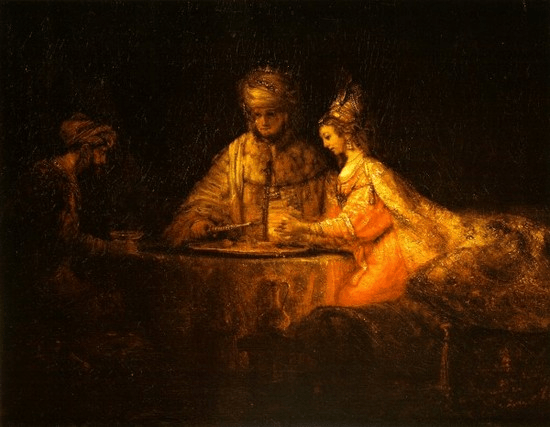
The King, Haman, and Esther, by Rembrandt van Rijn, 1660

But God, who is always awake and alert to whatever is happening in this world, had their backs. Even though the book of Esther does not once pronounce the name of God, the Lord’s influence and divine sovereignty are evident throughout the entirety of the story. 

God seems to specialize in hard cases, and in people who keep getting into trouble, despite their good intentions. And through providential means, the Lord inevitably gains the glory, and God’s people are wonderfully saved from circumstances well beyond their ability to save themselves.

Esther, a Jewish girl who became part of the king’s harem, and then the king’s wife and queen, humbly and prayerfully entered the king’s presence on behalf of her people, the Jews. Even though she was exalted to such a status, there was still the very real possibility that taking such an initiative would get Esther into deep trouble.

Yet, because of divine providence superintending the whole affair, the tables were turned, with the Jews being joyously delivered; and Haman literally finding himself at the end of his rope, on his own gallows. 

Prayer, sensitivity to God, and the humility to listen, undergirded Esther’s decision and courage to step out and act on behalf of her people. 

Especially when it comes to trouble, prayer is not optional equipment for the believer, but absolutely essential to facing each and every difficult situation. That’s because it is God, not us, nor any of our skill or ingenuity, that ultimately brings deliverance. 

Saving ourselves from impossible situations and dire circumstances is way above our pay grade; only God can bring true deliverance – the kind that genuinely changes people so that divine purposes are accomplished.

Our discouraging situations, hard cases, difficult people problems, and vexing trouble – whatever the situation – God has your back, and delights to answer our desperate pleas for help and deliverance. 

Like me, you may find yourself in trouble. But you can also find yourself with all the power of heaven behind you; and with an answer to your prayer that is beyond what you can even think or imagine.

Loving God, your Son Jesus Christ came that we might have life and have it abundantly. We humbly ask that you pour out your blessing upon our nation. Where there is illness, bring your healing touch; where there is fear, strengthen us with the knowledge of your presence; where there is uncertainty, build us up in faith; where there is dishonesty, lead us into truth; where there is discord, may we know the harmony of your love. This we are to bold to pray through Jesus Christ our Lord, who with you and the Holy Spirit are one God, now and forever. Amen.


The Second Woe Upon the Earth (Revelation 9:13-21)

The sixth angel sounded his trumpet, and I heard a voice coming from the four horns of the golden altar that is before God. It said to the sixth angel who had the trumpet, “Release the four angels who are bound at the great river Euphrates.” And the four angels who had been kept ready for this very hour and day and month and year were released to kill a third of mankind. The number of the mounted troops was twice ten thousand times ten thousand. I heard their number.

The horses and riders I saw in my vision looked like this: Their breastplates were fiery red, dark blue, and yellow as sulfur. The heads of the horses resembled the heads of lions, and out of their mouths came fire, smoke and sulfur. A third of mankind was killed by the three plagues of fire, smoke and sulfur that came out of their mouths. The power of the horses was in their mouths and in their tails; for their tails were like snakes, having heads with which they inflict injury.

The rest of mankind who were not killed by these plagues still did not repent of the work of their hands; they did not stop worshiping demons, and idols of gold, silver, bronze, stone and wood—idols that cannot see or hear or walk. Nor did they repent of their murders, their magic arts, their sexual immorality or their thefts. (New International Version)

In an apocalyptic vision of God’s judgment at the end of time, the Apostle John saw seven angels with seven trumpets. Each blast of the horn brought ever increasing levels of destruction upon the earth. The final three trumpets are also described as the three woes. (Revelation 8:2-6, 13)

The Sixth Trumpet (Second Woe)

The sixth angel sounded the sixth trumpet, which was also the second woe pronounced on the world. Four angels are released from their place of restraint. Whereas the invasion of locusts in the fifth trumpet (first woe) came from the pit of hell, the next invasion comes from the east, from the outskirts, that is, outside the Roman Empire.

The terrible angels go out to kill a third of all humanity. They lead a massive destructive force that overwhelms the earth. The incredible army looks something like centaurs, being horse and rider in one. And out of their mouths come fire, smoke, and sulfur. These are three plagues which brings death to a third of humanity.

The Response to the Second Woe’s Invasion

John records the human response to the divine judgment unleashed upon humanity with the four angels and their three plagues. In reality, it’s actually a lack of response; there is no change of heart and no repentant attitude from anyone. The awful devastation does nothing to elicit any sort of self-reflection, public awareness of sin, or reconsideration of ways by those left alive.

The Apostle records that the rest of the people, after going through such a traumatic time, keep up their worship of demons and their idolatry. They continue to murder, carouse, and steal, as if nothing had happened.

What’s more, John’s graphic and disturbing vision – from it’s very beginning – does not record a single person turning away from their evil ways. The surviving inhabitants of the earth act like old Pharaoh in Egypt during the days of Moses and the exodus; their hearts are hard, and they are not about to change.

What It Means For Us

A big question for us as contemporary people, two-thousand years removed from John’s apocalyptic vision is this: Do the judgments contained in the book of Revelation have any relevance for us today?

Some might dismiss all of this as weird historical story that nobody can really understand, so we might just as well put it aside as belonging in the past. Others grew up hearing “fire and brimstone” sermons from Revelation that did nothing for them other than help them decided that they never want to be in a church again and listen to a sinner about how sinful everybody is.

Although I do not condone hellfire preaching that does little more than make people feel bad, I do believe these difficult judgment chapters in the book of Revelation have something to say to us which we would do well to hear.

  • If we dig in and want what we want, without considering anyone else or even God, then we really cannot expect blessing either in this life or the life to come.
  • If and when disaster or destruction happens – and afterwards go on our merry way as if nothing even occurred – then we have come under divine judgment.
  • If we purposely stick our heads in the sand, and intentionally avoid what is happening around us in this world, then it will not go well for us in the end.
  • If we become angry, and nurse the grudge to the point of becoming hateful and unloving, then the hardness of heart will not recognize God’s visitation when it comes.
  • If we hurt and harm others without any remorse, or make excuses for bad behavior when called out on it, then we are no better than the unrepentant mass of humanity in the book of Revelation.

There is coming a time when it will be too late. The Day of the Lord will come. There will be a final judgment. But if you are reading this, there is obviously still time. Spiritual procrastination only leads to destruction. Spiritual attention to the here-and-now leads to life. What will you do “Today?”

Our Father who is in heaven,

uphold the holiness of your name.

Bring in your kingdom

so that your will is done on earth as it’s done in heaven.

Give us the bread we need for today.

Forgive us for the ways we have wronged you,

just as we also forgive those who have wronged us.

And don’t lead us into temptation,

but rescue us from the evil one. Amen.

The Radiant Face of Moses (Exodus 32:29-35)

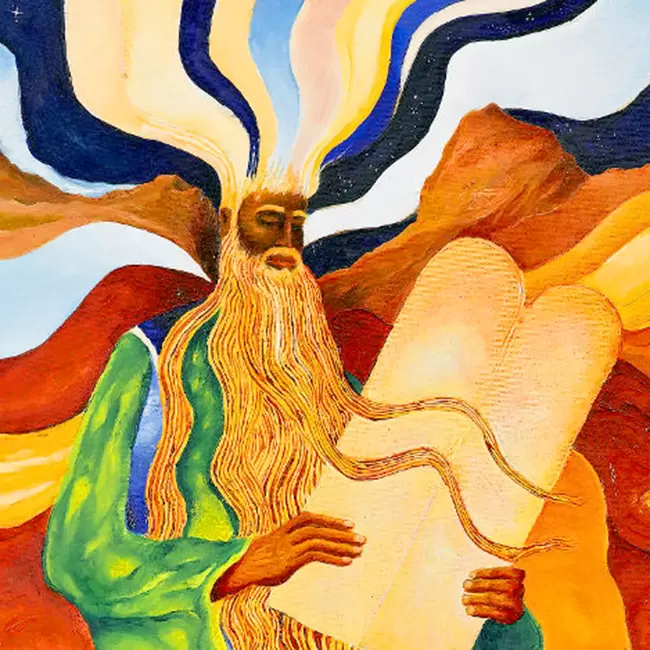
Moses and the Fire of Sinai, by Darius Gilmont

When Moses came down from Mount Sinai with the two tablets of the covenant law in his hands, he was not aware that his face was radiant because he had spoken with the Lord. When Aaron and all the Israelites saw Moses, his face was radiant, and they were afraid to come near him. But Moses called to them; so Aaron and all the leaders of the community came back to him, and he spoke to them. Afterward all the Israelites came near him, and he gave them all the commands the Lord had given him on Mount Sinai.

When Moses finished speaking to them, he put a veil over his face. But whenever he entered the Lord’s presence to speak with him, he removed the veil until he came out. And when he came out and told the Israelites what he had been commanded, they saw that his face was radiant. Then Moses would put the veil back over his face until he went in to speak with the Lord. (New International Version)

I’ve never seen anyone on Halloween dressed like Moses, complete with a shiny glowing face – even though the sight of Moses as he came down the mountain made the Israelites afraid to come near him. The face of Moses had been transformed in a way that made him appear haunted house scary to them.

Moses had actual face-to-face time with God on the mountain. And this seems to have changed his visage. Yet, Moses had stood before God previously without any change to his face. Moses had even interceded with God on other occasions with no special Halloween effect.

God made the new covenant and gave the new tablets because Moses smashed the old ones at the golden calf experience (see Exodus 32, especially verse 19). It could be that, with the radiant face of Moses, God was displaying before the people a tangible sign of God’s presence.

After all, the people had doubted God’s presence again and again during their time in the desert. So, when God’s seemingly ghostly presence was offered this time around, they were too afraid to be that closely connected to the divine.

Just as the loincloth that God made for the disobedient Adam and Eve in the Garden of Eden; and just as the sign of the rainbow God put in the sky after the world wide flood, so the Lord was making a new way for the people, a visible sign and demonstration of God’s presence – which was both reassuring and frightening.

It seems God wanted to show that Moses was still the leader, still God’s man, and that the people needed to not give him a hard time or rebel against God’s commands. At the same time, the Lord was assuring the Israelites that they were not abandoned, that Yahweh remains their God, full of mercy and grace, slow to anger, and abounding in steadfast love.

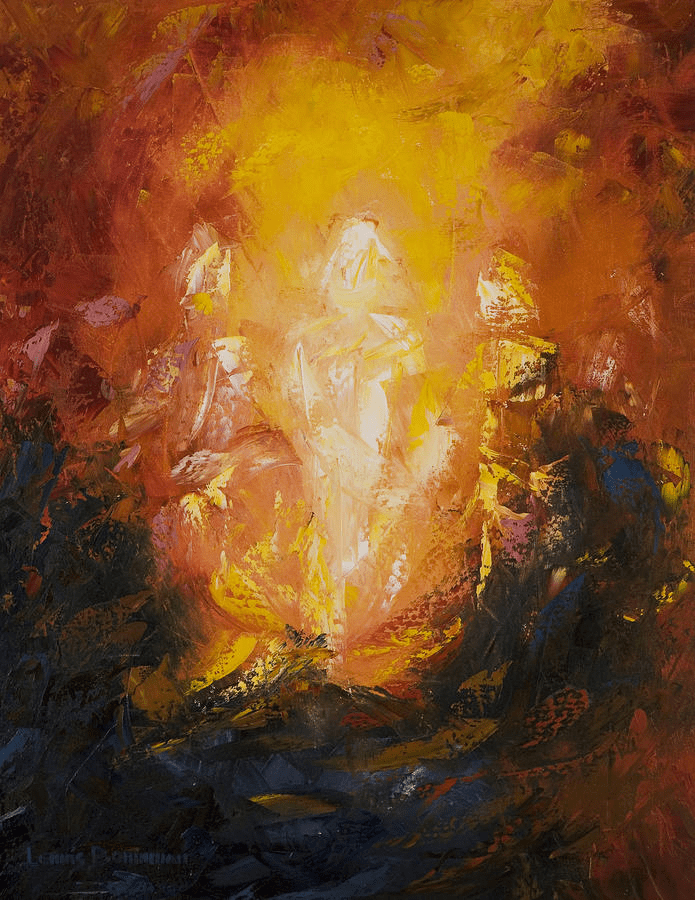
Transfiguration, by Lewis Bowman

In a similar way, the Transfiguration of Jesus in the New Testament Gospels does the same. The disciples were frightened on the mountain, seeing Jesus changed and probably much brighter than the face of Moses. And yet, they were also reassured that God was present with them in the person of Jesus Christ.

Just like the doubting people in Exodus, the disciples caught a glimpse of the great and awesome God, up close and personal. And like the people in the wilderness, the disciples did not understand everything that was going on. Both the ancient Israelites, and Christ’s disciples, did not fully comprehend what God was showing them. Each showed the fear of humanity, while God demonstrated God’s own character of love, faithfulness, and patience with frail humanity.

Certainly, when the face of Moses shone, it was an affirmation of the covenant’s renewal by God. The shiny face is also an indicator of the sort of relationship Moses had with God – and of his openness and vulnerability before God and before the community. It was a sign that Moses trusted God and that Israel, in turn, could trust God and Moses as their leader.

Whether veiled or unveiled, the face of Moses is a reminder of his unique relationship with God and with Israel. It’s a sign of God’s care and continual presence, and that God’s grace prevailed, even in the midst of Israel’s sin.

Another way of putting it, is that the radiant face of Moses represents a reversal of outcome concerning the golden calf idolatrous episode. It represents hope in the midst of a disaster in which all seemed hopeless.

In our own contemporary day and time of national upheavals and national disasters, it’s no wonder that many people would question whether there is any hope for our world, or not. Yet, no matter how dismal it may look; and no matter how unpromising the times we presently live in, today’s story about ancient Israel is a reminder to all of us to keep persevering and hold onto our confident hope that God is with us. There are better days ahead.

It might be Halloween, but the Advent of Christ is just around the corner.

Lord Jesus, Son of Man, Son of God, you encouraged us to come to you, all of us who labor and are heavy laden, and that you will give us rest. So, I now take your yoke upon myself, and learn from you because you are gentle and lowly in heart, and I know I will find rest for my soul. For your yoke is easy, and your burden is light. Help me to refocus from all that’s wrong in this old fallen world, and trust in you, through the enablement of the Holy Spirit. Amen.

Facing Racism (Numbers 12:1-9)

Moses and his wife Zipporah, by Flemish painter Jacob Jordaens, c.1650

When they were in Hazeroth, Miriam and Aaron criticized Moses on account of the Cushite woman whom he had married—for he had married a Cushite woman. They said, “Has the Lord spoken only through Moses? Hasn’t he also spoken through us?” The Lord heard it. Now the man Moses was humble, more so than anyone on earth.

Immediately, the Lord said to Moses, Aaron, and Miriam, “You three go out to the meeting tent.” So the three of them went out. Then the Lord descended in a column of cloud, stood at the entrance of the tent, and called to Aaron and Miriam. The two of them came forward. He said, “Listen to my words: If there is a prophet of the Lord among you, I make myself known to him in visions. I speak to him in dreams. But not with my servant Moses. He has proved to be reliable with all my household. I speak with him face-to-face, visibly, not in riddles. He sees the Lord’s form. So why aren’t you afraid to criticize my servant Moses?” The Lord’s anger blazed against them, and they went back. (Common English Bible)

I have three observations about today’s Old Testament lesson I want us to notice and lift-up, because they are crucial considerations for us in our present world.

First, the older siblings of Moses – Miriam the eldest and Aaron the other brother – had a problem with their sister-in-law (whose name was Zipporah). She was a Cushite. Cush was an ancient country which encompassed present day northern Sudan and much of Ethiopia in Africa. In other words, Zipporah was black, and Miriam and Aaron were critical of their little brother for marrying her.

Second, although having a black sister-in-law was the real issue, Miriam and Aaron confronted Moses not about this, but went after him concerning his role as a prophet. In other words, the siblings engaged in the age-old practice of ostensibly presenting a concern which was not really the matter on their hearts.

Third, the omniscient God knew what was happening. God was fully cognizant of Miriam and Aaron’s cloak-and-dagger attack at Zipporah through her husband Moses. The Lord was incensed with this coup attempt because it was unjust, unfair, ungodly, and frankly, racist. And so, the text states that God, with divine anger aroused, “immediately” addressed the situation.

Racism is insidious. It tends to get expressed most often through the methods similar to those used by Miriam and Aaron by criticizing another somewhat related issue. So, I offer the following questions with as much humility from Moses I can muster:

  • Are we aware of our own inheritance of centuries, and even millennia, of dominance language which keeps other human beings docile and subservient to another’s authority?
  • Have we chosen to challenge points of order and procedure in the attempt to marginalize certain persons?
  • Are we detached from our own needs, and so, unable to listen well?
  • Is there secret fear in our hearts, believing that we must maintain our hegemony, or else there will be chaos?
  • Is the goal for others to become like us, as if we were the Borg who talk about how resisting us is futile?
  • Are we willing to do the hard work of pulling out our own roots of racial segregation and injustice?
  • Do we want cheap diversity or true solidarity?
  • Will we work toward creating a new liberated humanity, championing equity in all things for all people, instead of attempting to sanitize existing systems?

For far too long, too many individuals, institutions, and even faith communities, have relied upon individualism and anti-structuralism; and it has not served us well in addressing our contemporary problems. Individualism sees only individual racist words and actions and is blind to systemic issues. It views social problems as merely a reflection of broken relationships, and, so, again, makes it impossible to see the systemic nature of our racialized society.

Anti-structuralism (not addressing racism as an organizing structure) is the assumption that racism is only individual racial prejudice and hatred. Thus, the approach in dealing with racism is to always be on the lookout for “bad racists.” This avenue, however, diverts attention from upholding biblical justice, forming policies of liberation, and establishing equitable care and opportunity for the common good of all persons.

As a historian, I tend to view things through historical lenses. So, I resonate deeply with the late twentieth-century essayist James Baldwin when he said, “White people are still trapped in a history which they do not understand; and until they understand it, they cannot be released from it.”

I want my history to be with Moses and freedom. I want God to show up and put racism to an end. I want to be part of the solution, and not the problem. I want justice and fairness to flow like a river that never runs dry.

Lord, Jesus Christ, you reached across ethnic boundaries between Samaritans, Romans, and Jews. In your earthly ministry you offered fresh sight to the blind and freedom to captives. Gracious Savior, help us to break down walls and barriers in our community; enable us to see the reality of racism and bigotry; and free us to challenge and uproot it from ourselves, our faith communities, our society, and our world. Amen.