The Holy Helper

Our ideas of God take shape in the many ways we live our lives. A God who is always right, fair, just, and loving in everything he says and does is a God we can trust. A cranky god who is aloof and indifferent does not help anyone. Yet, with the one true God we can be assured of strong spiritual support for any and every situation. When we have as our ally a robust theology which informs how we think and gives shape to how we act, then we can step forward with confidence knowing God has our back.

Sound theology needs to be identified, nurtured, and expressed in daily life. The Old Testament psalms are pregnant with vigorous views of God, as well as being the Church’s prayer book. Each individual psalm invites us to see God in a new or fresh way and inspires us to pray. Using the psalms as boots-on-the-ground prayer provides a firm foundation from which to know, worship, and serve God.

Here is my own translation of Psalm 99, which is meant to capture the spirit of the text. I encourage you to pray it over slowly, several times, and with appropriate emotional flavor behind the words:

The LORD rules everything; let all people everywhere who live unjustly, shake in their boots!

            God sits enthroned above all creation; let the earth rumble on its foundation!

The LORD is great among his people.

            In fact, God is far above all people.

Let everyone, no matter who they are or where they are from, praise Your great and awesome name. God is holy!

Mighty Ruler, the lover of everything that is just and right,

            You are the One who established what is fair and equitable.

You labored behind the scenes for causes which are just and right,

            and brought harmonious relations to folks at odds with each other.

Magnify the LORD, our God!

            Approach the Divine with great and mindful humility!

            God is holy!

Godly people of old such as Moses and Aaron were among the Lord’s devout followers.

            Those like Samuel were among the humble who called on God’s Name.

People from times long ago have cried out to the LORD and have gotten an answer.

            God spoke to the ancient Israelites in a great pillar of cloud.

They sought to keep and entrust the divine rules given to them.

O LORD our God, you answered them.

            You were a forgiving God to them,

            yet, you also were the One who held them accountable when they slid off the rails.

Magnify the LORD our God!

            Humble yourselves and worship at God’s holy mountain,

            because no one is like the LORD our God, a holy Helper!

Let’s get some hearty divine beliefs under our belt with the help of Psalm 99 so that we can live by faith, hope, and love…

God is Universal

A healthy view of God enables us to live with confidence no matter the circumstances. There is no place we can go where God is not there already. The Lord is universal – not tied to any distinct location, culture, class, race, gender, ethnicity, or group of people. God reigns supreme as Lord of all, not just some. The Lord is everywhere:

Where could I go to get away from your spirit?
    Where could I go to escape your presence?
If I went up to heaven, you would be there.
    If I went down to the grave, you would be there too!
If I could fly on the wings of dawn,
    stopping to rest only on the far side of the ocean—
        even there your hand would guide me;
        even there your strong hand would hold me tight!
If I said, “The darkness will definitely hide me;
        the light will become night around me,

     even then the darkness isn’t too dark for you!
        Nighttime would shine bright as day,
        because darkness is the same as light to you! (Psalm 139:7-12, CEB)

God is not only our God but everyone’s God – which means you will find God amongst both Democrats and Republicans, upper class and lower class, black and white, American and Asian, in every nation of the world, and within all societies. No one group of people have the corner on God, for God is much too big for that – which also means God is not limited to looking just like an old white northern European heritage male Protestant minister.

God is Just

It is important to have a proper definition of biblical justice. In the way many use the word, it refers to punishing those who do wrong and deserve incarceration. Although this idea is included in the meaning, it is only a secondary understanding of justice. The primary essence of justice is ensuring everyone has what they need to thrive and flourish on this earth – that there are no obstacles to people realizing their full humanity in God’s image.

Conversely, injustice means someone, a group of people, or even a nation is withholding resources and blocking persons, either knowingly or unknowingly, from thriving in life. A punitive implication of justice comes into play here. Unjust authorities must be replaced or even punished for their gross negligence in failing to provide for the common good of all persons under their responsibility.

Throughout Holy Scripture God spotlights those who are underprivileged and under resourced through no fault of their own. Those who love justice seek to rise above ignorance; be non-judgmental; use power on behalf of others; and are vigilant to operate fairly and equitably in all things.

The reason aliens, strangers, widows, and orphans are oft mentioned in the Bible is because they were the most vulnerable people in the ancient world to unjust actions and policies. God acts on their behalf so they will experience a fair distribution of resources instead of retribution from others.

The Lord your God is God of gods and Lord of lords, the great, powerful, and awe-inspiring God. He never plays favorites and never takes a bribe. He makes sure orphans and widows receive justice. He loves foreigners and gives them food and clothes. So, you should love foreigners, because you were foreigners living in Egypt. (Deuteronomy 10:17-19, GW)

“You must defend those who are helpless and have no hope. Be fair and give justice to the poor and homeless.” (Proverbs 31:8-9, CEV)

“I want to see a mighty flood of justice, an endless river of righteous living.” (Amos 5:24, NLT)

God is Relational

The Lord graciously gives guidance. God has spoken in the past in answer to those who called upon the name of the Lord. God’s presence was with the Israelites in their desert sojourn. God provided laws and promises to help them. And it was all done with the intimacy of a father and mother to a beloved child.

The powerful, living Spirit of God is available to us today, as well. The fallen nature of this world and our own sin is overcome through the grace of forgiveness in Christ. Even Jesus himself closely identifies with us and offers prayers on our behalf:

Jesus looked toward heaven and prayed, “Father, the hour has come. Glorify your Son, that your Son may glorify you. For you granted him authority over all people that he might give eternal life to all those you have given him. Now this is eternal life: that they know you, the only true God, and Jesus Christ, whom you have sent. I have brought you glory on earth by finishing the work you gave me to do. And now, Father, glorify me in your presence with the glory I had with you before the world began. I have revealed you to those whom you gave me out of the world. They were yours; you gave them to me, and they have obeyed your word. Now they know that everything you have given me comes from you. For I gave them the words you gave me, and they accepted them. They knew with certainty that I came from you, and they believed that you sent me. I pray for them. I am not praying for the world, but for those you have given me, for they are yours. All I have is yours, and all you have is mine. And glory has come to me through them.” (John 17:1-10, NIV)
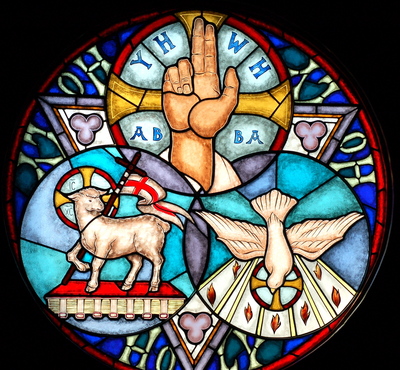
God is Holy

God is pure, set apart from injustice, wickedness, and sin. There are no impurities of mixed motives or malevolent plans with God. God’s holiness is the ground of the divine Being. In other words, the Lord does not simply act holy in all responses, plans, and works; the very essence and character of God is holiness. Therefore, God only acts consistent with this inherent personhood. Sacred words and actions come from the holy God.

And this is what engenders trust with the psalmist and caused him to acknowledge the great and wonderful help God gives. God’s holiness encompasses both divine transcendence and immanence, that is, the Lord is both far and near at the same time, all the time. And that theological understanding is of great worth to the worshiping and devout believer.

Each Sunday Christians all over the world gather and pray, “Our Father who art in heaven.” God is as near as a parent to a child and also reigns in heaven far above all – at the same time, all the time. God maintains a close and intimate relationship with humanity while also keeping a distance from injustice and unrighteousness.

Let us, along with the multitudes of heaven, proclaim God’s holiness:

“Holy, holy, holy is the Lord God Almighty, who was, and is, and is to come… You are worthy, our Lord and God, to receive glory and honor and power, for you created all things, and by your will they were created and have their being.” (Revelation 4:8, 11, NIV)

Our holy God lives forever in the highest heavens, and this is what he says: “Though I live high above in the holy place, I am here to help those who are humble and depend only on me.” (Isaiah 57:15, CEV)

God is our holy Helper. The Lord’s assistance is available, abundant, and awesome. So, let us take courage and pray with confidence and boldness to the God who listens and answers.


Genesis 6:5-22 – The God of Emotion

flood of tears

The Lord saw that the human beings on the earth were very wicked and that everything they thought about was evil. He was sorry he had made human beings on the earth, and his heart was filled with pain. Sothe Lord said, “I will destroy all human beings that I made on the earth. And I will destroy every animal and everything that crawls on the earth and the birds of the air, because I am sorry that I made them.” But Noah pleased the Lord. 

This is the family history of Noah. Noah was a good man, the most innocent man of his time, and he walked with God. He had three sons: Shem, Ham, and Japheth. 

People on earth did what God said was evil, and violence was everywhere. When God saw that everyone on the earth did only evil,he said to Noah, “Because people have made the earth full of violence, I will destroy all of them from the earth. Build a boat of cypress wood for yourself. Make rooms in it and cover it inside and outside with tar. This is how big I want you to build the boat: four hundred fifty feet long, seventy-five feet wide, and forty-five feet high. Make an opening around the top of the boat that is eighteen inches high from the edge of the roof down. Put a door in the side of the boat. Make an upper, middle, and lower deck in it. I will bring a flood of water on the earth to destroy all living things that live under the sky, including everything that has the breath of life. Everything on the earth will die. But I will make an agreement with you—you, your sons, your wife, and your sons’ wives will all go into the boat. Also, you must bring into the boat two of every living thing, male and female. Keep them alive with you. Two of every kind of bird, animal, and crawling thing will come to you to be kept alive. Also gather some of every kind of food and store it on the boat as food for you and the animals.” 

Noah did everything that God commanded him. (NCV) 

When I was a kid, the picture of God I had in my little head was of a white-bearded old guy sitting in the clouds looking bored and paying little attention to the humans below. Maybe, once-in-a-while, he would take his divine BB gun and shoot people in the backside, just for some fun. Although I have considerably moved on from that type of theological vision, it seems to be a common caricature of God that he is often indifferent – and even more so that God lacks emotions (except maybe anger). 

The Holy Bible says a lot about humanity. It says even more about God. In fact, Scripture is primarily about revealing who God is – the Lord’s character, attributes – and, yes, emotions. Much like my childhood misunderstandings of God, I am not sure why so many people tend to view God as lacking in feeling and emotion. Maybe the Enlightenment with its focus on reason, logic, and classification simply drained all emotion from God. It could be that contemporary humans project on God their own stoicism toward emotions. Perhaps we see emotions as unreliable and fickle, characteristics that God would not possess – and, so, we jettison any thought of God as feeling deeply about things. Whatever the reason, we will fail to know God as God unless we come to grips with a verse like this:  

The Lord saw that the human beings on the earth were very wicked and that everything they thought about was evil. He was sorry he had made human beings on the earth, and his heart was filled with pain.”(Genesis 6:6, emphasis mine) 

Broken Heart

Rather than our emotional human nature being a result of the Fall, it is instead a part of our original design of being in Paradise with God. As God’s image-bearers, we carry the mark of God with feeling deeply about things, just like our Creator. In those times when sadness seems as if it might swallow us whole, we just may be closer to God in that moment than any other. God has a heart, and that heart has been hurt and broken more times than we could ever imagine. God’s emotions moved him to action. God’s sorrow led to destroying injustice. 

The thoughts, attitudes, and actions of violent and unfeeling people very much trouble God – to the point of being heartsickIt is our emotional makeup which connects us and bonds us with the divine. The inability to feel is the ultimate disconnect from God. 

Jesus also felt deeply about a great many things – so much so that he died from a broken heart. Recall that ithe seminal Sermon on the Mount Christ’s first words to the large gathering of people were: 

“Blessed are those who mourn.” (Matthew 5:4)  

We underestimate the importance and the power of emotions to our peril. Biblical writers often purposefully contrast differing persons in their stories. In today’s Old Testament lesson, that contrast is most vivid between God and wicked humanity. Humanity had gotten to a point where they felt nothing. The violent behavior was a direct result of their emotional selves split-off from the rest of them. People were bifurcated, their humanity chopped as if a meat cleaver separated their feelings from themselves. Whenever we observe belligerent bullying, hate speech, meanness, and oppression – there you find a paucity of emotions. It is not the presence of feelings that brings about wickedness; it is the lack of emotional awareness and the absence of feelings which is the highway to a watery grave. 

We are in the “Last Days,” that is, the time before the final event in the Christian tradition’s understanding of historyChrist will return to judge the living and the dead. The righteous will enjoy God’s presence forever; the wicked, not really. These days are too often characterized by the kinds of behavior which lack the emotional depth of godly love and a heart of compassion: 

There will be terrible times in the last days. People will be lovers of themselves, lovers of money, boastful, proud, abusive, disobedient to their parents, ungrateful, unholy, without love, unforgiving, slanderous, without self-control, brutal, not lovers of the good, treacherous, rash, conceited, lovers of pleasure rather than lovers of God.” (2 Timothy 3:1-4, NIV) 

For me, learning to name my emotions and to observe where I carry those emotions in my body has been most helpful in connecting with my feelings – and connecting with my GodAnd, I must add, such an emotional awareness and kinship with feelings has brought personal wellness and compassionate ministry to others. 

So, receive this blessing today: 

The eyes of Jesus gaze upon you, stirring his heart with compassion. 

The gaze of Christ sees your heart, your joy and sorrow. 

The gaze of Christ sees your future, filled with the healing of emotions expressed. 

The eyes of Jesus gaze upon you, filling his heart with adoration. Amen. 

Jonah 1:1-17 – Against Hatred

JonahWhale

The Lord’s word came to Jonah, the son of Amittai: “Get up and go to Nineveh, that great city, and cry out against it, for their evil has come to my attention.”

So, Jonah got up—to flee to Tarshish from the Lord! He went down to Joppa and found a ship headed for Tarshish. He paid the fare and went aboard to go with them to Tarshish, away from the Lord. But the Lord hurled a great wind upon the sea, so that there was a great storm on the sea; the ship looked like it might be broken to pieces. The sailors were terrified, and each one cried out to his god. They hurled the cargo that was in the ship into the sea to make it lighter.

Now Jonah had gone down into the hold of the vessel to lie down and was deep in sleep. The ship’s officer came and said to him, “How can you possibly be sleeping so deeply? Get up! Call on your god! Perhaps the god will give some thought to us so that we won’t perish.”

Meanwhile, the sailors said to each other, “Come on, let’s cast lots so that we might learn who is to blame for this evil that’s happening to us.” They cast lots, and the lot fell on Jonah. So, they said to him, “Tell us, since you’re the cause of this evil happening to us: What do you do and where are you from? What’s your country and of what people are you?”

He said to them, “I’m a Hebrew. I worship the Lord, the God of heaven—who made the sea and the dry land.”

Then the men were terrified and said to him, “What have you done?” (The men knew that Jonah was fleeing from the Lord because he had told them.)

They said to him, “What will we do about you so that the sea will become calm around us?” (The sea was continuing to rage.)

He said to them, “Pick me up and hurl me into the sea! Then the sea will become calm around you. I know it’s my fault that this great storm has come upon you.”

The men rowed to reach dry land, but they couldn’t manage it because the sea continued to rage against them. So, they called on the Lord, saying, “Please, Lord, don’t let us perish on account of this man’s life, and don’t blame us for innocent blood! You are the Lord: whatever you want, you can do.” Then they picked up Jonah and hurled him into the sea, and the sea ceased its raging. The men worshipped the Lord with a profound reverence; they offered a sacrifice to the Lord and made solemn promises.

No escape for the prophet

Meanwhile, the Lord provided a great fish to swallow Jonah. Jonah was in the belly of the fish for three days and three nights. (CEB)

One way of outlining today’s Old Testament reading from Jonah is:

God said, “Go!” Jonah said, “No!” And, God said, “Oh!?”

Jonah did a full out run from God’s clear instructions to go to the city of Nineveh. This does not sound like a wise thing to do with God. So, why did Jonah run? Let’s get some perspective….

Who were the Assyrians?

Nineveh was a large city in the ancient world, and the capital of Assyria. The Assyrians had a reputation as fierce soldiers and conquered all the Middle East. They are mentioned many times in the Old Testament. It was Assyria that God used to judge the northern kingdom of Israel. The typical military practice of the Assyrians was to attack a city and completely subjugate it by deporting most of the people and repopulating it with some of their own people. They did this so that the conquered people could not mount a revolt or resistance to their rule.

What is important to know about the Assyrians and the Ninevites is that they were notorious in the ancient world for their brutality toward conquered peoples. Many forms of torture that we are aware of today were invented by the Assyrians. Their methods were so inhumane that it would be inappropriate for me to even discuss them here. I will just leave it at the fact that the Assyrians were experts at thinking-up and executing extreme forms of torture on everyone who resisted their power. It was a very violent culture.

Who is God?

Now, contrast that knowledge of the Assyrians with God. The ways of the Assyrians caught the notice of God, who was ready to pronounce judgment on the heart of the Assyrian Empire, Nineveh. So, as God typically did in the Old Testament, he told one of his prophets to go and give a message. And the message was simple: “Go to the great city of Nineveh and preach against it, because its wickedness has come up before me.” Lest we think God was determined to wipe Nineveh off the map, think again. Jonah confesses later in the book, “I knew that you are a gracious and compassionate God, slow to anger and abounding in love, a God who relents from sending calamity” (Jonah 4:2).

Who was Jonah?

Jonah was a prophet of God, which means he set apart to speak for God. So, here we have the rub as to Jonah’s lickety-split in the opposite direction from where God wanted him. Jonah did not like Assyrians. More than that, he loathed them. The last thing Jonah wanted was to have effective preaching and see Nineveh repent of their violent ways. Jonah wanted judgment, not grace.

In this little four-chapter prophetic book of the Old Testament, it is Jonah who needs divine deliverance as much as the Ninevites do. In fact, Jonah’s need for rescue gets more attention than the evil Assyrians. The message of Jonah comes down to this: Racism and hatred, however much perceived to be legitimate, have no part whatsoever in the kingdom of God.

Who are we?

Christians are the community of the redeemed. New life in Jesus Christ involves a wholesale jettison of bigotry and a complete chuck to the manure pile of hatred directed toward any ethnic and/or religious group of people, period. New life means adopting the love of God. It involves becoming a dispenser of grace and mercy with all people, not just the ones we feel deserve it.

What does God want us to learn?

To share the same heart as he has – a heart that beats for people to know and live by a better way – a heart that has grace and compassion even in the face of flat-out evil. We are meant to think twice about pointing the finger at others; to take the plank out of our own eye before we address the splinter in another’s eye.

O God, you created all people in your image. We thank you for the astonishing variety of races and cultures in this world. Enrich our lives by ever-widening circles of friendship, and show us your presence in those who differ most from us, until our knowledge of your love is made perfect in our love for all your children; through your Son, Jesus Christ our Lord. Amen.

Click Turn My Heart a beautiful song written by Marty Haugen as we seek to have our lives bend to God’s heart.

Grace and Anger


            I once dealt with a woman who was so upset with her husband that she was literally shaking with anger.  There had been a time when her husband had been abusive, but he came to know Christ and became a loving person.  What was so upsetting to this woman is that God saved her husband instead of punishing him for all the abuse he had dished out.  She wanted some divine payback!  She was actually furious about God showing grace and compassion.
 
            This is not a novel or new experience.  In the ancient world, the Assyrians were notorious for their brutality toward conquered peoples.  They thought up forms of torture as a creative past-time. It was a violent culture full of inhumane practices and soldiers who were the scourge of the Middle East.
 
            We know from the little Old Testament book of Jonah that the ways of the Assyrians caught the notice of God, who was ready to pronounce judgment on the heart of the Assyrian Empire, Nineveh.  So, as God typically did in the Old Testament, he tells one of his prophets to go and give a message.  And the message was simple:  “Go to the great city of Nineveh and preach against it, because its wickedness has come up before me” (Jonah 1:2). 
 
            For whatever reasons, when Jonah did not immediately obey God, God stuck with him.  God did not call another prophet to take his place, but insisted that Jonah be the one to preach.  If God calls us to something and we neglect to do it, we cannot simply think that someone else will do it.  Sometimes God insists that we do it, not someone else.
 
            Jonah eventually does go to Nineveh (after the infamous being in the belly of a great fish for three days and nights) and there is a great repentance of sin.  The entire city turns from their evil ways.  God saw this mass repentance and relented from sending disaster.  Instead of destroying the city with all its inhabitants and animals, he was gracious and compassionate, abounding in love.  If there is a response God delights in more than anything it is humility and the courage to admit personal evil and turn from it.
 
            But Jonah has a problem with what is going on.  He is not just a little ticked-off; he is greatly displeased.  He is angry enough about this whole affair to want to die.  Jonah was actually annoyed and angry by God’s goodness.  He wanted justice and judgment, not grace!  The grace of God is so massive that it even extends to some of the most evil people in history, and Jonah wanted no part of that theology.
 
            God asked Jonah twice:  “Do you have a right to be angry?”  It is the same question that God is asking his people today.  Jonah wanted destruction and pay-back for all the sin of the Assyrians.  But God searches our hearts and to expose our expectations.  Often, when those expectations do not happen we are disappointed.  But more than that, when the very opposite happens of what we want and expect, we can become very angry and upset.
 
            A lot of people are angry about radical Muslim groups killing and torturing Christians.  It is evil and it is upsetting.  In fact, many of the killings have taken place in the same geographical area as the ancient city of Nineveh.  Yet, perhaps God is asking us Western Christians who are looking for judgment the same question the little book of Jonah ends on:  “But there are 1.6 billion Muslims in the world; should I not be concerned about that great number?”


            God wanted Jonah to share the same heart he has, and God desires to see us have a heart that beats for lost people to know Jesus – a heart that has grace and compassion even in the face of flat-out evil.  Sometimes God calls us to do what we least want to do in order to reveal what is really in our heart.  Hating people to the point of wanting nothing but destruction upon them does nothing to bring about the righteous life that God desires.  But the blood of Jesus Christ has the power to bring healing and hope, even to the worst of sinners.  Thank you, Jesus, may it be so.