Luke 15:1-3, 11b-32 – Parable of the Lost Son

Prodigal Son by Wayne Pascall

Now all the tax collectors and sinners were coming to hear him. But the Pharisees and the experts in the law were complaining, “This man welcomes sinners and eats with them.”

So, Jesustold them this parable….

“A man had two sons. The younger of them said to his father, ‘Father, give me the share of the estate that will belong to me.’ So, he divided his assets between them. After a few days, the younger son gathered together all he had and left on a journey to a distant country, and there he squandered his wealth with a wild lifestyle. Then after he had spent everything, a severe famine took place in that country, and he began to be in need. So, he went and worked for one of the citizens of that country, who sent him to his fields to feed pigs. He was longing to eat the carob pods the pigs were eating, but no one gave him anything. But when he came to his senses he said, ‘How many of my father’s hired workers have food enough to spare, but here I am dying from hunger! I will get up and go to my father and say to him, “Father, I have sinned against heaven and against you.I am no longer worthy to be called your son; treat me like one of your hired workers.”’ So, he got up and went to his father. But while he was still a long way from home his father saw him, and his heart went out to him; he ran and hugged his son and kissed him. Then his son said to him, ‘Father, I have sinned against heaven and against you; I am no longer worthy to be called your son. ’But the father said to his slaves, ‘Hurry! Bring the best robe and put it on him! Put a ring on his finger and sandals on his feet! Bring the fattened calf and kill it! Let us eat and celebrate,because this son of mine was dead, and is alive again—he was lost and is found!’ So, they began to celebrate.

“Now his older son was in the field. As he came and approached the house, he heard music and dancing. So, he called one of the slaves and asked what was happening. The slave replied, ‘Your brother has returned, and your father has killed the fattened calf because he got his son back safe and sound.’ But the older son became angry and refused to go in. His father came out and appealed to him, but he answered his father, ‘Look! These many years I have worked like a slave for you, and I never disobeyed your commands. Yet you never gave me even a goat so that I could celebrate with my friends! But when this son of yours came back, who has devoured your assets with prostitutes, you killed the fattened calf for him!’ Then the father said to him, ‘Son, you are always with me, and everything that belongs to me is yours. It was appropriate to celebrate and be glad, for your brother was dead, and is alive; he was lost and is found.’” (New English Translation)

Lost people matter to God.

In the story of the lost prodigal son, that son hit rock bottom and rehearsed a speech he would give to his father when he came back. He never got to finish it, because the father interrupted his confession of sin and got the celebration going! 

We celebrate the things that are important to us. Lost people matter to God so much that it is a cause for a great celebration. God’s grace steps in and takes over, erasing past guilt and bringing radical forgiveness and reconciliation.

The Prodigal Son by Kaye Redman

Today there are literally tens of thousands of children who have walked away from their upbringing in faith, and even many times, literally walked away from their family of origin. Their parents know the feeling of standing at the window, wondering how their prodigal daughter really is, and longing for their prodigal son to come home. 

So, what do you do when you are the parent of a prodigal? How do you deal with the pain and the estrangement of a wayward son or daughter? 

  • Don’t expect a prodigal to be Christ-like. If the son or daughter is not a Christian, they aren’t going to act like one. Exhortations to stop drinking cheap wine, cease partying, not get a tattoo, or even go to church is not only useless, but it can also be harmful. Behind all the speech or behavior of a prodigal that might make a parent cringe, there is a world of hurt. The heart is sick or broken. Prodigals need to be treated as fellow humans and equals.

He was pierced because of our rebellions
    and crushed because of our crimes.
    He bore the punishment that made us whole;
    by his wounds we are healed.
Like sheep we had all wandered away,
    each going its own way,
    but the Lord let fall on him all our crimes. (Isaiah 53:5-6, CEB)

  • Welcome a prodigal home. It is possible (and necessary!) to remain connected in relationship, even if there are differing values or practices between parents and prodigals. In other words, don’t make it hard for a son or daughter to come home. Yes, there are instances when parents need to clarify and maintain boundaries, but those instances are actually rare.

In most cases, if a daughter smells like weed or an ashtray, just spray her jacket with Febreze and change the sheets when she leaves – but let her come home. If you find out she’s pregnant, then be with her and take her to her twenty-week ultrasound.

If a son is broke because he spent all the money you lent him on women and liquor, then forgive his debt as you’ve been forgiven; don’t give him any more money—and let him come home. If in doubt, always go with grace.

For God has revealed his grace for the salvation of all people. That grace instructs us to give up ungodly living and worldly passions, and to live self-controlled, upright, and godly lives in this world. (Titus 2:11-12, GNT)

  • Point a prodigal to Christ. A prodigal’s real problem is not sex or addiction, laziness or crime, cussing or ill manners. It is very possible that they simply don’t see Jesus for who he really is. So much Christian dogma or traditional practice might be encrusted on them that they simply cannot experience Jesus Christ’s love. God’s grace is what draws us all to faith – not hellfire preaching or parental badgering.

At one time you were separated from God. You were his enemies in your minds, and the evil things you did were against God. But now God has made you his friends again. He did this through Christ’s death in the body so that he might bring you into God’s presence as people who are holy, with no wrong, and with nothing of which God can judge you guilty. (Colossians 1:21-22, NCV)

We are to all share the same heart of the father in the parable of the lost son – a heart of hospitable love, abundant grace, and open celebration.

Loving heavenly Father, thank you that Jesus showed us your heart of love for the children of this world. Help us to do everything we can so that they will know how much you love them and want them to know your blessing. Thank you for your compassion for those who have strayed from you. Thank you that you are always ready to welcome us back with mercy and acceptance. Amen.

Luke 15:1-10 – The Parable of the Lost Sheep and the Lost Coin

Parable of the Lost Sheep by Sieger Köder (1925-2015)

Now all the tax collectors and sinners were coming to hear him. But the Pharisees and the experts in the law were complaining, “This man welcomes sinners and eats with them.”

So, Jesus told them this parable: “Which one of you, if he has a hundred sheep and loses one of them, would not leave the ninety-nine in the open pasture and go look for the one that is lost until he finds it? Then when he has found it, he places it on his shoulders, rejoicing. Returning home, he calls together his friends and neighbors, telling them, ‘Rejoice with me, because I have found my sheep that was lost.’ I tell you, in the same way there will be more joy in heaven over one sinner who repents than over ninety-nine righteous people who have no need to repent.

“Or what woman, if she has ten silver coins and loses one of them, does not light a lamp, sweep the house, and search thoroughly until she finds it? Then when she has found it, she calls together her friends and neighbors, saying, ‘Rejoice with me, for I have found the coin that I had lost.’ In the same way, I tell you, there is joy in the presence of God’s angels over one sinner who repents.” (New English Translation)

Lost people matter to God… a lot. They matter so much to the Lord that one lost soul who is found is the grounds for a big celestial party. 

Please note this simple observation of today’s Gospel lesson: If there is rejoicing in the presence of angels over one sinner who repents, then it is God who is doing the rejoicing. The Lord is absolutely giddy with joy over a lost person being found.

Jesus told two short stories, each teaching the same thing, so that we will be absolutely sure to get it: A loving God has unbounded joy over lost people being found. These parables of Jesus give us a glimpse of God’s own heart. The Lord would do anything to find a lost person, to restore and reconcile that person to right relationships. 

God would go dumpster diving and wade through stinky nasty garbage to find just one lost valuable person.

Restoring lost people is such a high priority to God that the Father sent the Son to this earth. Jesus paid the ultimate price of a cruel death on a cross to reconcile a broken lost relationship between people and God.

I have not always been a devoted follower of Christ. I still remember what it felt like to be separated from God and estranged from the church – it was lonely and awful, like being in a deep black hole with no way of getting out and no one around to help. 

But God mercifully sent people into my life to share good news with me and help me out of my prodigal way of life. I once was lost. But now I am found. When I turned from my path of destruction and embraced Jesus Christ, there was a big party in heaven.

Lost Sheep Parable by Thomas Bertram Poole

God gathering wayward and lost persons is a gracious activity, seemingly free from criticism. But there was. And because there were complaints leveled at Jesus for purposely going after the lost, it therefore needs to be asked: 

Where do we locate ourselves in these parables? 

The two stories were downright offensive to many of Christ’s original hearers. Those upset with Jesus were so inwardly focused that they believed ministry ought to revolve around them and their needs.

And, what’s more, the religious leaders were offended because they thought all the fuss about sinners would only highlight their sin. In other words, there ought to be no party and no rejoicing for people who have lived an ethically and morally dubious life.

Preaching grace is always offensive to people who work for their salvation. It is scandalous to such persons to hear that Jesus did not come to call the righteous, but sinners to repentance. 

If we hear Christ’s parables and the concern for lost sinners who don’t know Jesus and say, “Well, all this talk about outreach is well and good, but what about us?  What about me? After all, I never went down a path of immorality or hurt anyone. I’m a good person. Where’s my party?” Then, we must locate ourselves as the lost persons in need of being found by God’s grace.

Consider for a moment the worst sinner you can think of – a person for whom you would label as being akin to the devil…. Now picture that person being found by God and becoming a follower of Christ….

Would you attend the party to celebrate that person’s repentance, reconciliation, and recovery? 

If any of us feels justified in our hate, then we are the lost one in need of turning from our sin.

In leaving the ninety-nine sheep in the flock and going after the one sheep, God gave preferential attention to the lost…. Can you live with that? 

These parables of Jesus have significant meaning for church programs, budgets, and committees. By most estimations, only one-in-five lost people in America even knows one Christian. Statistics like that are what keep me up at night; it deeply saddens me. It drives me to prayer.

God’s unconditional mercy and amazing grace is what makes all the difference. 

If we lose the sense of awe and appreciation for what God has done for us in Christ, then there will be no outreach. Finding lost people is not dependent on completing a class on evangelism or getting training in how to answer every question.

Outreach is fueled by passion and desire. Healthy Christians reproduce themselves. I assume you didn’t take a class on how to procreate – you just had the desire and the willingness; and then, you celebrated nine-months later, the birth of new life.

New life always needs to be celebrated because that’s what God does. Yet, the party cannot commence until the lost are found….

O God – blessed Father, Son, and Spirit – sanctify all believers everywhere with your abiding presence. Enlighten the minds of your people more and more with the light of the Gospel. Bring lost people to the knowledge of our Savior Jesus Christ; and those who are walking in the way of life, keep steadfast to the end. Guard those who are strong and prosperous from forgetting you and straying from the flock. Increase in us your grace and love so that we may participate with you in finding the lost. Amen.

Romans 4:1-12 – Saved by Grace Through Faith

“Abraham Journeying to the Land of Canaan” by Giovanni Benedetto Castiglione (1609-1664); The Fitzwilliam Museum; http://www.artuk.org/artworks/abraham-journeying-to-the-land-of-canaan-5550

So how do we fit what we know of Abraham, our first father in the faith, into this new way of looking at things? If Abraham, by what he did for God, got God to approve him, he could certainly have taken credit for it. But the story we’re given is a God-story, not an Abraham-story. What we read in Scripture is, “Abraham entered into what God was doing for him, and that was the turning point. He trusted God to set him right instead of trying to be right on his own.”

If you’re a hard worker and do a good job, you deserve your pay; we don’t call your wages a gift. But if you see that the job is too big for you, that it’s something only God can do, and you trust him to do it—you could never do it for yourself no matter how hard and long you worked—well, that trusting-him-to-do-it is what gets you set right with God, by God. Sheer gift.

David confirms this way of looking at it, saying that the one who trusts God to do the putting-everything-right without insisting on having a say in it is one fortunate man:

Fortunate those whose crimes are whisked away,
    whose sins are wiped clean from the slate.
Fortunate the person against
    whom the Lord does not keep score.

Do you think for a minute that this blessing is only pronounced over those of us who keep our religious ways and are circumcised? Or do you think it possible that the blessing could be given to those who never even heard of our ways, who were never brought up in the disciplines of God? We all agree, don’t we, that it was by embracing what God did for him that Abraham was declared fit before God?

Now think: Was that declaration made before or after he was marked by the covenant rite of circumcision? That’s right, before he was marked. That means that he underwent circumcision as evidence and confirmation of what God had done long before to bring him into this acceptable standing with himself, an act of God he had embraced with his whole life.

And it means further that Abraham is father of all people who embrace what God does for them while they are still on the “outs” with God, as yet unidentified as God’s, in an “uncircumcised” condition. It is precisely these people in this condition who are called “set right by God and with God”! Abraham is also, of course, father of those who have undergone the religious rite of circumcision not just because of the ritual but because they were willing to live in the risky faith-embrace of God’s action for them, the way Abraham lived long before he was marked by circumcision. (The Message)

“Abraham Journeys Forth into the Unknown” by Yoram Raanan

We all need help. Yes, we like our independence and would rather give help than receive it. Yet, there are some things which we can do nothing about without some divine intervention. This is where faith comes into the picture.

“Faith” is a big word in Holy Scripture and in the Christian life. Faith encompasses the totality of how we come to Jesus Christ, and then how we live for him. In talking about faith, it is important to distinguish between the faith which saves us from guilt, shame, sin, death, and hell, and the faith which sanctifies and makes us holy. 

“Salvation” and “sanctification” are also big words in Scripture and in life. If we are fuzzy on our understanding and application of these two spiritual realities of salvation and sanctification, we are going to end up sleepwalking through life as spiritual zombies.

Christianity’s answer to the vital help we need for deliverance is the death and resurrection of Jesus Christ. This deliverance, or salvation, only occurs by faith. A person is “saved” by knowing about Jesus and his finished work on the cross and trusting that this work has taken care of my need for salvation, once for all. 

Christ sacrificed himself for us. He took our place. The punishment that belonged to us, he bore. When we acknowledge our lost and wayward lives, and believe Jesus is the way, the truth, and the life, then we are delivered and experience salvation from the awful emptiness of life. 

A person cannot earn this deliverance; they cannot buy it or work for it. No, salvation is a gift that comes only by faith in the person and work of Jesus. That is the essence of saving faith in Christianity. It is a one-time event of trust.

“Sanctification,” on the other hand, is what begins when becoming a believer in Jesus. The word simply means “to become holy,” or, “to be set apart for God.” Sanctification is not a singular event, but a process Christians engage in for the rest of their earthly lives. 

Whereas saving faith is a gift given to us without effort, sanctification requires a great deal of effort. We work and struggle and expend lots of energy to live the Christian life. 

“Grace [God’s gift to us in granting forgiveness] is not opposed to effort, it is opposed to earning. Earning is an attitude. Effort is an action. Grace, you know, does not just have to do with forgiveness of sins alone.” 

Dallas Willard

When a student gets a college scholarship at a university, the giving of the scholarship is a one-time event. It is granted to the student. They now possesses it and are able to attend school without trying to earn the money to pay for it. 

But that scholarship has been given for a reason – so that the student can now focus entirely on their studies and/or sport. The work has just begun. More blood, sweat, and tears will take place living into that scholarship than the student could ever imagine. It won’t be easy, and it will consume the student’s waking hours for the next four years.

Our life is a matter of faith, not of sight.

2 Corinthians 5:7, GNT

The biblical character of Abraham is Exhibit A of faith. He was delivered from an empty way of life in a pagan country and given a gift of grace to move to the country God would show him. Abraham did nothing to earn this favor. Before Abraham chose God, God chose him. 

Abraham sojourned as a pilgrim throughout the land God gave him, which mirrored his spiritual sojourning and learning to be a follower of God. Abraham likely faced the greatest test of faith a person could ever experience; he was asked to sacrifice his son. He responded to God with complete obedience.

Abraham’s faith was made complete by what he did; and it occurred well before his circumcision of being physically marked as belonging to God. 

We are made right not on our own but through the sheer grace of God in Christ by faith. Then, we continue to exercise faith by living into the righteousness given to us by the mercy of God.

God’s mercy is so abundant, and his love for us is so great, that while we were spiritually dead in our disobedience he brought us to life with Christ. It is by God’s grace that you have been saved. In our union with Christ Jesus he raised us up with him to rule with him in the heavenly world. He did this to demonstrate for all time to come the extraordinary greatness of his grace in the love he showed us in Christ Jesus. For it is by God’s grace that you have been saved through faith. It is not the result of your own efforts, but God’s gift, so that no one can boast about it.

Ephesians 2:4-9, GNT

God grants his faith scholarships to whomever he wants: rich and poor, men and women, from every race, ethnicity, and background imaginable across the entire earth. 

From the standpoint of faith, Abraham did nothing to receive God’s gracious scholarship of faith. He did not work for it. It was granted to him solely because of God’s grace. Then, his faith was confirmed and proven as genuine by his life of faith and obedience.

Therefore, our own deliverance and ability to live rightly is firmly rooted in faith – and not by holding a prominent position, having a particular pedigree, or expending personal power. All of humanity needs the saving help of Jesus Christ. Salvation is in Christ alone, by grace alone, through faith alone.

Lord Jesus Christ, I am sorry for the things I have done wrong in my life. Please forgive me. I now turn from everything that I know is wrong. Thank you that you died on the cross for me, so that I could be forgiven and set free. Thank you that you offer me forgiveness and the gift of your Spirit. I receive that gift with a grateful heart. Amen.

Romans 10:8b-13 – Believe and Confess

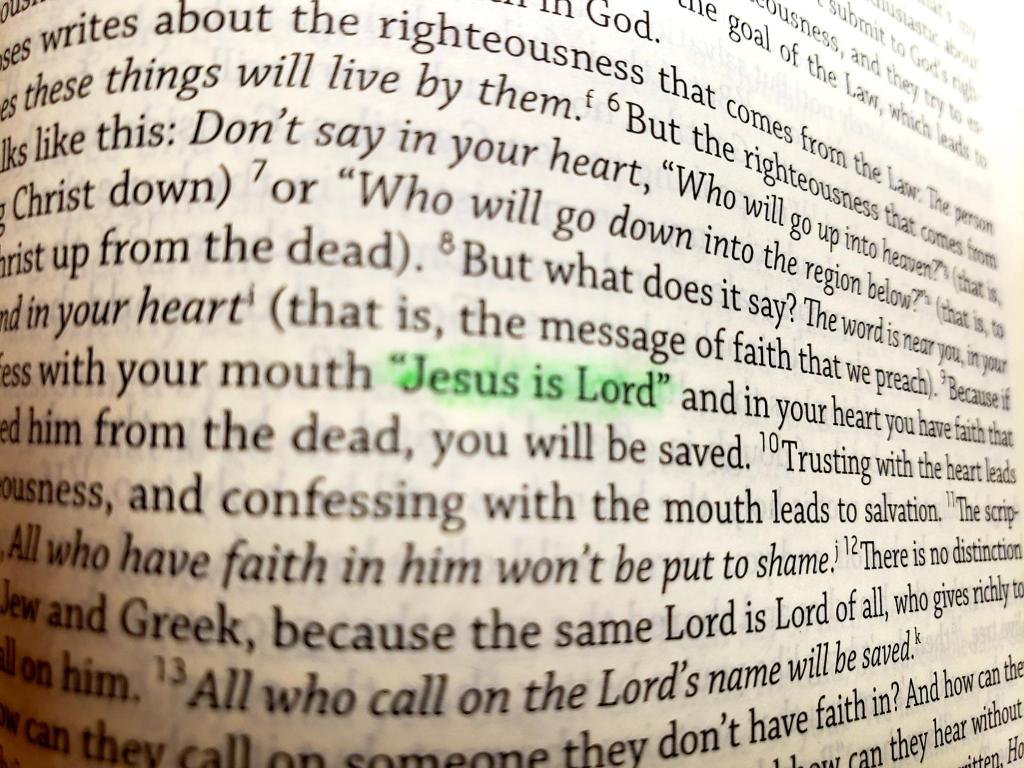
“The word is near you; it is in your mouth and in your heart,” that is, the message concerning faith that we proclaim: If you declare with your mouth, “Jesus is Lord,” and believe in your heart that God raised him from the dead, you will be saved. For it is with your heart that you believe and are justified, and it is with your mouth that you profess your faith and are saved. As Scripture says, “Anyone who believes in him will never be put to shame. ”For there is no difference between Jew and Gentile—the same Lord is Lord of all and richly blesses all who call on him, for, “Everyone who calls on the name of the Lord will be saved.” (New International Version)

Confess with the Mouth

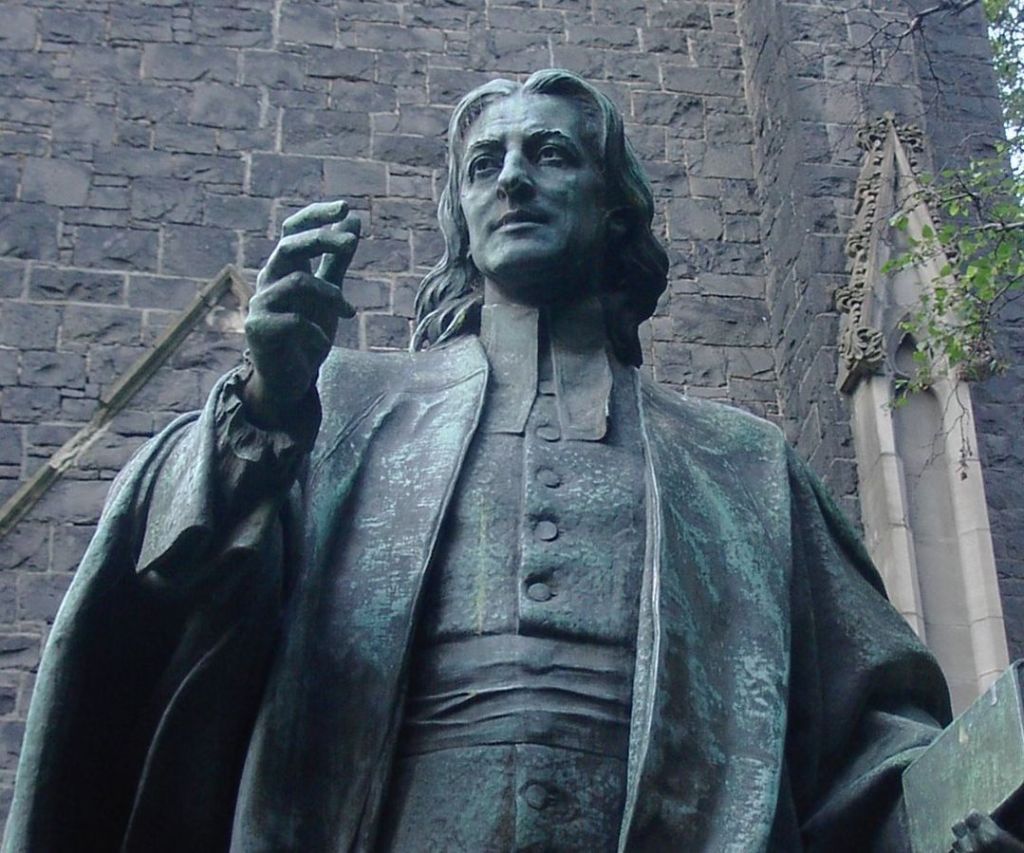
John Wesley (1703-1791) was an Oxford don who became an Anglican priest. He had all the intellectual tools to rightly handle the intricacies of theology and teach the Bible. Yet, when he first started out, there was no heart behind it. 

On a voyage across the Atlantic to America, Wesley spent much of the time on the ship with a group of German pietists – men and women who had a heart behind their practice of Christianity. The Germans deeply impressed Wesley, and he realized there was something important missing from his own religion. 

The ship encountered a storm and Wesley was afraid for his life. But the German believers seemed unfazed, having a heart-faith that John could not explain. He wanted what they had. Wesley was fearful and found little comfort in his religion. So, he confessed to one of them his growing misery and decision to give up the ministry. One of the Pietists advised, “Preach faith till you have it. And then, because you have it, you will preach faith.”

John Wesley acted on the advice. He led a prisoner to Christ by preaching faith in Christ alone for forgiveness of sins. He was astonished. Here was a man transformed instantly. Wesley cried out, “Lord, help my unbelief!” However, he still felt dull inside and little motivation even to pray for his own salvation. 

Statue of John Wesley as a young preacher, by Adam Carr, located in Melbourne, Australia

Having returned back to England, Wesley was in a church service listening to Romans expounded by the preacher. He recalled the experience years later: “While he was describing the change which God works in the heart through faith in Christ, I felt my heart strangely warmed. I felt I did trust in Christ, Christ alone for salvation; and an assurance was given me that He had taken away my sins, even mine, and saved me from the law of sin and death.”

Believe with the Heart

Simply uttering the words with our mouths, “Jesus is Lord,” by itself does not create deliverance and salvation. The heart needs to be involved. Yet, we must also consider the reality that only focusing on the heart, without having the mouth involved, is an insufficient faith. Christian belief has a solid objective real historical base from which our hearts can tether themselves. Christian confession affirms that Jesus is, indeed, risen from death and is Lord of all, having secured salvation for us through his shed blood on the cross.

Consider two hypothetical men at the time of the Passover in Egypt: Eleazar Ben Macaroni and Yakov Yarmulke. Eleazar and Yakov are talking together on the night the angel of death is about to pass through Egypt and the firstborn son in every family would be killed – that is, unless the blood from a sacrificial lamb was over the door of the house so that the angel would “pass over” the house and no one would be killed. 

Passover Angel of Death, by Arthur Hacker (1858-1919)

Yakov says to Eleazar, “Can you believe all that has been happening around here?  It’s all very scary!  All of those plagues, the disaster around us, and now this night!”  Eleazar asks, “Well, haven’t you put the blood over the door?”  “Yes, I’ve done all that – but it all is still disturbing.  My heart is troubled.  What do think will happen?” “Will we be okay?” asks Yakov nervously.  Eleazar responds, “I trust in the promises of God; let the angel come!”

So, when the angel of death came, which house do you suppose lost his firstborn son: Eleazar ben Macaroni, or Yakov Yarmulke?  The answer: neither of them. The angel of death did not come to either man’s house because deliverance is determined by the blood of the lamb and not by the quality or intensity of faith of the person. 

“For me His precious blood he shed – for me His life He gave. I need no other argument, I need no other plea; it is enough that Jesus died, and that he died for me.”

My Faith Has Found a Resting Place, hymn by Eliza Edmunds Hewitt (1851-1920)

If we only focus on the heart, our hearts will condemn us. We need to say the words of our faith, to confess them with our mouths, repeatedly, again and again, until we believe them. We are not to wait for our hearts to feel like having faith and living for God, because our hearts can be desperately wicked, and they will keep deceiving us. The heart needs to be informed by God’s Word and accept the words of Holy Scripture by faith:

“If we confess our sins, he is faithful and just to forgive us our sins, and to purify us from all unrighteousness.” (1 John 1:9, NIV)

Have the Heart and Mouth Work Together

We need both a right confession with our mouths and a right confession in our hearts for saving faith. When the heart receives grace, and the mouth expresses the beauty of faith – when heart and mouth work in concert with each other – something beautiful and gracious happens: 

“Everyone who calls on the name of the Lord will be saved.”

Romans 10:13

When Holy Scripture says “everyone,” it means “everyone.” All who cry out to God with their mouths, from a heart desiring God, will be saved. It does not matter whether that call is melodious, sweet, and in tune; or whether the call is a jumbled off-key joyful noise. It makes no difference; both will be saved. 

Only uttering the right words like some magical incantation does not save us. Only sincerity of heart does not save us. One does not achieve salvation through self-effort or trying to be worthy. No one is saved by finding the right combination of words in prayer or having a nice feeling.

Calling on the name of the Lord with both mouth and heart, trusting in the redemptive events of Jesus Christ, is what saves us.

Whether Jew or Gentile, rich or poor, American or Arab, famous or infamous, it is no matter – because salvation isn’t dependent on our looks, our past, or our zeal in doing good works. Salvation is completely from God and freely given to all who call upon the name of the Lord.

Make No Room for Shame

What’s more, all who trust in Jesus Christ will never be put to shame. In ancient Roman society, nearly three-fourths of all the people in the Empire were slaves to the other one-fourth. It was a culture built around the concept of honor and shame. It was shameful to be a slave, and honorable to be privileged, wealthy, and influential with a good Roman pedigree and citizenship. It was beneath such people to interact with those who served them because dealing with shameful people would make them shameful, as well.

Jesus forsook his honorable position in order to hob-nob with us rabble. He became one of us to save us and lift us up with him.

“For you know the grace of our Lord Jesus Christ, that though he was rich, yet for your sakes he became poor, so that you, through his poverty, might become rich.” 

2 Corinthians 8:9, NIV

Jesus embraced the shame of the cross. Therefore, we need never live in a state of shame ever again. Our hearts need not condemn us. Jesus has already taken care of shame, once for all.

“Let us fix our eyes on Jesus, the author and perfecter of our faith, who for the joy set before him endured the cross, scorning its shame, and sat down at the right hand of the throne of God.  Consider him who endured such opposition from sinful men, so that you will not grow weary and lose heart.” (Hebrews 12:2-3, NIV)

Put a Focus on Lent

The season of Lent lets us know we are neither brains-on-a-stick nor walking-headless-hearts. We have both heart and mouth, both deep feeling and real intellectual knowledge. Together, they form belief and confession. Lent is an invitation to prepare our hearts for Christ’s passion and resurrection. It includes an examination of our hearts so that we can deepen our piety and devotion to Jesus. And it incorporates confession of Jesus with the mouth.

The good news is this: Jesus is Savior and Lord; he has risen from death; and there is forgiveness of sins and deliverance from guilt and shame through is cross. When all is said and done, people need the Lord.

“I have not come to call the righteous, but sinners,” said Jesus. (Matthew 9:13)

Repentance involves both heart and mouth. And Lent is just the season for it, to turn from everything we have previously been living for other than Jesus. It’s an opportunity to start afresh with new life in Christ. It’s enough to make old John Wesley smile from the grave.

Have mercy on me, O God, according to your unfailing love; according to your great compassion blot out my transgressions. Wash away all my iniquity and cleanse me from my sin. 

Create in me a pure heart, O God, and renew a steadfast spirit within me. Restore to me the joy of your salvation and grant me a willing spirit, to sustain me.

Save me from guilt and shame and my tongue will sing of your righteousness. Open my lips, and my mouth will declare your praise. You do not delight in sacrifice, or I would bring it; you do not take pleasure in burnt offerings. The sacrifices of God are a broken spirit; a broken a contrite heart, O God, you will not despise. Amen.