John 1:14-18 – This Is the One

The Word became flesh and blood,
    and moved into the neighborhood.
We saw the glory with our own eyes,
    the one-of-a-kind glory,
    like Father, like Son,
Generous inside and out,
    true from start to finish.

John pointed him out and called, “This is the One! The One I told you was coming after me but in fact was ahead of me. He has always been ahead of me, has always had the first word.”

We all live off his generous abundance,
    gift after gift after gift.
We got the basics from Moses,
    and then this exuberant giving and receiving,
This endless knowing and understanding—
    all this came through Jesus, the Messiah.
No one has ever seen God,
    not so much as a glimpse.
This one-of-a-kind God-Expression,
    who exists at the very heart of the Father,
    has made him plain as day. (The Message)

This is an astounding passage of Holy Scripture! These are verses to savor and not quickly read through. The Apostle John’s opening comments to his Gospel are theologically rich, lovingly beautiful, and missionally sensitive. 

The high and holy God has chosen to come and show himself to us in the person of Jesus. We know God through Christ. We learn about what God is like through Jesus. God has condescended to us, bent down and communicated to us through means we can understand and discern, through the Lord Jesus. 

In the biggest cities of the world, like Mexico City, Mexico and Manilla, Philippines, there are huge garbage dumps that cover several square miles. On top of these heaps of waste there live thousands of families who have made this their home. 

Each day they send their kids out to forage for scraps so they can have something to eat and survive. Few others tread where these families are. Yet, there are believers who make the journey and try to bring the love of God to such a place.

As incredible and sad a situation this is, the journey from heaven to earth that Jesus made has no comparison.  Christ came to the sin-soaked dump of this world, to us who were living on a heap of garbage and entered into our lives to save us from our wretched condition.

“The Self-revealing of the Word is in every dimension – above, in creation; below, in the Incarnation; in the depth, in Hades; in the breadth, throughout the world. All things have been filled with the knowledge of God.”

St. Athanasius, On the Incarnation

Jesus did not just appear to be human. He actually became one of us. Christ, the rightful King of the universe, chose to live with all the same things we face from day to day.  He “tabernacled” with us, using the imagery of God’s presence with the ancient Israelites through their desert journey.

John and the other Gospel writers were evangelists; they wrote so that people might believe in Jesus and clearly see what God is doing for them amidst the grinding spiritual and physical poverty of this fallen world.

The Apostle John saw and experienced first-hand Jesus interacting with families in the dump. John knew what was happening; God was coming to save the people. 

The way to reach people, who are so concerned for scurrying about their business and trying to survive apart from God, is through the incarnation. Christ’s descent to this earth – his earthly ministry, his crucifixion, death, resurrection and subsequent ascension back to heaven – demonstrated how we, as his followers, are to live our lives.

Believers in Jesus testify to what God has done in Christ. They do so through being little incarnations, entering fully into people’s lives with the grace and compassion given them by their Lord. Christians are to be like the moon, not we ourselves producing light, but in the middle of darkness, reflecting the light of the sun (Son) so that the earth may know that Jesus cares and can deliver them.

The sort of God that Christians worship and serve is an over-the-top gracious and generous God who has gone to the most incredible lengths possible to restore lost humanity. 

Since God has bridged the great chasm between heaven and earth, the very least we can do is walk across the street, or across the room, and develop a new relationship with someone who needs the sort of deliverance Jesus can expertly provide. 

This is the One, Jesus, who shows us the glory of God.

God’s loving initiative can become our own motivation. Sit and soak with this wonderful passage of the New Testament today. Let it seep deep into your soul. Allow it to shape how you live your life.

Almighty God, whose blessed Son, our Savior Jesus Christ, ascended far above all heavens that he might fill all things: Mercifully give us faith to perceive that, according to his promise, he abides with his Church on earth, even to the end of the ages; through Jesus Christ our Lord, who lives and reigns with you and the Holy Spirit, one God, in glory everlasting. Amen.


Leviticus 19:9-18 – Be a Good Neighbor

When you reap the harvest of your land, do not reap to the very edges of your field or gather the gleanings of your harvest. Do not go over your vineyard a second time or pick up the grapes that have fallen. Leave them for the poor and the foreigner. I am the Lord your God.

Do not steal.

Do not lie.

Do not deceive one another.

Do not swear falsely by my name and so profane the name of your God. I am the Lord.

Do not defraud or rob your neighbor.

Do not hold back the wages of a hired worker overnight.

Do not curse the deaf or put a stumbling block in front of the blind but fear your God. I am the Lord.

Do not pervert justice; do not show partiality to the poor or favoritism to the great but judge your neighbor fairly.

Do not go about spreading slander among your people.

Do not do anything that endangers your neighbor’s life. I am the Lord.

Do not hate a fellow Israelite in your heart. Rebuke your neighbor frankly so you will not share in their guilt.

Do not seek revenge or bear a grudge against anyone among your people but love your neighbor as yourself. I am the Lord. (New International Version)

All of these Old Testaments commands to the ancient Israelites are a development and expansion upon the basic core Ten Commands or Words given by God to Moses.

Those core commands are based in the character of God. That same character is to be the normal daily lived experience of God’s people.

The Levitical instructions are a fleshing-out of God’s basic commands for a specific people in their particular social, economic, and historical situation.

Although we need not, as modern folk, strictly observe the commands, as they are culturally constructed, we very much need to fulfill the ethics and morality which are behind the specific instructions.

Today’s Old Testament lesson has to do with being a good neighbor – a person who conscientiously lives in community with others and pays attention to the collective needs and wants of everyone. It is to live into God’s overarching ethic for the common good of all persons.

A commitment to community life needs good neighbors. They are characterized by the following virtues:

Sacrifice

Israel was chiefly an agrarian society. So, when the season of harvest came, the workers gleaning the fields were to only go over it once. That way, the poor and less fortunate could come behind and pick up what the workers missed or dropped.

Any landowner who instructed the workers to keep working until they got every scrap of grain or fruit was being cruel to the poor. Merciful and generous owners would, conversely, instruct the workers to leave a bit behind and not get everything.

Since God sacrifices on behalf of humanity, so we, too, are to make sacrifices which benefit the common good of all persons in the community.

Live a life filled with love, following the example of Christ. He loved us and offered himself as a sacrifice for us, a pleasing aroma to God. (Ephesians 5:2, NLT)

A sacrificial spirit, not a self-indulgent one, is what God is looking for in a good neighbor.

Honesty

Cheating, lying, stealing, and deceit have absolutely no place in the kingdom of God. Instead, honest dealings with others, always being above board in all matters, is of upmost importance to God.

Witnesses in court are expected to speak the truth without falsehood. Business dealings are to have accurate weights and measures. Integrity and trustworthiness are the building blocks of any good society.

Since God is truth, so we, too, are to live into truth through being honest in all we say and do.

Have nothing to do with a false charge and do not put an innocent or honest person to death, for I will not acquit the guilty. Do not accept a bribe, for a bribe blinds those who see and twists the words of the innocent. (Exodus 23:7-8, NIV)

An honest spirit, not a thieving one, is what God is looking for in a good neighbor.

Fairness

In the ancient world, and still in many parts of the world today, workers were paid at the end of the day for their day’s work. Bosses who withheld expected wages till the next day were quite literally depriving a family of their supper.

For those who are not able to do a solid day’s work, such as the blind and the handicapped, it’s bad enough to simply ignore them, because God is attentive to their plight. That situation is exacerbated exponentially, whenever someone or a group of people, decide to make such persons’ lives even harder than they already are.

Since God is fair in all dealings, so we, too, are to extend fairness to all without any prejudice or favoritism.

The Lord watches to see if we are fair or if we cheat others. (Proverbs 16:11, CEV)

A fair spirit, not an exploitive one, is what God is looking for in a good neighbor.

Justice

Unequal treatment is about as far from God as one can get. Being concerned only about those with similar political views, economic interests, or spiritual inclinations is a gross practice of injustice. It denies the ethic of the common good of all in favor of the common good of some.

Since God is just in all things, so we, too, are to uphold biblical justice for our fellow humanity, no matter who they are or where they come from.

Never deprive foreigners and orphans of justice. And never take widows’ clothes to guarantee a loan. (Deuteronomy 24:17, GW)

A spirit of justice, not injustice, is what God is looking for in a good neighbor.

Love

Hate is the inevitable result of holding onto anger through nursing a grudge and holding onto bitterness. It fails to speak up and speak out.

Love, however, assertively addresses anger and seeks to make things right in a calm and concerned way. Love attacks problems, not people.

Since God is love, so we, too are to love one another.

Dear friends, let us love one another, for love comes from God. (1 John 4:7, NIV)

Don’t let evil get the best of you; get the best of evil by doing good. (Romans 12:21, MSG)

A spirit of love, not a hateful vengeful one, is what God is looking for in a good neighbor.

A good neighbor is one who seeks the common good of all persons because God is good, all the time, and always does what is right, just, and fair.

Gracious God and Father, in a world of fear and suspicion, teach us that love is the only means to conquer fear.

Loving Lord Jesus, Son of God, in a world full of anger and frustration, teach to overturn the tables and tear down the fences which turn away the hungry and homeless; and to practice hospitality without prejudice.

Blessed Holy Spirit of God, in a world of indifference and ignorance, teach us wisdom, to be caring of one another, and to protect one another.

Blessed Holy Trinity, the God whom we serve, help us to know the peace that steals gently in through quiet acts of kindness, just as peace is always within you as one God, now and forever. Amen.

Psalm 100 – Know That the Lord is God

Shout for Joy by Lucy Adams

Shout for joy to the Lord, all the earth.
    Worship the Lord with gladness;
    come before him with joyful songs.
Know that the Lord is God.
    It is he who made us, and we are his;
    we are his people, the sheep of his pasture.

Enter his gates with thanksgiving
    and his courts with praise;
    give thanks to him and praise his name.
For the Lord is good and his love endures forever;
    his faithfulness continues through all generations. (New International Version)

The worship of God cannot be contained with one dimension of a person – their spirit. Worshiping God requires the body, mind, and emotions, as well. Anything less, is withholding praise. We are to worship with our entire being.

The original use of today’s psalm was for the ancient Israelites approaching the temple to worship God.  Before worshipers ever came into the presence of the Lord, they were preparing themselves to encounter God through giving thanks, using this very psalm.

When King David and other Hebrew writers penned their poetic songs, they centered what they most wanted to draw attention to in the middle, so that what came before it and after it pointed to that central message. The center of the psalm is:

Know that the Lord is God. Knowing God is to experience the divine through a close relationship. It means we have a place and a purpose. It is a knowing and belonging which exists deep down in our gut.

We get to know God by how he has worked in people’s lives, as well as our own. So, gatherings of believers (whether physical or virtual) are an opportunity to reinforce collective values, strengthen faith, and encourage the discouraged.

Faithful worshipers deeply desire to focus on who God is and what God has done, remembering and rehearsing divine qualities and deeds. Through this activity, we help one another know the Lord. And knowing God is what real life is all about. The Lord is worthy of all the praise, adoration, and worship we can give.

There are three imperatives (commands) that come before the middle phrase to know that the Lord is God; and three imperatives coming after it.  All six imperatives are meant to help us know God better, to give our proper praise to the Lord.

Shout for joy to the Lord, all the earth. Declaring loudly of God’s gracious and loving character, expressed through right, just, and fair actions.

Worship the Lord with gladness. Kneeling and prostrating before God in humble reverence, awe, and adoration.

Come before the Lord with joyful songs. Approaching God’s throne with confidence and boldness.

Those are the three imperatives which lead us to know the Lord. 

The following three imperatives point back to know that the Lord is God:

Enter the Lord’s gates with thanksgiving. Immersing oneself in the presence of God.

Give thanks to the Lord. Giving voice in gratitude to God

Praise the name of the Lord. Declaring God’s holy name with heartfelt expression.

We belong to God. God’s people celebrate this tremendous experience of belonging with deliberate actions that put us in a position to know God better.

I keep asking that the God of our Lord Jesus Christ, the glorious Father, may give you the Spirit of wisdom and revelation, so that you may know him better. (Ephesians 1:17, NIV)

One of my all-time favorite verses in the Bible has to do with knowing God:

I want to know Christ—yes, to know the power of his resurrection and participation in his sufferings, becoming like him in his death.

Philippians 3:10, NIV

Everything in our lives, whether good or bad, is designed to help us know God better. Shared experiences with each other encourage Christians to keep living for Jesus. All of life, from a Christian perspective, points us to the mid-point of history, Jesus Christ, and him crucified, risen, and coming again.

And this is eternal life, that they may know you, the only true God, and Jesus Christ whom you have sent. (John 17:3, NRSV)

So, let us express gratitude today for all the gracious ways of God’s self-revealing and reaching out to save such ones as us.

I pray that out of his glorious riches he may strengthen you with power through his Spirit in your inner being, so that Christ may dwell in your hearts through faith. And I pray that you, being rooted and established in love, may have power, together with all the Lord’s holy people, to grasp how wide and long and high and deep is the love of Christ, and to know this love that surpasses knowledge—that you may be filled to the measure of all the fullness of God.

Now to him who is able to do immeasurably more than all we ask or imagine, according to his power that is at work within us, to him be glory in the church and in Christ Jesus throughout all generations, for ever and ever! Amen. (Ephesians 3:16-21, NIV)

Gracious and almighty God, the One who works on my behalf, give me grace to put away the rootless existence of someone who has no place; and help me to experientially know your radical acceptance and inclusion into the dance of the Trinity – Father, Son, and Spirit – one God, now and forever. Amen.

Grace and peace be yours in abundance through the knowledge of God and of Jesus our Lord. (2 Peter 1:2, NIV)

Amen. Soli Deo Gloria.

Psalm 23 – I Have Everything I Need

Psalm 23 by John August Swanson, 2010

The Lord is my shepherd;
    I have everything I need.
He lets me rest in fields of green grass
    and leads me to quiet pools of fresh water.
He gives me new strength.
He guides me in the right paths,
    as he has promised.
Even if I go through the deepest darkness,
    I will not be afraid, Lord,
    for you are with me.
Your shepherd’s rod and staff protect me.

You prepare a banquet for me,
    where all my enemies can see me;
you welcome me as an honored guest
    and fill my cup to the brim.
I know that your goodness and love will be with me all my life;
    and your house will be my home as long as I live. (Good News Translation)

I once had a neighbor named Art. Art was a shepherd. He spent a good chunk of his day, every day, leading his sheep around his five acres of property across the road from me. On occasion, Art would politely ask if some of his sheep could come to my backyard and feed on some of the wild plants that were in abundance. I was amazed how “artfully” he cared for his sheep.

Sheep get a bad rap, in my opinion. I have often heard others refer to them as stupid. Having grown up on a farm, I realize there are animals that are not so bright. Sheep aren’t one of them. Cows, however, are. I think when God created cows the raccoons came along and stole some of their brains. 

There’s a reason sheep possess the reputation of lacking smarts – they are prone to being afraid. Sheep get spooked and upset easily. And, when they are skittish and scared, sheep tend to panic.

More than once I’ve seen a flock of sheep run full-steam head-first into a stone wall. If you don’t know much about sheep and come along and see this, they most certainly appear to be downright stupid. Yet, sheep are really, quite intelligent.  It’s just when fear overcomes them, they can do some nonsensical things.

Jesus the Good Shepherd by Solomon Raj

The presence of a faithful shepherd makes all the difference.

Sheep become familiar with their shepherd and learn to depend on them. There were times that Art had to leave the sheep alone and I would do a sort of babysit with them. Around me the sheep were cautious and had their guard up. The presence of anxiety was clear. But when Art showed up, he didn’t have to say a word. I could feel and observe the flock collectively relaxing.

God Pastors

God is the ultimate shepherd of the sheep. Jesus is the Good Shepherd. When we sense the presence of God’s Spirit, there is faith, trust, and confidence. This, then, brings a settled conviction of calm and comfort. Whenever that sense is absent, we do things like buy two pallets of toilet paper and try to bring it home in a compact car. It’s non-sense.

Psalm 23 is a beloved portion of Holy Scripture for a reason; it helps us as sheep to settle down and trust, even in the middle of uncertainty and anxiety. 

God’s presence + God’s provision + God’s protection = God’s providential care. God’s presence is constant, not sporadic; his provision is enough, not stingy; and his protection is total, not partial.

To know and feel God’s presence watching over us and giving generously to us is the very balm we need. It melts our fear in the face of adversity and opposition; it helps us relax in tough economic times; and it inoculates us from believing the sky is falling. 

Our courage and confidence cannot be ginned-up through sheer willpower; it comes as we get to know the great shepherd of the sheep standing there watching over us with compassionate and competent care.

God Provides

God is personal, not generic. God is the great “I AM,” the God who is. The Lord is my shepherd – not was or will be – is. God is not just somebody else’s God and shepherd, but my shepherd. 

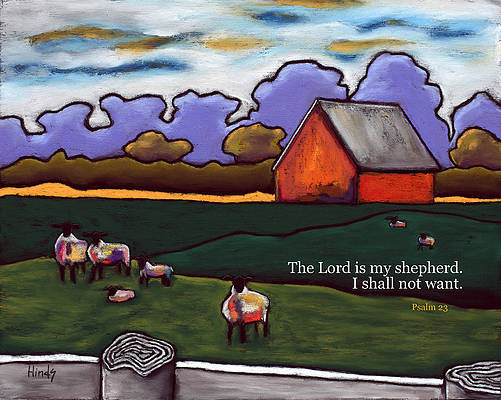
The Lord is My Shepherd by David Hinds

Shepherd is an apt term because a shepherd cares for the sheep – watches over them, is present with them, protects them, and provides whatever they need to both survive and thrive.

God benevolently leads us; and does not act outside of his character and attributes. If we believe this about the great “I AM,” then worry and anxiety begins to diminish. Too many of us suffer from the heebie-jeebies because we don’t see the shepherd standing in the field watching over us.

The answer to our worry is not to keep telling ourselves to stop being anxious. With God on the job as shepherd, I shall not be in want; I have everything I need. 

Troubled times will always be with us, this side of heaven. Fear can grab hold and prevent us from living with settled intentions and reasonable plans toward the future. Every day we see folks running headlong into a stone wall. 

It’s okay to be afraid; it is not okay to let fear rule our lives. The solution is to speak, despite your fear; to act, despite your worry; to live, knowing God has your back.

God Is Present

Within much of Hebrew poetry, the focus of the writing is found smack in the middle. Everything before it builds toward it; everything after it points back. Smack in the middle of Psalm 23 is that God is with us. 

Even though I walk through the valley of the shadow of death, even though it may seem that everything is bleak and that all things are against me – God is with me, which is why I do not succumb to fear. 

We walk through the valley, not around it. God does not cause us to avoid difficult circumstances. Instead, God promises to be with us through them. The way to deliverance is to confront our fears and walk with God, rather than expecting God to take away everything unpleasant that we don’t like.

My neighbor Art had a shepherd’s crook. He mostly used it as a walking stick. Yet, I did see times when he fended-off predators seeking to get to the sheep. More often, Art used his shepherd’s crook as a way of guiding the sheep where they could feed and be protected. 

The discovery of God’s guidance comes from movement and creativity. We aren’t going to experience the leading we want apart from embracing the uncomfortable in the confidence that God provides and protects through the trouble, and not apart from it.

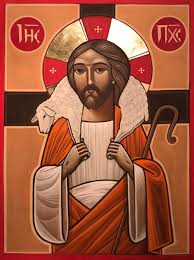
Coptic Church icon of Jesus the Good Shepherd

God Protects

Even with enemies of disease, death, and disorder surrounding us, God’s presence is such that his protection and provision are providentially working to create blessing in the middle of trouble. Whereas fear and panic believe in a culture of scarcity, a culture of abundance discerns that there is plenty for all – and will thus work toward equitable distribution and fostering an egalitarian spirit.

God refreshes, encourages, and restores. There are abundant blessings – even within troubled times. God’s provision is right here, amidst the worst of circumstances. We don’t have to pick a fight with someone in the Costco parking lot, who has what I want, to get the things we need.

It’s easy to believe that God’s goodness and love will follow me when my health is good, my income is solid, and I have plenty of friends around me. It is another thing to have an awareness of that goodness in dark days.  Yet, God’s love and goodness hasn’t sequestered itself.  God providentially uses each life situation and bends it to redemptive purposes.

Experientially knowing God brings contentment and confidence. The radical nature of Psalm 23 is that peace is realized while chaos and uncertainty is all around. Establishing spiritual practices that reinforce our sense of security can aid us through difficulty and hardship.

With a settled conviction that God indeed has our backs and stands as the divine sentinel watching over the beloved sheep, we find the ability to relax and trust that all is well with my soul.

Lord, help me to relax.

Take from me the tension
that makes peace impossible.
Take from me the fears
that do not allow me to venture.
Take from me the worries
that blind my sight.
Take from me the distress
that hides your joy.

Help me to know
that I am with you,
that I am in your care,
that I am in your love,
that you and I are one,

Through the mighty name of Jesus,

In the power of the Holy Spirit. 

Amen.