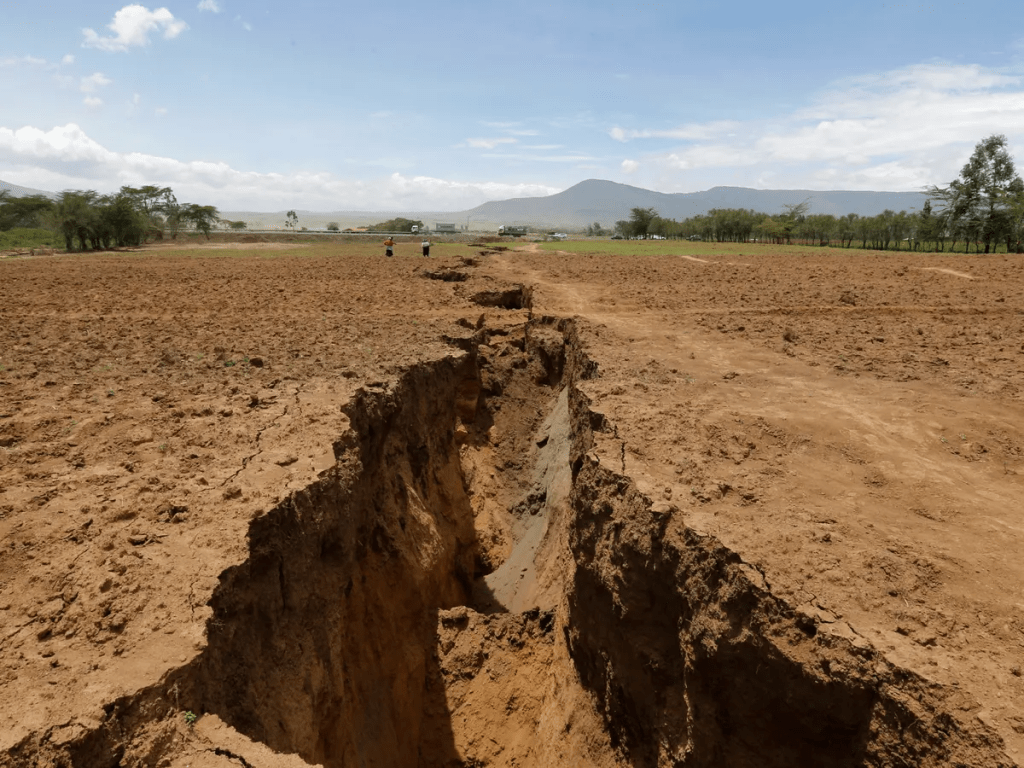
Psalm 60 – A Prayer for Deliverance

You have rejected us, God, and defeated us;
    you have been angry with us—but now turn back to us.
You have made the land tremble, and you have cut it open;
    now heal its wounds, because it is falling apart.
You have made your people suffer greatly;
    we stagger around as though we were drunk.
You have warned those who have reverence for you,
    so that they might escape destruction.
Save us by your might; answer our prayer,
    so that the people you love may be rescued.

From his sanctuary God has said,
    “In triumph I will divide Shechem
    and distribute Sukkoth Valley to my people.
Gilead is mine, and Manasseh too;
    Ephraim is my helmet
    and Judah my royal scepter.
But I will use Moab as my washbowl,
    and I will throw my sandals on Edom,
    as a sign that I own it.
Did the Philistines think they would shout in triumph over me?”

Who, O God, will take me into the fortified city?
    Who will lead me to Edom?
Have you really rejected us?
    Aren’t you going to march out with our armies?
Help us against the enemy;
    human help is worthless.
With God on our side we will win;
    he will defeat our enemies. (Good News Translation)

When you are distressed, what do you do?

For the psalmist, David, a time of distress is always a time for prayer to God.

And whenever David prayed, it was real gut level prayer, sometimes raw, and always genuine.

Far too many religious folk seem to tip-toe around God, as if they fear raising the Lord’s ire about something. That’s not a healthy view of God, feeling like you’re walking on spiritual eggshells. In contrast, the God of the Psalms is a God big enough to take any sort of prayer – and David knew that.

The psalmist was not afraid to express his feelings of abandonment from God, as well as his heartfelt sense of trust in God. And in all things, David had a continual sense of utter dependence upon the Lord.

The perspective of the psalms is that any belief in an independent livelihood apart from God is flat-out delusional – not to mention the source of much human wickedness.

The God we have in today’s psalm, and throughout the psalter, is accessible to humans. God is even open to argumentation, accountability, and rebuke. This is astounding, considering that we are the puny creatures and God is the immensely huge Creator.

It’s high time we wisely discern that we can talk to God about anything; we can express any emotion to the Lord, without fear of retribution. Conversely, ignoring God altogether, and pursuing other gods, is the inaction likely to bring out divine disappointment and anger.

Despite the fact that God is the absolute Sovereign over all humanity, the Lord responds to our needs and shows solidarity with us. This, however, does not mean that God is always at our beck and call – which is why the psalmists sometimes complain and lament over divine silence in the face of trouble.

God is not a genie. Prayer is not rubbing a lamp and getting our wishes fulfilled. God is both absent and engaged according to divine purposes, not ours. Yet, the Lord is continually attentive, with full awareness of what’s going on.

If we need deliverance, we need deliverance. And just because God may not show up according to our timetable (now!) doesn’t mean the Lord is aloof or uncaring. It just means the deliverance is likely to come in a way we aren’t expecting. Whatever happens, we will make it to the strong walled City of God.

So, we must persevere in prayer. And the psalms help us voice those prayers for deliverance. Sometimes, when we are distressed and exhausted, the words of prayer simply don’t come. In those times, the psalms become our prayers, as well….

Look at my suffering and deliver me
    because I haven’t forgotten your Instruction.
Argue my case and redeem me.
    Make me live again by your word. (Psalm 119:153-154, CEB)

I am not afraid of ten thousands of people
    who have set themselves against me all around.

Rise up, O Lord!
    Deliver me, O my God!
For you strike all my enemies on the cheek;
    you break the teeth of the wicked.

Deliverance belongs to the Lord;
    may your blessing be on your people! (Psalm 3:6-8, NRSV)

I am in deep distress.
    How long will it be?

Turn and come to my rescue.
Show your wonderful love
    and save me, Lord.
If I die, I cannot praise you
    or even remember you. (Psalm 6:3-5, CEV)

But you, Lord, my Lord!—
    act on my behalf for the sake of your name;
    deliver me because your faithful love is so good;
    because I am poor and needy,
    and my heart is broken. (Psalm 109:21-22, CEB)

In you, Lord, I have taken refuge;
    let me never be put to shame;
    deliver me in your righteousness.
Turn your ear to me,
    come quickly to my rescue;
be my rock of refuge,
    a strong fortress to save me.
Since you are my rock and my fortress,
    for the sake of your name lead and guide me. (Psalm 31:1-3, NIV)

But as for me, my prayer is to you, O Lord.
    At an acceptable time, O God,
    in the abundance of your steadfast love, answer me.
With your faithful help rescue me
    from sinking in the mire;
let me be delivered from my enemies
    and from the deep waters.
Do not let the flood sweep over me
    or the deep swallow me up
    or the Pit close its mouth over me. (Psalm 69:13-15, NRSV)

Give justice to the poor and the orphan;
    uphold the rights of the oppressed and the destitute.
Rescue the poor and helpless;
    deliver them from the grasp of evil people. (Psalm 82:3-4, NLT)

I sought the Lord and he answered me.
    He delivered me from all my fears.
Those who look to God will shine;
    their faces are never ashamed.

This suffering person cried out:
    the Lord listened and saved him from every trouble.
On every side, the Lord’s messenger protects those who honor God; and he delivers them.
Taste and see how good the Lord is!
    The one who takes refuge in him is truly happy! (Psalm 34:4-8, CEB)

These prayers are for us to use, over and over again. Say them aloud, often, with flavor.

May the God of life strengthen you for this day, and protect you through the coming night, through Jesus Christ our Savior, in the power of the Holy Spirit. Amen.

Psalm 52 – Deliver Us From Evil

The world’s oldest olive tree, 3,000 years, on the island of Crete

Hey, powerful person!
    Why do you brag about evil?
    God’s faithful love lasts all day long.
Your tongue devises destruction:
    it’s like a sharpened razor, causing deception.
You love evil more than good;
    you love lying more than speaking what is right.
You love all destructive words;
    you love the deceiving tongue.

But God will take you down permanently;
    he will snatch you up,
    tear you out of your tent,
    and uproot you from the land of the living!
The righteous will see and be in awe;
    they will laugh at those people:
“Look at them! They didn’t make God their refuge.
    Instead, they trusted in their own great wealth.
        They sought refuge in it—to their own destruction!”

But I am like a green olive tree in God’s house;
    I trust in God’s faithful love forever and always.
I will give thanks to you, God, forever,
    because you have acted.
In the presence of your faithful people,
    I will hope in your name because it’s so good. (Common English Bible)

Ideally, every person on planet earth would be safe to talk to and work with. But we know this is not true. That’s because we have our own experiences of persons in authority who used their power and influence for malevolent purposes – knowing exactly what kind of harm they’re doing.

This is precisely what once happened with David. Before he was king over all Israel and Judah, David was on the run from King Saul.

David had done nothing wrong. In fact, he had done everything right from a good heart. And yet, because of Saul’s jealousy and lust for power, he saw David as a threat and not an asset. So, he hunted him like an animal.

King Saul’s abuse of power was bad enough. But that abuse reached it’s evil height with Doeg the Edomite. (1 Samuel 22:6-23)

Doeg was a nasty guy. He wasn’t just bad; he enjoyed being bad. Saul was so obsessed with getting rid of his perceived rival, that he sought to kill anyone who aided and abetted David. And Doeg had such a lust for murder that he was willing to kill anyone.

And that’s what he did. When Saul found out that the priests in the village of Nob had helped David when he was on the run, the jealous king tried to use his authority to command the army to slaughter them all. However, being reasonable men, they could not do it.

Yet, Doeg stepped in and stepped up to single-handedly wipe out the priests. Sadly, he didn’t stop there…

Doeg the Edomite turned and attacked the priests; on that day he killed eighty-five who wore the linen ephod. Nob, the city of the priests, he put to the sword; men and women, children and infants, oxen, donkeys, and sheep, he put to the sword. (1 Samuel 22:18-19, NRSV)

It was after this horrific event that David crafted the psalm for today.

There is abuse, trauma, and oppression – and then there is the continual harming from another which goes unabated. The abuser, the oppressor, the murderer keeps going, unchecked. And we are powerless to stop it.

There is only One who can right such terrible wrongs.

Today’s psalm speaks of God’s constancy, the continual love which persists all day long. David lifted his grief and anger to the Lord concerning the misuse of power and authority by Saul and Doeg. In light of God’s justice and faithful love, David affirms and believes that the Lord will bring ruin on those who despise divine commands and ethical instruction.

We don’t know always know why evil continues, or how it will end. Those enduring questions out of our own human condition and experience of evil may persist. Yet, the believer knows with certainty, as follower of a righteous, just, and holy God, that the downfall of the wicked will be total, and it will be permanent.

There is a day coming when evil shall be finished forever. And it’s hard not knowing exactly when that’s going to happen.

Perhaps this sort of talk seems like a cop out. It may appear that if God is so loving and powerful that evil ought to be stopped this very second.

Yet, consider this: There is so much evil and injustice in this world that to forcefully and immediately pull up those nasty wicked weeds will end up taking out the good plants next to them. The cure ends up being the harm.

The Lord is presently, patiently, and meticulously moving all things toward an inexorable ending – and it must be done carefully so that the godly are preserved from annihilation.

Fortunately, most people on earth aren’t like Doeg the Edomite or King Saul. Unfortunately, having one of them in your life is likely to happen because of the world’s great evil. One wicked person is bad enough to foment hate, spread lies, create havoc, and outright murder people – both verbally and actually.

The biblical psalms exist to serve us well whenever we experience the wrath of a person like Doeg. The psalms let us know we aren’t alone and help give us a voice. This is highly important, especially when the wicked seek to silence us and squelch our voice.

Trusting in the Lord, day after day… week after week… month after month… year after year… decade after decade… with the same slow and deliberate plod of God, strengthens us like a big old thick olive tree. And the psalms are here to help that happen.

May the Lord Jesus Christ guard and deliver you from the snares of the devil, the assaults of evil spirits, the wrath of the wicked, all base passions, and the fear of the known and unknown. Amen.

Psalm 77:1-2, 11-20 – I and Thou

I pray to you, Lord God,
    and I beg you to listen.
In days filled with trouble,
    I search for you.
And at night I tirelessly
lift my hands in prayer,
    refusing comfort…

Our Lord, I will remember
the things you have done,
    your miracles of long ago.
I will think about each one
    of your mighty deeds.
Everything you do is right,
and no other god
    compares with you.
You alone work miracles,
and you have let nations
    see your mighty power.
With your own arm you rescued
your people, the descendants
    of Jacob and Joseph.

The ocean looked at you, God,
and it trembled deep down
    with fear.
Water flowed from the clouds.
    Thunder was heard above
as your arrows of lightning
    flashed about.
Your thunder roared
    like chariot wheels.
The world was made bright
by lightning,
    and all the earth trembled.

You walked through the water
    of the mighty sea,
but your footprints
    were never seen.
You guided your people
    like a flock of sheep,
and you chose Moses and Aaron
    to be their leaders. (Contemporary English Version)

“A person becomes whole not in virtue of a relation to oneself only, but rather in virtue of an authentic relation to another.”

Martin Buber

We all have experienced what it means to be in distress. Whether it is physical pain, financial stress, mental agony, spiritual duress, or emotional overwhelm, the feeling of being distressed is inevitably a part of the human condition.

Questions abound whenever we are in throes of distress: What do I do? How do I cope? From where does my help come? Is there hope? Will this ever go away? Why is this happening?

We don’t know what the psalmist’s distress was, but he was in trouble up to his eyeballs and as anxious as can be. His feeling of being trapped and caught between a rock and hard place was palpable. So, he looked for deliverance.

In 1937, the Jewish philosopher, Martin Buber wrote an insightful book entitled “I and Thou.” Buber postulated how people exist in the world and how they actualize that existence. We engage the world through both monologue and dialogue. For Buber, “all real living is meeting.” In other words, to exist, to live, is to encounter another and relate to a “Thou.” We only have meaning in relationships. We only have our being in God.

The psalmist acknowledges there is a “Thou” besides his distressed “I” – that this Thou will hear, make a difference, and open a way of deliverance. There are four actions the psalmist decides to do in his distress, actions which put him in a vital dialogue with the divine “Thou.”

I pray

Prayer, at its heart, is a dialogue with God. From the place of our spiritual poverty and bankruptcy, we beg; and God gives us the kingdom. To be a spiritual beggar, pleading for our needs to be met, knowing we have no way to repay, is a posture which God delights in.

Great blessings belong to those who know they are spiritually in need. God’s kingdom belongs to them. (Matthew 5:3, ERV)

You’re blessed when you’re at the end of your rope. With less of you there is more of God and his rule. (Matthew 5:3, MSG)

I Search

In the I and Thou relationship, the search works both ways.

You have searched me, Lord,
    and you know me.
You know when I sit and when I rise;
    you perceive my thoughts from afar.
You discern my going out and my lying down;
    you are familiar with all my ways….

Search me, God, and know my heart;
    test me and know my anxious thoughts.
See if there is any offensive way in me,
    and lead me in the way everlasting. (Psalm 139:1-2, 23-24, NIV)

Ask, and it will be given to you; search, and you will find; knock, and the door will be opened for you. For everyone who asks receives, and everyone who searches finds, and for everyone who knocks, the door will be opened. (Matthew 7:7-8, NRSV)

I Remember

The psalmist intentionally sought to recall the mighty works of God, especially in delivering the people from slavery and bringing them to the Promised Land. In our forgetfulness, we get lost in our troubles and our perspective becomes skewed. We cannot see beyond the end of our nose. Remembering, however, grants us a fuller picture of what is happening in light of the past. It brings us out of the lonely “I” and into the relationship of “I and Thou.”

Remember those earlier days after you had received the light, when you endured in a great conflict full of suffering. 

Sometimes you were publicly exposed to insult and persecution; at other times you stood side by side with those who were so treated. You suffered along with those in prison and joyfully accepted the confiscation of your property, because you knew that you yourselves had better and lasting possessions. 

So do not throw away your confidence; it will be richly rewarded.

You need to persevere so that when you have done the will of God, you will receive what he has promised. (Hebrews 10:32-36, NIV)

I Meditate

Pondering and thinking upon God’s deeds enables praise to arise from us. It fosters the I and Thou relationship, bolstering and buoying our faith through life-events which produce our distress.

I lie awake thinking of you,
    meditating on you through the night.
Because you are my helper,
    I sing for joy in the shadow of your wings. (Psalm 63:6-7, NLT)

Thou Art Worthy

The psalm ends with no resolution to the personal distress of the psalmist.

Whether there is a happy ending, or not, isn’t the point. It’s the process, the journey of moving through our troubles and discovering lessons from both the presence and the absence of God, which makes all the difference. We learn to pray, search, remember, and meditate because of and despite our troubles. We learn to relate to God and proclaim that Thou art worthy.

Thou art worthy, O Lord, to receive glory and honor and power: for thou hast created all things, and for thy pleasure they are and were created. (Revelation 4:11, KJV)

Amen.

Exodus 40:16-38 – No Matter Where We Go, God Is with Us

Israel Encamped Roundabout the Tabernacle in the Wilderness of Sinai
John W. Kelchner (1866-1942)

Moses followed the Lord’s instructions. And on the first day of the first month of the second year, the sacred tent was set up. The posts, stands, and framework were put in place, then the two layers of coverings were hung over them. The stones with the Ten Commandments written on them were stored in the sacred chest, the place of mercy was put on top of it, and the carrying poles were attached. The chest was brought into the tent and set behind the curtain in the most holy place. These things were done exactly as the Lord had commanded Moses.

The table for the sacred bread was put along the north wall of the holy place, after which the bread was set on the table. The lampstand was put along the south wall,then the lamps were attached to it there in the presence of the Lord. The gold incense altar was set up in front of the curtain, and sweet-smelling incense was burned on it. These things were done exactly as the Lord had commanded Moses.

The curtain was hung at the entrance to the sacred tent. Then the altar for offering sacrifices was put in front of the tent, and animal sacrifices and gifts of grain were offered there. The large bronze bowl was placed between the altar and the entrance to the tent. It was filled with water, then Moses and Aaron, together with Aaron’s sons, washed their hands and feet. In fact, they washed each time before entering the tent or offering sacrifices at the altar. These things were done exactly as the Lord had commanded Moses.

Finally, Moses had the curtains hung around the courtyard and at the entrance.

Suddenly the sacred tent was covered by a thick cloud and filled with the glory of the Lord. And so, Moses could not enter the tent. Whenever the cloud moved from the tent, the people would break camp and follow; then they would set up camp and stay there, until it moved again. No matter where the people traveled, the Lord was with them. Each day his cloud was over the tent, and each night a fire could be seen in the cloud. (Contemporary English Version)

There is no place we can go where God is not.

The presence of God is an overarching theme, not only of the book of Exodus, but of the entire Bible.

In the beginning, God created the heavens and the earth, and formed man and woman as the apex of divine creative work. Humans alone bear the stamp of God’s image and likeness. People were created to be with God. 

Sadly, however, humanity took their own path, apart from God, and fell into the suffering of guilt, shame, and misplaced love. 

“No one can hide so that I can’t see him,” declares the Lord.
“I fill heaven and earth!” declares the Lord.

Jeremiah 23:24, GW

Ever since the fall of humanity from their majestic position with the Lord, God has been on a determined, yet patient, mission to restore, reconcile, and reclaim lost humanity so that they can be together again. The Lord longs for people to find their way back to the peace and rest of the garden.

God chose Abraham and set apart his descendants, the Hebrews, to be a people and a kingdom of priests, to reverse the curse. 

The Lord chose Moses to free the people from bondage, giving them laws and commandments to communicate that the divine presence is among them. For the ancient Hebrews, God was like a pillar of cloud, a sentinel watching over them. 

Eventually, in the fullness of time, when it was ripe for the promised Savior to come, God sent the Son, the Lord Jesus, the “Immanuel,” meaning “God with us.”

Jesus lived a holy life, died a cruel death on our behalf to atone for all guilt and shame. Christ rose from death so that people might experience new life and once again connect with God and enjoy the divine presence forever. The Lord Jesus ascended to heaven, and now watches over us, interceding on our behalf. 

And that’s not all; until Christ comes again to this earth, to judge the living and the dead, God’s Holy Spirit has been sent to be the continuing presence of Jesus for this present time. The Spirit is with God’s people, always.

There is no place you can go where the Spirit of God is not already there.

It just doesn’t matter where we are located geographically; it doesn’t matter if we screw up; and doesn’t matter what kind of situation we find ourselves in. The truth of the matter is this: God is with us. Nothing can separate us from the love of God in Christ. 

God’s eyes are on human ways,
   and he sees all their steps.

Job 34:21, CEB

There are no guarantees in this life that things will turn out well, or that everything will go our way, just because we are believers. In fact, we are promised the opposite – that there will be suffering and hardship. Yet, what makes all the difference for the believer, is that we have the abiding presence of God with us.

The Lord has gone to the greatest lengths possible to make relational connection happen. And it is the persistent and pervasive presence of God that enables God’s people to face and endure all things with faith and confidence.

No matter where we travel, God is with us.

Ever-present God, your grace and mercy overwhelm the universe. Thank you for your constant and abiding love, even in the midst of hate and violence. Enable me to always live in awareness of this reality so that my life might confidently follow you anytime and anywhere; through Jesus Christ, my Lord, in the power of the Holy Spirit. Amen.