

“Come, let us return to the Lord.
He has torn us to pieces
but he will heal us;
he has injured us
but he will bind up our wounds.
After two days he will revive us;
on the third day he will restore us,
that we may live in his presence.
Let us acknowledge the Lord;
let us press on to acknowledge him.
As surely as the sun rises,
he will appear;
he will come to us like the winter rains,
like the spring rains that water the earth.”
“What can I do with you, Ephraim?
What can I do with you, Judah?
Your love is like the morning mist,
like the early dew that disappears.
Therefore I cut you in pieces with my prophets,
I killed you with the words of my mouth—
then my judgments go forth like the sun.
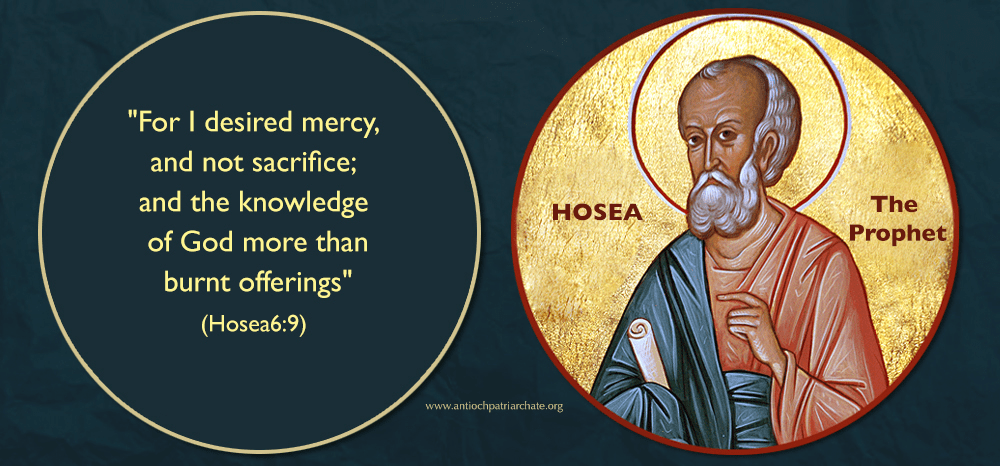
For I desire mercy, not sacrifice,
and acknowledgment of God rather than burnt offerings.
As at Adam, they have broken the covenant;
they were unfaithful to me there.
Gilead is a city of evildoers,
stained with footprints of blood.
As marauders lie in ambush for a victim,
so do bands of priests;
they murder on the road to Shechem,
carrying out their wicked schemes.
I have seen a horrible thing in Israel:
There Ephraim is given to prostitution,
Israel is defiled. (New International Version)
My favorite word in all of Holy Scripture is the Hebrew word חסד (“chesed” pronounced in English “kes-ed). It is such a rich word that no one English word can capture its depth and import.
So, chesed is translated in various ways across English translations of the Bible as:
- Goodness (American Standard Version)
- Faithful love (Common English Bible)
- Loyalty (God’s Word Translation)
- Constant love (Good News Translation)
- Mercy (King James Version)
- Love that lasts (The Message)
- Faithfulness (New English Translation)
- Loving-kindness (New Life Version)
- Steadfast love (New Revised Standard Version)
Chesed is God’s committed, gracious, and loving covenant loyalty to people. The Lord’s very attributes are sheer Love.
Since chesed marks the character and activity of God, the Lord very much desires people to reflect this same stance toward one another. In other words, because God is merciful and kind, we, as people created in God’s image, are to be marked with this same character in all we do.
In today’s Old Testament lesson, God is calling and wooing wayward people to return to a life of closeness with the Lord. God demonstrated chesed by not sending the people away, like a spouse outright divorcing an unfaithful partner. Instead, the Lord is committed to loving the Israelites even when they were unlovely.
At all times, the response God wants from people is not simply to go through the motions of outward worship. Ritual practices mean little if there is no heart behind them. The Lord longs for people to demonstrate both fidelity and fealty through mercy and a steadfast love to God and neighbor.
Both our work and our worship are to be infused with divine mercy.
God deeply desires a close relationship with humanity. The Lord is deeply grieved when people whore after other gods to meet their needs for love and belonging. Hosea’s prophecy is an impassioned plea for all persons to find their true fulfillment and enjoyment in a committed loving divine/human union, like a marriage.
In Christian readings of Hosea’s prophecy, repentance means accepting God’s chesed through Jesus Christ.
The believer is to allow the character of God to rule and reign in their heart so that love and commitment come flowing out in words, actions, thoughts, and dispositions.
Mercy, in Christianity, finds its highest expression in the person and work of Jesus.
It is no wonder, then, that Jesus lifted Hosea’s prophecy as a treasured principle of operation when asked why he deliberately made connections with “questionable” people:
As Jesus continued on from there, he saw a man named Matthew sitting at a kiosk for collecting taxes. He said to him, “Follow me,” and he got up and followed him. As Jesus sat down to eat in Matthew’s house, many tax collectors and sinners joined Jesus and his disciples at the table.
But when the Pharisees saw this, they said to his disciples, “Why does your teacher eat with tax collectors and sinners?”
When Jesus heard it, he said, “Healthy people don’t need a doctor, but sick people do. Go and learn what this means: I want mercy and not sacrifice. I didn’t come to call righteous people, but sinners.” (Matthew 9:9-13, CEB)
And when confronted about “questionable” activities, Jesus appealed to the same source of Hosea’s prophecy:
“Look! Your disciples are doing something that is not right to do on the day of rest—a holy day.”
Jesus asked them, “Haven’t you read what David did when he and his men were hungry? Haven’t you read how he went into the house of God and ate the bread of the presence? He and his men had no right to eat those loaves. Only the priests have that right. Or haven’t you read in Moses’ Teachings that on the day of rest—a holy day, the priests in the temple do things they shouldn’t on the day of rest yet remain innocent? I can guarantee that something greater than the temple is here. If you had known what ‘I want mercy, not sacrifices’ means, you would not have condemned innocent people. (Matthew 12:2-7, GW)
One can never go wrong with mercy and grace. If in doubt between whether to judge another or show mercy, the Christian’s choice is clear.
Grace and love reconnects the disconnected. The heart of true Christian spirituality is a deep kinship with the divine. Whenever that relation is broken or severed, it is vital to restore it. The means of doing so is not judgment; it’s mercy.
Chesed is more than a word; it is a way of life.
God wants mercy. Grace is the Lord’s divine will. So, let us today receive the forgiveness of Jesus and devote ourselves to prayer and works of love which come from a heart profoundly touched by grace.
May the result of our return to the Lord be healing of that which has been broken, and reconciled relationships with others.
Merciful and loving God, the One who shows amazing grace, forgive us for our wanderings away from the divine life. Return us, again, to the grace of Jesus Christ our Savior so that our hearts will be renewed and aflame with love for others. In the Name of the Father, Son, and Spirit, the Great Three in One. Amen.


 Rev. Tim Ehrhardt