Build It Now! (Haggai 1:1-15a)

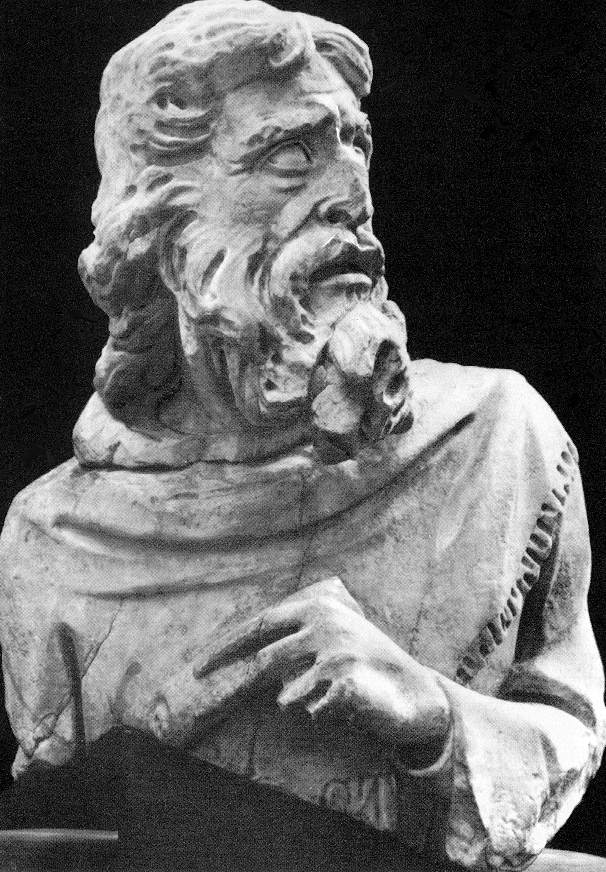
Statue of the prophet Haggai, by Giovanni Pisano, c.1290 C.E., Siena, Italy

In the second year of King Darius, on the first day of the sixth month, the word of the Lord came through the prophet Haggai to Zerubbabel son of Shealtiel, governor of Judah, and to Joshua son of Jozadak, the high priest:

This is what the Lord Almighty says: “These people say, ‘The time has not yet come to rebuild the Lord’s house.’”

Then the word of the Lord came through the prophet Haggai: “Is it a time for you yourselves to be living in your paneled houses, while this house remains a ruin?”

Now this is what the Lord Almighty says: “Give careful thought to your ways. You have planted much but harvested little. You eat, but never have enough. You drink, but never have your fill. You put on clothes but are not warm. You earn wages, only to put them in a purse with holes in it.”

This is what the Lord Almighty says: “Give careful thought to your ways. Go up into the mountains and bring down timber and build my house, so that I may take pleasure in it and be honored,” says the Lord. 

“You expected much, but see, it turned out to be little. What you brought home, I blew away. Why?” declares the Lord Almighty. “Because of my house, which remains a ruin, while each of you is busy with your own house. 

Therefore, because of you the heavens have withheld their dew and the earth its crops. I called for a drought on the fields and the mountains, on the grain, the new wine, the olive oil and everything else the ground produces, on people and livestock, and on all the labor of your hands.”

Then Zerubbabel son of Shealtiel, Joshua son of Jozadak, the high priest, and the whole remnant of the people obeyed the voice of the Lord their God and the message of the prophet Haggai, because the Lord their God had sent him. And the people feared the Lord.

Then Haggai, the Lord’s messenger, gave this message of the Lord to the people: “I am with you,” declares the Lord. So the Lord stirred up the spirit of Zerubbabel son of Shealtiel, governor of Judah, and the spirit of Joshua son of Jozadak, the high priest, and the spirit of the whole remnant of the people. They came and began to work on the house of the Lord Almighty, their God, on the twenty-fourth day of the sixth month. (New International Version)

Timing is everything.

There is a time to ponder and plan and there’s a time to move and act. If the time is ripe for action, then the lack of initiative is plain old procrastination. But how do you know when to act?

If the Lord says it’s time, well then, it’s time!

God’s people wouldn’t have described their inaction in rebuilding God’s house as dragging their feet. They perceived their inertia as a sensible delay.

Yet, the Lord saw the people’s approach as inexcusable enough to send a prophet with a specific message and call to action: Build the house now!

Let’s get a feel for why God’s call for immediacy comes when it does. In the ancient world, it had always been the practice of armies to assimilate conquered peoples into the culture of the conquering king. 

In the eighth century B.C.E., the Assyrian Empire conquered the northern kingdom of Israel. The Assyrians took most of the people into captivity, left the poorest of the people alone, and resettled the land with some of their own Assyrian people. The inevitable intermarriages resulted in their progeny being known as the Samaritans in the New Testament Gospels, as the Samaritans.

Two-hundred years after Assyria conquered Israel, Nebuchadnezzar besieged the southern kingdom of Judah and took over Jerusalem. He carried Daniel and all the other educated and professional people to Babylon. In the course of taking the city, Nebuchadnezzar tore down the wall and destroyed the temple that Solomon had made.

During the Babylonian exile, the Persians conquered Babylon and became rulers of a large geographical empire. Because the massive Persian Empire was in control of so many different kinds of people across such a vast territory, they were not able to operate as previous empires did by assimilation and resettlement. 

Instead, the Persians did something new and different: They encouraged and enabled their conquered peoples to keep their religion and their culture. The only caveat was that they had to give tribute and allegiance to the empire and pray for the king. This is why Nehemiah, Ezra, and Haggai were able to return to Jerusalem and given royal authority to rebuild the wall and the temple. 
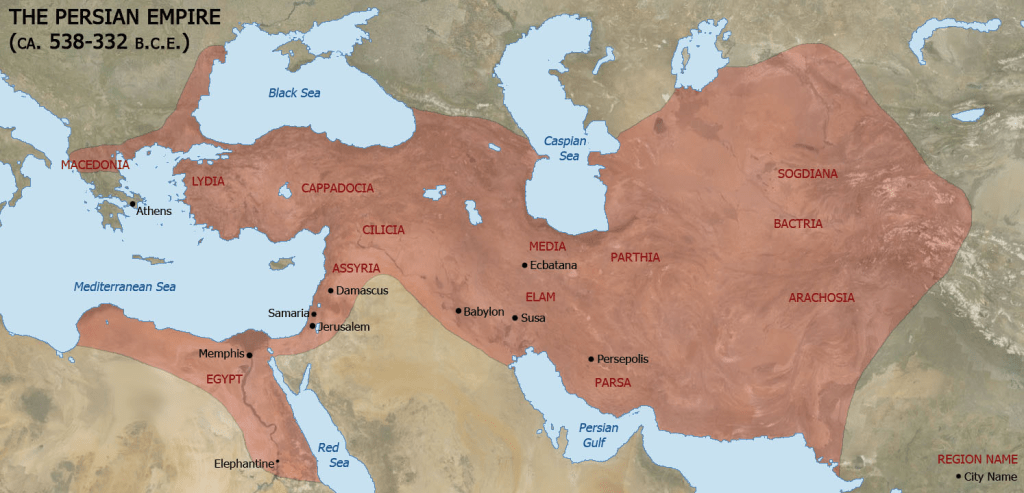
But, from the git go, there was opposition to the rebuilding from the old Canaanite inhabitants of the land. After many years, the wall was rebuilt but the temple restoration bogged down. The people slowly became discouraged and lost enthusiasm to do the work. 

Understandably, the people got caught up in taking care of their own homes and just plain neglected working on the temple. Over time, they just forgot about the entire project. But God didn’t.

The prophet Haggai made it clear that the people’s mental distraction and physical neglect was taken as disrespect by the Lord. Haggai insisted that the reason the people were not experiencing blessing on their land was because they simply did not have their priorities straight. 

Thus, God sent the prophet Haggai to preach a sermon entitled: Build the house now! 

To the people’s credit, they responded to the call of God and started rebuilding God’s house. The work was completed. However, there seemed to be a problem. 
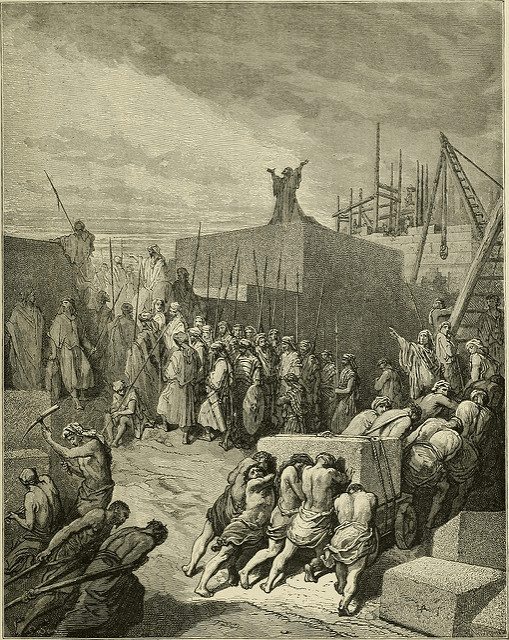
Rebuilding the Temple, by Gustave Doré, 1866

Moving into the rest of Haggai’s prophecy, the newly restored temple didn’t look anything like Solomon’s grand and glorious temple. Many of the older worshipers could still remember Solomon’s temple; to them, the rebuilt temple seemed like a bologna sandwich compared to the T-bone steak of the past. 

So, God sent Haggai again to encourage the people. The Lord will be with them. The restored temple may not look the same, but what makes the temple great is God’s glory.

An important takeaway from the prophecy of Haggai is that the Lord is a jealous God; God’s people are to worship the Lord with all of their heart, soul, mind, and strength. 

We also learn that the Lord is sovereign and supreme over all creation. God owns everything and will use it all to accomplish divine purposes on this earth. 

In addition, we see that God calls people to new work and fresh ministry. The Lord was behind the destruction of the old temple; and when the time was right, God called the people to build a new ministry.

And we learn something about ourselves, as well. God’s people need to hear and respond to God’s call. Haggai put a God-sized vision before the people; he helped them imagine what the new temple would be like – full of God’s glory.

God is doing a new thing. The Lord continues calling people to:

  • Seek first the kingdom of God. (Deuteronomy 4:29; Psalm 63:1; Matthew 6:33; Hebrews 11:6)
  • Love God with whole hearts. (Deuteronomy 6:5, 11:1-22, 19:9, 30:16-20; Matthew 22:37)
  • Love neighbor as we love ourselves. (Leviticus 19:18; Matthew 22:38; Romans 13:9; Galatians 5:14)
  • Make disciples of Christ from all nationalities. (Matthew 28:18-20)
  • Be witnesses to God’s glory in Christ. (Psalm 66:16; Acts 1:8; 2 Timothy 2:2)
  • Obey the Holy Spirit. (Acts 5:31-33; Romans 6:17; Hebrews 5:8-9)

It is good to remember and celebrate past ministries; and it is also good to throw ourselves into the new ministries which God calls us and to build them for God’s glory.

My friends, build it now.

Glory to you, O God, the One who is able to do far beyond all that we could ask or imagine by your divine power at work within us; glory to you, blessed God, in the church and in Christ Jesus for all generations, through the empowering Holy Spirit, forever and always. Amen.

Luke 9:18-27 – Jesus Makes All the Difference

Christ the Redeemer, Rio De Janeiro, Brazil

Once when Jesus was praying in private and his disciples were with him, he asked them, “Who do the crowds say I am?”

They replied, “Some say John the Baptist; others say Elijah; and still others, that one of the prophets of long ago has come back to life.”

“But what about you?” he asked. “Who do you say I am?”

Peter answered, “God’s Messiah.”

Jesus strictly warned them not to tell this to anyone. And he said, “The Son of Man must suffer many things and be rejected by the elders, the chief priests and the teachers of the law, and he must be killed and on the third day be raised to life.”

Then he said to them all: “Whoever wants to be my disciple must deny themselves and take up their cross daily and follow me. For whoever wants to save their life will lose it, but whoever loses their life for me will save it. What good is it for someone to gain the whole world, and yet lose or forfeit their very self? Whoever is ashamed of me and my words, the Son of Man will be ashamed of them when he comes in his glory and in the glory of the Father and of the holy angels.

“Truly I tell you, some who are standing here will not taste death before they see the kingdom of God.” (New International Version)

In my work as both a church pastor and hospital chaplain, not to mention just being a regular guy, I rarely encounter people who characterize Christians as setting self-interest aside to follow Jesus completely with humble ministry which is willing to suffer on behalf of others.

Instead, I daily interact with folks who have long left the Church with stories of Christians squelching genuine questions about God and faith; being judgmental toward others who are not like them; having a hypocritical double-standard approach to most issues; and verbally abusing individuals who don’t conform to their cultural ideas and biblical interpretations.

We need Christians who make a difference in this world. We need Jesus.   

A right and real confession of Jesus by his Church speaks a relevant word into the culture; proclaims the gospel of grace (not judgment); and consistently and lives what it believes.

Confessing Jesus as Lord makes all the difference.

After interacting with a lot of people on their ministry journeys, Jesus asked two questions of his disciples: “Who do people say I am?” and “Who do you say I am?” Out of all the questions we can ask people, these are two good ones: “Who do others say Jesus is?” and “Who do you say Jesus is?”  

The disciples gave a variety of answers, which is to be expected. Today, you will also get variegated answers, such as, Jesus is a good teacher, a model humanitarian, a myth or a legend. A few times I’ve been told that Jesus was an alien from another planet. My all-time personal favorite response is that Jesus was a nudist and that if we all just took off our clothes, there would be peace in the world.

Although the disciples are sometimes clueless, Peter as the spokesperson, gave an insightful answer: “You are God’s Messiah.” 

Messiah or Christ literally means, “The Answer.”  Peter confessed Jesus as being The Answer, the person for whom it all comes down to. Peter may not have fully understood what he was saying, but he said it, nevertheless.

Being called by God makes all the difference.

“The Answer” was revealed to Peter by the heavenly Father. Faith in Jesus Christ is a gift given to us by God.

“My Father has entrusted everything to me. No one truly knows the Son except the Father, and no one truly knows the Father except the Son and those to whom the Son chooses to reveal him.” (Matthew 11:27, NLT)

Peter was blessed – not because he did anything to deserve it – but because of sheer grace. It was revealed to Peter who Jesus really is, The Answer. We know who God is and who Jesus is by revelation, by God’s gracious self-revealing to people. Scripture is God’s revelation, a self-disclosure. It is through Scripture that we know. 

Revelation isn’t just a matter of waiting for some spiritual zap to occur, in which God bonks me in the brain and deposits the knowledge and understanding of who Jesus is. 

Peter put himself in a position to know by obeying the voice of Jesus to follow him. Then, Peter got to know Jesus over time.

Since it took years of being with Jesus for Peter and the other disciples to make a right confession of faith, then we need to have a great deal of patience for others, as well as ourselves. Others need time to get to know us, they need some time in the Scriptures, and they need some time with Jesus, too.

People do not typically come to a right confession of Jesus without having spent a good deal of time around us and within Holy Scripture.

Denying self, taking up our cross, and following Jesus makes all the difference.

God chooses to use you and me. The Lord only knows why. We are most certainly an imperfect people. Yet, it seems that our imperfections are the very thing God keeps using to reveal Jesus to others. Another way to put the matter is this: Genuine openness and vulnerability is needed, and not perfection or keeping up a tidy appearance.

Most people aren’t crazy about the word “vulnerable.”  We might expect openness in others yet have no intention of being vulnerable ourselves. If you have ever poured out your heart to someone or a group of people and only got blank stares in return; sincerely loved someone and they did not love you back; shared your genuine thoughts on something important to you and received only criticism; well then, we may believe vulnerability is a bad thing and not worth the emotional effort.

However, Jesus became vulnerable – descending from heaven, submitting to the machinations of evil persons, and exposed on a cruel cross. (Philippians 2:5-11)

In the Gospel of John, Mary displayed vulnerability in pouring expensive perfume on Jesus’ feet and wiping them with her hair, all the while exposing her true feelings for her Lord. In return, Mary got pushback and criticism from Judas. But Jesus upheld Mary’s actions and told Judas to leave her alone. (John 12:1-8).

In the Psalms, even a cursory reading reveals a boatload of vulnerability on the part of the psalmists. They were unafraid to explore the depth of human emotion, misery, joy, and praise of God.

Maybe we need the person who will stand up and say they are finally learning patience by being among a group of really annoying co-workers. Perhaps instead of laboring so hard to keep our thoughts and emotions in check, we need a church environment that lends itself to a person bawling their eyes out, while others just sit and cry with them.

That kind of vulnerability won’t happen unless we ourselves are real with God, who is never fooled by our deceitful hearts. Our evil-radar might be carefully attuned to others’ sin, but we are woefully inept at identifying the blackness within ourselves.

Jesus became completely exposed, naked, abandoned, alone and vulnerable on a cruel cross. Yet, instead of being shamed by the whole thing, Jesus scorned the shaming power of his crucifixion and embraced the suffering as the means of victory for our salvation. 

Vulnerability might seem ugly, but it turns whatever it touches into beauty. God can change our weakest, worst, and most shameful places into incredible strength and newfound love.

The broken and despised, the struggling and the lost, are the ones worthy of God’s kingdom. 

Whenever we are too afraid to walk into the mud of people’s lives, including our own, and are enamored instead with every spiritual shiny thing that comes along, we may have lost sight of our Lord, whom we are to imitate in his vulnerability. 

Christians don’t  have all the answers. But we do know the One who knows all things.

Methinks people will be drawn to Jesus when they observe Christians forsaking the path of the self-righteous prick, in favor of the humble servant who loses their life, only to find it.

Hebrews 4:12-16 – Jesus Is Our Great High Priest

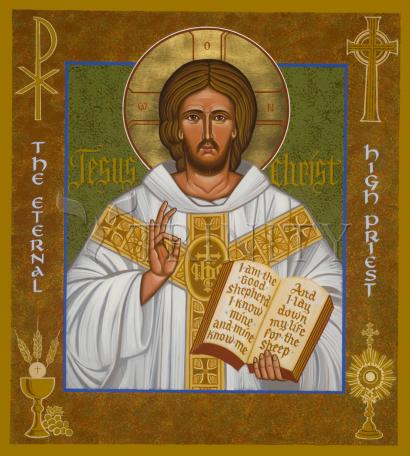
Jesus, the Eternal High Priest, by Joan Cole

For the word of God is alive and active. Sharper than any double-edged sword, it penetrates even to dividing soul and spirit, joints and marrow; it judges the thoughts and attitudes of the heart. Nothing in all creation is hidden from God’s sight. Everything is uncovered and laid bare before the eyes of him to whom we must give account.

Therefore, since we have a great high priest who has ascended into heaven, Jesus the Son of God, let us hold firmly to the faith we profess. For we do not have a high priest who is unable to empathize with our weaknesses, but we have one who has been tempted in every way, just as we are—yet he did not sin. Let us then approach God’s throne of grace with confidence, so that we may receive mercy and find grace to help us in our time of need. (New International Version)

Church Persecution and Christian Suffering

The book of Hebrews was originally a sermon preached to a group of believers who had come to Christ out of Judaism. From the book of Acts, we know there were thousands of Jewish Christians who were dispersed from Jerusalem when Stephen was martyred.  A great persecution broke out, and many believers fled west to places like Galatia, Ephesus, Greece and Rome. 

The Jewish believers were immigrants in a foreign land, looking to practice their faith without harm. Yet, their experience was anything but ideal. These followers of Christ found fellow ethnic Jews in the places where they went, yet those Jews had no use for these people that they believed were in some sort of aberrant cult.

What is more, the surrounding Gentile culture did not understand Christianity, at all, and many of those who held to pagan religions bought into rumors, such as, that Christians were cannibals who ate at what’s called the Lord’s Table.

So, here we have a situation where these displaced Christians had no respect from both Jews and Gentiles. As a result, they had a difficult time carrying out business because no one trusted them. They were essentially alone in the world. 

Losing Their Grip

Initially, they embraced their identity as Christians and held up quite well under the stress. However, over time, their resolve began to slowly erode. The followers of Jesus began to question their adverse situation. 

They began listening to their fellow Jews throw doubts on their faith. The hard life was not improving, maybe even becoming worse.  Eventually, the church came to a point where they began re-considering their whole way of life as Christians, and their faith commitment started slipping. The Christians actually considered leaving the Church and Christianity and going back to their old life in Judaism.

The Message of Hebrews

It was at this point that a vigorous believer in Jesus came to town, saw the situation of the church, and preached a spirited message to them. The preacher called them to hold tight to their commitment – to see Jesus afresh and anew as superior over all the Old Testament, as the fulfillment of all the promises of God. 

So, then, throughout the book of Hebrews we have this wonderful explanation and exposition of how to make sense of Jesus and the Old Testament, and of what Jesus really means to the church. Throughout his sermon, the preacher occasionally paused his teaching and gave the people a stiff warning about falling away from Christ. He called the church to be bold and confident in Christ, to stand up to the suffering, and to confront their temptations so that they would persevere in their commitment to Jesus Christ for the rest of their lives.

God’s Word and Work

We pick up the teaching and the exhortation in chapter four. Hebrews 4:12-16 is composed of two distinct sections that are paired together for a reason.  Verses 12-13 give us a graphic visual of the penetrating work of God’s Word, of the reality that God can get deep inside us. The next section, verses 14-16, lays out God’s response to our being under divine scrutiny – that there is grace and mercy available because of Jesus, our great high priest who is superior to every priest of the Old Testament to the point of being the last and permanent priest forever! 

These verses are bound together because we all need to struggle with the tension between God’s Word to us, and our words to God; between God’s judgment that opens our souls on a spiritual operating table, and God’s grace which jumpstarts our broken hearts. Our most fundamental need is for God’s mercy in Jesus Christ.

The Christian Life

It is important that our outer lives and our inner lives match each other. Whenever the two are out of sync, we come under the judgment of God’s Word. These early Hebrew Christians had slowly drifted from the truth so that their inner and outer lives did not line up well.

Some of them still performed the outward duties of being a Christian yet were inwardly despising their hard situation. A growing vacuum developed on their insides as they slowly started letting go of Jesus as their object of devotion. Their hearts began to harden because of their hard lives. 

On the other hand, there were other Hebrew Christians who began drifting in a different way. Inwardly, they tried to maintain their devotion and commitment to Christ. Yet these believers began compromising their outward life to match the culture around them. In both cases of hardening inwardly, and of compromising outwardly, they each shared the situation of drifting away from their original commitment to Christ.

Even today, it is a real temptation to try and avoid suffering, to grow weary of our present circumstances and look for a way to get out from under the pain and find a quick fix.  Whenever we find ourselves in such a situation, the remedy is to be reminded that we must continue to hold firmly to the faith we profess because of who Jesus is.

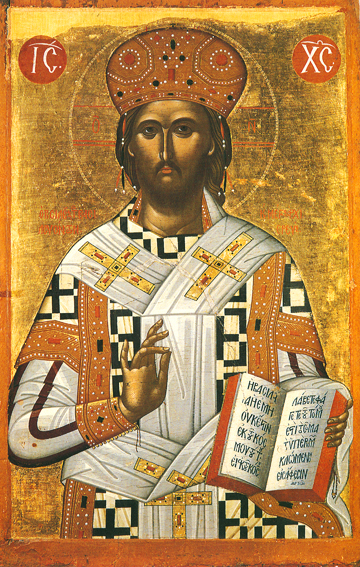
15th Century Orthodox icon of Christ the Great High Priest

Jesus As Permanent High Priest

Jesus is our great high priest. In the Old Testament, among the twelve tribes of the ancient Israelites, the tribe of Levi made up the class of priests. One of those Levites, always a descendent of the original Levite priest, Aaron, had the task of once a year entering a place called the Holy of Holies, which was at the center of the Temple, to offer a bloody sacrifice on behalf of the people, to atone for their sins from the previous year.

Jesus is our great and ultimate high priest. He did not enter the temporary sacrificial system to deal with sins for only a year. Jesus not only took on the role of high priest, but became the sacrifice, as well. As a result, we now have a thorough and permanent forgiveness of sins through Christ. So, the Hebrew Christian who considered going back to an old outdated system needed to be brought back to his senses and embrace again the once-for-all sacrifice of Jesus. 

As they considered Jesus, the believers needed to remember that Christ was not so far removed from them that the church could not relate to Jesus. Rather, Jesus is able to sympathize with each and every trouble, trial, and temptation we face because he faced the very same kind of sufferings. 

The only difference between Christ and his followers is that Jesus did not succumb to the trouble, but persevered and secured for us deliverance from sin, death, and hell. Jesus is the One who deserves every bit of our commitment, allegiance, and devotion. Christ is the One whom we are to worship inside and out.

Approaching God with Boldness

Let us then approach Jesus with confidence, with boldness, knowing that with him there is mercy and grace. Jesus not only suffered for us in the past; he also suffers with us now, in the present. We, as believers, are in union with Jesus. Christ is our great high priest, the One intimately involved in every nook and cranny of our lives. He knows what you and I are going through and is ready to give grace to help right now. 

Approaching Jesus has nothing to do with being good enough to do so. Coming to Jesus is about grace. Whenever we drift from Jesus and are confronted with God’s Word cutting us to the heart, the end result is not wrath or judgment; the result is mercy and grace.

Like the early Hebrew Christians, we all face situations out of our control that wear us down and cause us to become weary. In our tired state, we can be tempted to let our commitment to Christ slide in some small way. Over time, the small compromises of faith can snowball into a big slide away from God. 

Yet, Jesus is not sitting in heaven frustrated or confounded. God is not looking for a reason to punish people. It is just the opposite. Jesus, the Son of God, our great high priest, is looking for a reason to give grace and help us in our time of need. Christ is waiting for us to approach the throne of grace with confidence. Right now, Jesus is alive. He is scanning the world and the church, looking to extend mercy to those who need it. 

Asking for Help

We must avoid a spiritual hardening of heart which estranges us from approaching Jesus. Every one of us needs help. We are not God. We have weaknesses. We have confusion. We have limitations of all kinds. We need help.  And every one of us has something else: guilt and shame. At the bottom of our hearts, we feel undeserving, and so, avoid coming to Jesus. Yet, we need with family, loneliness, work, health, finances.

So, what to do? I can try to deny it all and be a superman who doesn’t need any help. I can try to drown it all with alcohol. I can be obsessive and compulsive about controlling events and/or people. I can simply succumb to discouragement. Here is what God declares: Jesus Christ became a High Priest to shatter despair with hope, to rescue that drowning person and that anxious individual.

God planned for a High Priest, a Savior, a Redeemer, and a gracious Helper. You and I are not trapped. We have Jesus. 

The book of Hebrews is all about a call to commitment – an invitation to come to Jesus.  And it is the most important invitation you will ever receive. Let us approach the throne of grace with confidence….

This is the confidence we have in approaching God: That if we ask anything according to his will, he hears us.  And if we know that he hears us – whatever we ask – we know that we have what we asked of him. Spirit of God, lead us into your will. Help us in all things. Fill our hearts and lives to overflowing with divine mercy and grace so that what comes out of our mouths and the actions we do are compassionate, kind, and good, through our great High Priest, Jesus Christ. Amen.