

I will exalt you, my God the King;
I will praise your name for ever and ever.
Every day I will praise you
and extol your name for ever and ever.
Great is the Lord and most worthy of praise;
his greatness no one can fathom.
One generation commends your works to another;
they tell of your mighty acts.
They speak of the glorious splendor of your majesty—
and I will meditate on your wonderful works….
The Lord is righteous in all his ways
and faithful in all he does.
The Lord is near to all who call on him,
to all who call on him in truth.
He fulfills the desires of those who fear him;
he hears their cry and saves them.
The Lord watches over all who love him,
but all the wicked he will destroy.
My mouth will speak in praise of the Lord.
Let every creature praise his holy name
for ever and ever. (New International Version)
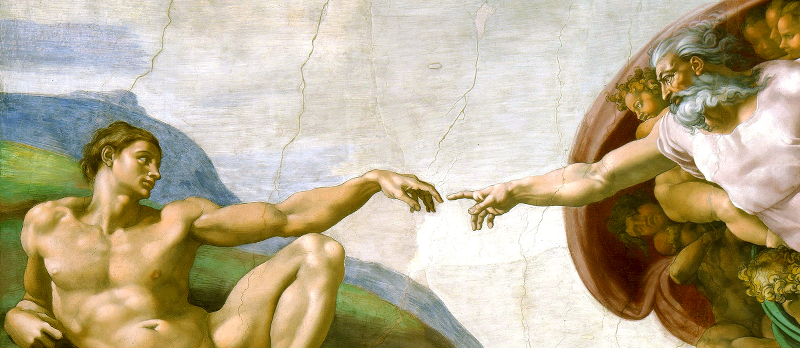
The Lord is both near and far. The God of Holy Scripture is, at the same time, both:
- approachable and aloof
- close and distant
- beside us and beyond us
- available and elusive
- revealing and remote
- warm and cool
- knowable and mysterious
- readily at hand and at arm’s length
- a good neighbor next door and a politician over in a city you’ve never been
The technical theological terms for describing God in such a way is that the Lord is both immanent and transcendent. And that is a good thing. We need the Lord to be both.
This psalm is a hymn of praise to God. The psalmist, David, celebrates the attributes and the actions of the Lord. David understood, better than most, that God is so far above humanity in divine majesty that miracles are always possible. Because God is God, the Lord’s arm is never too short to extend help and deliverance.
David knew that God’s powerful ability and God’s loving affection go hand-in-hand together; God’s mighty strength and God’s compassionate spirit work together harmoniously for our benefit.
They did not conquer the land with their swords;
it was not their own strong arm that gave them victory.
It was your right hand and strong arm
and the blinding light from your face that helped them,
for you loved them. (Psalm 44:3, NLT)
God’s interventions, wonders, and miracles are never done dispassionately; the Lord’s arm is extended with deep concern and loving care for people.
The Lord acts as a close relative, like a parent, exhibiting qualities of both father and mother. God is close enough to not only hear our verbal prayers but to also hear our faint whispers. Indeed, the Lord is so close that we don’t even have to speak for the prayers of our heart to be heard.
The righteous call to the Lord, and he listens;
he rescues them from all their troubles.
The Lord is near to those who are discouraged;
he saves those who have lost all hope.
Good people suffer many troubles,
but the Lord saves them from them all. (Psalm 34:17-19, GNT)
In the New Testament Gospels, Jesus gave us instruction on how to address God: “Our Father in heaven.” Not just “my” Father, but “our” Father. We are to pray with the mindful sense of our union with the Lord, as well as our connection with one another as believers.

The Lord sits in heaven as the Most High God, the transcendent Lord of me, you, and all people – watching over and protecting all whose hearts are in the right place, and effectively guarding us from a lofty divine vantage point.
My shield is God Most High, who saves the upright in heart. (Psalm 7:10, NIV)
Clap your hands, all you nations;
shout to God with cries of joy.
For the Lord Most High is awesome,
the great King over all the earth.
He subdued nations under us,
peoples under our feet. (Psalm 47:1-3, NIV)
With our transcendent God always having a watchful eye over us, we need not fear anything or anyone. The Lord knows the score of how things are going in the world and in your life. And, what’s more, God knows the ropes in providing for us, protecting us, and powerfully handling any and all enemies to our souls.
Yet, at the same time, all the time, God is both our high holy King, and our close intimate Friend. Indeed, the Lord is graciously immanent as my Abba – the Father who is near and dear to our hearts.

Because you are [adopted] sons and daughters, God sent the Spirit of his Son into our hearts, crying, “Abba, Father!” Therefore, you are no longer a slave but a son or daughter, and if you are his child, then you are also an heir through God. (Galatians 4:6-7, CEB)
Christians everywhere in the world, and throughout the ages, gather together and repeat the Lord’s Prayer, every Sunday, as well as in weekly small groups, and daily individual prayers. We cry out, “Our Father in heaven” as the most used phrase over the course of our Christian lives.
And that sort of repetition is a good thing. It is important to verbalize that God is transcendent – far above all earthly powers as the sovereign Lord of the universe; and to vocalize that God is immanent – near to us as a father to a child.
Just because a phrase can become vain repetition doesn’t mean that repeating it is a bad thing. Using our words to reiterate both the far distance and the close relation of God is a worthy activity which fortifies our faith, and which passes truth to successive generations of the faithful.
The best way I know of cultivating a healthy sense of God’s transcendence and immanence (outside of reading scripture and praying) is through clouds and kids – both of which require mature adults to practice some much needed humility.

There is nothing quite like putting clocks and schedules aside, stretching out a blanket on a hill, laying back, and watching the clouds roll by. The perspective of massive highness reminds us that our problems are neither as daunting nor as important as we thought.
In contrast to the high clouds, there’s also nothing quite like forgetting your age and getting on the ground to be eye level with a kid. Fortunately, I have rambunctious and curious grandsons who continually remind me that, the lower I get, the better I understand what’s truly most important.

Neither my kids nor my grandkids care all that much about the what’s in my life – what I do – my work, my hobbies, my angst, my daily activities. But they do care a great deal about who I am and why I’m with them.
Intentionally developing a sense of God as both far and near, helps us remember who we are and why are here.
Ironically, the closer I get in touch with the reality that I’m mere dust, and will return back to the ground, the better I’m able to see the Most High God. And, conversely, the more I gaze into the sky, the greater awareness I have of the people around me. I learn to love God and neighbor, as I ought.
There’s no better time than now to get out there and take advantage of the clouds and the kids. It will likely help you to know God better; and it will probably bring a greater awareness, clarity, and connection to the truly significant which is always around us.

Father God, you formed us from the dust of the earth. Remind us of our place as your creatures at home in your creation. Forgive us when we forget our connection to the earth, and our dependence upon the goodness of your world. Lord have mercy.
Brother Jesus, you were born into this world, and made your earthly home in Nazareth. Help us to know and love the people and places where you have set us. Forgive us when we fail to care for our homes, our communities, and your creation. Christ, have mercy.
Blessed Holy Spirit, you desire to grow in us your fruit of love, joy, peace, patience, kindness, goodness, faithfulness, gentleness, and self-control. Forgive us when our roots are so shallow, and our hearts so restless, that our lives fail to bear fruit. Enable us to find our home in you, and in the places to which you call us. Lord have mercy.
Blessed Holy Trinity – Father, Son, and Spirit – the God who is both far and near: Forgive us our sins, settle us in a place of belonging, and enable us to bear fruit for your kingdom. Amen.



 Rev. Tim Ehrhardt