


Therefore, I urge you, brothers, and sisters, in view of God’s mercy, to offer your bodies as a living sacrifice, holy and pleasing to God—this is your true and proper worship. Do not conform to the pattern of this world but be transformed by the renewing of your mind. Then you will be able to test and approve what God’s will is—his good, pleasing, and perfect will.
For by the grace given me I say to every one of you: Do not think of yourself more highly than you ought, but rather think of yourself with sober judgment, in accordance with the faith God has distributed to each of you. For just as each of us has one body with many members, and these members do not all have the same function, so in Christ we, though many, form one body, and each member belongs to all the others. We have different gifts, according to the grace given to each of us. If your gift is prophesying, then prophesy in accordance with your faith; if it is serving, then serve; if it is teaching, then teach; if it is to encourage, then give encouragement; if it is giving, then give generously; if it is to lead, do it diligently; if it is to show mercy, do it cheerfully. (NIV)
Every person is important. Everyone is needed. Each one, according to this New Testament lesson, is to offer their entire lives to God through worship and the exercise of their spiritual gifts. People are designed to be active in building up one another.
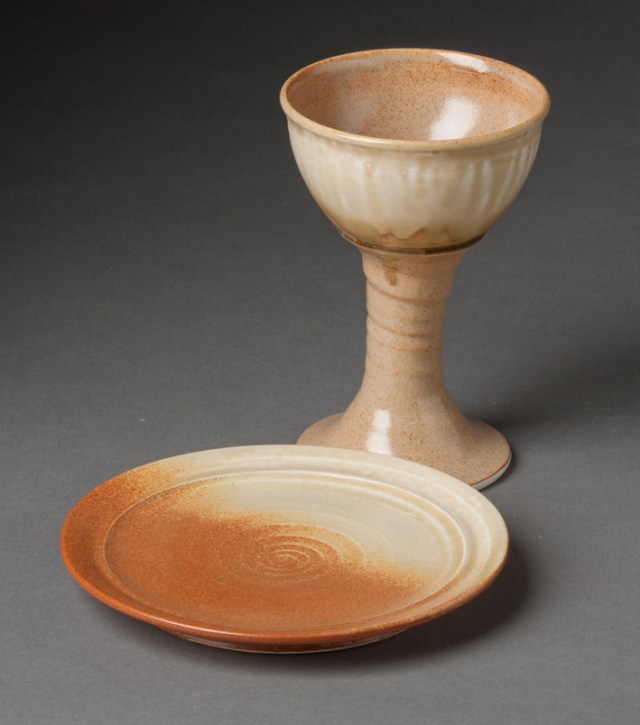
When I was growing up, we had a fine china set that my parents kept in a beautiful china cabinet. The set and the cabinet are old and were a prominent part of our living room. However, we almost never used it. I can only remember once or twice that my Mom got the china out to use. God is not looking for fine china that sits unused. He is looking for rough-and-tumble clay pots—the kind that can be used every day. God wants ordinary table-wear that can be handled in a crash-and-bang world.
Followers of Jesus Christ were never meant to be a china cabinet, where precious pieces are safely stowed out of harm’s way. Instead, humanity is to be like a working kitchen, where well-worn pots are filled again and again to dispense their life-giving contents to a thirsty world; and, where common plates and cups are used again and again to provide a hungry population with the Bread of Life.
Within the ancient Roman Church were both Jews and Gentiles – two groups vastly different from each other. They tended to keep to themselves and only operate within their familiar and comfortable circles of friends and relatives. But the Apostle Paul wanted them to be united by exercising their spiritual gifts for the benefit of the entire congregation, and not just certain persons.
We are strongly encouraged to give ourselves in service to one another because of God’s mercy in Christ. Since God has saved us from sin, we are to gratefully respond to him in worship that is dedicated to serving everyone. The word “worship” in today’s text is where we get the word “liturgy.” That is, Paul’s vision for the church was to have a daily liturgical rhythm of spiritual worship, not just on Sunday when we might pull out the fine china and impress people.
Paul’s appeal was not to guilt people into serving but is an exhortation for all Christians to appropriately respond to God’s grace by offering their lives in sacrificial service. This is a form of saying “thanks” to God. To be oriented in a sacred liturgy that is fit for the daily will of God, our minds must be renewed. Through saturation in Scripture we discern our spiritual gifts, know what God wants us to do with those gifts, and use them effectively in the church and the world.
Grace has been given to every believer in Jesus, not just a select few. We all have different gifts and have been graced with abilities for the benefit of others. When everyone collectively uses these spiritual gifts, there is the ability to know the will of God in any situation for any group of people. All the pronouns used in today’s verses are plural. There is to be a group dynamic which seeks to give minds and bodies completely to God in worship, using our spiritual gifts for building up one another, and discovering the will of God together.
All believers in Jesus must share and work together by utilizing God’s grace, instead of getting burned-out because others are not serving. Grumbling about what others are not doing begs the question of whether we are over-functioning, or not. It could be that we have succumbed to the danger the Apostle Paul warned us about: thinking so highly of ourselves that we believe our gifts are superior to others, so we need to maintain our control and hegemony in the group. This is a terribly misguided notion.
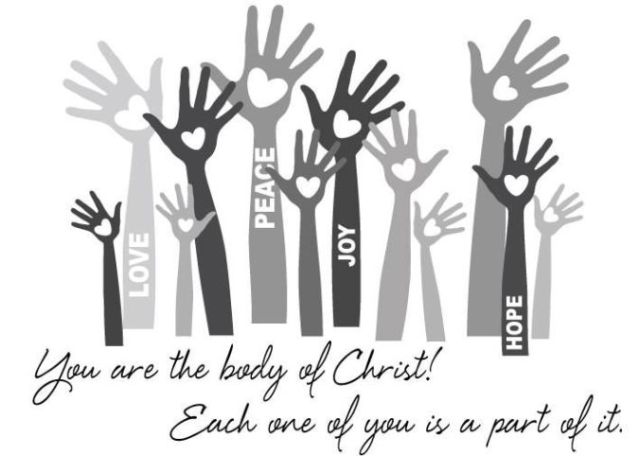
We belong to one another. Therefore, one major way of giving to God is through offering ourselves to each other with equity and without favoritism. We must not separate Christ from his church. To say that we need God, but do not need the church is to really say that we do not need God because the two are inseparable. Nowhere in Holy Scripture do we find individual Christians doing their own thing, isolated from a committed group of people, the church.
When Jesus called people to follow him in service to God and a world in need, some gave him excuses that they were busy and had other pressing matters to attend to before they could follow him. Jesus simply left them and told them they were not fit for the kingdom of God. (Luke 9:57-62)
When people were preoccupied with building wealth, or gaining power, or jockeying for influence, Jesus told them to stop it, exercise some faith, and seek first the kingdom of God. Build your treasure in heaven, Jesus said, because it will be permanent; and, not on earth where it is temporary. (Matthew 6:19-34)
We are graced by God with abilities which God fully expects us to use. “Cheap grace” is merely embracing Christ as a personal Savior but not welcoming him as the Lord in whom we must sacrificially give our lives to service in the church and the world. Spiritual health and vitality cannot exist apart from every person using God’s given grace to contribute to the functioning of the Body of Christ.

The list of spiritual gifts Paul provided is not exhaustive but represents a combination of speaking and serving gifts necessary to bless humanity. Paul exhorted the church to not restrain people’s exercise of gifts but let them go at it, full bore:
- “Prophesying” is not foretelling the future but a word meaning “inspired speech” from God that addresses what God’s people are to do considering his Word.
- “Serving” is a generic word referring to all types of hands-on service.
- “Teaching” is needed to instruct the faithful in all the revealed will of God.
- “Encouraging” involves both speaking and serving, as the one gifted in encouragement comes alongside others and helps them to do something with both verbal coaching and tangible help.
- “Giving” specifically refers to the person who lives a simple life to be able to give generously and contribute to the needs of others.
- “Leading” is the ability to get out in front and show the way in obtaining the will of God.
- “Mercy” is the much-needed ability to see down-and-out hurting people and be a conduit of God’s grace to them.
Here is a simple observation: There is no one person who possesses all these gifts. That is why everyone must work together to have a spiritually healthy community. A spiritually toxic community is the inevitable result of only a few people using their gifts.
The Apostle Paul communicated some important truth about what faithful Christians must do to be transformed by a renewal of the mind: exercise godly sacrifice; commitment to worship; intentional unity; and, an awareness of our spiritual gifts. The following are some thoughts on becoming aware of our spiritual gifts:
- Pay attention. Every spiritual gift reflects God’s grace and character, and so, you will find joy and satisfaction in expressing it. Your spiritual gift will be a place of deep spiritual formation and growth in your life, as God uses it both to powerfully connect you to him and to expose areas of your soul that need his forgiveness and redemption.
- Try. Give it a whirl. Take the step to connect with a service or ministry, or just try doing what you feel might be something God wants you to do. Gifts are discovered more from others observing and affirming your gift and less than going through a research process. The encouragers among us will be happy to affirm the gifts of others.
- Develop. All spiritual gifts must be cultivated and developed. Paul told his young protégé, Timothy, to fan into flame the gift of God. Put yourself in a position to be taught and mentored.
We were designed by God for worship and service. We will find our greatest delight in life through engaging those two activities. The result is a spiritually healthy and thriving Christian community that loves God, loves one another, and loves the world.
God of grace, I come before you today praying for your Holy Spirit to stir up the gifts already placed inside your people. God Almighty, I pray that whatever gifts your Holy Spirit has decided to give and put within me and those around me that those gifts be activated and used for your glory and the edification of others. I pray for peace and joy in the community, that no one will be jealous or covetous about anyone else’s gifts. Lord God, I pray also as these gifts grow and develop that the fruit of the Spirit will be manifested, to ensure the gifts are ministered in love. May you receive all praise honor and glory from the gifts you give, through Jesus Christ, our Lord. Amen.


 Rev. Tim Ehrhardt