Psalm 100 – Know That the Lord is God

Shout for Joy by Lucy Adams

Shout for joy to the Lord, all the earth.
    Worship the Lord with gladness;
    come before him with joyful songs.
Know that the Lord is God.
    It is he who made us, and we are his;
    we are his people, the sheep of his pasture.

Enter his gates with thanksgiving
    and his courts with praise;
    give thanks to him and praise his name.
For the Lord is good and his love endures forever;
    his faithfulness continues through all generations. (New International Version)

The worship of God cannot be contained with one dimension of a person – their spirit. Worshiping God requires the body, mind, and emotions, as well. Anything less, is withholding praise. We are to worship with our entire being.

The original use of today’s psalm was for the ancient Israelites approaching the temple to worship God.  Before worshipers ever came into the presence of the Lord, they were preparing themselves to encounter God through giving thanks, using this very psalm.

When King David and other Hebrew writers penned their poetic songs, they centered what they most wanted to draw attention to in the middle, so that what came before it and after it pointed to that central message. The center of the psalm is:

Know that the Lord is God. Knowing God is to experience the divine through a close relationship. It means we have a place and a purpose. It is a knowing and belonging which exists deep down in our gut.

We get to know God by how he has worked in people’s lives, as well as our own. So, gatherings of believers (whether physical or virtual) are an opportunity to reinforce collective values, strengthen faith, and encourage the discouraged.

Faithful worshipers deeply desire to focus on who God is and what God has done, remembering and rehearsing divine qualities and deeds. Through this activity, we help one another know the Lord. And knowing God is what real life is all about. The Lord is worthy of all the praise, adoration, and worship we can give.

There are three imperatives (commands) that come before the middle phrase to know that the Lord is God; and three imperatives coming after it.  All six imperatives are meant to help us know God better, to give our proper praise to the Lord.

Shout for joy to the Lord, all the earth. Declaring loudly of God’s gracious and loving character, expressed through right, just, and fair actions.

Worship the Lord with gladness. Kneeling and prostrating before God in humble reverence, awe, and adoration.

Come before the Lord with joyful songs. Approaching God’s throne with confidence and boldness.

Those are the three imperatives which lead us to know the Lord. 

The following three imperatives point back to know that the Lord is God:

Enter the Lord’s gates with thanksgiving. Immersing oneself in the presence of God.

Give thanks to the Lord. Giving voice in gratitude to God

Praise the name of the Lord. Declaring God’s holy name with heartfelt expression.

We belong to God. God’s people celebrate this tremendous experience of belonging with deliberate actions that put us in a position to know God better.

I keep asking that the God of our Lord Jesus Christ, the glorious Father, may give you the Spirit of wisdom and revelation, so that you may know him better. (Ephesians 1:17, NIV)

One of my all-time favorite verses in the Bible has to do with knowing God:

I want to know Christ—yes, to know the power of his resurrection and participation in his sufferings, becoming like him in his death.

Philippians 3:10, NIV

Everything in our lives, whether good or bad, is designed to help us know God better. Shared experiences with each other encourage Christians to keep living for Jesus. All of life, from a Christian perspective, points us to the mid-point of history, Jesus Christ, and him crucified, risen, and coming again.

And this is eternal life, that they may know you, the only true God, and Jesus Christ whom you have sent. (John 17:3, NRSV)

So, let us express gratitude today for all the gracious ways of God’s self-revealing and reaching out to save such ones as us.

I pray that out of his glorious riches he may strengthen you with power through his Spirit in your inner being, so that Christ may dwell in your hearts through faith. And I pray that you, being rooted and established in love, may have power, together with all the Lord’s holy people, to grasp how wide and long and high and deep is the love of Christ, and to know this love that surpasses knowledge—that you may be filled to the measure of all the fullness of God.

Now to him who is able to do immeasurably more than all we ask or imagine, according to his power that is at work within us, to him be glory in the church and in Christ Jesus throughout all generations, for ever and ever! Amen. (Ephesians 3:16-21, NIV)

Gracious and almighty God, the One who works on my behalf, give me grace to put away the rootless existence of someone who has no place; and help me to experientially know your radical acceptance and inclusion into the dance of the Trinity – Father, Son, and Spirit – one God, now and forever. Amen.

Grace and peace be yours in abundance through the knowledge of God and of Jesus our Lord. (2 Peter 1:2, NIV)

Amen. Soli Deo Gloria.

Psalm 105:1-42 – Getting Rid of the “Meh”

Praise the Lord
    and pray in his name!
    Tell everyone
    what he has done.
Sing praises to the Lord!
    Tell about his miracles.
Celebrate and worship
his holy name
    with all your heart.

Trust the Lord
    and his mighty power.
Remember his miracles
and all his wonders
    and his fair decisions.
You belong to the family
    of Abraham, his servant;
    you are his chosen ones,
    the descendants of Jacob.

The Lord is our God,
    bringing justice
    everywhere on earth.
He will never forget
his agreement or his promises,
    not in thousands of years.
God made an eternal promise
    to Abraham, Isaac, and Jacob,
    when he said, “I’ll give you
    the land of Canaan.”

At the time there were
only a few of us,
    and we were homeless.
We wandered from nation
to nation,
    from one country
    to another.
God did not let anyone
    mistreat our people.
Instead he protected us
    by punishing rulers
    and telling them,
“Don’t touch my chosen leaders
    or harm my prophets!”

God kept crops from growing
    until food was scarce
    everywhere in the land.
But he had already sent Joseph,
    sold as a slave into Egypt,
    with chains of iron
    around his legs and neck.

Joseph remained a slave
until his own words
    had come true,
    and the Lord had finished
    testing him.
Then the king of Egypt
    set Joseph free
    and put him in charge
    of everything he owned.
Joseph was in command
    of the officials,
    and he taught the leaders
    how to use wisdom.

Jacob and his family
came
    and settled in Egypt
    as foreigners.
They were the Lord’s people,
    so he let them grow stronger
    than their enemies.
They served the Lord,
and he made the Egyptians plan
    hateful things against them.
God sent his servant Moses.
He also chose and sent Aaron
    to his people in Egypt,
    and they worked miracles
    and wonders there.
Moses and Aaron obeyed God,
    and he sent darkness
    to cover Egypt.
God turned their rivers
into streams of blood,
    and the fish all died.
Frogs were everywhere,
    even in the royal palace.
When God gave the command,
    flies and gnats
    swarmed all around.

In place of rain,
God sent hailstones
    and flashes of lightning.
He destroyed their grapevines
    and their fig trees,
    and he made splinters
    of all the other trees.
God gave the command,
and more grasshoppers came
    than could be counted.
They ate every green plant
    and all the crops that grew
    in the land of Egypt.
Then God took the life
    of every first-born son.

When God led Israel from Egypt,
    they took silver and gold,
    and no one was left behind.
The Egyptians were afraid
    and gladly let them go.
God hid them under a cloud
    and guided them by fire
    during the night.

When they asked for food,
    he sent more birds
    than they could eat.
God even split open a rock,
    and streams of water
    gushed into the desert.
God never forgot
his sacred promise
    to his servant Abraham. (Contemporary English Version)

This morning, did you get up on the wrong side of the bed? Or did you awake feeling refreshed and ready to seize the day?

Maybe it was neither. Seems like, most days, we are neither energized nor grumpy. We are somewhere in the middle, feeling something like “meh.” 

Just as the importance of a decent breakfast is necessary to get a good start on the day, so beginning the day with some good spiritual food is a must to fortify our lives and set them on a solid trajectory for personal happiness and blessing the world. 

We cannot simply rely on feeding upon God when we feel like it, for then we will succumb to all the vicissitudes and variegations of life, becoming a slave to the almighty “meh.” 

As we get out of bed and orient ourselves from sleep to work, we need to tend to our spiritual selves and prepare for the day, just as we need to daily clean up our bodies and begin focusing our minds on our future tasks.

One way of taking charge of our spiritual lives is beginning the day with some vitamin-packed whole grain goodness of the biblical psalms. 

Today’s psalm calls on us to:

  • Give thanks to God
  • Call upon the name of the Lord
  • Make known the mighty deeds of God
  • Sing to the Lord
  • Glory in God’s name
  • Seek the Lord
  • Remember God’s wondrous works 

Feeding upon the psalms will help shoo the “meh” away.

God faithfully keeps all divine promises. As we recall and remember those promises, realizing that God remembers us, praise, singing, and thanksgiving arise along with our bodies. The Lord never has a “meh” response to us.

Perhaps before even getting out of bed in the morning, we can reach over, grab our Bible, tablet, or smartphone and read these words of Psalm 105 so that our day is formed around the positive promises of God and not the negative thoughts of our minds. 

And at night, the same ritual could be done before falling asleep so that our day is bookended with remembering God’s works. For the Bible is not simply some old book to adore from afar, but a living word from God to shape our minds and form our hearts.

The “meh” comes when there is a famine of God’s Word. Whenever we find ourselves saying things like, “Not my circus, not my monkeys,” or “I’m sleeping until I feel better,” then its time to cozy up to the psalmist and have a heart-to-heart.

You’ll be glad you did.

God almighty, you have remembered your people throughout the millennia with wondrous works and powerful deeds. Today I give thanks to you for giving your Son, the Lord Jesus, and accomplishing the mightiest work of all: securing my deliverance from sin, death, and hell. May the Name of Jesus be praised! Amen.

Psalm 118:26-29 – A Guided Meditation into Gratitude

Blessed is the one who comes in the name of the Lord.
    We bless you from the house of the Lord.
The Lord is God,
    and he has given us light.
Bind the festal procession with branches,
    up to the horns of the altar.

You are my God, and I will give thanks to you;
    you are my God, I will extol you.

O give thanks to the Lord, for he is good,
    for his steadfast love endures forever
. (New Revised Standard Version)

Today, take some meditative time to connect with the Lord. Allow yourself some space and grace to meaningfully get in touch with God and your own deep spirituality.

Make yourself comfortable… either sit down, stand outdoors, or recline in your favorite easy chair…. whatever posture helps you relax and relate to God.

Take several deep breaths in and out…

Give yourself permission right now to focus on your relationship with the Lord…

Make God and you a priority…

There is nowhere else you need to be…

You are deserving of this time…

If you get distracted by a thought or sound, simply acknowledge that it occurred and release it. Do not allow it to take you away from this time. For the next several minutes, focus on you and your God….

Imagine you are a kernel of corn, snuggled in the ground…

Although you are small, the Lord has given you everything you need within yourself to become a tall stalk with many ears of corn…

Breathe in, feeling your lungs expand as you inhale… and as you breathe out and exhale, stretch your arms slowly over your head, as if you are breaking the ground…

Slowly bring your arms down…

Lift your face toward heaven…

Imagine feeling the warmth of the sun and the light of God upon you… basking in the Lord’s grace for you…

Feel the refreshment of a gentle rain from heaven falling on you… giving you God’s steadfast love…

Sense your created self and all the potential within coming out… growing… lifting toward the immense sky of the Lord’s favor…

See yourself standing as a nine-foot tall stalk with multiple ears of corn…

Bask in the reality that you are a gift to a hungry world… that you are blessed to be on this earth, and to be a blessing to many… know that you are enough and express your gratitude to God using the following practice:

Look around you. Identify and name:

5 things you see…

4 things you feel…

3 things you hear…

2 things you smell…

1 thing you taste…

Express your thanks to the Lord for each of those things you identified.

End your time by slowly saying out loud with flavor:

You are my God, and I will give thanks to you;
    you are my God, I will extol you.

O give thanks to the Lord, for he is good,
    for his steadfast love endures forever.

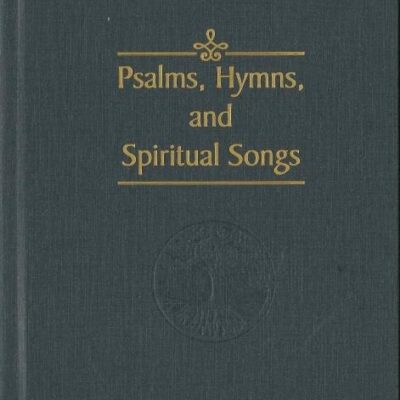
Ephesians 5:15-20 – Speak to One Another with Psalms, Hymns, and Spiritual Songs

Be very careful, then, how you live—not as unwise but as wise, making the most of every opportunity, because the days are evil. Therefore, do not be foolish, but understand what the Lord’s will is. Do not get drunk on wine, which leads to debauchery. Instead, be filled with the Spirit, speaking to one another with psalms, hymns, and songs from the Spirit. Sing and make music from your heart to the Lord, always giving thanks to God the Father for everything, in the name of our Lord Jesus Christ. (New International Version)

As you likely well know, an inebriated person tends to say and do things that they do not typically say or do when they’re sober. The Apostle Paul’s point about being filled with the Spirit is that, instead of doing and saying stupid things, we are so filled with God that we do things and say things that we would not typically do and say if we were not filled with God – that is, good things. 

Apart from being full of God’s Spirit, we tend toward mumbling, not singing; worry, not making music in our hearts; and complaining and arguing, not giving thanks. Half-filled Christians practice a half-hearted Christianity. They’re only half-baked in their service and devotion to Christ.

Why sing? 

Because singing is part of being filled with the Spirit of God. Singing happens when we experience God’s overflowing grace in our lives through the blessings of being chosen, adopted, and redeemed into God’s new community. (Ephesians 1:3-11)

Music is powerful. It’s not only a means of expressing praise and commitment to Christ and each other, it is also a powerful means of being impressed. For example, when we first teach kids the alphabet, we teach it in a song. Trying to teach letters in a rote fashion typically doesn’t work well for pre-school kids. Words set to music is why we still remember words from old TV shows, because those words were set to a catchy tune.  Music is why an Alzheimer’s patient cannot remember her daughter’s name but can flawlessly sing all four verses of Amazing Grace.

Singing is an offering and a sacrifice of praise to God (Hebrews 13:15). And singing is also a vehicle whereby we are taught, encouraged, and built up in the community of believers. We sing to God, one another, and even ourselves.

Church music, then, is to be both a means of praising God and a practice of encouraging each other. We do it through psalms, hymns, and spiritual songs.

Psalms

The word “psalm” helps us rightly think of the biblical book of Psalms. Singing the psalms is an ancient practice, going all the way back to the Israelites singing psalms in the temple and synagogue. The early church maintained this practice, especially as a means of being faithful to praying without ceasing. 

However, over time, medieval congregations began neglecting the practice. In fact, the congregations eventually gave up most singing altogether. Almost all the singing was done by church choirs and professional musicians employed by the state (no separation of church and state) to write, compose, and perform in worship services. 

Five-hundred years ago, with the Reformation, Martin Luther reinstituted congregational singing. He gave music back to the people. One of the results of this change was putting the book of psalms to song – the Psalter.  For many Protestant denominations, the Psalter became the primary means of singing. The Psalter chiefly set prayers to song. It was both a means of expressing prayer to God and learning Scripture.


Hymns

There have always been hymns in the church. Yet, it was not until the Reformation that hymns began to be written and sung by congregations. For the Reformers, hymns were used to teach sound doctrine and theology, as well as a means of confessing the faith together

Spiritual Songs

Spiritual songs are the present day equivalent of praise and worship choruses, or what some refer to as contemporary songs. These are songs purposefully designed to be emotional expressions of praise to God and to give powerful testimony for what God has done or is doing.

So, what?

Quick review:

  • Psalms are used to pray and learn Scripture.
  • Hymns are used to teach us sound doctrine and confess the faith together.  
  • Spiritual songs are an important way of expressing praise to God and being encouraged in the faith. 

Therefore, church music is to serve as both a revelation from God, and as a response from God’s people.

There are two important deductions from this verse:

  1. A variety of songs is inferred and expected.
  2. Paul commanded their use.

The reason worship style is such a hot topic in a lot of churches is because we all have our personal preferences.  And yet, if we are to be faithful to today’s New Testament lesson, we will not just lock in on what I want. 

Truth be told, we are selfish people when it comes to music. We want what we want, and we don’t care what somebody else wants. And we will persist in that self-absorbed spirit until somebody calls us on it. That somebody is the Apostle Paul. The Word of God calls us to encompass psalms, hymns, and spiritual songs – all three of them – in our worship.

I have a good friend who is an accomplished church musician and worship pastor. I once asked him how I can lead a worship service among such a variety of preferences concerning music. He answered my question with a question: “How highly do people, including and especially your musicians, value the unity of the church?  Do they love each other so much that they can allow for a wider range of style, and do so without vocally complaining about it?”

My friend went on to say, “When I arrived at one church as their pastor, some people were in a rather bad habit of saying very openly, ‘Oh I hate that song,’ or, ‘If I hear this song one more time I’m walking out.’ What I tried to do was teach people that this is not the most loving or mature approach and does little to build up the rest of the Body of Christ.”

If a group of people are being faithful to Scripture, and doing their best musically, then – if the music seems lifeless, dull, or strange to us – the real issue isn’t style but our hearts.       

Is that heart filled with the Spirit of God? If it is, then we will speak to one another using the Psalter, using time-honored hymns, and utilizing fresh contemporary praise songs. And the result will be the Body of Christ, the Church, built up in the faith.

Gracious God, give us grace to take to heart the great dangers we are in by our unhappy divisions about music.  Take away all hatred and prejudice, and whatever else may hinder us from godly union and concord; that, as there is but one body and one Spirit, one hope of our calling, one Lord, one faith, one baptism, one God and Father of us all, so we may from this time forward be all of one heart and of one soul, united in one holy bond of peace, and may with one mind and one mouth glorify you, through Jesus Christ our Lord. Amen.