You Have Inherent Worth (Genesis 2:4b-7)

Elohim Creating Adam, by William Blake, 1795

In the day that the Lord God made the earth and the heavens, when no plant of the field was yet in the earth and no vegetation of the field had yet sprung up—for the Lord God had not caused it to rain upon the earth, and there was no one to till the ground, but a stream would rise from the earth and water the whole face of the ground—then the Lord God formed man from the dust of the ground and breathed into his nostrils the breath of life, and the man became a living being. (New Revised Standard Version)

The word “Genesis” comes from the Septuagint, an ancient Greek translation of the Old Testament, and means “origin.” The first book of the Bible does indeed have to do with origins. And in the early chapters, Genesis addresses the origins of the earth and all it’s life and systems, including humans.

Genesis 1 is a poetic account of those origins. Genesis 2-3 provide a complementary narrative account of creation and the beginning of the world. These three chapters together affirm the inherent goodness of all creation, as well as how complex it all truly is.

God is the Creator of the earth and humanity. The original man, Adam, is a name transliterated from the Hebrew adamah, which means ‘ground’ or ‘dirt/dust.’ This relationship between Adam and the literal dirt of the planet is the basis for humanity’s special relationship with the land and taking good care of it as a proper steward of the earth. In the beginning, working the actual ground was set up as a blessing.

We are living creatures, having been given breath (Hebrew nephesh). Along with all the living breathing animals on this earth, we share a basic creaturehood and are thus connected with each other. In addition, only people are formed in God’s likeness and enjoy a special relationship with the Lord in being God’s image-bearers. (Genesis 1:27)

God created you and me as good. The Lord has made provision for us to glorify God, and to be successful in doing the Lord’s will. People who are ineffective in living out their spiritual lives are persons who do not know the truth about themselves. 

Both truth and error are powerful. If people are misguided about who they are, then they become like empty wells with no water to draw from. Many of our problems, failures, and shortcomings are largely due to a misunderstanding of our basic personhood. 

A profound result of this misunderstanding is a lack of self-worth. Whenever we are in error about who we really are, we have automatically limited ourselves to what we can do in our lives. Comparing ourselves to others is not helpful; nor is trying to simply gin-up good feelings about ourselves. 
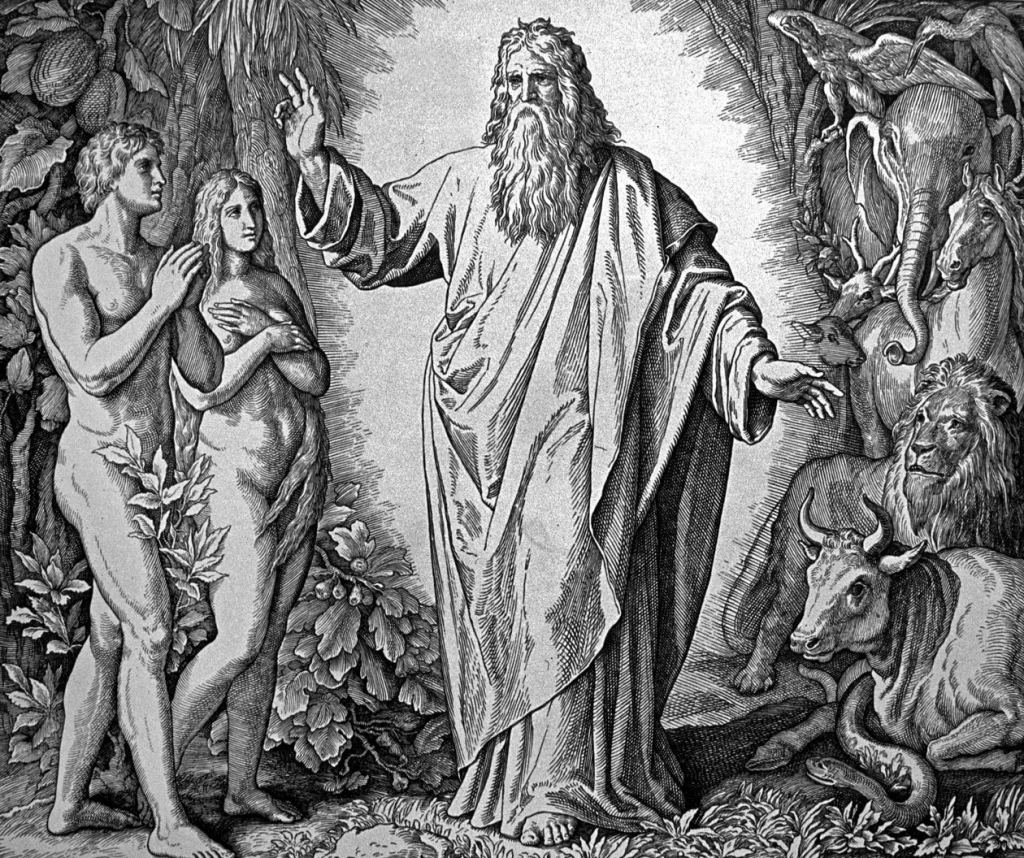
God Creates Adam and Eve, by Julius Schnorr von Carolsfeld (1794-1872)

Only by accepting who we truly and really are, can we actually be helped, and discover human fulfillment in this life. Let us consider that it is vitally important what the Holy Scriptures say about us; and also equally significant to respond in faith to the recognition of our great worth on this earth.

An important bedrock truth we must understand is that people been created in the image and likeness of God (Genesis 1:16-17). We can only begin to understand ourselves if we begin with creation. Since God is a Person of infinite perfection and goodness, to be created in God’s image means we are persons of great potential and value.

To be a person means that we are self-conscious and can make decisions. We also have inherent rights to know, to be heard, to feel, to have an opinion, to be honored, to develop potential, to assume responsibility, and to enjoy life and all creation. In other words, God treats us as persons; therefore, we may not treat ourselves any less than that.

People were created to know God, to understand spiritual truth, and to perform spiritual functions. 

Because we are created by God, we are sacred individuals. We commit a profound shortcoming when we do not develop our potential and live as though life and fulfillment were graciously given by God for our good. 

Accepting erroneous thoughts about ourselves (and we all have) leads us to misinterpret our circumstances, relationships and opportunities. Without even realizing it, we bring confusion and failure into many, if not all, areas of our life.

One of the clearest evidences that we may not know, accept, and practice the biblical truth of our self-worth, is seen in our response to Holy Scripture. Too often we observe altruistic people and say, “I can’t be like that!” Or we read scriptural promises and commands and say, “I can’t do that!” Living with that kind of unbelief and error in our lives results in discouragement and/or criticism of others who seem to be successful in their spiritual lives.

Here is the truth about you:

You are loved by God (John 15:9; 17:23). This means that God recognizes us as persons, gives us our rightful place in the divine life, and will do right by us. God has our back. Therefore, let us accept this truth.

You are called to live in fellowship with God (1 Corinthians 1:9). No greater honor could be bestowed on us than the invitation to interact with the Living God. As we do, the door is open, so that God can minister to us and lead us into the knowledge and practice of the divine will.

You have been given divine revelation (Hebrews 1:1-3). Having the Bible available to us (in our own language!) is one of the greatest possessions we could ever receive. There is nothing more powerful than the truth about God and divine desires for our daily life. Therefore, let us pay attention to divine revelation and obey it, since God has so graciously given it to us.

You are the object of divine redemption (Romans 5:8-9). The great evidence of our human worth is the reality that Jesus Christ has secured our redemption from guilt, shame to himself. Jesus, the Son of God, loved us and gave himself for us. (Galatians 2:20)

You are the temple of the Holy Spirit (1 Corinthians 6:19-20). The actual physical temple of the Old Testament was filled with the glory of God. Today, through Christ’s redeeming love on the cross, every believer in Jesus is God’s temple. Therefore, God wants to work in us and through us for the Lord’s glory and honor.

The conclusion to the matter is that the way to know our true self-worth is to accept what Holy Scripture says about us; and then respond by faith and love to its loving and redeeming message. 

According to the book of Genesis, you are no accident. You are a person of infinite worth to God. So live into this wonderful truth.

Soli Deo Gloria

Life (Genesis 1:20-2:4a)

The Creation of Heaven and Earth, by Unknown artist, c.18th century

God said, “Let the waters swarm with living things, and let birds fly above the earth up in the dome of the sky.” God created the great sea animals and all the tiny living things that swarm in the waters, each according to its kind, and all the winged birds, each according to its kind. God saw how good it was. Then God blessed them: “Be fertile and multiply and fill the waters in the seas, and let the birds multiply on the earth.”

There was evening and there was morning: the fifth day.

God said, “Let the earth produce every kind of living thing: livestock, crawling things, and wildlife.” And that’s what happened. God made every kind of wildlife, every kind of livestock, and every kind of creature that crawls on the ground. God saw how good it was. Then God said, “Let us make humanity in our image to resemble us so that they may take charge of the fish of the sea, the birds in the sky, the livestock, all the earth, and all the crawling things on earth.”

God created humanity in God’s own image,
        in the divine image God created them,
            male and female God created them.

God blessed them and said to them, “Be fertile and multiply; fill the earth and master it. Take charge of the fish of the sea, the birds in the sky, and everything crawling on the ground.” Then God said, “I now give to you all the plants on the earth that yield seeds and all the trees whose fruit produces its seeds within it. These will be your food. To all wildlife, to all the birds in the sky, and to everything crawling on the ground—to everything that breathes—I give all the green grasses for food.” And that’s what happened. God saw everything he had made; it was supremely good.

There was evening and there was morning: the sixth day.

The heavens and the earth and all who live in them were completed. On the sixth day God completed all the work that he had done, and on the seventh day God rested from all the work that he had done. God blessed the seventh day and made it holy, because on it God rested from all the work of creation. This is the account of the heavens and the earth when they were created. (Common English Bible)

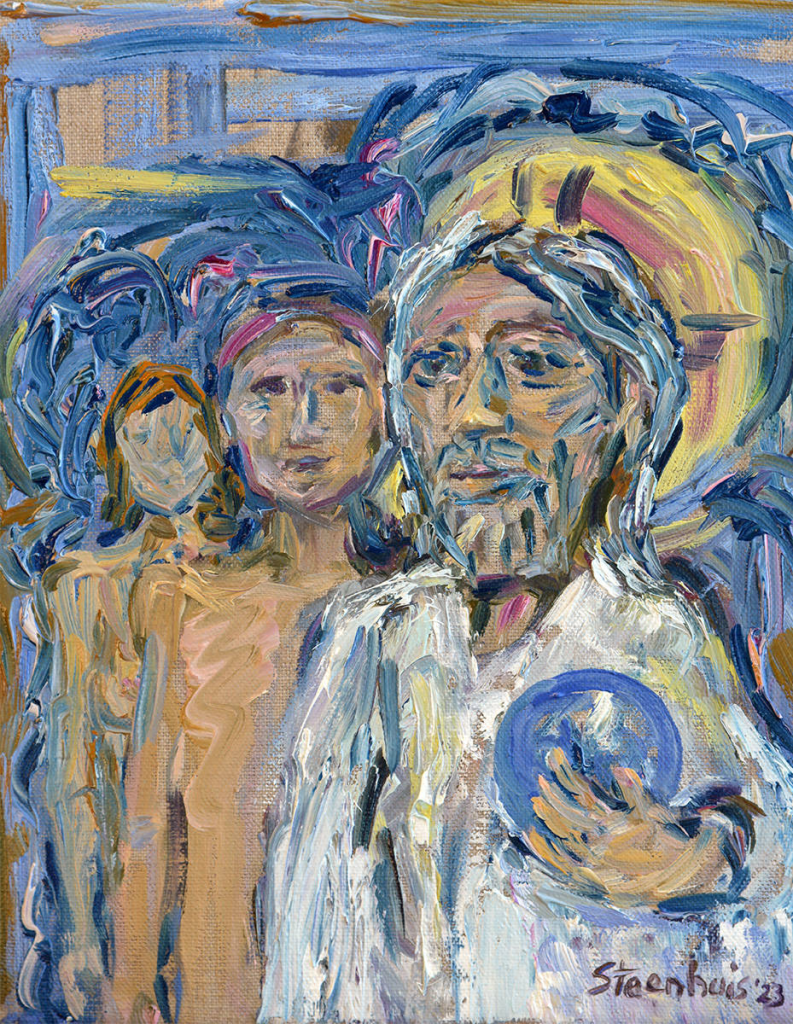
God Created Man in His Image – Male and Female, by Jill Steenhuis

In this Christian season of Eastertide, believers remember and celebrate new life in Jesus Christ. In today’s Old Testament lesson, the lectionary reminds us of original life – when God created the heavens and the earth.

The Beginning of Life

This was the beginning, before there were any words like sin, disobedience, guilt, and shame. This was the time when the original people, Adam and Eve, knew nothing about trying to chase after unconditional love. They had no concept of estrangement or heartache. Everything was fresh and alive and shiny. Disappointment, hurt, and sadness were unknown to them. Everywhere, the earth was teeming with abundant life.

God made it all; and all that was created was very good, supremely reflecting the goodness of the Creator. Life existed everywhere. The predictable and consistent rhythms of the universe were in place. Day and night, work and rest, creation and care, were all woven into the fabric of the world’s sights and seasons. The possibilities for growth were incredible. Life was indeed good.

“New” was simply part of all there was. Without any want or need, every day was an adventure of discovering all the newness which existed.

The Complicated Life

We all, however, know that it did not remain this way. People are now all too familiar with the myriad ways of injustice, and with the film of sin that covers the entire world like a noxious pollutant. And it is this situation, of course, which created the need for a “new” life, because the present life had become a moldy old leftover in the refrigerator of a life that doesn’t keep anything cold nor fresh.

People were created as good human beings. Even though sin has profoundly touched everything in creation, goodness is still within us as God’s image-bearers. The later introduction of human sin into the world in no way whatsoever removes the inherent stamp of the divine image upon us.

Humanity is the only creature who bears this likeness to God. We are related to the animal world, having been created on the same day, and sharing the same blessings of life. Yet, people are distinctive, set above all other creatures.

The Responsible Life

This is why people are given dominion over all other creatures. This is not a claim to privilege; it is, however, very much a claim to responsibility. People have been tasked with being faithful stewards of creation, entrusted with caring for other creatures and the created order.

And humanity was created as both male and female, together expressing the will and character of God in creation as they tend to it and care for it. Together with God, we are relational beings, and not just a race of individuals inhabiting the same earth.

God is a social being, existing as a community within the Godhead. Therefore, to exist as an image-bearer of God means that people are social creatures who need community – with both God and other people.

After God did all the work of creating the world with all its plants and animals and birds and fishes and people, God “rested.” This is why the seventh day is set aside as sacred; its different than the other days, sort of like how people are similar but different from the other creation.

God is clearly separated from the work and the creation itself, that is, God is transcendent and above all things as the Creator. The world is good, but the world is not divine. In the same way, by observing a day of rest, humanity recognizes and affirms and remembers that the work they have done is not divine.

Our human works, good as they may be, are not a thing to be worshiped or equated with God. Therefore, the Sabbath both celebrates the creation and the created order of things, as well as separates us from the idol worship of our hands.

To live into our inherent image of God means that we will work hard and tend to the gardens that are around us. Yet, at the same time, we will understand that in doing our responsible tasks, people are to live in community and love one another, without idolizing any other part of creation or what we creatively build with our own two hands. That is for God alone, who is distinct from all that God has created.

God our Father, you created the world and sent your own Son to live among us, made of the same stuff, breathing the same air, marveling at sunrise and sunset just as we do. Help us to participate in the life around and within us as your life, as you living in us and we living in you and in each other.

God of love and life, restore us to your peace, renew us through your power and teach us to love all that you have created and to care for the earth as your gift and our home. Amen.

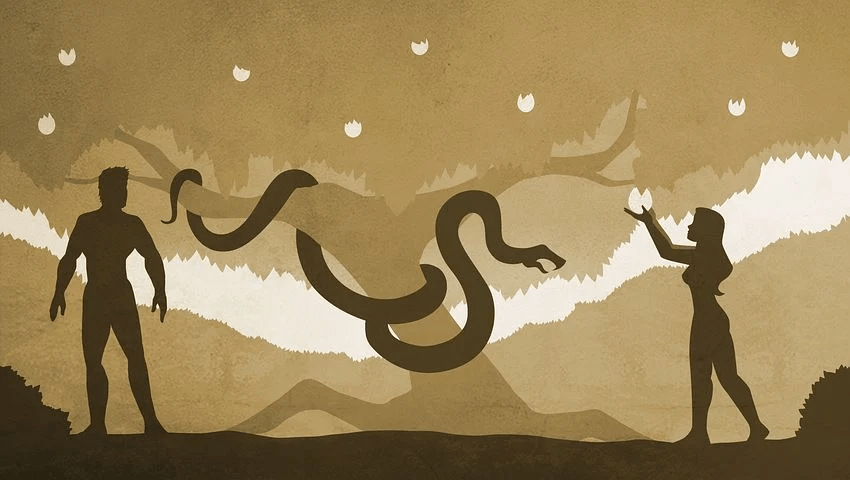
The Fall of Humanity (Genesis 2:15-17, 3:1-7)

The Lord God took the man and put him in the Garden of Eden to work it and take care of it. And the Lord God commanded the man, “You are free to eat from any tree in the garden; but you must not eat from the tree of the knowledge of good and evil, for when you eat from it you will certainly die….”

Now the serpent was more crafty than any of the wild animals the Lord God had made. He said to the woman, “Did God really say, ‘You must not eat from any tree in the garden’?”

The woman said to the serpent, “We may eat fruit from the trees in the garden, but God did say, ‘You must not eat fruit from the tree that is in the middle of the garden, and you must not touch it, or you will die.’”

“You will not certainly die,” the serpent said to the woman. “For God knows that when you eat from it your eyes will be opened, and you will be like God, knowing good and evil.”

When the woman saw that the fruit of the tree was good for food and pleasing to the eye, and also desirable for gaining wisdom, she took some and ate it. She also gave some to her husband, who was with her, and he ate it. Then the eyes of both of them were opened, and they realized they were naked; so they sewed fig leaves together and made coverings for themselves. (New International Version)

Lent is a 40-day season of preparation and repentance for Christians anticipating Good Friday’s cross of Christ and the victory over sin in Easter’s celebration of Christ’s resurrection. To understand why there is a need for repentance, let’s turn to where disobedience, shame, and guilt first entered the world.

Ever since humanity’s fall into sin, our human nature tends to look at the one thing we can’t do, instead of seeing all the range of possibilities that we can do.  The serpent (the devil) was successful in getting Adam and Eve to focus on that one tree they needed to avoid. In our fallen condition, just tell us what we can’t do and we’ll probably be sure to do it – rather than enjoy all the vast prospects we presently have and can actually do with God. 

What’s more, the devil subtly planted a terrible and untruthful idea in the heads of Adam and Eve – that God was somehow holding out on them and was not providing everything they really needed and wanted in life.

Sin may look attractive, and even initially taste good. Yet, disobedience has an awful aftertaste and damages our insides. Indeed, sin always over-promises and under-delivers.

Perhaps the greatest and deepest effect of sin is the shame of disobedience which causes us to hide from God, one another, and even ourselves. All this hiding causes spiritual blindness. We end up sleepwalking through hell, unaware of our awful spiritual plight. 

Because of this reality, we need deliverance; we need a Savior to intervene and save us from our ignorance and guilt. As mere dust, we need God’s Spirit to breathe new life into us so that we may again enjoy the Lord in Paradise.

Our fallen spiritual condition does not want to acknowledge our need for the sheer grace of God. Sewing some fig leaves together is symbolic of Adam and Eve’s new independence from God; from now on, they’re going to operate on their own.  The introduction of sin into the world causes people to look for ways to cope and deal with life apart from God.

We want to return to Paradise. We don’t want to hurt and struggle and be overburdened anymore. So, we devise all kinds of ideas and ways of doing that. And the Paradise we seek always seems to be “out there” somewhere, just out of our reach. 

In our fallen condition, we are plagued with the “if only” syndrome:

If only I had _____ (fill-in the blank) then I would be happy and be in Paradise.

If only I could meet the right person, then that special someone could meet my needs and complete me.

If only the people in my life were better, then everything would be okay and I could enjoy Paradise.

If only I had more money, a bigger house, another car, more power and influence.

If only other people would stop being jerks, care more, serve more, love more. If only my family would listen to me.

If only I could have my way, then there would surely be a restoration to Paradise.

The point to all the “if only” is that it twists us all up into believing that I’m either unlovable or that everyone else is the problem. If they would just change, then the world would be a better place. Or if only I was better, then I wouldn’t have so many problems.

The truth, however, is that we already have what we are so desperately looking for. And since we are unaware that God is with us, and wants to provide for us, we sew fig leaves together and look love in all the wrong places.

No man or woman is going to complete you because no person can fix what is broken in your heart. If you had your ideal relationship, perfect family, and dream job, you would still be empty. Why? Because you and I need a Savior to deliver us from our sin.

We all need deliverance from our disordered loves and misguided attempts to find Paradise in this life apart from God. The temptation after The Fall is to try and manufacture happiness outside of God through perfect relationships and ideal circumstances. 

What to do? Repent. Turn from the shame and guilt of disobedience and deal with the brokenness in our own lives. And that is what the season of Lent is all about.

Without God there are hidden feelings of mistrust, alienation, conditional love, selfishness, greed, and injustice. But with God there is forgiveness, grace, and unconditional love – the very kind of love that we need.

In this season of Lent, we must repent of our hiding and wishing for everything and everyone else to be different without any cost to myself. 

What do you need to repent of in this season? 

Who are the people that you look to do for you what only God can do? 

Have you forsaken your first love of Jesus Christ? 

How is the state of your relationship with God? Has it been stale, dull, and lacking passion, desire, and energy?  Has distance replaced intimacy between you and God? 

Do you avoid the spiritual disciplines of bible reading and prayer because you believe something else will satisfy the real needs of your heart? 

Are you keeping up appearances and hiding, while on the inside you have doubt, depression, and despair that things will never change? 

The prayers of this season are to be prayers of repentance:

Merciful God, we confess that we have hungered after things which do not satisfy.  We have doubted your ability to provide for us. Forgive our lack of faith. Restore in us such trust and love that we may again walk with you in Paradise. 

Loving God, we admit that we’ve given ground to Satan by believing his deception that we can find ultimate happiness in things other than you. So, in the name of the Lord Jesus Christ, we resist all of the devil’s strategies to hold us in spiritual blindness and darkness. 

Blessed Holy Spirit, we invite you to bring the fullness of your power to convict us and lead us into faith in Jesus. We humbly ask that you bring all the power of Christ’s crucifixion and resurrection directly against all forces of darkness seeking to destroy us. Set us free from all that blinds us and keeps us in bondage. 

Grant us, O God, the grace to be faithful and persistent in our walk with you.  Amen.