Struggling in the Season (Genesis 25:19-28)

Art by Sefira Lightstone

These are the descendants of Isaac, Abraham’s son: Abraham was the father of Isaac, and Isaac was forty years old when he married Rebekah, daughter of Bethuel the Aramean of Paddan-aram, sister of Laban the Aramean. Isaac prayed to the Lord for his wife because she was barren, and the Lord granted his prayer, and his wife Rebekah conceived. The children struggled together within her, and she said, “If it is to be this way, why do I live?” So she went to inquire of the Lord. And the Lord said to her,

“Two nations are in your womb,
    and two peoples born of you shall be divided;
the one shall be stronger than the other;
    the elder shall serve the younger.”

When her time to give birth was at hand, there were twins in her womb. The first came out red, all his body like a hairy mantle, so they named him Esau. Afterward his brother came out, with his hand gripping Esau’s heel, so he was named Jacob. Isaac was sixty years old when she bore them.

When the boys grew up, Esau was a skillful hunter, a man of the field, while Jacob was a quiet man, living in tents. Isaac loved Esau because he was fond of game, but Rebekah loved Jacob. (New Revised Standard Version)

As we near the end of Advent and the anticipation of the Christ child, today’s Old Testament lesson is a reminder to us of a much earlier birth.

The birth of the twins Jacob and Esau from Rebekah and the patriarch Isaac, are part of the promise given to Abraham, which would find its fulfillment centuries later, according to Christians, with the incarnation of Christ.

In this time of year, we may commonly associate the season with an emphasis on peace and unity. Yet, we must bear in mind that the need to emphasize these positive elements arises because enmity and discord exists among us.

In our story for today, we are reminded that God also works within conflict, even family conflict, to further divine purposes and promises. God’s presence exists through times of strife and disagreement, just as much as it does in times of joy of celebration.

The sibling rivalry between Jacob and Esau began within the womb and at their birth. Their adverse relationship and continual competition was something God used, and bent it toward the Lord’s good plans and purposes for people.

Just as Mary and Elizabeth were mothers central to the direction of God’s will accomplished on this earth, so Rebekah is a pivotal character in the early history of the people of Israel, and their covenantal promises.

And similar to Mary and Elizabeth in the New Testament, Rebekah in the Old Testament was given children by means of God’s gracious power. We are meant to see God’s sovereign authority over all things, including control of the future. The text of Scripture values faith, and trusting in divine promises.

The two babies, Esau and Jacob, are more than twins. They each are ancestors of entire nations of people: Esau of Edom, and Jacob of Israel.

Against all odds, Jacob is the one who kept coming out on top of things. His character reveals something of the nation of Israel’s understanding of themselves. Israel is a small, and by all appearances, an insignificant nation; and yet, they become identified as God’s covenant people.

The ways of the Lord are often quite contradictory to societal convention and cultural expectations. The smallest and the youngest, the least and the forgotten, become prominent in God’s economy of things. This is a common pattern throughout Holy Scripture. (e.g. Genesis 17:18-19; 42:6-9; 1 Samuel 16:10-13; 17:33, 50)

Even though the two of them are twins, Esau and Jacob have very different personalities and interests. Esau was an outdoorsman, a hunter, who wasn’t home much. He had an extroverted life which had him interacting with all sorts of different people, especially women from other places. Jacob, however, hung around the home tents, an introvert. He comes across a stereotypical mama’s boy.

Yet, despite Jacob’s continual conniving, and Esau’s constant disdain for his family’s heritage with God, the Lord nevertheless showed generosity to both brothers.

But for a long time, it seemed as if one might kill the other, or both of them may do away with each other. Yet, eventually, there is a reunion between the brothers.

Ultimately, their story as brothers ends without any more sibling rivalry or hatred. Instead, there is reconciliation, blessing, and peace, as they positively accept one another and share in the burial of their father Isaac.

Especially in this time of year, when families gather around tables to eat, watch football games together, and go outside for semi-ceremonial smokes and drinks – and all that goes with being together around family, there is the inevitable conflict.

And when it comes, each individual responds in their typical way of either avoidance, confrontation, or quick-fix resolution. But there is also another way to respond.

Know that struggle, rivalry, emotion, longing, and belonging are all part of our human experience. And God is just as much present within those times, as God is in the blessing before eating, or the spiritual conversation between friends, or the collective sojourn to church on Christmas Eve and/or Christmas Day.

The blessing and abundance of God comes through all sorts of means. The ways of the Lord are often beyond what we might think or believe.

This season is an opportunity to embrace the conflict and the struggle, in order to know God better, know friends and family better, and better know what it means to be blessed.

Almighty, ever-living, and ever-loving God, the Nativity of your Son draws near. May divine mercy flow from your Word, made flesh for us of the Virgin Mary, to us, your unworthy yet faithful servants. Let him establish his dwelling on this earth, and in our hearts, Jesus Christ, our Lord, who lives and reigns with you in the unity of the Holy Spirit, one God, now and forever. Amen.

The Tower of Babel (Genesis 11:1-9)

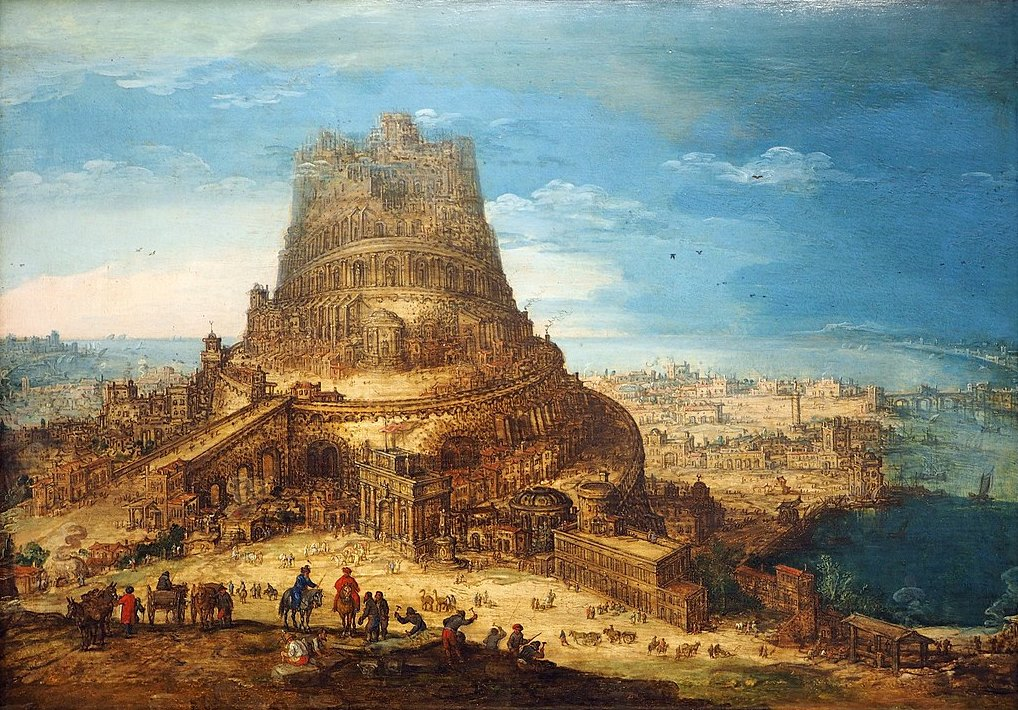
The Tower of Babel, by Hendrick van Cleve III (1525–1589)

At one time, the whole Earth spoke the same language. It so happened that as they moved out of the east, they came upon a plain in the land of Shinar and settled down.

They said to one another, “Come, let’s make bricks and fire them well.” They used brick for stone and tar for mortar.

Then they said, “Come, let’s build ourselves a city and a tower that reaches Heaven. Let’s make ourselves famous so we won’t be scattered here and there across the Earth.”

God came down to look over the city and the tower those people had built.

God took one look and said, “One people, one language; why, this is only a first step. No telling what they’ll come up with next—they’ll stop at nothing! Come, we’ll go down and garble their speech so they won’t understand each other.” Then God scattered them from there all over the world. And they had to quit building the city. That’s how it came to be called Babel, because there God turned their language into “babble.” From there God scattered them all over the world. (The Message)

At first glance, the Bible reader may wonder what the big deal is about people coming together to build a tower.

A mere cursory look at the text might seem as if God is having some sort of divine anal-retentive moment of control. After all, the people are just trying to get some work done; it’s not like they’re going to somehow invade God’s privacy with a very tall tower.

But that’s not what was going on, way back there several millennia ago. Something more subversive was afoot, and the Lord was completely savvy to what was happening.

The previous chapter (Genesis 10) presents a rather orderly spread of the burgeoning humanity across the earth – which is consistent with God’s original blessing and mandate at the creation of people:

“Prosper! Reproduce! Fill Earth! Take charge!
Be responsible for fish in the sea and birds in the air,
    for every living thing that moves on the face of Earth.” (Genesis 1:28, MSG)

Yet, here in Genesis 11, people have intentionally stopped discovering the earth. It appears they are more curious about heaven. So, they amassed themselves together and decided to move vertically rather than horizontally across the world.

There seems to have been a great deal of human ambition that was eyeing an assault and takeover of the divine realm, instead of busying themselves with their God-given human realm. Another way of putting it is that they were irresponsible – not caring for creation – but more concerned about having some leverage on God.

Ambition, in and of itself, is neither good nor bad; it’s where that ambition is aimed. And the early people were directing their sights up rather than out – trusting in their human ingenuity and technological abilities to achieve autonomy for themselves.

Because God created humans in the divine image and likeness, people were (and still are!) amazing creatures who can accomplish incredible feats of achievement in whatever they set their minds and hearts to do. Yet, in the case of constructing a tower (or ziggurat) humanity was ignoring their mandate to care about the earth and its inhabitants. Instead, they were working their own will to build a name for themselves, apart from God.

So, the Lord stepped in by confusing their common language so that they would have difficulty communicating with one another. On the surface, it might seem that God was being capricious. But examining just a bit deeper, we can observe what would happen if people threw off their responsibility to the planet and all of its creatures.

The entire world could be subject to terrible inattention. Much like a backyard garden that becomes overrun with weeds due to neglect, the whole earth was in jeopardy of falling into a system of evil that would care nothing for its abundant life and intricate ecosystems. In short, the earth could be ruined.

If this sounds eerily like what we humans are doing today, its probably because that is precisely what we are doing – putting a collective stiff-arm to God and doing whatever the heck we want in exploiting the earth for our own human purposes.

Never mind that entire species of fish and animals, along with flora and fauna and forests and wetlands and grasslands are being harmed and destroyed by so called human ingenuity and technological advance.

It is our own arrogant pride and hubris of abject selfishness, in setting up ourselves as masters of the universe, that brings us to the edge of an environmental holocaust – not to mention fighting amongst ourselves about who will be in charge and in control of it all. We’ll engage in wars and atrocities if that’s what it will take.

Therefore, the Tower of Babel is a symbol of all that is wrong – not right – with humanity. Until we can unlearn our ancient ways of arrogance and injustice, ignorance and lack of awareness, and recover even older ways of caring for one another and the earth, then we will find ourselves being broken by the divine gravity of judgment which exists whenever people choose to defy the order of the world.

In many ways, primeval history remains alive in our daily current events. Yet, it can change. But it will take a heavy dose of humility and confession of guilt to begin undoing the harm we have imposed on others and on our world. And it will take a return to Eden, to the responsibility of creation care, and of healthy relational connections with both other people and God.

Every one of us is culpable – whether we have been directly involved in systemic evil, or not. We all have participated in and benefited from our privilege as human beings living on this planet – sometimes to the extent of turning a blind eye to the great needs of the earth and its inhabitants.

So, what will you do about it? Who will you turn to? Where does your ultimate trust rest? Are you willing to work for good, to be merciful, just, kind, and loving in a pursuit of right relationships with God, others, and the earth?

Sovereign Lord and Creator, renew our spirits and cleanse our hearts. Renew our minds and transform our lives. Renew our cities and rebuild our ruins. Renew our world, in your name we pray, Amen.

You Have Inherent Worth (Genesis 2:4b-7)

Elohim Creating Adam, by William Blake, 1795

In the day that the Lord God made the earth and the heavens, when no plant of the field was yet in the earth and no vegetation of the field had yet sprung up—for the Lord God had not caused it to rain upon the earth, and there was no one to till the ground, but a stream would rise from the earth and water the whole face of the ground—then the Lord God formed man from the dust of the ground and breathed into his nostrils the breath of life, and the man became a living being. (New Revised Standard Version)

The word “Genesis” comes from the Septuagint, an ancient Greek translation of the Old Testament, and means “origin.” The first book of the Bible does indeed have to do with origins. And in the early chapters, Genesis addresses the origins of the earth and all it’s life and systems, including humans.

Genesis 1 is a poetic account of those origins. Genesis 2-3 provide a complementary narrative account of creation and the beginning of the world. These three chapters together affirm the inherent goodness of all creation, as well as how complex it all truly is.

God is the Creator of the earth and humanity. The original man, Adam, is a name transliterated from the Hebrew adamah, which means ‘ground’ or ‘dirt/dust.’ This relationship between Adam and the literal dirt of the planet is the basis for humanity’s special relationship with the land and taking good care of it as a proper steward of the earth. In the beginning, working the actual ground was set up as a blessing.

We are living creatures, having been given breath (Hebrew nephesh). Along with all the living breathing animals on this earth, we share a basic creaturehood and are thus connected with each other. In addition, only people are formed in God’s likeness and enjoy a special relationship with the Lord in being God’s image-bearers. (Genesis 1:27)

God created you and me as good. The Lord has made provision for us to glorify God, and to be successful in doing the Lord’s will. People who are ineffective in living out their spiritual lives are persons who do not know the truth about themselves. 

Both truth and error are powerful. If people are misguided about who they are, then they become like empty wells with no water to draw from. Many of our problems, failures, and shortcomings are largely due to a misunderstanding of our basic personhood. 

A profound result of this misunderstanding is a lack of self-worth. Whenever we are in error about who we really are, we have automatically limited ourselves to what we can do in our lives. Comparing ourselves to others is not helpful; nor is trying to simply gin-up good feelings about ourselves. 

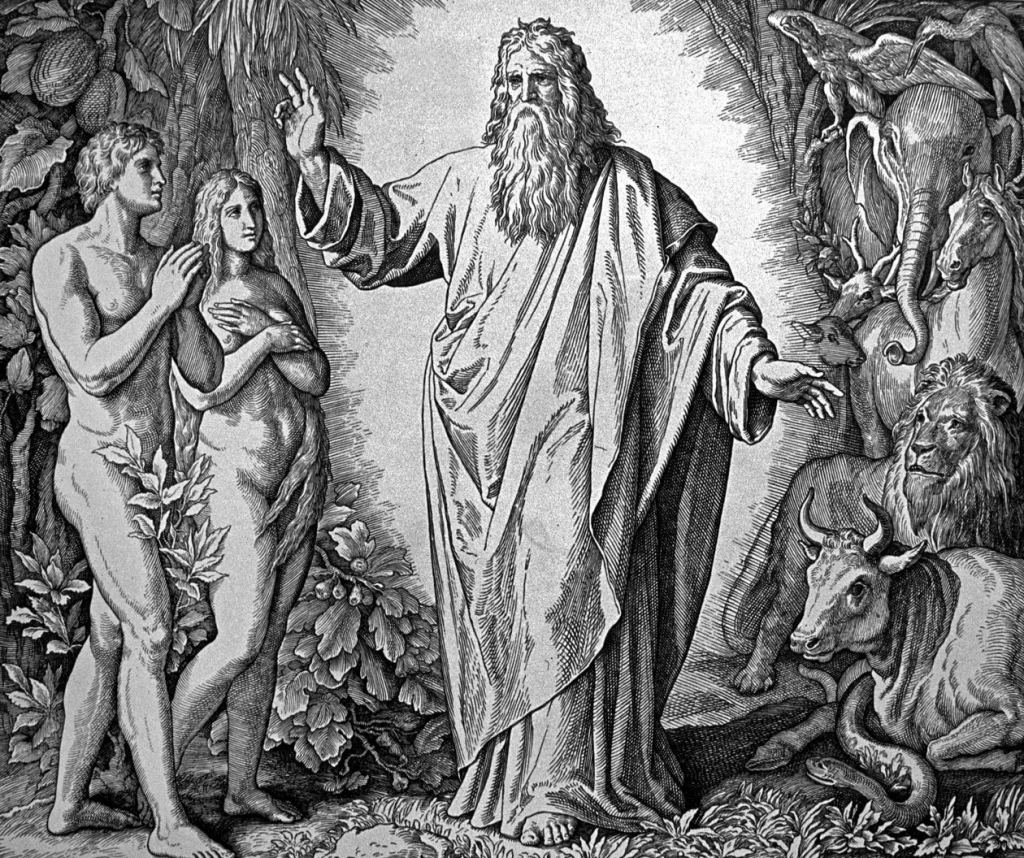
God Creates Adam and Eve, by Julius Schnorr von Carolsfeld (1794-1872)

Only by accepting who we truly and really are, can we actually be helped, and discover human fulfillment in this life. Let us consider that it is vitally important what the Holy Scriptures say about us; and also equally significant to respond in faith to the recognition of our great worth on this earth.

An important bedrock truth we must understand is that people been created in the image and likeness of God (Genesis 1:16-17). We can only begin to understand ourselves if we begin with creation. Since God is a Person of infinite perfection and goodness, to be created in God’s image means we are persons of great potential and value.

To be a person means that we are self-conscious and can make decisions. We also have inherent rights to know, to be heard, to feel, to have an opinion, to be honored, to develop potential, to assume responsibility, and to enjoy life and all creation. In other words, God treats us as persons; therefore, we may not treat ourselves any less than that.

People were created to know God, to understand spiritual truth, and to perform spiritual functions. 

Because we are created by God, we are sacred individuals. We commit a profound shortcoming when we do not develop our potential and live as though life and fulfillment were graciously given by God for our good. 

Accepting erroneous thoughts about ourselves (and we all have) leads us to misinterpret our circumstances, relationships and opportunities. Without even realizing it, we bring confusion and failure into many, if not all, areas of our life.

One of the clearest evidences that we may not know, accept, and practice the biblical truth of our self-worth, is seen in our response to Holy Scripture. Too often we observe altruistic people and say, “I can’t be like that!” Or we read scriptural promises and commands and say, “I can’t do that!” Living with that kind of unbelief and error in our lives results in discouragement and/or criticism of others who seem to be successful in their spiritual lives.

Here is the truth about you:

You are loved by God (John 15:9; 17:23). This means that God recognizes us as persons, gives us our rightful place in the divine life, and will do right by us. God has our back. Therefore, let us accept this truth.

You are called to live in fellowship with God (1 Corinthians 1:9). No greater honor could be bestowed on us than the invitation to interact with the Living God. As we do, the door is open, so that God can minister to us and lead us into the knowledge and practice of the divine will.

You have been given divine revelation (Hebrews 1:1-3). Having the Bible available to us (in our own language!) is one of the greatest possessions we could ever receive. There is nothing more powerful than the truth about God and divine desires for our daily life. Therefore, let us pay attention to divine revelation and obey it, since God has so graciously given it to us.

You are the object of divine redemption (Romans 5:8-9). The great evidence of our human worth is the reality that Jesus Christ has secured our redemption from guilt, shame to himself. Jesus, the Son of God, loved us and gave himself for us. (Galatians 2:20)

You are the temple of the Holy Spirit (1 Corinthians 6:19-20). The actual physical temple of the Old Testament was filled with the glory of God. Today, through Christ’s redeeming love on the cross, every believer in Jesus is God’s temple. Therefore, God wants to work in us and through us for the Lord’s glory and honor.

The conclusion to the matter is that the way to know our true self-worth is to accept what Holy Scripture says about us; and then respond by faith and love to its loving and redeeming message. 

According to the book of Genesis, you are no accident. You are a person of infinite worth to God. So live into this wonderful truth.

Soli Deo Gloria

Receive the Blessing (Genesis 48:8-19)

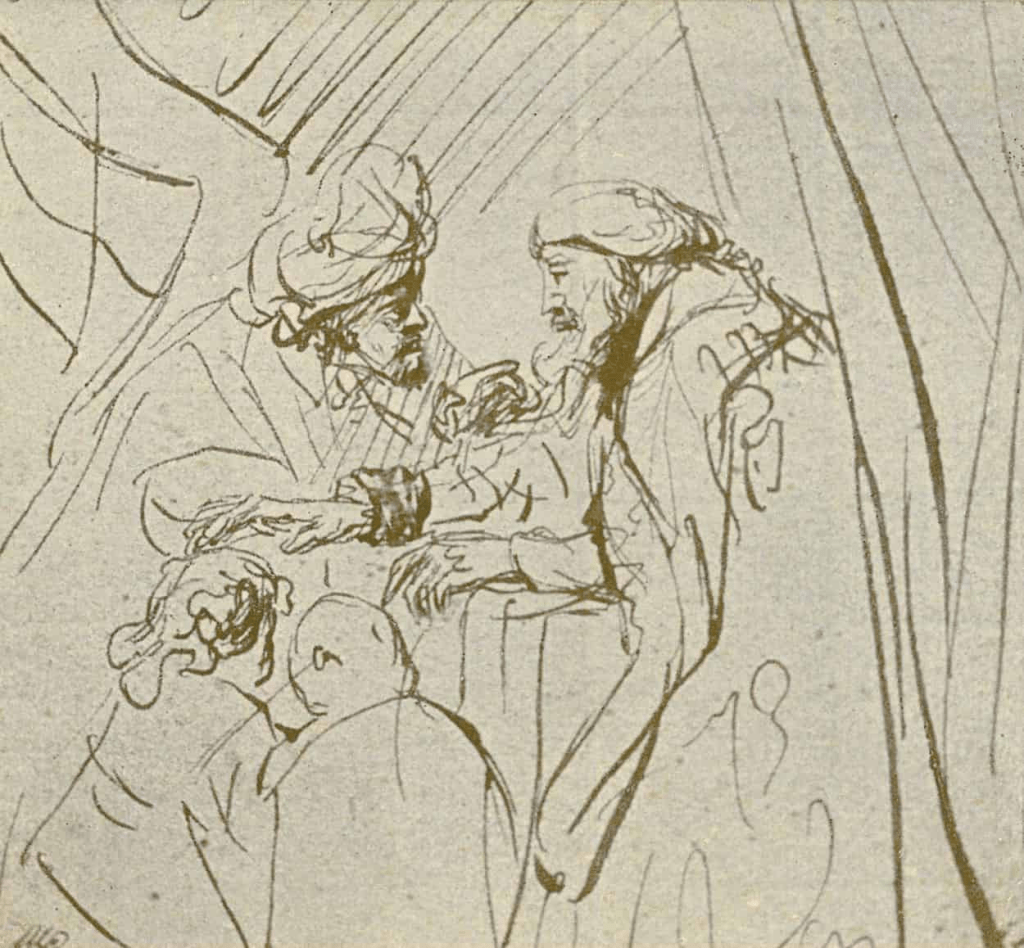
Jacob Blessing Ephraim and Manasseh, by Rembrandt van Rijn (1606-1669)

When Israel saw the sons of Joseph, he asked, “Who are these?”

“They are the sons God has given me here,” Joseph said to his father.

Then Israel said, “Bring them to me so I may bless them.”

Now Israel’s eyes were failing because of old age, and he could hardly see. So Joseph brought his sons close to him, and his father kissed them and embraced them.

Israel said to Joseph, “I never expected to see your face again, and now God has allowed me to see your children too.”

Then Joseph removed them from Israel’s knees and bowed down with his face to the ground. And Joseph took both of them, Ephraim on his right toward Israel’s left hand and Manasseh on his left toward Israel’s right hand, and brought them close to him. But Israel reached out his right hand and put it on Ephraim’s head, though he was the younger, and crossing his arms, he put his left hand on Manasseh’s head, even though Manasseh was the firstborn.

Then he blessed Joseph and said,

“May the God before whom my fathers,
    Abraham and Isaac, walked faithfully,
the God who has been my shepherd
    all my life to this day,
the Angel who has delivered me from all harm
    —may he bless these boys.
May they be called by my name
    and the names of my fathers, Abraham and Isaac,
and may they increase greatly
    on the earth.”

When Joseph saw his father placing his right hand on Ephraim’s head he was displeased; so he took hold of his father’s hand to move it from Ephraim’s head to Manasseh’s head. Joseph said to him, “No, my father, this one is the firstborn; put your right hand on his head.”

But his father refused and said, “I know, my son, I know. He too will become a people, and he too will become great. Nevertheless, his younger brother will be greater than he, and his descendants will become a group of nations.” (New International Version)

Jacob Blessing Ephraim and Manasseh, by Frederick Pickersgill (1820-1900)

Jacob (Israel) was on his deathbed. His son, Joseph, was in charge of all Egypt. Jacob had Joseph bring his two sons to him so that he could bless them. Joseph fully expected that his father would follow the convention of primogeniture, that is, the elder son receives a double inheritance. But that is not what happened. Jacob purposely went against normal convention.

It was not, however, against biblical convention. In the stories of Ishmael and Isaac, Esau and Jacob, the rights of the first-born are superseded by the promises of the next-born.

Family rules, ethnic customs, and cultural procedures are fine. Yet, when those practices become inflexible laws which are never to be different, then we get into trouble. Joseph had an expectation of how the blessing of his sons was to go. Jacob had another idea about it.

“We’ve never done it that way before,” are the seven last words of any institution. Any group organized around that belief is doomed. If we cannot make a distinction between the letter and the spirit of a law, rule, or custom, then our inflexibility will eventually break us.

In the ancient world, and even in many cultures today, birth order determines how things go with families, societal rights, and personal obligations. The firstborn occupies an esteemed position. In Judaism, when the temple still stood, the first fruits and firstborn of animals were considered the best sacrifices.

By blessing the younger son, and going against expected convention, Jacob taught future generations a valuable lesson: A person’s actions and character matter more than birth order. What’s more, being blessed first or last or whenever is not what guarantees future success.

Jacob had firsthand knowledge and experience that life is unpredictable and requires faith in God. One’s life cannot be projected and determined along an upward linear trajectory. We cannot predict what will happen in our lives by laying things out with Cartesian coordinates. Ultimate control belongs to God, not us. And that’s a good thing, because the Lord is good, all the time.

Our Lord, everything you do
    is kind and thoughtful,
and you are near to everyone
    whose prayers are sincere.
You satisfy the desires
    of all your worshipers,
and you come to save them
    when they ask for help.
You take care of everyone
who loves you,
    but you destroy the wicked. (Psalm 145:17-20, CEV)

It’s best to trust in pure goodness than to rely upon human ingenuity. Abraham – who was not a firstborn son, but the youngest of three – received the call from God to receive blessing. Isaac inherited the birthright over his older half-brother Ishmael. Jacob himself received the birthright over his older twin brother Esau. And Joseph, next to the youngest in a long line of sons from Jacob, was the clear head of the clan.

In matters of human faith and divine promises, birth order and typical cultural mores don’t apply. More important is fidelity to God, concern for one’s fellow humanity, and upholding love for the family. And it is these very things that are important going forward. Inevitably, suffering comes. And when it does, birth order, primogeniture, and societal expectations aren’t going to get you through it.

It is likely that the main reason why some folks embrace the adage “we’ve never done it that way before” is because of fear. Doing the same thing over and over again, even if it isn’t helpful anymore or is useless in a particular situation, still feels normal and secure. Moving out in faith is scary; we don’t really know how things are going to shake out.

This is why our concept and understanding of God is so crucial. A good God acts on our best interests and does not act with malevolence toward us.

I prayed to the Lord, and he answered me;
    he freed me from all my fears.
The oppressed look to him and are glad;
    they will never be disappointed. (Psalm 34:4-5, GNT)

Only obeying the letter of the law leads to fear. Only acknowledging the spirit of the law results in bondage. Only by observing both the letter and the spirit of the law will we experience freedom from fear and deliverance from anxious striving for blessing.

Blessing is given freely by the God who delights in doing so. Let the Lord bless you in the ways God wants to do so.

May God have mercy on you, bless you, and show you kindness, today and every day. And may the grace of the Lord Jesus, the love of God the Father, and the encouragement of the Holy Spirit be with you, now and forever. Amen.