


Praise the Lord,
the God of Israel!
He has come
to save his people.
Our God has given us
a mighty Savior
from the family
of David his servant.
Long ago the Lord promised
by the words
of his holy prophets
to save us from our enemies
and from everyone
who hates us.
God said he would be kind
to our people
and keep
his sacred promise.
He told our ancestor Abraham
that he would rescue us
from our enemies.
Then we could serve him
without fear,
by being holy and good
as long as we live.
You, my son, will be called
a prophet of God
in heaven above.
You will go ahead of the Lord
to get everything ready
for him.
You will tell his people
that they can be saved
when their sins
are forgiven.
God’s love and kindness
will shine upon us
like the sun that rises
in the sky.
On us who live
in the dark shadow
of death
this light will shine
to guide us
into a life of peace. (Contemporary English Version)
This beautiful psalm and prophecy came from the old priest Zechariah. It is a praise to God for the Christ about to be born; and, a prediction of Zechariah’s own son, newly born, as one who will prepare the way for Jesus. This benediction speaks of better days to come, pointing forward to peace (shalom) spiritually, politically, and relationally.
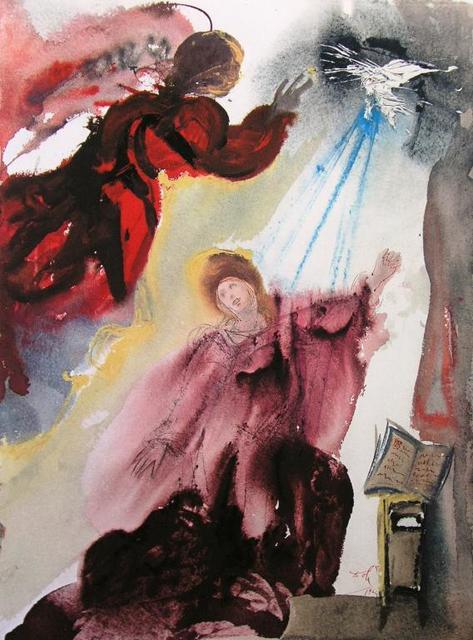
Zechariah and his wife Elizabeth were old and well past the childbearing years. In fact, Zechariah is portrayed earlier in Luke’s Gospel as something of a stereotypical grump. After being taken up to the temple in a golf cart because he could walk so well anymore, Zechariah was confronted by an angel and nearly lost his dentures out of fear.
The angel Gabriel told old Zechariah that his wife would bear a son who will prepare the way of Messiah. Zechariah then gave a sort of “Hmpff! That’s not likely, Sonny. Look at me and my wife. Are you sure you have the right couple, and the orders in heaven didn’t get screwed up?”

Gabriel was not very keen on being doubted, and it earned Zechariah losing his voice until John the Baptist was born. It was after Zechariah had nine months to think about that encounter, and experience watching a child grow in his wife’s womb that, after John’s birth, Zechariah was a changed man.
Zechariah went from just one of many old priests in Israel, to being inspired by the Spirit and singing the praises of God. We can almost imagine him as an ancient version of Fred Astaire, picking up his cane and dancing with joy.
Our lives are not so different than Zechariah in this respect: We are a complex concoction of both fear and joy that could combust at any time in either direction.
We sway back and forth from fear and anxiety to joy and gratitude. Certain words can swing us to one extreme or the other: finances, pandemic, politics, religion, the future. They can create in us either immediate tension or smiling happiness; tomorrow they might do just the opposite. Zechariah went from anxious to elated, fearful to joyful.
We live in a toxic world filled with polarizing opposites and entrenched stereotypes of others. People vacillate between love and hate, pursed lips of anger and dispositions of peace. So, how do we rise above the heated rhetoric that exists in our world? How are we going to deal with all the disharmony and vitriol? By possessing the peace given to us in the prophecy and promise of Jesus. Our feet need to be guided in the path of peace.
Jesus came to give peace. All the words of Zechariah’s inspiration point toward the harmonious peace of salvation, rescue, and forgiveness. The time was finally coming when there would be peace in its fullest sense – wholeness and thriving in life which was unprecedented and unthinkable before Jesus.
“True peace is not merely the absence of some negative force, tension or war – it is the presence of some positive force, justice, good will, brotherhood.”
Martin Luther King, Jr.
We are to live the Christian life and have a ministry in the church and the world without fear. Instead, we are to focus on what we are called to be and to do. Jesus rescues and delivers so that we will have forgiveness of sins which enables us to serve the Lord in holiness and righteousness, without fear.
Peace does not just magically appear out of thin air. Peace was bought at an agonizing price – the blood of Jesus. Peace must be pursued. Practices of peace must be engrafted into our lives if we are going to experience it on the daily practical level. Yes, obtaining peace is difficult. Yet, we instinctively know it is worth it.
Spiritual health comes through cultivating the peace of God in our lives through:
- Avoiding chronic negativity and embracing the positive.
- Making things right with others and embracing a reconciling spirit.
- Pursuing Jesus with heart, soul, mind, and strength.
- Reframing our situations to a fresh vision of peace, wholeness, integrity, spiritual growth, and relational health, instead of focusing solely on problem-solving.
Zechariah, by means of the Holy Spirit, gave us a vision of a future full of peace, joy, and thriving. The name “Zechariah” means in Hebrew “God remembered.” God has not forgotten divine promises. The time has come to take hold of the vision God had from the very beginning to walk with humanity in continual fellowship and happiness in the garden, a place of abundant growth, beauty, and health.
Beginning ten years ago, a new kind of study has come from a task force put together by professionals across a wide spectrum of disciplines known as the World Happiness Report. Every country in the world is ranked according to criteria such as the gross domestic product, social support, healthy lifestyles, freedom to make choices, lack of corruption, and both negative and positive outlooks on life.
The United States has yet to make the top ten list on happiness. Even with America’s vast resources, we are, collectively speaking, a very unhappy people. I believe the most interesting finding from the World Happiness Report was their conclusion as to what makes one country happier than another. The Report consistently concludes that citizens of the happiest nations on earth continually find a steady stream of peace and joy in three sources: their families, their rituals/traditions, and their religion.
It will be hard to find joy in our lives through our Christianity if we are not experiencing the peace of Jesus Christ. Christian liturgical rituals and observances of seasons like Advent help remind us we have peace with God through our Lord Jesus Christ.
The birth of Jesus turned Zechariah’s world upside-down. Forgiveness of sins, spiritual peace, and human well-being can be found in Christ. Here are several practical ways we can implement the peace we have in Jesus Christ today:
- Slow down, pause, breathe, and pray.
Do not worry about anything; instead, pray about everything. Tell God what you need and thank him for all he has done. Then you will experience God’s peace, which exceeds anything we can understand. His peace will guard your hearts and minds as you live in Christ Jesus. (Philippians 4:6-7, NLT)
- Exchange fear for the presence of God.
For I, the Lord your God, hold your right hand; it is I who say to you, “Do not fear, I will help you.” (Isaiah 41:13, NRSV)
- Listen to music, sing, or make music yourself.
Encourage each other with psalms, hymns, and spiritual songs. Sing and make music in your hearts to the Lord. (Ephesians 5:19, ERV)
- Have a “go to” word, phrase, or Scripture verse.
The Lord is my shepherd. I lack nothing. (Psalm 23:1, CEB)
- Unplug for a time from electronics and close your eyes.
We live by what we believe, not by what we can see. (2 Corinthians 5:7, NCV)
- Try aromatherapy and activate your sense of smell.
Through us, God brings knowledge of Christ. Everywhere we go, people breathe in the exquisite fragrance. Because of Christ, we give off a sweet scent rising to God, which is recognized by those on the way of salvation—an aroma redolent with life. (2 Corinthians 2:14-15, MSG)
- Set healthy boundaries.
Jesus went into a village. A woman named Martha welcomed him into her home. She had a sister named Mary. Mary sat at the Lord’s feet and listened to him talk. But Martha was upset about all the work she had to do. So, she asked, “Lord, don’t you care that my sister has left me to do the work all by myself? Tell her to help me.” The Lord answered her, “Martha, Martha! You worry and fuss about a lot of things. There is only one thing you need. Mary has made the right choice, and that one thing will not be taken away from her.” (Luke 10:38-42, GW)
May the peace of Christ guide you into the path of peace in this Advent season and be with you, now and forever. Amen.



 Rev. Tim Ehrhardt