Don’t Be a Fool (Proverbs 1:20-33)

Wisdom shouts in the street;
    in the public square she raises her voice.
Above the noisy crowd, she calls out.
    At the entrances of the city gates, she has her say:
“How long will you clueless people love your naïveté,
    mockers hold their mocking dear,
    and fools hate knowledge?
You should respond when I correct you.
    Look, I’ll pour out my spirit on you.
    I’ll reveal my words to you.
I invited you, but you rejected me;
    I stretched out my hand to you,
    but you paid no attention.
You ignored all my advice,
    and you didn’t want me to correct you.
So I’ll laugh at your disaster;
    I’ll make fun of you when dread comes over you,
        when terror hits you like a hurricane,
        and your disaster comes in like a tornado,
        when distress and oppression overcome you.
Then they will call me, but I won’t answer;
    they will seek me, but won’t find me
        because they hated knowledge
        and didn’t choose the fear of the Lord.
They didn’t want my advice;
    they rejected all my corrections.
They will eat from the fruit of their way,
    and they’ll be full of their own schemes.
The immature will die because they turn away;
    smugness will destroy fools.
Those who obey me will dwell securely,
    untroubled by the dread of harm.” (Common English Bible)
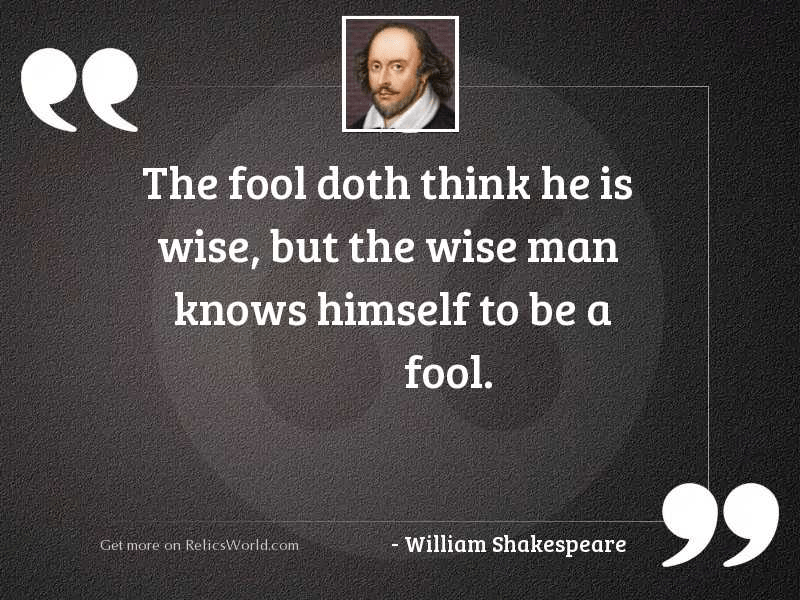
I don’t know about you, but I find that the older I get, the more I realize I don’t know.

What I’m trying to say is that, as I move along in this life, I am discovering more and more how much I need wisdom.

Wisdom is more than being smart, intelligent, or even having some common sense; it is to gain a basic foundation of sound knowledge and instruction, and then having the ability to put that knowledge into practice, applying it to the specific concrete situations we face daily.

In other words, to be wise is to make decisions, engage in actions, and speak words that are appropriate to a given circumstance.

Conversely, stupidity has less to do with one’s intelligence quotient (IQ), lack of education (degrees), or ability to speak well (erudition). To be stupid means that a person is too stubborn to accept help, take advice, or learn from their mistakes.

The Foolish Person

Instead, a stupid fool relies on their own short-sighted opinions, looks for easy ways out of trouble, and generally expects others to think and act the way they do. And that approach to life can literally get you killed. I can testify to that as a hospital chaplain who has been around a lot of death.

The telltale signs of a foolish person are:

  • Refusing to change, even if it means having a better life, or even to keep living
  • Ignoring the advice, correction, or rebuke of another person
  • Being cynical and sarcastic most of the time
  • Mocking and talking down to others
  • Disliking books and reading; or just generally not wanting to learn or consider new ideas
  • Freaking-out when any little thing doesn’t go their way

A person characterized by those things will face disaster, likely sooner than later. That will happen, not so much because they tend to get into trouble, but because they do not have a solid spiritual, emotional, and mental foundation of internal support to draw from. So, when disaster hits them, they fall over and crumble, like a house with its foundation built on sand.

Fools won’t find God in the mix of their hardship since they did not look to the Lord to begin with. And even in the midst of their adversity, the fool would rather blame God than seek God’s help. Indeed, stupidity is the deliberate cultivation of ignorance.

The Wise Person

The wise person, however, is careful to set aside time so that they can learn about God and God’s Word. They seek to know God’s commands in order to live honestly, ethically, responsibly, and justly.

Wisdom has taught them humility, obedience, and acceptance. When the storms of life hit the wise, they are safe and secure in a house built on the rock; the wind and waves shall not blow them over.

People who have sought wisdom can remain calm in the midst of trouble; rely on their acquired experiential knowledge in hard situations; and have faith that doing what is right and just is its own reward.

Wisdom is still calling out, just as she did all those centuries ago to the ancients. Amidst all the noise, bustle, and confusion of our contemporary society, you can hear the clarion voice of Lady Wisdom above the fray – that is, if you are bending your ear to listen…

Almighty God, the Creator and Author of my life, help me learn to read what you have written on my heart. Give me discerning eyes, a steadfast spirit, and courage of heart to look within me in order to understand how to reach outside of me. And once I have begun to read you aright, give me the generosity to help others to read you, to sound you out one letter, and one word of radical giving at a time. Amen.


Make Wise Choices (Proverbs 3:5-12)

Trust in the Lord with all your heart. Never rely on what you think you know. Remember the Lord in everything you do, and he will show you the right way. 

Never let yourself think that you are wiser than you are; simply obey the Lord and refuse to do wrong. If you do, it will be like good medicine, healing your wounds and easing your pains. 

Honor the Lord by making him an offering from the best of all that your land produces. If you do, your barns will be filled with grain, and you will have too much wine to store it all.

My child, when the Lord corrects you, pay close attention and take it as a warning. The Lord corrects those he loves, as parents correct a child of whom they are proud. (Good News Translation)

“The choice to make good choices is the best choice you can choose. Fail to make that choice and on most choices you will lose.”

Ryan Lilly

The biblical book of Proverbs is a collection of short pithy statements based in experiential truth. That is, they are wisdom sayings.

Wisdom is a gradual accumulation of understanding, over time, with a combination of observation and practice.

The Teacher (the Collector of the proverbs) highlights the wisdom needed to navigate life. It’s a bit like learning the basic laws of the universe, such as respecting the force of gravity by not walking off the roof of your house.

Wisdom observes and pays attention; then applies the understanding gained to reality.

Failing to cultivate a wise life (foolishness) creates all kinds of problems.

Notice the realities we need to respect in our Old Testament lesson for today: God, God’s guidance, God’s honor, God’s discipline.

And then notice the verbs which tell us how to respond wisely: trust, remember, obey, honor, pay close attention. Submitting to reality, respecting others, and accepting situations as they are, and not as we want them to be, is evidence of a sage life.

In contrast to the sage response, foolish reactions are made up of pride, avarice, and hate.

Both wisdom and foolishness are evidenced by their outcomes.

The wise person, having been taught a respect for God and the ways of grace, will most likely have the experience of receiving guidance, health, abundance, and love. Conversely, the fool who ignores divine counsel will probably experience misplaced trust, health issues, short-sighted financial decisions, and cruddy attitudes.

“You can’t choose your potential, but you can choose to fulfill it.”

Theodore Roosevelt

All things being equal, the wise person who deliberately and carefully applies knowledge and understanding to life will have an abundant spirit full of satisfaction – whereas the fool who improvises everything will struggle to live in a small world of holistic poverty and want.

The gist of today’s verses is that one cannot live as an island. We all need to practice consultation and collaboration to achieve a good life. Instruction and correction are necessary to obtain the good life. To spurn both divine and human connections in favor of radical personal independence is plain old foolish; it leads to a lousy life.

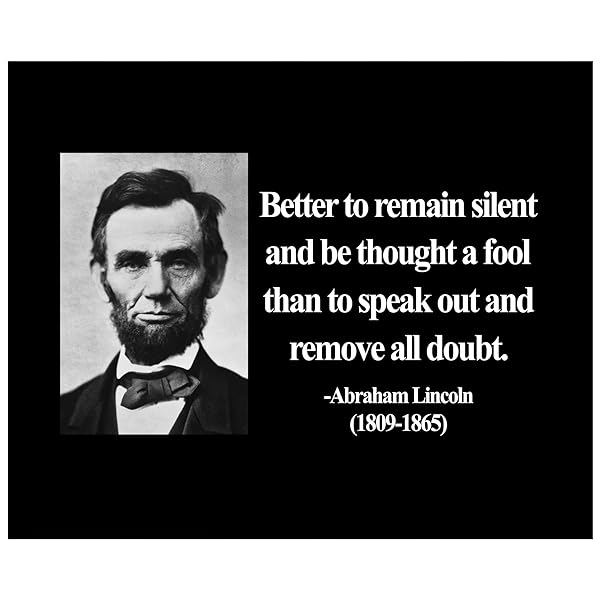
In short, the fool incessantly airs opinions with useless sophistry to an empty room; and, the sage is an observant student to universal rhythms and has learned the timing of proper words and of silence.

I am going to state this all in a different way: Relying on God and others through making and keeping promises to one another is the basis of a solid community and a gratifying personal life. Relying merely on one’s self is a one-way road to spiritual pain and emotional damage, not to mention physical illness and financial scarcity.

Fools always think they know best. Sages always know better than that.

The collection of Proverbs we have in the biblical canon is a presentation, a dialectic, a contrast and a setting forth of two ways of approaching how to live in the world:

  • foolishness or wisdom
  • independence or interdependence
  • cognitive pride or mental humility
  • negligence of evidence-based research or consultation through books, literature, and reading
  • exploitation of resources or submission to the natural laws and rhythms of the land
  • holding-on with clenched fists or generosity with open hands
  • Grinch-like attitudes or God-like dispositions
  • incessant criticism or heartfelt tribute
  • blaming or recognizing other’s contributions
  • shame or vulnerability
  • bitterness or forgiveness
  • resistance to correction or acceptance of discipline
  • hate or love
  • judgment or grace

There is always a fork in the road. And standing at those intersections of life, we must choose whether to take the difficult path of wisdom, or amble down the broad highway of foolishness.

The two paths will lead to either life or death, joy or despair, hope or disappointment, faith or fear.

How will you choose? Which way will you go?

Choose wisely, my friend.

Almighty God, the fountain of all wisdom, you know our necessities before we ask and our ignorance in asking: Have compassion on our weakness, and mercifully give us those things which for our unworthiness we dare not, and for our blindness we cannot ask; through the worthiness of your Son Jesus Christ our Lord, who lives and reigns with you and the Holy Spirit, one God, now and forever. Amen.

Proverbs 29:1-27 – Discipline Yourself

Some people refuse to bend when someone corrects them. Eventually they will break, and there will be no one to repair the damage.

When the rulers are good, the people are happy. When the rulers are evil, the people complain.

A son who loves wisdom makes his father happy. One who wastes his money on prostitutes will lose his wealth.

A nation will be strong when it has a fair and just king. A nation will be weak when it has a king who is selfish and demands gifts.

If you give false praise to others in order to get what you want, you are only setting a trap for yourself.

Evil people are defeated by their sin, but good people will sing and be happy.

Good people want to do what is right for the poor, but the wicked don’t care.

Proud people who laugh at what is right cause problems that divide whole cities, but people who are wise are able to calm those who are angry.

If someone who is wise tries to settle a problem with a fool, the fool will argue and say stupid things, and they will never agree.

If you always try to be honest, murderers will hate you, but those who do what is right will want you to be their friend.

Fools are quick to express their anger, but wise people are patient and control themselves.

If a ruler listens to lies, all his officials will be evil.

In one way the poor and those who steal from them are the same—the Lord made them both.

If a king judges the poor fairly, he will rule for a long time.

Punishment and discipline can make children wise, but children who are never corrected will bring shame to their mother.

If the wicked are ruling the nation, sin will be everywhere, but those who live right will win in the end.

Correct your children whenever they are wrong. Then you will always be proud of them. They will never make you ashamed.

If a nation is not guided by God, the people will lose self-control, but the nation that obeys God’s law will be happy.

Servants will not learn a lesson if you only talk to them. They might understand you, but they will not obey.

There is more hope for a fool than for someone who speaks without thinking.

Give your servants everything they want, and they will learn to be wasteful.

An angry person causes arguments, and someone who is quick-tempered is guilty of many sins.

Your pride can bring you down. Humility will bring you honor.

You are your own worst enemy if you take part in a crime. You will not be able to tell the truth even when people threaten you.

Fear can be a trap, but if you trust in the Lord, you will be safe.

Many people want the friendship of a ruler, but the Lord is the only one who judges people fairly.

Good people think the wicked are disgusting, and the wicked feel disgust for those who are honest. (Easy to Read Version)

I’m not much one for binary definitions of either/or. I find both/and to be a better approach to most things. So, when it comes to the nature versus nurture debate, it seems confusing to apply the either/or. Children are shaped by both their nature, DNA, and ancestral lineage – and the nurturing (or lack thereof) provided by their parents, grandparents, and significant people in their lives.

Both nature and nurture influence children so that the way of the parent tends to be the way of the child. It is extremely difficult for kids to rise above traumatic, abusive, or neglectful parenting and be virtuous. Violence, greed, and misdirected anger are vices both inherited and learned.

Even in loving homes directed by good hearts, a child can fall into bad companionship leading to bad behavior. And added to the mix, we are all profoundly touched by the fall of humanity. Our disordered loves, unhealthy habits, and dubious actions easily rub off on others, especially kids.

This is why self-discipline is so very important. It needs constant attention. There are too many obstacles and too much at stake to ignore wisdom and slide into an undisciplined life. The biblical proverbs help us to focus our attention and our efforts in healthy directions so that we might contribute to the good of our families and our society.

Reverence and trust in the Lord is the beginning of wisdom. The self-controlled and self-disciplined life leads to spiritual prosperity, emotional buoyance, and a mentality of abundance. Selfishness, and the lack of proper boundaries, quickly degenerates into foolish behavior and adversely effects the family and society.

Any garden variety fool can bluster on and cause a raucous, being insensitive and shortsighted to the consequences of their words and behavior. Foolish people scoffing and belligerently offering their unsolicited opinions helps absolutely no one. Indeed, it seems the fools around us are a dime-a-dozen.

The security and stability of both home and society depend upon wise order. Such order, applied wisely and graciously, avoids the extremes of harsh discipline and lax correction. It takes wisdom to make sound decisions in finding the sweet spot between too much and not enough.

Holding people accountable for their words and behavior, and doing it without a critical spirit, is at the heart of godly living.

A great deal of self-discipline is to force ourselves, and allow the Lord to bend our will, to exercise faithfulness in a responsible, regular, and robust way over all those whom we nurture and care for – without succumbing to ramshackle improvising, as if spontaneity were our only tool.

The wise sayings of the biblical proverbs are to be our merciful guide, keeping us on the road of life, not falling into the ditch on either side.

May it be so to the glory of G-d, and the shalom of our family homes, faith communities, and societal institutions.

Proverbs 8:32-9:6 – Listen to Lady Wisdom

Sophia (Divine Wisdom) by Mary Plaster

Pay attention, my children!
    Follow my advice,
    and you will be happy.
Listen carefully
to my instructions,
    and you will be wise.

Come to my home each day
and listen to me.
    You will find happiness.
By finding me, you find life,
    and the Lord will be pleased
    with you.
But if you don’t find me,
    you hurt only yourself,
    and if you hate me,
    you are in love with death.

Wisdom has built her house
    with its seven columns.
She has prepared the meat
and set out the wine.
    Her feast is ready.

She has sent her servant women
    to announce her invitation
    from the highest hills:
“Everyone who is ignorant
    or foolish is invited!
    All of you are welcome
    to my meat and wine.
If you want to live,
    give up your foolishness
    and let understanding
    guide your steps.” (Contemporary English Version)

“The only true wisdom is in knowing you know nothing.”

Socrates

Know-it-all’s don’t pursue wisdom. They ignorantly believe they already know what’s best about just about everything. Yet their prideful stance betrays only foolishness.

The truth is that wisdom is a skill to be developed. It takes time, patience, humility, grace, trial-and-error, action, reflection, and, most of all, a teachable spirit.

“Wisdom is not a product of schooling but of the lifelong attempt to acquire it.”

Albert Einstein

To be blessed is to carefully graft wisdom into one’s daily life. To go about life with meaning, humility, and confidence are the unmistakable evidence of wisdom’s work within a person. It would be difficult to overstate the great importance of wisdom. Indeed, there is no such thing as too much of it.

The wisdom literature of the Old Testament Proverbs contrasts two approaches to life, personified in the book as Lady Folly and Lady Wisdom. Lady Folly relies on clandestine encounters, secrets, and seduction in promising satisfaction and a happy life. Yet, in the end, imbibing her drink poisons the soul and kills the spirit.

Conversely, Lady Wisdom operates openly and in the daylight. She gives a clarion invitation to a genuinely good life and persuades others, without manipulation, to feast at her banquet. Eating from Lady Wisdom’s table is open to all, both the simple and the sage. She offers a perspective which brings insight and clarity to confusing situations and bewildering circumstances. Lady Wisdom sets up a person for a blessed life.

“A man has made at least a start on discovering the meaning of human life when he plants shade trees under which he knows full well he will never sit.”

D. Elton Trueblood

Perhaps an illustration may assist. The COVID-19 vaccination is available. It has proven to work. The clarion call has gone out. Listen carefully, get vaccinated, practice basic human kindness through masking and proper social distancing – and there will be life. Lady Wisdom is open about the process and the procedure for health.

However, another calls goes out, as well. The vaccine is not safe. It is an attempt to control. We are mere pawns in a politician’s game. The statistics on those infected are skewed. Come, drink deeply of freedom and exercise your right to refuse medical treatment. After all, if it was so safe, why is there so much talk about its safety, to convince people of its efficacy? Lady Folly has set her trap.

Foolishness relies on manipulating emotions, making false comparisons, and promising happiness without a pathway to get there. It sets up the logical fallacy of the Strawman, misrepresenting wisdom’s argument to make it easier to attack. Lady Folly is a simpleton who makes judgments without reasoning.

Lady Wisdom invites people to consult, collaborate, converse, and cooperate with well-worn bodies of teaching passed down through the ages – to drink deeply and eat heartily of truth so as to apply cogent applications to life’s most vexing issues.

“Discipline is wisdom and vice versa.”

M. Scott Peck

You see, it is eating and drinking at wisdom’s table which brings enduring patience, proper perspective, needed perseverance, and satisfying provision for life. Impatience, narrow-mindedness, lack of action because of petty squabbling, and ignorance, are the sad results of folly’s empty promises. They only lead to death.

Wisdom can only be acquired through making daily routine decisions of faith and patience, of putting one foot in front of the other in a slow process over time. In contrast, foolishness is just so because it circumvents time and process and speaks of deliverance and happiness now, right now, without all the fuss and hardship.

So, then, in our current social and economic climate; in our world dominated with the effects of pandemic; in our own personal lives; just what is Lady Folly barking at us about? And Lady Wisdom inviting us to?…

Your answer and your response just might be the difference between life and death.

Thank you, Wise God, for being present, available, and inviting me to approach you in my times of need. Thank you for bending your gracious ear to listen and to care. There are times I feel weak, helpless, even afraid. Yet, I cling to the knowledge that God is with me. I know that you are Lord, and I am not. I know that you hold all situations in your good strong hands. Therefore, I trust you and I trust the process you have me undergoing to become wise and just. I ask for strength and wisdom so that I might endure and handle everything in a way that will bless both you and the world; through Jesus Christ, in the power of the Holy Spirit I pray. Amen.