Luke 7:31-35 – Dealing with the Dull and Foolish

Jesus went on to say, “To what, then, can I compare the people of this generation? What are they like? They are like children sitting in the marketplace and calling out to each other:

“‘We played the pipe for you,
    and you did not dance;
we sang a dirge,
    and you did not cry.’

For John the Baptist came neither eating bread nor drinking wine, and you say, ‘He has a demon.’ The Son of Man came eating and drinking, and you say, ‘Here is a glutton and a drunkard, a friend of tax collectors and sinners.’ But wisdom is proved right by all her children.” (New International Version)

I am sure all of us, at some point in our lives, have been in a no-win type of situation. Even Jesus experienced it. 

John the Baptist came as an ascetic, eating no bread and being a teetotaler. Some people thought he had a demon. Then, when Jesus came on the scene doing just the opposite – eating, drinking, and having a grand old time – the people accused him of being a drunkard and a glutton. 

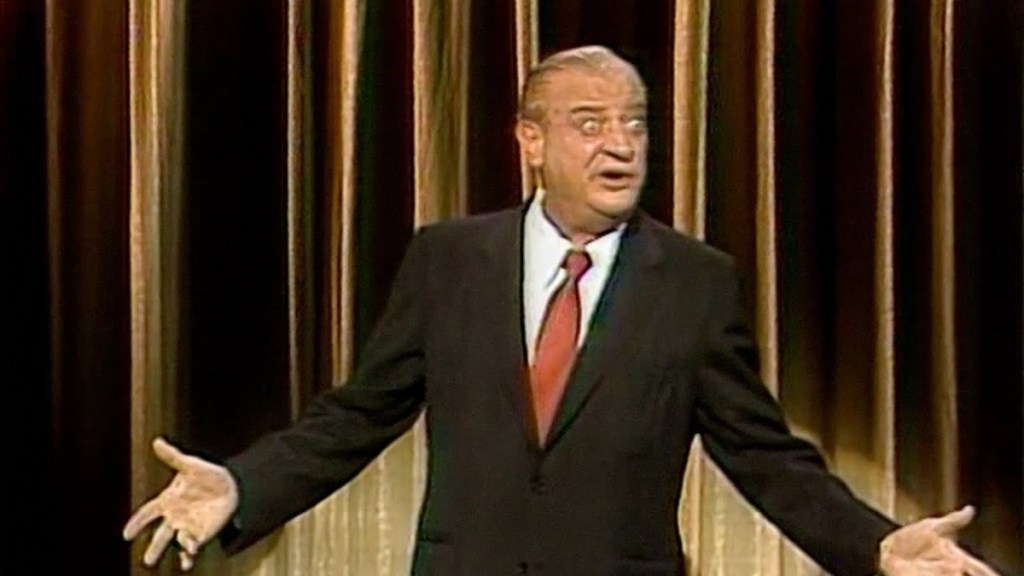
Jesus was like the Rodney Dangerfield of the ancient world – he never got any respect from the religious authorities.

I’m actually a bit relieved that Jesus went through that kind of scenario. Sometimes, it just seems that, with some people, they’ll grump and complain at us, no matter what we do or say. Wise King Solomon was familiar with such people; he called them fools: 

Do not answer a fool according to his folly,
    or you yourself will be just like him.
Answer a fool according to his folly,
    or he will be wise in his own eyes. (Proverbs 26:4-5, NIV) 

So, which is it? How do I handle a fool? The answer is: you don’t. A fool is going to be a fool no matter what you do or say. Handling them is a no-win situation.

It seems to me the way Jesus responded to the foolish around him was to express something of a lament. The saying he quoted has to do with weddings and funerals. Jesus was lamenting that the crowd standing right in front of him, seeing him and seeing his works, are like people who don’t dance at weddings, and don’t cry at funerals. 

In other words, they are plain dull and stupid. They have Jesus right in front of their faces, and they don’t see him because they are expecting someone else. The people just cannot get over the fact that Jesus hangs out with people other than them.

Jesus was likening the religious authorities to a bunch of bratty little kids. They sit and do nothing but heckle and bully others walking by, while they idly wait for their idea of Messiah to come waltzing along.

Messiah did come along. And they foolishly and dully missed it, and treated Jesus like any other Joe Schmo.

So, what do we do with such irritating and obnoxious people, like those who were never happy with Jesus? 

Well, frankly, Jesus just went about his mission – despite what the foolish generation was saying about him. 

And we must do the same. Some folks are going to backbite, gossip, slander, misunderstand and misrepresent you – and there’s not a dang thing you can do about it. We are not to take our cues from fools. We are to find our security and our solace in Jesus. We are to focus on living and loving, just like him.

And, as for the self-appointed critics and judges among us, let them blow their empty words out their blowholes into the air. The wise don’t have time to engage such blowhards. Leave them to God.

Wise Jesus, you handled people as well as anyone could, yet they still criticized you. Help me to live a sage life, and speak with circumspection, so that when irrational people talk their sinful jabbering, it isn’t because of my foolishness, but because of my love. Amen.

Amos 6:1-8 – Against Complacency

Woe to you who think you live on easy street in Zion,
    who think Mount Samaria is the good life.
You assume you’re at the top of the heap,
    voted the number-one best place to live.
Well, wake up and look around. Get off your pedestal.
    Take a look at Calneh.
Go and visit Great Hamath.
    Look in on Gath of the Philistines.
Doesn’t that take you off your high horse?
    Compared to them, you’re not much, are you?

Woe to you who are rushing headlong to disaster!
    Catastrophe is just around the corner!
Woe to those who live in luxury
    and expect everyone else to serve them!
Woe to those who live only for today,
    indifferent to the fate of others!
Woe to the playboys, the playgirls,
    who think life is a party held just for them!
Woe to those addicted to feeling good—life without pain!
    those obsessed with looking good—life without wrinkles!
They could not care less
    about their country going to ruin.

But here’s what’s really coming:
    a forced march into exile.
They’ll leave the country whining,
    a rag-tag bunch of good-for-nothings.

God, the Master, has sworn, and solemnly stands by his Word.
    The God-of-the-Angel-Armies speaks:

“I hate the arrogance of Jacob.
    I have nothing but contempt for his forts.
I’m about to hand over the city
    and everyone in it.” (The Message)

A fool is one who either cannot or will not see that their personal actions have communal ramifications. Arrogant people are shortsighted, and when there is no immediate consequence to their selfish actions, they quickly assume everything is okay.

Perhaps we are fools – not so much because of any heinous sins – but because of our great indifference toward the mass of humanity across the world, as well as the neighbor across the street.

If there is any foolishness with the Christian, I submit to you that it could likely be because we believers have abjectly avoided the Old Testament minor prophets as some anachronistic judgment of the past which has little to do with living in today’s New Testament grace.

It is high time that Christians, especially Western Christians, take the entirety of their Bibles seriously through a hard examination of the prophet Amos.

“Morally, there is no limit to the concern one must feel for the suffering of human beings. Indifference to evil is worse than evil itself; in a free society, some are guilty, but all are responsible.”

Abraham Joshua Heschel

Those with power and privilege nearly always believe that what is good for themselves is good for everybody else. In their pride, they either cannot or will not look under the ghost of Christmas Present’s robe. The boy Ignorance, and the girl Want, are out-of-sight, out-of-mind, for the foolish person of indifference.

The issue is not one of actually possessing wealth and influence. After all, the Lord God is wealthy and influential beyond anything we can imagine. The real issue is how we have obtained such things and whether we seek to use them for the common good of all people, and not just for myself or people just like me.

It will not do to be a simpleton and toss out flippant phrases such as, “If they want money they can get a job,” “They’re just lazy and unmotivated,” “The government takes plenty from me for those people,” “They could be self-sufficient if they really wanted to,” “They should be happy that I give them a [minimum wage] job,” “The poor are uneducated…addicts…drug seekers…unreliable…” And on the blustering goes, ad infinitum, ad nauseum.

Those, and many more statements like them, are nothing more than mere projections of the privileged few upon the masses. Truth is that addiction, debt, ingratitude, and laziness are marks of the rich and powerful in the same way you can find them anywhere. What’s more, projecting and deflecting are endemic of the mind that either cannot or will not engage in critical thinking and avoid logical fallacies.

Such persons are unaware that their luxurious eating and drinking in the dining room of the Titanic will suddenly be their last meal. Their complacency is their ruin.

Many of us tend to see the sins of others rather than our own sins. So, reading Amos, we may reflexively think of “those people’s sins, back then,” or, the sins of “other people.” Yet, as Jesus suggests in the Sermon on the Mount, when we interpret the law, we should first examine the logs in our own eyes, rather than starting with the slivers in our neighbor’s eye. (Matthew 7:3-5)

The place to begin with giving Amos an honest hearing, is to look inwardly at our own shadow selves. The lack of self-awareness is the beginning of all callousness, complacency, and conceit.

“Unfortunately, there can be no doubt that man is, on the whole, less good than he imagines himself or wants to be. Everyone carries a shadow, and the less it is embodied in the individual’s conscious life, the blacker and denser it is. If an inferiority is conscious, one always has a chance to correct it.”

Carl Jung

There are two practices which can help illumine our inner person, thus opening the way to greater compassion for others:

  1. Listen to your self-talk. What’s going on in your mind? Is it a series of negative thoughts that make you feel like crud? Or do you also consider gratitude and positive thoughts? Take a couple of minutes each day to sit in silence and listen to the tone of your inner voice. It might even help to write down your thoughts so that you can get a better idea of what they are truly like. If we cannot listen to ourselves, we won’t be able to listen to the voice of others – which means we’ll never really understand other people.
  2. Pay attention to your feelings. Emotions are barometers of how we are truly doing, as well as flags which signal what we are supposed to be paying attention to.For example, a warm feeling in your face might mean you’re embarrassed; ‘butterflies’ in your stomach can mean you’re nervous; or clenching your teeth might mean you’re angry. Stuffing emotions or trying to avoid them will inevitably lead to hardness of heart.

I suggest focusing on these two practices while you are reading the prophet Amos. That’s because reading the prophets never leaves us the same. They evoke lots of self-talk and plenty of emotion. This is the path to better understanding the prophet’s message.

God of the prophets, and of all living things: We are all hungry in a world full of abundance. Give us the grace and awareness to see the abundance of our world and to acknowledge our sins of greed and fear. Give us openness of soul and courageous, willing hearts to be with our sisters and brothers who are in need. We ask for your intervention on behalf of every person hungry for earthly food and hungry for the taste of the Spirit of God.

We give thanks that we can be part of your compassion for all people. This world is blessed with enough food for every person to eat and be satisfied. And we can all feed on the bread of Christ, as God makes a home in our hearts. We are in awe and wonder your great love for us, that we are invited and urged to participate with you in the care of our brothers and sisters. In the name of the Father, Son, and Spirit, one God, now and forever. Amen.

Proverbs 29:1-27 – Discipline Yourself

Some people refuse to bend when someone corrects them. Eventually they will break, and there will be no one to repair the damage.

When the rulers are good, the people are happy. When the rulers are evil, the people complain.

A son who loves wisdom makes his father happy. One who wastes his money on prostitutes will lose his wealth.

A nation will be strong when it has a fair and just king. A nation will be weak when it has a king who is selfish and demands gifts.

If you give false praise to others in order to get what you want, you are only setting a trap for yourself.

Evil people are defeated by their sin, but good people will sing and be happy.

Good people want to do what is right for the poor, but the wicked don’t care.

Proud people who laugh at what is right cause problems that divide whole cities, but people who are wise are able to calm those who are angry.

If someone who is wise tries to settle a problem with a fool, the fool will argue and say stupid things, and they will never agree.

If you always try to be honest, murderers will hate you, but those who do what is right will want you to be their friend.

Fools are quick to express their anger, but wise people are patient and control themselves.

If a ruler listens to lies, all his officials will be evil.

In one way the poor and those who steal from them are the same—the Lord made them both.

If a king judges the poor fairly, he will rule for a long time.

Punishment and discipline can make children wise, but children who are never corrected will bring shame to their mother.

If the wicked are ruling the nation, sin will be everywhere, but those who live right will win in the end.

Correct your children whenever they are wrong. Then you will always be proud of them. They will never make you ashamed.

If a nation is not guided by God, the people will lose self-control, but the nation that obeys God’s law will be happy.

Servants will not learn a lesson if you only talk to them. They might understand you, but they will not obey.

There is more hope for a fool than for someone who speaks without thinking.

Give your servants everything they want, and they will learn to be wasteful.

An angry person causes arguments, and someone who is quick-tempered is guilty of many sins.

Your pride can bring you down. Humility will bring you honor.

You are your own worst enemy if you take part in a crime. You will not be able to tell the truth even when people threaten you.

Fear can be a trap, but if you trust in the Lord, you will be safe.

Many people want the friendship of a ruler, but the Lord is the only one who judges people fairly.

Good people think the wicked are disgusting, and the wicked feel disgust for those who are honest. (Easy to Read Version)

I’m not much one for binary definitions of either/or. I find both/and to be a better approach to most things. So, when it comes to the nature versus nurture debate, it seems confusing to apply the either/or. Children are shaped by both their nature, DNA, and ancestral lineage – and the nurturing (or lack thereof) provided by their parents, grandparents, and significant people in their lives.

Both nature and nurture influence children so that the way of the parent tends to be the way of the child. It is extremely difficult for kids to rise above traumatic, abusive, or neglectful parenting and be virtuous. Violence, greed, and misdirected anger are vices both inherited and learned.

Even in loving homes directed by good hearts, a child can fall into bad companionship leading to bad behavior. And added to the mix, we are all profoundly touched by the fall of humanity. Our disordered loves, unhealthy habits, and dubious actions easily rub off on others, especially kids.

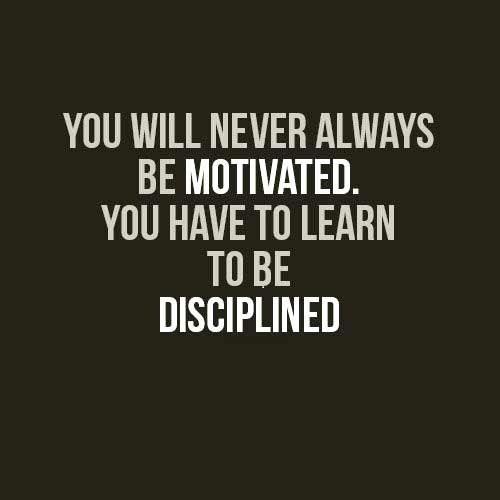
This is why self-discipline is so very important. It needs constant attention. There are too many obstacles and too much at stake to ignore wisdom and slide into an undisciplined life. The biblical proverbs help us to focus our attention and our efforts in healthy directions so that we might contribute to the good of our families and our society.

Reverence and trust in the Lord is the beginning of wisdom. The self-controlled and self-disciplined life leads to spiritual prosperity, emotional buoyance, and a mentality of abundance. Selfishness, and the lack of proper boundaries, quickly degenerates into foolish behavior and adversely effects the family and society.

Any garden variety fool can bluster on and cause a raucous, being insensitive and shortsighted to the consequences of their words and behavior. Foolish people scoffing and belligerently offering their unsolicited opinions helps absolutely no one. Indeed, it seems the fools around us are a dime-a-dozen.

The security and stability of both home and society depend upon wise order. Such order, applied wisely and graciously, avoids the extremes of harsh discipline and lax correction. It takes wisdom to make sound decisions in finding the sweet spot between too much and not enough.

Holding people accountable for their words and behavior, and doing it without a critical spirit, is at the heart of godly living.

A great deal of self-discipline is to force ourselves, and allow the Lord to bend our will, to exercise faithfulness in a responsible, regular, and robust way over all those whom we nurture and care for – without succumbing to ramshackle improvising, as if spontaneity were our only tool.

The wise sayings of the biblical proverbs are to be our merciful guide, keeping us on the road of life, not falling into the ditch on either side.

May it be so to the glory of G-d, and the shalom of our family homes, faith communities, and societal institutions.

Proverbs 8:32-9:6 – Listen to Lady Wisdom

Sophia (Divine Wisdom) by Mary Plaster

Pay attention, my children!
    Follow my advice,
    and you will be happy.
Listen carefully
to my instructions,
    and you will be wise.

Come to my home each day
and listen to me.
    You will find happiness.
By finding me, you find life,
    and the Lord will be pleased
    with you.
But if you don’t find me,
    you hurt only yourself,
    and if you hate me,
    you are in love with death.

Wisdom has built her house
    with its seven columns.
She has prepared the meat
and set out the wine.
    Her feast is ready.

She has sent her servant women
    to announce her invitation
    from the highest hills:
“Everyone who is ignorant
    or foolish is invited!
    All of you are welcome
    to my meat and wine.
If you want to live,
    give up your foolishness
    and let understanding
    guide your steps.” (Contemporary English Version)

“The only true wisdom is in knowing you know nothing.”

Socrates

Know-it-all’s don’t pursue wisdom. They ignorantly believe they already know what’s best about just about everything. Yet their prideful stance betrays only foolishness.

The truth is that wisdom is a skill to be developed. It takes time, patience, humility, grace, trial-and-error, action, reflection, and, most of all, a teachable spirit.

“Wisdom is not a product of schooling but of the lifelong attempt to acquire it.”

Albert Einstein

To be blessed is to carefully graft wisdom into one’s daily life. To go about life with meaning, humility, and confidence are the unmistakable evidence of wisdom’s work within a person. It would be difficult to overstate the great importance of wisdom. Indeed, there is no such thing as too much of it.

The wisdom literature of the Old Testament Proverbs contrasts two approaches to life, personified in the book as Lady Folly and Lady Wisdom. Lady Folly relies on clandestine encounters, secrets, and seduction in promising satisfaction and a happy life. Yet, in the end, imbibing her drink poisons the soul and kills the spirit.

Conversely, Lady Wisdom operates openly and in the daylight. She gives a clarion invitation to a genuinely good life and persuades others, without manipulation, to feast at her banquet. Eating from Lady Wisdom’s table is open to all, both the simple and the sage. She offers a perspective which brings insight and clarity to confusing situations and bewildering circumstances. Lady Wisdom sets up a person for a blessed life.

“A man has made at least a start on discovering the meaning of human life when he plants shade trees under which he knows full well he will never sit.”

D. Elton Trueblood

Perhaps an illustration may assist. The COVID-19 vaccination is available. It has proven to work. The clarion call has gone out. Listen carefully, get vaccinated, practice basic human kindness through masking and proper social distancing – and there will be life. Lady Wisdom is open about the process and the procedure for health.

However, another calls goes out, as well. The vaccine is not safe. It is an attempt to control. We are mere pawns in a politician’s game. The statistics on those infected are skewed. Come, drink deeply of freedom and exercise your right to refuse medical treatment. After all, if it was so safe, why is there so much talk about its safety, to convince people of its efficacy? Lady Folly has set her trap.

Foolishness relies on manipulating emotions, making false comparisons, and promising happiness without a pathway to get there. It sets up the logical fallacy of the Strawman, misrepresenting wisdom’s argument to make it easier to attack. Lady Folly is a simpleton who makes judgments without reasoning.

Lady Wisdom invites people to consult, collaborate, converse, and cooperate with well-worn bodies of teaching passed down through the ages – to drink deeply and eat heartily of truth so as to apply cogent applications to life’s most vexing issues.

“Discipline is wisdom and vice versa.”

M. Scott Peck

You see, it is eating and drinking at wisdom’s table which brings enduring patience, proper perspective, needed perseverance, and satisfying provision for life. Impatience, narrow-mindedness, lack of action because of petty squabbling, and ignorance, are the sad results of folly’s empty promises. They only lead to death.

Wisdom can only be acquired through making daily routine decisions of faith and patience, of putting one foot in front of the other in a slow process over time. In contrast, foolishness is just so because it circumvents time and process and speaks of deliverance and happiness now, right now, without all the fuss and hardship.

So, then, in our current social and economic climate; in our world dominated with the effects of pandemic; in our own personal lives; just what is Lady Folly barking at us about? And Lady Wisdom inviting us to?…

Your answer and your response just might be the difference between life and death.

Thank you, Wise God, for being present, available, and inviting me to approach you in my times of need. Thank you for bending your gracious ear to listen and to care. There are times I feel weak, helpless, even afraid. Yet, I cling to the knowledge that God is with me. I know that you are Lord, and I am not. I know that you hold all situations in your good strong hands. Therefore, I trust you and I trust the process you have me undergoing to become wise and just. I ask for strength and wisdom so that I might endure and handle everything in a way that will bless both you and the world; through Jesus Christ, in the power of the Holy Spirit I pray. Amen.