Luke 12:13-21 – The Parable of the Rich Fool

The angel of death surprises a rich man by Jim Janknegt

A man in a crowd said to Jesus, “Teacher, tell my brother to give me my share of what our father left us when he died.”

Jesus answered, “Who gave me the right to settle arguments between you and your brother?”

Then he said to the crowd, “Don’t be greedy! Owning a lot of things won’t make your life safe.”

So, Jesus told them this story:

A rich man’s farm produced a big crop, and he said to himself, “What can I do? I don’t have a place large enough to store everything.”

Later, he said, “Now I know what I’ll do. I’ll tear down my barns and build bigger ones, where I can store all my grain and other goods. Then I’ll say to myself, ‘You have stored up enough good things to last for years to come. Live it up! Eat, drink, and enjoy yourself.’ ”

But God said to him, “You fool! Tonight, you will die. Then who will get what you have stored up?”

“This is what happens to people who store up everything for themselves but are poor in the sight of God.” (Contemporary English Version)

Let’s be honest before God because there’s no way we are going to fool him. The truth is, we all worry. 

And the more stuff we accumulate, the more worried we get. And the more worried we get, the stingier we become – to the point where we encase ourselves around more stuff, which requires bigger places to store all our stuff.

Here’s a bit of a reality check: We are not self-sufficient independent automatons who are meant to function by themselves without ever needing help.

The Rich Fool by Rembrandt, 1627

If we have some success in this independence venture, we then expect that others ought to be able to do it, too. Such thinking leads to a lack of generosity, believing that others just need to work harder or smarter or better. They’re lazy, we may reason. So, I’ve got no responsibility to share any of my largess with slackers.

We seek after whatever it is we desire. If we seek the kingdom of God, we will pursue the Lord Jesus and aim our love toward knowing him. But if we seek materialism, wealth, and the accumulation of stuff, we will never have enough because worry and fear shall always overwhelm the voice of God. 

I make it sound easy, as if the choice were so clear. On one level it is, but, like most things, it’s complicated because we are all a weird hybrid of competing loves and desires.

So, let’s make a few distinctions that might help us clarify our kingdom calling. Materialism is not the same thing as hard work. 

Materialism:

  • Is a shield we lug around to protect us from failure and poverty
  • Puts us on a performance treadmill, and is tied to our self-worth
  • Is a never-ending quest for security and protection
  • Seeks to avoid the criticism of others by seeking their approval with stuff
  • Believes that money will take away feelings of hurt, pain, and discomfort

Whereas hard work:

  • Is about healthy achievement and a patient growth of assets
  • Seeks to improve and is satisfied with a job well done
  • Takes away fear and worry 
  • Brings gratitude and joy

Any worldly fool can make money; but the wise and righteous person is able to manage resources in a way that glorifies God, builds up the church, and blesses the world. 

And it all begins with knowing the difference between depending on God versus depending on self and stuff.

The rich farmer in Christ’s story is a fool not because he is wealthy or because he saves for the future, but because he lives only for himself, and because he believes he can secure his life with his abundant possessions.

In the parable, the rich guy only talks to himself – not to anyone else. The man doesn’t express any gratitude to God. There is neither any thanking the workers who have helped him plant and harvest this bumper crop, nor any sharing his wealth through giving them a bonus.

The farmer has more than he could ever hope to use, yet he seems to have no thought of sharing it. And there is clearly no thought of what God might require of him. The rich man is outright blind to the fact that his life is not his own to secure, that his life belongs to God, and that God can demand it back at any time.
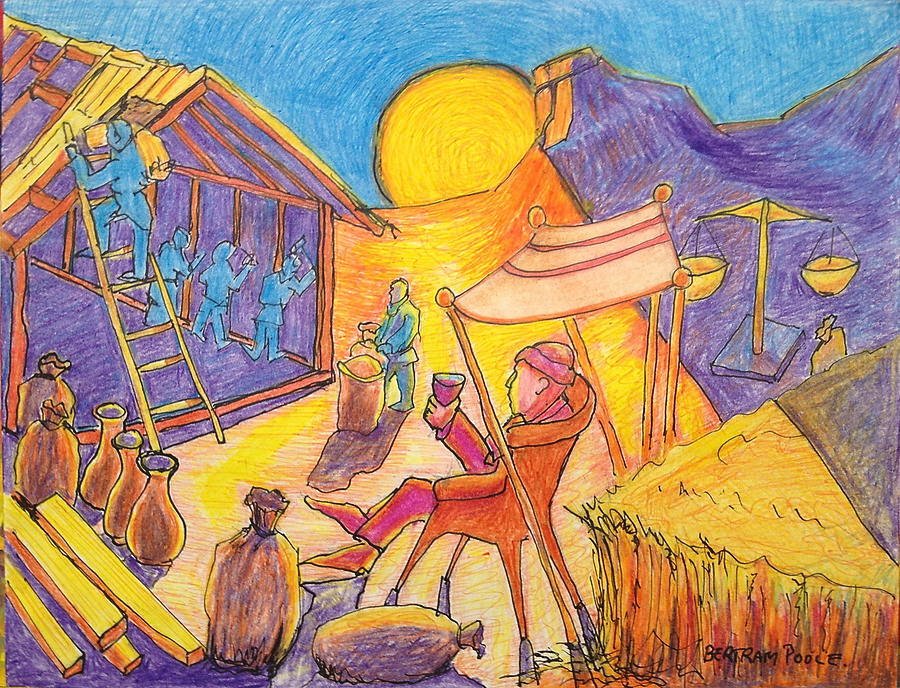
The Rich Fool by Bertram Poole

No amount of wealth can give any of us what we need most in life: healthy relationships, the love and enjoyment of friends and family, or eternal life. Nobody can buy their way into heaven or eternal bliss. What’s more, money cannot provide protection from disease and disaster.

Here’s another reality check: The rich and the poor all die, just the same. And the one who is wealthy cannot take a bit of it with him.

At issue here, for Jesus, is neither saving for retirement or for future needs, nor enjoying the good things in life. In fact, that’s wisdom.

The issue, for Jesus, is about what’s most important to God. It’s about priorities. God cares deeply about how we invest our lives and use the gifts given us. The Lord is vested in us, so he cares about how we love God and neighbor. God wants us to orient our lives toward the divine mission to bless and redeem the world.

In other words, God cares about whether we care, or not, about others.

As a hospital chaplain, I’ve seen my share of death. And I have never once heard anyone say, “Gosh, chaplain, I sure wish I hadn’t given so much money and stuff away. I wish I had kept more for myself.” But I’ve sure heard plenty of the opposite.

A spiritual reality check: We, and our resources, all belong to God.

We are merely stewards of everything we own. God gave it to us. God can take it away. Including our life.

The good news is that, since we, and everything we have, belongs to God, our future is secure in Christ.

Merciful God, thank you for giving me everything I need for life and godliness in this present world. Forgive me for ever doubting your goodness and ability to provide for me. Let my life bless the name of Jesus, and may I steward all that you have given me with care and compassion. Amen.


Proverbs 4:1-9 – Pay Attention to Wisdom

Listen, children, to a father’s instruction,
and pay attention so that you may gain discernment.
Because I hereby give you good instruction,
do not forsake my teaching.

When I was a son to my father,
a tender, only child before my mother,
he taught me, and he said to me:
“Let your heart lay hold of my words;
keep my commands so that you will live.
Acquire wisdom, acquire understanding;
do not forget and do not turn aside from the words I speak.
Do not forsake wisdom, and she will protect you;
love her, and she will guard you.
Wisdom is supreme—so acquire wisdom,
and whatever you acquire, acquire understanding!
Esteem her highly and she will exalt you;
she will honor you if you embrace her.
She will place a fair garland on your head;
she will bestow a beautiful crown on you.” (New English Translation)

Pay Attention to Instruction

Once, when I was a kid growing up on the farm, I was playing hide-and-seek with my brother and got lost in a cornfield. The stalks were taller than me, and I couldn’t jump up and try to see over them. I started to panic.

Then, I got my wits about me and looked straight up into the sky. Even though I was only seven or eight years old, I had looked up at the sky a bajillion times in my short lifetime. My dad had taught me how to read the sky and the weather above us. Fortunately, I had listened well and paid attention to all those times we looked up together.

I knew that the position of the sun in the bright blue sky would give me a fixed point of direction. Once I did that, I walked in the direction I was certain would take me out of the cornfield, trying not to let fear take hold of me. In no time at all, I was out. I lost the game of hide-and-seek. But I didn’t care.

Wisdom is personified in the book of Proverbs as a sage woman and a discerning counselor for whom we must hear and heed her advice. 

In the Old Testament, wisdom is the practical daily application of knowledge and understanding. It’s the ability to take the knowledge of God and use it in everyday life in a way that leads to human peace, contentment, and flourishing. There are two important aspects to wisdom. 

Pay Attention to Knowledge

First, the individual must possess some body of knowledge. If we are ignorant (without knowledge) then we have no ability to exercise wisdom. More than once, I rescued cousins and friends from the cornfield while playing hide-and-seek, because they didn’t have the same understanding of the sky that I did.

So, it’s absolutely imperative for us to actively seek understanding. It’s not going to simply drop into our lap. We must purposely strive to look up and see the Son, to view life from God’s perspective, and to put ourselves in another person’s shoes. 

To gain wisdom, we must become readers, listeners, and devoted learners. Why? Because without books to read, without spiritual directors to consult and listen to, and without adopting the humble posture of learning from others, we will never realize wisdom.

The telltale sign of one who fails to read, listen, and learn, is that they continually opine on everything with no evidence to back up their opinions, no insight into the human condition, and no grace in their language. In the book of Proverbs, such as a person is labeled the “fool.”

Pay Attention to Behavior

The second aspect to wisdom is that the individual must use the acquired knowledge to have good behavior and to live well. 

Knowledge by itself, apart from actual practical use, only produces puffed-up pride (1 Corinthians 8:1). The reason for accumulating understanding is to use it for the welfare of others, for the benefit of the common good. 

We have quite enough preening peacocks in this world who have answers for every earthly problem under the sun. This world needs much less of them, and more of those who seek the humility that comes from biblical wisdom. As the Apostle James in the New Testament once put it, we must be doers of the Word and not hearers only (James 1:22).

Wisdom is realized whenever there is learning that has come through both the head and the hands. Proverbs is a very good place to begin constructing a life of wisdom. Reading one chapter a day, for one month, will get you through the entire book. 

Make a wise plan to carefully go through Proverbs sometime this spring or summer. You’ll be glad you did. And so will those around you.

Pay Attention to Prayer

God of all wisdom, save me from pride and arrogance, and take me to the place where Christ’s humility is center stage, where I’m lifting up clean hands and a pure heart to you.

Spirit of discernment, take me to the place where I’m no longer looking with panic or anxiety at the cornfields and situations I face, but look up to you, where I can see clearly, and my decisions are flooded with your bright light, truth, and justice.

Jesus, teacher of all that is right and good, I submit to your instruction and humbly seek to live into your words and ways. I keep my ears open to receive your counsel, my heart open to receive your eternal wisdom, and my eyes open to see your risen and ascended glory.

Just, right, and wise God – Father, Son, and Spirit, the God whom I serve – know that I love wisdom. I desire it more than money, fame, or power. Help me to use biblical common sense, spiritual savvy, and Scriptural discernment so that I might learn the good and the beautiful. Amen.

Luke 7:31-35 – Dealing with the Dull and Foolish

Jesus went on to say, “To what, then, can I compare the people of this generation? What are they like? They are like children sitting in the marketplace and calling out to each other:

“‘We played the pipe for you,
    and you did not dance;
we sang a dirge,
    and you did not cry.’

For John the Baptist came neither eating bread nor drinking wine, and you say, ‘He has a demon.’ The Son of Man came eating and drinking, and you say, ‘Here is a glutton and a drunkard, a friend of tax collectors and sinners.’ But wisdom is proved right by all her children.” (New International Version)

I am sure all of us, at some point in our lives, have been in a no-win type of situation. Even Jesus experienced it. 

John the Baptist came as an ascetic, eating no bread and being a teetotaler. Some people thought he had a demon. Then, when Jesus came on the scene doing just the opposite – eating, drinking, and having a grand old time – the people accused him of being a drunkard and a glutton. 

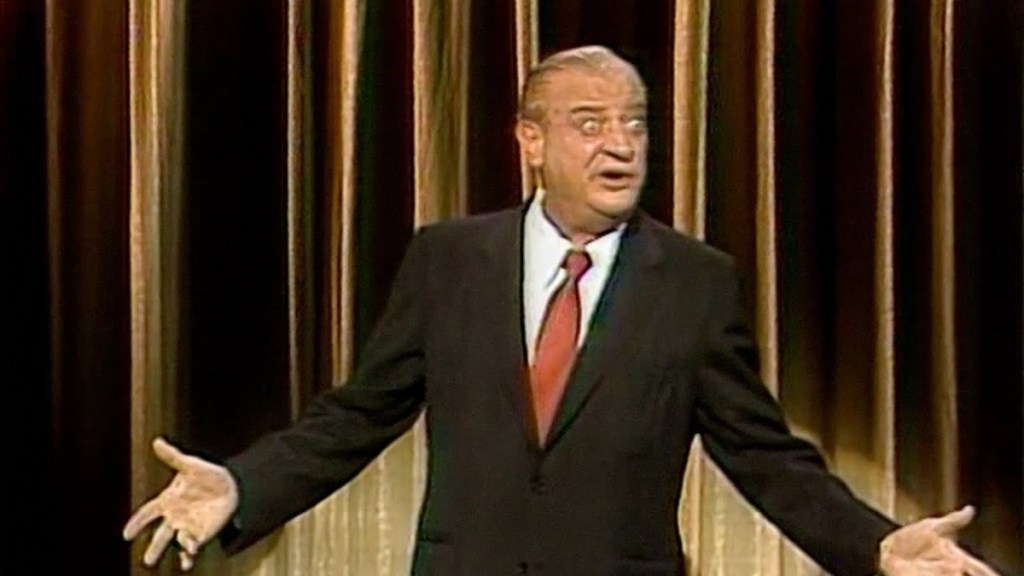
Jesus was like the Rodney Dangerfield of the ancient world – he never got any respect from the religious authorities.

I’m actually a bit relieved that Jesus went through that kind of scenario. Sometimes, it just seems that, with some people, they’ll grump and complain at us, no matter what we do or say. Wise King Solomon was familiar with such people; he called them fools: 

Do not answer a fool according to his folly,
    or you yourself will be just like him.
Answer a fool according to his folly,
    or he will be wise in his own eyes. (Proverbs 26:4-5, NIV) 

So, which is it? How do I handle a fool? The answer is: you don’t. A fool is going to be a fool no matter what you do or say. Handling them is a no-win situation.

It seems to me the way Jesus responded to the foolish around him was to express something of a lament. The saying he quoted has to do with weddings and funerals. Jesus was lamenting that the crowd standing right in front of him, seeing him and seeing his works, are like people who don’t dance at weddings, and don’t cry at funerals. 

In other words, they are plain dull and stupid. They have Jesus right in front of their faces, and they don’t see him because they are expecting someone else. The people just cannot get over the fact that Jesus hangs out with people other than them.

Jesus was likening the religious authorities to a bunch of bratty little kids. They sit and do nothing but heckle and bully others walking by, while they idly wait for their idea of Messiah to come waltzing along.

Messiah did come along. And they foolishly and dully missed it, and treated Jesus like any other Joe Schmo.

So, what do we do with such irritating and obnoxious people, like those who were never happy with Jesus? 

Well, frankly, Jesus just went about his mission – despite what the foolish generation was saying about him. 

And we must do the same. Some folks are going to backbite, gossip, slander, misunderstand and misrepresent you – and there’s not a dang thing you can do about it. We are not to take our cues from fools. We are to find our security and our solace in Jesus. We are to focus on living and loving, just like him.

And, as for the self-appointed critics and judges among us, let them blow their empty words out their blowholes into the air. The wise don’t have time to engage such blowhards. Leave them to God.

Wise Jesus, you handled people as well as anyone could, yet they still criticized you. Help me to live a sage life, and speak with circumspection, so that when irrational people talk their sinful jabbering, it isn’t because of my foolishness, but because of my love. Amen.

Proverbs 29:1-27 – Discipline Yourself

Some people refuse to bend when someone corrects them. Eventually they will break, and there will be no one to repair the damage.

When the rulers are good, the people are happy. When the rulers are evil, the people complain.

A son who loves wisdom makes his father happy. One who wastes his money on prostitutes will lose his wealth.

A nation will be strong when it has a fair and just king. A nation will be weak when it has a king who is selfish and demands gifts.

If you give false praise to others in order to get what you want, you are only setting a trap for yourself.

Evil people are defeated by their sin, but good people will sing and be happy.

Good people want to do what is right for the poor, but the wicked don’t care.

Proud people who laugh at what is right cause problems that divide whole cities, but people who are wise are able to calm those who are angry.

If someone who is wise tries to settle a problem with a fool, the fool will argue and say stupid things, and they will never agree.

If you always try to be honest, murderers will hate you, but those who do what is right will want you to be their friend.

Fools are quick to express their anger, but wise people are patient and control themselves.

If a ruler listens to lies, all his officials will be evil.

In one way the poor and those who steal from them are the same—the Lord made them both.

If a king judges the poor fairly, he will rule for a long time.

Punishment and discipline can make children wise, but children who are never corrected will bring shame to their mother.

If the wicked are ruling the nation, sin will be everywhere, but those who live right will win in the end.

Correct your children whenever they are wrong. Then you will always be proud of them. They will never make you ashamed.

If a nation is not guided by God, the people will lose self-control, but the nation that obeys God’s law will be happy.

Servants will not learn a lesson if you only talk to them. They might understand you, but they will not obey.

There is more hope for a fool than for someone who speaks without thinking.

Give your servants everything they want, and they will learn to be wasteful.

An angry person causes arguments, and someone who is quick-tempered is guilty of many sins.

Your pride can bring you down. Humility will bring you honor.

You are your own worst enemy if you take part in a crime. You will not be able to tell the truth even when people threaten you.

Fear can be a trap, but if you trust in the Lord, you will be safe.

Many people want the friendship of a ruler, but the Lord is the only one who judges people fairly.

Good people think the wicked are disgusting, and the wicked feel disgust for those who are honest. (Easy to Read Version)

I’m not much one for binary definitions of either/or. I find both/and to be a better approach to most things. So, when it comes to the nature versus nurture debate, it seems confusing to apply the either/or. Children are shaped by both their nature, DNA, and ancestral lineage – and the nurturing (or lack thereof) provided by their parents, grandparents, and significant people in their lives.

Both nature and nurture influence children so that the way of the parent tends to be the way of the child. It is extremely difficult for kids to rise above traumatic, abusive, or neglectful parenting and be virtuous. Violence, greed, and misdirected anger are vices both inherited and learned.

Even in loving homes directed by good hearts, a child can fall into bad companionship leading to bad behavior. And added to the mix, we are all profoundly touched by the fall of humanity. Our disordered loves, unhealthy habits, and dubious actions easily rub off on others, especially kids.

This is why self-discipline is so very important. It needs constant attention. There are too many obstacles and too much at stake to ignore wisdom and slide into an undisciplined life. The biblical proverbs help us to focus our attention and our efforts in healthy directions so that we might contribute to the good of our families and our society.

Reverence and trust in the Lord is the beginning of wisdom. The self-controlled and self-disciplined life leads to spiritual prosperity, emotional buoyance, and a mentality of abundance. Selfishness, and the lack of proper boundaries, quickly degenerates into foolish behavior and adversely effects the family and society.

Any garden variety fool can bluster on and cause a raucous, being insensitive and shortsighted to the consequences of their words and behavior. Foolish people scoffing and belligerently offering their unsolicited opinions helps absolutely no one. Indeed, it seems the fools around us are a dime-a-dozen.

The security and stability of both home and society depend upon wise order. Such order, applied wisely and graciously, avoids the extremes of harsh discipline and lax correction. It takes wisdom to make sound decisions in finding the sweet spot between too much and not enough.

Holding people accountable for their words and behavior, and doing it without a critical spirit, is at the heart of godly living.

A great deal of self-discipline is to force ourselves, and allow the Lord to bend our will, to exercise faithfulness in a responsible, regular, and robust way over all those whom we nurture and care for – without succumbing to ramshackle improvising, as if spontaneity were our only tool.

The wise sayings of the biblical proverbs are to be our merciful guide, keeping us on the road of life, not falling into the ditch on either side.

May it be so to the glory of G-d, and the shalom of our family homes, faith communities, and societal institutions.