The Divine Teacher and Leader (Isaiah 48:17-21)

Thus says the Lord,
    your Redeemer, the Holy One of Israel:
I am the Lord your God,
    who teaches you how to succeed,
    who leads you in the way you should go.
O that you had paid attention to my commandments!
    Then your prosperity would have been like a river
    and your success like the waves of the sea;
your offspring would have been like the sand
    and your descendants like its grains;
their name would never be cut off
    or destroyed from before me.

Go out from Babylon; flee from Chaldea;
    declare this with a shout of joy; proclaim it;
send it forth to the end of the earth;
    say, “The Lord has redeemed his servant Jacob!”
They did not thirst when he led them through the deserts;
    he made water flow for them from the rock;
    he split open the rock, and the water gushed out. (New Revised Standard Version)

A presupposition is something that is assumed in advance or taken for granted. In my own life, I live with the following basic presupposition: Christianity works. It stands behind my faith and confidence, informing everything I do.

I believe in a good God, who genuinely wants people to succeed in life, and will do whatever it takes to help us, doing what is best for us, for our own good.

God is our divine teacher and leader. The Lord is the One who gave Israel the Ten Words (commandments) and the Law to live by. Yahweh is the One who mercifully delivered the ancient Israelites out of Egyptian slavery, protected them in the desert, and led them into the Promised Land.

Furthermore, for the Christian, God the Father is the One who sent God the Son, Jesus, to be with us and amongst us as Teacher and Lord, leading us and saving us. God the Father and God the Son together sent God the Holy Spirit to be with us always – continually teaching us all things, reminding us of Christ’s teaching, and providing needed leadership for our earthly spiritual journey.

Every provision has been given for us to live into a successful life. Yet, in the case of both the Jews who originally heard Isaiah’s prophecy, as well as for many of us as contemporary believers, we have paid scant attention to the divine commandments – nor have we submitted to the divine leadership.

God is teaching and God is leading. We, however, are having difficulty in heeding the instruction and the guidance.

“Hear, O my people, and I will speak,
    O Israel, I will testify against you.
    I am God, your God…

You give your mouth free rein for evil,
    and your tongue frames deceit.
You sit and speak against your kin;
    you slander your own mother’s child.” (Psalm 50:7, 19-20, NRSV)

And God has furthermore stated:

“Hear, O my people, while I admonish you;
    O Israel, if you would but listen to me!…

But my people did not listen to my voice;
    Israel would not submit to me…

O that my people would listen to me,
    that Israel would walk in my ways!” (Psalm 81:8, 11, 13, NRSV)

God desires the best for us and our welfare. The Lord wants us to experience happiness, prosperity, abundance, and blessing. Christianity works. Attention to the spiritual life brings success. Yet we keep working against ourselves through our ignorance of divine teaching and leading.

We could move freely and powerfully like a river – yet we continue to dam up the flow.

We could grow and gain strength like the waves of the ocean – yet we refuse to go out and set sail.

We could reproduce ourselves by making more disciples than the sand on the seashore – yet we are impotent.

We could endure by remembering the name of the Lord – yet there is no future without listening.

What must we do? Go out!

Just as the ancient Israelites went out of Egypt and left their bondage behind, so we are to go out and experience the redemption we have in Jesus Christ.

God is leading us to freedom. The Lord is teaching us how to live in this world as free people. But we must take the step of going out, of leaving, of walking the way of the pilgrim and sojourning into the successful life.

God has our backs. Just as the Israelites were taken care of in the desert with the sustenance of manna and with even water gushing out of a rock, so the Lord will care for you and me out in this scary world of ours.

God does what God does, not based upon what humanity does or doesn’t do, but because of God’s own decision and will. Since the Lord is always good, right, just, and loving, God acts in ways consistent with the divine nature.

Another way of putting the matter is that the spiritual life works, and Christianity works, because it is grounded in nature of God. When we reflect the image of God within us by using our words and our deeds toward mercy, grace, justice, and love, then we are synced with how the universe operates. And success in life is realized.

Even more than that, we are connected with the Creator – which makes all the difference as we try to continually navigate through this earthly life in ways that are right and redemptive.

O God, you made us in your own image and redeemed us through Jesus your Son: Look with compassion on the whole human family; take away the arrogance and hatred which infect our hearts; break down the walls that separate us; unite us in bonds of love; and work through our struggle and confusion to accomplish your purposes on earth; that, in your good time, all nations and races may serve you in harmony around your heavenly throne; through Jesus Christ our Lord. Amen.

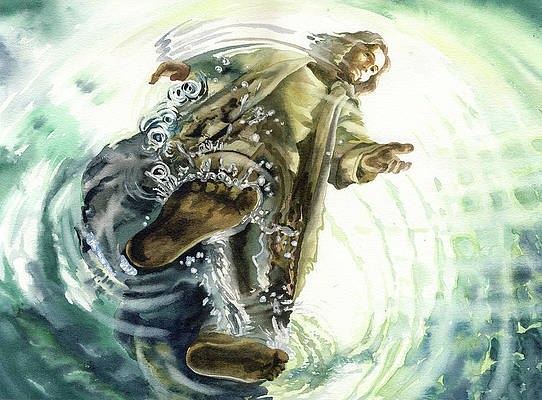
Walk on Water? Why? (Matthew 14:22-33)

Jesus Walks on Water, by Konstantin Alexejewitsch Korowin, 1890 

Immediately Jesus made the disciples get into the boat and go on ahead of him to the other side, while he dismissed the crowd. After he had dismissed them, he went up on a mountainside by himself to pray. Later that night, he was there alone,and the boat was already a considerable distance from land, buffeted by the waves because the wind was against it.

Shortly before dawn Jesus went out to them, walking on the lake. When the disciples saw him walking on the lake, they were terrified. “It’s a ghost,” they said, and cried out in fear.

But Jesus immediately said to them: “Take courage! It is I. Don’t be afraid.”

“Lord, if it’s you,” Peter replied, “tell me to come to you on the water.”

“Come,” he said.

Then Peter got down out of the boat, walked on the water and came toward Jesus. But when he saw the wind, he was afraid and, beginning to sink, cried out, “Lord, save me!”

Immediately Jesus reached out his hand and caught him. “You of little faith,” he said, “why did you doubt?”

And when they climbed into the boat, the wind died down. Then those who were in the boat worshiped him, saying, “Truly you are the Son of God.” (New International Version)

In the New Testament Gospels, we see Jesus for who he is – Son of God and true Sovereign of the universe – seeking to reconcile people to God through his life, miracles, and teaching. In the Gospels we also see Christ’s disciples for who they are – a rag-tag bunch who express both belief and doubt, and experience both faith and failure.

The reality of the Christian life is that it is a sort of three-steps-forward and two-steps-backward kind of experience. The expectation that we will “succeed” and have everything go hunky-dory each time we step out in faith, is far from how things actually work in both the world and in God’s kingdom. Doubt and failure are important experiences for the believer in Jesus.

Without failure, there is no Christian life. Why? Because it means we are still in the boat.

It’s evidence that we never left the safety of established routines and responded to God’s command to step out of our comfort zone, and boldly go where we’ve never gone before.

Our failures may, like Peter, be colossal bellyflops. Yet, Jesus is there – extending grace to Peter and helping him, even in his failure of faith. Failure does not define us; it isn’t our identity. Jesus is Lord over everything, including storms, hardship, and trouble. 

Yes, there are a lot of scary things in life. Learning to ride a bike was scary. Driving for the first time on an icy road was scary. Getting married and having kids was scary. Admitting a fault, mistake, or weakness is scary. Being vulnerable with another person is scary.

It can even be scary to be at church. Why? Because we might fail, and it may crush us.

The fear of failure, however, need not control our lives. Why? Because grace overcomes everything.

We all find ourselves, at times, caught midway between faith and doubt. But to know this situation is to experience grace. If the worst scenario you worry about in your head would actually come to pass, it will still never change the reality that God loves you! And it will not stop Jesus from extending his hand to you in a life-saving grip of grace. 

Fear melts away when we keep our eyes on Jesus. So, we must focus on Christ, instead of fixating on the waves around us. The truth sets us free. Therefore, let’s notice five truths about Jesus that help us overcome the fear of failure and embrace a life of faith.

1. Jesus is a person of prayer

Jesus was deeply dependent on his heavenly Father. His life exhibited the necessities of simple prayer and obedience. If Jesus found the need for solitude and prayer for his life and ministry, how much more to we need it!? 

The Lord had his disciples get into the boat and go out on the lake. Jesus knew they were about to face a storm. The boat ended up getting thrown around by the waves. Even though the disciples were doing God’s will by going out on the lake, they were not spared from adversity.  

Jesus wanted his disciples to experience the storm. Why? Because it is through the storm that we learn faith.  

Faith is developed through experience and adversity. Faith that never endures distress, never grows and matures. Faith must be exercised – and if it isn’t, it atrophies and becomes useless. 

Show me a person with great faith, and I’ll show you a person that has gone through a boatload of adversity and hurt, having allowed Jesus to grace them with healing.

2. Jesus is present with us, and this presence brings an end to fear

Being in the middle of a lake during a storm did not prevent Jesus from being present with the disciples – he just walked on the water to be with them. Even though the disciples had just participated in the miracle of Jesus feeding the five thousand, another miracle was not on their radar – which is why they did not recognize Jesus and were afraid when they saw him.

While afraid, we don’t see Jesus, even when he’s right in front of our faces. Why? Because we don’t expect him to be there and mistake him for a ghost.  

When the disciples cried out in fear, Jesus responded. I used to have a factory job, training workers. When the training was completed, I had the trainees evaluate our time together. The top response I received is that my presence helped them to learn their job – the freedom to fail time and time again without judgment. Having me there to rescue them, when things got too much, built confidence that they could do it on their own.

3. Jesus desires those who follow him to imitate him

Jesus walked on water. Jesus invited Peter to walk on water. Peter was not chided by Jesus for getting out of the boat, but for doubting that he could continue in the miracle that was happening. 

Jesus isn’t merely interested in disciples being able to regurgitate his teaching. Why? Because he wants us to exercise our learning through actual deeds of faith.  

Once the command of Jesus was given to Peter, “Come”, then walking on water became only a matter of trust.

“Christianity has not been tried and found wanting. It has been found difficult and left untried.”

G.K. Chesterton

We understandably get nervous when a crazy Jesus and an unpredictable Holy Spirit call us to change by getting out of the friendly confines of the boat. Why? After all, we might fail. 

However, it is at those times that we bank on God’s Word and promises. The Apostle James said that if we find ourselves lacking wisdom to deal with the unpredictable and unknowable, we are to ask God who gives generously to all without finding fault and will be given to us. (James 1:5)

Christ Walking on the Sea, by Natali Fedorova

Peter responded to his predicament by crying out to Jesus, “Lord, save me!” Jesus immediately reached out and saved Peter from his own doubt and lack of faith. Jesus called Peter a “little-faith.”

Many people have lived too long with the notion that God is some stern angry deity who is constantly displeased with sinful people, and that only through perfection will God ever be happy with us. The truth is that Jesus wants us to imitate him; and, when we fail, he is there to pick us up. 

4. Jesus has the authority to settle the storm when he is ready to do it

Jesus is King. Christ is Sovereign of the world. He will bring the crisis to an end according to his own good pleasure and good timing. Rather than spending all our emotional capital by worrying or conniving to get out of a situation, we can trust God and keep our eyes on Jesus.  Our job is to believe; God’s job is everything else.

5. Jesus’ power led the disciples to acknowledge who he is

Worship happens when we see Jesus as he really is, the Son of God. Flat, dull, boring worship comes from flat, dull, boring Christians who are unable to see the power of Jesus in their lives. We discover the power of God when we are in a situation which requires God’s strength to deliver us. Grasping Jesus as the Son of God is more than a verbal confession of faith; it is being able to trust him, like getting out of a boat in the middle of a lake.

We are to live by faith in the Son of God who loved us and gave himself for us (Galatians 2:20). It doesn’t require much faith to pray that Aunt Mable’s bunions will feel better. It only requires a little faith to give a dollar when you have ten dollars. It takes no faith to discuss the weather and steer clear of hard conversations.

But it does require faith:

  • to pray for a miraculous healing every day without giving up for a little boy who is racked by epilepsy, and trust God to spare his life
  • to write a check for $100 to someone in need when you have exactly $100 in your checking account, and trust God to provide for you own necessities. 
  • to go off the grid of the routine schedule to have a difficult discussion about social justice, and trust God to act on Christ’s teachings. 
  • to live as though the mission of God in this world is the most important thing we could ever do, and trust God to step out and do it.

It would be great if we could pray and act without ever doubting or failing, yet the only way to do that is to never step out of the boat. Instead, live life. Trust God. And see what happens.

Holy God, help us, your people, to embrace the life that is truly life by stepping out of the boat.  May Jesus define our lives instead of letting failure define us. May we accept the grace that is ours in Jesus Christ our Lord, in whose name we are bold to pray. Amen.

Tussling with Trouble (Matthew 10:24-39)

“The student is not above the teacher, nor a servant above his master. It is enough for students to be like their teachers, and servants like their masters. If the head of the house has been called Beelzebul, how much more the members of his household!

“So do not be afraid of them, for there is nothing concealed that will not be disclosed, or hidden that will not be made known. What I tell you in the dark, speak in the daylight; what is whispered in your ear, proclaim from the roofs. Do not be afraid of those who kill the body but cannot kill the soul. Rather, be afraid of the One who can destroy both soul and body in hell. Are not two sparrows sold for a penny? Yet not one of them will fall to the ground outside your Father’s care. And even the very hairs of your head are all numbered. So don’t be afraid; you are worth more than many sparrows.

“Whoever acknowledges me before others, I will also acknowledge before my Father in heaven. But whoever disowns me before others, I will disown before my Father in heaven.

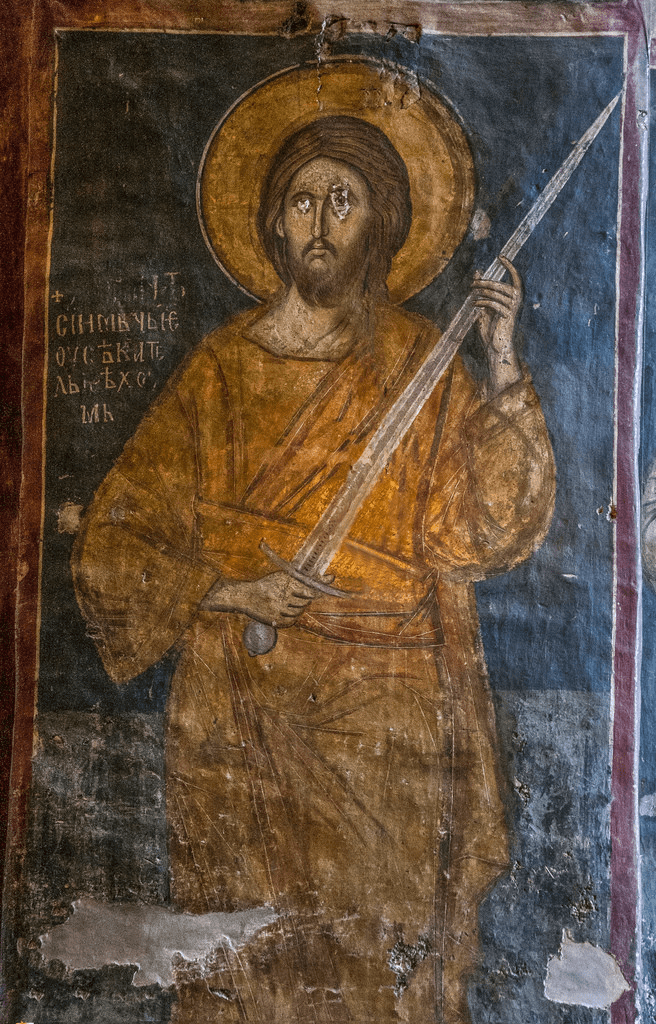
“Do not suppose that I have come to bring peace to the earth. I did not come to bring peace, but a sword. For I have come to turn

“‘a man against his father,
    a daughter against her mother,
a daughter-in-law against her mother-in-law—
    a man’s enemies will be the members of his own household.’

“Anyone who loves their father or mother more than me is not worthy of me; anyone who loves their son or daughter more than me is not worthy of me. Whoever does not take up their cross and follow me is not worthy of me. Whoever finds their life will lose it, and whoever loses their life for my sake will find it. (New International Version)

We can expect opposition and trouble from the world

Those who follow the words and ways of Jesus will experience hardship at the hands of others, because Christ’s values are often different than how the world’s systems typically operate. 

Being called the Devil (Beelzebul) isn’t exactly a term of endearment. There were those so upset with Jesus that they equated him with Satan. So, since Christ got this kind of verbal treatment, how much more will we be the brunt of false accusations, slander, and gossip? 

We are not above our Lord – we will be treated as he was. We cannot expect that we are above getting into trouble. Believers are promised deliverance from sin, death, and hell – and not from the meanness and ignorance of people in this present life.

Because of this reality, we need to be savvy to our situation of trouble and practice common sense, as well as have a mental disposition that thinks the best of people, and does not immediately judge and condemn others.

All of this requires us to avoid the two extremes of either simple assimilation into the culture, or rejection of the culture as evil. Both the blending into culture, and the separating from it, each share the same preferred outcome of trying to avoid opposition and trouble. 

Instead, there is a third way of being faithful to following the way of Jesus: Interact with and engage the culture as salt and light. (Matthew 5:13-16)

Assimilation causes us to lose our saltiness; and isolation hides our light. So, let’s find wise ways to understand truth and apply it in the concrete situations of life in this world. 

For example, we can discuss life issues about our jobs and school from a Christian perspective, so that we might speak into others’ lives, instead of just standing against something and complaining about it: How might we show both grace and truth in a particular situation? Are there ways we can give support without condoning something we oppose, and how?

We can expect that we are going to disrupt and upset our families and experience opposition from them

14th century fresco of Christ with a sword, in the Sacred Monastery of the Ascension of Christ Church, Kosovo

Unfortunately, opposition does not just come from the world, but within the very families and communities we love and rub shoulders with every day. Most persecution, hardship, and trouble for believers in Jesus come from family and those closet to us. 

Although I grew up in a church-going family, we never really discussed faith or Christianity. When I became serious about walking with Jesus, I faced a lack of support. I was often the brunt of teasing and verbal jabbing. My commitment to Christ had butted up against the family value of never rocking the boat. 

There was once a woman who experienced new life in Christ. When God grabbed ahold of her life, she had been on track to becoming the next Barbara Walters. But her newfound values of embracing the Beatitudes of Jesus rubbed the television broadcast world too much. 

So, she went into radio. Instead of looking toward a lucrative life on screen, she settled for less money and no fame behind the microphone of a Christian radio station. Her family didn’t understand this. And marrying a preacher didn’t help the situation any for her. To this day she still faces hardship and resentment for making decisions that did not get her the American dream.

Jesus said that anyone who wants to take the path of least resistance by not rocking the family boat with Christian love is not worthy of him. Anyone who does not take up their cross and follow Jesus in the way of trouble is not worthy of following him. 

We must die to self – which often means dying to avoidance of conflict – and become alive to the wonder of God’s mercy and love in the world.

We don’t need to be afraid of getting into trouble

Why? Because…

  1. Fear has to do with the unknown. So since we know opposition and trouble is expected, we will not live in dread of what might happen. The early Christians actually rejoiced in their suffering because they considered it a privilege to be walking in the way of Jesus. (Acts 5:27-42)
  2. You will receive special help. In times of persecution, we have a Helper, the Holy Spirit, given to us for such times as these. (John 3:34; 16:1-15)
  3. God isn’t surprised by your hardship. The Lord will eventually deal with all that is wrong in this world.
  4. The wrath of God is to be more feared than the wrath of people.
  5. God is watching over all the details of my life. If God cares for all the small details, how much more will the Lord take care of the big issues in my life?

Conclusion

It is a privilege to follow Jesus into trouble. This is what is called “upside-down” theology: 

  • In giving my life away to Jesus, I find it. 
  • In getting into trouble, I find peace. 
  • In serving and taking up our cross, there is happiness, not depression. 

Sometimes, things in the kingdom of God seem upside-down; and that is as it should be. Facing trouble is really not the worst thing to be experienced – being separated from God is. 

We are to expect opposition from the world, and from family. Yet, we need not be afraid, because tussling with trouble is part of what it means to follow Jesus – it is the way of the cross.

So, count the cost. Give your life away. In doing so, you will certainly not lose your reward from God.

A Lot of Hurting, Touching, and Healing (Luke 6:12-19)

Jesus calls his twelve disciples, by Sadao Watanabe

One of those days Jesus went out to a mountainside to pray, and spent the night praying to God. When morning came, he called his disciples to him and chose twelve of them, whom he also designated apostles: Simon (whom he named Peter), his brother Andrew, James, John, Philip, Bartholomew, Matthew, Thomas, James son of Alphaeus, Simon who was called the Zealot, Judas son of James, and Judas Iscariot, who became a traitor.

He went down with them and stood on a level place. A large crowd of his disciples was there and a great number of people from all over Judea, from Jerusalem, and from the coastal region around Tyre and Sidon, who had come to hear him and to be healed of their diseases. Those troubled by impure spirits were cured, and the people all tried to touch him, because power was coming from him and healing them all. (New International Version)

Pain is a lot

Touch is important. Humanity needs touch. It’s also one of those things that we likely take for granted. 

Philip Yancey and Dr. Paul Brand co-authored a book, originally published in 1982, entitled “Pain: The Gift Nobody Wants.” It’s largely a biography of Dr. Brand, who pioneered both the diagnosis and prognosis of leprosy. 

He discovered that leprosy occurs because of a lack of feeling – an inability to sense touch. The delicate nerve endings we all have in our fingers and toes are numb to the leper. The lack of sensing pain in the extremities leads to small cuts or injuries, which would be immediately treated by someone who feels pain, becoming gangrene with the losing of fingers and toes.

The ability to feel, to reach out and touch another person, is vitally important to our spiritual and emotional lives. Without touch, the calloused heart and unfeeling soul does not realize the damage that is being done to it.           

One of the gifts we have as people is the ability to feel guilt, sorrow, disappointment, and pain – to be touched mentally, emotionally, and spiritually – as well as physically. And in our ability to feel pain, it brings about attention to prayer and addressing the situation.

Many people are troubled in either mind or spirit, or experience chronic ailments of the body, day in and day out. They just want relief, to be at peace in both body and soul.

Jesus prays… a lot

In today’s Gospel lesson, Luke puts together two stories: one of Jesus choosing and calling his twelve disciples; and then one of Jesus being among the people and healing them of their diseases and their troubles. Let’s observe the relationship between them.

Jesus often withdrew to lonely, isolated places in order to pray (Luke 5:16). On this particular occasion, he went out and spent the entire night in prayer to God. When morning came, we discover the reason for the all-night prayer meeting: Christ chose the people who would be closest to him in his earthly ministry. He called the twelve to follow him and be his disciples.

I find it highly instructive that Jesus spent so much time in prayer before making such big decisions about his ministry. If anyone could size up somebody as a potential follower, it seems to me it would be Jesus. And yet, there was a lot of deliberation and interaction with the Father. Since the Lord Jesus found it necessary to pray with an extending time, and consult with the heavenly Father, I would say that our own prayer life and reaching out to consult and collaborate could probably use an upgrade.

Jesus heals… a lot of people

Then, Jesus and his disciples, together enter the fray of the crowd. And the disciples get their first lesson in following Jesus: Christ-centered ministry is about healing – it’s about restoring people to physical, mental, emotional, and spiritual health.

Healing is at the heart of all real Christian ministry. And healing is really what everyone is to be about, whether they identify as Christian, or not. To be healed is to experience a holistic restoration of body, mind, emotions, and spirit.

Touch is a big part of healing. Physical touch is important, and it’s powerful. Sometimes, bodily healing is needed because a person has been physically abused, or experienced some sort of physical trauma. And it can be very difficult to have others touch them, after such experiences. Yet, part of the healing will be in experiencing redemptive touch – either by surgeons, family, friends, or trusted others. The answer to bad touch and bad pain is to experience good touch and the good pain of healing.

Non-physical touch is no less important. And, I believe, Jesus understood this perhaps more than most. He routinely “touched” people in ways that changed their lives. Christ sought to not only bring physical healing, but also to heal the mental, emotional, and spiritual wounds.

Jesus touches… a lot of lives

Jesus touched a lot of lives through his healing ministry:

  • In healing lepers of their disease, Christ made sure that they were no longer ostracized from the community but were restored to full function in society.
  • In curing persons demonized and tormented by evil spirits, Jesus was concerned to restore them to their right mind and ensure they were included as members of society, as well as restored to their families.
  • In bringing salvation from guilt and shame, Jesus brought reconciliation and restoration between God and sinners.
  • In all his relational interactions, Jesus was intentional about making connections to the lonely and the lost, to those who were emotionally cut off from the mass of society.

So, whenever we feel pain – whether in body, mind, emotion, or spirit – this experience lets us know that we need to pay attention to something. As we do that, it can drive us to the source of healing, wholeness, and restoration. We go to prayer – not out of duty – but because we are convinced that there are divine resources only God can provide.

And we can come, again and again, finding the grace to help us in our time of need. For God’s mercy is inexhaustible; the grace of God will never run out or run dry.

Therefore, let followers of Jesus everywhere be aqueducts of grace, angels of mercy, and agents of healing in a world which so desperately needs the love, care, and attention we can give them.

May God the Father bless you; God the Son heal you; and God the Holy Spirit give you strength. May God the holy and undivided Trinity guard your body, save your soul, protect your mind, and bring you safely to his heavenly country; where he lives and reigns for ever and ever. Amen.