1 John 2:1-6 – Live as Jesus Did

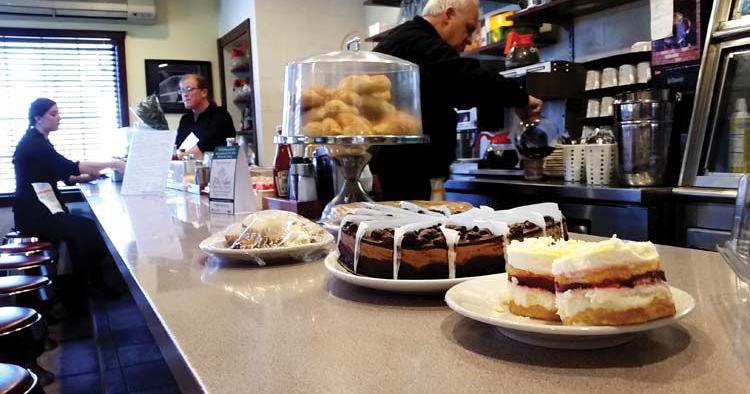
Photo by RODNAE Productions on Pexels.com

My dear children, I write this to you so that you will not sin. But if anybody does sin, we have an advocate with the Father—Jesus Christ, the Righteous One. He is the atoning sacrifice for our sins, and not only for ours but also for the sins of the whole world.

We know that we have come to know him if we keep his commands. Whoever says, “I know him,” but does not do what he commands is a liar, and the truth is not in that person. But if anyone obeys his word, love for God is truly made complete in them. This is how we know we are in him: Whoever claims to live in him must live as Jesus did. (New International Version)

Jesus is our advocate, the one who speaks on our behalf, our mediator, who stands in the gap between heaven and earth, standing-up for us when we have no leg to stand on. 

Christ has atoned for all our sin, guilt, and shame through his “propitiation” which means that his death satisfied all demands of justice and put to rest the sin issue once for all through his blood. Christ’s gracious intervention has saved us from ourselves. 

Jesus Christ has made it possible for us to experience forgiveness, restoration, and new life. Whenever we are so broken and so full of tears that we cannot even speak words at all, Jesus steps in and speaks on our behalf with words that mean something because they have been backed up with the action of the cross.

“But” as the late Ron Popeil used to say on the old commercials, “that’s not all!” Not only do we have deliverance from sin, death, and hell, Christ’s followers have both the means and the opportunity to give back and be a blessing to one another and the world. The Spirit enables us to obey God’s commands and is the continuing presence of Jesus to us and on this earth.

Christians are called to be little advocates, practicing the ministry of coming alongside and interceding for one another before God. We can agents of spiritual healing in a world of brokenness. Our gospel proclamation, a message of grace and forgiveness, gets to the very root of human problems and travails.

  • Anyone who harms and hurts others as a matter of habit in the name of Christ, and does not heal, is no follower of Jesus but is a victimizer.
  • Any person who talks a good talk, and walks a bad walk, is not living as Jesus did, and is a spiritual pettifogger.
  • Anybody who claims the name of Christ and avoids reading and studying and praying over the New Testament Gospels, is a slovenly lout, no matter whether they have prayed a “sinners prayer.”

Whoever claims to live for Christ must live as Jesus did. So, how did Jesus live?

“If any of you wants to be my follower, you must give up your own way, take up your cross, and follow me.”

Jesus (Matthew 16:24, NLT)

“You know that the rulers of the non-Jewish people love to show their power over the people. And their important leaders love to use all their authority. But it should not be that way among you. Whoever wants to become great among you must serve the rest of you like a servant. Whoever wants to become first among you must serve the rest of you like a slave. In the same way, the Son of Man did not come to be served. He came to serve others and to give his life as a ransom for many people.” (Matthew 20:25-28, NCV)

He came to tell about the light and to lead all people to have faith.

John 1:7, CEV

“You call me Teacher and Lord—and you are right, for that is what I am. So if I, your Lord and Teacher, have washed your feet, you also ought to wash one another’s feet. For I have set you an example, that you also should do as I have done to you.” (John 13:13-15, NRSV)

Your life must be controlled by love, just as Christ loved us and gave his life for us as a sweet-smelling offering and sacrifice that pleases God.

Ephesians 5:2, GNT

Adopt the attitude that was in Christ Jesus:

Though he was in the form of God,
        he did not consider being equal with God something to exploit.
But he emptied himself
        by taking the form of a slave
        and by becoming like human beings.
When he found himself in the form of a human,
        he humbled himself by becoming obedient to the point of death,
        even death on a cross. (Philippians 2:5-8, CEB)

Don’t be angry with each other but forgive each other. If you feel someone has wronged you, forgive them. Forgive others because the Lord forgave you.

Colossians 3:13, ERV

But if you suffer for doing good and you endure it, this is commendable before God. To this you were called, because Christ suffered for you, leaving you an example, that you should follow in his steps.

“He committed no sin,
    and no deceit was found in his mouth.”

When they hurled their insults at him, he did not retaliate; when he suffered, he made no threats. Instead, he entrusted himself to him who judges justly. (1 Peter 2:20-23, NIV)

This is how we know love: Jesus laid down his life for us, and we ought to lay down our lives for our brothers and sisters.

1 John 3:16, CEB

Christians inhabit unlovely places for the purpose of putting sacrificial love there. This is what it means to live as Jesus did.

O Lord, you have taught us that without love whatever we do is worth nothing. Send your Holy Spirit and pour into my heart your greatest gift, which is the love of God in Christ, the true source of healing and the real bond of peace. Amen.

When Will We Engage Our Ministry?

Welcome, friends!

Acts 1:1-11 contains the final words of Christ on this earth. Jesus gave his followers a mandate, not to sit idly and wait for his return, but to embody their identity as witnesses to what they have seen and heard for a world in need of God’s deliverance and love. Click the videos below, and let us embrace our purpose and mission as the people of God….

Pastor Tim Ehrhardt, Acts 1:8

God of hope and courage, you call each of us to bear witness to your abundant love in a frightened world. All around us are signs the world is struggling and the future is unclear. Strengthen our confidence in your unfailing grace and grant us the courage to move onward even when we cannot see the way, knowing that you will guide our every step. Amen.

Matthew 28:18-20 – Where Will We Do Our Ministry?

Then Jesus came to them and said, “All authority in heaven and on earth has been given to me. Therefore, go and make disciples of all nations, baptizing them in the name of the Father and of the Son and of the Holy Spirit, and teaching them to obey everything I have commanded you. And surely I am with you always, to the very end of the age.” (New International Version)

We will do our ministry by going and jumping into the people’s lives who are in our neighborhood and community. To “go” doesn’t exclusively mean to travel to another place. It mostly involves the willingness to get up, go, and walk across the street, or even just across the room.

Tony Campolo is a Christian preacher, professor emeritus, and author. He tells of once being in a city doing some business and could not sleep. So, he found a greasy spoon diner that was open all night. He retells his experience this way:

“As I sat munching on my donut and sipping my coffee at 3:30 in the morning, the door of the diner suddenly swung open and, to my discomfort, in marched eight or nine boisterous prostitutes. It was a small place, and they sat on either side of me. Their talk was loud and crude. I felt completely out of place and was just about to make my getaway when I overheard the woman beside me say:

“Tomorrow’s my birthday. I’m going to be 39.”  Her “friend” responded in a nasty tone, “So what do you want from me, a birthday party?”

“I’ve never had a birthday party in my whole life. Why should I have one now?”

I sat and waited until the women had left. Then I called over the large man behind the counter named Harry, and I asked him, “Do they come in here every night?”

“Yeah!” he answered.

“The one right next to me, does she come here every night?”

“Yeah!” he said. “That’s Agnes. Yeah, she comes in here every night. Why do you want to know?”

“Because I heard her say that tomorrow is her birthday,” I told him. “What do you say you and I do something about that? What do you think about us throwing a birthday party for her—right here—tomorrow night?”

Calling to his wife, who did the cooking in the back room, Harry shouted, “Hey! Come out here! This guy’s got a great idea. Tomorrow’s Agnes’s birthday. This guy wants us to go in with him and throw a birthday party for her—right here—tomorrow night!”

His wife came out of the back room all bright and smiley. She said, “That’s wonderful! You know Agnes is one of those people who is really nice and kind, and nobody does anything nice and kind for her.”

“Look,” I told them, “if it’s okay with you, I’ll get back here tomorrow morning about 2:30 and decorate the place. I’ll even get a birthday cake!”

“No way,” said Harry. “The birthday cake’s my thing. I’ll make the cake.”

At 2:30 the next morning, I was back at the diner. I had picked up some crepe-paper decorations at the store and had made a sign out of big pieces of cardboard that read, “Happy Birthday, Agnes!” I decorated the diner from one end to the other.

The woman who did the cooking must have gotten the word out on the street, because by 3:15 every prostitute in the city was in the place. It was wall-to-wall prostitutes and me!

At 3:30 on the dot, the door of the diner swung open, and in came Agnes and her friend. I had everybody ready, and when they came in, we all screamed, “Happy birthday!”

Her mouth fell open. As she was led to sit on one of the stools along the counter, we all sang “Happy Birthday”‘ to her. As we came to the end of our singing with “happy birthday, dear Agnes, happy birthday to you,” her eyes moistened. Then, when the birthday cake with all the candles on it was carried out, she lost it and just openly cried.

Harry gruffly mumbled, “Blow out the candles, Agnes! Come on! Blow out the candles!”  Agnes looked down at the cake. Then without taking her eyes off it, she slowly and softly said, “Look, Harry, is it all right with you if I keep the cake a little while? I mean, is it all right if we don’t eat it right away?”

Harry shrugged and answered, “Sure! It’s O.K. If you want to keep the cake, keep the cake. Take it home if you want to.”

“Can I?” she asked. Then, looking at me, she said, “I live just down the street a couple of doors. I want to take the cake home, okay? I’ll be right back. Honest!”

She got off the stool, picked up the cake, and carrying it like it was the Holy Grail, walked slowly toward the door. As we all just stood there motionless, she left.

When the door closed, there was a stunned silence in the place. Not knowing what else to do, I broke the silence by saying, “What do you say we pray?”

I prayed for Agnes. I prayed for her salvation. I prayed that her life would be changed, and that God would be good to her.

When I finished, Harry leaned over the counter and with a trace of hostility in his voice, he said, “Hey! You never told me you were a preacher. What kind of church do you belong to?” In one of those moments when just the right words came, I answered:

“I belong to a church that throws birthday parties for prostitutes at 3:30 in the morning.”

Harry waited a moment and then almost sneered as he answered, “No you don’t. There’s no church like that. If there was, I’d join it. I’d join a church like that!”

My friends, that’s the kind of church Jesus came to create!  We may not know any prostitutes, but there are people around us who need basic human kindness expressed in basic caring actions, no matter who they are.

Many people want nothing to do with church or Christians because they believe they’ll be given judgment instead of justice.

Its important where we are located. God has sovereignly placed us there. So, we need to be attentive and listen to the people and the neighbors God put around us, no matter who they are. To ignore them is to treat the Great Commission of Jesus as if it were the Great Omission.

One of the best ways to be missionally rooted in the place we are planted is to walk the community, be in it, and hang out. Developing an understanding of what’s going on and being connected to the issues a neighborhood is facing, is key to building neighborhood credibility and demonstrating that we really do care about the people, whomever they are.

Photo by Maria Orlova on Pexels.com

Discovering what people care about doesn’t necessarily mean we need to do something for them but with them. To go most often involves going where the people are – getting to know them and being a friend.

Whenever a pastor or parishioner becomes someone the community knows, neighborhood residents will share their hopes and concerns. The church can be the center of community life, going out and opening up to the neighborhood.

Often, we might focus on what’s lacking, what’s not there, the deficits within a person, family, or community – instead of looking for the assets, what is there already, and what is going right. It’s wise to begin with the good things already happening, the potential which already exists, and the dreams people have for the future of their place.

In focusing on what’s already there, here are some things we begin to see:

  1. Each person having a contribution to make, no matter who they are.
  2. Relationships building the community.
  3. People being active participants in developing what is good, right, and just, rather than passive recipients.
  4. Everyone can get involved because everyone has a meaningful place in the community.
  5. People caring and not apathetic about the neighborhood.
  6. Making decisions with everyone’s voice being valued.
  7. Asking for ideas is better than giving solutions.
  8. Folks doing the work are given authority and power.
  9. People mentoring others and building into their lives.

All of this requires getting to know local businesses, neighborhood associations, healthcare institutions, places of worship, schools, and cultural groups, as well as the individual talents of those within them.

We are to serve others, rather than imposing our own agendas on them. This is how we begin making disciples, that is, developing people who follow the words and ways of Jesus.

And it all begins with the command by our Lord to go….

Lord Jesus Christ, let your presence fill our hearts and overflow through our actions so that we may proclaim the good news of your Kingdom. Fill us with your compassion and insight to respond to human need with loving service. Let the fire of your goodness and justice burn into us and through us so that we may seek to transform the unjust structures of society. Guide us to renew and sustain the life of your creation.

Almighty God, in our baptism you adopted us for your own. Renew us by your Spirit in body, soul, and mind so that we may worship you in sincerity and truth, through Jesus Christ our Lord, who lives and reigns with you and the Holy Spirit, one God, now and forever. Amen.

Luke 5:27-32 – Included Through Hospitality

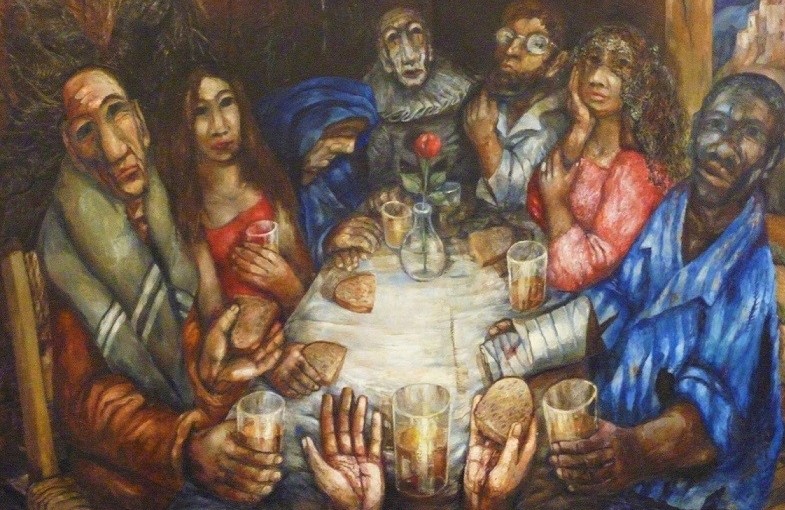
Jesus Eats with Tax Collectors and Sinners by Sieger Köder (1925-2013)

After this, Jesus went out and saw a tax collector by the name of Levi sitting at his tax booth. “Follow me,” Jesus said to him, and Levi got up, left everything and followed him.

Then Levi held a great banquet for Jesus at his house, and a large crowd of tax collectors and others were eating with them. But the Pharisees and the teachers of the law who belonged to their sect complained to his disciples, “Why do you eat and drink with tax collectors and sinners?”

Jesus answered them, “It is not the healthy who need a doctor, but the sick. I have not come to call the righteous, but sinners to repentance.” (New International Version)

Eating meals together in the Ancient Near East was much more than simply taking in sustenance and having some social interaction. It was also a deeply religious affair of spiritual connection and sharing.

So, it was rather surprising for a lot of people, not just the religious leaders, that Jesus freely ate and drank with people of dubious reputation.

Tax collectors were a hated lot by the Jewish people. Most were Jewish themselves, and so, were understandably seen as traitors and turncoats, colluding with the Romans to squeeze as much tax money out of their compatriots as they could.

Jesus actually calls one of these despised persons into his group. Then, even eats with him and his Mafia friends. This is a radical and unheard of inclusion, completely reversing the exclusion tax collectors had from the Jewish community and synagogue.

The religious leaders, of course, want an explanation for such unacceptable behavior by Jesus. He gave them a simple answer, short and sweet: It’s unhealthy people who need help, not healthy ones. I came to help.

For the malady of sin with all its guilt, shame, and exclusion, a powerful remedy is the act of hospitality.

“Hospitality is not to change people, but to offer them space where change can take place.”

Henri Nouwen

The word “hospitality” literally means “love of the stranger.” It is an invitation to accept another into our home that we do not know very well and befriend them. 

Hospitality is what Jesus did. Because of our sin and disobedience, humanity we were estranged from God – we were on the outside. But because of God’s great love, the Son was sent, the Lord Jesus, to come and dwell among us. 

Jesus invited us into the life of God. He is now standing at the door and knocking, and we are to invite Jesus in (Revelation 3:20). Christ has so closely identified with his people that when we invite others into our homes and lives, we are inviting Jesus in. 

Keep in mind that for Matthew to invite Jesus into his life and home cost him time, effort, and negative attention from those not around the table. There was no grumbling or belligerence by neither the tax collectors nor Jesus. 

In an ideal world, we always receive something back for our own work of hospitality – an invitation from the other person, or, at least, a simple thank you. But that does not always happen, and it cannot be the driving reason why we practice hospitality. 

Hospitality must be a work of love that comes from a heart that has been touched by the hospitality of God. Our earthly hospitality is to be a form of saying “thank you” to God for his great grace to us. And that is precisely what I believe Matthew was doing with his own hospitality. 

Complaining comes when we expect to receive and don’t get it. Yet, if you truly receive another person as though she were Christ himself, you will not complain but will rejoice in your service. Jesus has said, “Whoever receives you, receives me.” (Matthew 10:40)

In ancient Christianity, a concrete expression of love to other believers was providing food and shelter for Christians traveling throughout the Roman Empire. Many times, the traveling strangers were itinerant evangelists spreading the message of the gospel from place to place (3 John). 

At other times, believers were deprived of some basic necessities due to the occasional waves of persecution that broke out. They were often poor and needy because of their situation, and of being different; and the townspeople were not typically hospitable.  So, Christians had to rely on the love and hospitality of those believers they could connect with who had the means to help.

Hospitality is an important means of showing and providing love. 

Contribute to the needs of God’s people, and welcome strangers into your home. (Romans 12:13, CEB)

One of the qualifications for church leadership is that they are hospitable.

An elder… must be respected by others. He must be ready to help people by welcoming them into his home. (1 Timothy 3:2, ERV) 

There is a great need for hospitality in our world. Many people are lonely, isolated, and withdrawn, sometimes even excluded because of their mental illness or struggles with addiction. Being in a pandemic certainly doesn’t help that situation whatsoever. They have no one to talk to about important matters.

Hospitality cuts both ways for us. We are to invite the lonely into our hearts and homes; and the lonely are to invite others into their hearts and homes, instead of waiting for somebody to just show up.

Jesus fully understood that eating a meal together with Matthew and the other tax collectors was a sacred affair – communicating mutual acceptance, care, and friendship. This is why the religious leaders had such difficulty seeing Jesus eat with “sinners.” By eating with outsiders and those excluded from the community, Jesus was broadcasting his love and acceptance of such persons.

Our dining room tables are little mission stations. 

When my wife and I were new believers, there was a Christian couple who often had us into their home. Both of us had learned some unhealthy relations through our families of origin.  Here we were, not really knowing what a Christian family should look like. 

Through hospitality, eating together and sharing around the table, we began to learn how a family dedicated to Christ lives. We learned life lessons that we probably could not have learned in any other way.

Jesus, on the cusp of his Passion, enjoyed a meal with his disciples. He said…

While they were eating, Jesus took a loaf of bread, and after blessing it he broke it, gave it to the disciples, and said, “Take, eat; this is my body.” Then he took a cup, and after giving thanks he gave it to them, saying, “Drink from it, all of you; for this is my blood of the covenant, which is poured out for many for the forgiveness of sins.” (Matthew 26:26-28, NRSV)

One thing Jesus meant by those words is that, eating and ingesting the elements of bread and wine, serve as a very tangible way of understanding what life is to be like. 

We are to take Jesus into the depths of our lives. We are to ingest him, that is, to engage in a very close and intimate relationship with him to the degree that the two of us cannot ever be separated. 

The same is to be true of our relationship with one another in the Body of Christ, the Church.  We are to do life together. We are to enjoy eating and drinking together. 

We are to share with others, in a radical act of hospitality which emulates our Lord, not only our food, but our hearts.

Let your heart and your home be open today.

Soli Deo Gloria