1 John 2:12-17 – Where Is Your Love Aimed?

I am writing to you, dear children,
    because your sins have been forgiven on account of his name.
I am writing to you, fathers,
    because you know him who is from the beginning.
I am writing to you, young men,
    because you have overcome the evil one.

I write to you, dear children,
    because you know the Father.
I write to you, fathers,
    because you know him who is from the beginning.
I write to you, young men,
    because you are strong,
    and the word of God lives in you,
    and you have overcome the evil one.

Do not love the world or anything in the world. If anyone loves the world, love for the Father is not in them. For everything in the world—the lust of the flesh, the lust of the eyes, and the pride of life—comes not from the Father but from the world. The world and its desires pass away, but whoever does the will of God lives forever. (New International Version)

The true measure of one’s Christian belief and commitment is the direction of their love.

We all love. Its part of being a human. Where our love is oriented is the real issue. The trajectory of love is the best measurement of faith and belief.

To love our fellow humanity, our brothers and sisters in Christ, and the neighbors around us, is to live in the light. It is the distinguishing mark of following Jesus. To hate humanity, to downplay love and dismiss it amongst believers, and to ignore the neighbors God placed us around, is to live in darkness.

A Christian is one who has received the love of God in Christ. Because of Divine Love, they know they are forgiven and have eternal life. They know, experience, and feel the permanence of godly love flowing powerfully in and through them to the glory of God.

Christians trust their gut, informed by the conscience testifying to the importance of love, and the Spirit sanctifying them with the primary tool of love.

So, when some folks come along and place a heavy emphasis on cognitive belief, eschewing the heart and the gut, it ought to raise some saved and sanctified eyebrows. To merely affirm a doctrinal statement, then turn around and aim love in the wrong direction, is to affirm a wrong belief. To hate people and love the world is just plain heretical.

The term “world” in the New Testament has differing meanings according to the context. Jesus stated that God so loved the “world” that he gave his only Son. That’s a reference to people, the entire mass of humanity on this planet. John, however, typically uses “world” as the antonym to the church, as if it were an evil opposite.

In our New Testament lesson for today, the term “world” are the patterns, systems, and operations of the world which are in direct contrast to how God operates and how the church ought to function. To love humanity is to hate the world and do God’s will. To love the world is to hate others and adopt a devilish agenda. For example:

  • The world engages in revenge and payback when wronged, whereas the Christian learns to believe God as the Judge, loves the person who has offended them through prayer for their enemy, and obeys God through good works that seeks the welfare of the other. 
  • The world uses other people as either objects of their pleasure or to get ahead in life, whereas the Christian believes God will take care of their needs, will seek to love the other person instead of use them, and would rather obey God than be selfish. 
  • The world thinks nothing of lying, cheating, and stealing, if they can get away with it, whereas the Christian believes Jesus is the way, the truth, and the life, loves being a person of integrity, and obeys God even when it hurts.

Love in the Bible always begins with God’s love for people. This is the fundamental starting point for love because without God’s love, our love doesn’t get very far.

The world hates. God loves. Many people in this cruel and calloused world are unloving and unkind because they lack knowing that God loves them. If we do not believe or know that God infinitely loves us, then our words and our actions will reflect more hate than love.

The Lord your God is with you, he is mighty to save. He will take great delight in you, he will quiet you with his love, he will rejoice over you with singing.”  (Zephaniah 3:17, NIV)

Christianity does not come into existence by knowing some belief statements about Jesus. Rather, Christianity exists when individuals experience the white-hot burning love of God in Jesus Christ. Jesus came not only for those who skip church and only occasionally read their Bibles, but also came for the hard-hearted prick, the immoral adulterer, the strung-out addict, the terrorist, the murderer, and for all those caught up in bad choices and failed relationships. 

God’s love is not based on our performance, how good we look to others, nor conditioned by our moods. The love of God only looks longingly at you and me with the potential of what we can become in Christ and cares for us as we are.

God demonstrates his own love for us in this: While we were still sinners, Christ died for us. (Romans 5:8, NIV)

Christianity never begins with what we do for God to make ourselves lovely for him. Instead, Christianity always starts with what God has done for us, the great and wonderful love that exists for us in Christ Jesus.

But when the kindness and love of God our Savior appeared, he saved us, not because of righteous things we had done, but because of his mercy. (Titus 3:4, NIV)

All the wrong turns in the past, the mistakes and the moral lapses, everything that is ugly or painful all melts in the light of God’s acceptance and love for us. It makes loving the world seem distasteful, like trying to eat sand. Love for God and neighbor is the true source of doing God’s will and the true measure of Christian belief.

In what direction is your love aimed today?

O Lord, you have taught us that without love, whatever we do is worth nothing. Send your Holy Spirit and pour into my heart your greatest gift, which is love, the true bond of peace and of all virtue, without which whoever lives is accounted dead before you. Grant this for the sake of your only Son Jesus Christ, who lives and reigns with you and the Holy Spirit, one God, now and forever. Amen.


1 John 5:13-21 – We Know

I write these things to you who believe in the name of the Son of God so that you may know that you have eternal life. This is the confidence we have in approaching God: that if we ask anything according to his will, he hears us. And if we know that he hears us—whatever we ask—we know that we have what we asked of him.

If you see any brother or sister commit a sin that does not lead to death, you should pray, and God will give them life. I refer to those whose sin does not lead to death. There is a sin that leads to death. I am not saying that you should pray about that. All wrongdoing is sin, and there is sin that does not lead to death.

We know that anyone born of God does not continue to sin; the One who was born of God keeps them safe, and the evil one cannot harm them. We know that we are children of God, and that the whole world is under the control of the evil one. We know also that the Son of God has come and has given us understanding, so that we may know him who is true. And we are in him who is true by being in his Son Jesus Christ. He is the true God and eternal life.

Dear children, keep yourselves from idols. (New International Version)

In a world of constant change, the need for people to experience meaning and stability in their lives is more pronounced than ever. 

COVID-19 currently grips the world in a terrible reality of disease, death, and disruption. Just when we think there might be a light at the end of the tunnel, new strains of the virus arise. Meanwhile, life goes on with all it’s typical changes, losses, and devastating natural disasters.

There are people wondering if they will have a job tomorrow – or if they will ever get called back to one. Many parents are anxious about what kind of world their kids will have when they become adults. Others feel adrift in a fast-paced society, glutted with so much news and information that they have little sense of what is real or true. Discouragement and/or depression may seem to never end.

Whenever there are uncertainties all around us, it’s necessary to return to the knowable, to hang our hat on some solid bedrock certainties we are convinced are always there. That’s why the Apostle John wrote his letter, to remind the church of the known and the knowable:

  • “I write these things to you who believe in the name of the Son of God so that you may know that you have eternal life.”
  • “If we know that he hears us—whatever we ask—we know that we have what we asked of him.
  • “We know that anyone born of God does not continue to sin.”
  • “We know that we are children of God.”
  • “We know also that the Son of God has come and has given us understanding, so that we may know him who is true.” 

In English, we have only one word for “know.” Yet, in the ancient Greek of the New Testament there are two different words for “know.” Throughout today’s lesson, the Apostle consistently uses one of those words, then shifts to another at the end. 

All of the “knows” John used refer to an objective knowledge – an information-based understanding which anyone could discover, learn, or know. Then, the Apostle switched to a different word at the end – to know him (Christ) who is true. That particular word has to do with a subjective or experiential knowledge. In other words, it is an inner witness and knowing of objective knowledge.

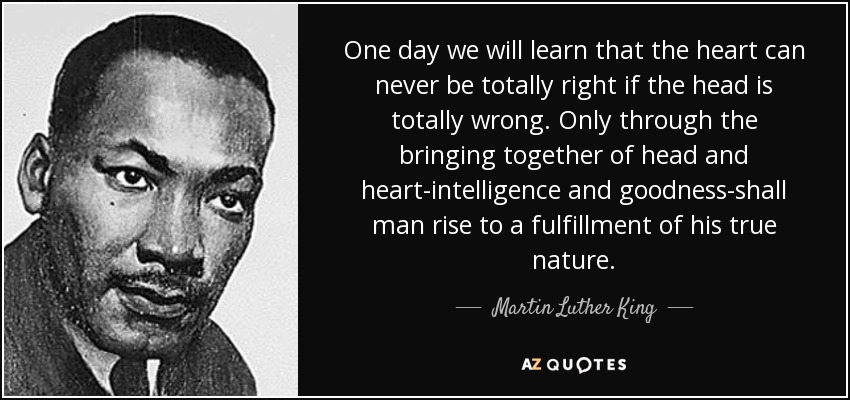
In American society, we frame the distinction between the two words by saying we need to know something in our heart (subjective knowledge) and not only in our head (objective knowledge).

Cerebral understanding, combined with heartfelt experience, results in a new confidence in prayer, a new attitude toward the world, and a new awareness of God. These are the impact of knowing Jesus Christ, and him crucified, risen, ascended, and coming again.

Knowing God takes both the head and the heart. Only being concerned for sound doctrine creates theological eggheads who dispassionately connect with God and others as if they were merely brains on a stick figure. Conversely, only being concerned for how religion makes us feel causes a kind of spiritual schizophrenia which is unstable and constantly seeks for a new or better experience in worship.

Love and obedience are the sacred pathways to personal and corporate knowledge and peace. Whenever the supreme ethic of love takes place in the believer’s life, through receiving it from God and giving it to others, it brings a sense of divine assurance in a sea of worldly uncertainty. 

Security in God will always outdo the insecurities of life.

Loving God, I know that you listen to me. I pray your love and assurance will fill me to such a place that I have peace amidst the vicissitudes of this life. May I rest in Jesus Christ through the work of your Holy Spirit. Amen.

1 John 2:18-25 – Who Is the Antichrist?

Dear children, this is the last hour; and as you have heard that the antichrist is coming, even now many antichrists have come. This is how we know it is the last hour. They went out from us, but they did not really belong to us. For if they had belonged to us, they would have remained with us; but their going showed that none of them belonged to us.

But you have an anointing from the Holy One, and all of you know the truth. I do not write to you because you do not know the truth, but because you do know it and because no lie comes from the truth. Who is the liar? It is whoever denies that Jesus is the Christ. Such a person is the antichrist—denying the Father and the Son. No one who denies the Son has the Father; whoever acknowledges the Son has the Father also.

As for you, see that what you have heard from the beginning remains in you. If it does, you also will remain in the Son and in the Father. And this is what he promised us—eternal life. (New International Version)

Throughout Christian history there have been churches, ministers, and individuals who have advanced certain persons as being the “antichrist,” enemies of Christ and his followers.  

Attempting to identify a particular enemy comes from a theological disposition that believes an antichrist is the first link in a chain of end-times events. Typically, a ruthless or dictatorial ruler, like Mussolini, Hitler, or Stalin received the label of “antichrist.” 

For some Protestants, the papacy continually gets set apart as being the antichrist. Seems like, ever since the Reformation, the Pope has received the dubious title from anti-Catholics. Today, it is standard fare for some evangelical end-times watchers to bemoan the state of the world and lay the blame in a particular person who is outside their own little group. 

Yet, the term “antichrist” has not typically been used as a title for one enemy setting-off a bomb of world-ending trauma. The earliest church, following the teaching of the Apostle John, understood antichrist not as an individual, but as a class of people who deny Jesus is the Christ. 

Indeed, John plainly said the antichrist is anyone who forsakes the Father and the Son. What is so disturbing about John’s talk of antichrist is that these persons arise from within the church, not outside of it.   

It has become too vogue in some circles of Christian evangelicalism to identify and label enemies outside their small groups, leading to a xenophobic attitude of distrust and finger-pointing toward all kinds of people.  

The fingers, however, must first be directed within our own house. It behooves us all to take up the instruction of John to internalize and remember sound teaching. If what you heard from the beginning abides in you, then you too will abide in the Son and in the Father.   

We are to embrace basic core cardinal truth given us. Then we will not be deceived by some supposed enlightened teacher who detracts from Trinitarian theology.   

It is the last hour – but not because of some politician, tyrant, or even religious figure. It is the end-times because Jesus has accomplished redemption for us, and the only event left is the return of Christ to judge the living and the dead.   

Therefore, we must all live with the possibility and tension that it could be today. We are to be prepared. That preparation comes through proclaiming Jesus in all we say and do – not by obnoxiously foaming at the mouth, fearmongering, or pointing fingers at those we don’t like. Rather, we emulate our Lord in the way of loving God and neighbor. 

When a person or group gets labeled by us as “enemy” or “antichrist” then our hate for them seems divinely justified and sanctioned. God, however, is the judge; not us. We are to follow the ethical instruction of Jesus to love our enemies, not curse them through slapping a moniker of “monster,” “devil,” “animal,” or some other non-human label on them. 

Weaponizing words in a verbal war which supposedly defends Christianity only shifts the focus off Jesus and onto how horrible another is. One of the great problems of our world, including many corners of Christianity, is the assumption we already know what another believes. So, we fail to listen. We do not care as we ought because we’ve already formed our judgments. 

“The moment someone attaches you to a philosophy or a movement, then they assign all the baggage and all the rest of the philosophy that goes with it to you. And when you want to have a conversation, they will assert that they already know everything important there is to know about you because of that association. And that’s not the way to have a conversation.”

Neil deGrasse Tyson

Within Christianity, there is much more we have in common with one another across the various traditions than that which is different. Yes, spiritual charlatans exist. Let’s just make sure we have done our due diligence in listening to another and being curious before we form our opinions. 

Despite our differences, the exchange of ideas and debate among various Christian groups in the early centuries of the church helped to clarify and form orthodox Christology. While it may be difficult to avoid labeling individuals in an increasingly complex society, we must act in good faith. 

Mighty God, you sent the Son to this earth to fulfill all your good promises. Let me embrace Jesus so fully and completely that the truth of his reality comes pouring out of me in every area of my life.  In his name I pray. Amen.