I Am with You (Isaiah 43:1-7)

The Train Crossed the Red Sea, by Marc Chagall, 1966

But now thus says the Lord,
    he who created you, O Jacob,
    he who formed you, O Israel:
Do not fear, for I have redeemed you;
    I have called you by name; you are mine.
When you pass through the waters, I will be with you,
    and through the rivers, they shall not overwhelm you;
when you walk through fire you shall not be burned,
    and the flame shall not consume you.
For I am the Lord your God,
    the Holy One of Israel, your Savior.
I give Egypt as your ransom,
    Cush and Seba in exchange for you.
Because you are precious in my sight
    and honored and I love you,
I give people in return for you,
    nations in exchange for your life.
Do not fear, for I am with you;
    I will bring your offspring from the east,
    and from the west I will gather you;
I will say to the north, “Give them up,”
    and to the south, “Do not withhold;
bring my sons from far away
    and my daughters from the end of the earth—
everyone who is called by my name,
    whom I created for my glory,
    whom I formed and made.” (New Revised Standard Version)

God is for us, not against us. The Lord is with us. In fact, a healthy way of viewing the entirety of Holy Scripture is to see it communicating a singular message that divine presence is always there, always a given. Which, then, allows us to respond with faith and trust, instead of fear and anxiety.

God is with us because God loves us. Contrary to how many folks were raised in the church, the Lord is not a continually angry Being. God isn’t like the perpetually upset parent who always finds fault with the child. Rather, the God of Scripture is Love itself, alive and flamed with a desire to gather humanity within a protective brood, much like a concerned mother hen.

“Be still, and know that I am God!
    I am exalted among the nations;
    I am exalted in the earth.”
The Lord of hosts is with us;
    the God of Jacob is our refuge.

Psalm 46:10-11, NRSV

“Look, the virgin shall become pregnant and give birth to a son, and they shall name him Emmanuel,” which means, “God is with us.” (Matthew 1:23, NRSV)

Jesus said, “And remember, I am with you always, to the end of the age.” (Matthew 28:20, NRSV)

Beloved, let us love one another, because love is from God; everyone who loves is born of God and knows God. Whoever does not love does not know God, for God is love. (1 John 4:7-8, NRSV)

There are times when our souls can become parched and dry, times when it seems no one quite understands, and as if circumstances might overwhelm the spirit. The best remedy to such times is to fill oneself full of God, of the divine love and presence that is with us. 

Today’s Old Testament lesson is the perfect prescription for those passing through difficulty and/or wondering what lies ahead, fearful of the future. The following is my own translation/interpretation of this encouraging passage of Holy Scripture; may it fortify your soul today and lead you through the sticking points of life:

Now listen up to what the Lord says, the One who created you and formed you:

Don’t be afraid, because I’m the God who has bought you from the auction block with the ultimate price;

            I have called you by name, and you are now mine.

When you are in water over your head, I want you to know that I will be with you;

            and when it seems like you are drowning, please understand that I’ve got you;

when you walk through fiery trials, I want you to know that you will not be burned,

            and the circumstance will not consume you and burn you out.

This will all be true because I am the Lord your God,

            the Holy One, your Savior.

I put everyone around you in their place,

            and there is no one who is in a position to buy you back from me.

Because you are infinitely precious in my eyes,

            and honored, and I love you,

there is nothing I would not give for you,

            nothing I would not do to keep you with me.

Don’t be afraid because I am with you always;

            I will gather all my children from the east and from the west,

            so that you will never be alone on this earth.

In fact, I will command all the ends of this planet of yours

            to not withhold, to bring together every son and daughter from the farthest reaches,

everyone who is called by my name,

            whom I created for my glory,

            whom I formed and made.

You are all in this life together,

            and I, the Lord, am watching over each and every one of you. 

 Bank on it.

Amen.

Anxious (Genesis 32:3-21)

Jacob praying for deliverance from his brother Esau, by Gustave Doré (1832-1883)

Jacob sent messengers on ahead to Esau, who lived in the land of Seir, also known as Edom. Jacob told them to say to Esau, “Master, I am your servant! I have lived with Laban all this time, and now I own cattle, donkeys, and sheep, as well as many slaves. Master, I am sending these messengers in the hope that you will be kind to me.”

When the messengers returned, they told Jacob, “We went to your brother Esau, and now he is heading this way with 400 men.”

Jacob was so frightened that he divided his people, sheep, cattle, and camels into two groups. He thought, “If Esau attacks one group, perhaps the other can escape.”

Then Jacob prayed:

You, Lord, are the God who was worshiped by my grandfather Abraham and by my father Isaac. You told me to return home to my family, and you promised to be with me and make me successful. I don’t deserve all the good things you have done for me, your servant. When I first crossed the Jordan, I had only my walking stick, but now I have two large groups of people and animals. Please rescue me from my brother. I am afraid he will come and attack not only me, but my wives and children as well. But you have promised that I would be a success and that someday it will be as hard to count my descendants as it is to count the grains of sand along the seashore.

After Jacob had spent the night there, he chose some animals as gifts for Esau: 200 female goats and 20 males, 200 female sheep and 20 males, 30 female camels with their young, 40 cows and 10 bulls, and 20 female donkeys and 10 males.

Jacob put servants in charge of each herd and told them, “Go ahead of me and keep a space between each herd.” Then he said to the servant in charge of the first herd, “When Esau meets you, he will ask whose servant you are. He will want to know where you are going and who owns those animals in front of you. So tell him, ‘They belong to your servant Jacob, who is coming this way. He is sending them as a gift to his master Esau.’ ”

Jacob also told the men in charge of the second and third herds and those who followed to say the same thing when they met Esau. And Jacob told them to be sure to say that he was right behind them. Jacob hoped the gifts would make Esau friendly, so Esau would be glad to see him when they met. Jacob’s men took the gifts on ahead of him, but he spent the night in camp. (Contemporary English Version)

Anxiety’s a booger. It arises as an unwanted guest within our psyche, putting pressure on our chest, and becoming a squatter in the pit of our gut. To be anxious is to have a vague sense of dread, anticipating some upcoming threat.

Jacob knew the feeling well. His mind raced with thoughts of what might happen and how to placate Esau when he encountered his brother. Jacob left home two decades earlier to escape Esau’s vengeance. Now their meeting up was imminent. Jacob was scared spitless.

What do you do when distress and dread wrap you in a straitjacket of anxiety?

Avoid avoidance

The only way to deal with fear is to face it. Avoiding it prevents us from moving forward. It makes us anxious.  One way of facing your fear and/or anxiety is to name it. When fear, anxiety, terror, apprehension, or distress arises, then name it. In naming our fears and anxieties, they become real and, thus, manageable. 

“Every time your fear is invited up, every time you recognize it and smile at it, your fear will lose some of its strength.”

Thict Nhat Hanh (1926-2022)

Another way to face fear is to “sit with it” for a short while. Give yourself permission to feel the anxiety for a set amount of time without judgment or trying to get over it. Pay attention to where you are carrying your anxiety in your body.

Focus on what’s within your control

We cannot control other people. There’s no way Jacob was going to control or manipulate his brother Esau. Many circumstances are outside our control. And yet, we always have the choice of self-control. Giving into addictions, or not facing problems are ways of giving up control of ourselves. Taking good care of ourselves, and focusing on good attitudes are ways of strengthening personal control.

The Serenity Prayer is a good reminder in those times when we feel out of control:

God, grant me the serenity to accept the things I cannot change,

The courage to change the things I can,

And the wisdom to know the difference.

Promote a positive mindset

Positive attitudes help us widen our perspective on things – and with a broader view of things comes more awareness of choices. Making wise choices for ourselves now, builds resilience and fortifies us for difficult situations down the road – without succumbing to old unhealthy coping mechanisms.

Find purpose and meaning in life

Experiencing traumatic events might cause us to question whether our lives have meaning, or not. We may feel unnecessary or expendable, and see no meaning for the future. 

So, it’s important to discover or reconnect with the spirituality within you. Take the time and energy to read Scripture, walk through nature, or discuss matters of the spirit with others. Just as our physical spine helps to support us and is not optional, so we also have a spiritual spine that needs attention for which we cannot live without.

Get support

Other people, like trusted friends and family, can help us make a realistic assessment of the fear and anxiety we are experiencing. With the support of others, we become more confident that we can deal with issues. Finding a church or some other religious gathering can be a fresh means of emotional support.

You are not alone. We are all in this life together. So, let’s rely upon one another and not believe that we just need to pull up ourselves out of impending trouble. There is a God (and God’s people) who are ready to help, if but we just ask.

O God, preserve us from faithless fears and worldly anxieties, and grant that no clouds of this mortal life may hide from us the light of that love which is immortal, and which you have manifested to us in your Son, Jesus Christ our Lord. Amen.

Tussling with Trouble (Matthew 10:24-39)

“The student is not above the teacher, nor a servant above his master. It is enough for students to be like their teachers, and servants like their masters. If the head of the house has been called Beelzebul, how much more the members of his household!

“So do not be afraid of them, for there is nothing concealed that will not be disclosed, or hidden that will not be made known. What I tell you in the dark, speak in the daylight; what is whispered in your ear, proclaim from the roofs. Do not be afraid of those who kill the body but cannot kill the soul. Rather, be afraid of the One who can destroy both soul and body in hell. Are not two sparrows sold for a penny? Yet not one of them will fall to the ground outside your Father’s care. And even the very hairs of your head are all numbered. So don’t be afraid; you are worth more than many sparrows.

“Whoever acknowledges me before others, I will also acknowledge before my Father in heaven. But whoever disowns me before others, I will disown before my Father in heaven.

“Do not suppose that I have come to bring peace to the earth. I did not come to bring peace, but a sword. For I have come to turn

“‘a man against his father,
    a daughter against her mother,
a daughter-in-law against her mother-in-law—
    a man’s enemies will be the members of his own household.’

“Anyone who loves their father or mother more than me is not worthy of me; anyone who loves their son or daughter more than me is not worthy of me. Whoever does not take up their cross and follow me is not worthy of me. Whoever finds their life will lose it, and whoever loses their life for my sake will find it. (New International Version)

We can expect opposition and trouble from the world

Those who follow the words and ways of Jesus will experience hardship at the hands of others, because Christ’s values are often different than how the world’s systems typically operate. 

Being called the Devil (Beelzebul) isn’t exactly a term of endearment. There were those so upset with Jesus that they equated him with Satan. So, since Christ got this kind of verbal treatment, how much more will we be the brunt of false accusations, slander, and gossip? 

We are not above our Lord – we will be treated as he was. We cannot expect that we are above getting into trouble. Believers are promised deliverance from sin, death, and hell – and not from the meanness and ignorance of people in this present life.

Because of this reality, we need to be savvy to our situation of trouble and practice common sense, as well as have a mental disposition that thinks the best of people, and does not immediately judge and condemn others.

All of this requires us to avoid the two extremes of either simple assimilation into the culture, or rejection of the culture as evil. Both the blending into culture, and the separating from it, each share the same preferred outcome of trying to avoid opposition and trouble. 

Instead, there is a third way of being faithful to following the way of Jesus: Interact with and engage the culture as salt and light. (Matthew 5:13-16)

Assimilation causes us to lose our saltiness; and isolation hides our light. So, let’s find wise ways to understand truth and apply it in the concrete situations of life in this world. 

For example, we can discuss life issues about our jobs and school from a Christian perspective, so that we might speak into others’ lives, instead of just standing against something and complaining about it: How might we show both grace and truth in a particular situation? Are there ways we can give support without condoning something we oppose, and how?

We can expect that we are going to disrupt and upset our families and experience opposition from them

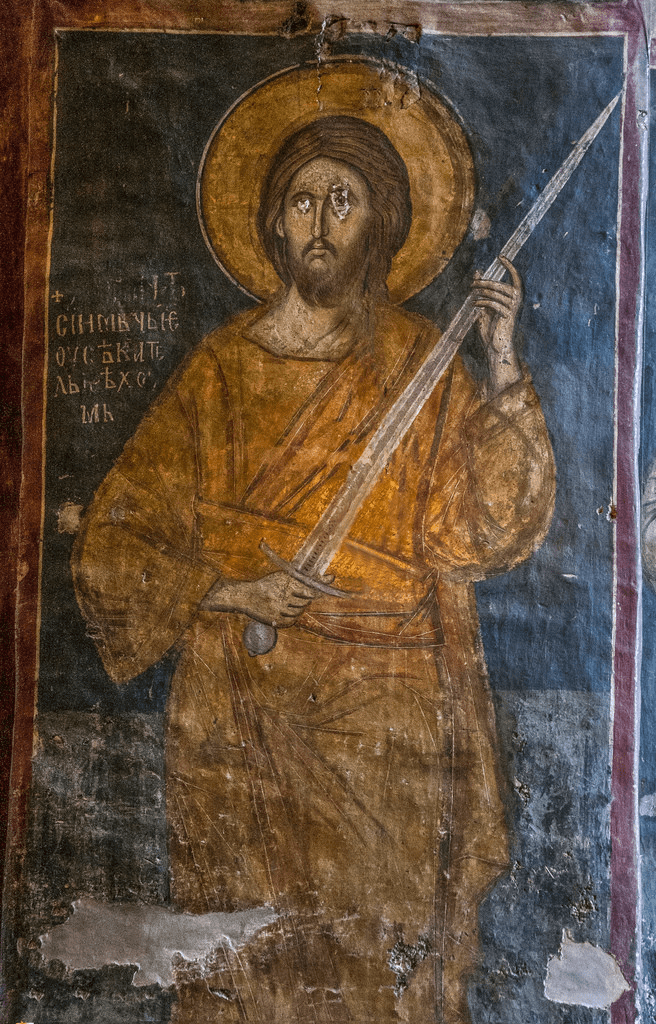
14th century fresco of Christ with a sword, in the Sacred Monastery of the Ascension of Christ Church, Kosovo

Unfortunately, opposition does not just come from the world, but within the very families and communities we love and rub shoulders with every day. Most persecution, hardship, and trouble for believers in Jesus come from family and those closet to us. 

Although I grew up in a church-going family, we never really discussed faith or Christianity. When I became serious about walking with Jesus, I faced a lack of support. I was often the brunt of teasing and verbal jabbing. My commitment to Christ had butted up against the family value of never rocking the boat. 

There was once a woman who experienced new life in Christ. When God grabbed ahold of her life, she had been on track to becoming the next Barbara Walters. But her newfound values of embracing the Beatitudes of Jesus rubbed the television broadcast world too much. 

So, she went into radio. Instead of looking toward a lucrative life on screen, she settled for less money and no fame behind the microphone of a Christian radio station. Her family didn’t understand this. And marrying a preacher didn’t help the situation any for her. To this day she still faces hardship and resentment for making decisions that did not get her the American dream.

Jesus said that anyone who wants to take the path of least resistance by not rocking the family boat with Christian love is not worthy of him. Anyone who does not take up their cross and follow Jesus in the way of trouble is not worthy of following him. 

We must die to self – which often means dying to avoidance of conflict – and become alive to the wonder of God’s mercy and love in the world.

We don’t need to be afraid of getting into trouble

Why? Because…

  1. Fear has to do with the unknown. So since we know opposition and trouble is expected, we will not live in dread of what might happen. The early Christians actually rejoiced in their suffering because they considered it a privilege to be walking in the way of Jesus. (Acts 5:27-42)
  2. You will receive special help. In times of persecution, we have a Helper, the Holy Spirit, given to us for such times as these. (John 3:34; 16:1-15)
  3. God isn’t surprised by your hardship. The Lord will eventually deal with all that is wrong in this world.
  4. The wrath of God is to be more feared than the wrath of people.
  5. God is watching over all the details of my life. If God cares for all the small details, how much more will the Lord take care of the big issues in my life?

Conclusion

It is a privilege to follow Jesus into trouble. This is what is called “upside-down” theology: 

  • In giving my life away to Jesus, I find it. 
  • In getting into trouble, I find peace. 
  • In serving and taking up our cross, there is happiness, not depression. 

Sometimes, things in the kingdom of God seem upside-down; and that is as it should be. Facing trouble is really not the worst thing to be experienced – being separated from God is. 

We are to expect opposition from the world, and from family. Yet, we need not be afraid, because tussling with trouble is part of what it means to follow Jesus – it is the way of the cross.

So, count the cost. Give your life away. In doing so, you will certainly not lose your reward from God.

The Spirit of Faith, Not Fear (Romans 8:14-17)

Come Holy Spirit, by Ed de Guzman, 2014

For those who are led by the Spirit of God are the children of God. The Spirit you received does not make you slaves, so that you live in fear again; rather, the Spirit you received brought about your adoption to sonship. And by him we cry, “Abba, Father.” The Spirit himself testifies with our spirit that we are God’s children. Now if we are children, then we are heirs—heirs of God and co-heirs with Christ, if indeed we share in his sufferings in order that we may also share in his glory. (New International Version)

The distinguishing mark of the believer in Jesus Christ is the presence and power of the Holy Spirit. The Spirit is the sine qua non – the indispensable and most essential element – of the Christian life.

Christians are spiritual people, that is, people of the Spirit. Christianity is a religion dependent upon spiritual resources for life and godliness.

There is nothing more practical, beneficial, and enjoyable than the application of biblical truth to our lives each and every day.  

The Spirit’s work is to point us to Christ. The application of biblical truth is an experience of getting to know Jesus Christ better, and becoming ever more aware and involved with God. This involvement, characterized by faith, hope, and love, increasingly transforms every area of the Christian’s character and life. And it is the Spirit who helps us do it.

It is not God’s will that we fail in living the Christian life by succumbing to fear.  

Rather, it is God’s intention that believers have a robust faith which sings with gusto, connects meaningfully and vulnerably with other Christians, and a boldness to embody the good news of grace and forgiveness in Christ. To love God, and love the world, is to have a life of faith, not fear.

The successful Christian life is characterized by:

  • Experiencing inner transformation through suffering
  • Enjoying ministry and worship with others
  • Progressive deliverance from the power of sin
  • Continual enablement to live a holy life
  • Being an effective witness to the person and work of Jesus

Living this kind of life keeps believers from yielding to temptation. Life in the Spirit motivates us to read the Bible and pray; and to live above criticism and pretense.

The spiritual life helps others discern and understand what Christianity is all about. And, perhaps most importantly, life in the Spirit glorifies God, because we are then reflecting the joy and beauty of the Lord in all we do and say.

So, why don’t more Christians experience this kind of life-giving knowledge and joy? 

It is possible, even with the best of intentions in living a faithful and spiritually rich life, to be stonewalled or crippled with fear and anxiety. And in our fearful state, we almost always produce incorrect actions. These mistakes end up becoming barriers to living an enjoyable and productive Christian life. 

Here are just a few of the fearful and/or erroneous statements I have heard as a pastor over the years:

  1. It’s the pastor’s job to do all that stuff (as if parishioners can live vicariously through their pastor and not have to face their fears of failure)
  2. I don’t need to be a part of a church (as if it’s optional for Christians; and as if I can do it myself)
  3. I don’t like reading (as if this gets us off the hook to personally learn Holy Scripture)
  4. I think (or feel) _____ (as if my thoughts and opinions are the final authority concerning what I should do or not do).
  5. That’s nice advice (as if what is heard in a sermon or read in the Bible does not really need to be followed)
  6. God will lead people to Jesus (as if I have no responsibility for involvement with unbelievers)
  7. I sincerely believe ______ (as if sincerity makes something true)
  8. If I can’t do it 100% I won’t do it at all (as if service depends on my effort, and not on the Spirit’s power)
  9. I might screw it up; others can do it better than me (as if the word “grace” doesn’t exist in Christianity)
  10. That might work for you, but it doesn’t work for me (as if certain people are exceptions to the a spiritually successful life)

      What might you add to this list? 

      What are some of the hindrances which keep you from enjoying the Lord and living in faith?  

Fear disconnects us from the God of grace, that is, unless we acknowledge we are afraid and drink deeply from the fount of Scripture, letting the Holy Spirit be our divine mentor in leading us to Jesus, who is the way, the truth, and the life.

I sought the Lord, and he answered me
    and delivered me from all my fears.
Look to him, and be radiant,
    so your faces shall never be ashamed. (Psalm 34:4-5, NRSV)

Mighty and merciful God, I humble myself before you, trusting that you shall exalt me in due time. Therefore, I cast all my anxiety on you because you care for me. May the grace of the Lord Jesus be with all your people, along with the presence and power of the Holy Spirit. And may you conspire within yourself – Father, Son, and Spirit – to alleviate our fears and bolster our faith. Amen.