The Time Is Near (Luke 21:5-19)

The Siege and Destruction of Jerusalem, by David Roberts, 1850

When some were speaking about the temple, how it was adorned with beautiful stones and gifts dedicated to God, he said, “As for these things that you see, the days will come when not one stone will be left upon another; all will be thrown down.”

They asked him, “Teacher, when will this be, and what will be the sign that this is about to take place?” And he said, “Beware that you are not led astray, for many will come in my name and say, ‘I am he!’ and, ‘The time is near!’ Do not go after them.

“When you hear of wars and insurrections, do not be terrified, for these things must take place first, but the end will not follow immediately.” Then he said to them, “Nation will rise against nation and kingdom against kingdom; there will be great earthquakes and in various places famines and plagues, and there will be dreadful portents and great signs from heaven.

“But before all this occurs, they will arrest you and persecute you; they will hand you over to synagogues and prisons, and you will be brought before kings and governors because of my name. This will give you an opportunity to testify. So make up your minds not to prepare your defense in advance, for I will give you words and a wisdom that none of your opponents will be able to withstand or contradict. You will be betrayed even by parents and siblings, by relatives and friends, and they will put some of you to death. You will be hated by all because of my name. But not a hair of your head will perish. By your endurance you will gain your souls. (New Revised Standard Version)

The Arch of Titus in Rome, depicting the Roman triumphal march after victory against the Jewish revolt

The temple, central in today’s Gospel lesson, had undergone an impressive and beautiful refurbishment by Herod the Great (appointed as King of Judea by the Roman Emperor).

It took eighty years for the rebuilding project to be completed. It was significantly enlarged; and generous amounts of gold and silver were used to refurbish it, along with ample use of white marble.

So, it was no wonder that people coming to Jerusalem and approaching the temple admired the massive and impressive edifice. In their awe, they commented so to Jesus.

But Jesus was less impressed with all the architectural rebuilding and expansion of grounds, and more concerned about what would be coming soon concerning the temple and the inhabitants of Jerusalem.

Jesus became the wet washrag to the awe of viewing the Jerusalem temple. He stated that the temple would be destroyed; and it would happen soon.

Imagine if you were one of the persons in the crowd listening to Jesus. “What are you talking about? Why in the world would you even bring that up? It’s obvious that God won’t let this temple be destroyed. It’s his house!”

To their credit, Christ’s disciples did not question the words of Jesus. They only asked a follow up question of when this imminent destruction was going to take place. Unlike the crowd, their query was: “When can we expect this to happen?”

Christ responded by warning his disciples not to believe every apocalyptic preacher who comes along trying to tell everyone when the event will happen. Because some of those preachers will be false prophets who only lead people astray.

False prophets tend to prophesy peace and abundance when God has already proclaimed doom. I find it curious and interesting that the current U.S. President keeps up a steady stream of telling the American people that the economy is booming and that everyone can trust him to keep them safe and secure – even though there is zero evidence for such bluster.

(In in fact, there is contrary evidence to his words; which begs the question why anyone would listen to him…). Prophets who ignore truth and proclaim error tend to downplay any sort of doom on the horizon, especially when they are in power.

Yet, with all the doom and gloom proclaimed by Christ, let’s keep in mind that although the temple was indeed destroyed as Jesus said it would in the year 70 C.E., neither Christianity nor Judaism was destroyed along with it.

God transcends any physical sacred religious space in the form of temples and church buildings.

After the temple’s destruction, both religions kept on, with Christianity growing and becoming the world’s most populous religion. Today, Judaism and Christianity have adherents across the entire earth in every nation, and among all sorts of races and ethnicities.

Sometimes the modern church forgets these things. There are many congregations today who identify themselves chiefly by their church building. For them, everything revolves around maintaining the physical plant, keeping the lights on, and having enough people in the pew to pay for it all.

All of this focus on the building means that congregants too often get excited about new people because they see them as potential givers who can help shoulder the load of paying bills and keeping up the building’s maintenance.

It’s no wonder that these same churches are continuing to decline. They are closing their doors at the rate of about 10 churches every day in the United States (nearly 4,000 churches per year).

When a church is struggling, it’s easy to believe that some gifted pastor will come along to renew and refurbish them; or that God will magically intervene and bring dozens if not hundreds of people to fill their empty pews.

They don’t want to hear any message that their building will be demolished by a wrecking crane. Yet, in many circumstances, Jesus has communicated to them what will happen. But the people continue believing the false prophesies of renewed glory days and the building busting at the seams with fresh converts.

If I’m coming across as a wet washrag, I’ll gently point us back to the Gospel story of Jesus for today.

Sometimes grief and lament are more biblical than overt positive thinking which is guised in the language of faith.

However, no matter what, the worldwide church will continue to go on, and the gates of hell shall not prevail upon it. The church will keep going, albeit in new places and in all sorts of new forms. Our task is to be sensitive to the Spirit’s leading, and have discerning men and women of faith who are true prophets with helpful information.

Back to the story, Jesus was even more gloomy about what would happen after the temple was destroyed. Believers would be arrested and persecuted. Circumstances would be dire. Christians would continually be at risk. And yet, a look back at history tells us that the church did not die; rather, it grew and flourished.

I am reminded today that hard circumstances and difficult situations – even including death and destruction – are not the end. In God’s kingdom, up is down and down is up; first is last and last is first. All is not lost, even though it may look that way today.

I am reminded of the words of the medieval priest, Thomas à Kempis, who wisely had his mind and heart in the right place when it came to hardship and persecution:

“Sometimes it is to our advantage to endure misfortunes and adversities, for they make us enter into our inner selves and acknowledge that we are in a place of exile and that we ought not to rely on anything in this world.

“And sometimes it is good for us to suffer contradictions and know that there are those who think ill and badly of us, even though we do our best and act with every good intention. Such occasions are aids in keeping us humble and shield us from pride.

“When men ridicule and belittle us, we should turn to God, who sees our innermost thoughts, and seek His judgment…

“It is when a man of good will is distressed, or tempted, or afflicted with evil thoughts, that he best understands the overwhelming need he has for God, without whom he can do nothing.

“While enduring these afflictions he takes himself to prayer with sighs and groans; he grows tired of this life and wishes to die so that he could be undone in order to live with Christ. It is in such times of trial that he realizes that perfect security and full peace are not to be found in this world.”

May we put our eggs not in the earthly basket of architectures, buildings, and physical plants, but in the heavenly basket of compassionate ministry, uplift for the poor and needy, and proclamation of the gospel of grace to all.

O God, in Christ you give us hope for a new heaven and a new earth. Grant us wisdom to interpret the signs of our times; encourage us to stand in the time of trial; and have faith to witness to your truth and love. Amen.

Have Some Spiritual Discernment (Deuteronomy 13:1-5)

Prophet, by Théophile Alexandre Steinlen, 1902

Prophets or interpreters of dreams may promise a miracle or a wonder, in order to lead you to worship and serve gods that you have not worshiped before. Even if what they promise comes true, do not pay any attention to them. The Lord your God is using them to test you, to see if you love the Lord with all your heart. Follow the Lord and honor him; obey him and keep his commands; worship him and be faithful to him. 

But put to death any interpreters of dreams or prophets that tell you to rebel against the Lord, who rescued you from Egypt, where you were slaves. Such people are evil and are trying to lead you away from the life that the Lord has commanded you to live. They must be put to death, in order to rid yourselves of this evil. (Good News Translation)

It’s a foolish notion that a servant of God can have a moonlighting gig with another god. A shortsighted philosophy believes that worshiping God on the Sabbath allows one to then do whatever they want on the other six days. And a downright deadly act is to become enamored with a miracle and then follow the miracle worker who did it, even though they want nothing to do with devotion to the Lord.

It only takes one bad apple to spoil the whole bushel basket of them. Just one rotten egg in a six egg omelet will ruin the entire thing. And one bad prophet amongst the people will end up destroying the congregation. Evil isn’t something to dabble with; instead, wickedness is something to rid yourself of altogether.

“If your right eye causes you to stumble, gouge it out and throw it away. It is better for you to lose one part of your body than for your whole body to be thrown into hell. And if your right hand causes you to stumble, cut it off and throw it away. It is better for you to lose one part of your body than for your whole body to go into hell.” Jesus (Matthew 5:29-30, NIV)

Jesus declared that believers must take decisive, drastic, and radical action against idolatry. Serving other gods, along with the one true God, requires an amputation. The biblical text of both Testaments leaves us no room to believe that it’s okay to dabble in things that the Lord condemns. And if we think we are not hurting anybody to hold onto such a thought, we very much need to think again.

True prophets and preachers don’t lead people into idolatry, no matter how spectacular their omens, wonders, or miraculous signs. False prophets and preachers exist only to test the sincerity of a believer’s love for the Lord. Israel was to take decisive and radical measures to rid themselves of false gods. Failing to do so would certainly lead to idolatry.

These are the regulations and the case laws that you must carefully keep in the fertile land the Lord, your ancestors’ God, has given to you to possess for as long as you live on that land:

You must completely destroy every place where the nations that you are displacing worshipped their gods—whether on high mountains or hills or under leafy green trees. Rip down their altars and shatter their sacred stones. Burn their sacred poles with fire. Hack their gods’ idols into pieces. Wipe out their names from that place.

Don’t act like they did toward the Lord your God! (Deuteronomy 12:1-4, CEB)

Believers of every era need to learn that the occurrence of supernatural manifestations, and/or wild success in ministry, does not automatically authenticate the prophet or preacher.

Theology always takes precedence over miraculous signs and wonders. A growing church doesn’t necessarily mean that God’s favor rests upon it, anymore than a declining church signals God’s displeasure. This is why we are to never add to or take away from God’s Word to people. (Deuteronomy 12:32)

“It is the nature of false prophets to create a conscience where there is none, and to cause conscience to disappear where it does exist.”

Martin Luther

If Christians are ever invited to disobey and rebel against the words and ways of Jesus, they are to refuse the offer. This, of course, requires actually knowing God’s Word and handling the worship of God and the interpretation of God’s Word with great care, humility, and wisdom.

There are many times that false preachers are quite sincere, believing that they are proclaimers of truth, when they are really leading others astray. We are always to be students of Holy Scripture, consistently discerning the difference between truth and error, right and wrong. Let us be careful to avoid the situation of the believers in the New Testament book of Hebrews:

In fact, though by this time you ought to be teachers, you need someone to teach you the elementary truths of God’s word all over again. You need milk, not solid food! Anyone who lives on milk, being still an infant, is not acquainted with the teaching about righteousness. But solid food is for the mature, who by constant use have trained themselves to distinguish good from evil. (Hebrews 5:12-14, NIV)

Let’s be people who take the time and effort to grow in the grace and knowledge of the Lord Jesus; and be patient and humble enough to learn over time what truly pleases the Lord.

Blessed God, give your servant a discerning heart to govern, lead, and teach your people, so that we may all be able to distinguish between right and wrong, doing your divine will and obeying your divine commands, to the glory of Jesus Christ, in the power of the Holy Spirit. Amen.

Advent Is Coming (Zechariah 13:1-9)

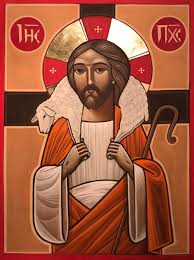
Coptic Church icon of Jesus the Good Shepherd

“On that day a fountain will be opened to the house of David and the inhabitants of Jerusalem, to cleanse them from sin and impurity.

“On that day, I will banish the names of the idols from the land, and they will be remembered no more,” declares the Lord Almighty. “I will remove both the prophets and the spirit of impurity from the land. And if anyone still prophesies, their father and mother, to whom they were born, will say to them, ‘You must die, because you have told lies in the Lord’s name.’ Then their own parents will stab the one who prophesies.

“On that day every prophet will be ashamed of their prophetic vision. They will not put on a prophet’s garment of hair in order to deceive. Each will say, ‘I am not a prophet. I am a farmer; the land has been my livelihood since my youth.’ If someone asks, ‘What are these wounds on your body?’ they will answer, ‘The wounds I was given at the house of my friends.’

“Awake, sword, against my shepherd,
    against the man who is close to me!”
    declares the Lord Almighty.
“Strike the shepherd,
    and the sheep will be scattered,
    and I will turn my hand against the little ones.
In the whole land,” declares the Lord,
    “two-thirds will be struck down and perish;
    yet one-third will be left in it.
This third I will put into the fire;
    I will refine them like silver
    and test them like gold.
They will call on my name
    and I will answer them;
I will say, ‘They are my people,’
    and they will say, ‘The Lord is our God.’” (New International Version)

There’s likely a reason why so many Bible-readers have barely considered, or just never read, the minor prophets of the Old Testament: It’s difficult reading, on several levels.

Yet, the twelve books of the minor prophets, along with the four books of the major prophets, account for a lot of material within Holy Scripture. If we are to understand the whole of the Bible, as well as know God better, we need to contend with what the prophets have to say.

Impurity and cleansing, grace and judgment, idolatry and stabbing, prophets and visions, sheep and shepherds, faith and apostasy, are all part of what seems, on the surface, to be a confusing hodge-podge of verbiage from the prophet Zechariah. Yet, we can still observe the things God cares about.

The Lord promised to rid the land of idols (false gods), (false) prophets, and the spirit of impurity (false righteousness). If God takes out the false prophets, then the people can say good riddance to a false message of leading others toward idolatry and impurity.

The spirit and the message behind false prophets, unholy leaders, and unrighteous teachers, has to do with propagating lies and suppressing truth, so that they can deceive people and manipulate others for their own benefit – leading groups of people away from reality, and into commitments that go nowhere.

This insidious stuff is meant to be taken quite seriously – because it leads to a breakdown in community, a proliferation of injustice, and oppressive spiritual bondage. That’s why we have a rather dramatic picture of parents stabbing a child – not because God likes violence – but to demonstrate that false prophets and their message will damage and destroy a nation, if indulged.

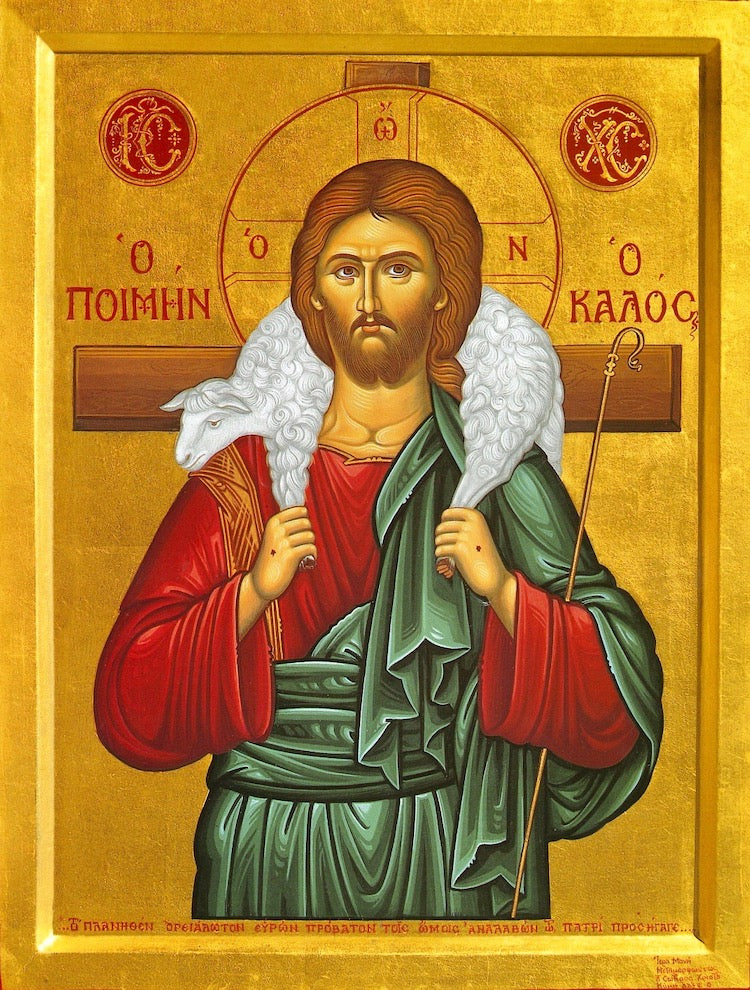
Orthodox icon of Jesus the Good Shepherd

We must always keep in mind and remember that injustice and unrighteousness must always be nipped in the bud (Deuteronomy 13:6-11). Sin, that is, those things which deceive and make false promises that result in a downward spiral toward death, is to be confronted. In the New Testament, Jesus put the matter this way:

If your right eye causes you to stumble, gouge it out and throw it away. It is better for you to lose one part of your body than for your whole body to be thrown into hell. And if your right hand causes you to stumble, cut it off and throw it away. It is better for you to lose one part of your body than for your whole body to go into hell. (Matthew 5:29-30, NIV)

Christ was not advocating a physical maiming of oneself, but rather for us to separate ourself from sin by whatever means necessary. In other words, Jesus was saying that sin isn’t something to be managed, but instead something to eradicate altogether.

Truth matters. Truth brings reality and beauty to light. Falsehood is terrible. To promote that which is false, and perhaps even worse, tolerate it, gives hate and injustice a platform from which to crawl out of the darkness and make the world blind. It would take an awful lot to undo error’s presence.

This is why the shepherd, or maybe, from the Christian perspective, the Christ, is stricken. The Good Shepherd, the one who is truth incarnate, would have to suffer. The injustice and unrighteousness is so foul and degrading that only the pure can undo the impure. And it is all set in motion, not by the forces of darkness, but by God.

God strikes the shepherd, and the sheep scatter. He is not struck because he deserves it – far from it – but because he assumes responsibility for the wrongdoing of others. Father God is the parent who stabs a spear in the side of God the Son.

The ultimate good shepherd of the sheep will die as a heinous offender; and God is the executioner.

In Christ, God put the wrong on him who never did anything wrong, so we could be put right with God.

2 Corinthians 5:21, MSG

This same great shepherd of the sheep, who became the Lamb of God that takes away the sin of the world, is coming again. And he will bring the refining and purifying fire of divine judgment upon the earth.

In this upcoming Advent season, we remember not only that Jesus has come to save the world. We also are reminded that there is yet a second Advent, in which Jesus will come to judge the living and the dead.

Behold, He is coming with clouds, and every eye will see Him, even they who pierced Him. And all the tribes of the earth will mourn because of Him. Even so, Amen.

“I am the Alpha and the Omega, the Beginning and the End,” says the Lord, “who is and who was and who is to come, the Almighty.” (Revelation 1:7-8, NKJV)

Blessed God and Father of our Lord Jesus Christ, preserve us from our own madness. Direct us away from dealing destruction to others; help us to steer clear of paths which lead to the ruin of ourselves and our world.

Protect us. Enable us to hear you. Beloved Jesus, show us your precious face in all others – you in us, and we in each other, from all places. Amen.

Who Are We Listening To? (Jeremiah 23:9-22)

My head is reeling,
    my limbs are limp,
I’m staggering like a drunk,
    seeing double from too much wine—
And all because of God,
    because of his holy words.

Now for what God says regarding the lying prophets:

“Can you believe it? A country teeming with adulterers!
    faithless, promiscuous idolater-adulterers!
They’re a curse on the land.
    The land’s a wasteland.
Their unfaithfulness
    is turning the country into a cesspool,
Prophets and priests devoted to desecration.
    They have nothing to do with me as their God.
My very own Temple, mind you—
    mud-spattered with their crimes.” God’s Decree.
“But they won’t get by with it.
    They’ll find themselves on a slippery slope,
Careening into the darkness,
    somersaulting into the pitch-black dark.
I’ll make them pay for their crimes.
    It will be the Year of Doom.” God’s Decree.

“Over in Samaria I saw prophets
    acting like silly fools—shocking!
They preached using that no-god Baal for a text,
    messing with the minds of my people.
And the Jerusalem prophets are even worse—horrible!—
    sex-driven, living a lie,
Subsidizing a culture of wickedness,
    and never giving it a second thought.
They’re as bad as those wretches in old Sodom,
    the degenerates of old Gomorrah.”

So, here’s the Message to the prophets from God-of-the-Angel-Armies:

“I’ll cook them a supper of maggoty meat
    with after-dinner drinks of strychnine.
The Jerusalem prophets are behind all this.
    They’re the cause of the godlessness polluting this country.”

A Message from God-of-the-Angel-Armies:

“Don’t listen to the sermons of the prophets.
    It’s all hot air. Lies, lies, and more lies.
They make it all up.
    Not a word they speak comes from me.
They preach their ‘Everything Will Turn Out Fine’ sermon
    to congregations with no taste for God,
Their ‘Nothing Bad Will Ever Happen to You’ sermon
    to people who are set in their own ways.

“Have any of these prophets bothered to meet with me, the true God?
    bothered to take in what I have to say?
    listened to and then lived out my Word?
Look out! God’s hurricane will be let loose—
    my hurricane blast,
Spinning the heads of the wicked like tops!
    God’s raging anger won’t let up
Until I’ve made a clean sweep,
    completing the job I began.
When the job’s done,
    you’ll see that it’s been well done.

“I never sent these prophets,
    but they ran anyway.
I never spoke to them,
    but they preached away.
If they’d have bothered to sit down and meet with me,
    they’d have preached my Message to my people.
They’d have gotten them back on the right track,
    gotten them out of their evil ruts. (The Message)

Jeremiah had a hard gig as a prophet of the Lord. And what made it especially difficult was the continual stream of false prophets, preaching their “everything will turn out just fine” sermons in the face of economic injustice, social unrighteousness, emotional denial, and spiritual adultery.

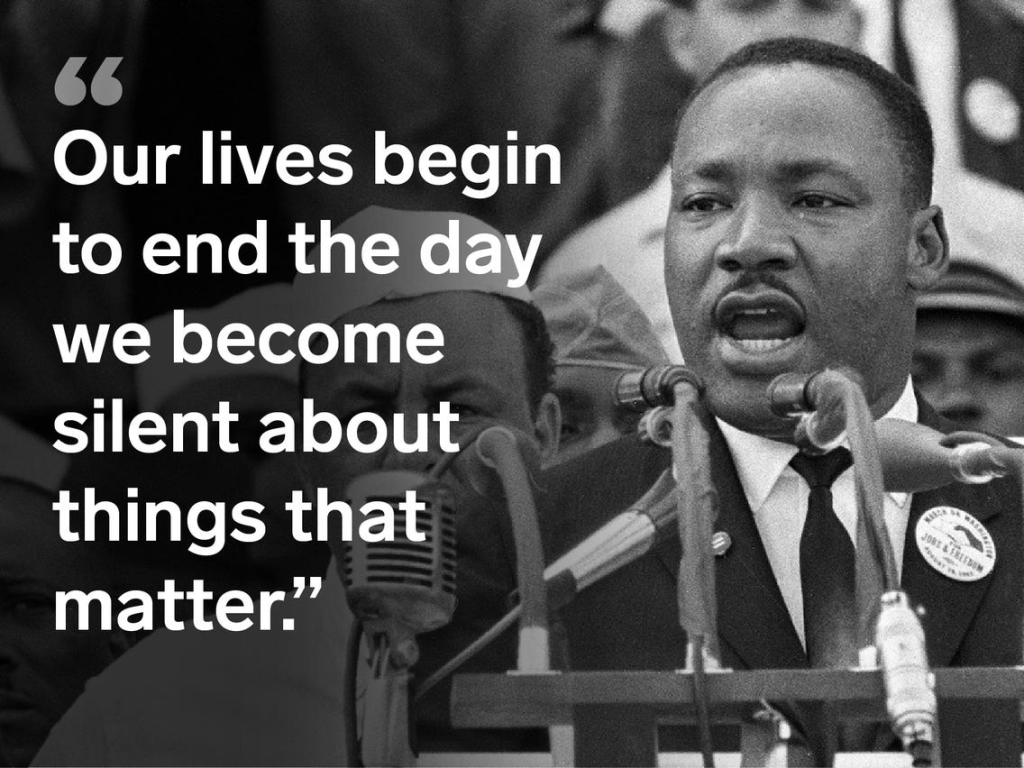
Methinks that Martin Luther King, Jr. must have felt a kinship with the prophet Jeremiah. After all, he was much like a modern-day prophet. In word and deed, he kept asking people to close the distance between the values they espoused and their actual behavior. 

The terrible treatment King and his allies received during the civil rights movement through non-violent marches and demonstrations, brought-out the awful gap between espoused American values of freedom, fairness, and tolerance, and the reality that Blacks really did not possess these in any manner close to the white population. 

Every prophetic ministry compels people to come face-to-face with the disparity between beliefs and behaviors.

Jeremiah knew all about the gulf between expressed values and actual conduct. And he faced a very large chasm between the two. 

Like Reverend King, Jeremiah was imprisoned, had rocks thrown at him, and was jeered for his message of calling people to live up to God’s agenda for humanity. 

White supremacy, or at least white privilege, was taken for granted in much of America before King. In the same way, Israelite privilege was taken for granted in Jerusalem, in Jeremiah’s day. Unfaithful prophets kept proclaiming Jewish supremacy and insisted that the Lord would be on their side of things. 

But the Lord insisted that these supposed prophets have neither attended a meeting of any divine council in heaven nor ever heard God speak to them.

I urge you, brothers and sisters, to keep an eye on those who create dissensions and hindrances, in opposition to the teaching that you have learned; avoid them. For such people do not serve our Lord Christ but their own appetites, and by smooth talk and flattery they deceive the hearts of the simple-minded. (Romans 16:17-18, NRSV)

The spirit of the age simply accepted power, privilege, and pedigree as the norm that ought to always endure. But God thinks differently about it. And so, the Lord sends prophets to call people back to justice, righteousness, and peace for the benefit of all persons.  

The zeitgeist of our own age is one of turmoil, uncertainty – and even chaos, violence, and death. We have our own contemporary self-appointed prophets who proclaim peace where there is no peace; safety, at the expense of others’ protection; militant forms of xenophobia; and an American exceptionalism which places a thin veneer of respectability over the graves of dead people’s bones.

The Lord will not contend with this forever.

An exercise in healthy introspection would be to consider these questions:

  • What are our most cherished values?
  • Where did we get them? Who are we listening to?
  • Are they God’s values? 
  • Who is really in control as the arbiter of values?
  • How might godly values of justice, righteousness, and peace be expressed in our everyday actions and behaviors?
  • Will we seek to engraft such values into our organizations, systems, faith communities, neighborhoods, and governments?
  • Can we work together in humility?
  • Do we have the courage to change, to share power, and to seek the common good of all persons?

Lord, have mercy, and grant us your peace.

All-Seeing God, you know the true state of every heart and every people group. Do your work of making me holy in all I do and say so that your values, and the words and ways of Jesus, might be expressed through me in the power of the Holy Spirit. Amen.