Micah 6:1-8 – What Does the Lord Require of Us?

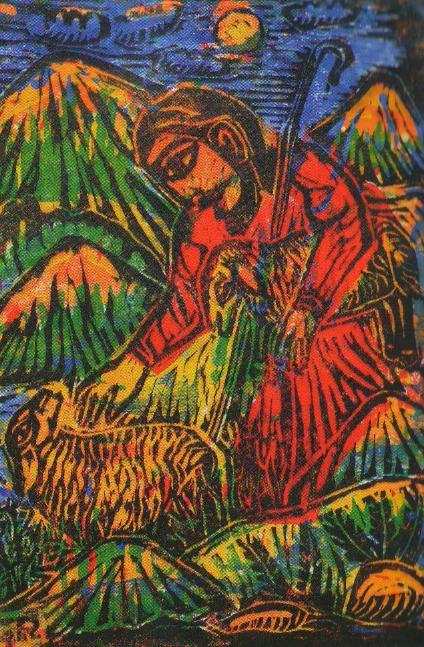
Jesus the Good Shepherd by Solomon Raj

Listen to what the Lord says:

“Stand up, plead my case before the mountains;
    let the hills hear what you have to say.

“Hear, you mountains, the Lord’s accusation;
    listen, you everlasting foundations of the earth.
For the Lord has a case against his people;
    he is lodging a charge against Israel.

“My people, what have I done to you?
    How have I burdened you? Answer me.
I brought you up out of Egypt
    and redeemed you from the land of slavery.
I sent Moses to lead you,
    also Aaron and Miriam.
My people, remember
    what Balak king of Moab plotted
    and what Balaam son of Beor answered.
Remember your journey from Shittim to Gilgal,
    that you may know the righteous acts of the Lord.”

With what shall I come before the Lord
    and bow down before the exalted God?
Shall I come before him with burnt offerings,
    with calves a year old?
Will the Lord be pleased with thousands of rams,
    with ten thousand rivers of olive oil?
Shall I offer my firstborn for my transgression,
    the fruit of my body for the sin of my soul?
He has shown you, O mortal, what is good.
    And what does the Lord require of you?
To act justly and to love mercy
    and to walk humbly with your God. (New International Version)

We are the people of God, the Church, the Body of Christ, the army of God, a holy temple. Those biblical labels are a picture of who we are and what we are to do. These metaphors all describe a people set apart for service, working in concert together toward a shared purpose.

In the prophet Micah’s day, the Israelites lost sight of the purpose and meaning of being God’s people. They needed to remember that the Lord acts in and through them for the redemption of the world. The kind of sacrifice and service which God wants is not so much a largess of tangible offerings we give. Rather, it is neatly summarized this way: Act justly. Love mercy. Walk humbly with your God.

This Old Testament passage has the feel of a courtroom scene. The defense lawyer is Micah, representing God. The people of Israel are the plaintiffs. The world is the judge. All of creation is the jury.

Israel was complaining about God. It’s an age old complaint from many people through the millennia: Blame God for anything that goes sideways in my life. The reasoning goes something like this: After all, God is powerful and in control. God should fix everything.

In their small-minded and short-sighted ways, the people seem unable to discern that easy fixes rarely help anyone. Like yanking up a big weed next to a small plant, it destroys both of them.

The defendant, Micah, speaks on behalf of God. What have I done to you? How have I burdened you? In fact, God has done just the opposite of failing to act or wronging the people in some way. The Lord actively delivered the Israelites:

  • When the people groaned and grumbled under Egyptian slavery, God delivered them with a series of miraculous deeds.
  • When the Israelites were heading to the Promised Land and vulnerable to their enemies, God protected them from the Moabites. The Lord even used a talking donkey to work on their behalf. God miraculously turned the efforts of Balak to curse the people into a blessing.
  • When the people entered the land, they did so by the powerful act of God to stop the Jordan River from flowing so the Israelites could cross over.

These saving acts of God are the motivation for living a life pleasing to God. Micah sarcastically pressed his argument, essentially asking if there’s anything that can be done to keep the people happy? What extremes need to happen to meet such excessive demands? The response by God is this: Do justice. Love mercy. Walk humbly with God.

Walk Humbly with God

Faith and action are meant to work seamlessly together. Doing justice and loving mercy are possible as we walk with God. Walking everyday with Jesus gives us the power and passion to invest in the healing of the world. God desires that we journey with Jesus and follow his words and ways. Throughout the New Testament, the Christian life is described as a road or a way we walk. In fact, the earliest believers were known as “The Way.” (Acts 9:1-19)

Jesus is the way (John 14:6). Jesus is the way to deal with our current concerns and anticipated anxieties. He himself is the way. The way is not through a program of self-improvement. The way is not through a fake-it-till-you-make-it approach. The way is not through an ability to articulate well-crafted words or through being able to answer with certainty every question of faith. The way is not through finding just the right plan or system.

Jesus is our way – he is the way of rescue, the road to a life of harmonious peace and settled rest even when the world is going to hell around us. Jesus is the way for the church everywhere – fellowship, encouragement, acts of loving service, teaching, and strengthening of faith all center around Jesus because he is love incarnate.

Jesus is the way for the world – serving neighbors and nations, advocating for those who are mistreated and facing injustice, tackling the dozens of world problems which oppress humanity – come through the continuing presence of Jesus here on this earth, that is, through the Holy Spirit and God’s people.

Love Mercy

This phrase (in the NIV) is translated various ways in other Bible versions:

  • “Embrace faithful love” (CEB)
  • “Let mercy be your first concern” (CEV)
  • “Show constant love” (GNT)
  • “Be compassionate and loyal in your love” (MSG)
  • “Love being kind to others” (NCV)
  • “Love kindness” (NRSV).

The reason for the variations is that the phrase in Hebrew carries a lot of meaning – and it’s difficult to capture that meaning in just one or two English words. It has to do with God’s steadfast loyalty to people based in a committed love and determination to do what is good and kind on their behalf – no matter whether they deserve such a grace, or not.

To love mercy comes from a large heart. The Grinch had a small heart. It caused him to be a nasty green curmudgeon who could steal gifts from a sweet little Who-girl. Only when his heart was enlarged did he mercifully return the gifts and then participate with the Whoville folks in their grand celebration.

God was merciful! We were dead because of our sins, but God loved us so much that he made us alive with Christ, and God’s wonderful kindness is what saves you. (Ephesians 2:4-5, CEV)

Love one another as if your lives depended on it.

1 Peter 1:22, MSG

Act Justly

Because many people define justice as a punitive act toward a wrongdoer, they struggle with this admonition to “do justice.” Giving people what they deserve doesn’t primarily mean someone is supposed to go to prison. Some people deserve that. Most don’t.

Instead, to act justly means to create a world in which everyone has what they need to live, thrive, and develop the gifts God has placed within them. Everyone deserves their basic human needs met – to have an equal opportunity in realizing the meeting of their needs. And that is what the heart of biblical justice is. Therefore, justice includes practical things like:

  • Providing tutors so that kids in urban schools have the same opportunities to read and as suburban kids.
  • Supporting an overwhelmed single parent who is struggling to find the time and resources to give adequate time to his or her children.
  • Taking in a foster child who needs the environment of a loving family.
  • Employing a person coming out of prison so that the terrible rates of recidivism don’t keep going.
  • Advocating for an underprivileged person who needs adequate healthcare or good housing.

Doing justice is more than giving away money or resources. It’s helping people to help themselves. It’s providing others the dignity and respect of putting them in a position so that they can take pride in their own efforts, just like we do. It’s not only giving someone a fish but taking the time and effort in teaching them how to fish.

Speak up for people who cannot speak for themselves. Help people who are in trouble. Stand up for what you know is right and judge all people fairly. Protect the rights of the poor and those who need help. (Proverbs 31:8-9, ERV)

Conclusion

What does the Lord require or desire of you?

What gifts and abilities has God given to you to act justly, love mercy, and walk humbly?

How can you and I step outside our comfort zones to other areas the Lord might be desiring for us?

The answers to those questions will determine whether we sink or swim as the people of God.

Father God, you have made all people in your image. It’s your desire and requirement that they be gathered together as one family in yourself. Fill the hearts of humanity with the fire of your love and the desire to ensure justice for all. By sharing the good things, you give us, may we secure equality for all our brothers and sisters throughout the world. May there be a truly human society built on love and peace, through Jesus Christ our Lord. Amen.


Acts 7:44-53 – Don’t Be a Church Curmudgeon

Muppets Statler and Waldorf

“Our ancestors carried the Tabernacle with them through the wilderness. It was constructed according to the plan God had shown to Moses. Years later, when Joshua led our ancestors in battle against the nations that God drove out of this land, the Tabernacle was taken with them into their new territory. And it stayed there until the time of King David.

“David found favor with God and asked for the privilege of building a permanent Temple for the God of Jacob. But it was Solomon who actually built it.However, the Most High doesn’t live in temples made by human hands. As the prophet says,

‘Heaven is my throne,
    and the earth is my footstool.
Could you build me a temple as good as that?’
    asks the Lord.
‘Could you build me such a resting place?
    Didn’t my hands make both heaven and earth?’

“You stubborn people! You are heathen at heart and deaf to the truth. Must you forever resist the Holy Spirit? That’s what your ancestors did, and so do you! Name one prophet your ancestors didn’t persecute! They even killed the ones who predicted the coming of the Righteous One—the Messiah whom you betrayed and murdered. You deliberately disobeyed God’s law, even though you received it from the hands of angels.” (New Living Translation)

On this eleventh day in the twelve days of the Christmas season, perhaps there are people who have moved on from the yearly celebration to daily complaints. A big reason why I personally hold to the Christian Calendar with its liturgical seasons is that it helps shape me spiritually so that I can avoid being a cranky old church curmudgeon.

It seems like some believers have been baptized in pickle juice. They have something negative to say about everything. And even when they acknowledge they don’t really understand something, they’ll still give a stony faced retort of “I’m against it.”

The liturgical calendar, when properly observed, keeps us grounded in faith, hope, and love. There are plenty of things in this old fallen world which can take our eyes off our calling as Christians. Pandemics, politics, poverty, and pain can mess with us. If we aren’t on solid spiritual ground, all the misfortunes of this life can take a significant toll on us. Then, like a stubborn old mule, we just sit down and don’t budge.

Like the ancient Israelites for whom Stephen railed against in our New Testament lesson for today, we might become hard-headed, and inflexible. We get lost in doing things our own way to the neglect of what God wants. 

Whenever that happens, there is damage to God’s people, God’s name, and God’s law. Rather than tongues being used for praising the Lord and encouraging others, God’s prophets who are calling us to holiness are verbally decapitated. Ironically, those who speak and act in the name of the Lord are resisting him.

“Pettiness of mind, ignorance and presumption are the cause of stubbornness, because stubborn people only want to believe what they themselves can imagine, and they can imagine very few things.”

Madeleine de Souvre

Anytime someone believes they have piously figured out everything, they will soon find themselves fighting against God. The Lord of All has not called us to figure out every mystery and nail down each uncertainty. Those who claim to have done it are living in a delusional world. Perhaps they will eventually discover how large and immense God really is – much bigger than our puny thoughts and misguided practices. 

How then shall we live?

Quit digging your heals in.

Let go of your illusions of power and privilege. Walking around like you’re King Lactose the Intolerant only looks weird and causes too many trips to the bathroom.

Submit afresh to the Lord for whom we must bow in all things. If we can do that, then we are well on our way to seeing the only true God in all his immensity. Humble ourselves under the mighty hand of God and set aside self-righteous pride so that he may exalt and honor us at the appropriate time of his choosing, not ours (1 Peter 5:6).

Take up our holy calling as Christ’s ambassadors, having become new people and knowing the reconciling power of the cross, through the proper spiritual tools of faith, hope, and love (2 Corinthians 5:17-21; 1 Corinthians 13).

The following practices can help us become more spiritually flexible and open to the Spirit’s work:

  • Stretch. If we are rarely or never in positions which work our faith, then that faith will diminish and eventually atrophy. Faith is not static, but dynamic. It needs to be worked ands stretched. And your face won’t break if you crack a smile now and then.
  • Breathe. Fear, worry, and anxiety cause us to have shallow breathing and unable to think straight. When we are amped-up about something, focus on doing some breath prayers, i.e., breathing in saying, “More of you,” and breathing out saying, “Less of me.”
  • Relax. A hyperextended faith will not support extreme positions which alienate people and put God to the test. Some folks just need to get off their high horse before God knocks them off. Nobody is helped by another’s forced beliefs.
  • Move. Faith is mostly lived in the mundane daily decisions of life. Consistently taking small steps of faith each day will go a long way toward our spiritual health and vitality – not to mention helping us see a big God at work.
  • Listen. Two ears. One mouth. Get the clue. Many people would be better served if they would just listen rather than incessantly talking. Behind all the bluster is typically an issue of wanting the kind of control God possesses.

To do the will of God, we must have a growing awareness and knowledge of a big unlimited God, and a small, limited self. This will take loosening up on the stubbornness and opening to greater flexibility.

If you are not in the habit of following the Christian Calendar through the year, now is a good time to start. After all, nobody wants to smell like they just crawled out of a pickle barrel.

Holy God, heaven is your throne and the earth your footstool. You cannot be kept within any one church or any single place.  You are much too big for that!  Forgive me for my small thoughts of you and my weak faith. I humble myself before you so that you can live in and through me for the sake of Jesus. Amen.

Ephesians 1:3-14 – We Are Blessed

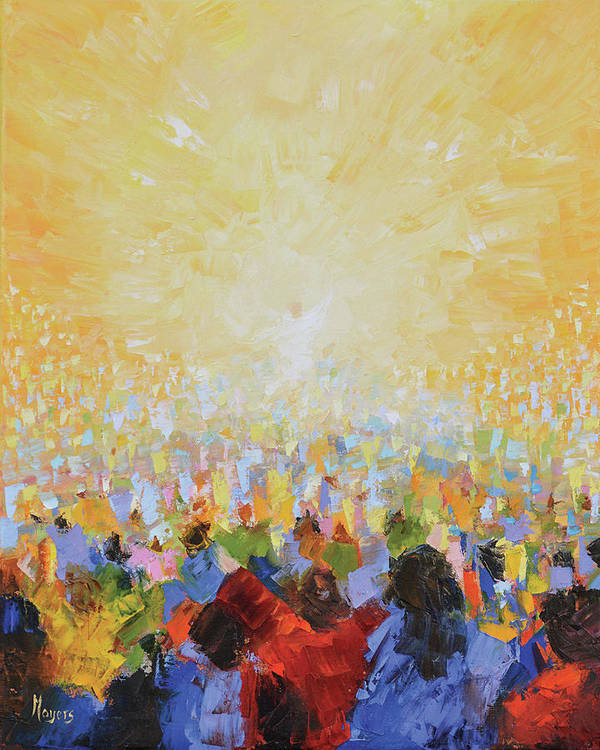
Hallelujah by Mike Moyers

Praise be to the God and Father of our Lord Jesus Christ, who has blessed us in the heavenly realms with every spiritual blessing in Christ. For he chose us in him before the creation of the world to be holy and blameless in his sight. In love he predestined us for adoption to sonship through Jesus Christ, in accordance with his pleasure and will— to the praise of his glorious grace, which he has freely given us in the One he loves. In him we have redemption through his blood, the forgiveness of sins, in accordance with the riches of God’s grace that he lavished on us. With all wisdom and understanding, he made known to us the mystery of his will according to his good pleasure, which he purposed in Christ, to be put into effect when the times reach their fulfillment—to bring unity to all things in heaven and on earth under Christ.

In him we were also chosen, having been predestined according to the plan of him who works out everything in conformity with the purpose of his will, in order that we, who were the first to put our hope in Christ, might be for the praise of his glory. And you also were included in Christ when you heard the message of truth, the gospel of your salvation. When you believed, you were marked in him with a seal, the promised Holy Spirit, who is a deposit guaranteeing our inheritance until the redemption of those who are God’s possession—to the praise of his glory. (New International Version)

God has blessed us. The word “blessing” comes from the same word for “giving thanks.”  So, when, we consider the ways God has spiritually blessed us, it leads us to effusive gratitude and praise.  And this was exactly the case for the Apostle Paul.

In writing these words, Paul was so excited to share with the church at Ephesus about the blessings of God that he could not stop. In our English translations we have broken these verses up into several sentences and two paragraphs. But Paul originally penned this as one sentence!

More than anything, Paul wanted the church to know the wonderful blessings of God to them. Throughout the book of Ephesians, Paul’s constant theme to the church is reconciliation and restoration. In fact, that is the end game for God. God has cares about reconciling people to himself, and others. The Lord deeply cares about restoring the entire world to the lordship of Jesus Christ.

To accomplish this gigantic feat, God intervened into humanity by giving the church three main blessings: election, redemption, and inheritance.

Election 

The word “chose” and “chosen” in some English translations is the Greek word ἐκλεκτός (eklektos) or “election.” This is where it all begins for us. Even before the creation of the world, God had the end of the story in mind. Divine decisions were made about outcomes and results. 

This approach, by the way, is how we are to engage ministry in the church. That is, we begin with the end in mind of what we want to accomplish. Then, we gather the people and begin making the needed decisions to see that end purpose realized. Too often, churches begin with a group of people and wonder about what they should do – which is backwards from how God does it. 

In eternity past, in love, God predestined us to be adopted as his children. You and I are so loved by God that we were special to him before we were even ever born! Election means God has a purpose for us. On the human level, we elect candidates so that they may serve the common good and put their energies into accomplishing some noble cause. 

Likewise with God. We were not elected or chosen by God solely to go to heaven when we die.  Although that is true and shall happen, the reason we were chosen by God was for us to be holy and blameless, to be for the praise of God’s glory. We are not in some sort of holding pattern on earth, impatiently waiting for the afterlife. Rather, we are to be active in accomplishing God’s purposes for our election. And what is that purpose?

We are to participate with God in the grand scheme of reconciling and restoring all of creation back to the original design. Therefore, every act of forgiveness, grace, love, and kindness; every overture of faith and communication of the gospel to others; and all steps of obedience are small movements toward the great restoration story God is writing. 

For example, the book of Acts ends on a dramatic note with no resolution to it. That’s because the story is still being written. We are chosen to be a part of it.

Redemption 

To be redeemed means to be delivered by a payment of a price. In the ancient world, slavery was an entrenched part of the society. The picture of the slave market provided a means for Paul to communicate a spiritual blessing: We have been redeemed from the slave market of sin through the payment of Christ’s blood, and so now, we enjoy the freedom from and forgiveness of sin. 

This is not just redemption from something (sin, death, and hell); it is also redemption to reconciliation and restoration. God elected us to receive redemption so that the grand design of bringing all the earth under the lordship of Christ will happen. God has and is creating a new society, the community of the redeemed, that will realize the original design of unhindered connection with God and others. 

Inheritance

We are receiving an inheritance. It will be put into effect when God’s timing and purpose is accomplished – and Paul spells the purpose out: To bring all things in heaven and on earth together under one head, Jesus Christ. 

Here is how Paul envisions what is coming: The chosen and redeemed of God will one day die, then they will go to be with Christ. But that is not yet the end because the entire world still needs redemption. This is why the preacher of Hebrews could say about the great heroes of the faith:  

These were all commended for their faith, yet none of them received what had been promised.  God had planned something better for us so that only together with us would they be made perfect. (Hebrews 11:39-40, NIV)

There is not just life after death; there is life after life-after-death. All those people of faith, including our believing friends and relatives who have gone before us to be with Jesus, are waiting. They, along with us, have not yet received all the promised blessings of our inheritance. 

We are waiting for the reconciliation and restoration of all things, a new heaven and a new earth in which we will be together as sons and daughters in the kingdom of God with Jesus as King over us. The possession of the Holy Spirit is the guarantee that this is the case, and it will happen. 

Conclusion

Our blessings of election, redemption, and inheritance are all activated by faith. Belief is the switch that turns on the blessings to us in a real and actual way. The electricity is there in the person of the Holy Spirit. The light bulb is there, and it is us. 

So, the question for us today is: Are we turned on and shining brightly, or is the switch off?  We must access our blessings by belief in the Son of God who loved us and gave himself for us.

God is on a mission to reconcile and restore the world. Our salvation is part of God’s plan to make that happen. God is a missionary. The Lord has chosen us to be emissaries to a world that needs redemption and restoration. 

The church is like no other institution on earth – existing for the life of the world, and not for itself. Like a mighty army, we are to train ourselves for godliness so that we can engage an invisible enemy and see the kingdom of God come and the will of God done here on earth as it is always done in heaven. 

The camaraderie we enjoy as fellow soldiers is not the end purpose – restoring enemy territory back to its original government is. So, we care for our wounded and do everything we can for them. There are yet more spiritual battles to be won and hearts captured for King Jesus. 

May you and I, then, give thanks with grateful hearts for the great spiritual blessings of election, redemption, and inheritance so that God’s benevolent and merciful rule might spread everywhere to everyone.

God our Savior, you desire that none should perish, and you have taught us through your Son that there is great joy in heaven over every sinner who repents: Grant that our hearts may ache for a lost and broken world. May your Holy Spirit work through our words, deeds, and prayers, that the lost may be found and the dead made alive, and that all your redeemed may rejoice around your throne, through Jesus Christ our Lord. Amen.

Hebrews 10:10-18 – Out with the Old, In with the New

Because Jesus Christ did what God wanted him to do, we are all purified from sin by the offering that he made of his own body once and for all.

Every Jewish priest performs his services every day and offers the same sacrifices many times; but these sacrifices can never take away sins. Christ, however, offered one sacrifice for sins, an offering that is effective forever, and then he sat down at the right side of God. There he now waits until God puts his enemies as a footstool under his feet. With one sacrifice, then, he has made perfect forever those who are purified from sin.

And the Holy Spirit also gives us his witness. First he says,

“This is the covenant that I will make with them
    in the days to come, says the Lord:
I will put my laws in their hearts
    and write them on their minds.”

And then he says, “I will not remember their sins and evil deeds any longer.”So, when these have been forgiven, an offering to take away sins is no longer needed. (Good News Translation)

As I sit at my computer, easily keyboarding my thoughts, it is almost inconceivable to me that I made it through my undergraduate college days in the early 1980s with a manual typewriter and notetaking with the old-fashioned pen and spiral notebook.  No cell phone, no tablet, no electronic devices aiding me through my education. Typewriters are now obsolete, along with corded dial telephones and wringer washers.

Yet even more incredible is the complete replacement of an old mundane system of ritual sacrifice to a religion of the heart in which God remembers the people’s sins no more. This is such a radical change that it would be like having self-cleaning dishes or total speech-to-text “writing” of “papers.” 

The new order of things described in Hebrews is so much more than a labor-saving device; it is a completely different system that leaves the old system obsolete forever. That is what Jesus Christ’s once-for-all sacrifice did on our behalf.

We live in a New Covenant era in which God has put divine laws on our hearts and written them on our minds. No typewriter, no computer, no keyboard necessary, because the blood of Christ has introduced a seminal change in how we relate to God. 

There is now a thorough forgiveness that no longer requires any labor, ritual, or work. Indeed, it is finished. Now, we have the privilege and opportunity of living into the new reality graciously provided for us. It is an era of great peace, joy, and goodwill.  It is so good that it would be absolutely ridiculous to go back to the old way.

So, slow down enough in this season to connect or re-connect with a most wonderful truth: Jesus Christ came to save sinners. Gratitude for our salvation from sin, death, and hell, recognized and acknowledged each day, helps to stave off living in the past.

Continually looking at a bygone era as the good old days probably wasn’t, in reality, near as great as it’s remembered. That’s because when things are hard in the present, we often reflexively retreat into the past, cherry-picking some good memories, then constructing a mental narrative without all the bad stuff which actually went along with it.

Instead, in this Advent season, Christians purposely focus upon and remember God’s merciful descent to live among humanity. Christ lived, died, rose from death, and is alive – interceding for us continually. Past and present come together in the person of Jesus.

The Word became flesh and blood,
    and moved into the neighborhood.
We saw the glory with our own eyes,
    the one-of-a-kind glory,
    like Father, like Son,
Generous inside and out,
    true from start to finish. (John 1:14, MSG)

The good news of Christianity is that we are gloriously forgiven and redeemed because of Christ, given for us, the once for all sacrifice for sin.

May this season be full of grace and wonder for you, as you pilgrim to the manger and adore Christ the newborn king.

Saving God, you have completely taken care of the sin issue once and for all through the blood of your Son.  Forgive me for my predilection to retreat into old obsolete ways of trying to earn peace and joy, instead of adopting the new, which sometimes seems almost too good to be true.  Thank you for deliverance and new life in Jesus Christ.  Amen.