Romans 8:1-11 – Life in the Spirit

Therefore, there is now no condemnation for those who are in Christ Jesus, because through Christ Jesus the law of the Spirit who gives life has set you free from the law of sin and death. For what the law was powerless to do because it was weakened by the flesh, God did by sending his own Son in the likeness of sinful flesh to be a sin offering. And so he condemned sin in the flesh, in order that the righteous requirement of the law might be fully met in us, who do not live according to the flesh but according to the Spirit.

Those who live according to the flesh have their minds set on what the flesh desires; but those who live in accordance with the Spirit have their minds set on what the Spirit desires. The mind governed by the flesh is death, but the mind governed by the Spirit is life and peace. The mind governed by the flesh is hostile to God; it does not submit to God’s law, nor can it do so. Those who are in the realm of the flesh cannot please God.

You, however, are not in the realm of the flesh but are in the realm of the Spirit, if indeed the Spirit of God lives in you. And if anyone does not have the Spirit of Christ, they do not belong to Christ. But if Christ is in you, then even though your body is subject to death because of sin, the Spirit gives life because of righteousness. And if the Spirit of him who raised Jesus from the dead is living in you, he who raised Christ from the dead will also give life to your mortal bodies because of his Spirit who lives in you. (New International Version)

I feel tremendously privileged to be a Christian and enjoy the very Spirit of God. The people of God are spiritual people, possessing God’s own Spirit. The Apostle Paul wanted Christians to know what they truly have as believers in Jesus.

No Condemnation

There is now no condemnation, no judgment, for those who are in Christ. God has pronounced a verdict, and that decision is final. We have been united to Christ by means of God’s Spirit. Since God condemns neither you nor I, there is no need whatsoever to condemn ourselves or other believers.

Since no condemnation is our reality as Christians, we are to believe this promise of God and swim in its wonderful privilege. 

Believe that the sin issue has been taken care of once for all through the life and death of Christ. If you do not feel forgiven, then put yourself in a position to believe. 

It would be silly to go into the bathroom, turn on the shower, and then just stand in the middle of the bathroom without getting under the showerhead. It would be silly because you did not put yourself in a position to actually become clean. You may believe that a shower and using soap and shampoo will make you clean, but if you do not actually avail yourself of the privilege of actually taking the shower but just stand there and look at it, you will not really be clean. 

We must put ourselves in a position to experience the privilege of knowing our wonderful state of cleanliness and no condemnation by actually reading the Word of God on a regular basis; praying in the Spirit on all occasions; and practicing the silence and solitude necessary to receive the cleansing work of the Holy Spirit.

Two people are declared “married” in a formal wedding ceremony. The couple then works out their shared union together over a lifetime. The minister does not pronounce condemnation at the ceremony; he declares a blessing. Yet, from that point forward, the two people must work on their marriage. They must believe their relationship is important enough to warrant putting themselves in a position to grow together. They will intentionally create date nights and conversations on the couch. They’ll seek to learn, appreciate, and participate in the other’s interests and life. 

“Grace is not opposed to effort; it is opposed to earning. Earning is an attitude. Effort is an action. Grace, you know, does not just have to do with forgiveness of sins alone.”

Dallas Willard, The Great Omission

Just as we do not marry ourselves and pronounce ourselves a married couple, so we do not save ourselves. However, having a marriage license does not mean there is no effort to be done in the relationship. A marriage is both a legal reality, and a kind of mystical union between two married persons.

It is a beautiful thing to be in a relationship where there is no condemnation. Because of Jesus Christ we are free to be the people God created us to be – forgiven and no longer burdened by sin’s condemnation.

Freedom from Sin and Death

In Holy Scripture, sin is not only a personal struggle but a present ubiquitous reality in the world. The power and presence of sin is found everywhere. There is personal, institutional, and systemic sin. Because sin is everywhere, death is everywhere. Biblically, death doesn’t only refer to physical death but is also a relational term referring to spiritual death. Death means relational separation from God. Conversely, life is relational connection with God. 

God did all the action necessary to make the union possible. God sent the Son. God became incarnate. God’s Son became a sin-offering, an atoning sacrifice for our sins. God condemned sin in sinful humanity. God met the righteous requirements of the law. God effects holiness in us by means of the Spirit. 

Rather than saving us from sin then simply telling us to live a holy upright life, God the Father and Son sent God the Holy Spirit to indwell us so that we can live like Jesus. 

Therefore, we must put ourselves in a position to experience life through dwelling in the Scriptures and letting the Spirit and the Word work together to effect practical change in our lives. 

Having the Mind of Christ

A problem we all face is that we inhabit a fallen world. Our mindset can easily get screwy. If we want life and peace, we need the mind of Christ and the Spirit. Whatever our minds are occupied with, that’s what determines whether we will have life and peace, or not. 

If the objects of our thoughts, interests, and affections are continually away from Christ and the Spirit, we will experience death, not life. If we put ourselves in a position to indulge the sinful nature, we will miss real life. A loose mind only leads to relational separation.

The addict knows very well that there are two choices, life or death. The first of twelve steps in Alcoholics Anonymous is to admit that I am powerless over alcohol and that my life has become unmanageable. The second step is to believe that a Power greater than myself can restore me to sanity. The third step is to turn my life and my will over to that Power. So, it is the same for us. 

We are powerless over sin, which will, if left unchecked, lead to death. But in the Spirit (and not in the alcoholic spirits) we have life. Sin, like alcohol, is a daily possibility, even after giving my life and my will to God. Yet, there is also the possibility of life. And that hope of life comes with possessing the mind of Christ and the Spirit. 

We have hope that through the Spirit’s power that we will overcome the power of choices that lead to death, and instead, embrace choices that lead to life. So, whatever we put into our minds is vitally important. 

The Spirit Indwelling Us

The Spirit is the sine qua non of the Christian life, that is, the distinguishing mark of the believer in Jesus. The Spirit opposes the sinful nature and expects us to do the same. There’s no need to try and live the Christian life on our own power when we possess spiritual power.

Pentecost by Edgardo De Guzman

There exists an internal struggle within us that desires to do right but has a compulsion to do otherwise. Yet, the indwelling Spirit gives us victory. Jesus lived the life for us that we could not live. His life, as much as his death, achieved salvation from sin for us. 

The very same Spirit that helped Jesus live his life, and raised him from death, is the same Spirit whom we possess.

When I was a kid, I remember my grandmother canning preserves. I would sit on a stool in the kitchen and watch her, looking forward to having some grape preserves on my next piece of toast. I once asked her, “Why are you always melting that wax over the fruit?” I didn’t understand how wax could make my toast taste any better. 

Grandma answered, “The wax seals the jar tightly so the fruit can’t be contaminated. If I didn’t seal it, the fruit would eventually rot.” As an amateur in the canning business, I could see the importance of picking grapes, boiling them, and canning them. But I now know how important sealing and preserving are.

You and I are God’s preserves. God not only chose us, redeemed us, and called us to life in the Son – God also had a plan for preserving us as heirs of eternal life. God gave us the indwelling Spirit so that we can live as we ought, free from sin and doing the will of God through spiritual power working within us. 

I hope today that you have a deep appreciation for the privileges of no condemnation, freedom from sin, possessing the mind of Christ and the power of the indwelling Spirit. And more than that, that you will avail yourselves of this tremendous gift of the Spirit and experience life and peace.

Gracious God, fill us with the knowledge of your will through all spiritual wisdom and understanding. May we live lives worthy of the Lord Jesus and please him in every way; bearing fruit in every good work, growing in the knowledge of God; being strengthened with all power according to your glorious might so that we may have great endurance and patience, joyfully giving thanks to you.  For you have rescued us from the dominion of darkness and have brought us into the kingdom of the Son you love, in whom we have redemption, the forgiveness of sins. Amen.

Psalm 56 – In God We Trust

Have pity, God Most High!
    My enemies chase me all day.
Many of them are pursuing
    and attacking me,
    but even when I am afraid,
    I keep on trusting you.
I praise your promises!
I trust you and am not afraid.
    No one can harm me.

Enemies spend the whole day
    finding fault with me;
    all they think about
    is how to do me harm.
They attack from ambush,
    watching my every step
    and hoping to kill me.
They won’t get away
    with these crimes, God,
    because when you get angry,
    you destroy people.

You have kept record
    of my days of wandering.
You have stored my tears
in your bottle
    and counted each of them.

When I pray, Lord God,
    my enemies will retreat,
    because I know for certain
    that you are with me.
I praise your promises!
I trust you and am not afraid.
    No one can harm me.

I will keep my promises
to you, my God,
    and bring you gifts.
You protected me from death
    and kept me from stumbling,
so that I would please you
    and follow the light
    that leads to life. (Contemporary English Version)

We all have enemies and opposition of both body and soul. It’s just part of the human condition on this fallen planet to experience forces oppressing us.

David’s enemies were real flesh and blood people. The Philistines and the Israelites were always at odds with each other. Wars and battles continually broke out amongst them. Dealing with enemies was, and always has been, a constant reality of the Jewish people.

As for us Gentiles, we may or may not have a person seeking to take our life. Yet, no matter who we are, we all deal with our own visible and invisible enemies which wage war against our souls.

The psalmist expresses a way of coping with the intense stress of opposition: Trust in God.

Yes, the bedrock issue whenever we face our demons within and without is trust. In whom or what will we put our trust?

If we have a philosophy of watching out for number one, then we merely look to ourselves and our own independence. Yet, since humanity is hard-wired for community, radical autonomy hits its limit rather quickly. Thus, we are left vulnerable to our enemies with no means of security.

If we put our trust in education, then we will focus efforts on mental solutions, coming up with ideas to deal with our enemies. However, since our very personhood is much more than a brain, this too shall eventually meet its limits with our stressful situation.

If we possess a strong Protestant work ethic, we may put all our energy into working harder, better, and faster to overcome our enemies. But subscribing to a philosophy of outworking everyone fails when our bodies break trying to keep ahead of the stress.

We must account for the transcendent, for that which is over and above all. We must trust in the Lord.

Trust in the Lord with all your heart;
    don’t rely on your own intelligence.
Know him in all your paths,
    and he will keep your ways straight.

Proverbs 3:5-6, CEB

To trust means to live consistent with the reality that we are in the Lord’s hands. Our ultimate protection is divine, not human. Not realizing we are in the grip of the Almighty only causes fear, anxiety, and the frenetic search to get out from under our enemy’s oppression.

When all is said and done, our hard circumstances point us to the hard realization that we are not in control of the universe – and not even the people standing right in front of us. Attempting to control others is called manipulation. And, I might add, is something that never ends well. We are only in control of ourselves, and even then, if our primary enemy is within, we can rarely even manage our own lives.

Deciding about whom or what we will trust is the existential basis of living. Hardship, stress, and fear in the teeth of enemy opposition calls for trust. Without faith, we will be swallowed alive.

Faith and trust is not only personal; it’s communal. The entire community of believers are to affirm together that God is with us, and that in Jesus Christ, there is no fear; there is security.

If God is for us, no one can stand against us. And God is with us. He even let his own Son suffer for us. God gave his Son for all of us. So now with Jesus, God will surely give us all things. Who can accuse the people God has chosen? No one! God is the one who makes them right. Who can say that God’s people are guilty? No one! Christ Jesus died for us, but that is not all. He was also raised from death. And now he is at God’s right side, speaking to him for us. Can anything separate us from Christ’s love? Can trouble or problems or persecution separate us from his love? If we have no food or clothes or face danger or even death, will that separate us from his love? As the Scriptures say,

“For you we are in danger of death all the time.
    People think we are worth no more than sheep to be killed.”

But in all these troubles we have complete victory through God, who has shown his love for us. Yes, I am sure that nothing can separate us from God’s love—not death, life, angels, or ruling spirits. I am sure that nothing now, nothing in the future, no powers, nothing above us or nothing below us—nothing in the whole created world—will ever be able to separate us from the love God has shown us in Christ Jesus our Lord. (Romans 8:31-39, ERV)

There is a way through the thicket of hate from others. It is to trust in the Lord with all our heart, to have the unshakable faith that the Lord is with us, to know we are ultimately in God’s gracious hands.

O God, the Creator of all, whose Son commanded us to love our enemies: Lead them and us from prejudice to truth; deliver them and us from hatred, cruelty, and revenge; and in your good time enable us all to stand reconciled before you in Jesus Christ; in whose Name we pray. Amen.

John 1:43-51 – Follow Me

“Follow Me” by Greg Dampier. Jesus calls Peter and Andrew.

The next day Jesus decided to leave for Galilee. Finding Philip, he said to him, “Follow me.”

Philip, like Andrew and Peter, was from the town of Bethsaida. Philip found Nathanael and told him, “We have found the one Moses wrote about in the Law, and about whom the prophets also wrote—Jesus of Nazareth, the son of Joseph.”

“Nazareth! Can anything good come from there?” Nathanael asked.

“Come and see,” said Philip.

When Jesus saw Nathanael approaching, he said of him, “Here truly is an Israelite in whom there is no deceit.”

“How do you know me?” Nathanael asked.

Jesus answered, “I saw you while you were still under the fig tree before Philip called you.”

Then Nathanael declared, “Rabbi, you are the Son of God; you are the king of Israel.”

Jesus said, “You believe because I told you I saw you under the fig tree. You will see greater things than that.” He then added, “Very truly I tell you, you will see ‘heaven open, and the angels of God ascending and descending on’the Son of Man.” (New International Version)

I am a follower of Jesus. I have been for decades. I found, and continue to find, in Jesus Christ a compelling person full of grace, truth, and love.

But my early life was not characterized with knowing Christ. I certainly learned about Jesus, that this ancient guy lived an altruistic life, got tortured and killed on a cross, and that Christians believe in his resurrection from death. However, back then it was more like some strange history lesson. That information made no difference to me.

That is, until I heard a voice – not an audible one that others could hear. Yet, it was just a real as any daily conversation with another person. I heard the call of Jesus. The Ancient of Days showed up. I know with every epistemic fiber in my being that it wasn’t an undigested bit of beef, a blot of mustard, a crumb of cheese, a fragment of an underdone potato. I am sure beyond sure that there was more of an empty grave than gravy about my experience of the risen Christ.

I experienced the call of Jesus to “follow me.” And that is really, at its simplest, the call which continually goes out to all humanity. It is a gracious and merciful call. It isn’t a summons to experience a cataclysmic event of total belief in one fell swoop. Rather, it’s a call to belief that is much more an unfolding awareness of the deep spirituality and connection with the divine within.

“I am the light of the world. If you follow me, you won’t have to walk in darkness, because you will have the light that leads to life.”

Jesus (John 8:12, NLT)

Important to that faith process is another call to “come and see.” Whereas there are some Christian traditions which focus solely on a singular one-time experience of saving faith in Christ, the Gospel of John displays a drama of faith with multiple layers which people move through.

There is no egalitarian zap in which God grants total and immediate understanding. Instead, faith is an ever-increasing process. It is appropriate and biblical to say that our salvation has happened, is happening, and will happen. We follow, we come and see, and we keep following, keep coming, keep seeing more and more.

Like a muscle, our faith grows, develops, stretches, and strengthens over time. To use another metaphor, we ascend a stairway to heaven, one step at a time, day after day, following Jesus.

Methinks this is likely part of what Jesus was getting at with Nathaniel in today’s Gospel lesson. Nathaniel would have quickly picked up on the reference Jesus was making, way back to the first book of Genesis. The Jewish patriarch, Jacob, had an experience of seeing the angels of God on some celestial stairway, ascending and descending. It was an encounter of God’s presence with Jacob, assuring him of divine intervention into the muck of humanity. (Genesis 28:10-17)

Jesus connected that ancient portrait to himself so that Nathaniel would understand, would believe, that God has again broken into this world with a special divine presence. To look at Jesus and follow him, is to see and follow God.

Christ Jesus is the ultimate example and embodiment of God with us. Throughout John’s Gospel, Jesus presents himself as:

  • Living water – connecting to Jacob’s well (John 4:5-14)
  • The Temple of God – the place where the Lord dwells in all divine fullness (John 2:18-22)
  • Bread from heaven – linking the giving of manna to the Israelites in the desert (Exodus 16:4-7; John 6:1-59)
  • The good shepherd – fulfilling divine Old Testament imperatives of caring for people (Ezekiel 34:11-16; John 10:1-30)

In all these ways, and more, Jesus intentionally connects himself as fulfilling God’s ancient promises to people.

In whichever way we need to hear the call to follow, Jesus accommodates to us. For some, Christ comes knocking on the front door. For others, he enters the side door, or slips into the backdoor of our lives.

And, if we will come and see, Jesus will also accommodate us by being the authority over us, the teacher to us, or the friend beside us. The Lord Jesus shall shepherd us and woo us to the flock for guidance and protection.

However, Jesus comes to you, it most likely will be in ways we aren’t expecting. Surely, nothing good can come from Nazareth! Yet, it did. Can anything good come from Calcutta, India, or Juarez, Mexico, or Hoboken, New Jersey, or Milwaukee, Wisconsin, or even from a small rural area that doesn’t show up on a map? Yes, it can. Because with Jesus, God has entered this world, and, as it turns out, the Lord’s presence is everywhere.

Follow me. Come and see. Two of the simplest exhortations ever uttered. Yet, two of the most gracious phrases ever said, with profound implications for us beyond what we can fathom or imagine.

Guide us waking O Lord, and guard us sleeping; that awake we may watch with Christ and asleep we may rest in peace. May the shape of each day be formed by the pedantic following of my Lord; and may I come and see the wonders you have done, are doing, and will do. Almighty and merciful God – Father, Son and Holy Spirit – bless us and keep us. Amen.

1 John 5:13-21 – We Know

I write these things to you who believe in the name of the Son of God so that you may know that you have eternal life. This is the confidence we have in approaching God: that if we ask anything according to his will, he hears us. And if we know that he hears us—whatever we ask—we know that we have what we asked of him.

If you see any brother or sister commit a sin that does not lead to death, you should pray, and God will give them life. I refer to those whose sin does not lead to death. There is a sin that leads to death. I am not saying that you should pray about that. All wrongdoing is sin, and there is sin that does not lead to death.

We know that anyone born of God does not continue to sin; the One who was born of God keeps them safe, and the evil one cannot harm them. We know that we are children of God, and that the whole world is under the control of the evil one. We know also that the Son of God has come and has given us understanding, so that we may know him who is true. And we are in him who is true by being in his Son Jesus Christ. He is the true God and eternal life.

Dear children, keep yourselves from idols. (New International Version)

In a world of constant change, the need for people to experience meaning and stability in their lives is more pronounced than ever. 

COVID-19 currently grips the world in a terrible reality of disease, death, and disruption. Just when we think there might be a light at the end of the tunnel, new strains of the virus arise. Meanwhile, life goes on with all it’s typical changes, losses, and devastating natural disasters.

There are people wondering if they will have a job tomorrow – or if they will ever get called back to one. Many parents are anxious about what kind of world their kids will have when they become adults. Others feel adrift in a fast-paced society, glutted with so much news and information that they have little sense of what is real or true. Discouragement and/or depression may seem to never end.

Whenever there are uncertainties all around us, it’s necessary to return to the knowable, to hang our hat on some solid bedrock certainties we are convinced are always there. That’s why the Apostle John wrote his letter, to remind the church of the known and the knowable:

  • “I write these things to you who believe in the name of the Son of God so that you may know that you have eternal life.”
  • “If we know that he hears us—whatever we ask—we know that we have what we asked of him.
  • “We know that anyone born of God does not continue to sin.”
  • “We know that we are children of God.”
  • “We know also that the Son of God has come and has given us understanding, so that we may know him who is true.” 

In English, we have only one word for “know.” Yet, in the ancient Greek of the New Testament there are two different words for “know.” Throughout today’s lesson, the Apostle consistently uses one of those words, then shifts to another at the end. 

All of the “knows” John used refer to an objective knowledge – an information-based understanding which anyone could discover, learn, or know. Then, the Apostle switched to a different word at the end – to know him (Christ) who is true. That particular word has to do with a subjective or experiential knowledge. In other words, it is an inner witness and knowing of objective knowledge.

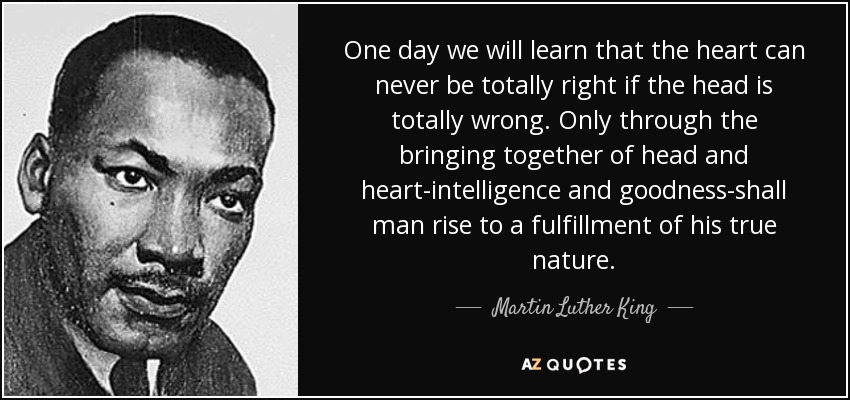
In American society, we frame the distinction between the two words by saying we need to know something in our heart (subjective knowledge) and not only in our head (objective knowledge).

Cerebral understanding, combined with heartfelt experience, results in a new confidence in prayer, a new attitude toward the world, and a new awareness of God. These are the impact of knowing Jesus Christ, and him crucified, risen, ascended, and coming again.

Knowing God takes both the head and the heart. Only being concerned for sound doctrine creates theological eggheads who dispassionately connect with God and others as if they were merely brains on a stick figure. Conversely, only being concerned for how religion makes us feel causes a kind of spiritual schizophrenia which is unstable and constantly seeks for a new or better experience in worship.

Love and obedience are the sacred pathways to personal and corporate knowledge and peace. Whenever the supreme ethic of love takes place in the believer’s life, through receiving it from God and giving it to others, it brings a sense of divine assurance in a sea of worldly uncertainty. 

Security in God will always outdo the insecurities of life.

Loving God, I know that you listen to me. I pray your love and assurance will fill me to such a place that I have peace amidst the vicissitudes of this life. May I rest in Jesus Christ through the work of your Holy Spirit. Amen.