2 Chronicles 34:20-33 – Renew Your Faith

He [King Josiah] gave these orders to Hilkiah, Ahikam son of Shaphan, Abdon son of Micah, Shaphan the secretary and Asaiah the king’s attendant:“Go and inquire of the Lord for me and for the remnant in Israel and Judah about what is written in this book that has been found. Great is the Lord’s anger that is poured out on us because those who have gone before us have not kept the word of the Lord; they have not acted in accordance with all that is written in this book.”

Hilkiah and those the king had sent with him went to speak to the prophet Huldah, who was the wife of Shallum son of Tokhath, the son of Hasrah, keeper of the wardrobe. She lived in Jerusalem, in the New Quarter.

She said to them, “This is what the Lord, the God of Israel, says: Tell the man who sent you to me, ‘This is what the Lord says: I am going to bring disaster on this place and its people—all the curses written in the book that has been read in the presence of the king of Judah. Because they have forsaken me and burned incense to other gods and aroused my anger by all that their hands have made, my anger will be poured out on this place and will not be quenched.’ 

Tell the king of Judah, who sent you to inquire of the Lord, ‘This is what the Lord, the God of Israel, says concerning the words you heard: Because your heart was responsive and you humbled yourself before God when you heard what he spoke against this place and its people, and because you humbled yourself before me and tore your robes and wept in my presence, I have heard you, declares the Lord. Now I will gather you to your ancestors, and you will be buried in peace. Your eyes will not see all the disaster I am going to bring on this place and on those who live here.’”

So, they took her answer back to the king.

Then the king called together all the elders of Judah and Jerusalem. He went up to the temple of the Lord with the people of Judah, the inhabitants of Jerusalem, the priests and the Levites—all the people from the least to the greatest. He read in their hearing all the words of the Book of the Covenant, which had been found in the temple of the Lord. The king stood by his pillar and renewed the covenant in the presence of the Lord—to follow the Lord and keep his commands, statutes and decrees with all his heart and all his soul, and to obey the words of the covenant written in this book.

Then he had everyone in Jerusalem and Benjamin pledge themselves to it; the people of Jerusalem did this in accordance with the covenant of God, the God of their ancestors.

Josiah removed all the detestable idols from all the territory belonging to the Israelites, and he had all who were present in Israel serve the Lord their God. As long as he lived, they did not fail to follow the Lord, the God of their ancestors. (New International Version)

Sadness transformed to joy is a beautiful thing. However, joy that turns into an “Uh, oh!” is an altogether different thing.

Today’s Old Testament lesson has both sadness and joy, at the same time. God’s temple was undergoing repairs. And the Book of the Law was found. It’s sad that the Law was even lost, at all. Somewhere along the line a king, a priest, some people, they all just plain forgot about God’s Word to them. 

Yet, what’s joyful is that King Josiah had God’s Word read to him. He and his officials responded with promising to be faithful to what they heard, and to carefully follow God and God’s instructions for them as God’s people. What’s more, Josiah asked the Israelites to make that same promise.

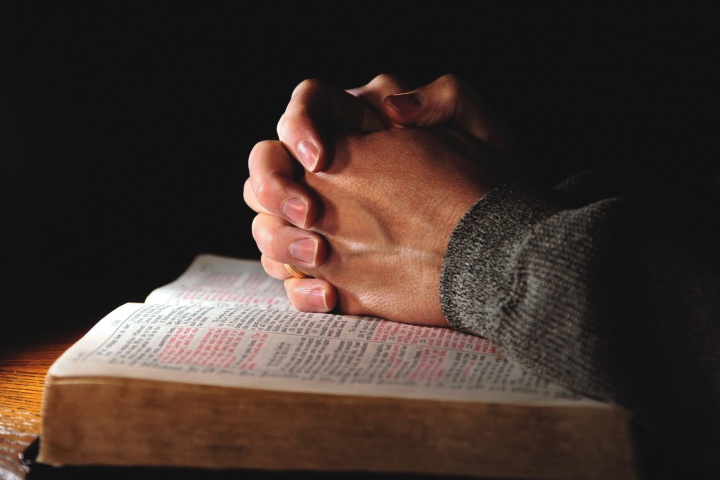
It’s likely that you are reading this because you are a person committed to listening to God’s Word. Also, it’s likely you don’t need to go on an archaeological dig inside your own house, just to find an old dusty Bible to read. 

Maybe, however, you need to take the next step, like Josiah of old, to not only listen and obey yourself, but to ask and invite others to make the same promise.

You and I know that straightforward Bible reading often does not take place within the homes and even the churches of many confessing believers in Jesus. So, take the next step. Invite others to read with you. Ask fellow Christians to read Scripture, make observations about it, apply it to their lives, and base prayers upon it. 

Ask them to make the same promise that you have made to God: To listen to God’s Word, and then, do what it says.

This is how renewal happens.

Patient God, you continue to wait for people to read your Word and obey it. May I not simply attend to your laws in isolation from others, but freely ask others to make the same promise I have: To obey Jesus Christ, my Lord, by living and loving like him, in the power of the Holy Spirit. Amen.

2 Chronicles 15:1-15 – Revive Us Again

The Spirit of God came on Azariah son of Oded. He went out to meet Asa and said to him, “Listen to me, Asa and all Judah and Benjamin. The Lord is with you when you are with him. If you seek him, he will be found by you, but if you forsake him, he will forsake you. For a long time, Israel was without the true God, without a priest to teach and without the law. 

But in their distress they turned to the Lord, the God of Israel, and sought him, and he was found by them. In those days it was not safe to travel about, for all the inhabitants of the lands were in great turmoil. One nation was being crushed by another and one city by another, because God was troubling them with every kind of distress. But as for you, be strong and do not give up, for your work will be rewarded.”

When Asa heard these words and the prophecy of Azariah son of Oded the prophet, he took courage. He removed the detestable idols from the whole land of Judah and Benjamin and from the towns he had captured in the hills of Ephraim. He repaired the altar of the Lord that was in front of the portico of the Lord’s temple.

Then he assembled all Judah and Benjamin and the people from Ephraim, Manasseh and Simeon who had settled among them, for large numbers had come over to him from Israel when they saw that the Lord his God was with him.

They assembled at Jerusalem in the third month of the fifteenth year of Asa’s reign. At that time, they sacrificed to the Lord seven hundred head of cattle and seven thousand sheep and goats from the plunder they had brought back. They entered into a covenant to seek the Lord, the God of their ancestors, with all their heart and soul. All who would not seek the Lord, the God of Israel, were to be put to death, whether small or great, man or woman. They took an oath to the Lord with loud acclamation, with shouting and with trumpets and horns. All Judah rejoiced about the oath because they had sworn it wholeheartedly. They sought God eagerly, and he was found by them. So, the Lord gave them rest on every side. (New International Version)

God’s people had drifted. Times of seeking the Lord became few and far between – until it rarely happened, at all. They were spiritually dry with seemingly no hope. How did they get to the point of being so far from God that they needed a spiritual revival?

After God brought Israel out of hundreds of years of slavery in Egypt, they were led to the Promised Land with Moses as leader. Moses died, and his young protégé Joshua took over and led Israel in her military campaigns to take the land that God had promised them. 

God kept the divine promises. However, although Israel had geographically taken the land, they did not completely dislodge all the peoples living there, as God had told them to do. God’s people only partially obeyed. They were content to be in the land without dealing with all the remaining people.

Israel and Judah’s relationship to the land also serves as a metaphor for the church and her faith. Israel saw the land as a possession, as something to have, rather than as something to be used and developed for the glory of God. 

If and when God’s people, in any age, look upon their faith as merely a possession, instead of a dynamic relationship between themselves and the Lord, then the beginnings of spiritual rigor mortis begin to settle in. 

We get a haunting narrative in the book of Judges, after the people took the land, and Joshua died: 

“After that whole generation had been gathered to their ancestors, another generation grew up who knew neither the Lord nor what he had done for Israel… They forsook the Lord, the God of their ancestors, who had brought them out of Egypt. They followed and worshiped various gods of the peoples around them. They aroused the Lord’s anger.” (Judges 2:10-12)

The land became something not to lose, instead of something God wanted to use to grow them into faithful people.

The day God’s people took the land was the day they rejoiced in victory, and also the day their faith began to die. The Old Testament is a long drawn out story of a disobedient and obstinate people who continually forsake their God and live like the nations for whom they did not overcome. 

The Lord, ever the longsuffering and patient God, went century after century sending prophets to call them back to a living faith. Yet, with each passing year, they’d die a little bit more.

The promise, however, was always there: Seek God, and you will find him. Whenever the people were reminded of that reality and took it to heart by going after the Lord, there was revival in the land.

Restore us, Lord God Almighty;
    make your face shine on us,
    that we may be saved.

Psalm 80:19, NIV

God’s people, in every age, must look upon faith as a wonderful opportunity to spiritually engage the world – to explore all the dimensions of knowing God. That requires putting unhealthy stuff aside and taking up healthy practices. The word for that action is “repentance.” And the result is revival, or new life.

For the Christian, if the goal is to just keep some semblance of looking like a real follower of Jesus, then there is probably some inner distress which no one sees. If we become more afraid of making mistakes than we are of missing God-given opportunities, then the time is ripe for a revival. 

God does not send us to safe places to do easy things; the Lord sends prophets to remind us of our true calling, to revive us again.

The need for resurrection presupposes that there is death. Praying for revival, renewal, and reawakening means that something needs life. With God, nothing is impossible – even the deadest and driest of people and situations.

God specializes in both giving and restoring life. The Lord does more than help; God finds us and changes us. reanimates us from spiritual rigor mortis to lively resurrection through breathing on us. Jesus came to his disciples after the resurrection and said:

“Peace be with you! As the Father has sent me, I am sending you.” And with that he breathed on them and said, “Receive the Holy Spirit. ” (John 20:21-22, NIV)

Faith is more than a possession; it is also a gift to be used to glorify God in loving one another and loving the world as Jesus did.

You live where you live because God wants you to bring life to your neighborhood. 

Who will pray for your neighbors, if not you? 

Who will be concerned for our communities, if not us? 

You work at your workplace because God wants to bring life to it.

Who will make a difference at your workplace, if not you? 

You are in your family, your school, or your church because God wants to bring life to all those spaces and places.

Who will bring a vigorous spiritual life everywhere they are, if not you? 

We are to seek the Lord. It isn’t a game of hide-and-seek. It is an act of faith, believing that God can and will be found by those who seek after him. And wherever God is found, there you will find abundant life.

Perhaps, just maybe, what is needed is some heartfelt, sustained, and focused prayer to God.

Ask and it will be given to you.

Seek and you will find.

Knock and the door will be opened to you. 

For everyone who asks receives; the one who seeks finds; and to the one who knocks, the door will be opened. (Matthew 7:7-8)

Revive us again, fill each heart with thy love.
May each soul be rekindled with fire from above.

Hallelujah! Thine the glory, hallelujah! Amen!
Hallelujah! Thine the glory, revive us again. – W.P. Mackay, 1863

Psalm 133 – The Blessing of Unity and Harmony

How wonderful it is, how pleasant,
    for God’s people to live together in harmony!
It is like the precious anointing oil
    running down from Aaron’s head and beard,
    down to the collar of his robes.
It is like the dew on Mount Hermon,
    falling on the hills of Zion.
That is where the Lord has promised his blessing—
    life that never ends. (Good News Translation)

Unity, solidarity, and harmony are beautiful blessings. Disunity, division, and fragmentation are ugly curses.

Within every family, faith community, neighborhood, organization, and workplace are a diverse bunch of people – which brings the potential of both wonderful fellowship and disagreeing fights.

Today’s reading is a psalm of ascent. It is one of a group of psalms the Israelites would say and sing together as they made their pilgrimage to Jerusalem, ascending the temple mount to worship the Lord. Their common purpose and shared experience led to a blessed unity among all the worshipers.

The metaphors the psalm uses are meant to convey the feeling and impact of a unified people’s blessing as one harmonious bunch. The reference to oil communicates abundance and extravagant blessing beyond expectation. The dew pictures a giving of life to a dry landscape. The psalm is a celebration of life’s simple pleasures, enjoyed with friends and family.

People created in the image of God are hard-wired for community. Rather than existing in isolation, doing our own thing, and keeping to ourselves, the Lord’s intention for humans is to be close enough to one another to rejoice with those experiencing joy and to weep with those mourning a loss.

True community requires unity and harmony.

To live in harmony with one another means we regard everyone the same way by not playing favorites, being condescending, or giving more weight to one group more than another. It is a willingness to interact, work, and play with all kinds of people – not just those whom we like or help us get ahead in life.

We are designed by our Creator to live and work together in common purposes. And that takes a great deal of effort.

Be completely humble and gentle; be patient, bearing with one another in love.  Make every effort to keep the unity of the Spirit through the bond of peace.

Ephesians 4:2-3, NIV

If you’ve gotten anything at all out of following Christ, if his love has made any difference in your life, if being in a community of the Spirit means anything to you, if you have a heart, if you care—then do me a favor: Agree with each other, love each other, be deep-spirited friends. Don’t push your way to the front; don’t sweet-talk your way to the top. Put yourself aside, and help others get ahead. Don’t be obsessed with getting your own advantage. Forget yourselves long enough to lend a helping hand. (Philippians 2:1-4, MSG)

If we long to enjoy blessed relationships, then we will engage in genuine conversation, focused listening, and fair dialogue; simply stating opinions at each other will not do the trick.

Unity and harmony take work because it is easy to have a nasty tendency to think better of oneself than what is true, and of others what is not so good. We might inflate our positive qualities and abilities, especially in comparison to other people. 

Numerous research studies have revealed the propensity to overestimate ourselves. For example, when one research study asked a million high school students how well they got along with their peers, none of the students rated themselves below average. Interestingly, 60% of students believed they were in the top 10%; and 25% rated themselves in the top 1%.

College professors were just as biased about their abilities. When they were asked how well they got along with others, only 2% of professors rated themselves below average; 10% were average and 63% were above average, while 25% rated themselves as truly exceptional in getting along with their peers. Of course, this is statistically impossible.

One researcher summarized the data this way: “It’s the great contradiction: the average person believes he is a better person than the average person.”

Christian psychologist Mark McMinn contends that this study reveals our pride. He says, “One of the clearest conclusions of social science research is that we are proud. We think better of ourselves than we really are, we see our faults in faint black and white rather than in vivid color, and we assume the worst in others while assuming the best in ourselves.”

Where sinful pride rules, disharmony runs amok within a community. The acid test of harmonious love is how we treat the lowly.

“If a poor man comes into your church, behave like him, and do not put on airs because of your riches. In Christ there is no rich or poor. Do not be ashamed of him because of his outward dress but receive him because of his inward faith. If you see him in sorrow, do not hesitate to comfort him, and if he is prospering, do not feel shy about sharing in his pleasure. If you think you are a great person, then think others are also. If you think they are humble and lowly, then think the same of yourself.”

St. John Chrysostom, Bishop of Constantinople, 4th Century

We cannot function apart from harmony.

A tuning fork delivers a true pitch by two tines vibrating together. Muffle either side, even a little, and the note disappears. Neither tine individually produces the pure note. Only when both tines vibrate is the correct pitch heard. 

Harmony is not a matter of give-and-take and compromise to make each other happy or satisfied. Harmony comes through a common mission and purpose which engages in the shared experiences of loving and caring for others.

My Christian convictions and tradition tell me that the Word of God is applied by the Spirit of God through the people of God.

We are to embrace community.

We are to do life together.

We are to view everyone as our brother or sister.

After all, we are our brother’s and sister’s keeper.

So, let us ascend the hill of the Lord together. Let us worship God together with glad and sincere hearts. Let us be mindful of all our brothers and sisters, no matter who they are.

Lord Jesus, who prayed that we might all be one, we pray to you for the unity of Christians, according to your will, according to your means. May your Spirit enable us to experience the suffering caused by division, to see our sin, and to hope beyond all hope. Amen.

Revelation 21:1-6 – Making Everything New

Make All Things New by James Janknegt, 2005

Then I saw “a new heaven and a new earth,” for the first heaven and the first earth had passed away, and there was no longer any sea. I saw the Holy City, the new Jerusalem, coming down out of heaven from God, prepared as a bride beautifully dressed for her husband. And I heard a loud voice from the throne saying, “Look! God’s dwelling place is now among the people, and he will dwell with them. They will be his people, and God himself will be with them and be their God. ‘He will wipe every tear from their eyes. There will be no more death’ or mourning or crying or pain, for the old order of things has passed away.”

He who was seated on the throne said, “I am making everything new!” Then he said, “Write this down, for these words are trustworthy and true.”

He said to me: “It is done. I am the Alpha and the Omega, the Beginning and the End. To the thirsty I will give water without cost from the spring of the water of life. (New International Version)

The world as we now know it will someday pass away. For the Christian, there is a future hope – there is a time coming when it will literally be heaven on earth, a renewed earth. God will descend to dwell with us.

This will bring us full circle to the original design God had in the garden with Adam and Eve –an unhindered relationship between God and humanity in which we are no longer dogged by our sinful nature, a sinful world system, and all the sinful temptations that the devil uses to exploit for his own purposes. 

Tears, death, sorrow and pain will be a thing of the past. Eventually, our struggle with sin, guilt, and shame will be completely over.

The message of the Apostle John to the early Church was a very encouraging vision for them. The Church was facing all kinds of trouble and persecution due to their commitment to Christ. To know that contemporary problems would not last, but that Jesus would change everything, was a great comfort and help to the believers in their very real and present troubles.

One of the problems we experience in this present evil age is that we are an impatient people. We want good things to happen, now!  All of God’s people throughout history have been looking ahead for the ultimate fulfillment of God’s promises. The Apostle John was not so much giving a brand new revelation to the Church but upholding and anticipating for Christians what had also been true for Israel: 

“See, I will create
    new heavens and a new earth.
The former things will not be remembered,
    nor will they come to mind.
But be glad and rejoice forever
    in what I will create,
for I will create Jerusalem to be a delight
    and its people a joy.
I will rejoice over Jerusalem
    and take delight in my people;
the sound of weeping and of crying
    will be heard in it no more. (Isaiah 65:17-19, NIV)

When Jesus came in his first Advent, God’s people thought for sure all these promises would be fully realized. But, like a young couple in their engagement period, the promises of God had been initiated and promised, but not yet realized or consummated. Some folks might wonder if those good promises are nothing more than a politician’s word.

Above all, you must understand that in the last days scoffers will come, scoffing and following their own evil desires. They will say, “Where is this ‘coming’ he promised? Ever since our ancestors died, everything goes on as it has since the beginning of creation.” 

But they deliberately forget that long ago by God’s word the heavens came into being and the earth was formed out of water and by water. By these waters also the world of that time was deluged and destroyed. By the same word the present heavens and earth are reserved for fire, being kept for the day of judgment and destruction of the ungodly.

But do not forget this one thing, dear friends: With the Lord a day is like a thousand years, and a thousand years are like a day. The Lord is not slow in keeping his promise, as some understand slowness. Instead, he is patient with you, not wanting anyone to perish, but everyone to come to repentance.

But the day of the Lord will come like a thief. The heavens will disappear with a roar; the elements will be destroyed by fire, and the earth and everything done in it will be laid bare. (2 Peter 3:3-10, NIV)

Jesus had John write this statement down: “I am making everything new.” God is now in the process of moving history to its final stage. Can we be patient, as God is, in letting divine purposes do their work until that final day comes, or will we be impatient? 

“No step taken in faith is wasted, not by a God who makes all things new.”

Rachel Held Evans

We live in an amazing time in which we have instant communications and can travel anywhere in the world in a relatively short amount of time. The earth is a big place, but we can traverse it by plane in less than two days. It used to be that a ship going across the Atlantic Ocean took about three months from Europe to America. Now, we fly across the ocean in a matter of hours. Yet, we freak out that we have to be to the airport two hours before a flight and grump and complain about standing in a twenty minute line to board a plane.

It used to be that communication moved at the same pace as a ship. Knowing about a significant event that happened in Europe would take three months to reach America. Now we can know about what kind of bread some Frenchman ate for breakfast almost instantly after he eats it because he posted it on social media. And we complain if we have to wait a few extra seconds for something to load on our computers and phones, as if the world were about to end.

Well, actually, it is about to end.

Until that happens, we are not to twiddle our thumbs and simply wait for the end to come, spending our remaining time figuring out exactly the day and hour of Christ’s return. Instead, all things are being transformed. And it will culminate and climax in his Second Coming and the final passing away of the old order of things.

We properly anticipate Jesus coming again when we let God change our hearts and lives, our neighborhoods and workplaces, our families and churches, to be just like Jesus. God is now in the business of preparing for Christ’s return by doing away with the old order to make room for the new. 

Therefore, if anyone is in Christ, the new creation has come: The old has gone, the new is here! All this is from God, who reconciled us to himself through Christ and gave us the ministry of reconciliation: that God was reconciling the world to himself in Christ, not counting people’s sins against them. And he has committed to us the message of reconciliation. 

We are therefore Christ’s ambassadors, as though God were making his appeal through us. We implore you on Christ’s behalf: Be reconciled to God. God made him who had no sin to be sin for us, so that in him we might become the righteousness of God. (2 Corinthians 5:17-21, NIV)

The book of Revelation helps us to break our fixation with the past and holding onto the ways we have always done things. It reminds us of God’s capacity and action for renewal.  We can walk now in newness of life. 

We were therefore buried with him through baptism into death in order that, just as Christ was raised from the dead through the glory of the Father, we too may live a new life. (Romans 6:4, NIV)

The work of God will ultimately destroy the old and bring in the new. God is now in the process of renewal, changing lives so that Christ can dwell in our hearts through faith as the Alpha and Omega, the Beginning and the End, as the One who has no room for any other god.

God knows the whole story. The Lord knows your story. The sovereign ruler of the universe knows how everything is going to turn out. When everything passes away, when all is stripped from our lives, when the world as we know it is done away with, what are we left with? 

We are left with God’s purposes, not ours. Then, our own hearts can beat in sync with God’s heart for all creation. Whenever we seek to do away with the evils and troubles of this world; to eradicate global poverty; to end the world of sex-trafficking; to help others come to grips with the evil of this world through changing old satanic ways of operating; to come alongside others in their trouble; then, God is using us to make everything new.

The end is coming, but it is not yet here. Meanwhile, God is presently working to make everything new by bringing salvation of both body and soul to all kinds of people.

Blessed God, the world seems to be spinning out of control. Keep me alert and disciplined in my prayers. More than anything, help me live in constant, redeeming love for everybody. Let my hospitality be endless, generous, and without complaint. Make my tongue, my hands, and my heart a conduit for the light of Jesus Christ, the source of all goodness. Amen.