Grace Changes Everything (Isaiah 12:1-6)

In that day [to come] you will say:

“I will praise you, Lord.
    Although you were angry with me,
your anger has turned away
    and you have comforted me.
Surely God is my salvation;
    I will trust and not be afraid.
The Lord, the Lord himself, is my strength and my defense;
    he has become my salvation.”
With joy you will draw water
    from the wells of salvation.

In that day you will say:

“Give praise to the Lord, proclaim his name;
    make known among the nations what he has done,
    and proclaim that his name is exalted.
Sing to the Lord, for he has done glorious things;
    let this be known to all the world.
Shout aloud and sing for joy, people of Zion,
    for great is the Holy One of Israel among you.” (New International Version)

The Bad News

The reason prophecies are made about better times ahead is because the times now are not so good. That was true of Isaiah’s day, and still remains true today.

It’s easy to identify what’s wrong in this world, especially during a political election cycle! It’s not so easy to recognize the ways we keep ourselves as Christians in bad times. A big reason why, and I unabashedly state it, even though I say it much to my chagrin:

Christianity in our day has mostly failed at spiritual transformation because we have not identified and named the real evils we face, thus leaving us largely irrelevant to a world desperately in need of Jesus Christ.

Jesus, speaking to religious folk who should have known better, said:

“You have neglected the more important matters of the law—justice, mercy and faithfulness… You blind guides! You strain out a gnat but swallow a camel.” (Matthew 23:23-24, NIV)

The tragedy of our age, which was the same tragedy of Isaiah’s age, is that there are so many godless followers of God. They fuss about trifles while ignoring more serious matters. Many Christians’ faith is not much more than conforming to cultural Christian norms while mostly ignoring the realities in front of their faces.

We say we need God but then turn to Google for answers and solutions.

We bemoan the lack of righteousness in the nation, then obnoxiously argue with others and create unnecessary relational wedges.

We decry the injustice of our cities and our world, then do nothing to address the problems and change it.

We talk about the need for others to change rather than first looking in the mirror. Yet, even when we do that, we walk away and forget what we look like.

“For it is time for judgment to begin with God’s household; and if it begins with us, what will the outcome be for those who do not obey the gospel of God?” (1 Peter 4:17, NIV)

The Good News

However, judgment is not the last word. Even though the prophecy of Isaiah is thick with it, and I started out with less than uplifting words, there is one word that transcends every word: grace.

The grace of God is remarkable! The Lord made promises to Israel in Isaiah’s day not based upon what they would or would not do; God made promises to the people by God’s own radical and scandalous grace. It wasn’t a matter of playing Let’s Make a Deal, with God saying, “If you get your act together, then I will be good to you.” No, before Israel even had a chance to return to the Lord, God was already choosing to be merciful.

I am absolutely convinced with the firmest conviction possible that the Scriptures of the Old and New Testaments are all about God and God’s own unbounded, unfettered, free, crazy, illogical, and wildly wonderful grace.

Because God is Love, the Lord constantly goes out of the way to be gracious so that we can live up to being the sort of people our dogs think we are already.

If we miss the message of God’s grace in the Holy Scriptures, we have missed salvation – because only grace can save us. Without grace, we are lost. Today’s Old Testament lesson is full of praise because it’s a response to the undeserved grace which God freely gives. 

If grace isn’t the answer, we aren’t asking the right question. Grace is love that seeks you out when you have nothing to give in return. Grace is wildly generous. Grace does not use carrot sticks, scorecards, or power politics. Grace never demands – it only gives. 

Grace is unconditional acceptance given to an undeserving person by an unobligated giver. 

That is what God did for Israel… and for us. And when we get a hold of this truth, even a little bit, our hearts become bubblers of praise.

The Bible is an extended drama of redemption; and Isaiah’s prophecy is an adventure of God’s steadfast love toward unlovable people – which is why Isaiah is one of the most quoted books of the Old Testament by Jesus. Jesus came because of grace. 

Jesus came to release us from our obsessive need to be right, our compulsion to be rewarded, and our demands to be respected. 

Because Jesus came to set sinful captives free, life does not have to be a joyless effort of justifying and validating ourselves before others. The grace of God in Christ is a game-changer. And with but a glimpse of grace, we are forever undone by God’s mercy.

Grace leads us to praise God

“Praise be to the God and Father of our Lord Jesus Christ, who has blessed us in the heavenly realms with every spiritual blessing in Christ. For he chose us… In love he predestined us… to the praise of his glorious grace, which he has freely given us in the One he loves.” (Ephesians 1:3-6, NIV)

Grace causes us to trust God

If God is for us, who can be against us? (Romans 8:31, NIV)

Grace results in our comfort and satisfaction in God

Never again will they hunger;
    never again will they thirst.
The sun will not beat down on them,
    nor any scorching heat.
For the Lamb at the center of the throne
    will be their shepherd;
he will lead them to springs of living water.
    And God will wipe away every tear from their eyes. (Revelation 7:16-17, NIV)

Grace creates in us thanksgiving to God

“We know that the one who raised the Lord Jesus from the dead will also raise us with Jesus and present us with you to himself. All this is for your benefit, so that the grace that is reaching more and more people may cause thanksgiving to overflow to the glory of God.” (2 Corinthians 4:14-15, NIV)

The Lord has seen you at your worst, and still loves you. And if that isn’t something that gets you expressing gratitude to God, then you have failed to see God in your dog. We make known among the nations what God has done because God has really done something in our lives worth babbling our thanksgiving over to everyone. And grace helps us to do it.

Grace causes us to sing together to God

When grace takes hold of a congregation, there is no mumbling of songs – there are loud shouts and singing for joy because God is good! We need times of both silence and contemplative worship and times of becoming unhinged with some noisy worship to the God who has saved us and given us something to sing about. 

Oh, sing to the Lord a new song!
For He has done marvelous things;
His right hand and His holy arm have gained Him the victory. (Psalm 98:1, NKJV)

Conclusion

The world mostly ignores God. Some Christians take God’s grace for granted. The greatest sin of all is the sheer absence of grace – because where there is no grace, there is no God. God is the expert in transforming apathetic people into caring, compassionate, and concerned citizens of the kingdom who raise their voices and declare the works of the Lord.

Isaiah’s entire prophecy is about returning to the Lord. And the upcoming season of Advent is all about God’s relentless pursuit of wayward people – the anticipation of grace coming in the form of an infant – and the bringing of grace to a people living in darkness.

Let us, then, return to the Lord… be captivated by grace… renew our love for Jesus… lose ourselves in praise and adoration of the One who gave everything for us.

Let us worship Christ the King and proclaim the name of Jesus as exalted over everything and everyone.

Gracious God, we come with nothing but ourselves and our baggage of sin. Forgive, cleanse, renew, revive, refresh, and reform us according to the ways of Jesus Christ. Thank you for your undeserved grace. We give you praise for the lengths you went to secure our forgiveness. With a joy too deep for words, we humbly offer to you our lives so that the name of Jesus will be exalted through us, to your glory and honor. Amen.

What’s the Point of All This Suffering? (2 Thessalonians 1:3-12)

We ought always to thank God for you, brothers and sisters, and rightly so, because your faith is growing more and more, and the love all of you have for one another is increasing. Therefore, among God’s churches we boast about your perseverance and faith in all the persecutions and trials you are enduring.

All this is evidence that God’s judgment is right, and as a result you will be counted worthy of the kingdom of God, for which you are suffering. God is just: He will pay back trouble to those who trouble you and give relief to you who are troubled, and to us as well. This will happen when the Lord Jesus is revealed from heaven in blazing fire with his powerful angels. He will punish those who do not know God and do not obey the gospel of our Lord Jesus. They will be punished with everlasting destruction and shut out from the presence of the Lord and from the glory of his might on the day he comes to be glorified in his holy people and to be marveled at among all those who have believed. This includes you because you believed our testimony to you.

With this in mind, we constantly pray for you, that our God may make you worthy of his calling, and that by his power he may bring to fruition your every desire for goodness and your every deed prompted by faith. We pray this so that the name of our Lord Jesus may be glorified in you, and you in him, according to the grace of our God and the Lord Jesus Christ. (New International Version)

There are 66 books in the Bible. Every one of them, without exception, addresses human suffering. What’s the point of all this suffering? Isn’t salvation supposed to deliver me from all that mess? Why should I even read this dumb blog post?

All of the Apostle Paul’s epistles (a fancy way of saying “letters”) contain a perspective on suffering. And Paul’s reasoning and understanding of suffering goes like this:

  1. Jesus suffered. Throughout his earthly ministry, Christ endured opposition, trouble, and malevolence, especially in a cruel crucifixion and death. Yet, his suffering was the means of redeeming the world.
  2. Christians suffer. Throughout our earthly ministry, we will endure opposition, trouble, and malevolence; especially in a commitment to live the words and ways of Jesus. Yet, our suffering is the means of participating with Christ in redeeming the world.
  3. Suffering is mandatory. It is a significant means of spiritual growth for the Christian. And it is an important way of displaying Christianity’s virtues to a spiritually lost world.
  4. Misery is optional. There’s no solid biblical reason to become miserable or nihilistic with all the seemingly random suffering of the world. It’s hubris to think that my perspective on the subject of suffering and God is the right one.
  5. God is just. And Jesus is the rightful Judge of malevolent troublemakers.
  6. Christians, too, are to be just. Christians, however, are not the rightful judges; thus, there is to be neither executing of judgment on troublemakers nor any judgmentalism in Christ’s church.
  7. Suffering before glory. We are not above our Lord. Jesus rose from death, ascended to heaven, and is glorified. It had to happen that way. It has to happen that way for us, too. There must be suffering before there is glory.
  8. Suffering is temporary. Just like their Lord, Christians, too, shall rise from death, ascend to heaven, and participate in God’s glory. The suffering is for but a moment, but the glory is everlasting.

This reality of suffering and its purpose begs several questions of us. If this is all true (which it is) then:

  • Why do Christians spend so much of their spiritual energy praying and working toward avoiding suffering at any and all costs?
  • What does this tell us about ourselves?
  • Where do we feel the pull to resist change?
  • Will we allow suffering to be our teacher, or not?
  • How might our suffering bring justice and righteousness to a lost world?

Suffering is the mechanism by which spiritual growth is activated. If Christians never faced suffering, there would be no need for faith. That’s because faith is not static but active; it is meant to be regularly used, and if it is not, then belief atrophies and is worth nothing. Much like a muscle, faith needs daily exercise.

Furthermore, the Christian’s exercise of faith is not only for personal spiritual wellness but also for the benefit of others. To put the matter another way, Christians put blood, sweat, and tears into justice for the common good of everyone – thereby putting themselves in a position to be leveled with unjust vitriol. Whenever we challenge the power of another’s unjust actions, the inevitable consequence is fireworks in the form of catching some suffering.

This is why suffering for the right reasons is a sign of God’s grace in one’s life. We aren’t supposed to suffer because of our own stupidity and bad decisions; we are to suffer by our advocacy of the  powerless and the voiceless, thus redeeming time, energy, and resources for God’s kingdom. And it won’t be just a little bit of suffering; it will be a lot.

“If we are to enter God’s kingdom, we must pass through many troubles.”

Acts 14:22, CEB

We may get rather impatient with all this suffering. Yet, it’s also a sign and demonstration of God’s great patience – not wanting anyone to perish but all to enter eternal life. The least we can do is endure hardship for the sake of another’s life.

The Lord isn’t slow to do what he promised, as some people think. Rather, he is patient for your sake. He doesn’t want to destroy anyone but wants all people to have an opportunity to turn to him and change the way they think and act. (2 Peter 3:9, GW)

And if we persevere to the end, we will be vindicated; and malevolent troublemakers will have to contend with God. When we see the injustice of evil winning and good people suffering, it’s easy to get discouraged. But it won’t always be this way. Evil is temporary. Love is eternal.

There must be suffering. Yet, there will also be glory. Our trials and tribulations are but for a moment. But God’s favor lasts forever.

So then, earnest and heartfelt prayer is in order and always in season:

Great God of justice and righteousness, we pray that you will make us perfectly fitted for what you have called us to be. We ask that you fill our good ideas and acts of faith with divine energy so that it all amounts to something. May you cause our lives to honor the name of Jesus; and may we soon experience the day when Christ honors us. Your grace is sufficient for us – whether in good times or bad, through Jesus Christ our Lord in the power of the Holy Spirit. Amen.

Build It Now! (Haggai 1:1-15a)

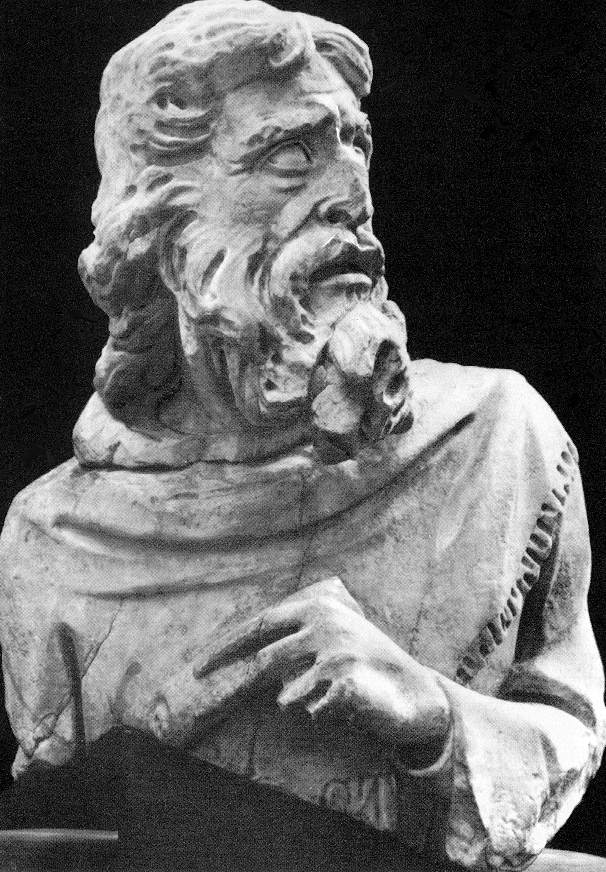
Statue of the prophet Haggai, by Giovanni Pisano, c.1290 C.E., Siena, Italy

In the second year of King Darius, on the first day of the sixth month, the word of the Lord came through the prophet Haggai to Zerubbabel son of Shealtiel, governor of Judah, and to Joshua son of Jozadak, the high priest:

This is what the Lord Almighty says: “These people say, ‘The time has not yet come to rebuild the Lord’s house.’”

Then the word of the Lord came through the prophet Haggai: “Is it a time for you yourselves to be living in your paneled houses, while this house remains a ruin?”

Now this is what the Lord Almighty says: “Give careful thought to your ways. You have planted much but harvested little. You eat, but never have enough. You drink, but never have your fill. You put on clothes but are not warm. You earn wages, only to put them in a purse with holes in it.”

This is what the Lord Almighty says: “Give careful thought to your ways. Go up into the mountains and bring down timber and build my house, so that I may take pleasure in it and be honored,” says the Lord. 

“You expected much, but see, it turned out to be little. What you brought home, I blew away. Why?” declares the Lord Almighty. “Because of my house, which remains a ruin, while each of you is busy with your own house. 

Therefore, because of you the heavens have withheld their dew and the earth its crops. I called for a drought on the fields and the mountains, on the grain, the new wine, the olive oil and everything else the ground produces, on people and livestock, and on all the labor of your hands.”

Then Zerubbabel son of Shealtiel, Joshua son of Jozadak, the high priest, and the whole remnant of the people obeyed the voice of the Lord their God and the message of the prophet Haggai, because the Lord their God had sent him. And the people feared the Lord.

Then Haggai, the Lord’s messenger, gave this message of the Lord to the people: “I am with you,” declares the Lord. So the Lord stirred up the spirit of Zerubbabel son of Shealtiel, governor of Judah, and the spirit of Joshua son of Jozadak, the high priest, and the spirit of the whole remnant of the people. They came and began to work on the house of the Lord Almighty, their God, on the twenty-fourth day of the sixth month. (New International Version)

Timing is everything.

There is a time to ponder and plan and there’s a time to move and act. If the time is ripe for action, then the lack of initiative is plain old procrastination. But how do you know when to act?

If the Lord says it’s time, well then, it’s time!

God’s people wouldn’t have described their inaction in rebuilding God’s house as dragging their feet. They perceived their inertia as a sensible delay.

Yet, the Lord saw the people’s approach as inexcusable enough to send a prophet with a specific message and call to action: Build the house now!

Let’s get a feel for why God’s call for immediacy comes when it does. In the ancient world, it had always been the practice of armies to assimilate conquered peoples into the culture of the conquering king. 

In the eighth century B.C.E., the Assyrian Empire conquered the northern kingdom of Israel. The Assyrians took most of the people into captivity, left the poorest of the people alone, and resettled the land with some of their own Assyrian people. The inevitable intermarriages resulted in their progeny being known as the Samaritans in the New Testament Gospels, as the Samaritans.

Two-hundred years after Assyria conquered Israel, Nebuchadnezzar besieged the southern kingdom of Judah and took over Jerusalem. He carried Daniel and all the other educated and professional people to Babylon. In the course of taking the city, Nebuchadnezzar tore down the wall and destroyed the temple that Solomon had made.

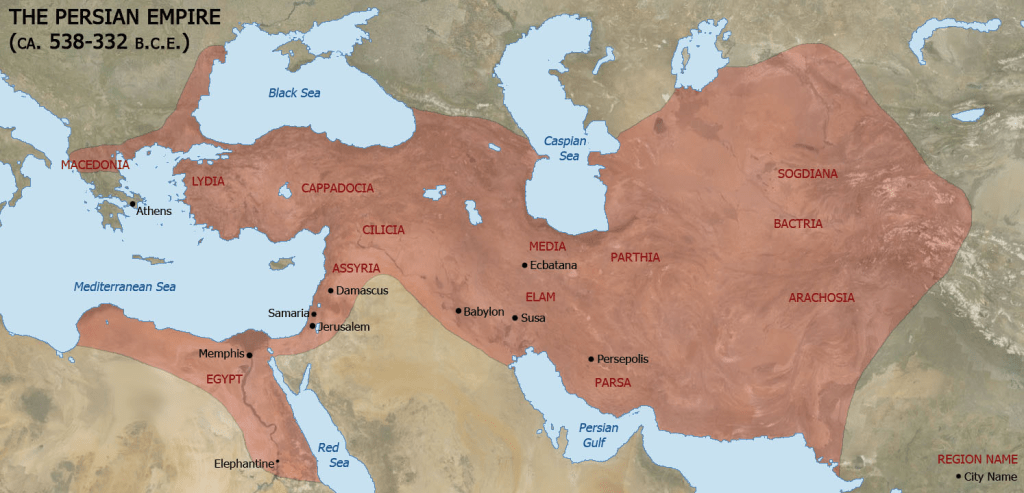
During the Babylonian exile, the Persians conquered Babylon and became rulers of a large geographical empire. Because the massive Persian Empire was in control of so many different kinds of people across such a vast territory, they were not able to operate as previous empires did by assimilation and resettlement. 

Instead, the Persians did something new and different: They encouraged and enabled their conquered peoples to keep their religion and their culture. The only caveat was that they had to give tribute and allegiance to the empire and pray for the king. This is why Nehemiah, Ezra, and Haggai were able to return to Jerusalem and given royal authority to rebuild the wall and the temple. 

But, from the git go, there was opposition to the rebuilding from the old Canaanite inhabitants of the land. After many years, the wall was rebuilt but the temple restoration bogged down. The people slowly became discouraged and lost enthusiasm to do the work. 

Understandably, the people got caught up in taking care of their own homes and just plain neglected working on the temple. Over time, they just forgot about the entire project. But God didn’t.

The prophet Haggai made it clear that the people’s mental distraction and physical neglect was taken as disrespect by the Lord. Haggai insisted that the reason the people were not experiencing blessing on their land was because they simply did not have their priorities straight. 

Thus, God sent the prophet Haggai to preach a sermon entitled: Build the house now! 

To the people’s credit, they responded to the call of God and started rebuilding God’s house. The work was completed. However, there seemed to be a problem. 

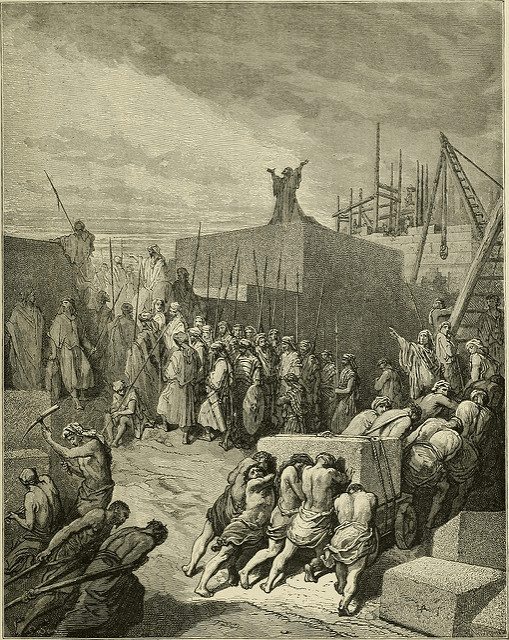
Rebuilding the Temple, by Gustave Doré, 1866

Moving into the rest of Haggai’s prophecy, the newly restored temple didn’t look anything like Solomon’s grand and glorious temple. Many of the older worshipers could still remember Solomon’s temple; to them, the rebuilt temple seemed like a bologna sandwich compared to the T-bone steak of the past. 

So, God sent Haggai again to encourage the people. The Lord will be with them. The restored temple may not look the same, but what makes the temple great is God’s glory.

An important takeaway from the prophecy of Haggai is that the Lord is a jealous God; God’s people are to worship the Lord with all of their heart, soul, mind, and strength. 

We also learn that the Lord is sovereign and supreme over all creation. God owns everything and will use it all to accomplish divine purposes on this earth. 

In addition, we see that God calls people to new work and fresh ministry. The Lord was behind the destruction of the old temple; and when the time was right, God called the people to build a new ministry.

And we learn something about ourselves, as well. God’s people need to hear and respond to God’s call. Haggai put a God-sized vision before the people; he helped them imagine what the new temple would be like – full of God’s glory.

God is doing a new thing. The Lord continues calling people to:

  • Seek first the kingdom of God. (Deuteronomy 4:29; Psalm 63:1; Matthew 6:33; Hebrews 11:6)
  • Love God with whole hearts. (Deuteronomy 6:5, 11:1-22, 19:9, 30:16-20; Matthew 22:37)
  • Love neighbor as we love ourselves. (Leviticus 19:18; Matthew 22:38; Romans 13:9; Galatians 5:14)
  • Make disciples of Christ from all nationalities. (Matthew 28:18-20)
  • Be witnesses to God’s glory in Christ. (Psalm 66:16; Acts 1:8; 2 Timothy 2:2)
  • Obey the Holy Spirit. (Acts 5:31-33; Romans 6:17; Hebrews 5:8-9)

It is good to remember and celebrate past ministries; and it is also good to throw ourselves into the new ministries which God calls us and to build them for God’s glory.

My friends, build it now.

Glory to you, O God, the One who is able to do far beyond all that we could ask or imagine by your divine power at work within us; glory to you, blessed God, in the church and in Christ Jesus for all generations, through the empowering Holy Spirit, forever and always. Amen.

A Parable about Faithfulness (Luke 19:11-27)

Parable of the Ten Minas, by Dutch painter Willem de Poorter (1608-1668)

The crowd was listening to everything Jesus said. And because he was nearing Jerusalem, he told them a story to correct the impression that the Kingdom of God would begin right away. 

He said, “A nobleman was called away to a distant empire to be crowned king and then return. Before he left, he called together ten of his servants and divided among them ten pounds of silver, saying, ‘Invest this for me while I am gone.’ But his people hated him and sent a delegation after him to say, ‘We do not want him to be our king.’

“After he was crowned king, he returned and called in the servants to whom he had given the money. He wanted to find out what their profits were. The first servant reported, ‘Master, I invested your money and made ten times the original amount!’

“‘Well done!’ the king exclaimed. ‘You are a good servant. You have been faithful with the little I entrusted to you, so you will be governor of ten cities as your reward.’

“The next servant reported, ‘Master, I invested your money and made five times the original amount.’

“‘Well done!’ the king said. ‘You will be governor over five cities.’

“But the third servant brought back only the original amount of money and said, ‘Master, I hid your money and kept it safe. I was afraid because you are a hard man to deal with, taking what isn’t yours and harvesting crops you didn’t plant.’

“‘You wicked servant!’ the king roared. ‘Your own words condemn you. If you knew that I’m a hard man who takes what isn’t mine and harvests crops I didn’t plant, why didn’t you deposit my money in the bank? At least I could have gotten some interest on it.’

“Then, turning to the others standing nearby, the king ordered, ‘Take the money from this servant, and give it to the one who has ten pounds.’

“‘But, master,’ they said, ‘he already has ten pounds!’

“‘Yes,’ the king replied, ‘and to those who use well what they are given, even more will be given. But from those who do nothing, even what little they have will be taken away. And as for these enemies of mine who didn’t want me to be their king—bring them in and execute them right here in front of me.’” (New Living Translation)

The great humanitarian issues of this world are not only individual concerns but are also systemic problems.

And the majority of those troubles are us climbing the wrong ladder. It’s a booger to get to the top and find out all that energy was expended for a worthless chamber pot full of $%&!.

So, whenever we examine Holy Scripture, especially the words of Jesus, it’s necessary to pay attention and hear both the responsibility of individuals and the accountability which human culture has to ensure a just society and equitable structural systems.

In other words, evil resides in both the individual human heart and in the world’s operating system. Corporations, communities, and churches not only have sinful persons within them; sin also resides in the very ways we about business, interactions, even worship.

Westerners tend to read a story, like today’s Gospel parable from Jesus, with individualist eyes. Yes, it is about individual servants; and it’s also about community and culture – and ultimately about the kingdom of God.

The cost of Christian discipleship is high, demanding both personal and communal faithfulness to Jesus Christ.

Christianity is concerned for all of life – not just the religious parts but all the parts – both body and soul, personal and communal, church and workplace, individual minds and institutional education, healthy emotional selves and healthy public discourse. It all matters to God.

Whoever’s in charge makes a big difference as to whether right and just systems are followed, or whether corrupt and oppressive operations are the chief mode of ruling.

To illustrate the contrast, Jesus told a parable about systemic evil and whether one will be faithful to that or some other way of operating.

In the parable, the nobleman becoming the king is a reference to an earthly ruler, not Jesus. Before this worldly prince takes off to obtain more authority, he summons ten of his servants and gives them each ten pounds, or coins.

As the sort of person who rules in standard worldly ways, the nobleman fully expects the servants to operate just as he himself would: collect unfair taxes, squeeze the poor of what little they have, and generally do whatever it takes to make a profit. This, of course, is why the story tells us that the general populace hate the guy in charge.

Parable of the Ten Minas, by Unknown 16th century artist

This is not a parable about rejecting the Messiah or God; it is about authority and government, economics and politics, systemic oppression and structural evil. It’s about where our faith and commitment is truly placed.

The ruler is quite pleased when the first and second servants faithfully invest in the politics and economics of his worldly kingdom. So, the servants are rewarded for abiding by the system.

However, if you buck the system, like the third servant did, you’ll get condemned. That servant knew the sort of ruler he was dealing with and the kind of cutthroat system which was in place. And he wanted nothing to do with it.

The third servant in the parable is unfaithful to the unjust ruler and oppressive system because he is faithful to another lord with a different kind of system. This servant was prepared to accept the consequences of his convictions and his inaction. In a way, he was practicing civil disobedience.

As servants under God’s rule and reign, we are not to play along with worldly systems of injustice and oppression. If we want to be faithful Christian disciples, then we must live into the words and ways of Jesus; we must be prepared to pay the price for our commitment to an alternative kingdom.

Everyone has faith. It’s just a matter of whom and what we place that faith in.

Perhaps Jesus had the words of his mother, Mary, in his mind when he told the story. She was willing to accept whatever happens in a complete commitment and faith in God:

“Here am I, the servant of the Lord; let it be with me according to your word.” (Luke 1:38, NRSV)

Jesus was unlike any earthly ruler. Christ operated very differently than any worldly government. He and his teaching were in stark contrast to others:

God will bless you people
who are poor.
    His kingdom belongs to you!

God will bless
    you hungry people.
You will have plenty
    to eat!
God will bless you people
who are now crying.
    You will laugh!

God will bless you when others hate you and won’t have anything to do with you. God will bless you when people insult you and say cruel things about you, all because you are a follower of the Son of Man…. So when this happens to you, be happy and jump for joy! You will have a great reward in heaven.

But you rich people
    are in for trouble.
You have already had
    an easy life!

You well-fed people
are in for trouble.
    You will go hungry!
You people
who are laughing now
    are in for trouble.
You are going to cry
    and weep!

You are in for trouble when everyone says good things about you. (Luke 6:20-26, CEV)

In order to embrace Christian ethics, worldly practices have got to be jettisoned. To make room for the good, the just, and the right, we must let go of any and all ways contrary to our Christian commitment of following Jesus.

Are you willing to be the third servant?

Gracious and sovereign Lord God of all, in your mercy, hear our prayers:

Help us to be understanding and forgiving of all those we encounter.

Show us how to serve one another, to offer love, care and support.

Guide all those who are called to lead and advocate in the world.

Inspire our leaders, teachers, doctors, social workers and counsellors to be bringers of hope in all situations.

Protect all those who carry peace to other nations. Bless the food, care and shelter they provide.

Comfort those who live with grief. Help them see the light of heaven.

Heal all the broken-hearted and those with broken bodies and spirits.

Embrace those in pain and physical suffering. May they feel your abiding and close presence.

Watch over all who feel isolated and alone. Calm their fears and lead them into peace and freedom.

Strengthen and encourage all those who seek to serve and protect the vulnerable.

Lead us to be generous with our time, possessions and money.

Lord, in your mercy, hear our prayers, and answer them according to your good grace and in your good time. Amen.