Now faith is confidence in what we hope for and assurance about what we do not see. This is what the ancients were commended for.
By faith we understand that the universe was formed at God’s command, so that what is seen was not made out of what was visible….
All these people were still living by faith when they died. They did not receive the things promised; they only saw them and welcomed them from a distance, admitting that they were foreigners and strangers on earth. People who say such things show that they are looking for a country of their own. If they had been thinking of the country they had left, they would have had opportunity to return. Instead, they were longing for a better country—a heavenly one. Therefore God is not ashamed to be called their God, for he has prepared a city for them.
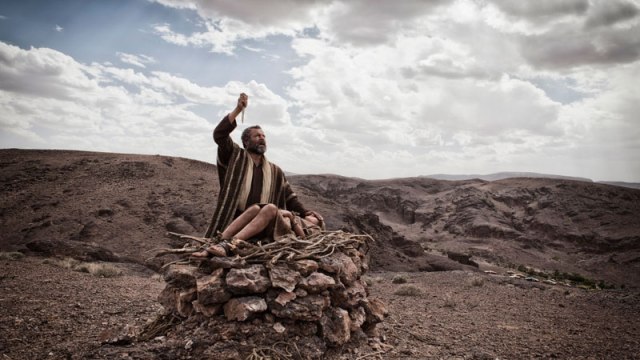
By faith Abraham, when God tested him, offered Isaac as a sacrifice. He who had embraced the promises was about to sacrifice his one and only son, even though God had said to him, “It is through Isaac that your offspring will be reckoned.” Abraham reasoned that God could even raise the dead, and so in a manner of speaking he did receive Isaac back from death. (New International Version)
Faith is important. It’s part of us. We are all people of faith – maybe not sharing the same faith – but it is faith, none-the-less.
Belief transcends time. Faith is rooted in the past, experienced in the present, and future-oriented. In Christianity, faith is historically moored to the redemptive events of Christ’s incarnation, life, death, resurrection, and ascension.
This historic faith has continuing ramifications into the present time. And it is a faith which believes Christ is coming again to judge the living and the dead.
People of faith allow their belief in what is coming to shape how they live now in daily life.
The biblical character of Abraham is synonymous with faith. And for good reason. God had told Abraham he would have a son with his wife Sarah. This would not be unusual except for the fact the couple were well advanced in age, and Sarah was incapable of having children.
Yet, despite the overwhelming odds, Abraham believed God. Years later and with a mix of patience and impatience from the would-be parents, the promise from God was realized. Abraham and Sarah had a son, Isaac.
But true faith never comes without anguish…
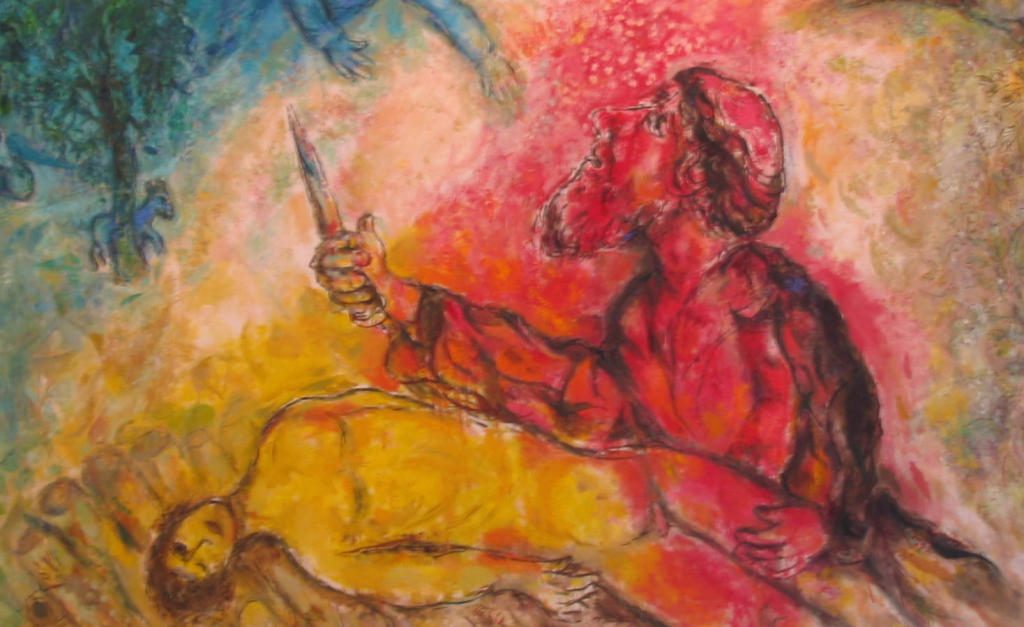
Isaac was known as the child of the promise. So that’s why this command of God was so perplexing: Take your son, this child of the promise, and go to the mountain and sacrifice him there. (Genesis 22:2)
Huh? What the #&%! But it only seems strange and super-weird to us. There was no reaction from Abraham, no questioning, no talk back. He simply went about the business of saddling up the donkey, chopping some wood for the sacrifice, and took his only son with him on the journey to the mountain. (Genesis 22:3-5)
The Sacrifice of Isaac, by Marc Chagall, 1966
We might wonder what was going through Abraham’s mind through all of this. While you and I might try and figure out if we really heard God or not, Abraham had a history of talking with God. He knew God’s voice as well as he knew his own.
Abraham was well down the road of relationship with the God he served. We gain the insight from the author of Hebrews into Abraham’s thought process, a line of thinking consistent with a person who has a regular habit of talking with God.
The promise was given to Abraham that it would be Isaac who receives the family blessing. So, when Abraham’s faith underwent a maximum test, he was willing to sacrifice Isaac. He reasoned and believed that God could raise people to life. Abraham simply thought he would get Isaac back from death.
Abraham did not try and figure out God’s mind. He didn’t get into a debate with God about the contradiction of ethics he was being asked to do. He just obeyed. Abraham knew that it didn’t matter if Isaac were killed because God would raise him from death.
This, of course, is not what happened. It was all a test of faith. Abraham knew beyond a shadow of a doubt that God is the Lord who provides. (Genesis 22:9-14)
You and I, along with all the faithful believers who have gone before us, rarely know why we are facing the unwanted and unasked for circumstances we are enduring. We don’t always know what in the world God is thinking.
Yet, like Abraham, if we have a spiritual history of walking with God and hearing the Lord’s voice, we don’t hesitate to respond. We are convinced God will provide. Obedience for the follower of Christ is not a burden but a privilege, even when we are being tested beyond our seeming emotional ability to do it.
True biblical faith is neither an existential leap into darkness, nor a simple recognition of certain facts. Rather, Christian faith is a reliance upon and commitment to the promises of God that results in taking a risk.
Sovereign Lord, your ways are sometimes strange and confusing. Yet, I know that everything you do is always right, just, and good. It is to your gracious and merciful character that I know you will provide. My allegiance is to you, in the Name of Jesus Christ, through the power of the Holy Spirit. Amen.
The Delivery of Israel out of Egypt, by Francis Danby, 1825
O give thanks to the Lord; call on his name; make known his deeds among the peoples. Sing to him, sing praises to him; tell of all his wonderful works. Glory in his holy name; let the hearts of those who seek the Lord rejoice. Seek the Lord and his strength; seek his presence continually. Remember the wonderful works he has done, his miracles and the judgments he has uttered, O offspring of his servant Abraham, children of Jacob, his chosen ones.
He is the Lord our God; his judgments are in all the earth. He is mindful of his covenant forever, of the word that he commanded for a thousand generations, the covenant that he made with Abraham, his sworn promise to Isaac, which he confirmed to Jacob as a statute, to Israel as an everlasting covenant, saying, “To you I will give the land of Canaan as your portion for an inheritance….
Then he brought Israel out with silver and gold, and there was no one among their tribes who stumbled. Egypt was glad when they departed, for dread of them had fallen upon it. He spread a cloud for a covering and fire to give light by night. They asked, and he brought quails and gave them food from heaven in abundance. He opened the rock, and water gushed out; it flowed through the desert like a river. For he remembered his holy promise and Abraham, his servant.
So he brought his people out with joy, his chosen ones with singing. He gave them the lands of the nations, and they took possession of the wealth of the peoples, that they might keep his statutes and observe his laws. Praise the Lord! (New Revised Standard Version)
Some stories are worth repeating over and over again. For example, on the birthday of each of my children (and now grandchildren) I recount and remember their birth story; on Christmas, I read the first chapter of Luke’s Gospel to the family in order to recall and remember the birth of Jesus.
Psalm 105 is a remembering and retelling of the ancient Israelites’ exodus event, their deliverance from Egyptian slavery. That event permeates much of the Old Testament, and rightly so. God’s faithfulness, grace, and steadfast love dominates the psalm, namely because the Lord’s majesty, power, and sovereignty was overwhelmingly evident through the deliverance from Egypt.
And so, it is appropriate for the psalmist to express gratitude and praise to God in remembering that deliverance. It only makes sense, in such a retelling, that we are encouraged to continually seek the Lord. Seeking the Lord is a common biblical admonition, and is linked to memories of what God has done in the past.
Glory in his holy name; let the hearts of those who seek the Lord rejoice. Seek the Lord and his strength; seek his presence continually. Remember the wonderful works he has done, his miracles and the judgments he uttered. (1 Chronicles 16:10-12, NRSV)
God graciously works in history by choosing a people and making a covenant with them. The Lord is faithful to that arrangement by giving them everything they need to maintain obedience on their end of the covenant. For God doesn’t merely call persons who are already equipped and ready for high level spiritual service. Rather, the Lord equips those who are called.
Abraham was called by God, not because he had some sort of superior spirituality or inclination toward the divine, but only because God chose him, period. And once he was called, Abraham doggedly and faithfully sought the Lord.
God brought the Israelites out of Egypt because of the covenant made to Abraham. The Lord promised him and his descendants a people and a land. It may have seemed that becoming enslaved in Egypt would negate the promise. But not so. The exodus happened.
Being freed from slavery, the people could seek the Lord and pursue knowing God without any hindrance or obstacle. From that point on, the people were expected to utilize their memory of God’s saving actions to seek God with all their heart, soul, and mind.
The entire aim of recounting God’s covenant and the exodus event is to remind the people to observe God’s commands. Since a powerfully good God has acted in history, then we are to keep the faith by embracing the powerfully good words of God and following them with the utmost commitment.
Remembering that we belong to God, enables us to keep on seeking the Lord throughout all of life, for the rest of our lives. The consistent retelling of deliverance stories can strengthen our faith and equip us for what is ahead.
When times are tough, it is good and helpful to recall the divine deliverance that has already happened. Our memory can then serve us well, by renewing our minds and energizing us to persevere in the spiritual life.
O Lord our God, we pray that your Spirit would guide and inspire our life and worship, our contemplation and our action. Open our mouths to sing and speak your praise, our ears to hear your Word, our eyes to see to you at work among us, and our hearts to receive your divine love. Help us to remember your goodness, seek your face continually, and serve you always. Amen.
Then he began to teach them that the Son of Man must undergo great suffering and be rejected by the elders, the chief priests, and the scribes and be killed and after three days rise again. He said all this quite openly. And Peter took him aside and began to rebuke him. But turning and looking at his disciples, he rebuked Peter and said, “Get behind me, Satan! For you are setting your mind not on divine things but on human things.”
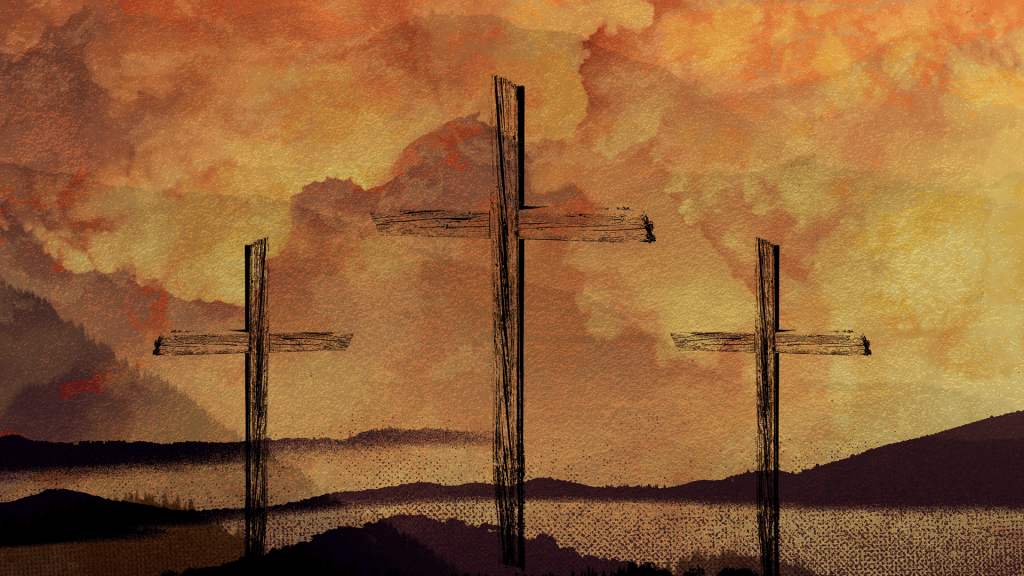
He called the crowd with his disciples and said to them, “If any wish to come after me, let them deny themselves and take up their cross and follow me. For those who want to save their life will lose it, and those who lose their life for my sake, and for the sake of the gospel, will save it. For what will it profit them to gain the whole world and forfeit their life? Indeed, what can they give in return for their life? Those who are ashamed of me and of my words in this adulterous and sinful generation, of them the Son of Man will also be ashamed when he comes in the glory of his Father with the holy angels.” (New Revised Standard Version)
Saintly Sinners and Sinning Saints
People cannot be separated easily into the categories of saints or sinners. We are much more like saintly sinners or sinning saints.
If we look closely, everyone is, at the same time, both beautiful and hideous; holy and depraved; full of faith and full of fear. And when it comes to the church, it is both the place of spiritual sensitivity toward others, as well as a den of decadent self-interested individuals.
So, anyone searching for a church or a community that is a nice clean upward path of success with everything done to perfection with no one ever being hurt or unhappy, will be sorely disappointed. Such an organization or institution does not exist; and, it never did.
Yet, with that reality in mind, Jesus stands right alongside imperfect people, despite all their flaws, shallowness, and self-interest. Jesus is very well acquainted with people’s damaged emotions and open putrid spiritual abscesses. Yet, Christ treats everyone with mercy; Jesus never tires of rehabilitating and reforming.
Christ’s disciple, Peter, is the poster child for humanity’s mix of faith and failure. He stepped out of a boat in great faith and walked on the water, only to begin sinking because of his great fear. (Matthew 14:22-33)
It was Peter who made a bold and right confession of faith, and then turned around and bought into a satanic agenda. Yet, Jesus was right there, next to Peter all the way. Christ both rebukes and loves, all the while never abandoning us, but always working in and through us to accomplish good and right purposes.
The bald fact of the matter is that following Jesus involves pain and sacrifice. That’s the reality of living in a broken mixed-up world. What’s more, Christ’s Church is still imperfect and in the process of becoming holy. So, if we will admit it, we are all like Peter – a little devil who needs to get in line behind Jesus.
Everyone gets frustrated or disgusted with church, or really any consistent gathering of people. It’s easy to complain and even avoid others. It’s much harder to take up our cross and lose our life for the sake of Christ and others. We truly can choose to put love where love is not, even when we do not feel loved.
Imagine that your family has gathered for a holiday. Everyone is together. But you are struggling with tiredness and anger. Your spouse is sulking. Your teenage kids don’t want to be there. You worry about your aging parent. And you’re anxious about whether your crazy uncle is going to be nice or go on some weird political rant.
You want to be present, to celebrate the holiday. Your family is anything but a Hallmark card. Everyone’s hurts and hang-ups are not far from the surface. But you are together for a reason, to celebrate and experience joy. It may be a twisted human version of togetherness and spirituality, but it’s still a foretaste of the heavenly banquet that is to come. So, you deal with it all, and find some peace and satisfaction, transcending the carnal and experiencing the sacred.
In much the same way, the church gathers together in an imperfect way, a crazy mix of sinner and saint. But we gather in and around Jesus – and that makes all the difference. There’s a reason for doing this that is bigger than all our dysfunctional ways and dyspeptic attitudes.
Jesus Christ is building his church, and he will keep it going until the end of the age. Fellow saints and sinners, Jesus isn’t finished with us yet!
The Sacrifice of Jesus Is Needed
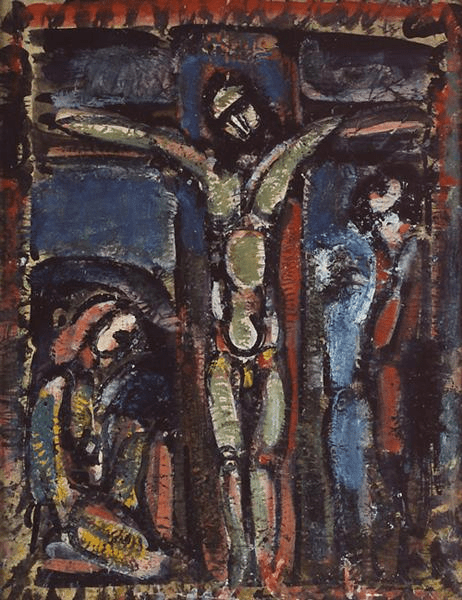
Jesus openly stated openly that it is necessary for him to suffer deeply and die a cruel death. It’s God’s plan. But Peter didn’t like that plan, at all. So, he took Jesus aside and rebuked him, believing Jesus to be off his rocker for even suggesting such a terrible scenario. Jesus, however, turned the tables on Peter and rebuked him right back because being Christ-centered without being cross-centered is satanic.
Peter presumed to know what was best for Jesus. He believed the suffering of the cross would never happen. Peter’s perceptions were dim and limited. He did not the reality of how the world truly is; and that Jesus needed to offer himself as a sacrifice for the sins of the entire planet.
Sometimes, like Peter, we may believe that the way I see and the way I perceive is the way things really are; or, at least, how I think they should be.
Peter had been walking with Jesus for a few years, watching and enjoying him. It was all good. So, in his mind, it should never change; why try and fix something that isn’t broken? Oh my, but broken the world is!
Just because it was good for Peter did not mean it was good for everybody or should always be this way. If Peter had his way, we would likely be in hell. We, like Peter, are finite humans with limited understanding and perceptions.
One can easily slip into a satanic mode of believing that because something is going fine for me that everyone else is doing okay, too. I like it, I want it, so what’s the problem?
The problem is that we too easily view life through selfish lenses. In such a state, we fail to:
see other people’s needs
perceive a lost world with any sense of reality
understand that Jesus has an agenda different from our own
Our limited perceptions come out in saying things such as:
“Oh, she’s just depressed because she is avoiding responsibility.”
“People on government welfare are lazy.”
“He’s addicted because he doesn’t want to help himself.”
“They’re picketing because they’re a bunch of malcontents.”
Statements like those are legion, and betray a satanic worldview devoid of grace. It’s a compulsive need to find blame. It’s a belief that if there’s personal suffering, there must be personal sin.
We belong to one human family, and therefore, we are all in this life together. One person’s joys are our joys; one person’s struggles are our struggles. The detachment we can have toward other humans is completely foreign to the words of Jesus.
The Christian life always involves suffering, and Jesus invites us to follow him in his way of sacrifice.
The Sacrifice of Christ’s Followers Is Needed
There is a way to reverse a satanic agenda and demonic thinking: self-denial. Jesus issued an invitation to fall in line behind him and walk with him in his suffering.
Self-denial is not so much doing something like giving up chocolate for Lent; rather, it’s giving up on ourselves as our own masters. It’s a decision to make the words and ways of Jesus the guiding direction for life. It’s the choice to quit holding onto the way I believe things ought to be, and take the time to listen to Jesus.
The logic of Jesus is relentless. Life comes through death. We give up our lives to find life. It’s unhelpful to adulterate our lives by serving the gods of success and perfectionism. Jesus invites us to quit our moonlighting job with the world, and go all in with him. In this way, we find abundant life.
Jesus was encouraging not only submission to suffering, but also an embrace of suffering. In doing so, we find reward and joy. For those familiar with this path, suffering is a blessing. In walking this road, they find the true purpose and meaning of life.
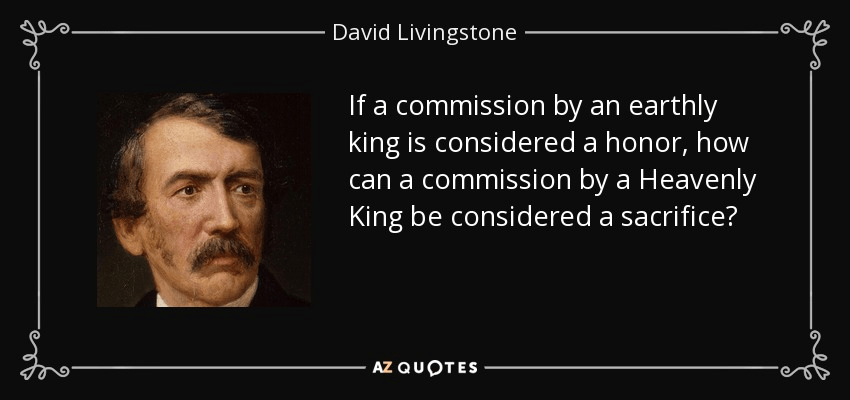
Few people suffered as much as the nineteenth-century missionary medical doctor to Africa, David Livingstone. He was a pioneer explorer who opened up the interior of Africa to the outside world. He had two reasons for doing so: To take the good news of Christ’s suffering to the African people; and, to open Africa to legitimate trade, so that the illicit slave trade would end.
Dr. Livingstone’s hand was bitten and maimed by a lion. His wife died while on the mission field. The one house he built was destroyed in a fire. He was often wracked with dysentery and fever, or some other illness in the jungle.
Someone once commented to him that he had sacrificed a lot for following Jesus. His response: “Sacrifice? The only sacrifice is to live outside the will of God.” When asked what helped him get through the hardship, he said, “The words of Jesus to take up my cross are always ringing in my ears.”
We may mistakenly believe that we must watch out for ourselves; push for our personal preferences; that if I accept the invitation to follow Jesus in the way of self-denial, I will be miserable and people will walk all over me. Those thoughts are merely demonic whispers in the ear.
There are two differing ways of thinking and acting:
The way of success, perfection, and a pain-free life as the evidence of God’s working.
The way of suffering as right and necessary in order to connect with God and be in solidarity with those who suffer.
Suffering, rejection, and execution did not fit into Peter’s church growth plan. But according to Jesus, we do not exist only for ourselves, to be in some sort of spiritual country club. We exist to follow Jesus in his path of sacrifice and suffering for a world of people who desperately need to know the grace of forgiveness, and the mercy of Christ.
Since Jesus died, we are to die to ourselves. Since Christ lives, we are to live a new life. In God’s upside-down kingdom, joy comes through suffering. We follow Jesus as the mix of sinner and saint that we are. Amen.
“Praise him, you servants of the Lord! Honor him, you descendants of Jacob! Worship him, you people of Israel! He does not neglect the poor or ignore their suffering; he does not turn away from them, but answers when they call for help.”
In the full assembly I will praise you for what you have done; in the presence of those who worship you I will offer the sacrifices I promised. The poor will eat as much as they want; those who come to the Lord will praise him. May they prosper forever!
All nations will remember the Lord. From every part of the world they will turn to him; all races will worship him. The Lord is king, and he rules the nations.
All proud people will bow down to him; all mortals will bow down before him. Future generations will serve him; they will speak of the Lord to the coming generation. People not yet born will be told: “The Lord saved his people.” (Good News Translation)
I find that a great deal of truth and reality in this world is something of a mystery and a paradox. Christianity, especially, is a religion of paradox, in my opinion. For example, God is Three – Father, Son, and Spirit – but God is One. Jesus Christ is fully human and fully divine, at the same time, all the time. And when it comes to the spiritual life, suffering exists, and God is sovereign and in control of all things.
This then, is what prompts many people to question if there is really a God – since so much suffering exists throughout the world. Yet, it’s necessary to maintain the tension that hard circumstances, adversity, and difficulty in the form of awful suffering, and the preeminence of the Lord God almighty, both exist without taking anything away from either of them.
The severity of suffering, nor the supreme majesty of God, need to be watered down in any way in order to try and make sense of our existential situations.
“Suffering” is a word we would like to avoid. Even saying or reading the word might make some folks cringe. Suffering? No thanks. I think I’ll pass on that. Yet, something inside of us instinctively knows we cannot get around it. Everyone suffers in some way. It is endemic to the human condition that at times we will suffer physically, financially, mentally, emotionally, and spiritually.
That’s why I believe there is so much talk within some Christian circles about miracles. It’s more than understandable:
a chronic pain sufferer wants relief, so she prays for a miracle of health
a small business owner is bleeding financially, and looks to God for an immediate miracle of wealthy clients
a beloved senior saint knows she is afflicted with Alzheimer’s, so she prays for the miracle of deliverance, even to be taken home to be with the Lord
a young adult finds himself in the throes of depression and has tried everything to cope and get out of it, so he petitions God for a miracle out of the deep black hole
a believer in Jesus keeps experiencing a besetting sin and cannot get over it, so she looks to God for the miracle of not struggling any more with it
These scenarios and a thousand other maladies afflict people everywhere. There are a multitude of stories out there. Folks who have experienced a miracle tell of their wonderful deliverance. But what about the rest? Those without the miracle? Do they have a lack of faith? Has God forgotten them?
Oh, my, no! God sees, and God knows. God is acquainted with suffering. Jesus knows it first-hand. Remember that it was Jesus who said, “My God, my God, why have you forsaken me?” (Psalm 22:1; Mark 15:34; Matthew 27:46)
Even Jesus cried out in his suffering. But there was no deliverance coming for him. There was, however, deliverance coming for us.
Sometimes the greatest miracle and deliverance of all is to be freed from the need for a miracle. The reason God doesn’t just offer immediate relief from everyone’s suffering and bring a divine miracle is that the Lord is doing something else: Walking with us through our suffering. God oftentimes has plans and purposes for us that are well beyond our understanding.
We simply are not privy to everything in God’s mind.
We may not get the miracle we desire. Yet, what we will get without fail, is God’s provision and steadfast love all the way through the suffering.
Where is God in your suffering? Right beside you. Jesus is suffering with you. You are not crying alone; Christ weeps with you.
Let, then, those who suffer, eat and be full. Let them be satisfied with the portion God has given them. And, what’s more, let them offer praise to the God who is squarely beside them in every affliction and each trouble.
God Almighty, you are the One who knows suffering and affliction better than anyone. I admit I don’t often understand what in the world you are doing or not doing in my life and in the lives of those I love. Yet, I admit that I have found in you the comfort, encouragement, and strength to live another day in my trouble. For this, I praise you, in the Name of Jesus Christ, in the power of the Holy Spirit. Amen.







 Rev. Tim Ehrhardt