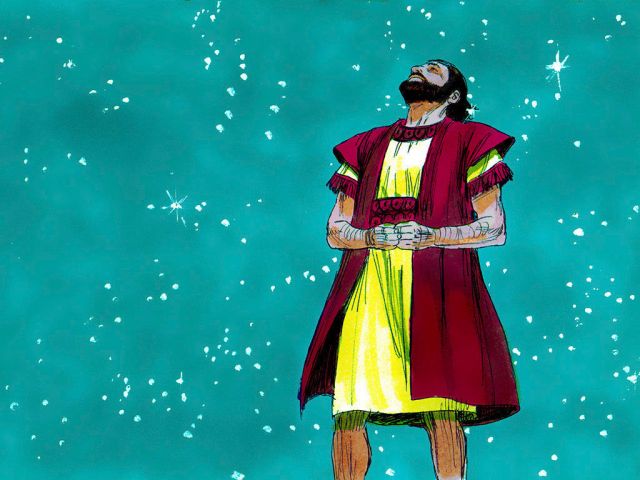
The Desert


footprints in the desert 2

Every one of us must take this journey.  No one is exempt.  It is a pilgrimage that takes us into uncharted territory.  Lack of certainty, the unknown, and mystery are the companions along the way of this nomadic travel.  The harrows of this trip might seem to be the outward troubles and circumstances which surround you, but the real test is the journey within – it is the walk across the desert and the aridity that seems to exist in the soul, as if there are no familiar resources to draw from.  There is only one way, and that way appears so fearful that you and I try and avoid it like the plague.  But we cannot.

When times are tough, and when we find ourselves in the midst of circumstances that we didn’t see coming or have no desire to experience become the desert journeys which both demonstrate and define who we are as people.  The rock hard vicissitudes of this fallen world are no respecter of persons.  They come to all, whether rich or poor, black or white, privileged or underprivileged, introverted or extroverted, hard working or the just-getting-by, as well as the young or the aged.  What truly separates one person from another is how they handle the inevitable desert journey with its dryness of soul and seemingly endless barrage of trouble.

You cannot avoid it.  Eventually, someone you love will die – maybe even several of them in a short amount of time.  If not now, there will come a time when your financial budget will no longer budge and you’ll wonder what in the world you are going to do.  Even if you have never known poverty or want, the prospect of what will happen in the future might occur, with its lost investments and/or the slow erosion of economic resources because of circumstances out of you control.  There will come a time when you will be betrayed, become the victim of a verbal hate crime, or lose your reputation.  If relationships are presently serene, there is coming a day when it will not always be this way.  Strained friendships, difficult relations with co-workers, marriage troubles, and family squabbles aren’t just things that happen to other people.

Perhaps at this point you no longer wish to stick with me on this journey of words.  It’s a downer.  Maybe there isn’t enough positive thinking and you’d like to break off this train of trouble.  That is your prerogative.  But it doesn’t negate the fact that there is either right now something going on under your nose that you’re ignoring or in denial about, or a turn in your life that is coming down the pike.  Then what will you do?  Will you have the inner resources to face it?  Is your soul in a state that can sustain a loss, even a minor one, tomorrow?  Are you ready for adversity?

If you have ever felt alone, lost, hopeless, empty, and in the dark, as if you are sinking in quicksand, I want you to know that this is a journey that we all must undergo.  It is tempting, when going through such a time, to look backward and long for the good ol’ days.  But those days are gone.  They aren’t coming back.  What worked for you back there probably won’t work for you now.  So, here is the thought that I’d like you to think:

The desert is the perfect place for transformation; the wilderness journey is the means to a new and better life.

The ancient Israelites were slaves in Egypt, hard pressed and in agony.  Through a series of miraculous events God redeemed them out of that place and sent them on a journey… into the desert.  Yes, that’s right.  It might have seemed to the Israelites that they were jumping out of the frying pan and into the fire.  Here they were out in the middle of nowhere without water, food, and basic necessities.  It’s endemic to the human condition to complain and seek to blame someone for your trouble.  Moses took a lot of crap from the people.  Yet, God had his own purposes and plans for the inner redemption of the people as well as outward freedom.

God put his people squarely in a place where they could not go back, couldn’t go around, and most definitely could not stay put where they were.  Nope.  They had to go through the desert.  There was no other way.  Moses made it through those years of living in the desert by reminding the people that there was a future for them, a better future than Egypt or the desert – a hope of the Promised Land.  God also shaped the way they were to think about the past through an annual rehearsal of the deliverance out of bondage, the Passover.  For the daily and ever present activity of desert living, God enabled Moses to delegate the practical situations of being together in a desert situation by gifting others to help and walk with him.  And this was all formed through the covenant experience of Sinai – the giving of the Law, the Promise that God would always have his loving loyalty upon the people.

Going through your own desert journey will require the same resources of Promised Land, Passover, and the Law of Promise.  That is, viewed through the lens of the Christian, God is forming within us a deep spirituality based in the promises of His Word, the sustenance of the Lord’s Table, and the confident expectation of Christ’s return and the hope of His reign to be manifested in everything from small family structures to large corporate systems, and humungous governments.  In short, the kingdom of God is near – if we have the eyes of faith to see and the ears of belief to hear.

It is imperative that you and I connect with Holy Scripture in a healthy and consistent rhythm of hearing God and responding back to him.  It is most necessary that our perspective of both the past (Christ’s cross and resurrection) and the future (Christ’s return and reign) is formed through regular spiritual practices which remind us of what is most important in life, not to mention how these spiritual resources can sustain us through dark times.

To survive the desert, one must walk through it – not around it, not going backward away from it, and not sticking our spiritual heads in the sand.  To make the trip, we must deliberately walk with others who will remind us of healthy ways of seeing ourselves, our past, and our coming future.  Faith, hope, and love are the practical necessities which need to be in our backpacks as we go forward.  They will be our food and our drink.

Travel well, my friend.  May the grace of the Lord Jesus be with you as the Spirit hurls you into the desert to experience the love of God in new and profound ways.


Hebrews 3:1-6 – Jesus Is Better


Loving-Gods-House

“Therefore, brothers and sisters who are partners in the heavenly calling, think about Jesus, the apostle and high priest of our confession.  Jesus was faithful to the one who appointed him just like Moses was faithful in God’s house.  But he deserves greater glory than Moses in the same way that the builder of the house deserves more honor than the house itself.  Every house is built by someone, but God is the builder of everything. Moses was faithful in all God’s house as a servant in order to affirm the things that would be spoken later.  But Jesus was faithful over God’s house as a Son. We are his house if we hold on to the confidence and the pride that our hope gives us.” (Common English Bible)

It’s hard to be patient, difficult to persevere.  If the Christian life were a piece of cake, then there would be no need for the strengthening of faith and the development of perseverance.  But faith is a muscle.  If unused, it atrophies.  Faith needs exercise, and it must be tried in adverse circumstances to grow and mature.

The reason the author of Hebrews wrote his letter to Jewish Christians is because they were losing their grip, faltering in their faith.  The hard circumstances of those Christians were leading them to entertain the notion of returning to their old ways of life, apart from Christ.

It can be tempting to think of the past as “the good old days.”  But if you think about it for any length of time, you know better.  You’re just struggling in the present, and our minds turn to filter all the crud out from the past to make it look like things were better back then.

“Better” is what the book of Hebrews is all about.  The writer consistently and persistently insists that Jesus is better than anything from the Hebrew Christians’ past.  Moses was one the most respected and impressive figures of Old Testament history.  Jews revered him.  The book of Hebrews acknowledges that respect for Moses, but points-out and reminds the people that whereas Moses was faithful within God’s house, it is Jesus who is the Master over the house.  Jesus is better than Moses.

What’s more, we as believers and followers of Jesus are the house.  Jesus Christ is Lord – not Moses, or anybody else.  Jesus cares for and protects his house.  It might be tempting to believe that a previous house we lived-in in another city or town was better.  But the reality is that we live today in God’s house.  Therefore, we must hold on and not let go of the confidence we have in Jesus and the pride and privilege we have in living where we presently live.

When life is tough, reminiscing about the past is easy.  For sure, you can find all kinds of things you miss from your previous days somewhere.  Yet, trolling your personal history, like a time-wasting galavant on the computer, doesn’t do anything for your need of faith and perseverance.  But today, Jesus has a hold of you.  Today he wants to walk with you through your trouble, and not just transport you to the past.  Now is the time to follow Jesus into all the situations that are in front of you.  You are not alone.  You can do this.

Lord Jesus, you are sovereign over my past, present, and future.  Today has its situations and problems.  Help me walk into and through them with your gracious protection so that perseverance is developed within me and my faith in you is strengthened for tomorrow.  Amen.

Genesis 22:1-19 – The Lord Will Provide

abraham and isaac

Abraham named that place “The Lord Will Provide.” And even now people say, “On the mountain of the Lord it will be provided.”

The biblical character of Abraham is synonymous with faith.  And for good reason.  God had told Abraham that he would have a son with his wife Sarah.  This wouldn’t be unusual except for the facts that the couple were well advanced in age, and Sarah was incapable of having children.  Infertility isn’t just a modern problem; it has always existed.  But Abraham believed God.  Years later and with a mix of patience and impatience from the would-be parents, the promise from God was realized.  Abraham and Sarah had a son, Isaac.

“The child of the promise.”  This was Isaac’s moniker – which makes the command coming from God so perplexing: Take your son, the child of the promise, and go to the mountain and sacrifice him there.  Huh? What the…!  But it only seems strange and super-weird to us.  We get no reaction from Abraham, no questioning, no talk back.  He just goes about the business of saddling up the donkey, chopping some wood for the sacrifice, and takes his only son with him on the journey to the mountain.

We can wonder what might be going through Abraham’s mind through all of this.  While you and I might try and figure out if we really heard God or not, Abraham had a history of talking with God.  He knew God’s voice as well as he knew his own.  Abraham was well down the road of relationship with the God he served.  We get an insight from the author of Hebrews into Abraham’s thought process, a line of thinking that is consistent with a person who has a regular habit of talking with God:

“Abraham had been promised that Isaac, his only son, would continue his family. But when Abraham was tested, he had faith and was willing to sacrifice Isaac, because he was sure that God could raise people to life. This was just like getting Isaac back from death.” (Hebrews 11:17-18, CEV)

Abraham didn’t try and figure out God’s mind.  He didn’t get into a debate with God about the contradiction of ethics he was being asked to do.  He simply obeyed. He reasoned that it didn’t matter if Isaac were killed because God could raise him from death.  This, of course, is not what happened.  It was all a test of faith.  Abraham knew beyond a shadow of a doubt that God is the Lord who provides.

You and I don’t always know why we are facing the circumstances we’re enduring.  We don’t always know what in the world God is thinking.  Yet, like Abraham, if we have a spiritual history of walking with God and hearing his voice, we don’t hesitate to respond.  We are convinced that God will provide.  Obedience for the follower of Christ is not a burden; it’s a privilege, even when we are being tested beyond our seeming emotional ability to do it.

Sovereign Lord, your ways are sometimes strange.  Yet, I know that everything you do is always right, just, and good.  It is to your gracious and merciful character that I know you will provide.  My allegiance is to you; in the Name of Jesus Christ, in the power of the Holy Spirit.  Amen.

Romans 4:13-25 – Christianity 101

promise to abraham

“Against all hope, Abraham in hope believed and so became the father of many nations, just as it had been said to him, “So shall your offspring be.” Without weakening in his faith, he faced the fact that his body was as good as dead—since he was about a hundred years old—and that Sarah’s womb was also dead. Yet he did not waver through unbelief regarding the promise of God, but was strengthened in his faith and gave glory to God, being fully persuaded that God had power to do what he had promised. This is why “it was credited to him as righteousness.” The words “it was credited to him” were written not for him alone, but also for us, to whom God will credit righteousness—for us who believe in him who raised Jesus our Lord from the dead.  He was delivered over to death for our sins and was raised to life for our justification.” (New International Version)

Sometimes it’s easy to lose sight of why we are here and what we are really supposed to be doing.  There’s just so much stuff going on around us all the time that it seems like we have spiritual ADD and can’t focus on what’s most important.  Certain people irritate us, we scramble to making a decent living, there never seems to be enough time to accomplish everything, and there is adversity and obstacles all along life’s way.

There’s a lot going on in the book of Romans.  At first glance, like our lives, it seems complicated.  The Apostle Paul had all kinds of words for the Christians: hope; faith; righteousness; and, justification, just to name a few.  But all those ideas funneled to and pointed toward a singular focus: the Lord Jesus.  Everything in church and life comes down to Christ.

The church was losing sight of why they existed.  Within the church at Rome were both Jews and Gentiles together as one people of God.  They didn’t always see eye-to-eye on everything.  The Gentiles thought the Jews were stuck in tradition and needed to move on.  The Jews had centuries of history behind them of God working through them; they thought the Gentiles needed some solid Old Testament law to bolster their primitive spirituality.  Would the church take their cues on life from the Gentiles, or the Jews?

Paul essentially told the church that they were focused in the wrong direction.  The issues and problems of living the Christian life were to take a back seat to faith in God.  To prove his point, Paul went back to Abraham as Exhibit A of what it means to live with and for God.

It went down like this: God made a promise to Abraham of progeny in his old age; Abraham believed what God said; Abraham demonstrated his faith by having the confident expectation (hope) that God is good for his promise; and, God declared (justified) Abraham to have a right relationship with himself (righteousness).

In other words, the heart of Christian faith and practice is: God makes promises; people respond in faith, hope, and love.  Law and the willpower to keep it doesn’t even come into the equation.

Christians are the spiritual children of Abraham.  All God’s promises are fulfilled in Christ.  We respond to God by believing in Jesus. The redemptive events of Jesus make us just and right.  So, what does this mean for you and me?

We are not to get sidetracked with trying to make others like be like us.  Instead, we are to proclaim the promises of God in Christ so that others might respond by believing and embracing those promises.  Furthermore, we have no need to try and get God to like us, notice us, and/or listen to us.  God has already made and kept promises to us, demonstrating his love, mercy, and grace through his Son, the Lord Jesus.

Our lives are not to center in our abilities, or lack thereof, to live a godly life.  Rather, our lives are to revolve around the person and work of Jesus Christ through faith, with the hope that God will always hold to his promise to be with us, which frees us to love others.  This is Christianity 101.  This is the faith we embrace.

Righteous God, you have made and kept promises to me.  My ultimate deliverance from sin, death, and hell isn’t through my ability to keep the law, but in your Son’s life, death, and resurrection.  Help me to live by faith in Jesus who loved me and gave himself for me; in the strength of your Holy Spirit.  Amen.