Revelation 2:8-11 – Persevering to the End

perseverance

“And to the angel of the church in Smyrna write: These are the words of the first and the last, who was dead and came to life:

“I know your affliction and your poverty, even though you are rich. I know the slander on the part of those who say that they are Jews and are not but are a synagogue of Satan. Do not fear what you are about to suffer. Beware, the devil is about to throw some of you into prison so that you may be tested, and for ten days you will have affliction. Be faithful until death, and I will give you the crown of life. Let anyone who has an ear listen to what the Spirit is saying to the churches. Whoever conquers will not be harmed by the second death. (NRSV)

What is unique about chapters two and three of Revelation is that Jesus himself is the speaker to seven different churches. Today’s New Testament lesson is addressed to the church at Smyrna, which was a large and beautiful port city in the ancient world. Jesus was letting the believers in Smyrna know they were about to experience severe persecution. However, they need not be fearful and can remain faithful because their Lord knows all about suffering. The church’s perseverance under such trouble would result in the crown of life, given to them by Jesus himself.  This was surely an encouragement to the believers as they underwent difficulty.

The congregation at Smyrna was facing imprisonment and, for some, even death for their faith. The heart of the message by Jesus is to remain faithful.  There will always be cowards and those with weak faith who will fold when the going gets tough. Yet, persecution and hardship have a way of purging the soul as well as the church of its dross.

Suffering is inevitable; how we handle adversity when it comes is completely under our own control.

Few of us reading this will ever likely face a hardship that could result in martyrdom. Knowing there are brothers and sisters in the faith throughout the world who do face daily hardship for their devotion and beliefs puts our own troubles in a different light. The daily irritations and trials God puts in our way to refine us and shape our faith certainly seem small compared to imprisonment and martyrdom. Yet, no matter who we are and where we are located on this earth, whether facing uncommon hardship or banal difficulty, the afflictions of both body and soul come to us as opportunities to lean into faith and love Jesus to the end.

Our Lord is not looking for perfect people, just faithful followers willing to endure suffering with the truth that our Lord stands with us. 

Whatever our current circumstances may be, Jesus offers us his perspective on it. He knows precisely what is going on and understands the spiritual resources you and I possess for each adverse situation we encounter. In fact, few of us really discern the largess of internal resources are within us because of Christ’s redemptive work and the Spirit’s abiding presence – not to mention the very personality God graciously gave us in the womb before we were even born. Even though it seems, at times, we lack strength, wisdom, and courage for what is ahead – Jesus has supreme confidence in us to maintain faith and endure through our afflictions.

Life is not a sprint. Life is a marathon.

To finish the race we need to be in good spiritual health. The perseverance of the saints will happen as we run step after step with boldness despite fear of the unknown future around the bend. This requires the equipment of risk, vulnerability, accountability, and steadfast love which is both received and given. Perhaps most of all it requires keeping our heads up and running toward the promise of reward at the finish. The crown of life is an image of both congratulation and celebration of a race well-run and the enjoyment of unending fellowship with our Lord for whom we have endured so much.

When all is said and done, and the end of the age has occurred, we will be able to look back in hindsight and see that it was really Jesus who all along was fortifying us to keep standing and keep going. Christ is so vested in us that he continually ensures our ultimate victory through a constant presence of help and encouragement. The heritage of both Reformation and Holy Scripture testify to this truth:

“All our progress and perseverance are from God.” –John Calvin

“I’m sure about this: the one who started a good work in you will stay with you to complete the job by the day of Christ Jesus.” (Philippians 1:6, CEB)

May the grace of Jesus sustain you; the love of God surround you; and, the encouragement of the Spirit surprise you, today and every day. Amen.

Grant, O God, That we may never lose the way through our self-will, and so end up in the far countries of the soul; that we may never abandon the struggle, but that we may endure to the end, and so be saved; that we may never drop out of the race, but that we may ever press forward to the goal of our high calling; that we may never choose the cheap and passing things, and let go the precious things that last forever; that we may never take the easy way, and so leave the right way; that we may never forget that sweat is the price of all things, and that without the cross, there cannot be the crown.

So keep us and strengthen us by your grace that no disobedience and no weakness and no failure may stop us from entering into the blessedness which awaits those who are faithful in all the changes and chances of life down even to the gates of death; through Jesus Christ our Lord. Amen

William Barclay, Prayers for the Christian Year

Mark 7:1-13 – Unmasking Hypocrisy

09781-mask2

One day some Pharisees and teachers of religious law arrived from Jerusalem to see Jesus. They noticed that some of his disciples failed to follow the Jewish ritual of hand washing before eating. (The Jews, especially the Pharisees, do not eat until they have poured water over their cupped hands, as required by their ancient traditions. Similarly, they don’t eat anything from the market until they immerse their hands in water. This is but one of many traditions they have clung to—such as their ceremonial washing of cups, pitchers, and kettles.)

So the Pharisees and teachers of religious law asked him, “Why don’t your disciples follow our age-old tradition? They eat without first performing the hand-washing ceremony.”

Jesus replied, “You hypocrites! Isaiah was right when he prophesied about you, for he wrote,

‘These people honor me with their lips,
but their hearts are far from me.
Their worship is a farce,
for they teach man-made ideas as commands from God.’

For you ignore God’s law and substitute your own tradition.”

Then he said, “You skillfully sidestep God’s law in order to hold on to your own tradition. For instance, Moses gave you this law from God: ‘Honor your father and mother,’ and ‘Anyone who speaks disrespectfully of father or mother must be put to death.’ But you say it is all right for people to say to their parents, ‘Sorry, I can’t help you. For I have vowed to give to God what I would have given to you. ’In this way, you let them disregard their needy parents. And so you cancel the word of God in order to hand down your own tradition. And this is only one example among many others.” (NLT)

As I read this Gospel text for today, I tried to imagine what emotions Jesus might have experienced when confronted about the lack of attention to tradition from his disciples concerning ritual hand washings – maybe frustration, anger, sadness, exasperation, disappointment, irritation, aggravation, or discouragement. Perhaps Christ felt all those emotions. Whatever Jesus was feeling at the time, I can easily see him taking a deep breath and exhaling a great big *sigh* over the religious leaders’ hypocrisy.

Hypocrisy is a disconnect between the values we espouse and our behavior. When there is incongruity between what we say is important and how we really live, this is being two-faced and duplicitous. The men who came to see Jesus were plain old insincere hacks who practiced religious quackery. And Jesus saw right through their fake pretension of righteousness.

First off, this narrative is not a dig on rituals themselves but on using ritual to leverage an appearance of religious superiority over others. This type of motivation for engaging ritual ignores the ethical and moral intention of those rituals.

Sometimes folks can get so doggone wrapped up in how faith is represented that they lose sight of the faith itself.

Hypocrisy has to do with our motives – not so much what we do but why we do it. Rituals are good. Why we do them or not, or how we go about doing them, gets at the heart of our objectives for engaging religious practices. Are they truly a worship offering to God, or are they merely mechanisms for keeping up appearances of holiness?

Hypocrisy is acting a part which is not truly us. It is to live from the false self through the attempt of providing an idealized perfect person to the public instead of embracing the true self and realizing our common humanity with one another in genuine devotion to God and service to others. Religious hypocrisy is particularly insidious because it uses what is sacred for selfish purposes. It damages the credibility of the religion, creates idolatry, and covers hate with a veneer of pretentious piety.

The hypocrite is one who is a bundle of disparate parts in massive need of integration to a whole and real self. The cost to facing this is vulnerably exposing oneself as flawed, imperfect, even ugly. Many persons have no willingness to be viewed by others as such, so they maintain their play-acting and continue to seek the attention and accolades as a model religious person.

We all must come to grips with the reality that God cares a whole lot about why we do what we do.

When the forms of faith become tools of oppression and crushing burdens upon others backs, then those forms have supplanted the faith itself. Out of the overflow of the heart the mouth speaks, and from the heart the hands and feet move. Whenever we care more about being and appearing right than getting it right and becoming better, then we have a heart problem. The heart of the issue is the heart itself. Clean up the heart, and everything else follows – not the other way around.

The probity of today’s Gospel lesson is that we might misinterpret what is important to God. We may be playing the hypocrite yet have the belief we are genuine. The capacity for our hearts to enlarge with love is in direct relation to an awareness of the hidden motives buried within those hearts. Evil intentions and motivations are what separate us from God – not our race, class, age, gender, religion, ethnicity, behavior, rituals, or anything else on the outside.


log
“You can see the speck in your friend’s eye, but you don’t notice the log in your own eye. How can you say, ‘My friend, let me take the speck out of your eye,’ when you don’t see the log in your own eye? You’re nothing but show-offs! First, take the log out of your own eye. Then you can see how to take the speck out of your friend’s eye.” –Jesus (Matthew 7:3-5)

If we find ourselves being nit-picky of others, this is usually a clue that the unconscious self is trying to protect us from facing the pain of our own sins by projecting and focusing on another’s supposed missteps with tradition or ritual.

Fortunately, Jesus came to this earth full of grace and truth. Christ sometimes, maybe oftentimes, set aside niceness and decorum to go for the heart. In shining light on the motives behind the deeds of people, some repented and received the good news of the kingdom of God; and, others resisted to maintain their illusion of control and superiority. None could ride the fence with Jesus around. You either loved him or hated him.

The beauty of grace is that when we squarely and uncompromisingly face our sins and let go of things we consider so important, and turn to God with authenticity, we are welcome at his Table.

Most holy and merciful Father, we acknowledge and confess before you our sinful nature, prone to evil and slow to do good, and all our shortcomings, offenses, and malevolent motives. You alone know how often we have sinned in wandering from Christ’s way of grace and truth, in wasting your gifts of compassion and justice, and in forgetting your love. O Lord have mercy on us. We are ashamed and sorry for all the ways we have displeased you. Teach us to hate our errors; cleanse us from our secret faults; and forgive us our sins; for the sake of your dear Son, our Lord. Most holy and loving God help us to live in your light and to walk in your ways according to the commandment of Jesus Christ, our Savior, in the enabling of your blessed Holy Spirit. Amen.

Hebrews 3:1-6 – Fix Your Thoughts on Jesus

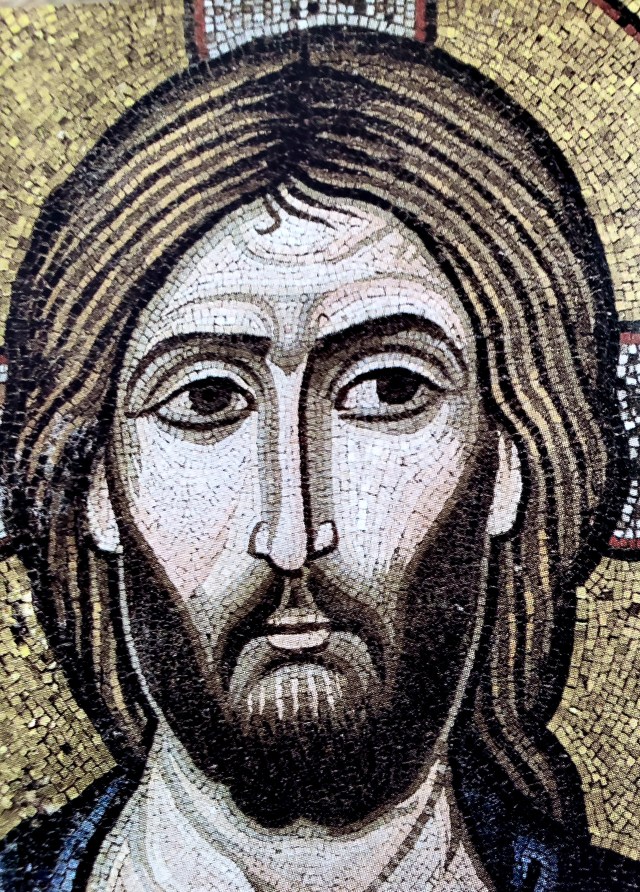
Christ of Mercy
Byzantine Christ of Mercy, circa 1100

Therefore, holy brothers and sisters, who share in the heavenly calling, fix your thoughts on Jesus, whom we acknowledge as our apostle and high priest. He was faithful to the one who appointed him, just as Moses was faithful in all God’s house. Jesus has been found worthy of greater honor than Moses, just as the builder of a house has greater honor than the house itself. For every house is built by someone, but God is the builder of everything. “Moses was faithful as a servant in all God’s house,” bearing witness to what would be spoken by God in the future. But Christ is faithful as the Son over God’s house. And we are his house, if indeed we hold firmly to our confidence and the hope in which we glory. (NIV)

It is hard to be patient. Perseverance is difficult. If the Christian life were all bunny rabbits and rainbows, there would be no need for the strengthening of faith and the development of endurance – it would all be fun and easy. However, we know life is often hard and demanding. It requires effort and faith is the muscle that gets us through adversity. If unused, faith atrophies. Faith needs strenuous exercise to grow, and must be tested in adverse circumstances to mature.

The author of Hebrews wrote his letter to Jewish Christians because they were losing their grip of faith. The hard circumstances of the believers were leading them to entertain the notion of returning to their old ways of life, apart from Christ. They needed to refocus and set their thoughts on Jesus in the present moment.

When in the middle of situations, we neither asked for nor want, it can be tempting to view the past as “the good old days.” Yet, if you stop to think about it, you really know better. Because of your present struggle, the mind conveniently filters out all the crud from the past to make the bygone days look romantically better than they really were.

“Better” is what the book of Hebrews is all about.

The author persistently insists that Jesus is better than anything from the Hebrew Christians’ past. Moses is one of the most revered figures in Old Testament history. The writer of Hebrews acknowledges this basic respect for Moses, and goes beyond the glittery Mosaic-era reminiscing to remind the people that whereas Moses was faithful within God’s house, it is Jesus who is the Master over the house. Reality check, believers: Jesus is better than Moses.

What is more, followers of Jesus are the house. Jesus Christ is Lord – not Moses, or anybody else. Jesus cares for and protects his house. It might be tempting to believe that a previous house we had in another city or town was better. That was then, this is now. Today we live in God’s house. Therefore, we must hold on and not let go of the confidence we have in Jesus and the privilege we have living in God’s house.

When life is tough, daydreaming about a rosy past is easy. For sure, we can find all kinds of things we miss from previous days elsewhere. I have moved dozens of times in my life, and each place I have lived has a unique and special place in my life. Yet, trolling our personal histories, much like time-wasting gallivants on the internet, does nothing for the development of faith and perseverance.

Faith needs strengthening so that it is sustainable through the entire Christian life.

Just as a bodybuilder needs disciplined routines of exercise, so the Christian requires spiritual disciplines for a faith conditioning program which focuses the mind on Jesus. There are many spiritual practices, all which are wonderfully useful. Three of the most basic of those disciplines are: Scripture reading and spiritual reflection; personal and corporate prayer, and worship/fellowship. They are the Christian’s barbells.

  • Since God has revealed himself through Holy Scripture, we have the gracious privilege of reading the Bible to encounter the living Lord. I look at this not so much as reading but as taking a posture of listening to God. So, I read slowly and carefully, being alert to the Spirit’s voice.

For the word of God is alive and active. Sharper than any double-edged sword, it penetrates even to dividing soul and spirit, joints and marrow; it judges the thoughts and attitudes of the heart. (Hebrews 4:12, NIV)

  • Since God desires conversation with us, prayer opens us to a divine dialogue with the Lord. The Russian Orthodox monk, Theophan the Recluse (1815-1894) describes it this way: “To pray is to descend with the mind into the heart, and there stand before the face of the Lord, ever-present, all seeing, within you.” With this kind of description, prayer is sustained much less by duty and much more by a desire to connect with God.

Therefore, since we have a great high priest who has ascended into heaven, Jesus the Son of God, let us hold firmly to the faith we profess. For we do not have a high priest who is unable to empathize with our weaknesses, but we have one who has been tempted in every way, just as we are—yet he did not sin. Let us then approach God’s throne of grace with confidence, so that we may receive mercy and find grace to help us in our time of need. (Hebrews 4:14-16, NIV)

  • Since God exists in the fellowship of three persons, our fellowship with one another spiritually forms us for the sake of blessing the world. As we share in the life of our Triune God in worship, we gain ability to live in healthy community and learn from each other. By opening our lives to both God and others, we discover newfound faith and learn to strengthen one another.

See to it, brothers and sisters, that none of you has a sinful, unbelieving heart that turns away from the living God. But encourage one another daily, as long as it is called “Today,” so that none of you may be hardened by sin’s deceitfulness. We have come to share in Christ, if indeed we hold our original conviction firmly to the very end. (Hebrews 3:12-14, NIV)

In the present moment, right now, today, Jesus has a hold of you. Fix your thoughts on him. Today, Jesus wants to walk with you through your trouble – not transport you to the past. Now is the time to follow Jesus into all the situations that are in front of us. You are not alone. You can do this. We are all in this together.

Lord Jesus, you are sovereign over my past, present, and future.  Today has its situations and problems.  Help me walk into and through them with your gracious protection so that perseverance is developed within me and my faith in you is strengthened for tomorrow.  Amen.

Hebrews 13:20-21 – Conflict and Peace

Pretty Place Chapel Blue Ridge Mountains
Pretty Place Chapel in the Blue Ridge Mountains

May the God of peace,
who brought back the great shepherd of the sheep,
our Lord Jesus,
from the dead by the blood of the eternal covenant,

        equip you with every good thing to do his will,
by developing in us what pleases him through Jesus Christ.
To him be the glory forever and always. Amen. (CEB)

These verses are the benediction, that is, the blessing given at the end of a long letter to a group of struggling Jewish Christians. In fact, things were so difficult for these believers that they were giving serious consideration to reneging on their commitment to Christ. So, the author of Hebrews sent them an exhortation and an encouragement to remain true and steadfast to the faith.

What is needed is not a shrinking back from faith but instead an enduring faith which is sustainable for the long haul of a person’s life.

The believers had both inner and outer conflict. They were experiencing hardship and persecution in the form of confiscation of their property and public insults. The Christians had started out well, facing such trouble with confidence through standing side-by-side with others who were suffering as well as holding on to their vibrant faith.

Yet, over time, their resolve began to break down. A slow drift occurred. Eventually, they started to retreat from the helping of others. They emotionally and spiritually inched their way to becoming despondent to the point of questioning whether all this Christianity stuff was worth it. The outer conflict worked its way inside their souls and damaged their spirits. By the time the writer of Hebrews comes along, a group of Christians are stuck in discouragement.

It’s one thing to deal with trouble and hardship on one day, even two. It’s quite another thing when that difficulty does not let up – when days turn into weeks, weeks into months, even months into years.

There are times when peace seems to have about as much chance of being realized as winning the lottery.

Yet, God is the God of peace, real lasting harmonious spiritually restful peace. It was achieved through the life and death of Jesus. The peace Jesus has brought is so much more than the absence of conflict. God’s peace is freedom from fear and anxiety. It is a settled confidence deep down inside that God will ultimately make good on all his promises and that things will not always be this way.

Until that day comes, God is not sitting in some divine Lazy-Boy recliner watching old reruns of the Angels playing baseball. Rather, God is active through carefully, deliberately, and, to our occasional consternation, slowly equipping us and developing us into spiritually fortified people who do the will of God and please Jesus in everything they do and say. Jesus is the Great Shepherd of the sheep who will not lead us astray but will settle us in green pastures.

The word translated “equip” is a rich word (Greek καταρτίσαι, pronounced “cot-ar-tids-ay”) which means to set something straight. Picture a bone which has been broken and needs to be reset and have time to heal. That is what God is doing in his people – repairing broken spirits. This divine healing is equipping believers for a lifetime of handling adversity with faith, confidence, and endurance. The process, frankly, hurts and requires patience before healing and health come.

If God can raise the dead, he can most certainly handle any earthly trouble we are going through.

God is in the transformation business. Extreme makeovers are his specialty. He uses hard circumstances, troubles, and torments of our lives and bends them into divine tools to form and shape his people to both survive and thrive in the world.

Complaining spirits, blaming and shaming others, and impatience borne of unrealistic expectations are the evidence of damaged emotions, wounded souls, and weak faith. This is the antithesis of God. He’s not overlooking humanity with a divine *sigh* in exasperation. That’s because he is the God of peace who is bringing all things to a conclusion in Christ. Jesus will come to judge the living and the dead. The Holy Spirit is now and very presently active to heal damaged emotions, repair wounded souls, and strengthen faith.

In those times when God seems absent and prayers seem to bounce off the ceiling are the times that God is establishing peace and expanding our capacity for faith and patience.

Benediction, blessing, and doxology come through the dark night of the soul and not by avoiding it.

Soli Deo Gloria. To God be the Glory.

Almighty God,
all thoughts of truth and peace
proceed from you.
Kindle in the hearts of all people
the true love of peace.
Guide with your pure and peaceable wisdom
those who take counsel
for the nations of the earth;
that in tranquility your kingdom
may go forward,
till the earth is filled
with the knowledge of your love;
through Jesus Christ our Lord. Amen.

–From the Book of Common Order of the Church of Scotland, St. Andrew Press.

Click It Is Well with My Soul by TenTwoSix Music and arranged by David Wise.