Matthew 26:6-13 – More Than Meets the Eye

Quincy
Jack Klugman as “Quincy, M.E.” (1976-1983)

While Jesus was in Bethany in the home of Simon the Leper, a woman came to him with an alabaster jar of very expensive perfume, which she poured on his head as he was reclining at the table.

When the disciples saw this, they were indignant. “Why this waste?” they asked. “This perfume could have been sold at a high price and the money given to the poor.”

Aware of this, Jesus said to them, “Why are you bothering this woman? She has done a beautiful thing to me. The poor you will always have with you, but you will not always have me. When she poured this perfume on my body, she did it to prepare me for burial. Truly I tell you, wherever this gospel is preached throughout the world, what she has done will also be told, in memory of her.” (NIV)

When I was a teenager there was a show on TV called “Quincy.”  Quincy was a coroner.  Every episode was him performing an autopsy on someone who appeared to have a rather normal death.  But Quincy always found something suspicious and spent his time prying into people’s lives to confirm his investigation.  His boss and the police chief would chide and warn him saying, “Leave it alone, Quincy.”  Quincy’s typical response was: “But I can’t leave it alone.  There’s more here than what meets the eye!”

Indeed, there is more going on in today’s Gospel lesson than what meets the eye. The Apostle John identifies the woman as Mary (John 12:1-11), a woman with a sordid background who had her life transformed through meeting Jesus.  Now, near the end of Christ’s life as he was about to enter Jerusalem and be arrested, tried, tortured, and killed, this woman, Mary, is aware of what is happening when others are not.  Her own brokenness cracked open to her the true reality of life.

The surface event itself is a touching and tender moment in history.  This woman, whom everyone knew was a damaged person, took a high-end perfume and broke the entire thing open. She then proceeded to anoint Christ’s feet with it.  You can imagine the aroma which filled the entire house with expensive perfume for all to smell.  Giving what she had to Jesus, Mary demonstrated the path of true discipleship.

Yet, that is not all, because there is more here than what meets the eye:

  • The broken jar of perfume shows us the brokenness of the woman and our need to be broken (Matthew 5:3-4).
  • The woman used an extraordinary and extravagant amount of perfume, picturing her overflowing love for Jesus (John 20:1-18).
  • The woman poured the perfume on the head of Jesus, and she herself used her hair as the application (according to John); hair is a rich cultural symbol for submission and respect (1 Corinthians 11:14).
  • The perfume directs us to the death of Jesus (John 19:38-42).
  • The perfume highlights for us the aroma of Christ to the world (2 Corinthians 2:15-17).
  • There is more to the disciples’ response than mere words about perfume; the Apostle John specifically names Judas as questioning this action – the one who is not actually concerned for the poor (Matthew 26:15).
  • The woman and the disciples, or Judas and Mary, serve as spiritual contrasts: Mary opens herself to the sweet aroma of Christ; Judas plain stinks.
  • The perfume presents a powerful picture of the upcoming death of Christ, for those with eyes to see; he was broken and poured out for our salvation (Luke 23:26-27:12).

Christianity was never meant to be a surface religion which only runs skin deep.  The follower of Christ is meant to be profoundly transformed, inside and out, so that there is genuine healing, spiritual health, and authentic concern for the poor and needy.  Keeping up appearances is what the Judas’s of this world do.  But the Mary’s among us dramatically point us to Jesus with their tears, their humility, their openness, and their love.

In this contemporary environment of fragmented human ecology, our first step toward wholeness and integrity begins with a posture of giving everything we have – body, soul, and spirit – to the Lord Jesus.  Methinks Quincy was on to something.

Loving Lord Jesus, my Savior, and my friend, you have gone before us and pioneered deliverance from an empty way of life and into a life of grace and gratitude.  May I and all your followers, emulate the path of the woman Mary and realize the true freedom which comes from emptying oneself out for you.  Amen.

Exodus 2:11-15 – Time Out

A Time for Everything

In the course of time Moses grew up. Then he went to see his own people and watched them suffering under forced labor. He saw a Hebrew, one of his own people, being beaten by an Egyptian. He looked all around, and when he didn’t see anyone, he beat the Egyptian to death and hid the body in the sand.

When Moses went there the next day, he saw two Hebrew men fighting. He asked the one who started the fight, “Why are you beating another Hebrew?”

The man asked, “Who made you our ruler and judge? Are you going to kill me as you killed the Egyptian?” Then Moses was afraid and thought that everyone knew what he had done.

When Pharaoh heard what Moses had done, he tried to have him killed. But Moses fled from Pharaoh and settled in the land of Midian. (GW)

Faith is not a static phenomenon that one possesses, or not. Rather, faith is a dynamic movement which is continually either being strengthened or weakened through our life choices.  Moses needed to learn how to make healthy decisions of faith, just as much or more than the rest of us.  The fact that he was eighty years old before he became the human agent of God’s deliverance of the Israelites from the Egyptians, after a forty year stint in the backside of the desert, tells us that it took him awhile to mature.  Even though Moses may have had a sense that the Israelites needed freedom from slavery and acted on that sense by killing a ruthless Egyptian, his method and sense of timing were off.

There is a time for everything, said the writer of Ecclesiastes.  Wisdom, which is the ability to apply faith to concrete situations with appropriate forms, is often in the timing of things.  To know when to speak and when to listen, when to act and when to wait, is an important facet of faith.  The ancient Israelites were slaves in Egypt for a long time.  Moses knew they were suffering, and he acted in “good faith.” Yet, it was not yet time and it was a rash movement.  Eventually, the Jewish cry of suffering arose to God, and God heard them, remembering his covenant with them.  Why God did not act sooner, or use Moses earlier, is information that is only privy within God himself.

If we are to develop a strong and wise faith with an opportune sense of timing, we will need to rely on God.  Trusting in ourselves, our own efforts, and our own gauge of how things ought to proceed will usually not end well.  We may, like Moses, find ourselves taking a “time out” from God in obscurity until we learn to wait on him.

In the fullness of time, Paul said to the Galatians, Jesus came, born of a woman, born under law, to redeem those under the law (Galatians 4:4-5).  God knows what he is doing, even though it might seem like he is sometimes slow to act.  God sees.  God delivers.  And he does it in his timing – not ours.

Redeeming God, you control all things, including the clock.  Give me wisdom so that my sense of timing might reflect your will and your way, through Jesus Christ, your Son, who with you and the Holy Spirit reign supremely as one God, now and forever.  Amen.

Romans 12:1-8 – Healthy Group Dynamics

Transformed

Therefore, I urge you, brothers, and sisters, in view of God’s mercy, to offer your bodies as a living sacrifice, holy and pleasing to God—this is your true and proper worship. Do not conform to the pattern of this world but be transformed by the renewing of your mind. Then you will be able to test and approve what God’s will is—his good, pleasing, and perfect will. 

For by the grace given me I say to every one of you: Do not think of yourself more highly than you ought, but rather think of yourself with sober judgment, in accordance with the faith God has distributed to each of you. For just as each of us has one body with many members, and these members do not all have the same function, so in Christ we, though many, form one body, and each member belongs to all the others. We have different gifts, according to the grace given to each of us. If your gift is prophesying, then prophesy in accordance with your faith; if it is serving, then serve; if it is teaching, then teach; if it is to encourage, then give encouragement; if it is giving, then give generously; if it is to lead, do it diligently; if it is to show mercy, do it cheerfully. (NIV) 

Every person is important. Everyone is needed. Each one, according to this New Testament lesson, is to offer their entire lives to God through worship and the exercise of their spiritual gifts. People are designed to be active in building up one another. 

When I was growing up, we had a fine china set that my parents kept in a beautiful china cabinet.  The set and the cabinet are old and were a prominent part of our living room. However, we almost never used it. I can only remember once or twice that my Mom got the china out to use. God is not looking for fine china that sits unused. He is looking for rough-and-tumble clay pots—the kind that can be used every day. God wants ordinary table-wear that can be handled in a crash-and-bang world.  

Followers of Jesus Christ were never meant to be a china cabinet, where precious pieces are safely stowed out of harm’s way. Instead, humanity is to be like a working kitchen, where well-worn pots are filled again and again to dispense their life-giving contents to a thirsty world; and, where common plates and cups are used again and again to provide a hungry population with the Bread of Life. 
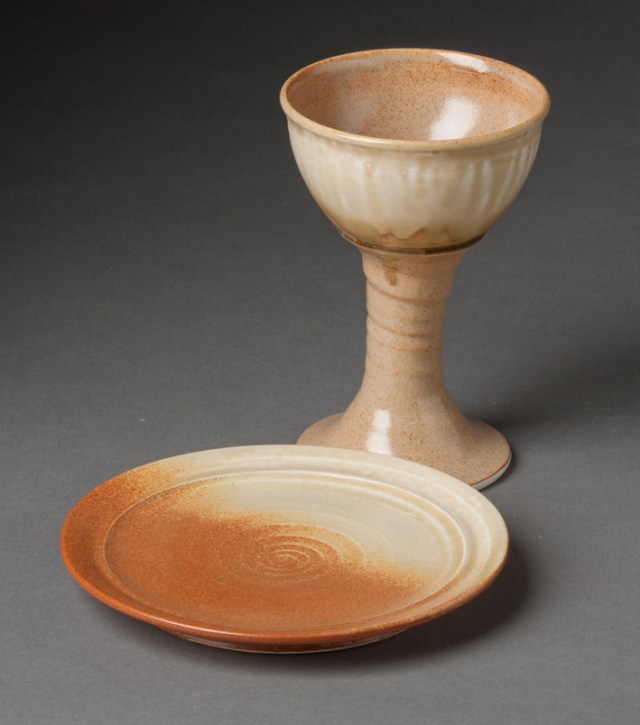
Cup and Plate

Within the ancient Roman Church were both Jews and Gentiles – two groups vastly different from each other.  They tended to keep to themselves and only operate within their familiar and comfortable circles of friends and relatives.  But the Apostle Paul wanted them to be united by exercising their spiritual gifts for the benefit of the entire congregation, and not just certain persons. 

We are strongly encouraged to give ourselves in service to one another because of God’s mercy in Christ.  Since God has saved us from sin, we are to gratefully respond to him in worship that is dedicated to serving everyone.  The word “worship” in today’s text is where we get the word “liturgy.”  That is, Paul’s vision for the church was to have a daily liturgical rhythm of spiritual worship, not just on Sunday when we might pull out the fine china and impress people. 

Paul’s appeal was not to guilt people into serving but is an exhortation for all Christians to appropriately respond to God’s grace by offering their lives in sacrificial service. This is a form of saying “thanks” to God. To be oriented in a sacred liturgy that is fit for the daily will of God, our minds must be renewed. Through saturation in Scripture we discern our spiritual gifts, know what God wants us to do with those gifts, and use them effectively in the church and the world.   

Grace has been given to every believer in Jesus, not just a select few. We all have different gifts and have been graced with abilities for the benefit of others. When everyone collectively uses these spiritual gifts, there is the ability to know the will of God in any situation for any group of people. All the pronouns used in today’s verses are plural. There is to be a group dynamic which seeks to give minds and bodies completely to God in worship, using our spiritual gifts for building up one another, and discovering the will of God together. 

All believers in Jesus must share and work together by utilizing God’s grace, instead of getting burned-out because others are not serving. Grumbling about what others are not doing begs the question of whether we are over-functioning, or not. It could be that we have succumbed to the danger the Apostle Paul warned us about: thinking so highly of ourselves that we believe our gifts are superior to others, so we need to maintain our control and hegemony in the group. This is a terribly misguided notion.   
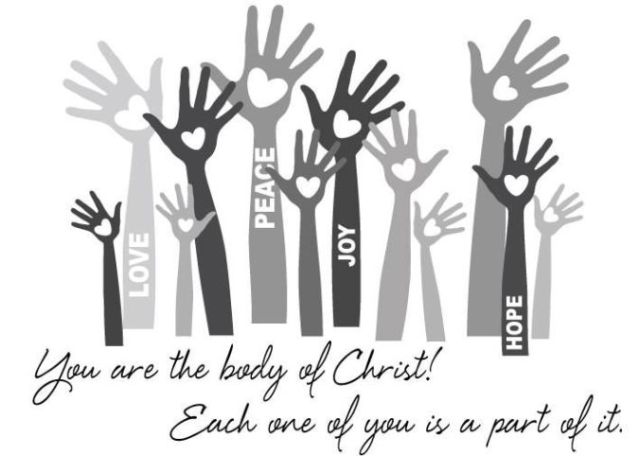
Body of Christ

We belong to one another.  Therefore, one major way of giving to God is through offering ourselves to each other with equity and without favoritism.  We must not separate Christ from his church.  To say that we need God, but do not need the church is to really say that we do not need God because the two are inseparable. Nowhere in Holy Scripture do we find individual Christians doing their own thing, isolated from a committed group of people, the church.  

When Jesus called people to follow him in service to God and a world in need, some gave him excuses that they were busy and had other pressing matters to attend to before they could follow him. Jesus simply left them and told them they were not fit for the kingdom of God. (Luke 9:57-62) 

When people were preoccupied with building wealth, or gaining power, or jockeying for influence, Jesus told them to stop it, exercise some faith, and seek first the kingdom of God.  Build your treasure in heaven, Jesus said, because it will be permanent; and, not on earth where it is temporary. (Matthew 6:19-34)  

We are graced by God with abilities which God fully expects us to use. “Cheap grace” is merely embracing Christ as a personal Savior but not welcoming him as the Lord in whom we must sacrificially give our lives to service in the church and the world. Spiritual health and vitality cannot exist apart from every person using God’s given grace to contribute to the functioning of the Body of Christ.   

spiritual gifts

The list of spiritual gifts Paul provided is not exhaustive but represents a combination of speaking and serving gifts necessary to bless humanity. Paul exhorted the church to not restrain people’s exercise of gifts but let them go at it, full bore:  

  • “Prophesying” is not foretelling the future but a word meaning “inspired speech” from God that addresses what God’s people are to do considering his Word.   
  • “Serving” is a generic word referring to all types of hands-on service.   
  • “Teaching” is needed to instruct the faithful in all the revealed will of God.   
  • “Encouraging” involves both speaking and serving, as the one gifted in encouragement comes alongside others and helps them to do something with both verbal coaching and tangible help.   
  • “Giving” specifically refers to the person who lives a simple life to be able to give generously and contribute to the needs of others.   
  • “Leading” is the ability to get out in front and show the way in obtaining the will of God.   
  • “Mercy” is the much-needed ability to see down-and-out hurting people and be a conduit of God’s grace to them. 

Here is a simple observation: There is no one person who possesses all these gifts. That is why everyone must work together to have a spiritually healthy community.  A spiritually toxic community is the inevitable result of only a few people using their gifts. 

The Apostle Paul communicated some important truth about what faithful Christians must do to be transformed by a renewal of the mind: exercise godly sacrifice; commitment to worship; intentional unity; and, an awareness of our spiritual gifts. The following are some thoughts on becoming aware of our spiritual gifts:   

  1. Pay attention.  Every spiritual gift reflects God’s grace and character, and so, you will find joy and satisfaction in expressing it. Your spiritual gift will be a place of deep spiritual formation and growth in your life, as God uses it both to powerfully connect you to him and to expose areas of your soul that need his forgiveness and redemption.   
  2. Try.  Give it a whirl.  Take the step to connect with a service or ministry, or just try doing what you feel might be something God wants you to do.  Gifts are discovered more from others observing and affirming your gift and less than going through a research process.  The encouragers among us will be happy to affirm the gifts of others. 
  3. Develop.  All spiritual gifts must be cultivated and developed.  Paul told his young protégé, Timothy, to fan into flame the gift of God.  Put yourself in a position to be taught and mentored. 

We were designed by God for worship and service. We will find our greatest delight in life through engaging those two activities. The result is a spiritually healthy and thriving Christian community that loves God, loves one another, and loves the world. 

God of grace, I come before you today praying for your Holy Spirit to stir up the gifts already placed inside your people. God Almighty, I pray that whatever gifts your Holy Spirit has decided to give and put within me and those around me that those gifts be activated and used for your glory and the edification of others.  I pray for peace and joy in the community, that no one will be jealous or covetous about anyone else’s gifts. Lord God, I pray also as these gifts grow and develop that the fruit of the Spirit will be manifested, to ensure the gifts are ministered in love. May you receive all praise honor and glory from the gifts you give, through Jesus Christ, our Lord.  Amen. 

Psalm 124 – Our Help

Our Help

If the Lord hadn’t been for us—
let Israel now repeat!—
if the Lord hadn’t been for us,
when those people attacked us
then they would have swallowed us up whole
with their rage burning against us!
Then the waters would have drowned us;
the torrent would have come over our necks;
then the raging waters would have come over our necks!

Bless the Lord
because he didn’t hand us over
like food for our enemies’ teeth!
We escaped like a bird from the hunters’ trap;
the trap was broken so we escaped!

Our help is in the name of the Lord,
the maker of heaven and earth. (CEB)

“Our help is in the name of the Lord who made heaven and earth.”  These are the words for which I begin nearly every worship service in church.  It is a call to worship the God who is above all and sees all – and can do something about the adversity and trouble we face in the world.  When confronted with a new day, our attention needs some direction in the positive way of acknowledging God.

Our ultimate help is in the Lord.  Our fears about the future, our insecurities of what will happen, and our anxieties about all the upcoming stuff we must face can be transformed with the biblical perspective of acknowledging our need for God.  The Lord is our most prescient support.  That virtual meeting you have been dreading; that conversation you have been avoiding; or, that deadline that has been looming over your head; these and all situations can only find their proper perspective in light of the God who helps.

I am a believer in making daily affirmations of faith in God. That is, affirming the truth about God, even if I don’t feel like it, each and every day so that some solid robust theology is at the forefront of my mind, and the attributes of God sink firmly into my heart.  For faith does not simply come because of signing off on a checklist of beliefs.  Rather, faith arises as a response to the recognition that God is good – all the time – and that he helps those who look to him.

There are a lot of things we do not know: what will happen tomorrow; how a situation will shake out in the end; whether a relationship will flower or wither; and, a million other things which can weigh down our hearts with anxiety. However, there is one sure truth we can count on right now and for every minute into the future: God is with us. God’s ever-present help remains the constant ballast in a sea of changing circumstances.

Indeed, “If God is on our side, can anyone be against us?… I am sure that nothing can separate us from God’s love—not life or death, not angels or spirits, not the present or the future, and not powers above or powers below. Nothing in all creation can separate us from God’s love for us in Christ Jesus our Lord!” (Romans 8:31, 38-39, CEV)

Creator God, you are the ever-present One who provides everything I need for life and godliness.  I need your help today and everyday so that I can confidently do your will.  I stand with full assurance of faith because I serve the Lord Jesus, who is benevolent and always does what is right and just.  Amen.