Encountering God (Exodus 19:9-25)

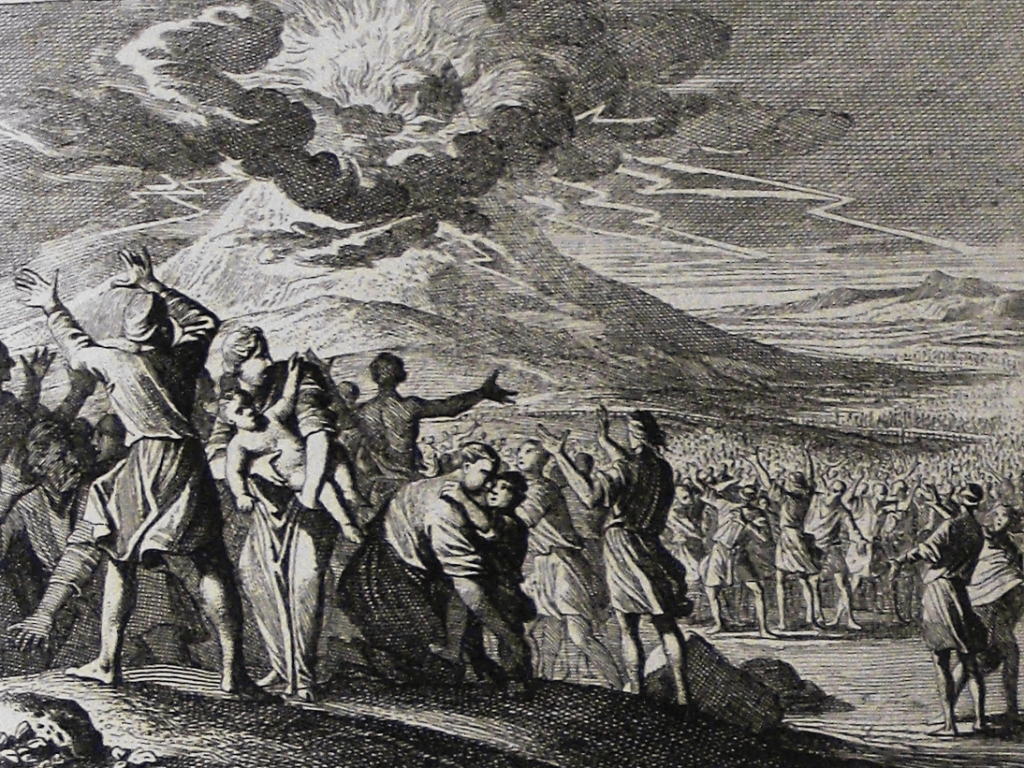
Israel at Mount Sinai, by Jan Luijken (1649–1712)

Then the Lord said to Moses, “I will come to you in a thick cloud, Moses, so the people themselves can hear me when I speak with you. Then they will always trust you.”

Moses told the Lord what the people had said. Then the Lord told Moses, “Go down and prepare the people for my arrival. Consecrate them today and tomorrow, and have them wash their clothing. Be sure they are ready on the third day, for on that day the Lord will come down on Mount Sinai as all the people watch. Mark off a boundary all around the mountain. Warn the people, ‘Be careful! Do not go up on the mountain or even touch its boundaries. Anyone who touches the mountain will certainly be put to death. No hand may touch the person or animal that crosses the boundary; instead, stone them or shoot them with arrows. They must be put to death.’ However, when the ram’s horn sounds a long blast, then the people may go up on the mountain.”

So Moses went down to the people. He consecrated them for worship, and they washed their clothes. He told them, “Get ready for the third day, and until then abstain from having sexual intercourse.”

On the morning of the third day, thunder roared and lightning flashed, and a dense cloud came down on the mountain. There was a long, loud blast from a ram’s horn, and all the people trembled. Moses led them out from the camp to meet with God, and they stood at the foot of the mountain. All of Mount Sinai was covered with smoke because the Lord had descended on it in the form of fire. The smoke billowed into the sky like smoke from a brick kiln, and the whole mountain shook violently. As the blast of the ram’s horn grew louder and louder, Moses spoke, and God thundered his reply. The Lord came down on the top of Mount Sinai and called Moses to the top of the mountain. So Moses climbed the mountain.

Then the Lord told Moses, “Go back down and warn the people not to break through the boundaries to see the Lord, or they will die. Even the priests who regularly come near to the Lord must purify themselves so that the Lord does not break out and destroy them.”

“But Lord,” Moses protested, “the people cannot come up to Mount Sinai. You already warned us. You told me, ‘Mark off a boundary all around the mountain to set it apart as holy.’”

But the Lord said, “Go down and bring Aaron back up with you. In the meantime, do not let the priests or the people break through to approach the Lord, or he will break out and destroy them.”

So Moses went down to the people and told them what the Lord had said. (New Living Translation)

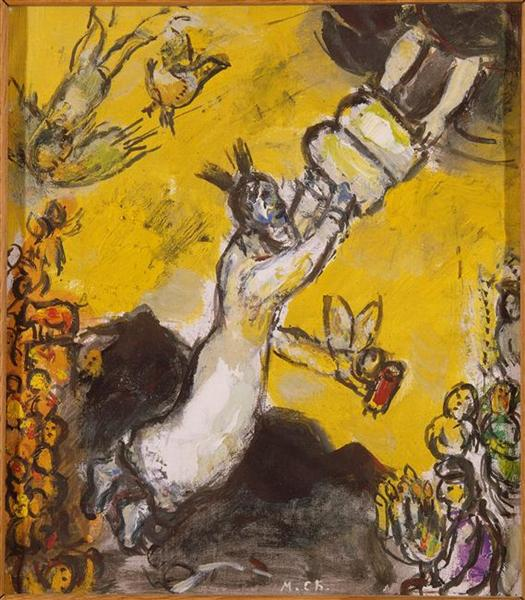
Moses receives the Ten Commandments, by Caspar Luijken (1672-1708)

There’s a lot of drama surrounding today’s Old Testament story. That’s because it’s a big deal when an announcement comes that God is about to show up, speak to the people, and be with them. This is definitely not the stuff of daily mundane life.

The Mount Sinai event is one of the most remembered and talked about events in the Old Testament. This encounter establishes that the presence of the Lord is with Moses, thereby giving him authority over the people. It authenticates the leadership of Moses up to this point – in leading the people out of Egyptian slavery and to the Promised Land.

The presence of God with the people, demonstrated in Moses the leader, assures the Israelites of protection against dangers from other nations and peoples. The divine presence of the Lord will be seen preeminently in the giving of the Law. God’s very Word is encapsulated in the commands and instructions given to Moses on the mountain.

Although the scene on Mount Sinai appears dark, serious, and even scary, it nonetheless is a gift of God’s self-revelation to the people. The Law is a wonderful and gracious provision for Israel. The Lord is providing necessary guidance for living, direction in shaping successful spiritual lives, and the opportunity for obedience to a life-giving system of laws.

If the Israelites hear and obey the Lord, they will be God’s special and treasured people – a nation of priests, a people set apart to be a light for the world.

So, preparations were made for God to enter. The Lord is truly awesome and holy, and so, certain boundaries needed to be established so that the people would be safe and not overcome by such immense light and power. The mountain shakes in anticipation of the divine arrival; the shofar (ram’s horn) is heard, signaling the imminent entrance of God.

The people are assembled by Moses. God descends in the fire, which accompanies the Lord’s presence. Yahweh has come to Israel. The way is now prepared for God’s revelation to be given to Moses in Israel’s hearing. It is an awesome sight and experience.

Perhaps your own days on this earth seem very ho-hum compared to the mountain encounter of Moses and God. You may even feel as if your prayers are puny and don’t get beyond the ceiling of your house. Yet, there is always and continually an opportunity to meet with this very same God, without all the pomp and scariness.

Every single day we have the gracious and wonderful opportunity of opening the book containing a good and merciful God’s self-revelation, and reading gracious words of life to live by. We have guidance for our earthly journey; there is direction for our needy souls.

Your word is a lamp to guide my feet
    and a light for my path. (Psalm 119:105, NLT)

All Scripture is inspired by God and is useful to teach us what is true and to make us realize what is wrong in our lives. It corrects us when we are wrong and teaches us to do what is right. God uses it to prepare and equip his people to do every good work. (2 Timothy 3:16-17, NLT)

Blessed Lord, who caused all Holy Scriptures to be written for our learning: Grant us so to hear them, read, mark, learn and inwardly digest them, so that we may embrace and ever hold fast the blessed hope of everlasting life, which you have given us in our Savior Jesus Christ; who lives and reigns with you and the Holy Spirit, one God, forever and ever. Amen.

Organizational Leadership (Exodus 18:13-27)

Jethro and Moses, by James Tissot, c.1898

The next day Moses took his seat to serve as judge for the people, and they stood around him from morning till evening. When his father-in-law saw all that Moses was doing for the people, he said, “What is this you are doing for the people? Why do you alone sit as judge, while all these people stand around you from morning till evening?”

Moses answered him, “Because the people come to me to seek God’s will. Whenever they have a dispute, it is brought to me, and I decide between the parties and inform them of God’s decrees and instructions.”

Moses’ father-in-law replied, “What you are doing is not good. You and these people who come to you will only wear yourselves out. The work is too heavy for you; you cannot handle it alone. Listen now to me and I will give you some advice, and may God be with you. You must be the people’s representative before God and bring their disputes to him. Teach them his decrees and instructions, and show them the way they are to live and how they are to behave. But select capable men from all the people—men who fear God, trustworthy men who hate dishonest gain—and appoint them as officials over thousands, hundreds, fifties and tens. Have them serve as judges for the people at all times, but have them bring every difficult case to you; the simple cases they can decide themselves. That will make your load lighter because they will share it with you.If you do this and God so commands, you will be able to stand the strain, and all these people will go home satisfied.”

Moses listened to his father-in-law and did everything he said. He chose capable men from all Israel and made them leaders of the people, officials over thousands, hundreds, fifties and tens. They served as judges for the people at all times. The difficult cases they brought to Moses, but the simple ones they decided themselves.

Then Moses sent his father-in-law on his way, and Jethro returned to his own country. (New International Version)

I’ll be the first to say that administration is not my gift – much like I think Moses would have said. So, wading out into the ocean of organizational theory might be a bit like a pastoral walking-the-plank for me. Yet, on the other hand, I have found myself time and again in leadership situations where significant organizational change is needed.  

Maybe God has a sense of humor, or maybe the Lord just wants to use somebody who recognizes he isn’t going to get anything done on the organizational level without a lot of divine intervention. Because of this, I like the K.I.S.S. approach to organizing a group of people (Keep It Simple Stupid). For me, that means sticking with a results-oriented organizational system as opposed to task-oriented organization.

In a task-oriented system, everything lives or dies with the “To Do” list. The focus is accomplishing a few core functions. For example, as a church pastor it might mean preparing sermons, visiting shut-ins, and attending meetings. As a hospital chaplain it could mean serving communion to patients, and listening to complaints from cranky staff persons. For an Administrator it might involve overseeing a sizable budget, leading several committee meetings, and keeping track of the organization’s numbers.

With task-oriented organization, church members feel good about attending worship services and putting money in the offering plate. The problem? People are unlikely to see a need for change and a transformation of the heart because these few tasks are simply what they do. It’s a sort of spiritual cruise-control, driving the car of mediocrity.  

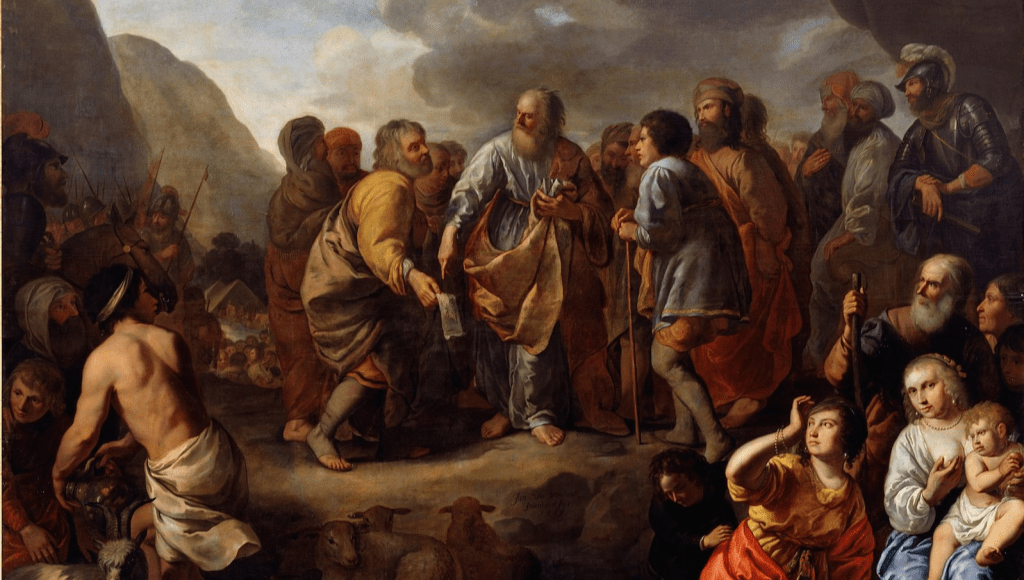
Jethro advising Moses, by Jan Gerritsz van Bronckhorst (1603-1661)

Meetings and church services within the task-oriented system tend to be ends in themselves (frustrating and boring!) because the meeting itself is just something that gets scratched off the to do list. Churches that have a hard time making decisions are probably stuck in the task-oriented mode, because there is no over-arching framework from which to decide anything.  

So, people entrench themselves in positions based in personal preferences. It’s the world of heated conversations and worship wars. If motivation and morale is dependent on people getting their way, no one is likely to be happy. The great need for a task-oriented church is a big picture vision that seeks results.

The results-oriented organization focuses on achieving some desired outcomes. This is the kind of organization that Jethro was thinking of when he observed Moses engaged in the endless task orientation of hearing people’s cases.

Tasks and functions are not ends in themselves, but will continually change in order to accomplish the results we want. This is a church or organization oriented around mission.  

Jesus came to this earth to accomplish the salvation of the world. He was on a mission of love – intent on extending grace to lost sinners. In this setting, decision-making becomes exciting. A group of people come up with ideas and tasks about loving people and reaching them with the grace we have received from God.  

A results orientation has personal preferences taking a back seat to the great needs of the community. There is freedom to experiment and imagine together, instead of guilt for not getting something crossed off the “To Do” list.

In truth, I like to create lists; it feels good when everything is scratched off the list at the end of the day. But I make sure that those things are a means to an end, and not the end itself.  

By orienting my ministry around mission (God’s, not mine) I am able to create tasks and functions that contribute to seeing the kingdom of God break into the church and the world. So, here are two K.I.S.S. questions for every leadership team:  

What result(s) would you like to see in your church?  

What kind of tasks will help you get the results you want?

Jesus is building his church, and the gates of hell will not overtake it. We can participate, change, grow, live, and learn, without fear of screwing up the church and making it more complicated than it is. Why? Because Jesus is the One building it.

All we need is a bit of grace with each other to step out by faith and make a difference by focusing and planning for some worthy, good, and just outcomes.

Almighty God, we pray for leaders everywhere in every place, that you will guide them in the ways of freedom, justice, and truth, so that all persons may live in peace. Lord, in your mercy, hear our prayer. Amen.

Relying on the Presence (Exodus 13:17-22)

When Pharaoh let the people go, God did not lead them on the road through the Philistine country, though that was shorter. For God said, “If they face war, they might change their minds and return to Egypt.” So God led the people around by the desert road toward the Red Sea. The Israelites went up out of Egypt ready for battle.

Moses took the bones of Joseph with him because Joseph had made the Israelites swear an oath. He had said, “God will surely come to your aid, and then you must carry my bones up with you from this place.”

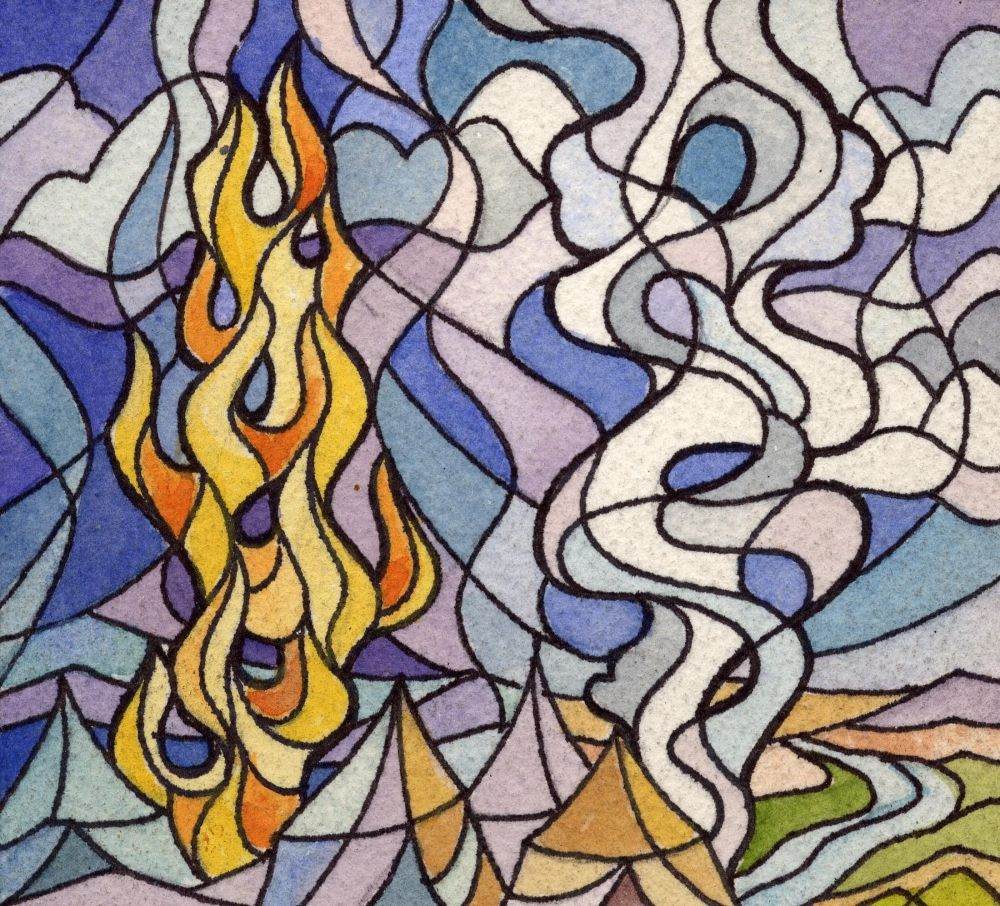
After leaving Sukkoth they camped at Etham on the edge of the desert. By day the Lord went ahead of them in a pillar of cloud to guide them on their way and by night in a pillar of fire to give them light, so that they could travel by day or night. Neither the pillar of cloud by day nor the pillar of fire by night left its place in front of the people. (New International Version)

From a human perspective, God makes some nonsensical decisions in the Bible such as telling Noah to build a big boat in a place with no water; Abraham to leave everything, and later, to sacrifice his son; Moses to stroll into Egypt and tell Pharaoh to let the people go; and, the people to walk through a body of water without getting wet. Indeed, it’s as if God has an odd predilection for making weird requests of people.

Although today’s Old Testament story gives us a glimpse into God’s thinking, the people were not privy to that information. Yes, God’s people were experiencing an unbelievable exodus out of Egypt. Their wildest dreams could not have imagined such a reality as strolling out of slavery having seen not one but a string of miraculous wonders. Yet, God was not done with the miracle thing.

Although many people would really like to see a miracle happen in their lives, rarely do we think about the circumstances we might need to face for that miracle to occur. God typically asks folks to do some outrageous-sounding things to set up the miracle.

An entire nation left Egypt with celebration only to be told to go in a misdirection toward the Promised Land, as if God were somehow geographically challenged. I can imagine that this decision had Moses raising a Spock-like eyebrow and the Israelites wondering if God was off his celestial rocker.

There is, however, a reason why folks like Noah, Abraham, and Moses obeyed instructions that didn’t make sense to them at the time: The Presence of God.

Pillar of Fire, Pillar of Cloud in the Desert, Congregation Beth Emeth, Herndon, VA

It is the personal Presence and power of God which makes all the difference. For God has not promised to create an existence with a zero factor of hardship. God, instead, has created a world that is full, vibrant, and alive with Presence – and a zero tolerance for bullies like Egypt. The uncertainty, doubt, and mystery of the future is thoroughly mitigated with the effusive Presence.

When sitting with patients in the hospital who struggle with the unknown of why they are there and what will become of them (and their families) the last thing I do is try to fabricate reasons so that it makes sense – because it doesn’t, and I’m not going pretend that it does.

Rather, I remind them of what I know: The Presence of God is here. Although God does not go out of the way to give us an easy life, God does, however, go far out of the way to communicate the glorious divine Presence with us.

God kept constant vigil over the ancient Israelites, powerfully seen with the pillar of cloud by day and pillar of fire by night. Nothing was going to happen to the Jewish people without first passing through the mighty hands of God.

Not only do I know God is with us, but I also know the Lord neither slumbers nor sleeps (Psalm 121). When God keeps vigil, God keeps vigil! No smoke or bathroom breaks with God. God’s vigilance is relentless and wondrous, giving assurance to the godly, and terrifying the ungodly.

Once we are out in the wilderness of uncertainty, there is no turning back. And that’s okay – because the Presence of God patrols the area and divinely guards our every move.

For the Christian, the Presence has found its fulfillment in the person of Jesus. Although Christians everywhere serve a risen and ascended Christ, the Divine Presence remains with glorious constancy through the Holy Spirit, the Paraclete, the One who is consistently alongside us, empowering us and advocating on our behalf.

The beautiful theological truth here is that God is both transcendent (far above us) and immanent (intimately close to us) at the same time, all the time. Armed with such a robust theological understanding, trust and confidence come to us without having to resort to ginning up positive thoughts.

Instructions and commands which seem like nonsense? No problem. The Transcendent and Immanent One has the Presence all around it. In between a rock-and-hard-place (or an Egyptian army and a Red Sea)? Not an issue. I willingly place myself there knowing that with the Presence, the miraculous is about to happen.

We need not buck the difficult circumstances. The Presence has got this.

So, then, let us pray for the Church and for the world, and let us thank God for the great Presence: In the power of the Spirit and in union with Christ, we pray to you, Almighty God, and Father. From the rising of the sun to its setting, we pray to you, ever-vigilant Lord, on behalf of those in despair and darkness, that they may find the hope and light of Christ; those in fear of death, that they may find faith through the resurrection of Jesus; prisoners and captives, widows and orphans, and all those who today need a blessed assurance of the Presence; through Jesus Christ, your Son, our Lord, who with you and the Holy Spirit are one God, now and forever. Amen.

Rituals Are Important (Exodus 13:1-10)

The Passover Meal (Last Supper) by Jess Santos

The Lord spoke to Moses, “Set apart every firstborn male for me. Every firstborn male offspring among the Israelites is mine, whether human or animal.”

Then Moses said to the people, “Remember this day—the day when you left Egypt, the land of slavery. The Lord used his mighty hand to bring you out of there. Don’t eat anything made with yeast. Today, in the month of Abib, you are leaving Egypt. The Lord swore to your ancestors that he would give you the land of the Canaanites, Hittites, Amorites, Hivites, and Jebusites. When he brings you into that land flowing with milk and honey, you must observe this ceremony in this month.

“For seven days you must eat unleavened bread. The seventh day will be a pilgrimage festival in the Lord’s honor. Only unleavened bread should be eaten during these seven days. No sourdough or yeast should be seen anywhere in your territory. On that day tell your children, ‘We do this because of what the Lord did for us when we left Egypt.’ This festival will be like a mark on your hand or a reminder on your forehead that the teachings of the Lord are always to be a part of your conversation. Because the Lord used his mighty hand to bring you out of Egypt, you must follow these rules every year at this time. (God’s Word Translation)

Rituals are an important part of being human. They help us to observe significant events, specials seasons, and daily routines. Ritual activities are meaningful re-telling of stories for us and others. In other words, rituals activate memory, enabling us to remember what is of value.

Religious traditions are typically filled with rituals, in order to remind the faithful of what is significant about their faith. Unfortunately, there are some Christian traditions which have a negative view of ritual, believing it to be “vain repetition.”

The problem, however, is not with rituals themselves; the issue is with the one performing the ritual. If it is done with a disconnect between head and heart, then the ritual does not accomplish it’s intended goal of helping the community to remember and giving meaning in the present time.

“Ritual is not simply an attitude or intention, just as love is not simply a feeling. At its most basic, ritual is something that you do. A man can’t plow a field just by thinking about it; he must go out to the field and get to work. If he is fully present to the work and acts with mindfulness and loving attention – if he brings his whole self along – then even as he turns over the rich soil beneath the plow, he turns it over in his mind and heart, as well. The act of tilling the soil becomes an act of tilling the soul.”

Alison Leigh Lilly

No matter whether folks are religious, or not, all people engage in rituals. For example, here are some rituals many people do in order to remember, celebrate, and renew an old story:

  • Birthdays (remembering and re-telling the birth story)
  • Graduations (remembering and re-telling the story of school)
  • Marriages & Anniversaries (remembering and re-telling the courtship story)
  • National Holidays (remembering and re-telling the patriotic story)
  • Dinner and/or Bedtime (remembering and re-telling stories from the day)
  • Morning (remembering and re-telling my story of purpose and meaning)
  • Earth (remembering and re-telling the seasons of Spring, Summer, Fall, and Winter)
  • Annual sojourns to special places such as vacations, sports stadiums, or reunions (remembering and re-telling the story of friendship and family).

The reasons people do such rituals are to

  • Re-enforce values
  • Have a sense of belonging
  • Mark time in a meaningful way
  • Form personal and healthy habits
  • Remind of us of who we are and what our purpose in this world is

Avoiding rituals can cause a lack of identity and purpose. Failing to observe rituals can also create loneliness, confusion, and emptiness.

“Rituals are those repeated actions done again and again in the interest of things like focus, grounding, tradition, cultural symbolism, predictable life rhythms, and feeling a part of something bigger than ourselves.”

Craig Kelley

The Lord gave divine instructions to the newly freed Israelites. And those commands involved instituting some ritual behavior, to be done year after year. God told them to observe a Passover ritual each year so that the story of Israel’s deliverance from Egyptian slavery would remain alive for the generations to come; and so that the event itself would have meaning for people in the present time.

Because Yahweh spared the firstborn of Israel’s children and livestock – and not the firstborn of Egypt – those same firstborn are to be given to God, in some sort of vicarious ransom. All the symbols of Passover are meant to be reminders of what the Lord had done for Israel.

The exodus event is to be actualized, made real for the generations today. By means of ritual, the relationship between God and the people is remembered and renewed for each new generation. Engaging in the ritual repeatedly helps press the story and it’s reality into both the mind and the heart.

And this is precisely what worship is supposed to do for the Christian. Ideally, a worship service is a re-enactment of Christ’s redemption for believers. Even more, it’s a dialogue between God and the people in which the Lord speaks and the worshipers respond.

One ritual which unites all Christians together is the Lord’s Table (communion, or the Lord’s Supper, or the Eucharist). Each Christian tradition has their particular views and theology surrounding it – yet it’s common to all. Observing the Table is a ritual which has been going on for two-thousand years; and which has it’s roots in the Passover and the original meal at the time of the exodus.

The Table is a time of remembrance, communion, and hope. We retell the story of Christ’s redemption and remember the Lord’s once for all sacrifice on the cross for the whole world. It is a unifying ritual, where believers commune together. And the Table expresses hope – that just as we eat and drink now, we will do so all together at the end of the age at the great supper of the Lamb.

Yes, rituals have meaning and it’s symbols are significant. They help us to express our shared humanity together.

May the love of Christ be active in your heart, be heard in your words, be seen in your actions and inform your choices today and every day. Amen.