The Grace of Redemption and Gratitude (Exodus 37:1-16)

Bezalel made the ark of acacia wood—two and a half cubits long, a cubit and a half wide, and a cubit and a half high. He overlaid it with pure gold, both inside and out, and made a gold molding around it. He cast four gold rings for it and fastened them to its four feet, with two rings on one side and two rings on the other. Then he made poles of acacia wood and overlaid them with gold. And he inserted the poles into the rings on the sides of the ark to carry it.

He made the atonement cover of pure gold—two and a half cubits long and a cubit and a half wide. Then he made two cherubim out of hammered gold at the ends of the cover. He made one cherub on one end and the second cherub on the other; at the two ends he made them of one piece with the cover. The cherubim had their wings spread upward, overshadowing the cover with them. The cherubim faced each other, looking toward the cover.

They made the table of acacia wood—two cubits long, a cubit wide and a cubit and a half high. Then they overlaid it with pure gold and made a gold molding around it. They also made around it a rim a handbreadth wide and put a gold molding on the rim. They cast four gold rings for the table and fastened them to the four corners, where the four legs were. The rings were put close to the rim to hold the poles used in carrying the table. The poles for carrying the table were made of acacia wood and were overlaid with gold. And they made from pure gold the articles for the table—its plates and dishes and bowls and its pitchers for the pouring out of drink offerings. (New International Version)

This section is, for the most part, a mirror image of Exodus 25:23-40 – which provides meticulous instructions from God on how to build the Ark of the Covenant and the Table that goes with it.

The purpose of this section in Holy Scripture is to give a detailed report that everything the Lord instructed Moses to do, was obediently done, down to every last detail.

This was of upmost importance to the biblical writer, because half-obedience is really not obedience, at all. And there needs to be obedience in order to realize blessing.

God had a purpose with ancient Israel to establish them as God’s people, with God dwelling amongst them. The way this would happen was by means of all the specific prescriptions for the Tabernacle with its worship implements.

Foremost amongst those worship implements was the Ark and the Table, simply because that was the place of meeting with God – and even more specifically – the place of redemption.

The Tabernacle was built, then erected and put into place, just as it was described by God to Moses. And that is the point. The Lord does not change. There was no Plan B or altering the agenda as things went along, because human sin and people’s foibles mucked up everything. No, that’s not how it went down.

Nothing detracts or sidelines God from accomplishing divine purposes – especially when it comes to redeeming people and coming alongside them.

Just because the Israelites disastrously made an idol in the form of a golden calf, and worshiped it as if it were God, did not mean God’s plan failed.

In fact, the Lord made the plan even better by showing exceeding grace in not wiping out the entire lot of them – but instead used the situation to demonstrate steadfast love and accomplish the divine purpose of redemption.

No matter how you slice or dice it, it always comes out as grace.

My hope is that you can see that through all of the details of worship implements and Tabernacle protocol, God bent over backwards to be with the people.

God is holy. God is absolute purity and light. That holiness and purity would incinerate us in a nanosecond if we didn’t have things in place to help us be with God. That was what the Ark and the Table helped to do for Israel.

There are times in Holy Scripture when things get repeated. Repetition, according to many scholars, communicates emphasis. The repeated details of the Ark and the Table, as well as all the other articles associated with worship, communicate the heart of God in wanting us to have access to the divine. In other words, its repeated because it’s important.

Access, redemption, worship, and mercy are all important for the believer. We learn from today’s seemingly mundane verses that:

  • Sin must be addressed in order to have access to God
  • A way has been made for us to be with God
  • We are enabled and empowered to approach God
  • We have received the mercy of redemption from God
  • We are to therefore give mercy to others through table fellowship and forgiveness
  • And we are to give thanks and have gratitude in our hearts to God

Listening to the instructions of God, obeying them, and enjoying them is at the heart of good religion. May it be so, to the glory of God.

Accept, O Lord, our thanks and praise for all that you have
done for us. We thank you for the splendor of the whole
creation, for the beauty of this world, for the wonder of life,
and for the mystery of love.

We thank you for the blessing of family and friends, and for
the loving care which surrounds us on every side.

We thank you for setting us at tasks which demand our best
efforts, and for leading us to accomplishments which satisfy
and delight us.

We thank you also for those disappointments and failures
that lead us to acknowledge our dependence on you alone.

Above all, we thank you for your Son Jesus Christ; for the
truth of his Word and the example of his life; for his steadfast
obedience, by which he overcame temptation; for his dying,
through which he overcame death; and for his rising to life
again, in which we are raised to the life of your kingdom.

Grant us the gift of your Spirit, that we may know him and
make him known; and through him, at all times and in all
places, may give thanks to you in all things. Amen.

Giving Freely for a Worthy Project (Exodus 25:1-22)

Gathering To Build the Tabernacle, by Yoram Raanan

The Lord said to Moses, “Tell the Israelites to bring me an offering. You are to receive the offering for me from everyone whose heart prompts them to give. These are the offerings you are to receive from them: gold, silver and bronze; blue, purple and scarlet yarn and fine linen; goat hair;ram skins dyed red and another type of durable leather; acacia wood; olive oil for the light; spices for the anointing oil and for the fragrant incense; and onyx stones and other gems to be mounted on the ephod and breast-piece.

“Then have them make a sanctuary for me, and I will dwell among them. Make this tabernacle and all its furnishings exactly like the pattern I will show you.

“Have them make an Ark of acacia wood—two and a half cubits long, a cubit and a half wide, and a cubit and a half high. Overlay it with pure gold, both inside and out, and make a gold molding around it. Cast four gold rings for it and fasten them to its four feet, with two rings on one side and two rings on the other. Then make poles of acacia wood and overlay them with gold. Insert the poles into the rings on the sides of the ark to carry it. The poles are to remain in the rings of this ark; they are not to be removed. Then put in the ark the tablets of the covenant law, which I will give you.

“Make an atonement cover of pure gold—two and a half cubits long and a cubit and a half wide. And make two cherubim out of hammered gold at the ends of the cover. Make one cherub on one end and the second cherub on the other; make the cherubim of one piece with the cover, at the two ends. The cherubim are to have their wings spread upward, overshadowing the cover with them. The cherubim are to face each other, looking toward the cover. Place the cover on top of the ark and put in the ark the tablets of the covenant law that I will give you. There, above the cover between the two cherubim that are over the ark of the covenant law, I will meet with you and give you all my commands for the Israelites. (New International Version)

Israel gathers to bring gifts for the construction of the Tabernacle

Details matter. Typically, when something is important to someone, they go into great detail about it. It won’t do for them to ignore the nuances of what they care about. So when God goes into intricate detail about the construction of the portable sanctuary, the Tabernacle, the people can take notice that this has great significance.

The Israelities were delivered from Egyptian slavery. Now, in the desert of the Sinai peninsula, they are to worship in a particular way with certain sacred objects for its use. The sacred tent, the Tabernacle, was the center of Israel’s religious life while wandering in the years between Egypt and the Promised Land. It became God’s dwelling place amongst the people – the place where sacrifices were offered and Moses their leader communicated with the Lord.

The instruction manual given to Moses from God for the holy implements of worship was very specific and involved a lot of people. It was such an important and technical project that it required the participation of all the people. In a national-level sort of fundraiser, God asked Moses to ask the Israelites to bring their contributions and donations as freewill offerings for the work to be done.

Moses went up Mount Sinai to meet with God. The expressed purpose was to provide divine instructions concerning the law, worship, and how to live in the Promised Land once they get there. Since the Tabernacle was a central part of the nation’s covenant with God, the Lord sought to communicate how everything was to be built.

But before it could all happen, there needed to be a collection of the materials for construction. And it was not something to be taxed or required; it was an ask. The true heart of righteousness is that giving is an opportunity to help and do the right thing; it’s a privilege.

Righteousness is a healthy dynamic of freely giving, and thus, freely receiving. It benefits everyone – both giver and receiver. The wise and righteous person understands that it is the giver who benefits most.

When everyone has an opportunity to give, all persons are of equal status; there is no charity because the whole community acts as one person together in ensuring needs are satisfied.

If everyone gives, then we benefit from living in a society where everyone’s needs are met, and none are in want. The truly righteous society that is full of justice and goodness is the one in which everyone is privileged, and everyone receives the benefits of giving.

In the New Testament, the Apostle Paul picked up on this form of right living and described it to the Corinthian Church:

“And now, brothers and sisters, we want you to know about the grace that God has given the Macedonian churches. In the midst of a very severe trial, their overflowing joy and their extreme poverty welled up in rich generosity. For I testify that they gave as much as they were able, and even beyond their ability.

Entirely on their own, they urgently pleaded with us for the privilege of sharing in this service to the Lord’s people. And they exceeded our expectations: They gave themselves first of all to the Lord, and then by the will of God also to us… For if the willingness is there, the gift is acceptable according to what one has, not according to what one does not have.” (2 Corinthians 8:1-5, 12, NIV)

Paul went on to encourage the believers that each individual should give what they have decided in their heart to give, not reluctantly or under compulsion. Why? Because God loves a cheerful giver, and not a reluctant miser. (2 Corinthians 9:7)

If something is important enough to warrant a full detailed and technical plan, then it’s worthy enough to allow others to freely give for that project as they so desire.

Everyone is blessed when we know what has to be done, and are willing to freely give what we possess to make that important thing happen.

Lord of our lives, teach us how to use our money and our possessions. Deliver us from stinginess and wasteful extravagance; inspire our giving with the spirit of true generosity. Help us always to remember your generous love for us, that we may be wise and faithful stewards of the good gifts you have given us. Amen.

It’s In the Details (Exodus 28:29-38)

Aaron the High Priest

“Whenever Aaron enters the Holy Place, he will bear the names of the sons of Israel over his heart on the breast-piece of decision as a continuing memorial before the Lord. Also put the Urim and the Thummim in the breast-piece, so they may be over Aaron’s heart whenever he enters the presence of the Lord. Thus Aaron will always bear the means of making decisions for the Israelites over his heart before the Lord.

“Make the robe of the ephod entirely of blue cloth, with an opening for the head in its center. There shall be a woven edge like a collar around this opening, so that it will not tear. Make pomegranates of blue, purple and scarlet yarn around the hem of the robe, with gold bells between them. The gold bells and the pomegranates are to alternate around the hem of the robe. Aaron must wear it when he ministers. The sound of the bells will be heard when he enters the Holy Place before the Lord and when he comes out, so that he will not die.

“Make a plate of pure gold and engrave on it as on a seal: holy to the Lord. Fasten a blue cord to it to attach it to the turban; it is to be on the front of the turban. It will be on Aaron’s forehead, and he will bear the guilt involved in the sacred gifts the Israelites consecrate, whatever their gifts may be. It will be on Aaron’s forehead continually so that they will be acceptable to the Lord. (New International Version)

This area of Holy Scripture is likely not one of the more popular places to read. Frankly, it’s boring and pedantic. Yet, contained within the Bible it is, for us to examine.

After giving Moses the Ten Commandments in Exodus 20, the next several chapters, from Exodus 20-31 contain detailed instructions from God concerning the covenant code stipulations with the Israelites. Plans for liturgical and sacrificial worship are covered with a fine tooth comb. Instructions for building implements for worship are precise.

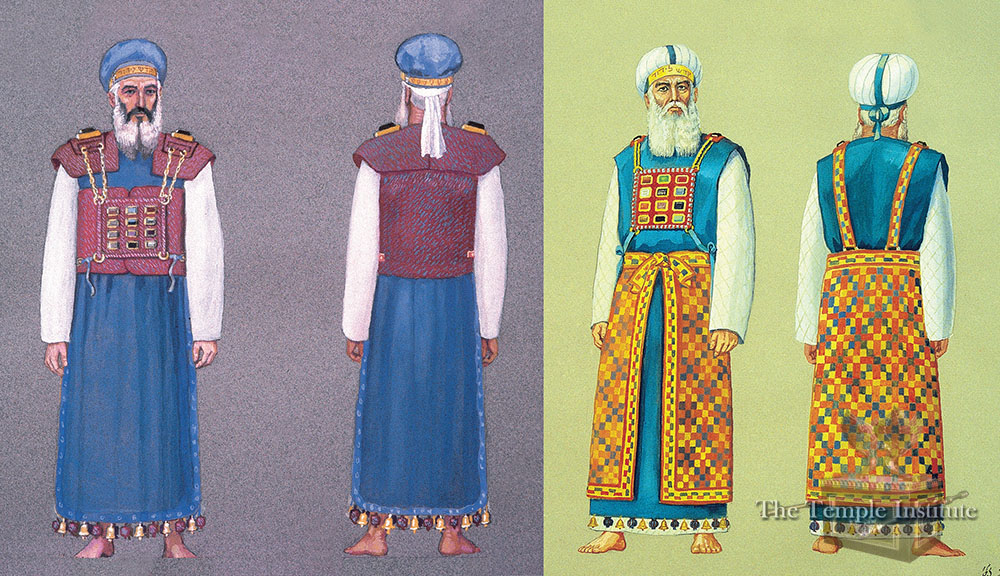
And the special garments of the priests’ clothing are described in detail, both as to their design and the material to be used. It’s as if we’re all sitting in a virtual meeting just trying to stay awake, let alone pay attention. Yet, the fact of the details lets us know that the plan is important.

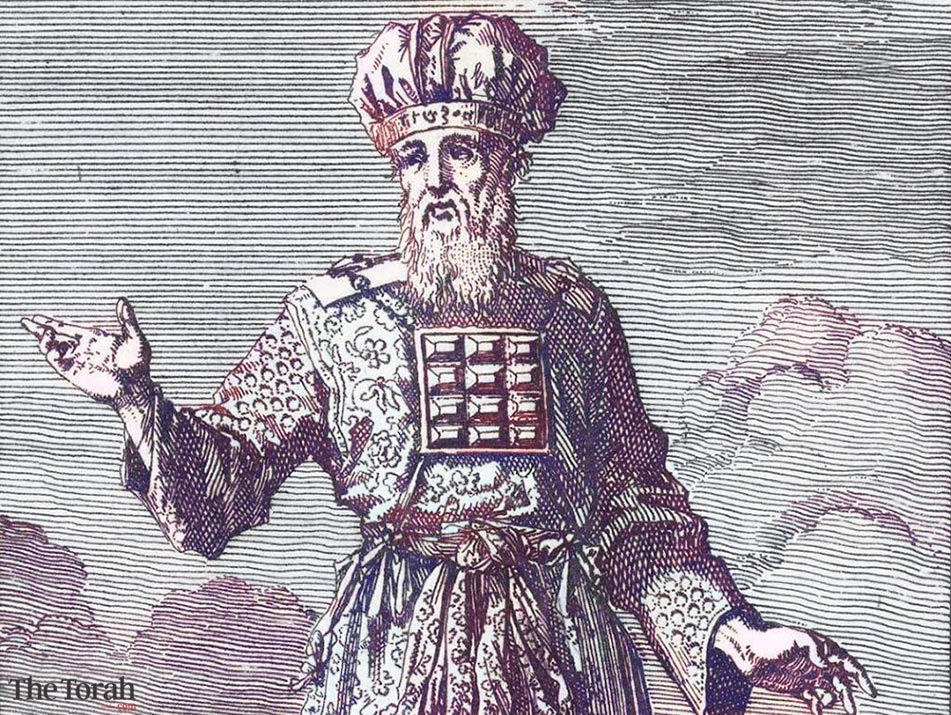
Aaron the High Priest, by Jan Luyken (1669-1712)

Today’s Old Testament lesson deals specifically with the vestments of Aaron, the first high priest of the covenant. An ephod was made – which is a richly embroidered, apron-like vestment having two shoulder straps and ornamental attachments for securing the breastplate, worn with a waistband. (Exodus 28:1-30)

The garment which Aaron was to wear, when he entered the sacred space, symbolically kept the nation of Israel in front of Yahweh, and also over the high priest’s heart.

There was a robe which covered the ephod, equipped with bells. As Aaron moved, the bells rang, signaling that he was coming into and out of the presence of God. Only the high priest was consecrated to enter the most holy place; and the high priest alone wore the special clothing for the unique service which was done.

The entire ritual of the high priest’s service was a visual display of God’s glory and of the reality that no one may enter God’s presence flippantly or carelessly. God is gracious and merciful; and God also has no tolerance for impurity, unrighteousness, and pride.

God expects divine laws, stipulations, and commands to be obeyed without prejudice. The Israelites could not pick and choose what directives from God they would do, or not do. And that is the core of what holiness before the Lord really is.

An interesting observation about this text of Scripture is that Aaron the high priest is given no instructions or commands about what to say when he entered and then left God’s presence. No mantras. No incantations or formulaic words. The inference is that Aaron was silent.

Instead, the garments spoke. “Holy to the Lord” on the plate affixed to the turban said a lot – along with the ephod and the robe, affirming that holiness is needed in order to make any sort of decisions before God.

We never get an explanation in Scripture about what the Urim and Thummim are – which is why, when translating the words from Hebrew, we merely have English transliterations of them. We only know that they were used when making decisions. Evidently, the high priest was an earthly source of God’s wisdom and direction.

Whatever we think about these verses in the book of Exodus, it seems that we are meant to understand that details matter; and how we go about our obedience, down to the last jot and tittle, matters.

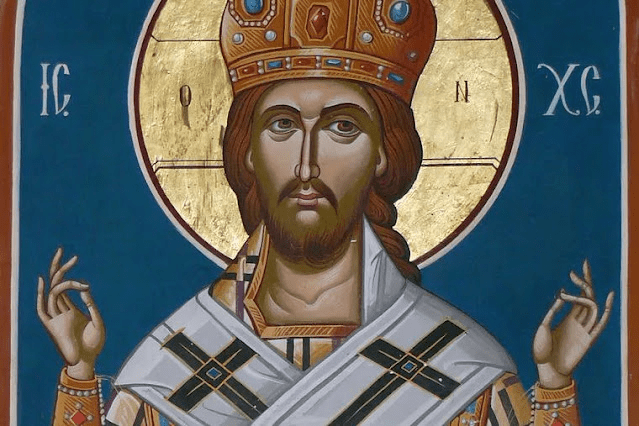
Orthodox icon of Jesus Christ, the High Priest of a New Covenant

In the ministry of Christ, there were people wondering if all of his talk was upending or replacing those detailed imperatives of God. Jesus responded:

“Do not think that I have come to abolish the Law or the Prophets; I have not come to abolish them but to fulfill them. For truly I tell you, until heaven and earth disappear, not the smallest letter, not the least stroke of a pen, will by any means disappear from the Law until everything is accomplished.” (Matthew 5:17-18, NIV)

Jesus furthermore upheld God’s expectation that divine commands be obeyed:

“Therefore anyone who sets aside one of the least of these commands and teaches others accordingly will be called least in the kingdom of heaven, but whoever practices and teaches these commands will be called great in the kingdom of heaven.” (Matthew 5:19, NIV)

At issue was the nature of righteousness – right relations with both God and others. Justice is imperative. Being humble, pure, merciful, and a peacemaker matters. The laws and directives of God are never to be used for walking around like a peacock to display what a wonderfully important and religious person you are.

In other words, the ornate garments of the high priest are not the person; they are special clothing used for a special purpose. Clothes may be important, yet it’s the heart that truly matters. And a heart devoted to God will seek to humbly obey God’s words down to the most minute detail.

O God, by whom the humble are guided, and light rises up in darkness for the godly: Grant us, in all our doubts and uncertainties about obedience, the grace to ask what you would have us to do, that the Spirit of wisdom may save us from all false choices, and that in your light we may see light, and in your straight path may not stumble; through Jesus Christ our Lord. Amen.

Remember Passover (Deuteronomy 16:1-8)

Exodus, by Yoram Raanan

Observe the month of Aviv and celebrate the Passover of the Lord your God, because in the month of Aviv he brought you out of Egypt by night. Sacrifice as the Passover to the Lord your God an animal from your flock or herd at the place the Lord will choose as a dwelling for his Name. Do not eat it with bread made with yeast, but for seven days eat unleavened bread, the bread of affliction, because you left Egypt in haste—so that all the days of your life you may remember the time of your departure from Egypt. Let no yeast be found in your possession in all your land for seven days. Do not let any of the meat you sacrifice on the evening of the first day remain until morning.

You must not sacrifice the Passover in any town the Lord your God gives you except in the place he will choose as a dwelling for his Name. There you must sacrifice the Passover in the evening, when the sun goes down, on the anniversary of your departure from Egypt. Roast it and eat it at the place the Lord your God will choose. Then in the morning return to your tents. For six days eat unleavened bread and on the seventh day hold an assembly to the Lord your God and do no work. (New International Version)

The first five books of the Old Testament are known by Christians as the Pentateuch. These same books are the Torah in Judaism. Deuteronomy is the fifth and final book; it is a restatement of God’s Law for the Israelites about to enter the Promised Land.

Several prominent theological themes are highlighted in the book of Deuteronomy. It vigorously advocates for exclusive loyalty to the monotheistic God, Yahweh. Yahweh is characterized as a transcendent Being, full of steadfast love and transformative justice.

Deuteronomy places significant emphasis upon the covenant relationship between God and Israel. The covenant was established with the patriarchs – Abraham, Isaac, and Jacob – and affirmed at Mount Sinai after the exodus from Egypt, at the giving of the Law. This Law was graciously provided by God for the people; it is encapsulated in the Ten Commandments, and is to be reaffirmed as soon as Israel enters the land.

Moses receiving the Tablets of Law, by Marc Chagall, 1963

Therefore, the entire book of Deuteronomy looks forward toward a new existence in the Promised Land. This new society is to pursue justice and be devoted to righteousness. All Israel is to live in harmony with God and one another, enjoying the land and the covenant relationship.

The welfare of Israel depends upon upholding and maintaining the social and religious laws given by Yahweh. God’s commands are a divine gift, and if closely followed, will be the best humanitarian way of caring for the poor and disadvantaged, as well as bringing the people close to Yahweh.

The sacrificial system will revolve around a singular sanctuary in the religious capital. By locating sacrifices in a particular place, this has the effect of Jewish faith not becoming dependent on offerings, but instead on mercy, love, learning the law, and rituals that uphold reverence for God.

Perhaps the greatest of all the rituals is Passover. Israel’s experience of deliverance at the Red Sea and the centralization of worship in Jerusalem is remembered and celebrated at the festival of Passover every year.

In the original Passover, at the time of the exodus, the blood of a sacrificed lamb was smeared on the doorposts of each Jewish home. In doing this, it let the angel of death know to “pass over” that house, thereby only entering Egyptian homes that did not revere nor recognize God. This act was also the final miraculous act of ten plagues leveled on Egypt.

And There Was a Great Cry in Egypt, by Arthur Hacker, 1897

As the households of Egypt were grieving their dead, Israel was urged by the Egyptians to get out. Egypt feared what would happen if the Israelites remained. Therefore, Israel left post haste. They didn’t have any time for their bread to rise. The people ate unleavened bread so they could immediately leave Egypt.

So, from then on, every year in early Spring, Israel commemorates and remembers God’s deliverance of the people from slavery. God, through Moses, instructed the Israelites to mark Aviv as the first month; it is then that the Passover festival is to occur.

I believe that what we can takeaway from this Scripture, is that perhaps, we ought to stop trying to always have takeaways for everything – as if the Bible can be boiled down to some neat personal application for my life.

Aside from admitting I’ve had a bit of a cynical streak lately, we really must contend with seasons like Passover and Lent, and matters such as social justice and religious worship. These religious seasons are important enough to warrant what the late Eugene Peterson called “a long obedience in the same direction.”

By that phrase, Peterson meant that there are some spiritual practices that we must commit ourselves to year after year, even day after day, for the rest of our lives. Generations before did, and generations after us will need to, as well.

Spiritual growth and maturity take time; and we must patiently and consistently cultivate a sense of justice and a practice of righteousness over and over again.

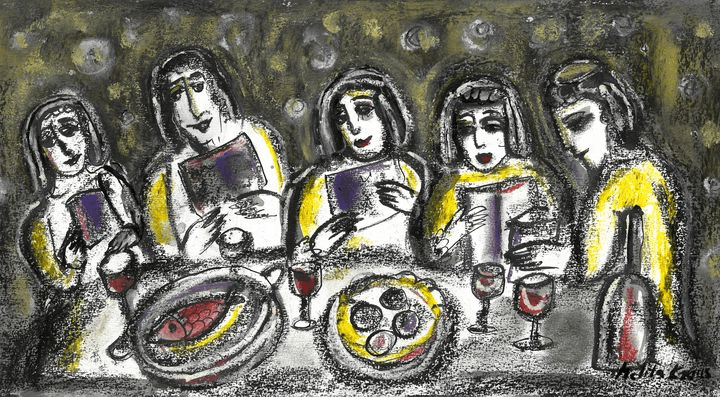
Passover Seder, by Melita Kraus

One must fight for what they believe, each and every day. Spiritual growth takes a lot of time, grit, tenacity, and resilience. It requires patience and grace, perseverance and a good nature. And it is very much a skill which demands daily practice.

Contemporary society is obsessed with quick fixes and easy solutions. But the time-tested practices of Lent, rooted in the remembrances of Passover, are a Christian discipleship that is long on obedience in the same well-worn ancient directions.

We need to keep moving in the directions of deepening a life of prayer, learning the joy of service, growing in the worship of God, and discovering the virtues of humility and a concern for the welfare of everyone in the community.

In other words, to truly observe something, we need to do it, over and over, year after year. In observing the significant events and dates and seasons of the Christian Year, we can find the sort of spiritual support that will fortify our soul, and bless others.

Almighty and everlasting God, you hate nothing you have made and forgive the sins of all who are penitent: Create and make within us new and contrite hearts, so that we may acknowledge our guilt and lament our shame. Let us obtain from you, O merciful God, reconciliation through the Cross, and empowerment through the Spirit, to do justice, love mercy, and walk humbly with you. Amen.