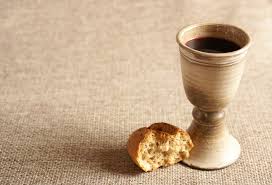
The Lord of Life (John 6:56-69)

Bread of Life, by Kennedy Paizs

“Those who eat my flesh and drink my blood abide in me and I in them. Just as the living Father sent me and I live because of the Father, so whoever eats me will live because of me. This is the bread that came down from heaven, not like that which the ancestors ate, and they died. But the one who eats this bread will live forever.” Jesus said these things while he was teaching in a synagogue at Capernaum.

When many of his disciples heard it, they said, “This teaching is difficult; who can accept it?” But Jesus, being aware that his disciples were complaining about it, said to them, “Does this offend you? Then what if you were to see the Son of Man ascending to where he was before? It is the spirit that gives life; the flesh is useless. The words that I have spoken to you are spirit and life. But among you there are some who do not believe.”

For Jesus knew from the beginning who were the ones who did not believe and who was the one who would betray him. And he said, “For this reason I have told you that no one can come to me unless it is granted by the Father.”

Because of this many of his disciples turned back and no longer went about with him. So Jesus asked the twelve, “Do you also wish to go away?” Simon Peter answered him, “Lord, to whom can we go? You have the words of eternal life. We have come to believe and know that you are the Holy One of God.” (New Revised Standard Version)

This is a hard teaching – which is why a fair number of Christ’s disciples unfollowed him, literally, and not just socially and virtually.

Perhaps they believed they were following a great moral teacher, only to find Jesus prattling-on about being bread from heaven and divinely related to God.

The late great C.S. Lewis commented on Jesus, saying this:

“I am trying here to prevent anyone saying the really foolish thing that people often say about Him: I’m ready to accept Jesus as a great moral teacher, but I don’t accept his claim to be God. That is the one thing we must not say. A man who was merely a man and said the sort of things Jesus said would not be a great moral teacher. He would either be a lunatic — on the level with the man who says he is a poached egg — or else he would be the Devil of Hell. You must make your choice. Either this man was, and is, the Son of God, or else a madman or something worse. You can shut him up for a fool, you can spit at him and kill him as a demon or you can fall at his feet and call him Lord and God, but let us not come with any patronizing nonsense about his being a great human teacher. He has not left that open to us. He did not intend to.” C.S. Lewis, Mere Christianity

It seems Jesus cares little about whether we think of him as a moral teacher or some monstrosity. But he does care about moving people to a spirit-filled confession, a settled claim of faith, and a bold proclamation of his person and work.

Indeed, Jesus Christ, Son of Humanity, Son of God, leads us to hear his own confession, claim, and proclamation: “I Am.”

The crowd of people listening to Jesus were having a hard time wrapping their heads around his message. There were simply no existing categories of thought to which they could put Jesus neatly into. Everyone was rather puzzled with Christ’s words.

Jesus was in the Capernaum synagogue, a village on the Sea of Galilee, 30 miles from where he grew up in Nazareth. Any talk of eating and drinking and religion within any faith community is likely to be a charged discussion. Typically the politics of faith is not for the faint of heart.

We are to abide in Christ, to be in vital union with him. To have Jesus close, to have his words and ways within us, is akin to eating a satisfying meal that goes throughout our entire body and effects our being. Connecting and remaining with Jesus is true living and abundant life.

But the synagogue crowd wasn’t having any of this crazy talk of eating flesh and drinking blood. The lines between meat and metaphor were severely blurred for them. They did not accept the wedding of the spiritual and the material, of word and flesh, of God and Jesus together as Father and Son.

Jesus was causing the men to fold their arms in disgust, and the ladies to squirm in their pews with agitation. They looked upon this Jesus in front of them as causing a religious scandal of the first degree.

Rather than back off the scandalous words, Jesus stuck with them. Furthermore, he intensified what he was saying. At the heart of it was a claim to be the ladder between heaven and earth, the one who is manna from above, given for the life of the people.

His flesh is bread, and his blood is drink. He is life itself. He is even spirit, the one who breathes new life into people. At this point, Jesus was being as scandalous as it gets for his audience in the synagogue.

All of Christ’s talk is meant to bring people to consider him, to contemplate God, and to come to a point of response. Because nobody encountered Jesus without deciding if he is a liar, a lunatic, or the Lord who is life itself.

Many of Christ’s own disciples bailed on him. The scandal was too much. They didn’t sign up for this. To stay with Jesus means to really stay, to abide, to believe and know who he is.

Throughout the New Testament Gospels, Jesus honors people with questions and choices – and does not simply bypass human dignity and worth. He asked his closest twelve disciples if they also wanted to retreat from the scandalous message and messenger they’d been following.

Peter, of course, still had to learn this lesson of respect; he answered for the entire group. Jesus is where, and in whom, he found life, along with the rest of them. They didn’t know how all of the scandalous talk was going to shake-out specifically, although I think each of them had a pretty good idea.

But it didn’t matter. The twelve disciples were stuck on Jesus. Or, to be more accurate, the eleven disciples. Perhaps it was at this point that Judas Iscariot no longer had to wonder what was going to happen, and what exactly Jesus was up to.

Abiding in a movement that did not include a Roman takeover and a glorious wealthy kingdom was something Judas was unwilling to invest in. Maybe it was here that he began considering his exit plan.

Recognizing Jesus as Son of Humanity, Son of God, and the Word made flesh for us, requires both belief and knowledge – because you must have the one to have the other. C.S. Lewis discovered this. So did I. And may you, as well, my friend. For Jesus is the Lord of life.

Gracious God, although we once were strangers, you receive us as friends and draw us home to you. Set your living bread before us so that, feasting around your table, we may be strengthened to continue the work to which your Son commissioned us. Amen.

All Saints Day (Psalm 34:1-10, 22)

I will praise the Lord at all times;
my mouth will continually praise him.
I will boast in the Lord;
let the oppressed hear and rejoice.
Magnify the Lord with me.
Let us praise his name together.
I sought the Lord’s help and he answered me;
he delivered me from all my fears.
Look to him and be radiant;
do not let your faces be ashamed.
This oppressed man cried out and the Lord heard;
he saved him from all his troubles.
The angel of the Lord camps around
the Lord’s loyal followers and delivers them.
Taste and see that the Lord is good.
How blessed is the one who takes shelter in him.
Fear the Lord, you chosen people of his,
for those who fear him lack nothing.
Even young lions sometimes lack food and are hungry,
but those who seek the Lord lack no good thing…

The Lord rescues his servants;
all who take shelter in him escape punishment. (New English Translation)

In all times and every place throughout history God has specialized in taking imperfect and broken people and transforming their lives. On the Christian Calendar, November 1 is the day each year to remember the saints who have gone before us. This day is meant to be an intentional way of not forgetting the people, friends, and family – as well as long-dead historical saints – who made a significant impact in our spiritual lives.

All Saints Day is more than a focus on extraordinary persons; it highlights the work of ordinary Christians who faithfully lived their lives. We give thanks for the gift of how they lived their faith every day. We also remember that all believers in Jesus are united and connected through the cross.

Remembering is a prominent theme in Holy Scripture. Over one-hundred times we are told to remember God’s covenant and actions on behalf of people; to remember the needy and those less fortunate; and to remember the important people who influenced us in our journey of faith.

Remember your leaders, who spoke the word of God to you.  Consider the outcome of their way of life and imitate their faith. (Hebrews 13:7, NIV)

We are to be inspired now in the present with the actions of faithful saints of the past. They serve as a model of faithfulness, so that we will persevere in our Christian lives and not give up. Through biblical stories of very human persons being used of God, as well as reading biographies of godly people, we can gain motivation for patience and perseverance until Jesus returns.

Who were the people in your life that went out of their way to communicate God’s love to you with both words and actions? Who were those persons who labored behind the scenes in prayer so that you and others would know Jesus? 

If any of those persons are still around, and you know where they are, remember them. Drop them a note. Express to them a simple thank you for their influence in your life. You will not only encourage that person – it will help you remember and re-engage with something in your life you may have forgotten or have just taken for granted for too long.

We are not to live our Christian lives in isolation from others, as if we do not need them. You and I are here today because someone influenced us in the way of Jesus. And we will continue to persevere and thrive in the faith when we remember those who have gone before us and allow those here in the present to journey with us along this road of faith.

Today is all about remembrance. We remember answered prayer and salvation. We recollect the people who gave us the life-giving gospel message in both word and deed. We remember the death of Christ and recall that he said he is coming back.

The psalmist recalled his rescue and pulled it forward into the present so that all God’s worshipers could taste and see that the Lord is good. This is exactly what the Apostle Peter did for a church which needed to recall and remember the mighty acts of God:

Like newborn babies, crave pure spiritual milk, so that by it you may grow up in your salvation, now that you have tasted that the Lord is good. As you come to him, the living Stone—rejected by humans but chosen by God and precious to him—you also, like living stones, are being built into a spiritual house to be a holy priesthood, offering spiritual sacrifices acceptable to God through Jesus Christ. (1 Peter 2:2-5, NIV)

Our memories are accessed through symbols and with taste and sight. God uses symbols to reveal himself to us.  For example, when God wanted to show us the ugliness of sin and the cost of forgiveness, the Lord told the Israelites to kill an animal and sprinkle its blood on their clothing and on the altar.

That sounds awful. Yet, worshipers never walked away from the experience scratching their heads and wondering what it was all about. That’s because they encountered and tasted the drama of sin and redemption. Their senses saw it, felt it, smelled it, and tasted the meat from it. 

Symbols have power. We cannot know God with only our minds; we’re more than brains on a stick. People need ordinary events, like shared meals, that include symbols and rituals. 

Every year faithful Jews gather to remember and re-enact the Passover – the story of how they were enslaved in Egypt, oppressed by Pharaoh, and set free by God.  To this day pious Jews still remember the Passover by eating and drinking together and telling stories.

We need both words and sacraments. Therefore, holidays like Thanksgiving and Christmas involve both verbal expressions of gratitude and love, and particular actions of love in giving gifts and sharing food. Together, it all connects us to God, to one another, and to a history of God’s people. 

Jesus met his disciples in the Upper Room to celebrate Passover together. Jesus energized their time together by filling it with words and symbols of love and redemption. Christ told the disciples about his upcoming death and acted symbolically. “Take and eat – this is my body….  Take this cup – drink from it, all of you.” (Luke 22:7-20)

Rather than sitting around, analyzing the bread, and discussing the wine’s vintage, the disciples ate and drank.  They tasted real food and drink. They also tasted real spiritual food. It’s one thing to speak of God’s presence, and it’s another thing to experience that presence through an ordinary shared ritual of bread and cup.

God is good. Jesus is our Emmanuel, God with us. Christ is present with us through our ritual of fellowship and food. When the sixteenth-century Reformer John Calvin was asked how Jesus is present to us at the Lord’s Supper he explained: “Now if anyone asks me how this takes place I shall not be ashamed to confess that it is a secret too lofty for either the mind to comprehend or my words to declare….  I rather experience it than understand it.”

The taste of bread reminds us of the incarnation of Christ, and Christ’s humiliation and death. The taste of drinking the cup reminds us of the sacrifice of Christ, the drops of blood which Jesus sweated in Gethsemane, and the beatings, floggings, nails, and crown of thorns that caused the bleeding.

Tasting the bread and cup when we celebrate communion reminds us that our sins are forgiven, we are united to Christ, and we are united together. 

There are historical events which are just that. Then, there are past actions which linger with continual results into the present. The incarnation, life, death, resurrection, ascension, and glorification of the Lord Jesus are past redemptive events which continue to exert powerful force into the here and now.

Saints throughout church history have moved the message of Christ along and demonstrated for us that the past lives in the person of Jesus Christ.

Along with them, we proclaim that Christ has died, Christ has risen, Christ is coming again. And God has something planned for those who have gone before us, along with us, so that together we will experience the perfect righteousness of Christ forever. (Hebrews 11:39-40)

We are encouraged through word and sacrament to proclaim the good news of Jesus Christ until he comes again. Let us respond to God’s wooing invitation to eat and drink, to taste and see that the Lord is good through faith, hope, and love. Let us find in God our refuge and strength, our ever-present help.

Soli Deo Gloria

Rituals Are Important (Exodus 13:1-10)

The Passover Meal (Last Supper) by Jess Santos

The Lord spoke to Moses, “Set apart every firstborn male for me. Every firstborn male offspring among the Israelites is mine, whether human or animal.”

Then Moses said to the people, “Remember this day—the day when you left Egypt, the land of slavery. The Lord used his mighty hand to bring you out of there. Don’t eat anything made with yeast. Today, in the month of Abib, you are leaving Egypt. The Lord swore to your ancestors that he would give you the land of the Canaanites, Hittites, Amorites, Hivites, and Jebusites. When he brings you into that land flowing with milk and honey, you must observe this ceremony in this month.

“For seven days you must eat unleavened bread. The seventh day will be a pilgrimage festival in the Lord’s honor. Only unleavened bread should be eaten during these seven days. No sourdough or yeast should be seen anywhere in your territory. On that day tell your children, ‘We do this because of what the Lord did for us when we left Egypt.’ This festival will be like a mark on your hand or a reminder on your forehead that the teachings of the Lord are always to be a part of your conversation. Because the Lord used his mighty hand to bring you out of Egypt, you must follow these rules every year at this time. (God’s Word Translation)

Rituals are an important part of being human. They help us to observe significant events, specials seasons, and daily routines. Ritual activities are meaningful re-telling of stories for us and others. In other words, rituals activate memory, enabling us to remember what is of value.

Religious traditions are typically filled with rituals, in order to remind the faithful of what is significant about their faith. Unfortunately, there are some Christian traditions which have a negative view of ritual, believing it to be “vain repetition.”

The problem, however, is not with rituals themselves; the issue is with the one performing the ritual. If it is done with a disconnect between head and heart, then the ritual does not accomplish it’s intended goal of helping the community to remember and giving meaning in the present time.

“Ritual is not simply an attitude or intention, just as love is not simply a feeling. At its most basic, ritual is something that you do. A man can’t plow a field just by thinking about it; he must go out to the field and get to work. If he is fully present to the work and acts with mindfulness and loving attention – if he brings his whole self along – then even as he turns over the rich soil beneath the plow, he turns it over in his mind and heart, as well. The act of tilling the soil becomes an act of tilling the soul.”

Alison Leigh Lilly

No matter whether folks are religious, or not, all people engage in rituals. For example, here are some rituals many people do in order to remember, celebrate, and renew an old story:

  • Birthdays (remembering and re-telling the birth story)
  • Graduations (remembering and re-telling the story of school)
  • Marriages & Anniversaries (remembering and re-telling the courtship story)
  • National Holidays (remembering and re-telling the patriotic story)
  • Dinner and/or Bedtime (remembering and re-telling stories from the day)
  • Morning (remembering and re-telling my story of purpose and meaning)
  • Earth (remembering and re-telling the seasons of Spring, Summer, Fall, and Winter)
  • Annual sojourns to special places such as vacations, sports stadiums, or reunions (remembering and re-telling the story of friendship and family).

The reasons people do such rituals are to

  • Re-enforce values
  • Have a sense of belonging
  • Mark time in a meaningful way
  • Form personal and healthy habits
  • Remind of us of who we are and what our purpose in this world is

Avoiding rituals can cause a lack of identity and purpose. Failing to observe rituals can also create loneliness, confusion, and emptiness.

“Rituals are those repeated actions done again and again in the interest of things like focus, grounding, tradition, cultural symbolism, predictable life rhythms, and feeling a part of something bigger than ourselves.”

Craig Kelley

The Lord gave divine instructions to the newly freed Israelites. And those commands involved instituting some ritual behavior, to be done year after year. God told them to observe a Passover ritual each year so that the story of Israel’s deliverance from Egyptian slavery would remain alive for the generations to come; and so that the event itself would have meaning for people in the present time.

Because Yahweh spared the firstborn of Israel’s children and livestock – and not the firstborn of Egypt – those same firstborn are to be given to God, in some sort of vicarious ransom. All the symbols of Passover are meant to be reminders of what the Lord had done for Israel.

The exodus event is to be actualized, made real for the generations today. By means of ritual, the relationship between God and the people is remembered and renewed for each new generation. Engaging in the ritual repeatedly helps press the story and it’s reality into both the mind and the heart.

And this is precisely what worship is supposed to do for the Christian. Ideally, a worship service is a re-enactment of Christ’s redemption for believers. Even more, it’s a dialogue between God and the people in which the Lord speaks and the worshipers respond.

One ritual which unites all Christians together is the Lord’s Table (communion, or the Lord’s Supper, or the Eucharist). Each Christian tradition has their particular views and theology surrounding it – yet it’s common to all. Observing the Table is a ritual which has been going on for two-thousand years; and which has it’s roots in the Passover and the original meal at the time of the exodus.

The Table is a time of remembrance, communion, and hope. We retell the story of Christ’s redemption and remember the Lord’s once for all sacrifice on the cross for the whole world. It is a unifying ritual, where believers commune together. And the Table expresses hope – that just as we eat and drink now, we will do so all together at the end of the age at the great supper of the Lamb.

Yes, rituals have meaning and it’s symbols are significant. They help us to express our shared humanity together.

May the love of Christ be active in your heart, be heard in your words, be seen in your actions and inform your choices today and every day. Amen.

Hebrews 1:1-4, 2:5-12 – World Communion Sunday

In the past God spoke to our ancestors through the prophets at many times and in various ways, but in these last days he has spoken to us by his Son, whom he appointed heir of all things, and through whom also he made the universe. The Son is the radiance of God’s glory and the exact representation of his being, sustaining all things by his powerful word. After he had provided purification for sins, he sat down at the right hand of the Majesty in heaven. So, he became as much superior to the angels as the name he has inherited is superior to theirs….

It is not to angels that he has subjected the world to come, about which we are speaking. But there is a place where someone has testified:

“What is mankind that you are mindful of them,
    a son of man that you care for him?
You made them a little lower than the angels;
    you crowned them with glory and honor
    and put everything under their feet.” [Psalm 8:4-6]

In putting everything under them, God left nothing that is not subject to them. Yet at present we do not see everything subject to them. But we do see Jesus, who was made lower than the angels for a little while, now crowned with glory and honor because he suffered death, so that by the grace of God he might taste death for everyone.

 In bringing many sons and daughters to glory, it was fitting that God, for whom and through whom everything exists, should make the pioneer of their salvation perfect through what he suffered. Both the one who makes people holy and those who are made holy are of the same family. So, Jesus is not ashamed to call them brothers and sisters.He says,

“I will declare your name to my brothers and sisters;
    in the assembly I will sing your praises.” [Psalm 22:22] (New International Version)

Today is World Communion Sunday. We come to the Lord’s Table with awareness of Christian sisters and brothers throughout the world, in all nations, and in all the various traditions of Christianity. We may not all agree about a lot of things in the church and the Christian life. Yet, every Christian tradition – past and present – has and does observe communion around the Lord’s Table. It is a practice which binds us and reminds us of our unity with another.

And that unity is focused and centered in Jesus Christ our Savior and Lord. Jesus is the person who holds us together. Jesus is the one in whom all the good promises of God are fulfilled. Today we remember Jesus, commune with Jesus, and express our hope in Jesus.

We remember that Jesus was made perfect through suffering – and that we, too, experience spiritual formation through suffering.

We commune with Jesus and one another because the cross of Christ achieved deliverance from spiritual estrangement and relational loneliness and gathered us into the one people of God.

We hope with confident expectation, as we celebrate Jesus at the Table along with all the saints everywhere, that Christ will return and take us to be with him forever in glory. There will be no more suffering, no more pain, no more poverty, no more oppression, no more injustice. There will be complete faith, realized hope, and absolute love for all time and forever. Amen!

Our past, present, and future all belong to Jesus. And we are not alone, for all Christians in everyplace from every race, ethnicity, class, and gender – whether they are Pentecostals in Puerto Rico, Anglicans in Africa, Catholics in Poland, Coptic Egyptians, or Orthodox Russians – the beautiful diversity of Christ’s Body comes together in harmonious unity at the Lord’s Table. It is this sacrament which raises our awareness of both solidarity with Christ and with all believers everywhere.

The purpose of the Lord’s Table is to participate in the blessings of Christ by visually re-creating the story of Jesus. There are three different terms for the Table in the New Testament, and each term is meant to convey a different aspect of the Table’s significance. 

The Lord’s Supper is a focus on remembrance, a memorial of Christ’s death that is deeply reflective and contemplative. 

What you must solemnly realize is that every time you eat this bread and every time you drink this cup, you reenact in your words and actions the death of the Master. You will be drawn back to this meal again and again until the Master returns. You must never let familiarity breed contempt.

Anyone who eats the bread or drinks the cup of the Master irreverently is like part of the crowd that jeered and spit on him at his death. Is that the kind of “remembrance” you want to be part of? Examine your motives, test your heart, come to this meal in holy awe. (1 Corinthians 11:26-28, MSG) 

The Eucharist literally means “thanksgiving.” The Lord’s Table as Eucharist means we celebrate Christ’s victory over sin, death, and hell on our behalf. 

While they were eating, Jesus took a piece of bread, gave a prayer of thanks (Eucharist), broke it, and gave it to his disciples. “Take it,” he said, “this is my body.” Then he took a cup, gave thanks to God (Eucharist), and handed it to them; and they all drank from it. (Mark 14:22-23, GNT) 

Communion means to participate in Christ and with other Christians. This emphasizes that when we partake of the Lord’s Table, we ought to do so with unity and fellowship. We are more than individual Christians. We share in the Lord together as the community of the redeemed.

When we drink from the cup that we ask God to bless, isn’t that sharing in the blood of Christ? When we eat the bread that we break, isn’t that sharing in the body of Christ? By sharing in the same loaf of bread, we become one body, even though there are many of us. (1 Corinthians 10:16-17, CEV) 

As we allow the Table to be a remembrance, celebration, and participation with each other, we engage in a ritual that helps us to know Christ better. And we are better able to realize God’s grace to us.

Participating and sharing in communion is important because we can easily be fragmented and not fellowship with one another in a local church, as well as the world-wide church. The cross of Jesus Christ has ended division. The cross has brought us peace and reconciliation between God and others. 

The suffering of Jesus on the cross has restored a broken relationship between us and God, and also between one another. Therefore, there is to be no more ignoring one another, or brothers and sisters elsewhere, because we are one unified people around the good news of Jesus – enjoying solidarity with each other in both our joys and our sufferings.

One awareness needed as we share in communion together is to be mindful of others. Not everyone is the same. We must avoid coming to the Table expecting people to be the way we want them to be. Instead, we are to come because we have staked our souls on the fact that Christ is the Way, the Truth, and the Life, and the Church is the best place to be while we all struggle to figure out what that means. We come because we’d be hard pressed to say which is the bigger of the two scandals of God: that he loves me—or that he loves everyone else. 

The Lord’s Table is the great leveler, where we all have equal footing and accept one another according to a common confession of Christ. Communion emphasizes participation in the body and blood of Christ, as well as participation with all Christians everywhere. 

Therefore, we are not alone. Communion means God is with us, and that Christ has so closely identified with us that he took our place on the cross. As a result, every believer in Jesus is linked to all the others so that, when one suffers or rejoices, all suffer or rejoice, whether it is a Pastor down the street rejoicing over a newly saved soul, or a suffering Syrian Christian trying to survive in a refugee camp.

Let us live up to what, and whom, we profess. Since we are God’s forgiven people, we are to work at living the Christian life together. This unity is symbolized by partaking together of the same loaf of bread and drinking from a common cup.

One Sunday, a group of missionaries and believers in Papua New Guinea were gathered to observe communion together.  After one young man sat down, one of the missionaries recognized that he seemed to be quite upset. Then, after a while, the young man seemed to be fine. 

The missionary leaned over and whispered to him, “What was it that troubled you?”  The young man replied, “The man who just came in happens to be the man who killed and ate the body of my father.  And now he has come in to observe communion with us. At first I didn’t think I could do that. But it is all right now.  He is washed in the same precious blood as I am.”  And so together they participated in Christian communion.

We have peace because of Jesus. Christ’s suffering and death has brought reconciliation not only between us and God, but between each other. As we approach the Lord’s Table, let us be aware not only of our personal relationship with God, but our relationships with one another in the local church, and our unity with the world-wide church. 

May our lives be shaped and formed around the cross of Jesus Christ, as we remember, celebrate, and participate together.

Almighty and everlasting God, may this time we partake of the body and blood of Jesus unite us in the community of saints who know your love and proclaim your Son with fervor and grace to a broken and hurting world. May your healing hands be the salve for ending hurt and violence in this world, even as we prepare for the next. In the holy Name of Jesus. Amen.