
Anxious (Genesis 32:3-21)

Jacob praying for deliverance from his brother Esau, by Gustave Doré (1832-1883)

Jacob sent messengers on ahead to Esau, who lived in the land of Seir, also known as Edom. Jacob told them to say to Esau, “Master, I am your servant! I have lived with Laban all this time, and now I own cattle, donkeys, and sheep, as well as many slaves. Master, I am sending these messengers in the hope that you will be kind to me.”

When the messengers returned, they told Jacob, “We went to your brother Esau, and now he is heading this way with 400 men.”

Jacob was so frightened that he divided his people, sheep, cattle, and camels into two groups. He thought, “If Esau attacks one group, perhaps the other can escape.”

Then Jacob prayed:

You, Lord, are the God who was worshiped by my grandfather Abraham and by my father Isaac. You told me to return home to my family, and you promised to be with me and make me successful. I don’t deserve all the good things you have done for me, your servant. When I first crossed the Jordan, I had only my walking stick, but now I have two large groups of people and animals. Please rescue me from my brother. I am afraid he will come and attack not only me, but my wives and children as well. But you have promised that I would be a success and that someday it will be as hard to count my descendants as it is to count the grains of sand along the seashore.

After Jacob had spent the night there, he chose some animals as gifts for Esau: 200 female goats and 20 males, 200 female sheep and 20 males, 30 female camels with their young, 40 cows and 10 bulls, and 20 female donkeys and 10 males.

Jacob put servants in charge of each herd and told them, “Go ahead of me and keep a space between each herd.” Then he said to the servant in charge of the first herd, “When Esau meets you, he will ask whose servant you are. He will want to know where you are going and who owns those animals in front of you. So tell him, ‘They belong to your servant Jacob, who is coming this way. He is sending them as a gift to his master Esau.’ ”

Jacob also told the men in charge of the second and third herds and those who followed to say the same thing when they met Esau. And Jacob told them to be sure to say that he was right behind them. Jacob hoped the gifts would make Esau friendly, so Esau would be glad to see him when they met. Jacob’s men took the gifts on ahead of him, but he spent the night in camp. (Contemporary English Version)
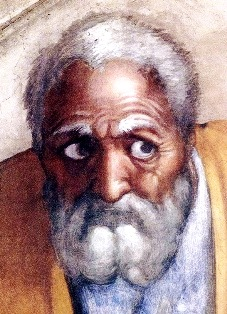
Anxiety’s a booger. It arises as an unwanted guest within our psyche, putting pressure on our chest, and becoming a squatter in the pit of our gut. To be anxious is to have a vague sense of dread, anticipating some upcoming threat.

Jacob knew the feeling well. His mind raced with thoughts of what might happen and how to placate Esau when he encountered his brother. Jacob left home two decades earlier to escape Esau’s vengeance. Now their meeting up was imminent. Jacob was scared spitless.

What do you do when distress and dread wrap you in a straitjacket of anxiety?

Avoid avoidance

The only way to deal with fear is to face it. Avoiding it prevents us from moving forward. It makes us anxious.  One way of facing your fear and/or anxiety is to name it. When fear, anxiety, terror, apprehension, or distress arises, then name it. In naming our fears and anxieties, they become real and, thus, manageable. 

“Every time your fear is invited up, every time you recognize it and smile at it, your fear will lose some of its strength.”

Thict Nhat Hanh (1926-2022)

Another way to face fear is to “sit with it” for a short while. Give yourself permission to feel the anxiety for a set amount of time without judgment or trying to get over it. Pay attention to where you are carrying your anxiety in your body.

Focus on what’s within your control

We cannot control other people. There’s no way Jacob was going to control or manipulate his brother Esau. Many circumstances are outside our control. And yet, we always have the choice of self-control. Giving into addictions, or not facing problems are ways of giving up control of ourselves. Taking good care of ourselves, and focusing on good attitudes are ways of strengthening personal control.

The Serenity Prayer is a good reminder in those times when we feel out of control:

God, grant me the serenity to accept the things I cannot change,

The courage to change the things I can,

And the wisdom to know the difference.

Promote a positive mindset

Positive attitudes help us widen our perspective on things – and with a broader view of things comes more awareness of choices. Making wise choices for ourselves now, builds resilience and fortifies us for difficult situations down the road – without succumbing to old unhealthy coping mechanisms.

Find purpose and meaning in life

Experiencing traumatic events might cause us to question whether our lives have meaning, or not. We may feel unnecessary or expendable, and see no meaning for the future. 

So, it’s important to discover or reconnect with the spirituality within you. Take the time and energy to read Scripture, walk through nature, or discuss matters of the spirit with others. Just as our physical spine helps to support us and is not optional, so we also have a spiritual spine that needs attention for which we cannot live without.

Get support

Other people, like trusted friends and family, can help us make a realistic assessment of the fear and anxiety we are experiencing. With the support of others, we become more confident that we can deal with issues. Finding a church or some other religious gathering can be a fresh means of emotional support.

You are not alone. We are all in this life together. So, let’s rely upon one another and not believe that we just need to pull up ourselves out of impending trouble. There is a God (and God’s people) who are ready to help, if but we just ask.

O God, preserve us from faithless fears and worldly anxieties, and grant that no clouds of this mortal life may hide from us the light of that love which is immortal, and which you have manifested to us in your Son, Jesus Christ our Lord. Amen.

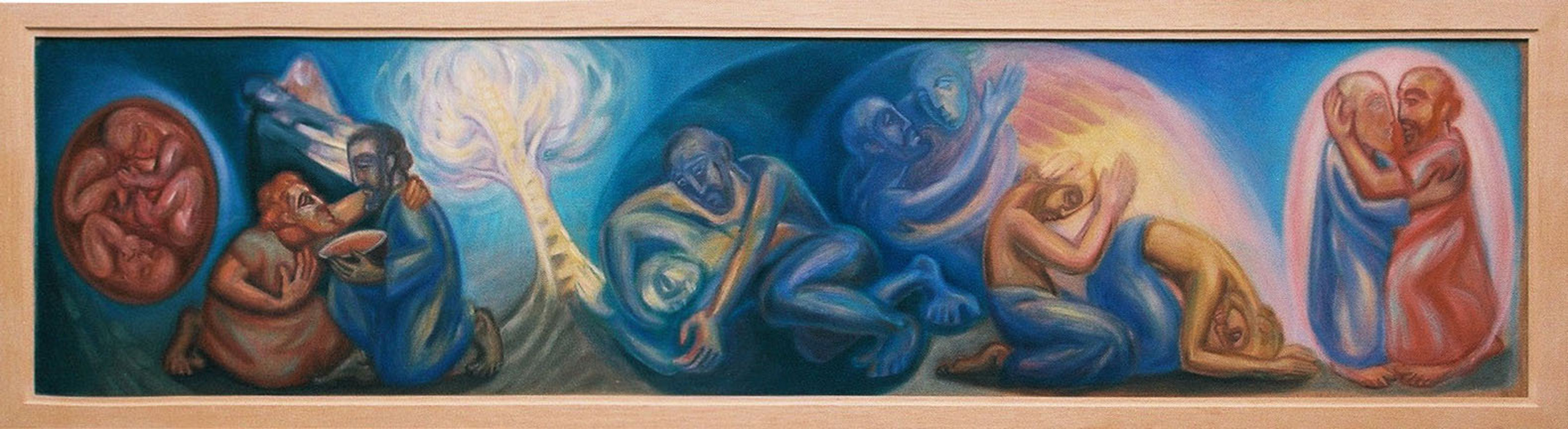
Genesis 33:1-17 – Brothers Reconciled

Jacob and Esau by Willow Winston
Jacob and Esau by British artist Willow Winston

Jacob looked up and saw Esau coming with his four hundred men. He divided the children between Leah and Rachel and the two maidservants. He put the maidservants out in front, Leah, and her children next, and Rachel and Joseph last. He led the way and, as he approached his brother, bowed seven times, honoring his brother. But Esau ran up and embraced him, held him tight and kissed him. And they both wept. 

Then Esau looked around and saw the women and children: “And who are these with you?” 

Jacob said, “The children that God saw fit to bless me with.” 

Then the maidservants came up with their children and bowed; then Leah and her children, also bowing; and finally, Joseph and Rachel came up and bowed to Esau. 

Esau then asked, “And what was the meaning of all those herds that I met?” 

“I was hoping that they would pave the way for my master to welcome me.” 

Esau said, “Oh, brother. I have plenty of everything—keep what is yours for yourself.” 

Jacob said, “Please. If you can find it in your heart to welcome me, accept these gifts. When I saw your face, it was as the face of God smiling on me. Accept the gifts I have brought for you. God has been good to me and I have more than enough.” Jacob urged the gifts on him, and Esau accepted. 

Then Esau said, “Let’s start out on our way; I’ll take the lead.” 

But Jacob said, “My master can see that the children are frail. And the flocks and herds are nursing, making for slow going. If I push them too hard, even for a day, I’d lose them all. So, master, you go on ahead of your servant, while I take it easy at the pace of my flocks and children. I’ll catch up with you in Seir.” 

Esau said, “Let me at least lend you some of my men.” 

“There’s no need,” said Jacob. “Your generous welcome is all I need or want.” 

So, Esau set out that day and made his way back to Seir. 

And Jacob left for Succoth. He built a shelter for himself and sheds for his livestock. That’s how the place came to be called Succoth (Sheds). (MSG) 

Repentance includes more than saying sorry. It also involves admitting wrong and making things right. This, then, lays the groundwork for an earnest attempt at reconciliation.  For example, the Christian does more than a simple acceptance and acquiescence of Jesus, if merely adding a bit of Christ to life will dash it up a bit and make it better. Rather, we are invited into the very life of Christ. This life turns us upside-down and inside-out in a new and radical allegiance.

Repentance and reconciliation are a way of life, as well as a necessary skill requiring development through continual practice and use. Broken relationships are the stuff of life, and we need gracious approaches to deal with them so that bitterness does not take root in our souls. Connection and peace between two people are a beautiful thing; it brings emotional health, spiritual wholeness, and life enrichment.

From the get-go, twin brothers Jacob and Esau in the Old Testament book of Genesis had a contentious relationship. At one point their relations were so bad that Esau was having some homicidal ideation toward his brother. Neither Esau nor Jacob handled things well between each other with Jacob leaving, finding a wife, and growing a family, and becoming wealthy. Twenty years passed before they came together again.

Jacob wrestling with God
Jacob Wrestling with the Angel of God by Jack Baumgartner, 2009

Jacob, knowing he was about to meet his brother, had an encounter with God that changed his identity from the old deceiver to the new Israel (Genesis 32:22-31).  In a demonstration of his new identity as Israel, Jacob worked at making amends for his old cheating ways by turning around the blessing he had stolen from his brother and then giving one back to him.

Jacob understandably had some dread in meeting Esau, considering what he had done to his brother in deceitfully taking both his birthright and blessing. Fresh from wrestling with God, Jacob demonstrated a newfound courage and humility through respect, gift-giving, and showing honor – reversing his past pattern of disrespect, stealing, and dishonor.

True turning away from what we have done wrong is by making things right. Merely having the feeling of being sorry is not repentance. Genuine repentance involves true sorrow; an earnestness to make restitution and reconciliation; an indignation over what happened; and, perhaps most importantly, a deep concern for the person(s) harmed by our wrongdoing (2 Corinthians 7:8-11).

The reconciliation between the brothers was a surprise because Jacob was not expecting Esau’s response. It seems Jacob was bracing for the worse, which would explain his high anxiety before the encounter. Esau’s gracious response was an answer to Jacob’s prayer.  For Jacob, seeing Esau’s face was like seeing the face of God – in fact, he saw both faces and lived!  Jacob likely would not have seen his brother’s face until he had first seen God’s. His divine experience prepared the way for the human encounter.

We all experience times when relationships unravel and need to be mended. Jacob procrastinated for twenty years before working at reconciliation with his brother. What made the difference for Jacob was trusting God, who always works out his promises, despite our human foibles.

May you know and experience the God who reconciles and restores, and in so doing extend that same earnestness to others.

Merciful God, I confess that I have sinned against you and against others through my own fault by thought, word and deed in things done and left undone. Especially I confess that I have _____.  therefore repent; for these and all my sins I am terribly sorry and pray for forgiveness. I firmly intend to make amends and seek for help. I ask for strength to serve you in newness of life through Jesus Christ, my Lord, in the power of your Holy Spirit. Amen.

Genesis 27:30-46 – “Bless Me, Too!”

Isaac Blesses Jacob by Yoram Raanan

After Isaac finished blessing him, and Jacob had scarcely left his father’s presence, his brother Esau came in from hunting. He too prepared some tasty food and brought it to his father. Then he said to him, “My father, please sit up and eat some of my game, so that you may give me your blessing.”

His father Isaac asked him, “Who are you?”

“I am your son,” he answered, “your firstborn, Esau.”

Isaac trembled violently and said, “Who was it, then, that hunted game and brought it to me? I ate it just before you came, and I blessed him—and indeed he will be blessed!”

When Esau heard his father’s words, he burst out with a loud and bitter cry and said to his father, “Bless me—me too, my father!”

But he said, “Your brother came deceitfully and took your blessing.”

Esau said, “Isn’t he rightly named Jacob? This is the second time he has taken advantage of me: He took my birthright, and now he’s taken my blessing!” Then he asked, “Haven’t you reserved any blessing for me?”

Isaac answered Esau, “I have made him lord over you and have made all his relatives his servants, and I have sustained him with grain and new wine. So, what can I possibly do for you, my son?”

Esau said to his father, “Do you have only one blessing, my father? Bless me too, my father!” Then Esau wept aloud.

His father Isaac answered him,

“Your dwelling will be
away from the earth’s richness,
away from the dew of heaven above.
You will live by the sword
and you will serve your brother.
But when you grow restless,
you will throw his yoke
from off your neck.”

Esau held a grudge against Jacob because of the blessing his father had given him. He said to himself, “The days of mourning for my father are near; then I will kill my brother Jacob.”

When Rebekah was told what her older son Esau had said, she sent for her younger son Jacob and said to him, “Your brother Esau is planning to avenge himself by killing you. Now then, my son, do what I say: Flee at once to my brother Laban in Harran. Stay with him for a while until your brother’s fury subsides. When your brother is no longer angry with you and forgets what you did to him, I’ll send word for you to come back from there. Why should I lose both of you in one day?”

Then Rebekah said to Isaac, “I’m disgusted with living because of these Hittite women. If Jacob takes a wife from among the women of this land, from Hittite women like these, my life will not be worth living.” (NIV)

The twins Esau and Jacob are the very definition of sibling rivalry. Even at their birth, they jostled and positioned for their entry into the world. Although brothers, they were different from one another in every way. As their aged father, Isaac, was near the end of his days, he was looking to pass on a family blessing to Esau, the firstborn. And that’s where things got dicey.

Jacob, always the trickster, was still playing out the rivalry. When his brother Esau was out hunting and preparing to receive his father’s blessing, Jacob posed as his brother and deceitfully gained the blessing of Isaac. Both Isaac and Esau were shocked to discover what happened. Esau’s response was one of grief, disappointment, bitterness, with tears and weeping. Despite Esau not being known for his sensitivity to God or family before this event, we can certainly feel his cry: “Do you have only one blessing, my father? Bless me too, my father!”

Blessing with hands

The blessing. As a chaplain who works with behavioral health patients, I have heard many times over the lament of individuals without a blessing from their father. As people created in the image and likeness of God, we were meant to be blessed – to have a loving and enduring stamp of approval from both our heavenly Father and our earthly fathers. And when an earthly father, or father figure, either cannot or will not extend a vital blessing to children, it is a terrible wound – like an invisible open putrid abscess which continually leaves the person emotionally and spiritually sick.

Blessing is needed. Without blessing we flounder in the world, struggling to see hope, wondering if we are loved, and lacking confidence in our faith. To be blessed is to receive a beautiful gift. The term “blessing” in Scripture is a powerful communication of God’s presence and approval. So, when humans bless one another, we offer commitments of love and connection. We provide powerful words of encouragement and picture a special future for those we are close to.

None of this is optional. Blessing is God’s way of building up one another and fortifying each other for the rigors of this world. When blessing is withheld, and even worse, when it is replaced with cursing, then individuals are bereft of support to face stressful situations. Like a ship adrift without any power or wind, so the person trying to live in this world without blessing is dead in the water. Where there is no blessing, like Esau, revenge fills our hearts.

Jesus clearly understood the need and the power of blessing, and he was not deterred in deliberately offering it:

People were bringing little children to Jesus for him to place his hands on them, but the disciples rebuked them. When Jesus saw this, he was indignant. He said to them, “Let the little children come to me, and do not hinder them, for the kingdom of God belongs to such as these. Truly I tell you, anyone who will not receive the kingdom of God like a little child will never enter it.” And he took the children in his arms, placed his hands on them and blessed them. (Mark 10:13-16, NIV)

I wonder how this simple encounter affected the lives of those children on that day in which Jesus blessed them. I am curious in what ways they grew-up and how Christ’s blessing shaped their lives. Because that is what blessing does: it forms us into the kind of people we were meant to be.

Receive today this blessing from Holy Scripture:

The Lord bless you and keep you;
the Lord make his face to shine upon you, and be gracious to you;
the Lord lift up his countenance upon you, and give you peace. Amen. (Numbers 6:24-26, NRSV)