Waiting with Hope (Romans 8:22-25)

Art depicting cracked earth, a dry riverbed, white plastic shapes, a lack of life and the red glow of fire. The figures are separated, lacking any real connection. By artist Chris De Hoog

For we know that all creation has been groaning as in the pains of childbirth right up to the present time. And we believers also groan, even though we have the Holy Spirit within us as a foretaste of future glory, for we long for our bodies to be released from sin and suffering.

We, too, wait with eager hope for the day when God will give us our full rights as his adopted children, including the new bodies he has promised us. We were given this hope when we were saved. (If we already have something, we don’t need to hope for it. But if we look forward to something we don’t yet have, we must wait patiently and confidently.) (New Living Translation)

Salvation is not only personal; it’s also cosmic.

That is, freedom from the power of sin, death, and hell is not only for an individual person, but this deliverance is for all of creation, for the entire earth.

So then, all of creation – not just people – long for and groan for the advent of Christ. My oak tree in the backyard longs for it. My dog whines for it. When it rains, the sky is wondering how long it will have to keep up its tears.

Together with the entire cosmos, we look forward to the complete fulfillment of our inheritance as God’s creation, as God’s creatures.

Since that is true, it is Christians who need to see the privilege and responsibility of conducting ourselves with unity, harmony, and non-violence. We are to live this way because we are foreshadowing the end of the world’s story.

There is a day coming when there will be no more malevolent and selfish posturing for power and control. No more oppression and victimization. No more injustice.

And we have the chance to begin living that way now, and not only in a future time. We get to do this because of Christ.

But that doesn’t mean we don’t suffer anymore. Presently, along with all creation, we have pain like that of a woman in childbirth. This is no papercut inconvenient pain; this is “I hurt like hell” pain. That sort of pain has us awaiting the redemption of our bodies.

I work as a hospital chaplain. Every day, I see suffering, some of it unimaginable. I listen to stories of people longing for healing, and grasping at hope. And I hear plenty of groaning (both the actual physical groans, as well as the more quiet internal sighs and groans).

I say to you: The human body is not meant to be destroyed. Our physical selves are not destined for elimination. No, our bodies are meant to be redeemed; they are meant for salvation. It will not always be this way!

So, we hope.

The Christian has the confident expectation that not only is the soul redeemed, but the body, as well. We can enjoy spiritual salvation now. But we must wait for the physical deliverance. There must be patience on our part until Resurrection Day.

The Apostle Paul was calling on believers to hope. Five times he said it in only two verses. Paul was emphasizing the need for spiritual endurance because we have not yet arrived.

In case you haven’t noticed, we aren’t in heaven; this isn’t a renewed earth; people around the globe are not all presently singing kumbaya together.

Therefore, it is imperative that we live with the tension between the “now” and the “not yet.” It’s a weird existence, this Christian life. But, in reality, we exist in the paradox of being saved now, and not yet being saved.

Another way of putting this is that God’s adopted children have not yet received their inheritance.

But that doesn’t mean we’ve been left to ourselves. We have the first fruits of our salvation: the Holy Spirit.

We presently, right now, enjoy a real and significant portion of God’s freedom and deliverance. We have God’s gift of presence. There is the continuing presence of Jesus Christ with us, the blessed Holy Spirit.

And this divine presence is what today helps us to endure and hold onto hope. By holding this future hope, we learn to accept, cope, and transcend our circumstances through love.

Therefore, since we have been made right in God’s sight by faith, we have peace with God because of what Jesus Christ our Lord has done for us. Because of our faith, Christ has brought us into this place of undeserved privilege where we now stand, and we confidently and joyfully look forward to sharing God’s glory.

We can rejoice, too, when we run into problems and trials, for we know that they help us develop endurance. And endurance develops strength of character, and character strengthens our confident hope of salvation. And this hope will not lead to disappointment. For we know how dearly God loves us, because he has given us the Holy Spirit to fill our hearts with his love. (Romans 5:1-5, NLT)

The very suffering which we so often try to avoid and get out of, becomes the means of connecting us with Christ and with others.

The problem becomes the answer.

The Spirit groans with our own spirit, and we all become connected together.

I point out, however, that not everyone wants this sort of connection. There are many people who want nothing to do with solidarity.

Some folks want to remain in their own little huddle or small world; and they take offense at anyone outside of their group who seeks to understand and connect with that group’s suffering.

Although everyone’s pain and suffering is unique – and no one can fully know another’s sorrow – that does not mean solidarity and connection are impossible, or undesirable.

I don’t need to have cancer in order to connect with a cancer patient. I don’t have to become victimized to show genuine empathy and extend competent comfort. Yet, sadly, some persons only want connection and consolation from a certain person or group.

But I say to that: Who are you to tell God whom God can love you through?

To suffer is one thing, because we all must suffer in some way. But to compound your suffering by your own volition is another thing altogether.

You deserve better than harming yourself through cutting off help.

It could be that today is the day you reach out to that person you know will be there for you. Or, perhaps now is the time to quite putting off making space for prayer and reflection.

Whatever it is that you need to do, it’s okay to do it, without putting it off until tomorrow.

Lord Jesus Christ, by your patience in suffering you hallowed earthly pain and gave us the example of obedience to your Father’s will: Be near me in my time of weakness and pain; and sustain me by your grace, so that my strength and courage may not fail. Heal me according to you will; and help me always to believe that whatever happens to me here is of little account if you hold me in eternal life. Amen.


How Long, O Lord? (Psalm 80)

Hear us, Shepherd of Israel,
    you who lead Joseph like a flock.
You who sit enthroned between the cherubim,
    shine forth before Ephraim, Benjamin and Manasseh.
Awaken your might;
    come and save us.

Restore us, O God;
    make your face shine on us,
    that we may be saved.

How long, Lord God Almighty,
    will your anger smolder
    against the prayers of your people?
You have fed them with the bread of tears;
    you have made them drink tears by the bowlful.
You have made us an object of derision to our neighbors,
    and our enemies mock us.

Restore us, God Almighty;
    make your face shine on us,
    that we may be saved.

You transplanted a vine from Egypt;
    you drove out the nations and planted it.
You cleared the ground for it,
    and it took root and filled the land.
The mountains were covered with its shade,
    the mighty cedars with its branches.
Its branches reached as far as the Sea,
    its shoots as far as the River.

Why have you broken down its walls
    so that all who pass by pick its grapes?
Boars from the forest ravage it,
    and insects from the fields feed on it.
Return to us, God Almighty!
    Look down from heaven and see!
Watch over this vine,
    the root your right hand has planted,
    the son you have raised up for yourself.

Your vine is cut down, it is burned with fire;
    at your rebuke your people perish.
Let your hand rest on the man at your right hand,
    the son of man you have raised up for yourself.
Then we will not turn away from you;
    revive us, and we will call on your name.

Restore us, Lord God Almighty;
    make your face shine on us,
    that we may be saved. (New International Version)

What do you do when your life is not going as expected? How do you deal with the confusion of unwanted circumstances you didn’t ask for?

Nobody willingly signs up for chronic pain, constant hardship, debilitating situations, and unanswered prayer. And yet, all of us know what it feels like to have our hearts broken over a child, parent, or relative; or to be grief-stricken with either a physical malady, mental disease, emotional disorder, spiritual abuse, or some combination of them.

The psalmist most certainly knows your difficulty and your pain. That’s because he intimately knew God – and still had questions! In fact, all of us who worship and adore the Lord have faced the conundrum that God seems, at times, to be missing in action.

We may wonder, like the psalmist, where the God of the past is. Where is the One who manhandled enemies, provided for the godly, and brought abundant life? The Lord might sometimes seem to be foreign to our human condition, and far from our human experience of things.

There are plenty of stories in the Bible about God doing the miraculous, bringing deliverance, and extending help in dire situations. Yet, for many, in this present time, there is silence. Prayer after prayer brings nothing but bupkis from God. A sullen angst can easily settle into our spiritual bones.

It could also be that people we love and care for are experiencing too many hardships, boatloads of anxiety, and are wracked with worry. And we wonder why God has not risen up to answer our prayers on their behalf.

How long, Lord? Will you forget me forever?
    How long will you hide your face from me?
How long must I wrestle with my thoughts
    and day after day have sorrow in my heart?
    How long will my enemy triumph over me? (Psalm 13:1-2, NIV)

The very fact that with only a cursory look at the news there are children dying in war, senseless murders in the streets, and wanton destruction throughout the world, we may cry out, “Where is God in all this? Wake up! How long, O Lord, must we endure this!?”

Even the small tragedies of life might push us beyond what we can bear, because grief is stacked upon grief in a big lamentable sandwich of spiritual hurt. And if God seems nowhere to be found, our afflictions are multiplied.

The psalmist drew upon agricultural metaphors that his culture was quite familiar with. A society of farmers knows how much hard work is involved in their vocation – and the hours of anxiety and concern for the field to produce some crops and bear some fruit.

Farmers very much realize the power that nature can do through either drought or flood, hail or wind. The picture of the attentive farmer, gardener, and vinedresser is an apt picture of how God looks upon us.

I grew up on an Iowa farm. I have an intimate understanding of the requirements for tending to the land so that it will produce a crop, and yield a good harvest. Like many jobs, farming isn’t something that requires the same amount of attention every single day.

There are times and seasons for a high degree of activity, like planting in the Spring and harvesting in the Fall. At other times, there isn’t much to do but wait.

By no means does the farmer expect the plants to grow overnight. The faithful farmer learns to be patient, knowing that it will be weeks before anything breaks the ground; and that it will take all summer for the crops to grow and mature before they are ready for harvest.

In those times of inactivity, the corn stalks don’t start talking to one another about where the farmer went to, and whether he is off fishing or not. Even though the farmer is absent, the actions of the farmer are still very much evident.

Our own wonderings and questions about God’s presence and absence are all understandable and valid. Yet, we must keep in mind that there is continual evidence all around us that the Lord has been at work, and is still laboring as the Divine Gardener in ways we cannot see.

God is continually watching over us, ensuring that we have the proper conditions of sun, water, and good soil in order to grow, thrive, and produce a harvest of righteousness. We will still face the adverse circumstances of inclement weather, unfavorable weeds, and pests eating on and around us. Yet, we already and always have everything we need to live a successful spiritual life – without choking or starving to death.

We are not going to have all of our questions answered this side of heaven. We are, however, assured that God is good and can restore us when we are broken or failing to thrive. However, it just might take some time to do it, that’s all.

O God of heavenly powers, by the might of your command, drive away from our bodies all sickness and infirmity, and everything that brings us ill health of either body, mind, or spirit. Be present in your goodness with all your servants who are in need, that their weakness may be banished and strength restored; and that, with health renewed, they may bless your holy Name. Amen.

Hang In There (1 Corinthians 7:17-24)

Nevertheless, each person should live as a believer in whatever situation the Lord has assigned to them, just as God has called them. This is the rule I lay down in all the churches. Was a man already circumcised when he was called? He should not become uncircumcised. Was a man uncircumcised when he was called? He should not be circumcised. Circumcision is nothing and uncircumcision is nothing. Keeping God’s commands is what counts. Each person should remain in the situation they were in when God called them.

Were you a slave when you were called? Don’t let it trouble you—although if you can gain your freedom, do so. For the one who was a slave when called to faith in the Lord is the Lord’s freed person; similarly, the one who was free when called is Christ’s slave. You were bought at a price; do not become slaves of human beings. Brothers and sisters, each person, as responsible to God, should remain in the situation they were in when God called them. (New International Version)

Whenever a person converts to Christianity and becomes a follower of Jesus, they experience new life. They don’t, however, experience reincarnation. They’re still the same person – not a different one altogether.

If the convert was married, it doesn’t matter if their spouse is a convert, or not; they’re still married and need to hang in there and remain married, albeit with a new way of being with them.

There is no magical wiping away of situations, circumstances, jobs, family, and relationships with becoming a Christian. Hopefully, a new orientation of grace, truth, and love begins to permeate it all. But all those people and situations are still there, and need to be dealt with.

So, the Apostle Paul gave some very practical social instruction to the Corinthian converts to Christ. He was rather pointed in communicating to them in not using the occasion of conversion to go someplace else and/or be with someone else. Nor is it proper to daydream of a reincarnated life; stick with the new redeemed life you have received.

The place where you became a Christian is the place to start living the Christian life. Obey God, follow the Lord’s words and ways, live out your redemption right there. Why? Because your new identity as belonging to God – not your marital status, vocation, or anything else – defines your life and determines how you are to live. And Paul was consistent on that instruction in all of the churches he established.

For the Jew in Paul’s day, circumcision was the defining mark of religion and identity. To marry an uncircumcised non-Jewish person was unthinkable; it defiled a relationship and made it impure. But the Apostle insisted that Jewishness (or non-Jewishness) isn’t actually the point of living the Christian life. What’s really important is obeying God’s call and following Christ’s commands, period.

Therefore, the convert ought to stay where they are – no matter what their marital status or social position is. Believing in Christ and following Jesus transcends all of it. Whether one is a slave, or not, faith obliterates any and all obstacles to God. If a person comes to faith and converts to Christianity, they still might be in human bondage; but they have freedom in Christ.

Hopefully, the slave’s spiritual freedom will work itself out in actual physical freedom. The point, however, is that – whether slave or free – the person belongs to God and neither bondage nor freedom will ever hinder the individual from realizing spiritual redemption.

In many different ways, we are all both slaves and free persons. The best situation is to be a bondservant of Christ and a slave to no one else. Yet, if circumstances are not ideal, the reality is that one’s union with Christ can never be severed by any human institution or authority.

Once we convert, and enter into a life-giving free relationship with God in Christ, Paul exhorts all believers to be vigilant: Don’t slip back into old ways of spiritual bondage and capitulate to a shameful society. After all, Christ – whom the convert serves – has paid the true ultimate sacrifice of himself on the cross for the sake of all humanity.

So, hang in there, stay in the place and position where you were called by God, and reorient your life with Christ in the middle of it. In doing this, every believer can persevere through adversity, hold onto the gift of faith, and make a difference in the society to which one belongs.

Blessed and holy God, grant us the Spirit of wisdom and discernment so that we may know Christ better and love you more. Give us an understanding heart so that we may be open to hear your divine voice, and the courage to walk in the way of your commands.

Use us, your people who belong to Christ, to be your hands and feet – your voice and heart, so that we may be a channel through which you pour out your grace to help others – may we decrease and Christ increase, so that Jesus is seen in our lives, through the power of the Holy Spirit. Amen.

Remember… (1 Thessalonians 2:9-13)

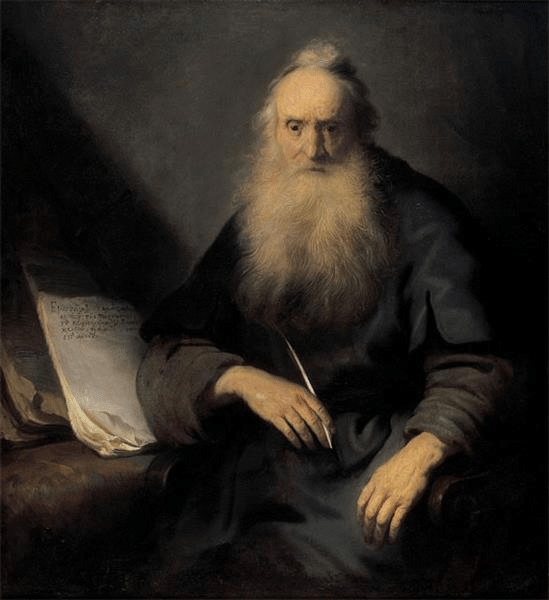
St. Paul writing to the Thessalonians, by Jan Lievens, c.1629

Surely you remember, brothers and sisters, our toil and hardship; we worked night and day in order not to be a burden to anyone while we preached the gospel of God to you. You are witnesses, and so is God, of how holy, righteous and blameless we were among you who believed. For you know that we dealt with each of you as a father deals with his own children, encouraging, comforting and urging you to live lives worthy of God, who calls you into his kingdom and glory.

And we also thank God continually because, when you received the word of God, which you heard from us, you accepted it not as a human word, but as it actually is, the word of God, which is indeed at work in you who believe. (New International Version)

The Christian believers in Thessalonica were becoming discouraged. The church sincerely believed that Jesus was coming soon… any day he could show up!

But as time went on, and Jesus was still nowhere to be seen…

the Thessalonians began losing their spiritual resolve…

started wondering if they had missed out on something…

began doubting if it was all real…

started slipping spiritually.

Missed expectations can be difficult to deal with. Maybe we have been praying for someone or something for so long that we wonder if it will really happen; or secretly question if something is wrong with us. Yet, maybe God simply wants us to wait… to be patient and to persevere… maybe the answer is closer than we think.

Since the church was becoming discouraged, the Apostle Paul reminisced with them. He wanted them to remember and not forget about what God had done in their lives. The Thessalonians desperately needed a faith for the long haul.

Remembering is a prominent theme in Scripture. Well over a hundred times we are told to remember:

  • God’s covenant and actions on behalf of people
  • Those less fortunate than us
  • Important people in our lives who influenced us in our journey of faith

In order to steel the church for a faith that lasts a lifetime, Paul reminded them of his own example, his own character, his ministry among them, and how they initially came to faith.

Paul was trying to inspire the believers with his own model of faithfulness, so that they would persevere in their Christian lives and not give up. He reminded them of his hard work in order to preach the gospel to them. The picture that Paul painted for them is having done whatever it took to make the good news of Jesus Christ known to the Thessalonians. 

Who were the people in your life that went out of their way to communicate the gospel to you both with words and with actions? 

Who were those persons who labored behind the scenes in prayer so that you and others would know Jesus? 

If any of those persons are still around, and you know where they are, remember them. Drop them a note. Express to them a simple thank you for their influence in your life. In doing so, you will not only encourage that person, but it will help you remember and re-engage with something in your life that you may have forgotten or taken for granted.

Paul was not shy about reminding the Thessalonians concerning the way in which he interacted with them. He did this not because he was trying to illicit some praise for himself, but because he wanted the church to emulate his character. 

That particular character is described as holy, righteous, and blameless. And we are to emulate Paul in these character qualities. These three words refer to the full range of relationships we encounter on a daily basis: with God, the church, and the community. 

Holiness in our relationship with God means that we have been set apart completely in Christ, so that we say and do nothing impure. 

Righteousness in our interactions with fellow believers in Jesus means we are in right relationship with them, so that there is nothing that hinders or stands between us. 

Blamelessness in our relations with the world means that the ways we live and work among outsiders are ethical and consistent with being a Christian.

Paul described his ministry as one of encouraging, comforting, and urging the believers to live lives worthy of God. He expected the Thessalonians to live into their callings as believers in Jesus. 

Encouragement refers to the ministry of coming alongside others and telling them what they need to do both in teaching and by example. Comfort refers to consoling others with the gospel. The word “urge” in the NIV is the word for “witnessing” which is a reference to the reality that Paul was constantly living his life in such a way that proclaimed Jesus to others.

The Thessalonians had received the Word of God; and this was an occasion to thank God for it. Each time we recall and remember what God has done for us through others and through God’s Word, we need to offer thanks. God’s Word is implanted within us, then takes root, grows, and produces a harvest of righteousness for those who have been disciplined by it.

We must remember those who brought us the Word of God; and to remember how they treated us, and what they did for us. Then, we must be obedient to what we learn. 

There are several needs we have as followers of Christ: 

  • intimate relationships in the church
  • to be mentored, and mentor others, in the faith
  • the power of God’s Word
  • our callings as Christians 

We forget these needs too easily – which is why repetition is a good thing. For example, each time we celebrate a baptism, it causes us to remember our own baptisms, and to live into our callings as Christians. Or when we move through the worship liturgy, we remember our sinfulness, God’s forgiveness, and our responsibility to live according to God’s Word. 

Our lives, our work, and our worship might seem plain and ordinary. However, the majority of life is lived in the mundane. The tangible reminders we can put in front of us are important, so that we never forget the spiritual experiences God has given us. (i.e. Deuteronomy 27:2-3)

We are meant to live our Christian lives in a vital connection with Christ and other believers. We will continue to persevere and thrive in the faith, when we remember those who have gone before us, and allow those here in the present to journey with us along this road of faith.

Blessed God, continue the good work begun in me; that increasing daily in wholeness and strength, I may rejoice in your goodness; and so order my life always to think and do that which pleases you, through Jesus Christ our Redeemer. Amen.