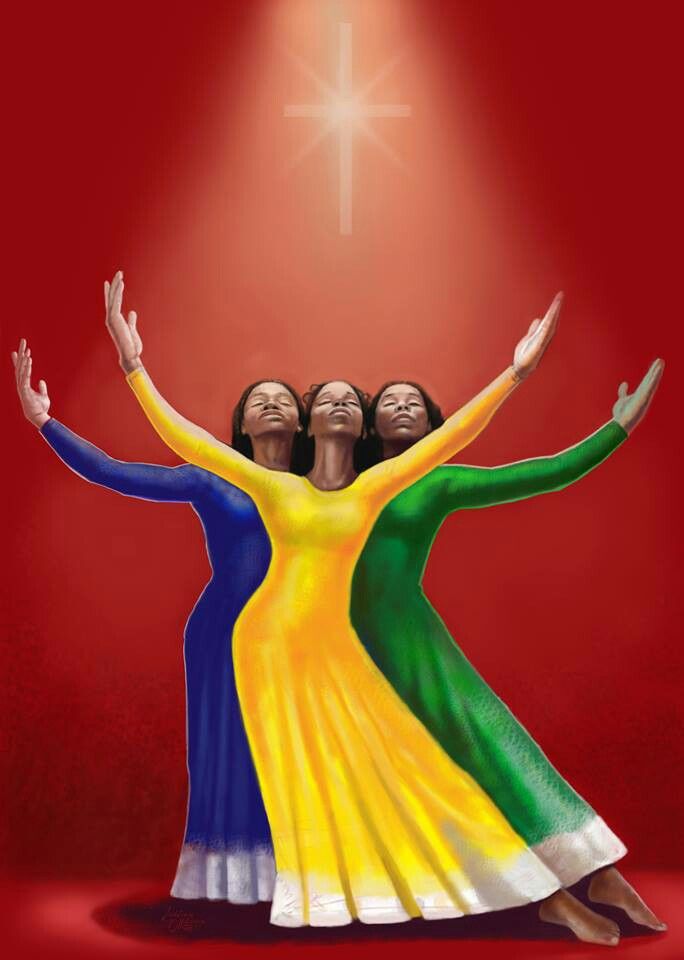
Both Body and Soul (1 John 4:1-6)

Dear friends, don’t believe everyone who claims to have the Spirit of God. Test them all to find out if they really do come from God. Many false prophets have already gone out into the world, and you can know which ones come from God. His Spirit says that Jesus Christ had a truly human body. But when someone doesn’t say this about Jesus, you know this person has a spirit that doesn’t come from God and is the enemy of Christ. You knew this enemy was coming into the world and now is already here.

Children, you belong to God, and you have defeated these enemies. God’s Spirit is in you and is more powerful than the one who is in the world. These enemies belong to this world, and the world listens to them, because they speak its language. We belong to God, and everyone who knows God will listen to us. But the people who don’t know God won’t listen to us. This is how we can tell the Spirit that speaks the truth from the one that tells lies. (Contemporary English Version)

Sometimes, it’s not what in someone says, but in what they don’t say.

The Apostle John gave some spiritually sage advice to a group of his disciples. They were being influenced by people who claimed Christian faith yet were not the real deal. Lots of people make claims, but the real muster of a Christian is in embracing an embodied spirituality that truly meets the holistic needs of others.

For John, affirming Christ’s deity, while denying Christ’s humanity, is unacceptable; he had no room for the Platonic Greek dualism of body and spirit. 

Jesus was a real man with a very real body. To deny this was to deny the faith. Ethereal musings about the insignificance of the body were flatly rejected by John. The apostle was concerned that the supreme Christian ethic of love be practiced through attention to both body and soul. 

Words are important; they’re also insufficient. Actual demonstrations of love are needed, as well. To downgrade or deny a bodily Jesus is to pay little attention to the real bodily needs of people. Christianity is a religion of both body and soul; it’s not a Greek philosophy of life.

I will be the first guy to insist on some deep theological reflection on the great spiritual, cultural, and social issues of our day. Yet, if our theology does not lead to tangible acts of love based on that reflection, then we have not yet been called God’s friend. 

Correct doctrine – embracing body and soul – leads to loving actions of faith. Ideally, we glorify God with both speech and service, physically and spiritually. Words and actions, heart and hands, must work together for an authentic Christian ministry.
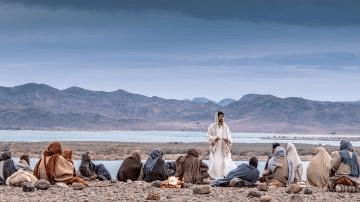
The Word became a human being and lived here with us. (John 1:14)

The early church councils condemned the denigration of Christ’s full humanity for good reason. Not only did Jesus have a real flesh and body experience while on this earth, but Jesus also healed actual bodies and performed real physical miracles.

Jesus Christ met both the spiritual needs of forgiveness and reconciliation, and the needs of the body. What’s more, Jesus had no ranking system, as if the spiritual needs were the real commitments whereas tangible needs were just a means to the end of meeting intangible obligations.

The Gospel involves both body and soul; they are equally significant. To exalt one above the other is, frankly, heresy. So, let’s put this in more practical terms: Love is more than an expression of good feelings and goodwill toward others; love has skin on, using both physical actions and words formed from our vocal chords to bring goodness to others.

Jesus has always maintained the connection between spiritual and physical needs; it’s us who separate them. It’s the spiritual charlatan, and the huckster preacher, who speak out of one side of their mouth about spiritual salvation with no bodily human help or uplift.

Those who are against Jesus, the spirit of the antichrist, talk a good line but when push comes to shove, they have no intention of paying attention to both body and soul.

Our gut knows that feeling we cannot quite shake when we are around someone. It has real meaning. The spirit within us is greater than the spirit of the world. Just because we may not be able to respond very well to another, or give clear voice to what is inside us, does not necessarily mean that the other person is okay or right.

A proper Christian response to others incorporates head, heart, and gut. The interaction and alignment of all our faculties is needed. If we draw upon our entire selves, both body and soul, we will overcome the spirit of the antichrist through loving words and actions toward those who need it most.

The Antichrist wants us to get caught up in putting all our focus fighting theological battles and debating philosophical ideas – while our neighbor next door is dying of cancer; our co-worker is experiencing covert racism; and, our friend is stuck in poverty.

Since Jesus is fully human, that fact alone ought to impel us toward meeting the needs of the body – without wondering if it is the spiritual thing to do, or not. You already know this to be true. So, don’t let some esoteric preacher or teacher tell you otherwise.

Almighty God, Creator and Preserver of all humanity, I humbly ask: Make your ways known to everyone, and your saving health to all nations. May your church everywhere be guided and governed by your good spirit, so that all who profess and call themselves Christians may be led into the way of truth, and hold the faith in unity of spirit, in the bond of peace, and in righteousness of life.

Caring God, in your parental goodness, lift up those who are afflicted or distressed, in mind, body, or spirit. Comfort them and meet their every need, giving them patience under their sufferings, and a good outcome of all their afflictions. This we ask for the sake Jesus Christ your Son, our Lord, who with you and the Holy Spirit reign forever. Amen.

Whole Person Love (1 Thessalonians 4:1-12)

As for other matters, brothers and sisters, we instructed you how to live in order to please God, as in fact you are living. Now we ask you and urge you in the Lord Jesus to do this more and more. For you know what instructions we gave you by the authority of the Lord Jesus.

It is God’s will that you should be sanctified: that you should avoid sexual immorality; that each of you should learn to control your own body in a way that is holy and honorable, not in passionate lust like the pagans, who do not know God; and that in this matter no one should wrong or take advantage of a brother or sister. The Lord will punish all those who commit such sins, as we told you and warned you before. For God did not call us to be impure, but to live a holy life. Therefore, anyone who rejects this instruction does not reject a human being but God, the very God who gives you his Holy Spirit.

Now about your love for one another we do not need to write to you, for you yourselves have been taught by God to love each other. And in fact, you do love all of God’s family throughout Macedonia. Yet we urge you, brothers and sisters, to do so more and more, and to make it your ambition to lead a quiet life: You should mind your own business and work with your hands, just as we told you, so that your daily life may win the respect of outsiders and so that you will not be dependent on anybody. (New International Version)

Everyone intuitively knows that love is supremely important. Yet, what some may not realize is that love is designed to effect the entire person – body, mind, emotions, and spirit.

Love is spiritual. It involves receiving love from a spiritual source and using it to give love to others. (Matthew 22:37-40; Mark 12:29-31)

Love is emotional. It is a matter of the heart and must felt deeply. (1 Peter 1:22, 4:8)

Love is thoughtful. The human brain requires love in order to mentally mature and operate with efficiency. (Philippians 2:2; 1 Peter 3:8)

Love is physical. The body is our means of putting hands and feet to love. (1 John 3:17-18)

A true Christian spirituality is an embodied spirituality which puts both mental and emotional energy into loving God and one another.

Consider for a moment some of the things you have done today… For me, I arose early, had a workout, ate breakfast, showered, went to work, etc. Yeah, typical stuff we are familiar with. These things I just mentioned all have to do with the body – and those things are good and holy.

Sometimes we may get a misguided notion that purity and holiness only has to do with activities that take place in a church building; or special works like serving at a homeless shelter; or, that the meeting of physical needs is merely a means to reach the soul.

Yet, there is neither a secular/sacred dichotomy nor a dualism of body and soul anywhere in Holy Scripture. Love demands the whole person, not part of the person.

We in the western world have inherited a long tradition of Platonic thinking. It undergirds a lot about how we think of the body. Plato (c.427-327 B.C.E.) embraced a dualistic nature of people – an existence of body and soul in which the spirit is trapped within physical flesh. Plato considered the soul to be the true nature of a person and tended to denigrate the body as an earthen vessel which will eventually be discarded. Our physical existence was nothing more than a necessary evil for Plato.

The problem with Plato’s anthropology is that it fails to discern the holistic nature of body and soul and the need for integrity with these human dimensions. Historically, Plato’s view has tended to come out sideways through lack of care for the body and seeing bodily actions as insignificant.

Thus, sexual immorality is common with a dualistic idea because our physical selves are less significant, temporary, and disposable. In all fairness to Plato, he did not encourage misuse of the body or sexual immorality, yet his philosophy opened-up to generations of people in neglecting their own bodies and inflicting harm on other bodies.

When we exalt the soul as supreme over the body, we are living out platonic thought, and not biblical love.

All of life is sacramental – the body is sacred, and, so, ought to be treated as holy – with great care and careful attention to breath, movement, exercise, eating, sleeping, playing, and, yes, even sex. The body is to be celebrated as our means of glorifying God on this earth.

And, at the end of the age when Christ returns, we will be reunited with our bodies to live forever as embodied creatures. So, what we do with our bodies now matters to God.

Inattention to the body God has given us will inevitably lead to a lack of boundaries in which others are open to violate us and we are unaware of violating others. We end up running roughshod over each other, spiritually and physically.

In other words, disregard for the body creates a disregard for love. An embodied and grounded spirituality helps us clarify what holiness and sanctification looks like in relationships and everyday life.

God has called us to holiness in all of life, in every physical activity we do. We have been designed by our Creator to walk the road of purity and peace. 

The way in which we use our minds, wills, emotions, and bodies – aligned and in agreement with the whole person – are of much interest and great concern and interest to almighty God. 

God cares about:

  • Food and whether I eat to his glory and give thanks; or, whether I have no interest in those that are hungry but just stuff as many groceries as I can in my distended stomach. 
  • Rest and Sabbath; or whether I compulsively work every waking moment of my life. 
  • Vocal chords and the content of my conversations with my family and friends – whether I am using my tongue for encouraging and building-up others, or whether it is slanderous, gossipy, and unhelpful.

Everything in all creation belongs to God – including me, you, and everything we do. God cares about all of life’s activities and leisure time because God is the Lord of Love.  

Whether tying our shoes or teaching a Sunday School class, it is all to be done with a sense of holiness and connection to the God that makes it all possible. 

Christian spirituality is an embodied spirituality. So, let us engage in all kinds of good loving works for the benefit of the body, whether little or large, with the time and talents God has graciously given us. 

Lord God, I belong to you – set apart and sanctified so that I may always walk in holiness and please you in everything I do. Help my life today to reflect the purity you have given me through your Son, the Lord Jesus.  May he be glorified through me now and always.  Amen.

1 Corinthians 15:42b-49 – Attention to the Body is Spiritual

It’s the same with the resurrection of the dead: a rotting body is put into the ground, but what is raised won’t ever decay. It’s degraded when it’s put into the ground, but it’s raised in glory. It’s weak when it’s put into the ground, but it’s raised in power. It’s a physical body when it’s put into the ground, but it’s raised as a spiritual body.

If there’s a physical body, there’s also a spiritual body. So, it is also written, the first human, Adam, became a living person, and the last Adam became a spirit that gives life. But the physical body comes first, not the spiritual one—the spiritual body comes afterward. The first human was from the earth made from dust; the second human is from heaven. The nature of the person made of dust is shared by people who are made of dust, and the nature of the heavenly person is shared by heavenly people. We will look like the heavenly person in the same way as we have looked like the person made from dust. (Common English Bible)

Laying around on clouds. Strumming harps. Perhaps chanting. Maybe an angel choir. Ethereal. Yes, quite disembodied. That’s the stereotypical idea when it comes to the afterlife for many people. Although many believers in Jesus realize heaven won’t be quite like that, they still might think of it as non-corporeal.

The stereotypical view really comes from Plato, not Scripture. The ancient Greek philosopher Plato (423-347, B.C.E.) believed the soul to be immortal and the body mortal. Hence, after death, an ethereal existence with no physical attributes. Plato saw death itself as an emancipation from the body.

A New Testament understanding of the body is that it’s perishable and will die. However, the body will be resurrected and become permanently imperishable. Just as Christ died and rose again, so shall we. Since Jesus was raised to new life with an actual spiritual body, complete with the scars of crucifixion, so humanity is raised to new life – not without a body but with a renewed one – and will be fit to exist with God forever.

“All the fullness of deity lives in Christ’s body.” (Colossians 2:9, CEB)

This all might seem like theological trivia or quibbling over philosophical musings. But when we mosey through the Bible, the body is important, lifted-up as equal to the spirit or soul. The material and the immaterial are not to be ranked in order of importance; they are to be held together as equal partners of personhood.

The Lord God formed a man from the dust of the ground and breathed into his nostrils the breath of life, and the man became a living being. (Genesis 2:7, NIV)

Body and soul belong together like a hand in a glove; like biscuits and gravy; or like copy and paste; Calvin and Hobbes; cupcakes and frosting; the moon and the stars; gin and tonic; bacon and anything; and, well, like Adam and Eve. Care of both the material and immaterial dimensions of personhood are vital and necessary.

Our bodies are the vehicles in which we do the will of God in the world. And the same shall be true after this life is over. The next life requires some full lungs to sing to the Lord; tongues to praise God; hands to lift high in worship; and feet to dance with the Trinity – not metaphorically but with actual plain speech and real live action.

We were made from dust, and to dust we shall return. But that isn’t the end of the story. Resurrection has the final say. Mortality will give way to immortality. The perishable will become imperishable. Temporal existence will cease and a permanent life, eternal life, shall endure without degeneration or entropy, with no disease, disorder, or death.

We, therefore, have hope – a confident expectation that it will not always be this way – a planet filled with pain, heartache, and grief. The tent of our present existence will be left behind for a grand mansion with God at the center – all things revolving around divine grace and love with the light of glory dispelling the night forever.

Our faith is embodied; and will be for all time. Embodied spirituality discerns all human dimensions—body, soul, heart, mind, emotions, and consciousness—as equal partners in bringing oneself into fuller personal alignment and engagement with the world.

Spiritual transformation is incomplete unless it encompasses the body. We need to be aware of and connected to our physical selves. Else, we lack wholeness and integrity. The body is not a platonic prison of the soul but a spiritual temple of the Holy Spirit. It is our home and the place where we meet with God.

A complete human being with a full-orbed spirituality is firmly grounded in the body, fully open to the spirit, and in community with others experiencing transformation from the inside-out.

One way of honoring our bodies is to incorporate them into our prayers. Here are some physical postures we can take when praying:

  • Sit with hands open, palms up, ready to receive grace and love from God.
  • Stand with hands open and raised overhead, and face toward ceiling/sky.
  • Kneel with head bowed (I personally use a kneeler. My knees aren’t what they used to be).
  • Kneel with hands/head in one of the positions described above.
  • Walk a prayer labyrinth.
  • Lie on your back (on your bed, the floor, the grass).
  • Lie face down with hands outstretched (prostrate).
  • Genuflect (bow) and make the sign of the cross.
  • Cupped hands facing up to receive blessing from God.
  • Deep breath in (saying “more of you”) and a full exhale out (saying “less of me”).

Our worship on this earth is training us for worship in the new heavens and the new earth. Paying attention to our bodies is good spiritual sense, not to mention being thoroughly biblical.

Almighty God, Creator of heaven and earth, we await your divine presence in our lives – not as we expect or imagine – but just as it is. We allow and invite all the ministry of your Spirit into our lives. We accept whatever you give to us or withhold from us as a gift. And we will attend to our bodies and care for them as faithful stewards of this flesh and blood existence, through Jesus Christ our Lord. Amen.

An Embodied Spirituality

By Unknown artist

It is normal to feel guilty at this time of year about our bodies. Some of the more common goals for a new year are to lose weight, stop smoking, get in shape, have better sleep hygiene, and generally learn better self-care.  I am not going to add to the burden of guilt but emphasize something important: Our bodies are the vehicle given to us to glorify God. Our spirituality is quite embodied. (1 Corinthians 6:19-20)

One of the reasons we fail our bodies is that we do not always make the biblical connection of seeing our material selves with the same importance as the immaterial.  The Apostle Paul brought up a discussion about the body to the Corinthian Church because Corinth was a Greek city thoroughly imbibed with a Platonic philosophy of life.  At the core of Plato’s view of humanity was that the immaterial and the spiritual were of higher value than the body.  For Plato, the body is a necessary evil.  He referred to our souls as being imprisoned within the flesh.  When we die the soul is released and is freed from its bodily prison.

Western civilization has been significantly influenced, even today, by Plato’s view of humanity. Yet, that is not a biblical view of the body.  Instead of being a prison, the body is a temple, a sacred place which is no better and no worse than the soul.  When we die, we will not be disembodied souls, but will experience a bodily resurrection at the end of the age.  Eternity will be spent existing in a real glorified body free from sin. (1 Corinthians 15)

Since the body is sacred, and we glorify God with our bodies, then we must steward them just like we would steward any other physical material possession we own.  We have bought into Platonic philosophy when we treat our cars better than we treat our bodies.  If a warning light comes on in our cars, we get it checked by the mechanic.  He fixes the issue and tells us what we need to do to prevent it from happening again, and we listen to him. 

Far too often, when warning lights go off in our bodies, we ignore them until our bodies literally break down and we must go to the doctor.  And even then, the doctor tells us to do something, and we do not do it.  We never avoid the advice of our mechanic, and yet we do it with our doctor.  We need to adopt the biblical wisdom of glorifying God on this earth through our bodies. 

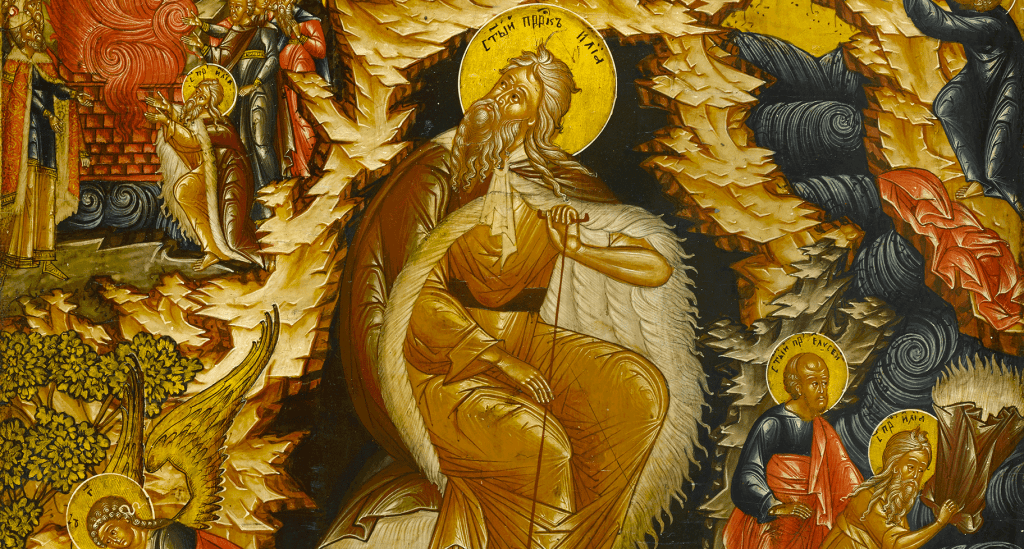
God’s care for our bodies can be found, for example, in the Old Testament prophet, Elijah. After Elijah experienced a great spiritual victory, he became the target of evil Queen Jezebel.  Elijah ran for his life and was severely burned-out from intense spiritual struggles with the queen’s prophets of Baal (1 Kings 19:1-3).  At that point, God did not come to Elijah and give him a sermon or exhortations about getting over it.  No, God restored Elijah’s body. And the Lord wants to restore our bodies, as well.

19th century Russian Orthodox icon of the prophet Elijah in the wilderness

First, Elijah needed sleep (1 Kings 19:5-6).  Millions of Americans are sleep deprived and live with a significant sleep debt (thus being continually cranky and out of sorts).  Insurance companies know this is a major issue because improper sleep habits have caused various auto accidents and fatalities. I once kept a crazy schedule with not many hours for sleep.  One day, during rush hour, I drove through a downtown expressway in bumper-to-bumper traffic and fell asleep.  I woke up about two minutes later and was still alive driving down the highway.  I sincerely believe God graciously drove the car for me.  That was my “wake up” call to change the way I was treating my body.

Second, Elijah needed to eat well (1 Kings 19:6-8).  For us, that means eating healthy.  One source of being overweight is failing to make the connection that eating is a spiritual activity.  Food is important to the kingdom of God.  It was eating that got us into trouble to start with and resulted in the fall of humanity.  Eventually, we will come full circle with eating being the activity we engage in at the end of the age – a redeemed view of food and eating together with Jesus at the marriage supper of the Lamb (Revelation 19:1-10).  God cares about food – what we eat and how much of it we consume.  He cares because we do not own our bodies – we steward them for God.

Third, Elijah needed some vigorous exercise (1 Kings 19:8-9).  He walked all the way to Mount Horeb, which was over a month’s travel.  But that exercise was essential to his well-being, both physically and spiritually.  It was only after he slept, ate well, and walked that Elijah was ready to meet with God in a powerful experience.

Our physical fitness is a spiritual issue, and so, needs prioritization.  I am under no illusions or delusions about the difficulty of this. I prefer brownies to broccoli and rather like sleeping instead of exercise. Yet, I work at being physically fit and caring for my body.  I am personally motivated toward health because I love God and want to please the Lord with my body. After all, my body was important enough to be redeemed through the Cross of Christ.

This is not about willpower – it is about Christian stewardship. I look at my body the same way I look at borrowing something from another person: I return it in the best condition I can. When the Lord takes me someday, I do not want it to be because I hastened my own death through disregard of my God-given body.

If I were God, donuts would be health food, sitting back in the recliner would build muscle, and two hours of sleep at night would be sufficient. But I am not God, so I submit to doing what it takes to have an embodied spirituality. We are to enjoy life through making the connection between the spiritual and the physical because that is the way God created us.

It is never too late to be a proper steward of the body.  Our physical anatomy is an amazing work of God and incredibly receptive to healthy choices. Here are a few of the choices we can make…

Remember the positives

Remember that care of the body is worth it.  Being fit feels great and equips us for the will of God.  Keep the long view in mind.  Sacrificing a temporary pleasure is worth the eventual gain.

Start small

I will not be doing any triathlons anytime soon, or ever. We need to be realistic and set appropriate goals without comparison to others. Start small and build up over time with slow incremental change. The place to begin is by rearranging our schedules so that our bodies become a priority.  Maybe it is time to make that doctor’s appointment you have been putting off.

Join others

Accountability and fun can and ought to go together. For example, preparing meals together is a chance to connect with a friend or family member. Discover and maintain a consistent rhythm of health that works for you and is enjoyable.

Reframe it

People often give up their best laid plans because they are disconnected from the rest of their lives. Reframing our view of the body as a spiritual activity helps connect and align our mind, body, and spirit in the wholeness God designed for us.

Start today

It takes time for something to become a habit. All good things are a process of realization. Consider and plan today, asking for God’s direction. Get the Lord in on it from the beginning and let it be an offering to him.

May you find the joy, contentment, and satisfaction of living with a body properly cared for and ready for use to the glory of God.