The Sheep Need Boundaries (Jeremiah 23:1-8)

“What sorrow awaits the leaders of my people—the shepherds of my sheep—for they have destroyed and scattered the very ones they were expected to care for,” says the Lord.

Therefore, this is what the Lord, the God of Israel, says to these shepherds: “Instead of caring for my flock and leading them to safety, you have deserted them and driven them to destruction. Now I will pour out judgment on you for the evil you have done to them. But I will gather together the remnant of my flock from the countries where I have driven them. I will bring them back to their own sheepfold, and they will be fruitful and increase in number. Then I will appoint responsible shepherds who will care for them, and they will never be afraid again. Not a single one will be lost or missing. I, the Lord, have spoken!

“For the time is coming,”
    says the Lord,
“when I will raise up a righteous descendant
    from King David’s line.
He will be a King who rules with wisdom.
    He will do what is just and right throughout the land.
And this will be his name:
    ‘The Lord Is Our Righteousness.’
In that day Judah will be saved,
    and Israel will live in safety.

“In that day,” says the Lord, “when people are taking an oath, they will no longer say, ‘As surely as the Lord lives, who rescued the people of Israel from the land of Egypt.’ Instead, they will say, ‘As surely as the Lord lives, who brought the people of Israel back to their own land from the land of the north and from all the countries to which he had exiled them.’ Then they will live in their own land.” (New Living Translation)

All of the Old Testament prophets have something to say on the subject of caring for the flock, that is, on the religious leaders of the people and their sacred responsibility to spiritually meet the needs of others.

God cares for each and every sheep (person) and will do whatever it takes to ensure the flock has everything they need for life and godliness.

So, the Lord’s ire is raised whenever shepherd-leaders don’t do their proper job and fail to live into their vocation of responsibly caring for the flock by watching over it and providing for them.

One of the modern forms this takes is expecting worshipers to serve the institution, rather than the institution existing to serve the worshiper. The telltale signs of institutional centrality in the Church (instead of Christo-centric religion) is continually pursuing the priorities of attendance, money, and the church building.

To put it more crassly, some churches seem to only care about buildings, budgets, and butts in the pew. This makes the people the burden-bearers of supporting the system, rather than the system of leaders supporting the people.

“You get what you tolerate.”

Henry Cloud

Admittedly, I just painted a picture with a broad stroke; furthermore, there is nothing inherently wrong with institutional religion (after all, I’m part of the established religion scene). It’s just that shepherds need to be continually vigilant about focusing their pastoral goals and efforts in ways which spiritually care for the common good of all the flock.

A major reason why there is so much fear and anxiety amongst believers is twofold:

  1. Spiritual leaders have too much power and responsibility over too many things, and so, less time and effort is put into pastoral care and compassionately ministering to the flock of God
  2. Churches give spiritual leaders too much power and responsibility, having unreasonable expectations for pastors
  3. Believers aplenty have given up on church

You might conclude (wrongly) that institutional forms of religion, such as churches, just need to be avoided. However, none of us can completely avoid systemic sin because it resides everywhere. Instead, we need to clarify what we will tolerate and not tolerate.

Abusive situations occur when there are no fences to keep everyone safe, secure, and well-fed. It’s important to have boundaries in place for the life and health of everyone.

What are “boundaries?”

Boundaries define who we are. A boundary shows me where I end and someone else begins, leading me to a sense of ownership. Knowing what I am to take and not take responsibility for gives me freedom.

No is a complete sentence.”

Anne Lamott

Why is it important to set boundaries?

  • Boundaries help us keep the good in and the bad out. Setting boundaries involves taking responsibility for your choices. You are the one who makes them, and the one who must live with their consequences.
  • Boundaries help protect us from “gaslighting.” Gaslighting is a form of emotional abuse in which one person manipulates another into doubting their thoughts, feelings, judgments, perceptions, and/or memories. Gaslighting convinces someone to accept the gaslighter’s version of reality at the expense of their own.
  • Boundaries hold people accountable for their words and actions. Without boundaries, we can easily feel used and mistreated.

What are some ways to set healthy boundaries?

  1. Clarify your values. Is this about preserving personal space? Do you want to make sure your emotions are not dismissed or invalidated? Are you trying to take back control of your time, energy, or resources?
  2. Decide where the fence will go. Where is your boundary line? What behaviors can you tolerate?  At what point does someone cross the line with you?
  3. Identify specific, problematic behaviors. What specific behaviors constitute unwanted trespassing on your life?
  4. Identify how a boundary violation is handled. Will you remove yourself from the situation, or step away from an unfinished argument?
  5. Follow through on the consequences. This is essential. If you’ve stated clearly what your boundaries are and they are crossed, make sure to do what you said you will do.

God makes and keeps boundaries and puts up reasonable fences in order that God’s people will be safe and cared for. The Lord also enforces those boundaries and has clear consequences when they are crossed.

The sooner we respect those divine fences, the better off we will be.

Almighty and everlasting God, breathe your Holy Spirit into our hearts and inspire us with love for goodness and truth. May we respect and honor you, and have no fear to hinder us from doing your will. Help us to be compassionate leaders and followers, knowing your compassion, being mindful of your love, and serving you faithfully, through Jesus Christ our Lord. Amen.

Deuteronomy 11:1-17 – Knowing Our Boundaries

Love the Lord your God and follow his instruction, his regulations, his case laws, and his commandments always. And know right now what your children haven’t known or yet witnessed:

  • The Lord your God’s discipline, his power, his mighty hand and outstretched arm.
  • The signs and the acts that he performed in the heart of Egyptian territory, against Egypt’s King Pharaoh and all his land.
  • What God did to the Egyptian army, to its horses and chariots—how he made the water of the Reed Sea flow over their heads when they chased after you, but the Lord destroyed them, and that’s how things stand right now.
  • What the Lord did for you in the desert, until you arrived at this place.
  • And what he did to Dathan and Abiram, the descendants of Eliab the Reubenite, when the ground opened its mouth and swallowed them, their families, their tents, and every living thing they possessed in the presence of all Israel.

Your own eyes witnessed each of these powerful acts the Lord performed. So, keep every part of the commandment that I am giving you today so that you stay strong to enter and take possession of the land that you are crossing over to possess, and so that you might prolong your life on the fertile land that the Lord swore to your ancestors to give to them and their descendants—a land full of milk and honey.

The land you are about to enter and possess is not like the land of Egypt, where you came from, where you sowed your seed and irrigated it by hand like a vegetable garden. No, the land you are entering to possess is a land of hills and valleys, where your drinking water will be rain from heaven. It’s a land that the Lord cares for: The Lord’s eyes are on it constantly from the first of the year until the very end of the year.

Now, if you completely obey God’s commandments that I am giving you right now, by loving the Lord your God and by serving him with all your heart and all your being, then he will provide rain for your land at the right time—early rain and late rain—so you can stock up your grain, wine, and oil. He will also make your fields lush for your livestock, and you will eat and be satisfied. But watch yourselves! Otherwise, your heart might be led astray so you stray away, serving other gods and worshipping them. Then the Lord’s anger would burn against you. He will close the sky up tight. There won’t be any rain, and the ground won’t yield any of its crops. You will quickly disappear off the wonderful land the Lord is giving to you. (Common English Bible)

“Boundaries define us. They define what is me and what is not me. A boundary shows me where I end and someone else begins, leading me to a sense of ownership. Knowing what I am to own and take responsibility for gives me freedom. Taking responsibility for my life opens up many different options. Boundaries help us keep the good in and the bad out.”

Henry Cloud

God has boundaries. The Lord doesn’t just flit about doing whatever seems alright for the moment. No, God is firmly secure as the divine Being. God has a deliberate will and way. The Creator God is not okay with created humanity having no boundaries. Since we are people created in God’s image, we are to reflect that image in all things, including having the established boundary of taking charge of our own spiritual lives and obeying the Lord in all things.

God has opened the way of redemption for wayward people. It came first in the incredible event of the exodus from Egypt, then in the culmination of our freedom through the cross and resurrection of Jesus Christ. 

Therefore, God expects us to live into this opportunity without blaming divine action or inaction for our problems, as if fault lies outside of us. Just because God stands up to people and does not cave into their demands and their whining does not make the Lord mean or unjust – it simply means God doesn’t need the props or accolades of people. God is secure enough to not be dependent on humans.

Divine expectations are quite clear on where the boundary lines fall: Love. Yes, indeed, it comes down to love. Love the Lord your God and always hold tightly to the law with its statutes, rules, and commandments. There is no fudge factor to that statement, scratching our heads wondering what we ought to be doing. If we obey God, we will discover life as it ought to be lived – free from all the machinations of the world’s brokenness and insecurity – and yet securely confined within godly boundaries. 

God can exhort people to be strong and take the land. That’s because the Lord made it possible for them to do so by acting in history. Therefore, God expects us to respond in obedience to the boundary lines established so that we will flourish and grow as people in a new land.

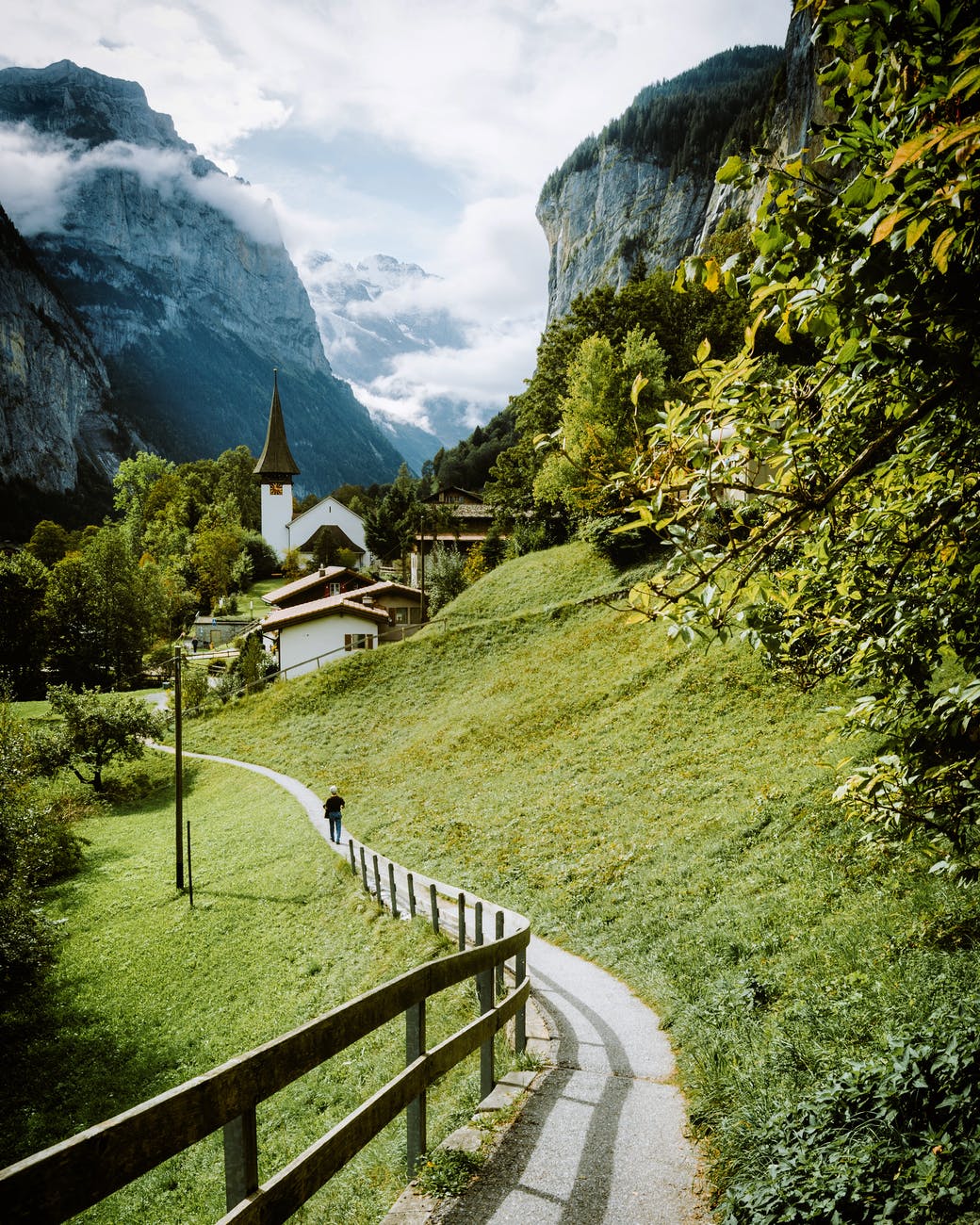
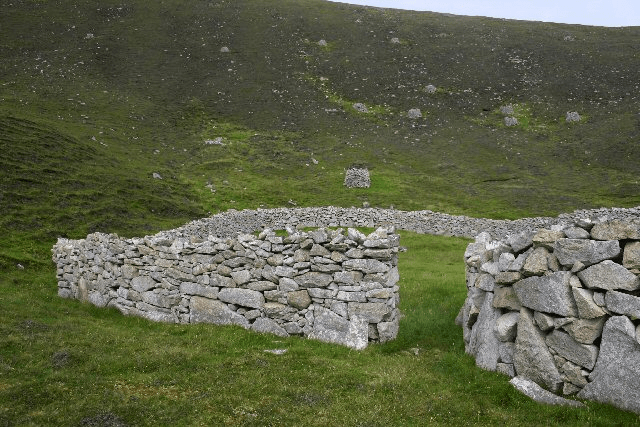
There is a big divine pasture for us to enjoy and thrive within. Yes, there is a fence around it, marking the boundary of where we can go. It is there for our benefit and protection, and not to simply keep us in line. Longing for the green grass on the other side of the fence is to be unaware of the vast beauty and foliage all around us.

For we already have everything we need – if we possess the awareness and the gratitude to see it.

Great God Almighty, I choose today to obey you in all things out of the grace given to me because of Jesus Christ.  I want to please you in all I say and do, so that you will be seen as the glorious and exalted king of the universe.  Help me to live up to my standing in Christ in the power of the Spirit as I step into your world with the keys of the kingdom.  Amen.

Deuteronomy 11:1-17

            God has boundaries.  That is, he does not just flit about doing whatever seems alright for the moment because he is firmly secure in who he is and what exactly he wants.  God is not okay with his creatures, us, having no boundaries.  Since we are people created in his image, we are to reflect him in all things, including having the established boundary of taking charge of our own spiritual lives and obeying him in all things.
 
            God has opened the way of redemption to his people, first in the incredible event of the exodus from Egypt, then in the culmination of our freedom through the cross and resurrection of Jesus Christ.  Therefore, God expects us to live into this opportunity without acting like all our problems are his fault.  Just because God stands up to people and does not cave into their demands and their whining does not make him mean or unjust – it simply means he doesn’t need people to give him props.  God is secure enough to not be dependent on humans.
 
            God is quite clear on what he wants, and where the boundary lines fall:  “You shall therefore love the LORD your God and keep his charge, his statutes, his rules, and his commandments always.”  There is no fudge factor to that statement, scratching our heads wondering what we ought to be doing.  If we will obey God, we will experience life as it ought to be lived – free from all the machinations of sinful brokenness and insecurity, yet, securely confined within godly boundaries.  God can tell his people to be strong and take the land because he has made it possible for them to do so.  He has acted in history, and expects us to respond in obedience to the boundary lines he has established that will allow us to flourish and grow as people in a new land.
            Great God Almighty, I choose today to obey you in all things out of the grace given to me because of Jesus Christ.  I want to please you in all I say and do, so that you will be seen as the glorious and exalted king of the universe.  Help me to live up to my standing in Christ in the power of the Spirit as I step into your world with the keys of the kingdom.  Amen.