No Class (1 Corinthians 11:17-22)

In the following directives I have no praise for you, for your meetings do more harm than good. 

In the first place, I hear that when you come together as a church, there are divisions among you, and to some extent I believe it. No doubt there have to be differences among you to show which of you have God’s approval. 

So then, when you come together, it is not the Lord’s Supper you eat, for when you are eating, some of you go ahead with your own private suppers. As a result, one person remains hungry and another gets drunk. 

Don’t you have homes to eat and drink in? Or do you despise the church of God by humiliating those who have nothing? What shall I say to you? Shall I praise you? Certainly not in this matter! (New International Version)

The memory of the Last Supper with Jesus and his disciples is one that has significantly shaped church history. In the earliest church, we see from the Apostle Paul how impactful table fellowship was for the believers.

Paul received the words of faith, and passed them on to the churches he established, including the church at Corinth. The Apostle faithfully engaged in handing down a tradition which Christians practice all over the world, even today.

The Corinthian Church had devolved into a bunch of divided special interest groups. They were in great need of unity in order to reflect being the one Body of Christ. The divisions fractured their worship, especially their communion with one another.

The Christians in Corinth were gathering for a shared meal, but not really for communion with each other and their Lord. There was no true interaction and fellowship that was happening.

The church’s divisions were such that the groups had no intention of meaningfully interacting with one another. In other words, the church culture was so fragmented and polarized that the Apostle Paul had enough of their disunity, and addressed it head on in his letter.

One of the significant situations was the class differences amongst the believers. The wealthy members of the congregation were given to a lot of leisure time with a good deal of discretionary money. They would often come together, well before the working class and the day laborers could show up to eat.

The richer parishioners feasted amongst themselves. By the time others arrived, many of them either had very little, or went without altogether. For Paul, this was a travesty of the communion meal, which was supposed to signify the unity of believers and the sacrifice of Christ for all.

The Apostle clearly understood that the poor were being humiliated and treated as second class citizens in the church. So, Paul condemned this situation of division, and the inequitable treatment of the less privileged.

The rich people were therefore instructed to eat and drink privately in their own homes, so that the wealthy would not come and scarf all the food, making a mockery of the sacrament.

The shared meal was to remind them of Christ, and was not a time for petty and ostentatious selfishness. Jesus gave his life for all. All believers – whether rich or poor – are to remember both the corporeal body of Jesus, and the corporate body of believers, so that every Christian may overcome ungodly divisions and live into the unity provided through the cross of Christ.

What the Corinthians were doing was not the Lord’s Supper. The believers’ conduct and character eviscerated it’s true purpose and meaning, and made it something else altogether.

Celebration, by John August Swanson (1938-2021)

If the church was to celebrate at the Table, then they needed to listen to what the Lord told Paul about it. Christians coming together for fellowship, eating, and remembering the Lord is not a collection of individual believers doing their own thing. It is a collective meal, meant to emphasize their unity with Christ and one another.

Unlike a contemporary church potluck, the Corinthians brought their own food to eat without sharing. Thus, the rich were eating caviar and crème brûlée, whereas the poor chewed on a peanut butter sandwich with no jelly, and stale potato chips.

On one side of the room there was a group of well-to-do people gorging themselves on a feast, while on the other side of the room the less fortunate folks just tried to eat their meager rations.

The have’s and the have-not’s were splitting the church in ways that made it no different from the wider pagan culture. And Paul would have none of it. The Apostle’s train of thought and Christian convictions on this were clearly spelled out just a few verses earlier in his letter:

So whether you eat or drink or whatever you do, do it all for the glory of God. Do not cause anyone to stumble, whether Jews, Greeks or the church of God—even as I try to please everyone in every way. For I am not seeking my own good but the good of many, so that they may be saved. (1 Corinthians 10:31-33, NIV)

We are all to ensure that our meetings together are helpful, life-giving, and promote the common good of everyone. Anything less than this is simply unchristian.

Almighty God our heavenly Father, you declare your glory and show forth your handiwork in the heavens and in the earth: Deliver us in our various occupations from the service of self alone, that we may do the work you give us to do in truth and beauty and for the common good; for the sake of him who came among us as one who serves, your Son Jesus Christ our Lord, who lives and reigns with you and the Holy Spirit, one God, for ever and ever. Amen.


Keep On Praying For What’s Important (Romans 15:22-33)

Together We Pray, by Jerome White

This is why I have often been hindered from coming to you.

But now that there is no more place for me to work in these regions, and since I have been longing for many years to visit you, I plan to do so when I go to Spain. I hope to see you while passing through and to have you assist me on my journey there, after I have enjoyed your company for a while. 

Now, however, I am on my way to Jerusalem in the service of the Lord’s people there. For Macedonia and Achaia were pleased to make a contribution for the poor among the Lord’s people in Jerusalem. They were pleased to do it, and indeed they owe it to them. For if the Gentiles have shared in the Jews’ spiritual blessings, they owe it to the Jews to share with them their material blessings. 

So after I have completed this task and have made sure that they have received this contribution, I will go to Spain and visit you on the way. I know that when I come to you, I will come in the full measure of the blessing of Christ.

I urge you, brothers and sisters, by our Lord Jesus Christ and by the love of the Spirit, to join me in my struggle by praying to God for me. Pray that I may be kept safe from the unbelievers in Judea and that the contribution I take to Jerusalem may be favorably received by the Lord’s people there, so that I may come to you with joy, by God’s will, and in your company be refreshed. The God of peace be with you all. Amen. (New International Version)

Paul’s Intentions

It always had been the Apostle Paul’s intention to preach Christ in places where the name of Jesus was not known. He wanted all people everywhere to hear the good news of grace, forgiveness, and new life in Jesus Christ as the fulfillment of all God’s good promises.

Paul wrote a rather complicated historical and theological letter to the Roman Church. He specifically addressed their situation of both Jew and Gentile Christians worshiping together in one church. They were often divided and critical of one another.

Throughout his letter, the Apostle provided a solid apologetic for staying together on clear biblical and theological grounds. Paul also wanted them to work side-by-side in practical matters of ministry, which would help them learn to appreciate each other.

So, Paul intended on visiting them – hopefully sooner than later – to encourage them in the faith, and as a stop on the way to Spain. He longed to get to the farthest geographic point of the continent and make Christ known.

To that end, Paul made a concluding personal statement and emotional appeal to the entire Roman Church – Jew and Gentile alike – for their abiding prayerful support of his ministry and intentions.

Paul’s Prayer

For Paul, and from a New Testament perspective, prayer is the most necessary activity a believer can do. Prayer connects the divine and the human in meaningful dialogue, as well as connecting people to each other in a common purpose of seeking the Lord and knowing Christ.

The Apostle practiced what he preached. Paul continually prayed for the Roman Church and wrestled in prayer for all the believers. (Romans 1:9-12)

He specifically asked the believers to pray that he be rescued from unbelievers; and that his ministry in Jerusalem might be good and acceptable to the believers in that place. Paul took great pains to gather a collection throughout many of the churches he established, so that he could bless the needy persons in Judea.

Paul’s Longing

The Apostle Paul constantly sought and worked toward solidarity between the Christian Jews and converted Christian Gentiles. They were ancient enemies, and at the time of Paul’s writing the Roman Empire and their occupation created even more animosity between the two groups of people.

Paul longed for the world to see an alternative to such enmity. The Church is to be the one place on earth where there are no walls, no separations, no divisions. The Body of Christ is to be a place of unity, mutual encouragement, and sincere love for one another, without prejudice or favoritism.

Unity and the ability to work together in a shared purpose of gospel proclamation was a high value to the Apostle Paul. That’s because it was important to Jesus.

Christ’s Prayer of Unity

Stained glass of Jesus praying

My hope is that Christians will never lose sight of their Lord’s high priestly prayer, as recorded by the Apostle John:

“Holy Father, protect them by the power of your name, the name you gave me, so that they may be one as we are one…My prayer is not for them alone. I pray also for those who will believe in me through their message, that all of them may be one, Father, just as you are in me and I am in you. May they also be in us so that the world may believe that you have sent me. I have given them the glory that you gave me, that they may be one as we are one—I in them and you in me—so that they may be brought to complete unity. Then the world will know that you sent me and have loved them even as you have loved me.” (John 17:11, 20-23, NIV)

If this is the heartbeat of Jesus, then I submit that Christians everywhere ought to also pray this prayer, and work toward that which is important to Christ himself.

I am also keeping in mind that there is nothing automatic about prayer. Paul did not get all of his prayers answered the way he wanted. In fact, so far, neither has Jesus. Two-thousand years later, we are living in a fragmented and polarized world more than ever, even in Christianity between all sorts of different Christian traditions.

On the one hand, we can and ought to bemoan the situation of disunity and even outright animosity between people who confess the name of Christ. This needs to impel us forward by embracing the values of both Jesus and Paul.

On the other hand, there is reason to hope, knowing that the good news can and is making a difference throughout the world. We can be encouraged to keep on praying and to continue persevering in prayer.

The Apostle Paul envisioned a new society in which old enemies would become friends and co-workers around building a community of persons who are redeemed by Jesus and seek to live into his words and ways.

May it be so, to the glory of God. Amen.

Addressing the Divisions Amongst Us (1 Corinthians 4:8-13)

Are you already satisfied? Are you now rich? Have you become kings while we are still nobodies? I wish you were kings. Then we could have a share in your kingdom.

It seems to me that God has put us apostles in the worst possible place. We are like prisoners on their way to death. Angels and the people of this world just laugh at us. Because of Christ we are thought of as fools, but Christ has made you wise. We are weak and hated, but you are powerful and respected. 

Even today we go hungry and thirsty and don’t have anything to wear except rags. We are mistreated and don’t have a place to live. We work hard with our own hands, and when people abuse us, we wish them well. When we suffer, we are patient. When someone curses us, we answer with kind words. Until now we are thought of as nothing more than the trash and garbage of this world. (Contemporary English Version)

On this particular July 4 in the USA, there is perhaps no more pertinent biblical passage than today’s in addressing the current American political and emotional climate. Yet, before this is specifically addressed, let’s understand what was going on with the Apostle Paul and the Corinthian Church…

The Corinthian Divisions

Special interest groups had formed within the church. Each was following a specific person – some Paul, some Apollos, and some other leaders and teachers. The groups began to harden into political church factions. And Paul wanted nothing to do with this way of being Christian, because it is antithetical to the gospel itself.

Christ died to bring unity, not division. Paul established egalitarian churches that showed no favoritism. The Corinthians were called to a way of being that breaks down barriers between rich and poor, Jew and Greek. This business of groups and factions only fostered the division which Christ died to do away with.

By the time the Apostle wrote his letter to the Corinthian Christians, they had devolved a way of being with each other that was judgmental. They were pointing out unhealthy and demeaning comparisons, and boasting about how their group was more spiritual and wise than the others.

The Apostle Tackles the Divisions

So Paul, never one to shy away from initiative and justice, went on the offensive. Admittedly, in today’s New Testament lesson, Paul is quite sarcastic. He was actually mocking the Corinthians for their sinful arrogance and pride; and he used their own ways of being together against them to demonstrate how utterly foolish and ridiculous they were being.

The Apostle Paul countered with some comparisons of his own, using the example of the apostles themselves. Through his sarcastic comparison, he essentially argued that God used the very real oppression and suffering of the apostles toward good and positive ends.

Paul contrasted the apostles and the Corinthians to show the injustice that was happening in their factional wars with each other. By drawing attention away from the Corinthians and putting it on the apostles, Paul upheld a Christian ministry of weakness, not strength.

The apostles endured much suffering and opposition in their ministry. Paul viewed himself as a sort of dishrag that was used to clean the dirty dishes of the world. And he was okay with that, because it had a redemptive purpose. But he was not at all okay with the dirty business of factions and divisions within the church.

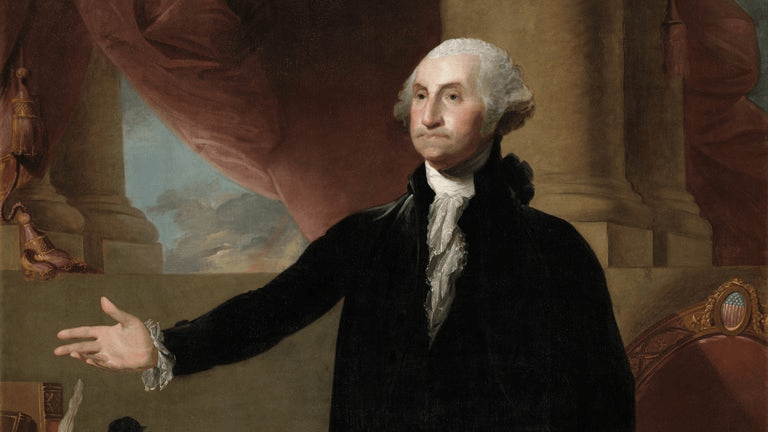
George Washington Addresses the Divisions

In our own day, it’s as if we have not learned the lessons of the past. And that is most likely because we have such little historical knowledge and awareness. I know of few people who realize George Washington was very much against a party system of government – and argued against it for similar reasons to the Apostle Paul.

Washington considered parties to be the bane of republican government. Parties were factions that threatened to divide the electorate into competing groups who might use violence to advance their interests.

He argued that political parties might also disrupt the separation of powers, especially in the case of unified government where loyalty to a party could interfere with the system of checks and balances.

What’s more, Washington said that parties threatened to stand in the way of effective representation, with elected officials tempted to represent only fellow party members and to leave opposition groups without a voice in government.

George Washington was mostly unique among the founders in never reconciling himself with political parties and never acknowledging the positive things that parties can bring to republican government.

Although it’s likely that Washington understood that parties were inevitable, he argued for keeping them under restraint and limiting their interference in the political process as much as possible.

Obviously, the party system won out, and rather quickly. In a healthy state of being, political parties can mobilize voters and encourage voter participation. They help build support for officeholders and serve as conduits of communication to the people. Political parties allow minorities to form coalitions to create majority rule.

Stick with the Evidence

Yet, what we seem to continually experience nowadays is the unhealthy aspect of the party system. People are hardened and reified into established positions and refuse to listen to the other. In such a position, evidence-based practices take a back seat.

For example, although there is not a shred of evidence that the former U.S. President experienced a hung jury and a corrupt judge in being convicted on 34 felony counts, a sizable chunk of Americans believe the corruption to be true – seemingly only because the former President said so, and without any objective, reasonable, and serviceable evidence to offer in backing up that claim.

And that prideful hardened spirit is the very thing that was happening in the ancient Corinthian Church. They wanted what they wanted, and they didn’t care what the other group thought. Each group believed (without evidence) they were wise and right. Yet, all of them were, in reality, foolish and unjust.

If we want a better public political climate; the freedom to be who we are; and confidence for the future; then, we had better begin with examining ourselves and listening well to the other first, before we assume that our own group is in the right and should be in control.

The privileges of freedom can only be enjoyed by embracing the responsibilities of freedom. And those responsibilities include a unified concern for the common good of all citizens, and not just the ones I like and who agree with me.

O God, the Father of our Lord Jesus Christ, our Savior, and the Prince of Peace; Give us grace to lay aside our unhappy divisions. Take away all hatred and prejudice, and whatsoever else may hinder us from godly union and concord. Help us to build bridges, not walls, and live into the unity you provided for us in Christ, through the Spirit. Amen.

Dealing with Opposing Views (Romans 14:1-12)

Accept the one whose faith is weak, without quarreling over disputable matters. One person’s faith allows them to eat anything, but another, whose faith is weak, eats only vegetables. The one who eats everything must not treat with contempt the one who does not, and the one who does not eat everything must not judge the one who does, for God has accepted them. Who are you to judge someone else’s servant? To their own master, servants stand or fall. And they will stand, for the Lord is able to make them stand.

One person considers one day more sacred than another; another considers every day alike. Each of them should be fully convinced in their own mind. Whoever regards one day as special does so to the Lord. Whoever eats meat does so to the Lord, for they give thanks to God; and whoever abstains does so to the Lord and gives thanks to God. For none of us lives for ourselves alone, and none of us dies for ourselves alone. If we live, we live for the Lord; and if we die, we die for the Lord. So, whether we live or die, we belong to the Lord. For this very reason, Christ died and returned to life so that he might be the Lord of both the dead and the living.

You, then, why do you judge your brother or sister? Or why do you treat them with contempt? For we will all stand before God’s judgment seat. It is written:

“‘As surely as I live,’ says the Lord,
‘every knee will bow before me;
    every tongue will acknowledge God.’”

So then, each of us will give an account of ourselves to God. (New International Version)

Within the church at Rome were Jewish believers who had come to faith in Christ from their background steeped in the Old Testament. They had a rich two-thousand year history of a covenant with God that included ritual food laws, the keeping of certain feast days, and observing a calendar of events, especially the Sabbath.

Also within the Roman church were Gentiles (non-Jewish people) having come to faith in Christ from a background of paganism. They had no history with the God of the Bible. There were no previous generations of faithful believers in God. They were first generation Christians and basked in their newfound freedom.

The Apostle Paul’s vision was for one church, unified together around Jesus. And this unity would need to be worked on. Jew and Gentile were very different from one another; and here they were in the same church together, not understanding each other. 

The Jewish believers were appalled at Gentile thinking and behavior. Even though the Jewish Christians had come to embrace Jesus, they did not abandon their two-thousand year history of being with God. They still held to their food laws and special days. The Jewish members believed the Gentiles should be like them; the Jews wanted the Gentiles to embrace the same ritualistic behavior that they had done for centuries.

But the Gentiles did not comply. So, the Jewish believers passed judgment and condemnation on them for not being sensitive to the things of God.

On the other hand, the Gentile believers felt no compulsion to have such rules and regulations concerning their Christian lives. They ate what they pleased and saw no need to hold to special days. They could not understand why the Jewish Christians were so stuck in their traditions. So the Gentiles looked down on the Jews as hopelessly misguided. This was a potentially explosive situation that Paul was deeply concerned about.

The Apostle Paul’s message was to accept the person whose faith is weak without passing judgment on disputable matters. Sounds like easy counsel to follow. But the problem was that the people did not distinguish between what is a non-negotiable matter and what was a disputable matter. 

The guiding principle is that Christ died and returned to life so that he might be the Lord of both the dead and the living. The non-negotiable matter is Jesus Christ, his person and work.  Jesus is our core belief. Nothing else is to be in the center except him.

Therefore, we are to celebrate our unity around Jesus, our center. Anything outside of that center is a “disputable matter” and not worthy of Christians condemning each other or looking down on one another.

The root problem of any church conflict is the de-throning of Jesus and setting up our particular views as the center of Christianity.

The church has struggled with this teaching for its long two-thousand year history. Every church I have served had their particular issues that they felt so strongly about that it crowded Jesus out of the center. 

In one church, education was the big issue. Some believed in Christian schools as the only way to educate their kids. Others felt that home-schooling was the way to go because of the culture. Yet others thought public education needed the light of Christians participating in it, and sent their kids to public schools. The problem was that each group sincerely believed they were right and everyone else was wrong.

In another church I served, there were hard feelings about the place of men and women in the church who had been divorced and remarried. In yet another church, the issue was about whether church members could drink alcohol or not. And yet another church’s issue dealt with how we dress and what our attire is at church. 

I still remember one lady in that church talking with a woman who had recently given her life to Christ out of a life of prostitution. The woman was wearing jeans and a t-shirt. The church lady was giving her a lecture about how she should be “dressing up for Jesus.” As I heard this, I thought to myself, “Lady, I’m not sure you are going to like the woman’s idea of dressing up for Jesus….”

Whenever we want to place disputable matters on people’s “must-do” list, then there will be trouble. We will judge others who do not think as we think, and do as we do, because of the mistaken notion that our way is equal to the death and resurrection of Christ. If it isn’t done my way, the church will be lost.

We do not necessarily need to change our views on disputable matters; but we do need to change our attitude and our behavior toward those we disagree with.

Intolerance of others’ views and behaviors causes a lack of dialogue, to create special interest groups and cabals against others, to stereotype others, and to seek to get their way no matter what. Such intolerance moves church members from a concern for the Great Commission of Jesus to the Great Commode of Satan’s bathroom.

For the Apostle Paul, the issues that divide Christians are very important, not because he championed one over the other, but because the church’s identity was at stake. Paul was concerned for two questions:

  1. Will the church be, at its core, a community of redeemed persons by the grace of God who center all their lives around the person and work of Jesus?
  2. Or will the church be a community of opinionated individuals and groups all jockeying for position to have their way on how they believe things should go?

This is really a heart issue: humility versus pride, and gentleness versus stubbornness. You can tell what a person’s identity is by their “identity markers.”

For the Jewish Christians, Sabbath-keeping, circumcision, food laws, and holding to certain days on the calendar marked their identity as God’s people. Those issues were so important that if you took them away, there would be an identity crisis; the people felt totally lost without their traditions.

For Gentile Christians, their identity was built around being more free-thinking. So, if you take away their freedom and ability to choose, the Gentiles will go nuts and have an identity meltdown. 

Paul’s answer was for both Jew and Gentile to accept each other and build their unity around Jesus, period. They needed to be sensitive to one another and focus on their shared identity of Jesus as the center of the Christian life.

Both the church and the society need some civility. In a nation where we feel free to say whatever we want, we do. In doing so, we elevate self-expression and our opinions over self-control and the mission of the church.

We need some generous spaciousness which allows room for us to discuss issues and disputable matters in an atmosphere of generosity, hospitality, and acceptance, seeking to first listen and understand, before responding. 

The goal of the Christian is not to win an argument or have our way, but to uphold Jesus as Lord of everything and maintain our center in him. On that basis alone, we will be held accountable by God. So, let us live wisely and well, knowing and pursuing Jesus with heart, soul, mind, and strength.

Gracious God, it’s both settling and centering to focus on the assurance of your acceptance. You know everything about us, and despite our failures, fickleness, foolishness, and faithlessness, yet still we are fully and eternally accepted. As you have accepted us, help us to accept others. Grant us grace to love those whom we disagree with.

Merciful and mighty God, enlarge our hearts. Enable us to show kindness without compromising our convictions. Teach us the difference between essential and non-essential matters. Free us from the limitations of our individual perspectives, the prejudices of our heritage, the insecurities of our comfort zone, insincere niceness,and the need to be right. 

Blessed Holy Spirit, burn your holy Word indelibly into us so that we accept all things and everyone you give us, through Jesus Christ our Lord. Amen.