People Are a Bundle of Contradictions (Romans 7:7-20)

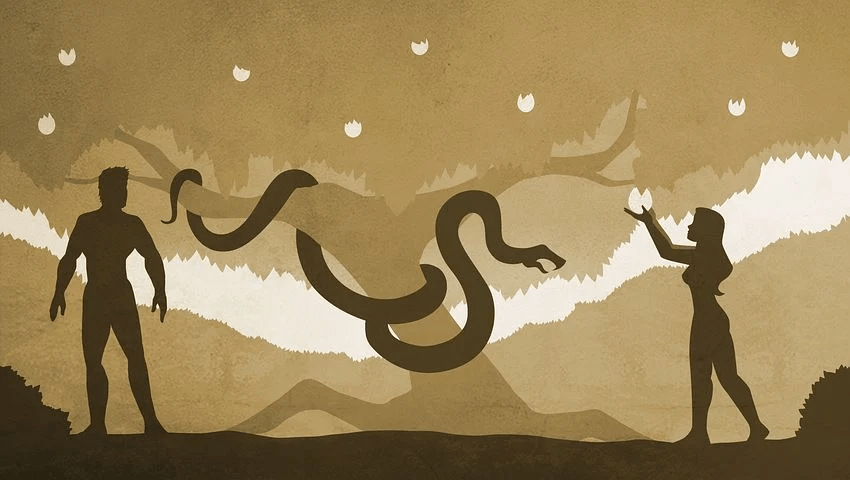
“Contradictions” by Michael Lang, 2015

But I can hear you say, “If the law code was as bad as all that, it’s no better than sin itself.” That’s certainly not true. The law code had a perfectly legitimate function. Without its clear guidelines for right and wrong, moral behavior would be mostly guesswork. Apart from the succinct, surgical command, “You shall not covet,” I could have dressed covetousness up to look like a virtue and ruined my life with it.

Don’t you remember how it was? I do, perfectly well. The law code started out as an excellent piece of work. What happened, though, was that sin found a way to pervert the command into a temptation, making a piece of “forbidden fruit” out of it. The law code, instead of being used to guide me, was used to seduce me. Without all the paraphernalia of the law code, sin looked pretty dull and lifeless, and I went along without paying much attention to it. But once sin got its hands on the law code and decked itself out in all that finery, I was fooled, and fell for it. The very command that was supposed to guide me into life was cleverly used to trip me up, throwing me headlong. So sin was plenty alive, and I was stone dead. But the law code itself is God’s good and common sense, each command sane and holy counsel.

I can already hear your next question: “Does that mean I can’t even trust what is good [that is, the law]? Is good just as dangerous as evil?” No again! Sin simply did what sin is so famous for doing: using the good as a cover to tempt me to do what would finally destroy me. By hiding within God’s good commandment, sin did far more mischief than it could ever have accomplished on its own.

I can anticipate the response that is coming: “I know that all God’s commands are spiritual, but I’m not. Isn’t this also your experience?” Yes. I’m full of myself—after all, I’ve spent a long time in sin’s prison. What I don’t understand about myself is that I decide one way, but then I act another, doing things I absolutely despise. So if I can’t be trusted to figure out what is best for myself and then do it, it becomes obvious that God’s command is necessary.

But I need something more! For if I know the law but still can’t keep it, and if the power of sin within me keeps sabotaging my best intentions, I obviously need help! I realize that I don’t have what it takes. I can will it, but I can’t do it. I decide to do good, but I don’t really do it; I decide not to do bad, but then I do it anyway. My decisions, such as they are, don’t result in actions. Something has gone wrong deep within me and gets the better of me every time. (The Message)

“Contradictions in human character are one of its most consistent notes.”

Muriel Sparks, “Loitering with Intent”

The Apostle Paul’s vulnerable expression of his dilemma resonates deeply with many people. There are times when we say things to ourselves such as:

“I told myself I wasn’t going to be like my mother, and here I am responding just like she would.”

“I know better than to drive by the liquor store on my way home and pick up a pint of vodka, yet, I still did it.”

“I don’t want to die, but my thoughts keep racing about a plan for suicide.”

There are many situations in which we are both frustrated and befuddled by doing the things we do not want to do, and not doing the things we want to do.

Yes, indeed, Paul’s existential angst is a timeless description of our common human condition. We all can relate to the seeming inability to do what is right in so many situations. It can drive us nuts, even to a constant and never-ending low-level discouragement that underlies almost everything we do.

Paul’s prescription for dealing with this does not rely on law. He understood that putting our willpower and effort into obeying commands gets us nowhere, because we will eventually fail. Neither our brains nor our spirits work that way. Our willpower was never designed to be the driver of what we do and do not do. If anything, willpower, and the lack thereof, demonstrates just how much we are climbing the ladder on the wrong wall.

People are a bundle of contradictions, doing good, then bad, and flip-flopping back and forth with great frustration.

God’s law was not crafted to transform us from the inside-out. The law has three solid purposes, none of which are meant to bring deep personal transformation:

  1. Attention to the law works to restrain sin in the world
  2. Use of the law provides us with a helpful guide for grateful living in response to divine grace
  3. Reflection on the laws show us how bad off we really are in this world, and how much we are in need of forgiveness

We need a change of habits, and this is different than adopting a list of laws.

Habits are developed from our desires, our affections. In other words, we do what we love – more specifically, our ultimate love(s) drive us to do what we want. To put it in a more straightforward way:

We sin because we like it. And the path to overcoming any besetting sin is to have an ultimate love surpass the lesser sin which we like.

For example, I have developed daily habits or rituals of faith which enable me to commune with God. I love God with all my heart, soul, mind, and strength, and this ultimate love enables me to push out all competing gods who want my devotion. I also love my wife with all my heart. We work on developing habits of a marital relationship which reinforce our love for each other. Love is what drives me to do right and good by her.

So, what do we do when we mess up? For the Christian, no matter what the question is, the answer is always grace.

God’s grace in the finished work of Jesus Christ applied to us by the Holy Spirit is the operative power that changes lives. The law has no power to do that kind of work. Freedom from the tyranny of our misplaced desires and disordered loves comes from Christ’s forgiveness through the cross. Like a lover enamored with his beloved, our desires become oriented toward Jesus for his indescribable gift to us. That is the strength of grace.

Saving God, I thank you for delivering me from sin, death, and hell through your Son, the Lord Jesus. May your Holy Spirit apply the work of grace to my life every day so that I can realize spiritual healing and practical freedom from all that is damaging and destructive in my soul. Amen.

The Fall of Humanity (Genesis 2:15-17, 3:1-7)

The Lord God took the man and put him in the Garden of Eden to work it and take care of it. And the Lord God commanded the man, “You are free to eat from any tree in the garden; but you must not eat from the tree of the knowledge of good and evil, for when you eat from it you will certainly die….”

Now the serpent was more crafty than any of the wild animals the Lord God had made. He said to the woman, “Did God really say, ‘You must not eat from any tree in the garden’?”

The woman said to the serpent, “We may eat fruit from the trees in the garden, but God did say, ‘You must not eat fruit from the tree that is in the middle of the garden, and you must not touch it, or you will die.’”

“You will not certainly die,” the serpent said to the woman. “For God knows that when you eat from it your eyes will be opened, and you will be like God, knowing good and evil.”

When the woman saw that the fruit of the tree was good for food and pleasing to the eye, and also desirable for gaining wisdom, she took some and ate it. She also gave some to her husband, who was with her, and he ate it. Then the eyes of both of them were opened, and they realized they were naked; so they sewed fig leaves together and made coverings for themselves. (New International Version)

Lent is a 40-day season of preparation and repentance for Christians anticipating Good Friday’s cross of Christ and the victory over sin in Easter’s celebration of Christ’s resurrection. To understand why there is a need for repentance, let’s turn to where disobedience, shame, and guilt first entered the world.

Ever since humanity’s fall into sin, our human nature tends to look at the one thing we can’t do, instead of seeing all the range of possibilities that we can do.  The serpent (the devil) was successful in getting Adam and Eve to focus on that one tree they needed to avoid. In our fallen condition, just tell us what we can’t do and we’ll probably be sure to do it – rather than enjoy all the vast prospects we presently have and can actually do with God. 

What’s more, the devil subtly planted a terrible and untruthful idea in the heads of Adam and Eve – that God was somehow holding out on them and was not providing everything they really needed and wanted in life.

Sin may look attractive, and even initially taste good. Yet, disobedience has an awful aftertaste and damages our insides. Indeed, sin always over-promises and under-delivers.

Perhaps the greatest and deepest effect of sin is the shame of disobedience which causes us to hide from God, one another, and even ourselves. All this hiding causes spiritual blindness. We end up sleepwalking through hell, unaware of our awful spiritual plight. 

Because of this reality, we need deliverance; we need a Savior to intervene and save us from our ignorance and guilt. As mere dust, we need God’s Spirit to breathe new life into us so that we may again enjoy the Lord in Paradise.

Our fallen spiritual condition does not want to acknowledge our need for the sheer grace of God. Sewing some fig leaves together is symbolic of Adam and Eve’s new independence from God; from now on, they’re going to operate on their own.  The introduction of sin into the world causes people to look for ways to cope and deal with life apart from God.

We want to return to Paradise. We don’t want to hurt and struggle and be overburdened anymore. So, we devise all kinds of ideas and ways of doing that. And the Paradise we seek always seems to be “out there” somewhere, just out of our reach. 

In our fallen condition, we are plagued with the “if only” syndrome:

If only I had _____ (fill-in the blank) then I would be happy and be in Paradise.

If only I could meet the right person, then that special someone could meet my needs and complete me.

If only the people in my life were better, then everything would be okay and I could enjoy Paradise.

If only I had more money, a bigger house, another car, more power and influence.

If only other people would stop being jerks, care more, serve more, love more. If only my family would listen to me.

If only I could have my way, then there would surely be a restoration to Paradise.

The point to all the “if only” is that it twists us all up into believing that I’m either unlovable or that everyone else is the problem. If they would just change, then the world would be a better place. Or if only I was better, then I wouldn’t have so many problems.

The truth, however, is that we already have what we are so desperately looking for. And since we are unaware that God is with us, and wants to provide for us, we sew fig leaves together and look love in all the wrong places.

No man or woman is going to complete you because no person can fix what is broken in your heart. If you had your ideal relationship, perfect family, and dream job, you would still be empty. Why? Because you and I need a Savior to deliver us from our sin.

We all need deliverance from our disordered loves and misguided attempts to find Paradise in this life apart from God. The temptation after The Fall is to try and manufacture happiness outside of God through perfect relationships and ideal circumstances. 

What to do? Repent. Turn from the shame and guilt of disobedience and deal with the brokenness in our own lives. And that is what the season of Lent is all about.

Without God there are hidden feelings of mistrust, alienation, conditional love, selfishness, greed, and injustice. But with God there is forgiveness, grace, and unconditional love – the very kind of love that we need.

In this season of Lent, we must repent of our hiding and wishing for everything and everyone else to be different without any cost to myself. 

What do you need to repent of in this season? 

Who are the people that you look to do for you what only God can do? 

Have you forsaken your first love of Jesus Christ? 

How is the state of your relationship with God? Has it been stale, dull, and lacking passion, desire, and energy?  Has distance replaced intimacy between you and God? 

Do you avoid the spiritual disciplines of bible reading and prayer because you believe something else will satisfy the real needs of your heart? 

Are you keeping up appearances and hiding, while on the inside you have doubt, depression, and despair that things will never change? 

The prayers of this season are to be prayers of repentance:

Merciful God, we confess that we have hungered after things which do not satisfy.  We have doubted your ability to provide for us. Forgive our lack of faith. Restore in us such trust and love that we may again walk with you in Paradise. 

Loving God, we admit that we’ve given ground to Satan by believing his deception that we can find ultimate happiness in things other than you. So, in the name of the Lord Jesus Christ, we resist all of the devil’s strategies to hold us in spiritual blindness and darkness. 

Blessed Holy Spirit, we invite you to bring the fullness of your power to convict us and lead us into faith in Jesus. We humbly ask that you bring all the power of Christ’s crucifixion and resurrection directly against all forces of darkness seeking to destroy us. Set us free from all that blinds us and keeps us in bondage. 

Grant us, O God, the grace to be faithful and persistent in our walk with you.  Amen.

On Knowing Christ

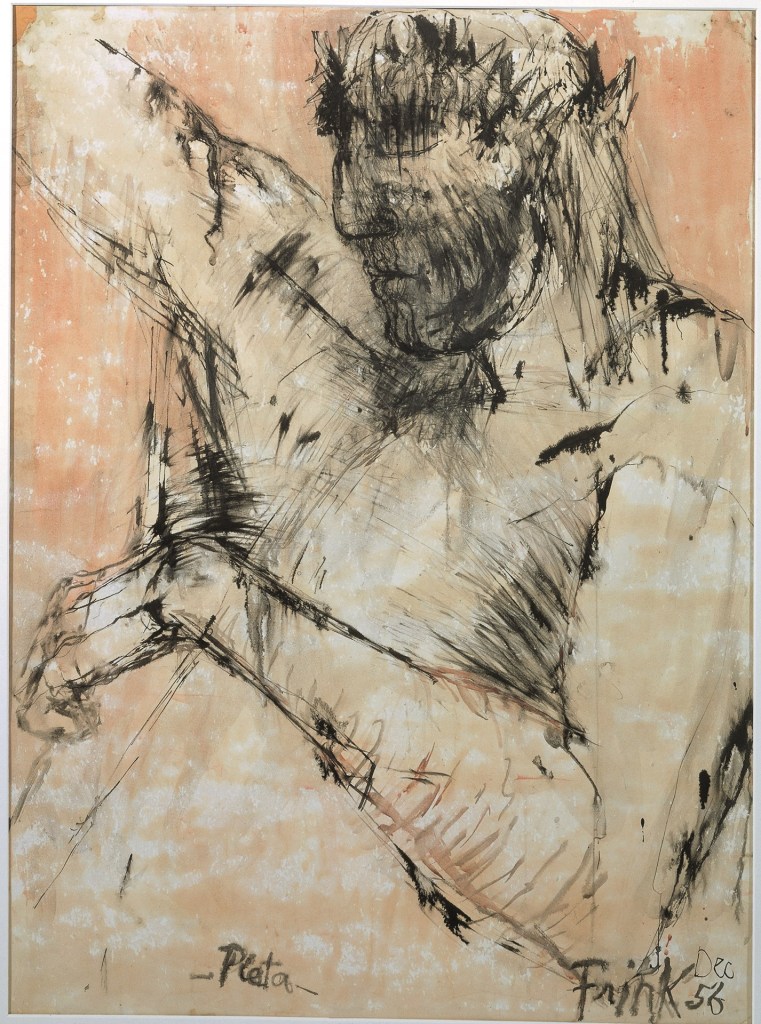
Pietà by Elisabeth Frink

The ancient Philippian church had lost sight of their purpose, of what is the primary reason for their being in existence. Simply put, they needed to unify around what is the central and most valuable core of Christianity: knowing Jesus Christ. For the Apostle Paul, in his letter to the Church at Philippi, Jesus was so valuable that he literally gave up everything to become a Christian and follow Jesus. (Philippians 3:4-14)

It was no little thing that Paul did, converting in such a completely life-altering way to Christ. Paul had everything going for him. He was the up and coming star in Judaism. Paul had the Jewish pedigree, the intelligence, the personality, and the drive to become one of the greatest Pharisees of all time. And yet he forsook it all to pursue and know Christ. 

It might be hard for us to imagine just how significant Paul’s turn around was. On a much smaller scale, it would be like Green Bay Packer quarterback, Aaron Rodgers, at the height of his career, leaving football altogether to become a missionary to some remote place few people have ever heard of. Most might likely think he lost his marbles and was throwing away (pun intended) something valuable and important. So, it was with Paul.  Everyone thought he was nuts for becoming a Christian.

However, this would be to misunderstand what is really of greatest value. There are plenty of people in our society telling us what we need. With all the noisy rhetoric, from political pundits to commercial marketers, the person and work of Jesus can easily get lost in an ocean of competing voices. On a practical level, it can be far too easy to simply toss Christian discipleship on the smorgasbord of good ideas we get handed each day. Jesus might get misplaced and forgotten on our plate of life because of the mass of other food that is piled alongside him.

World Communion Sunday (always the first Sunday in October each year) reminds Christians that Jesus is our surpassing greatness, the highest and most worthy asset we possess. When we come to the Lord’s Table, there is nothing else to feast upon except Jesus, and Jesus alone. In the act of receiving the common elements of bread and cup, we proclaim that we need no one else and no other thing to make us happy in this life. Jesus is enough for us. What is more, we stand united with our brothers and sisters in Christ throughout the world in a common purpose and value of knowing Jesus Christ, and him crucified.

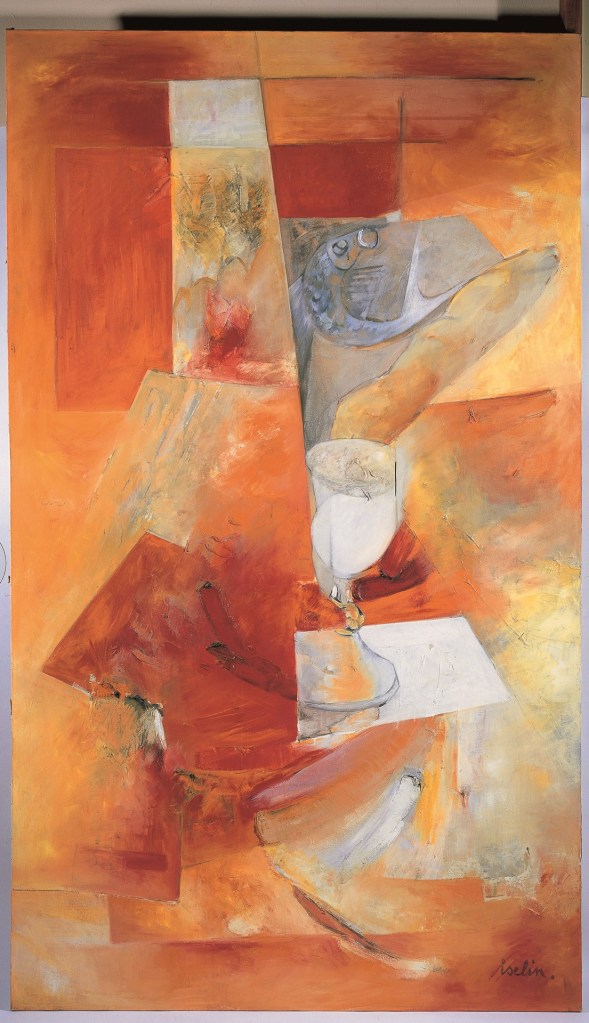
The Elements of Holy Communion by Jacques Iselin

The core value and heart of Christianity is a faith and love relationship with Jesus, to know him. This was the heartfelt cry of the Apostle Paul, and it was so meaningful to him that he gave up everything to pursue Christ and follow Jesus.  If we ever strip Christianity of this core value and stray from knowing Christ, the vacuum will be quickly filled with all kinds of other stuff, like the sheer duty of perfunctory prayers, clean living, and dispassionate robotic service. 

Paul longed to know Christ better. There are two words in the Greek language for “know.” One word refers to information; the other refers to an experiential knowledge – and that is the word Paul used with the Philippians. He deeply desired an intimate experience of Jesus. And Paul craved this so much that literally everything, when compared to Jesus, was “rubbish” to him. 

In the ancient world there were no landfills and dumps – the street served as the place people threw their garbage. The trash then got trampled into the ground, along with the generous amounts of animal dung. That is how Paul thought of even the best things in life as compared to knowing Jesus. 

There is no comparison between a freshly grilled T-bone steak and microwaved liverwurst. There is no comparison between a billion dollars and a penny. There is no comparison between the Green Bay Packers and the Chicago Bears (sorry Chi-Town). And there is no comparison between Jesus and anyone or anything else, no matter whom or what it is. 

Saint Augustine, Bishop of Hippo, in the fifth century, described life apart from Jesus as “disordered love.” By that he meant we pursue whatever our affections are set upon. One might love family, friends, job, and hobbies, yet if Jesus is absent or must compete for our affections in the middle of those things, then it is a disordered love. The solution, for Augustine, is to rightly order our love by having Jesus as the premier object of our affection. The New Testament frames it this way: Repent and believe the gospel.

To have “disordered love” is a nicer way of saying “spiritual adultery.” Using this metaphor, the appropriate response is to return to our first love. “You have forsaken your first love,” said Jesus to the church in Ephesus.  “Remember the height from which you have fallen!  Repent and do the things you did at first” (Revelation 2:4-5). 

Christianity is not some religion in which we strike a deal with God to go to heaven if we accept Jesus. Rather, Christianity centers all of life in the person and work of Jesus. The Lord is a jealous God, feeling slighted when Christians moonlight with the world at night while acknowledging Jesus during the day.

Specifically, Paul wanted to know the power of Christ’s resurrection. He yearned to experience a supernatural change from the inside-out – to be a new person in Christ. Paul did not simply turn over a new leaf; he did a dramatic 180 degree turn and went hard after Jesus. A desire and/or decision to know Christ is to be more than a milquetoast “I’ll try to do better.” Christianity, at its core, is dying to self and being reborn in Jesus with new life.

Furthermore, Paul wanted to know Christ and the fellowship of sharing in his sufferings. Paul ached to know Jesus so much that he embraced suffering, just as his Lord did. Paul was not some spiritual masochist; he rightly recognized that spiritual growth and intimacy with Jesus largely comes from the harsh realities of life’s trials and difficulties, as faith is stretched.  We would not know Christ the healer if we were not broken; Christ the provider if we were not in want; and, Jesus Christ and him crucified unless we were aware of sin in the world along with our own personal sin.

Each time a Christian approaches the Lord’s Table, they set aside competing voices and forsake rival gods to have Jesus. For us who believe, let the ingesting of the elements be an act of fellowship with God. May we, along with Paul, Augustine, and all past saints desire to have Jesus completely take over our lives because he is so valuable to us. We never need to be perfect to partake of bread and cup. Instead, we only need to strive toward what is ahead and decide that today we will press on toward the higher goal of knowing Christ.