Daniel 9:1-14 – A Prayer of Confession, Part 1

Daniel the Prophet by Sefira Ross

In the first year of Darius’ rule—Darius, who was Ahasuerus’ son, a Median by birth and who ruled the Chaldean kingdom— I, Daniel, pondered the scrolls, specifically the number of years that it would take to complete Jerusalem’s desolation according to the Lord’s word to the prophet Jeremiah. It was seventy years. I then turned my face to my Lord God, asking for an answer with prayer and pleading, and with fasting, mourning clothes, and ashes. As I prayed to the Lord my God, I made this confession:

Please, my Lord—you are the great and awesome God, the one who keeps the covenant, and truly faithful to all who love him and keep his commands: We have sinned and done wrong. We have brought guilt on ourselves and rebelled, ignoring your commands and your laws. We have not listened to your servants, the prophets, who spoke in your name to our kings, our leaders, our parents, and to all the land’s people. Righteousness belongs to you, my Lord! But we are ashamed this day—we, the people of Judah, the inhabitants of Jerusalem, all Israel whether near or far, in whatever country where you have driven them because of their unfaithfulness when they broke faith with you. Lord, we are ashamed—we, our kings, our leaders, and our parents who sinned against you. Compassion and deep forgiveness belong to my Lord, our God, because we rebelled against him. We did not listen to the voice of the Lord our God by following the teachings he gave us through his servants, the prophets. All Israel broke your Instruction and turned away, ignoring your voice. Then the curse that was sworn long ago—the one written in the Instruction from Moses, God’s servant—swept over us because we sinned against God. God confirmed the words he spoke against us and against our rulers, bringing great trouble on us. What happened in Jerusalem has not happened anywhere else in the entire world! All this trouble came upon us, exactly as it was written in the Instruction of Moses, but we did not try to reconcile with the Lord our God by turning from our wrongdoing or by finding wisdom in your faithfulness. So, the Lord oversaw the great trouble and brought it on us, because the Lord our God has been right in every move he has made, but we have not listened to his voice. (CEB)

The world’s sins are legion. Our own sins are too many to count. They are a crushing load. Put all together, the heap of sin is piled all the way up to heaven. We all have sinned against God and one another in the things we have done, and those things we have left undone.

Devout believers are to remember they belong to God and enter this season of Lent with focused prayer, repentance, and fasting. I have always encouraged folks to adopt the prayers of the Bible and use them as their own.  I also often personalize the prayers for contemporary use. This is what I am doing today with Daniel’s prayer of confession.

Denial is not an option. Simply wishing things were different does not make it so. For the Christian, change begins with looking evil square in the face, calling it what it is, and confessing it. Daniel did just that because of his people’s indifference. I have taken the liberty to form Daniel’s prayer as the basis for my own. It is not the entire prayer of Daniel. The rest of the prayer comes with tomorrow’s reading. But for today, it is confession…

Please, my Lord—you are the great and awesome God, the one who keeps your promises and is truly faithful to all who love you and keep your commands. 

There is no good way to say this: We have sinned and done wrong. We have brought guilt on ourselves and rebelled, ignoring your commands and your laws to love you, and love our neighbors.

We have forsaken self-care and rest, tossing the notion of Sabbath aside as an antiquated observance.

We have dishonored our parents by turning aside from their instruction. They taught us better than we are living. And we have ignored our ancestors in the faith who kept your commands and followed your ways.

We kill one another with guns we have stockpiled like cans in a pantry, not to mention the murderous words we continually breathe on those we hate.

We have failed to keep fidelity with our spouses and treat them like second-hand items.

We steal land and resources, lie through our teeth, and cheat others with an envious eye which is neither satisfied nor content with the blessings right in front of our faces.

We have not listened to your Son, the Lord Jesus, or to your Holy Spirit speaking to us in your Holy Word. The people of this land have given you the stiff-arm through the allowance of systemic evil, structural racism, inattention to the poor and needy, and calling injustice justice. 

Righteousness belongs to you, Lord! But we lack seeing our own guilt. We, the people of this created world, have broken faith with you by insisting on our own way of doing things.

Our uncivil words and unloving behavior have drowned your voice to us. Our ears have become deaf to the teachings you gave us through your messengers.

We all have broken faith with you by not heeding your warnings to forsake hate and embrace love.

A curse has swept over us because we sinned against you, God, with impunity. Our children are at risk, even dead, yet we continue to bicker and fight amongst ourselves while destruction continues to abound through the hands of unstable people.

God, you have brought great trouble on us. This dangerous morass of immorality and injustice is our own doing, and yet we stubbornly remain independent and do not seek divine reconciliation by turning from our wrongdoing or by finding wisdom in the faithfulness of your loving character and compassion. 

Lord, you have been right in every move you have made in giving us a clear moral code with the Holy Spirit to help us, but we have neither heard nor heeded your voice of truth….

1 Samuel 15:10-31 – Rationalizing Disobedience

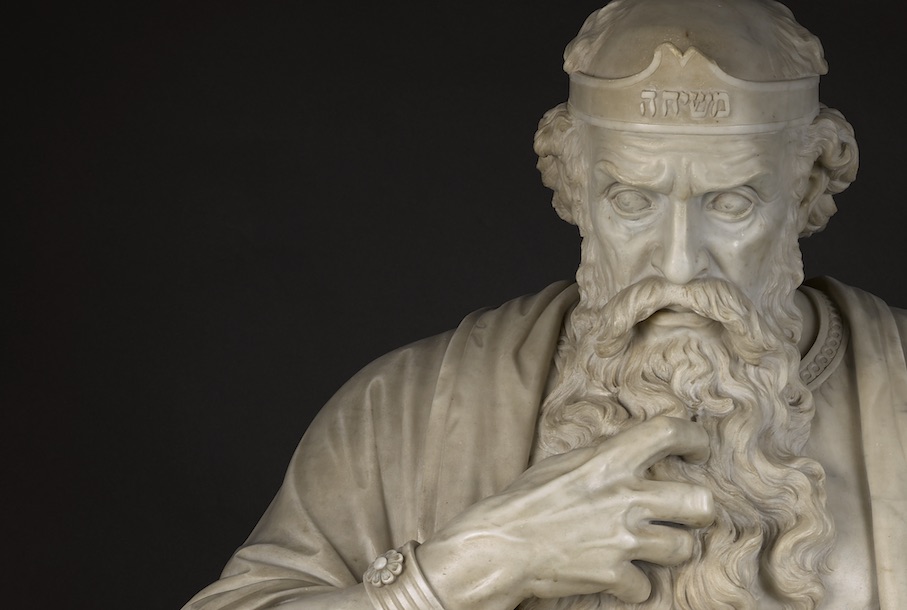
King Saul by William Wetmore Story (1819-1895) at the North Carolina Museum of Art

Then the word of the Lord came to Samuel: “I regret that I have made Saul king, because he has turned away from me and has not carried out my instructions.” Samuel was angry, and he cried out to the Lord all that night.

Early in the morning Samuel got up and went to meet Saul, but he was told, “Saul has gone to Carmel. There he has set up a monument in his own honor and has turned and gone on down to Gilgal.”

When Samuel reached him, Saul said, “The Lord bless you! I have carried out the Lord’s instructions.”

But Samuel said, “What then is this bleating of sheep in my ears? What is this lowing of cattle that I hear?”

Saul answered, “The soldiers brought them from the Amalekites; they spared the best of the sheep and cattle to sacrifice to the Lord your God, but we totally destroyed the rest. “Enough!” Samuel said to Saul. “Let me tell you what the Lord said to me last night.”

“Tell me,” Saul replied.

Samuel said, “Although you were once small in your own eyes, did you not become the head of the tribes of Israel? The Lord anointed you king over Israel. And he sent you on a mission, saying, ‘Go and completely destroy those wicked people, the Amalekites; wage war against them until you have wiped them out.’ Why did you not obey the Lord? Why did you pounce on the plunder and do evil in the eyes of the Lord?”

“But I did obey the Lord,” Saul said. “I went on the mission the Lord assigned me. I destroyed the Amalekites and brought back Agag their king. The soldiers took sheep and cattle from the plunder, the best of what was devoted to God, to sacrifice them to the Lord your God at Gilgal.”

But Samuel replied:

“Does the Lord delight in burnt offerings and sacrifices
    as much as in obeying the Lord?
To obey is better than sacrifice,
    and to heed is better than the fat of rams.
For rebellion is like the sin of divination,
    and arrogance like the evil of idolatry.
Because you have rejected the word of the Lord,
    he has rejected you as king.”

Then Saul said to Samuel, “I have sinned. I violated the Lord’s command and your instructions. I was afraid of the men and so I gave in to them. Now I beg you, forgive my sin and come back with me, so that I may worship the Lord.”

But Samuel said to him, “I will not go back with you. You have rejected the word of the Lord, and the Lord has rejected you as king over Israel!”

As Samuel turned to leave, Saul caught hold of the hem of his robe, and it tore. Samuel said to him, “The Lord has torn the kingdom of Israel from you today and has given it to one of your neighbors—to one better than you. He who is the Glory of Israel does not lie or change his mind; for he is not a human being, that he should change his mind.”

Saul replied, “I have sinned. But please honor me before the elders of my people and before Israel; come back with me, so that I may worship the Lord your God.” So, Samuel went back with Saul, and Saul worshiped the Lord. (NIV)

“You cannot compensate by sacrifice what you lose through disobedience.”

edwin louis cole

God had given Saul explicit instructions on how to handle a group of people called the Amalekites (the first nation to attack the Jewish people after the Exodus from Egypt, and viewed as the archetypal enemy of the Jews). Saul obeyed only some of the instructions, but not all of them. King Saul rationalized his behavior as worship. But God would have none of it. The Lord rejected Saul as king. God wants no monkey business when it comes to obedience.

Whenever I come across biblical characters like Saul, I find myself trying to distance from them. Yet, oftentimes, when I take the time to sit a bit with the Scriptures, I realize I can have some of the same propensities as their behavior. In today’s Old Testament lesson, I am like Saul whenever:

  • I say I will do something and then get busy and not do it. I sometimes rationalize my lack of follow through by explaining what good things I was doing with my time instead.
  • I justify a purchase of something I do not really need but want with the excuse that I put a lot of money in the offering plate for God.
  • I slander another person, even though it is forbidden by God, with the knucklehead notion that I am protecting and helping others from that person’s evil ways.
  • I keep quiet in the face of a bad situation when I should be speaking up. I dismiss the lack of engagement and involvement with needing to save my energy for people who want it….

I could have kept going with this little exercise, but I got too convicted to keep thinking about it anymore. So, before we get too uppity about saying we are not like Saul and would never be like him, perhaps we ought to sit with the story for a while, being mindful and aware of any unacknowledged disobedience.

Rationalization is the way of sinners.  Repentance is the path of saints.  Which road will you choose today?

Holy God, you expect obedience to clear instructions.  I am sorry for all those times I found creative ways to circumvent your teaching.  Help me not to avoid your good commands, but to own them with vigor and vitality through Jesus Christ my Lord in the power of your Holy Spirit.  Amen.

2 Samuel 6:1-11 – Unacceptable Worship

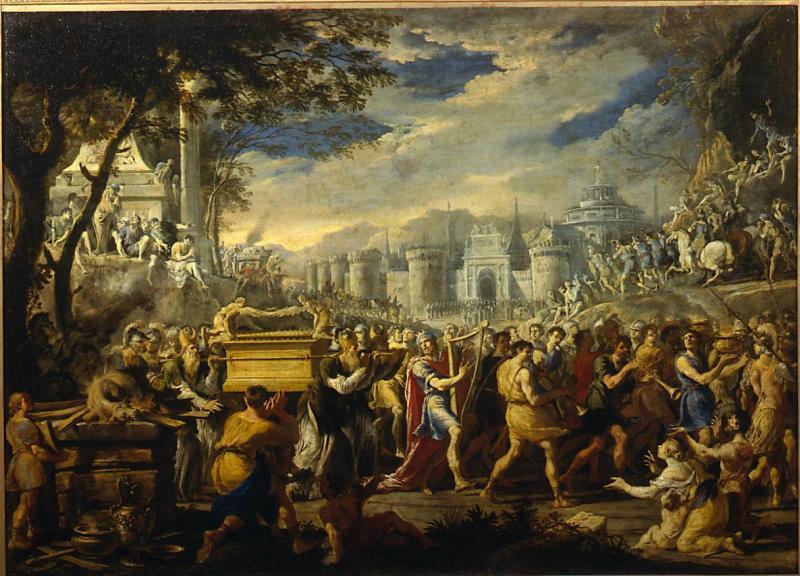
Transferring the ark of the Lord to Jerusalem by Domenico Gorgiolo (1609-1675)

David again brought together all the able young men of Israel—thirty thousand. He and all his men went to Baalah in Judah to bring up from there the ark of God, which is called by the Name, the name of the Lord Almighty, who is enthroned between the cherubim on the ark. They set the ark of God on a new cart and brought it from the house of Abinadab, which was on the hill. Uzzah and Ahio, sons of Abinadab, were guiding the new cart with the ark of God on it, and Ahio was walking in front of it. David and all Israel were celebrating with all their might before the Lord, with castanets, harps, lyres, timbrels, sistrums and cymbals.

When they came to the threshing floor of Nakon, Uzzah reached out and took hold of the ark of God, because the oxen stumbled. The Lord’s anger burned against Uzzah because of his irreverent act; therefore, God struck him down, and he died there beside the ark of God.

Then David was angry because the Lord’s wrath had broken out against Uzzah, and to this day that place is called Perez Uzzah.

David was afraid of the Lord that day and said, “How can the ark of the Lord ever come to me?” He was not willing to take the ark of the Lord to be with him in the City of David. Instead, he took it to the house of Obed-Edom the Gittite. The ark of the Lord remained in the house of Obed-Edom the Gittite for three months, and the Lord blessed him and his entire household. (NIV)

The narrator who originally compiled, told, and wrote this story wanted to communicate something significant about God and how to relate to the Lord.  God put the big kibosh on David’s hoedown. At that time in the history of Israel, the ark was the foremost symbol God was present with the people. Within the ark contained the tablets of the Ten Commandments (the symbol of God’s Word); the staff of the first priest, Aaron, (the symbol of God’s choice); and, a pot of manna (the symbol of God’s provision). 

The ark was a holy object, pointing to a holy God.

The ark of the Lord was built during the time of Moses, when the ritual laws were established concerning offerings and how to approach God in worship. There were detailed prescriptions for how to construct all the sacred articles for worship. (Exodus 35:30-40:33) 

The ark was at the center of worship, representing the presence of God among the people. For nearly five-hundred years before David, the ark had become a familiar object in the life of Israel, always there, continually being the symbol of God to the people.

We have all likely had the experience of something becoming so familiar to us that we begin to lose sight of how important and valuable it really is. Not until we lose it, or something traumatic happens, do we wake up and take stock of its true significance. 

The Israelites had become lethargic and apathetic toward the worship of God, and it led to some disheartening and tragic circumstances. The people of God throughout the ages have always needed to be vigilant against the opiate of familiarity, dulling the senses to the importance of worship.

Moving the ark of the Lord to Jerusalem was one of the first acts David did as the king of Israel and Judah.  God was with David and brought him success against his enemies. David enjoyed a close relationship with God.  Yet even though David’s heart was in the right place, he made a huge miscalculation which ended up offending God. 

David had the best of intentions in bringing the ark to Jerusalem and giving it a prominent place in the center of Jewish life. This was an exceptionally good plan. The problem, however, came in the manner the ark was carried from one place to another. 

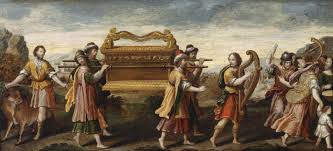
King David bringing the ark to Jerusalem by Unknown Italian artist, c.1500

God’s law laid out in careful detail how the ark was to be transported. Uzzah and Ahio were Levites charged with the ark’s care. Only the Levites could handle the ark and the holy objects of worship that went along with it. Since it was the job of the Levites for hundreds of years, they knew better than to carry the ark of the Lord on a cart. God clearly told Moses that the ark was to have two long poles of acacia wood overlaid with gold inserted into four gold rings of the ark.

The ark was to always be carried on the shoulders of the Levites with the two poles.

We are not told why Uzzah and Ahio were pulling the ark on a cart with oxen instead of carrying it in the prescribed way. Perhaps it was because the ark was incredibly heavy and no easy task to carry.  Maybe they decided it would be easier and more expedient to have the much stronger oxen pull the ark on a nice new cart; it would save a lot of energy transporting it over a long distance. 

As pragmatic people, Uzzah and Ahio’s approach makes a lot of sense. However, God was not okay with this arrangement.  When the oxen stumbled and the ark was in danger of falling off the cart, Uzzah reflexively reached out to steady it.  That was the last act Uzzah ever did on this earth. God immediately put him down for his “irreverent act.”

So, here is the not so good idea: Evaluating the worship of God by common sense pragmatism, what we think will work best, and how we feel it ought to be done.  Everything about worship is to pay attention to the holiness of God through our obedience.  Whenever we avoid the prescriptions of Holy Scripture, however best the intentions might be, is not a good thing and people will get hurt.  One can never justify an action that goes against God’s Word because people are praising God. 

Just because the heart is in the right place does not mean what is being done is okay.

David’s first response was anger, then fear.  He gave his best effort, and it resulted in God’s disfavor. Perhaps David realized that maybe he took for granted that the ark could be moved any old way he wanted to move it. 

Trouble with God happens whenever we value efficiency and expediency over obedience and submission.

The great error of Uzzah which resulted in his death was trying to manage God. We do not take care of God; God takes care of us. God does not bow to us and allow himself to be managed by creatures. The Lord wants pure unadulterated obedient worship from people in the way God wants it to be done, period. It is not up for negotiation.

So, David took some time to re-evaluate the whole approach to worship he was doing and left the ark with a Philistine. Then, he went back and did it right….

Holy God, we confess that we have too often forgotten we are yours. Sometimes we carry on our lives as if there was no God and we fall short of being a credible witness to you. For these things we ask your forgiveness and for your strength. Give us clear minds and open hearts so we may bear witness to you in our world. Remind us to be who you would have us to be regardless of what we are doing or who we are with. Hold us close and build our relationship with you and with those you have given us on earth, through Jesus Christ our Lord. Amen.

Jeremiah 31:31-34 – A New Covenant

The Last Supper by Francis Newton Souza, 1990

“The day is coming,” says the Lord, “when I will make a new covenant with the people of Israel and Judah. This covenant will not be like the one I made with their ancestors when I took them by the hand and brought them out of the land of Egypt. They broke that covenant, though I loved them as a husband loves his wife,” says the Lord.

“But this is the new covenant I will make with the people of Israel after those days,” says the Lord. “I will put my instructions deep within them, and I will write them on their hearts. I will be their God, and they will be my people. And they will not need to teach their neighbors, nor will they need to teach their relatives, saying, ‘You should know the Lord.’ For everyone, from the least to the greatest, will know me already,” says the Lord. “And I will forgive their wickedness, and I will never again remember their sins.” (NLT)

For the past few weeks, the Daily Lectionary readings brought us steady admonitions of passing faith onto future generations, with obedience as the key to it all. However, God’s ancient people kept going through significant times of unfaithfulness, infidelity, and disobedience. As if they had some sort of spiritual A.D.D., the people could not seem to keep their eyes off the glittering gods from the surrounding nations.

For certain, God has always possessed a faithful remnant of people devoted to observing the covenant. Yet, the nation in the prophet Jeremiah’s day floundered and broke faith with the teaching given to them.

Since God’s grace has the last word, the sins and shortcomings of the backslidden people who failed to pass on the covenant teachings to their progeny would have a better ending than judgment.

God’s answer to repeated human failings was to establish a new covenant, unprecedented in its audacious mercy.

Rather than rewriting commands on stone tablets (as with Moses on Mount Sinai) and having a remedial class on covenant, God would instead do the extraordinary by writing the law on human hearts – that way they would know the Lord in a direct and immediate way. What is more, it would be for everybody, neither only for the remnant nor for the spiritual elite.

From the least to the greatest, from young to old, even from Jew to Gentile, God would forgive once and for all.

If that is not the most gracious act ever decreed, I do not know what is. This was a radical move of spiritual amnesty which was completely undeserved and most definitely not something any other god from any other nation would ever do. It was unthinkable – completely off everyone’s radar. Yet, that is exactly what grace does.

From a New Testament (New Covenant) perspective, Jesus is the fulfillment of all God’s good covenant promises to the people. Furthermore, God’s Holy Spirit serves as the continuing presence of Jesus within us, teaching us and guiding us in the ways of God. Our only task, then, is to live into those promises – to know them, claim them, and bank on them. 

We are most obedient when we believe the promises of God and throw all our hope in them.

The implications of this divine decree are enormous. It means:

  • I cannot do a dang thing to earn God’s acceptance because I already have it! (John 6:37; Colossians 1:21-22; Romans 8:33-39, 15:7-12)
  • I need not fear judgment because Jesus has already taken care of the sin issue, once for all! (Romans 6:5-10; Hebrews 7:27-28, 10:5-10; 1 John 4:17-18)
  • I lack nothing because God has already given me everything I need for life and godliness in this present evil age! (Philippians 4:19; 2 Peter 1:3-4)
  • I can know God, right now, without jumping through spiritual hoops or over imposed hurdles because Jesus leveled the way and made it clear! (John 14:6; Ephesians 2:8-9; Hebrews 2:9-18)
  • I can enjoy forgiveness and a clean heart because God has decreed it to be so! (Psalm 103:8-12; Ezekiel 36:25-27; Luke 22:20; Hebrews 8:7-13, 10:14-18)

If this were not enough, Jesus has sent the Spirit to be with us forever, to guide us and lead us into realizing the law written on our hearts. We are never alone. God is with us.

Jesus said, “The Companion, the Holy Spirit, whom the Father sends, will teach you everything and will remind you of everything I told you. Peace I leave with you. My peace I give you. I give to you not as the world gives. Do not be troubled or afraid.” (John 14:26-27, CEB)

In this world of trepidation, fear, uncertainty, and unrest, there is peace, grace, and love because of Father, Son, and Spirit, the one true God, the Blessed Holy Trinity, the Divine Warrior who fights our battles, the Lord of Hosts who has our backs. Yes, this God, and no other god, has the chutzpah to make promises to us and the power to back them up.

Our Father in heaven,
Reveal who you are.
Set the world right;
Do what’s best—as above, so below.
Keep us alive with three square meals.
Keep us forgiven with you and forgiving others.
Keep us safe from ourselves and the Devil.
You’re in charge!
You can do anything you want!
You’re ablaze in beauty!
Yes! Yes! Amen!