Evicting Complaints (Exodus 16:1-8)

On the fifteenth day of the second month after the Israelites had escaped from Egypt, they left Elim and started through the western edge of the Sinai Desert in the direction of Mount Sinai. There in the desert they started complaining to Moses and Aaron, “We wish the Lord had killed us in Egypt. When we lived there, we could at least sit down and eat all the bread and meat we wanted. But you have brought us out here into this desert, where we are going to starve.”

The Lord said to Moses, “I will send bread down from heaven like rain. Tell the people to go out each day and gather only enough for that day. That’s how I will see if they obey me. But on the sixth day of each week they must gather and cook twice as much.”

Moses and Aaron told the people, “This evening you will know that the Lord was the one who rescued you from Egypt. And in the morning you will see his glorious power, because he has heard your complaints against him. Why should you grumble to us? Who are we?”

Then Moses continued, “You will know it is the Lord when he gives you meat each evening and more than enough bread each morning. He is really the one you are complaining about, not us—we are nobodies—but the Lord has heard your complaints.” (Contemporary English Version)

Every person on planet earth knows what a complaint is. That’s because we’ve all complained about something and we’ve all been the brunt of someone else’s complaining. To handle grumblers, we need to first deal with our own complaining spirit. 

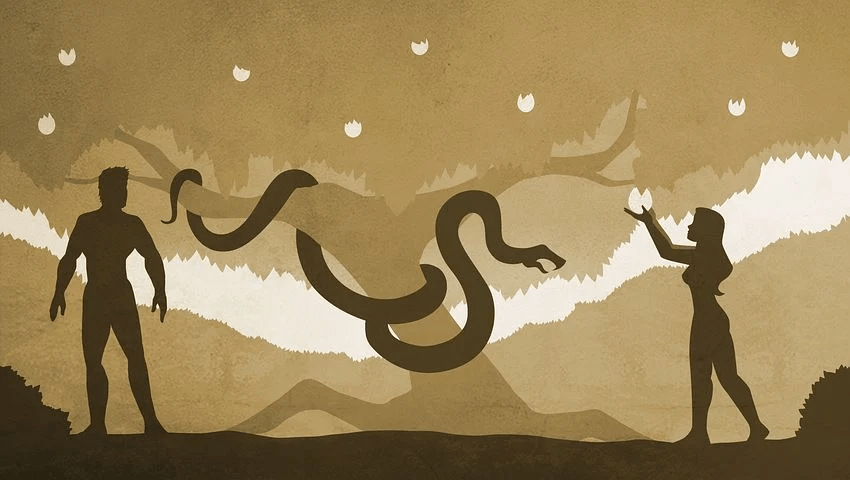
Early in the book of Genesis, Adam and Eve disobeyed God. That caused their attitudes to change. Whereas their original reflex responses in the Garden of Eden were to enjoy God and be open, their automatic emotional reflexes after the fall were to hide, blame, and guard themselves. 

Adam’s first response to God after his disobedience was to point the finger at Eve: “The woman you put here with me – she gave me some fruit from the tree, and I ate it.”  And Eve’s initial reflex attitude was to shift the blame, as well: “The serpent deceived me, and I ate” (Genesis 3).

Ever since, people have had an automatic attitude of blaming, quarreling, and complaining. The heart drifts toward complaint as if by some gravitational pull because grumbling seems a reasonable response to disappointing events.

Generally, complaints show up as an uninvited guest. You return home from a frustrating day to discover that complaint has moved into your guest room, unpacked its luggage, started a load of laundry, and is rooting through your fridge.

Even as you work to evict complaint—as you move its bags to the curb and change the locks on your doors—it somehow crawls back into the guest room window. Complaint is highly resistant to eviction. 

Before you know it, over time, complaint becomes familiar, even right. With every struggle, we become like the Israelites murmuring in the desert (Exodus 16-17). Although God wants to prepare our faith for works of service in the world, we are hunkered down with complaint, watching TV together, and grumbling through every show and each conversation.

We can discourage complaint’s residency in our lives by inviting another guest to move in with us. That new guest is a prayerful attitude of trust and gratitude. When we choose to trust God and give thanks in the face of deep disappointment, complaint has less space to maneuver.

While attempting to unpack for an extended stay, complaint discovers that trust and gratitude have taken all the drawers in the guest room and already occupy the empty seat at the supper table. Faith and gratitude evict complaint because faith and a grumbling spirit are not able to live in the same house together. One inevitably pushes the other one out.

The ancient Israelites experienced a miraculous deliverance from harsh slavery in Egypt. The Lord parted the Red Sea so that they could walk across on dry ground and escape the Egyptian army’s pursuit. It’s easy to praise God when great things happen, and the Israelites had a whopper of a praise and worship service after that deliverance. Yet it’s quite another thing to praise and trust God when trouble happens – and when it keeps happening over and over again. 

Immediately after the praise and worship, Moses led the people into the desert. There was no water. God deliberately led the people into a difficult situation to test their faith. The Israelites quickly forgot the blessings and began grumbling about their situation. 

Their reflex response was to complain and ignore God’s direct commands. Maybe they did so because they spent four-hundred years of slavery in Egypt, and complaint had made such a home with them that it was second nature to murmur about their situation.

I keep a small c-clamp in my office to remind me that I am not in control, but God is. It isn’t my job to hold the universe together. The c-clamp also reminds me that I need to keep a clamp on my tongue when it comes to grumbling and complaining. Sins of the tongue are some of the most dominant forms of disobedience to God throughout Holy Scripture. 

All kinds of animals, birds, reptiles, and sea creatures can be tamed and have been tamed. But our tongues get out of control. They are restless and evil, and always spreading deadly poison. (James 3:7-8, CEV)

I wonder, can any of us go 24 hours without complaining about something or someone? 

Those who cannot answer “yes” must recognize that’s a real problem. If you cannot go 24 hours without drinking liquor, you are addicted to alcohol. And if you cannot go 24 hours without grumbling about something or someone, then you have lost control over your tongue and you are addicted to murmuring and have an adulterous relationship with complaint.

We must invite everlasting life to take up permanent residence. We need to evict the squatter of complaint. 

God is with us. Difficult circumstances, trouble, hard situations, problem people, and the seeming impossibility that things will not change doesn’t mean God moved out of your house. Instead, it’s evidence that the Lord wants us to exercise our faith.

Let God do it.

O God:
Give us all strength to live another day without grumbling, arguing, or complaining;
Let us not lose faith in other people and withdraw from them, or you, out of spite;
Keep our hearts tender in spite of the ingratitude, treachery, or meanness around us;
Help us to maintain purity of heart, and to live in faith and confidence, so that failure cannot dishearten us;
Open wide our spiritual eyes so that we may see the good in all things;
Inspire us with the spirit of joy and gladness;
and make us worthy and competent servants to suffering souls;

The Fall of Humanity (Genesis 2:15-17, 3:1-7)

The Lord God took the man and put him in the Garden of Eden to work it and take care of it. And the Lord God commanded the man, “You are free to eat from any tree in the garden; but you must not eat from the tree of the knowledge of good and evil, for when you eat from it you will certainly die….”

Now the serpent was more crafty than any of the wild animals the Lord God had made. He said to the woman, “Did God really say, ‘You must not eat from any tree in the garden’?”

The woman said to the serpent, “We may eat fruit from the trees in the garden, but God did say, ‘You must not eat fruit from the tree that is in the middle of the garden, and you must not touch it, or you will die.’”

“You will not certainly die,” the serpent said to the woman. “For God knows that when you eat from it your eyes will be opened, and you will be like God, knowing good and evil.”

When the woman saw that the fruit of the tree was good for food and pleasing to the eye, and also desirable for gaining wisdom, she took some and ate it. She also gave some to her husband, who was with her, and he ate it. Then the eyes of both of them were opened, and they realized they were naked; so they sewed fig leaves together and made coverings for themselves. (New International Version)

Lent is a 40-day season of preparation and repentance for Christians anticipating Good Friday’s cross of Christ and the victory over sin in Easter’s celebration of Christ’s resurrection. To understand why there is a need for repentance, let’s turn to where disobedience, shame, and guilt first entered the world.

Ever since humanity’s fall into sin, our human nature tends to look at the one thing we can’t do, instead of seeing all the range of possibilities that we can do.  The serpent (the devil) was successful in getting Adam and Eve to focus on that one tree they needed to avoid. In our fallen condition, just tell us what we can’t do and we’ll probably be sure to do it – rather than enjoy all the vast prospects we presently have and can actually do with God. 

What’s more, the devil subtly planted a terrible and untruthful idea in the heads of Adam and Eve – that God was somehow holding out on them and was not providing everything they really needed and wanted in life.

Sin may look attractive, and even initially taste good. Yet, disobedience has an awful aftertaste and damages our insides. Indeed, sin always over-promises and under-delivers.

Perhaps the greatest and deepest effect of sin is the shame of disobedience which causes us to hide from God, one another, and even ourselves. All this hiding causes spiritual blindness. We end up sleepwalking through hell, unaware of our awful spiritual plight. 

Because of this reality, we need deliverance; we need a Savior to intervene and save us from our ignorance and guilt. As mere dust, we need God’s Spirit to breathe new life into us so that we may again enjoy the Lord in Paradise.

Our fallen spiritual condition does not want to acknowledge our need for the sheer grace of God. Sewing some fig leaves together is symbolic of Adam and Eve’s new independence from God; from now on, they’re going to operate on their own.  The introduction of sin into the world causes people to look for ways to cope and deal with life apart from God.

We want to return to Paradise. We don’t want to hurt and struggle and be overburdened anymore. So, we devise all kinds of ideas and ways of doing that. And the Paradise we seek always seems to be “out there” somewhere, just out of our reach. 

In our fallen condition, we are plagued with the “if only” syndrome:

If only I had _____ (fill-in the blank) then I would be happy and be in Paradise.

If only I could meet the right person, then that special someone could meet my needs and complete me.

If only the people in my life were better, then everything would be okay and I could enjoy Paradise.

If only I had more money, a bigger house, another car, more power and influence.

If only other people would stop being jerks, care more, serve more, love more. If only my family would listen to me.

If only I could have my way, then there would surely be a restoration to Paradise.

The point to all the “if only” is that it twists us all up into believing that I’m either unlovable or that everyone else is the problem. If they would just change, then the world would be a better place. Or if only I was better, then I wouldn’t have so many problems.

The truth, however, is that we already have what we are so desperately looking for. And since we are unaware that God is with us, and wants to provide for us, we sew fig leaves together and look love in all the wrong places.

No man or woman is going to complete you because no person can fix what is broken in your heart. If you had your ideal relationship, perfect family, and dream job, you would still be empty. Why? Because you and I need a Savior to deliver us from our sin.

We all need deliverance from our disordered loves and misguided attempts to find Paradise in this life apart from God. The temptation after The Fall is to try and manufacture happiness outside of God through perfect relationships and ideal circumstances. 

What to do? Repent. Turn from the shame and guilt of disobedience and deal with the brokenness in our own lives. And that is what the season of Lent is all about.

Without God there are hidden feelings of mistrust, alienation, conditional love, selfishness, greed, and injustice. But with God there is forgiveness, grace, and unconditional love – the very kind of love that we need.

In this season of Lent, we must repent of our hiding and wishing for everything and everyone else to be different without any cost to myself. 

What do you need to repent of in this season? 

Who are the people that you look to do for you what only God can do? 

Have you forsaken your first love of Jesus Christ? 

How is the state of your relationship with God? Has it been stale, dull, and lacking passion, desire, and energy?  Has distance replaced intimacy between you and God? 

Do you avoid the spiritual disciplines of bible reading and prayer because you believe something else will satisfy the real needs of your heart? 

Are you keeping up appearances and hiding, while on the inside you have doubt, depression, and despair that things will never change? 

The prayers of this season are to be prayers of repentance:

Merciful God, we confess that we have hungered after things which do not satisfy.  We have doubted your ability to provide for us. Forgive our lack of faith. Restore in us such trust and love that we may again walk with you in Paradise. 

Loving God, we admit that we’ve given ground to Satan by believing his deception that we can find ultimate happiness in things other than you. So, in the name of the Lord Jesus Christ, we resist all of the devil’s strategies to hold us in spiritual blindness and darkness. 

Blessed Holy Spirit, we invite you to bring the fullness of your power to convict us and lead us into faith in Jesus. We humbly ask that you bring all the power of Christ’s crucifixion and resurrection directly against all forces of darkness seeking to destroy us. Set us free from all that blinds us and keeps us in bondage. 

Grant us, O God, the grace to be faithful and persistent in our walk with you.  Amen.

There’s a Price to Pay (Leviticus 26:34-46)

At that time, while it is devastated and you are in enemy territory, the land will enjoy its sabbaths. At that time, the land will rest and enjoy its sabbaths. During the whole time it is devastated, it will have the rest it didn’t have during the sabbaths you lived in it.

I will bring despair into the hearts of those of you who survive in enemy territory. Just the sound of a windblown leaf will put them to running, and they will run scared as if running from a sword! They will fall even when no one is chasing them! They will stumble over each other as they would before a sword, even though no one is chasing them!

You will have no power to stand before your enemies. You will disappear among the nations—the land of your enemies will devour you. Any of you who do survive will rot in enemy territory on account of their guilty deeds. And they will rot too on account of their ancestors’ guilty deeds.

But if they confess their and their ancestors’ guilt for the wrongdoing they did to me, and for their continued opposition to me—which made me oppose them, so I took them into enemy territory—or if their uncircumcised hearts are humbled and they make up for their guilt, then I will remember my covenant with Jacob. I will also remember my covenant with Isaac. And my covenant with Abraham.

And I will remember the land. The land will be absent of them and will be enjoying its sabbaths while it lies devastated, free of them. They will be making up for their guilty deeds for no other reason than the fact that they rejected my regulations and despised my rules. 

But despite all that, when they are in enemy territory, I will not reject them or despise them to the point of totally destroying them, breaking my covenant with them by doing so, because I am the Lord their God. But for their sake I will remember the covenant with the first generation, the ones I brought out of Egypt’s land in the sight of all the nations, in order to be their God; I am the Lord.

These are the rules, regulations, and instructions between the Lord and the Israelites that he gave through Moses on Mount Sinai. (Common English Bible)

Disobedience has a price. Within God’s household, the Lord isn’t some geriatric or decrepit deity who let’s the kids run around and do whatever the heck they want. Instead, God has certain rules so that the children can grow and thrive within loving boundaries. The fences aren’t there in order to be a divine killjoy; rather, the rules and boundaries exist for the flourishing and enjoying of life.

The price of disobedience is brokenness and devastation. To continually buck our basic design as humans will eventually catch up to us. If we eat with impunity, spending copious amounts of time consuming food, we’ll one day collect a host of heart-related issues and diseases. If we drive the car and never maintain it through regular oil changes and inspections, someday it will break down, perhaps permanently.

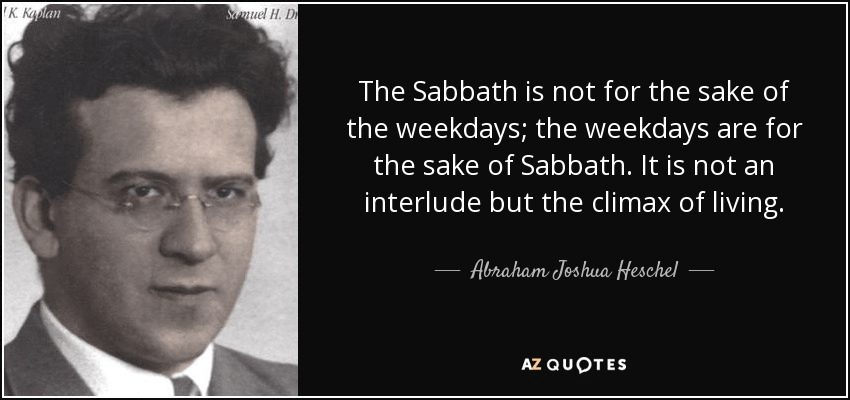
And if we live our lives without punctuating our weeks with needed rest – and use the land as if it were an infinite resource – then everything will eventually go awry and not work or produce like it should. That’s not God being mean, as if the Lord is to blame; it’s us being stupid, not practicing our God-given wisdom.

“Because we do not rest, we lose our way.”

Wayne Muller

Everything and everyone needs rest. It’s vital to us, just as much as water to drink and air to breathe. So, if we ignore it, we’ll pay the price of our neglect.

Sabbath was built into the universal scheme of things because it’s necessary. Our bodies neither work right nor live right without regular sabbath rests. It’s not optional. Try telling your body that you’re too busy to go to the bathroom and see how that works out for you. Sooner than later, you’re going to have to submit, or there will be a hefty price to pay.

If we stray from wise ways of living, or even stubbornly refuse to obey, there’s hope; we won’t be left to wallow in our own foolishness. Grace is too big and strong for any of our puny human backsliding. The Lord is always ready and willing to receive the humble and penitent heart.

God’s expertise is in restoration; the Lord gives a new lease on life to people who could never do it themselves. In fact, from a New Testament perspective, God even goes so far as to pay the price of human waywardness with his own Son.

A loving God ensures that all of creation will have what it needs to survive and thrive. An unloving god turns a blind eye to it all. If we don’t learn to play well with the creation around us, we’ll be called into the house and not be allowed to be outside for quite some time.

We are meant to practice good self-care, be good caregivers for others, and concern ourselves with caring for all creation.

So, pay the price of caring for self, others, and the land. Accept and submit to the rhythms of life which are required to live well. You’ll be glad you did because the alternative may be something a whole lot harder.

Creator God, you made the goodness of the land, the riches of the sea and the rhythm of the seasons; as we thank you for your gracious providing may we cherish and respect this planet and its peoples, through Jesus Christ our Lord. Amen.

Obey with Integrity and Love (Psalm 15)

God, who gets invited
    to dinner at your place?
How do we get on your guest list?

 “Walk straight,
    act right,
        tell the truth.

“Don’t hurt your friend,
    don’t blame your neighbor;
        despise the despicable.

“Keep your word even when it costs you,
    make an honest living,
        never take a bribe.

“You’ll never get
blacklisted
if you live like this.” (The Message)

Nearly all of us had to work hard to get good grades in school. Each schoolyear began with a blank slate; then, what we did with learning the lessons determined the grade.

So, it’s unthinkable for many of us to consider that we all begin God’s school with A’s. We’re all 4.0 students. There’s only a lower grade if we neglect to do the things necessary as an A student. And, as it turns out, the most important things are a matter of basic human kindness and respect for others.

At the end-of-the-year banquet, awards are given. If we’ve done what’s expected, then the invitation to come to the front and receive the award is assured.

Yet, if anyone has gone out of their way to be deliberately stupid and ignore what’s right, then they aren’t going to show up at the banquet. They’ll dismiss it as a waste of their time and blabber about how they don’t be around a bunch do-gooder pricks and Abe Lincoln’s, blah-blah-blah.

Integrity, honesty, kindness, accountability, and commitment matter. Virtue shows itself through the practice of obedience.

We might get hung up on obedience for a few reasons:

  1. Many Westerners, especially Americans, have a strong anti-authoritarian strain; obedience smacks them as something negative. For some, they would rather stick-it-to-the-man than obey. Even Christians might sacralize their disobedience by linking obedience to law – as if gospel and obedience are antithetical.
  2. A lot of people have been personally hurt because they tried to do the right thing by obeying their authorities, but it ended badly. Now, they aren’t so sure about the whole obedience thing.
  3. We just plain don’t want anyone else telling us what to do and not do; and that includes not wanting to obey God. So, we focus on the freedom to do what we want, to the exclusion of obedience.

Yet, there’s no way to get around the pervasive reality of obedience to Torah, to Yahweh. Obedience is both the glue which holds a people together, as well as the major means of expressing love to God and others.

Jesus said, “If you love me, obey my commandments.” (John 14:15, NLT)

Love and obedience go together in Holy Scripture like a hand in a glove. Jesus insisted that upholding Torah and loving others is by obedience to divine commands.

When Jesus first began his teaching and healing ministry, he sat all the people down who were following him and gave them a summary of the Old Testament understanding of God’s righteousness. These are the things, Jesus explained, that characterize a person who loves God:

Blessed are the poor in spirit, for theirs is the kingdom of God. 

Blessed are those who mourn, for they shall be comforted. 

Blessed are the meek, for they will inherit the earth. 

Blessed are those who hunger and thirst for righteousness, for they will be filled. 

Blessed are the merciful, for they will be shown mercy. 

Blessed are the pure in heart, for they will see God.  Blessed are the peacemakers, for they will be called sons of God. 

Blessed are they who are persecuted for righteousness, for theirs is the kingdom of God (Matthew 5:12-17, NIV).

Obedient believers are characterized by their:

  • Authentic humility
  • Deep concern over sin, to the point of tears
  • Gentle and meek spirit toward others
  • Intense desire for personal righteousness and corporate justice
  • Daily life of mercy, purity, and peacemaking
  • Willingness to accept adversity as part of the spiritual life

“Love the Lord your God with all your heart and with all your soul and with all your mind. This is the first and greatest commandment. And the second is like it: Love your neighbor as yourself.”

Jesus (Matthew 22:36-40, NIV)

Humanity is meant for wholeness, integration, and alignment of head, heart, and gut – with the glue of obedient love. We are designed to have all of life in parity and balance – work, play, family, and faith – because God is Lord of it all, not just the spiritual parts.

Historic confessional Christianity acknowledges that obedience is both duty and delight – and they go together in perfect harmony.

Believers consider it a both a high charge and a wonderful privilege to love the Lord with a life devoted to obeying divine commands.

It’s just that sometimes we have our lives so planned and pre-determined that when God’s Spirit shows up to take us to a place of obedience, we struggle to realize what’s happening. And we miss what the Lord is doing in this world. 

At other times, we read scriptural commands and feel the gentle nudging of God’s Spirit, yet we either cannot or will not respond out of fear, busyness, or grief. 

Then there are times in which we are attentive to God’s Word and Spirit, seeking to obey – only to mess up and fail at it. It can leave us wondering if God could ever really do anything in or through us.

The truth is this: Love conquers all. Grace overcomes everything. Mercy never fails.

We are here on this earth because of how much the Lord is devoted to us. Even though we often walk the spiritual road in a three-steps-forward-two-steps-backward kind of way, God accommodates to our weakness. 

So, we keep learning the ways of the Lord under the tutelage of God’s Spirit – who patiently and powerfully works within us so that God’s kingdom breaks into this world and God’s will is done on earth as it is in heaven.

Blessed God, I seek not my own will but to fulfill your will in my everyday life. Enable me and strengthen me for this sacred duty and delight, in the power of your Spirit. Amen.