
What Is Your View of God? (Psalm 86:1-10)

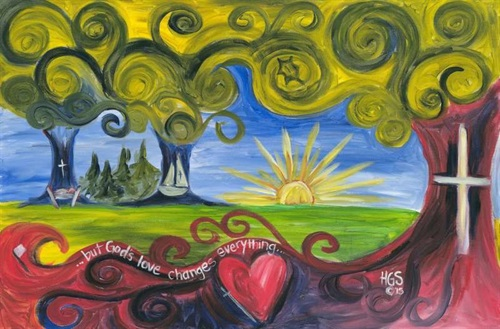
God’s Love… by Hope G. Smith

Incline your ear, O Lord, and answer me,
    for I am poor and needy.
Preserve my life, for I am devoted to you;
    save your servant who trusts in you.
You are my God; be gracious to me, O Lord,
    for to you do I cry all day long.
Gladden the soul of your servant,
    for to you, O Lord, I lift up my soul.
For you, O Lord, are good and forgiving,
    abounding in steadfast love to all who call on you.
Give ear, O Lord, to my prayer;
    listen to my cry of supplication.
In the day of my trouble I call on you,
    for you will answer me.

There is none like you among the gods, O Lord,
    nor are there any works like yours.
All the nations you have made shall come
    and bow down before you, O Lord,
    and shall glorify your name.
For you are great and do wondrous things;
    you alone are God. (New Revised Standard Version)

What is your view of God? 

For some, God is up there, somewhere, like some white-bearded old guy who is aloof to what is going on down here – there is neither anything personal nor personable about him, at all. If he gets involved, at all, it’s just to get out his divine BB gun and shoot a few sinners in the backside.

For others, God is a force which binds all things together; God is there, but you’re never quite sure how to get in touch with him – it’s like a crap shoot trying to connect with God. So, you might do all sorts of things to get God’s attention, like be especially good – and if that doesn’t work, maybe you’ll go the other way and be especially bad, just to get any sort of attention.

For yet others, God is perpetually perturbed about something; he’s got a bee in his divine bonnet and it’s our job to figure out what he’s sullen and upset about all the time, that we might appease God in some way. So, you might double-down on being self-sacrificial, try not to swear in front of the Pastor, and help others so that God will, in turn, help you.

The psalmist David, however, sees God in a very different way than all the aforementioned. God is not aloof and distant, nor angry. Instead, David understands and views God as personal, knowable, and reachable.

What characterizes God?

Reading today’s psalm tells us a great deal of how David thought and felt about God. Notice what we learn about God from David’s description: good and forgiving; abounding in steadfast love; listens and answers; and, does great and wondrous things.

Now this is a God you can sink your teeth into. This God is attentive, engaged, and is anything but upset all the time – which is why David has no problem asking God to listen and answer his prayer.

David put his trust in God to save him and make his heart glad. With this kind of God, David can willingly affirm his devotion. With a God of steadfast love and support, the worshiping and praying person’s heart forever belongs to the Lord.

If your view of God cannot support and bear the weight of your life’s hardest circumstances, then you need a different view of God!

Rather than God being the problem, it could be that your understanding of God is off. And if your understanding of God is off, then it’s likely that your own understanding of yourself is skewed – which is why many persons who have darker views of God are down on themselves and possess little self-worth.

I invite you to see the God of David. This God has both the ability and the willingness to satisfy your life’s greatest needs.

What will you do with your view of God?

In humility and brokenness, we call out in our misery. God responds in steadfast love and abundant mercy. With God, we can move from trouble to confidence.

And sometimes, we discover that our troubles and our circumstances change very little. But we ourselves have changed a great deal. Our compulsions for solid answers to our questions give way to a settled confidence in divine mystery. And our obsessions with a pain-free and problem-free life are replaced with a curiosity for what the hard situations in our lives will teach us.

The poor and needy cry out to God, knowing that grace and mercy characterizes the Lord. Life on this earth may not treat us well, but God gives us much more than we deserve.

The faithful trust in the Lord, fully confident that their preservation and protection are in God’s hands – and not in political leaders or padded bank accounts.

The miserable pray, constantly persevering in prayer, because their hope is in the name of the Lord who made heaven and earth. They have learned to pray expectantly, understanding that sometimes the greatest miracle of all is being delivered from the need to have a miracle.

Those who lift their faces to heaven, looking for the bright sunshine of grace, will know joy, down deep in their soul – and not simply a fleeting happiness from temporary reprieve of trouble.

The ones calling on the name of the Lord, banking their lives on God’s love, discover forgiveness and a good peaceful life of peace – rather than the anxiety of constantly worrying about tomorrow.

The spiritually devoted are confident that God will answer in their day of trouble – and they are patient, knowing full well that God’s sense of timing is much better than their own. So, they learn to hold all things loosely, knowing that God gives and God takes away. Blessed be the name of the Lord.

All those taking the time and effort to find the God who is truly characterized by kindness and compassion know in their gut, without a shadow of a doubt, that there is no one like the Lord – a God who does wondrous things and is attentive to justice and righteousness.

What is your view of God? Listen closely to the psalmist, and he will tell you what the Lord has done for him because of God’s basic nature of love and goodness.

Great God of David, you are above all things and beside all things and with all things. You are uniquely positioned and powerful to walk with me through all the situations of my life. Thank you for sending the Son of David to make your promises real to me. Amen.

A (Needed) Perspective on the Christian Life (Acts 27:39-44)

Paul’s Shipwreck, by Ludolf Backhuysen (1630–1708)

When daylight came, they did not recognize the land, but they saw a bay with a sandy beach, where they decided to run the ship aground if they could. Cutting loose the anchors, they left them in the sea and at the same time untied the ropes that held the rudders. Then they hoisted the foresail to the wind and made for the beach. But the ship struck a sandbar and ran aground. The bow stuck fast and would not move, and the stern was broken to pieces by the pounding of the surf.

The soldiers planned to kill the prisoners to prevent any of them from swimming away and escaping. But the centurion wanted to spare Paul’s life and kept them from carrying out their plan. He ordered those who could swim to jump overboard first and get to land. The rest were to get there on planks or on other pieces of the ship. In this way everyone reached land safely. (New International Version)

Saul was an up and rising star among the Jewish Pharisees. He was committed to his religion to the point of approving the death of the first Christian martyr, Stephen. Saul saw followers of Jesus as an aberration to Judaism, and did whatever he could to stamp out the sect.

During one of his travels to do just that, he was confronted by a vision of Christ himself, who said to Saul, “Why do you persecute me?” (Acts 9:4-5) For days Saul was blind, mimicking his spiritual blindness. Both his physical and spiritual eyesight were restored when he came to faith in Christ and began following the words and ways of Jesus. His name changed from Saul to Paul the Apostle.

Paul’s conversion was a complete transformation of life. Yet, this in no way meant that the rest of his life was all rainbows and butterflies. Just the opposite. Saul the Persecutor ended up becoming Paul the Persecuted One.

With the same drive and desire that he once had to do away with Christians altogether, so now the Apostle Paul put all that energy into proclaiming the good news of grace and forgiveness in Jesus Christ his Savior and Lord. And, as one might expect, this put Paul in the crosshairs of his former partners, the Jewish Pharisaical leadership. They now despised Paul.

The Jewish religious authorities hated Paul so much that they made sure to stir up trouble for him everywhere he went, even when it was way out in the Gentile sticks of Galatia and the Gentile strongholds of Greece. And that is essentially why Paul landed in prison. He was portrayed as a rebel and a troublemaker, an enemy of the social order (even though Paul himself was actually a citizen of Rome).

As a Roman citizen, Paul invoked his right to appeal to Caesar. And so, he was put on a Roman prison ship, bound from Palestine to Italy. And that is where we pick up today’s New Testament lesson.

Paul had been through an awful lot of adversity, hardship, and persecution. His faith had become so robust that a terrible storm and a shipwreck could not at all wreck his commitment to Christ. In fact, it only strengthened it.

It’s not always easy to see, but Paul’s words to the Roman Christians are true, even for us today:

And we know that God causes everything to work together for the good of those who love God and are called according to his purpose for them.

The Apostle Paul (Romans 8:28, NLT)

This is an understanding of God, a deep theological perspective, which is informed by years of walking with Jesus in the crucible of suffering and difficulty. It discerns the Lord as caring and loving, even when it appears on the surface that God is mean and capricious.

Many Christians today tend to believe that the redemption which Christ secured is a mere life insurance policy for heaven. And, if it has anything to do with the here-and-now, it means we ought to have all our desires met for earthly peace and abundance. If that were true, both Jesus and Paul were miserable failures as godly people.

God, however, cares about our salvation, our wholeness and integrity as people on this earth. Yes, we have eternal life, yet that life has already begun, and we are to live into it now.

Christianity is a paradoxical faith. The way to gain your life is to lose it. The path to glory is through suffering.

This, my friends, means that we do not gain a good and blessed life by attempting to make everything in life go our way, without any difficulty. Instead, the good life comes by acknowledging the grit and grist of life. It is in the full acceptance of suffering, persecution, illness, death, and our own psychological infirmities that leads us into becoming who God wants us to be – and thus more open to what joy really is.

On the practical level, this means that our failures, our missed expectations, and our dashed hopes are very important pieces to our faith and it’s development. All of this is what awakens us to compassion – both for others and ourselves.

So then, Paul’s perspective on all the difficulties in his life is that they are significant spiritual incubators of faith for him. Paul accepted his sufferings and hardships – and more than that – he valued them for the ways they developed his faith in God and ability to minister to others.

As one old Rabbi once put it:

“There are many rooms in God’s castle. There is, however, one key that opens every room, and that key is a broken heart.”

Ba’al Shem Tov (1698-1760)

Sovereign God, let our love be genuine; help us to hate what is evil, and to hold on to what is good; and empower us to love one another with mutual affection. Strengthen our spirits so that we might serve our Lord Jesus. With you as our faith, we choose to rejoice in hope; be patient in affliction; and persevere in prayer, by means of your blessed Holy Spirit. Amen.

Change and Stress (Acts 27:1-12)

When it was decided that we would sail for Italy, Paul and some other prisoners were handed over to a centurion named Julius, who belonged to the Imperial Regiment. We boarded a ship from Adramyttium about to sail for ports along the coast of the province of Asia, and we put out to sea. Aristarchus, a Macedonian from Thessalonica, was with us.

The next day we landed at Sidon; and Julius, in kindness to Paul, allowed him to go to his friends so they might provide for his needs. From there we put out to sea again and passed to the lee of Cyprus because the winds were against us. When we had sailed across the open sea off the coast of Cilicia and Pamphylia, we landed at Myra in Lycia. There the centurion found an Alexandrian ship sailing for Italy and put us on board. We made slow headway for many days and had difficulty arriving off Cnidus. When the wind did not allow us to hold our course, we sailed to the lee of Crete, opposite Salmone. We moved along the coast with difficulty and came to a place called Fair Havens, near the town of Lasea.

Much time had been lost, and sailing had already become dangerous because by now it was after the Day of Atonement. So Paul warned them, “Men, I can see that our voyage is going to be disastrous and bring great loss to ship and cargo, and to our own lives also.” But the centurion, instead of listening to what Paul said, followed the advice of the pilot and of the owner of the ship. Since the harbor was unsuitable to winter in, the majority decided that we should sail on, hoping to reach Phoenix and winter there. This was a harbor in Crete, facing both southwest and northwest. (New International Version)

Change is an emotionally charged word. For some, change is longed for. Those with adverse circumstances and difficult situations may look for change, and even for a miracle to turn their life around. Others want nothing to do with change; they’ve had a bad experience with it. Their fortunes were good, until something changed. And now they’re stressed out.

The majority of us have some sort of love/hate relationship with change – which is why there are people who look askance on Christianity and raise their eyebrow in skepticism toward Christians or religious folk in general. At the heart of Christianity is change, and change can be quite threatening toward a lot of people.

The Apostle Paul perhaps knew about change better than any Christian in history. He went from resisting change with violence, to embracing change so wholeheartedly that he became a victim of other’s violence. We meet him in today’s New Testament lesson as a prisoner being shipped from Palestine to Rome.

Paul’s message, at its core, is the good news of transformation because of Christ’ crucifixion and resurrection. It’s a message of radical and joyous change, of new life. And it’s also a scandalous message which impacts the surrounding culture.

Wherever the gospel of Jesus Christ went, people responded, and it influenced society to a significant degree. Throughout the Acts of the Apostles, political authorities, religious leaders, and cultural elites felt powerful shifts in their societies. Yes, a few became Christians themselves, but most resisted the change, and in some cases, in their irritated stress response, retaliated against believers.

The message of Christianity doesn’t yield to political forces that attempt to domesticate God; and that reality put many believers in the crosshairs of those forces.

Paul’s ability to keep up his witness to Christ, even while held prisoner under powerful Roman authority, comes from a theology that God is above all earthly rule and can make a way where there seems to be no way. In other words, no matter whether human institutions, empires, and structures either acquiesce or oppose the gospel makes no difference; God is able to bend any system and authority for divine purposes.

And this is precisely why the Apostle Paul appears calm, non-anxious, and able to encourage others in the center of a storm in which everyone might lose their lives. Put simply: Paul trusted God.

Yes, we have unwanted circumstances. Yet, if we are able to entrust ourselves to a good God (which may sound trite and easy, yet is anything but that) then we find that we’re also able to have a radical acceptance of the situation we’re presently in.

Faith and trust help us to accept difficult changes and respond to stress with resilience because faith is attentive to the following:

  • Knowing change is coming. Throughout the New Testament we are told that adversity and suffering are an integral part of the Christian life. Paul wasn’t caught by surprise with a storm. In his life, he expected the difficulties to come.

You have seen me experience physical abuse and ordeals in places such as Antioch, Iconium, and Lystra. I put up with all sorts of abuse, and the Lord rescued me from it all! In fact, anyone who wants to live a holy life in Christ Jesus will be harassed. (2 Timothy 3:11-12, CEB)

  • Paying attention to the feelings of self and others. Emotions are not a necessary evil. They play a very important role in helping us come to grips with what’s happening. Paul acknowledged the emotions of everyone on the ship, as well as his own. And this became the pathway to both acceptance and encouragement.

There’s a season for everything
    and a time for every matter under the heavens

a time for crying and a time for laughing,
    a time for mourning and a time for dancing. (Ecclesiastes 3:1, 4, CEB)

  • Becoming resilient. The ability to adapt, to find ways of surviving and thriving, is buoyed by a robust faith which can see with spiritual eyes and make decisions of faith, hope, and love.

“When I was born into this world,
    I was naked and had nothing.
When I die and leave this world,
    I will be naked and have nothing.
The Lord gives,
    and the Lord takes away.
Praise the name of the Lord!” (Job 1:21, ERV)

Stress and change can be hard and overwhelming. Yet, at the same time, it can be an opportunity to put faith into practice and be a blessing to the world.

Assist us, Lord, in living hopefully into the future. In the face of change, help us to set unnecessary fears aside and to recognize our potential for creative response. Help us to develop a reasonable optimism and to guard against our own defensiveness. Be with us as we remember and celebrate former times, and keep us from unreasonable yearning for them, which takes us from the work you have set before us in our time. All this we ask in the name of your Son, our Savior, Jesus Christ. Amen.

A Prayer of Desperation (Jonah 2:1-10)

From inside the fish, Jonah prayed to the Lord his God:

When I was in trouble, Lord,
I prayed to you,
    and you listened to me.
From deep in the world
    of the dead,
I begged for your help,
    and you answered my prayer.

You threw me down
    to the bottom of the sea.
The water was churning
    all around;
I was completely covered
    by your mighty waves.
I thought I was swept away
    from your sight,
never again to see
    your holy temple.

I was almost drowned
by the swirling waters
    that surrounded me.
Seaweed had wrapped
    around my head.
I had sunk down deep
    below the mountains
    beneath the sea.
I knew that forever,
    I would be a prisoner there.

But you, Lord God,
    rescued me from that pit.
When my life was slipping away,
    I remembered you—
and in your holy temple
    you heard my prayer.

All who worship worthless idols
turn from the God
    who offers them mercy.
But with shouts of praise,
I will offer a sacrifice
    to you, my Lord.
I will keep my promise,
because you are the one
    with power to save.

The Lord commanded the fish to vomit up Jonah on the shore. And it did. (Contemporary English Version)

Desperate (adjective):

  1. reckless or dangerous because of despair, hopelessness, or urgency: a desperate prayer for help
  2. having an urgent need, desire: desperate to stay alive in a watery grave
  3. leaving little or no hope; very serious or dangerous: desperately stuck in the belly of a fish
  4. extremely bad; intolerable or shocking: skin being bleached white inside of a stomach
  5. extreme or excessive: swallowed and puked-out by a fish

Out of all the postures of prayer I have taken in my life, and in every prayer of desperation I’ve ever uttered to God, none of my experiences were ever quite like Jonah’s. Curled up in a fetal position inside the belly of a big fish will tend to bring out a desperate plea for help. And desperate prayers are the sort God wants from us.

I am God Most High!
    The only sacrifice I want
is for you to be thankful
    and to keep your word.
Pray to me in time of trouble.
I will rescue you,
    and you will honor me. (Psalm 50:14-15, CEV)

The Lord says, “If you love me
    and truly know who I am,
I will rescue you
    and keep you safe.
When you are in trouble,
    call out to me.
I will answer and be there
    to protect and honor you.
You will live a long life
    and see my saving power.” (Psalm 91:14-16, CEV)

Anyplace of difficulty, adversity, or overwhelming situation, can be transformed from the acid belly of a fish to a womb of possibility and new life.

In running from God, Jonah chose unwisely, and took the path of separation and death. Being swallowed whole by a great fish, and languishing in such a place of sheer isolation, is also a metaphor mirroring the actual circumstance of Jonah’s great separation from everyone, everything, especially God.

Our own fleeing from what we hate, and searching for safety apart from the Lord, only lands us in a place of horror. Jonah got himself so far from everything that he became entombed in a living death. In truth, God is the only safe and sacred place we have, our only secure refuge. We don’t need to run in order to be protected – not when God has our backs.

The turning point is whenever we come to our senses and make the choice to unmask our actual thoughts, feelings, and intentions before the Lord. The change comes whenever we make an honest cry of desperation in prayer. For prayer is the very breath of life; it is our hope.

What do you do when you are in distress?

Prayer elicits mercy from the heart of God. The value of adopting biblical prayers, like the ones in the psalter and Jonah’s prayer, is that frequent use of praying them fills our minds and hearts with words in times of great distress.

Its when we are in overwhelming need that scriptural prayers and familiar passages reawaken us with fresh hope for deliverance and renewal.

Jonah’s dark watery grave became empty when he decided to voice his desperate prayer to God. It’s one thing to pray because you want something; it’s another thing to pray because your very life is on the line.

Living for God is much more than holding to particular doctrines or making pious statements about God. The spiritual life is one in which we open ourselves to new beginnings and new life – going beyond ourselves and connecting with a transcendent God.

We must abandon ourselves to God. We are in no position to negotiate or make deals with the Lord. There needs to be a radical letting go of hatred and bigotry, injustice and unrighteousness, and especially our bent toward wanting things our way.

It is from the empty places of life that we find possibility. It was from the grave of the fish’s belly that set up Jonah’s experience of being vomited out in a spiritual resurrection.

Jonah was in the stomach of a big fish for three days and nights, just as the Son of Man will be deep in the earth for three days and nights. (Matthew 12:40, CEV)

Abandoning the false self, forsaking the old life, and coming to the end of ourselves, puts us in a position to pray desperate prayers which God delights to answer beyond what we can even ask or think.

Most holy and merciful God, I am in your care. Help me know that I need not face my troubles alone. May you grant me consolation in my sorrow, courage in my fear, and healing in the midst of my suffering. Fill me with the grace to accept whatever lies ahead for me; and strengthen my faith. Thank you that I have a living hope, through Jesus Christ my Lord, who with you and the Holy Spirit are one God, now and forever. Amen.