To Be, or Not to Be (Psalm 28)

Only you, Lord,
    are a mighty rock!
Don’t refuse to help me
    when I pray.
If you don’t answer me,
    I will soon be dead.
Please listen to my prayer
    and my cry for help,
as I lift my hands
    toward your holy temple.

Don’t drag me away, Lord,
    with those cruel people,
who speak kind words,
    while planning trouble.
Treat them as they deserve!
    Punish them for their sins.
They don’t pay any attention
    to your wonderful deeds.
Now you will destroy them
    and leave them in ruin.

I praise you, Lord,
    for answering my prayers.
You are my strong shield,
    and I trust you completely.
You have helped me,
and I will celebrate
    and thank you in song.

You give strength
    to your people, Lord,
and you save and protect
    your chosen ones.
Come save us and bless us.
Be our shepherd and always
    carry us in your arms. (Contemporary English Version)

Today’s Psalm, in the Revised Common Lectionary, is alongside the Old Testament story of Joseph and his brothers in the book of Genesis. While out caring for the vast flocks of sheep and goats, Joseph’s brothers hatched a cabal against their younger sibling. They tossed him into an empty cistern (a deep water well) and intended to leave him for dead.

But when a caravan came along, heading to Egypt, the brothers decided on yet another diabolical plan. So, they brought Joseph out of the cistern and sold him into slavery. And, if that weren’t enough, the hateful brothers kept rolling out the devious scheming by making it look like a wild animal killed Joseph, so that they could hide their shameful guilt from Jacob, their father.

So, we are invited to view the psalm from Joseph’s perspective of frustration and agony, crying out to God. Then, praising the Lord for listening and saving his life – even if it meant becoming a servant in a foreign country.

Although becoming a slave was certainly not an ideal situation, Joseph faced a desperate need, even death, and the Lord saved him from it. And Joseph was encouraged and emboldened by the reality that God was with him, no matter where, nor what the situation.

Joseph, along with the original craftsman of the psalm, David, gave praise to God for hearing their prayers. Whereas we may get lost in anger and want retribution, perhaps our orientation is best directed toward offering praise to God for being with us and saving us from certain death.

This raises several questions, at least for me, about being in situations where I experience being heard by God, protected from ultimate harm, yet still left between a-rock-and-hard-place:

  • Can I praise God just for being heard and listened to? 
  • Do I really need to be healed or delivered? Or do I actually need to be delivered from the need for deliverance? 
  • What if I don’t get everything I pray for? Am I expecting to receive something God never promised? 
  • Will I offer praise and thanksgiving, even if God is silent? 
  • Is my joy in a relationship with God either conditional, or unconditional?

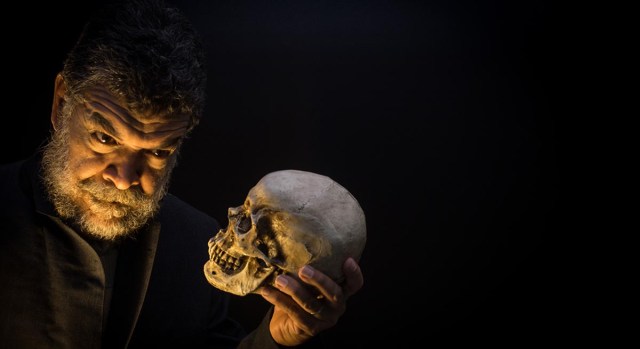
William Shakespeare’s Hamlet (c.1601 C.E.) put the question this way: “To be, or not to be, that is the question.” Hamlet’s soliloquy went on to say:

“Whether ’tis nobler in the mind to suffer
The slings and arrows of outrageous fortune,
Or to take arms against a sea of troubles,
And by opposing end them? To die: to sleep;
No more; and by a sleep to say we end
The heartache and the thousand natural shocks
That flesh is heir to, ’tis a consummation
Devoutly to be wish’d. To die, to sleep;
To sleep: perchance, to dream: ay, there’s the rub;
For in that sleep of death what dreams may come
When we have shuffled off this mortal coil,
Must give us pause: there’s the respect
That makes calamity of so long life;
For who would bear the whips and scorns of time,
The oppressor’s wrong, the proud man’s contumely,
The pangs of despised love, the law’s delay,
The insolence of office and the spurns
That patient merit of the unworthy takes,
When he himself might his quietus make
With a bare bodkin [knitting needle]?”

Like Joseph left for dead in an empty cistern, Hamlet was miserable and burdened with a profound lack of power to change his circumstances. So, he reflected on life and death in a morbid and melancholy way. It’s not that Hamlet had suicidal ideation, as much as he meditated on what life truly is, and tried to find some meaning within it.

Unlike Joseph, Hamlet cannot find the courage to deal with his frustration and feels stymied with fear of the unknown. He became lost in the injustice of it all.

If we are blatantly honest with ourselves, we much too often have a particular outcome in mind that we want or expect God to do. 

Our hopes become tethered to God doing something extremely specific so that, if it does not come to pass, or does not come quickly, or doesn’t happen as we want, then discouragement, disillusionment, and even depression may settle down in our souls like a lead weight. 

Like Hamlet, we become lost in the shadows of our thinking and ponder some sort of escape.

So, here is another set of questions I am asking myself: 

  • If my adverse circumstances do not change, can I praise God anyway? 
  • Can I, like David, take joy in simply being heard? 
  • Can I find gratitude in all situations? 
  • Do I only express thanks and praise to God when things are going my way? 
  • Am I open to whatever God wants to do in my life, even if it is not what I would choose? 
  • Do I feel that I am above having to put up with the wickedness of this world? 
  • Am I expecting heaven on earth, or am I willing to suffer as Jesus did? 

I honestly believe the answers to those questions will largely determine the trajectory of our spiritual development, our emotional maturity, our mental thoughts, and our overall religious experience.

I praise you, O God, in the good and the bad, the easy and the difficult, the failures and the victories. You are Lord over all things. You are my strength and shield in every circumstance. When I am weak, then I am strong. I can do all things through Christ who strengthens me. Amen.

Life in the Spirit (Romans 8:1-11)

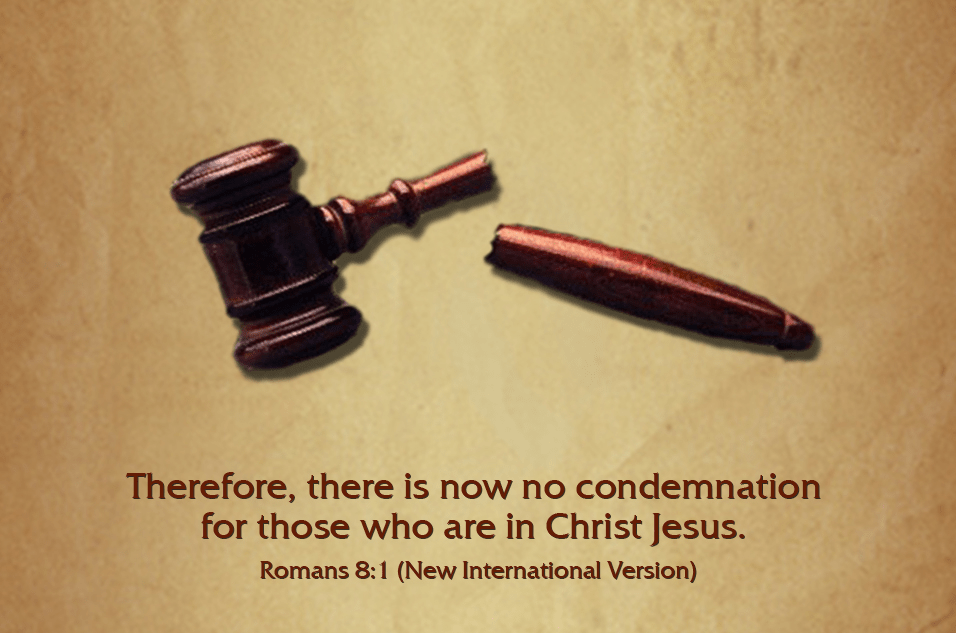
Therefore, there is now no condemnation for those who are in Christ Jesus, because through Christ Jesus the law of the Spirit who gives life has set you free from the law of sin and death. For what the law was powerless to do because it was weakened by the flesh [sinful nature] God did by sending his own Son in the likeness of sinful flesh to be a sin offering. And so he condemned sin in the flesh, in order that the righteous requirement of the law might be fully met in us, who do not live according to the flesh but according to the Spirit.

Those who live according to the flesh have their minds set on what the flesh desires; but those who live in accordance with the Spirit have their minds set on what the Spirit desires. The mind governed by the flesh is death, but the mind governed by the Spirit is life and peace. The mind governed by the flesh is hostile to God; it does not submit to God’s law, nor can it do so. Those who are in the realm of the flesh cannot please God.

You, however, are not in the realm of the flesh but are in the realm of the Spirit, if indeed the Spirit of God lives in you. And if anyone does not have the Spirit of Christ, they do not belong to Christ. But if Christ is in you, then even though your body is subject to death because of sin, the Spirit gives life because of righteousness. And if the Spirit of him who raised Jesus from the dead is living in you, he who raised Christ from the dead will also give life to your mortal bodies because of his Spirit who lives in you. (New International Version)

I feel tremendously privileged to be a Christian and to enjoy the very Spirit of God. The people of God are spiritual people, possessing God’s own Spirit. The Apostle Paul wanted Christians to know the privileges of life in the Spirit, as believers in Jesus.

No Condemnation

There is now no condemnation, no judgment, for us who are in Christ. God has pronounced a verdict, and that decision is final. We have been united to Christ by means of God’s Spirit. Since God condemns neither you nor I, there is no need whatsoever to condemn ourselves or other believers.

Since no condemnation is our reality as Christians, we are to believe this promise of God and swim in its wonderful privilege. Believe that the sin issue has been taken care of once for all through the life and death of Christ. And if you do not feel forgiven, then put yourself in a position to believe. 

It would be silly to go into the bathroom, turn on the shower, and then just stand in the middle of the bathroom without getting under the showerhead. It would be weird because you did not put yourself in a position to actually become clean. You may believe that a shower and using soap and shampoo will make you clean, but if you do not actually avail yourself of the privilege of actually taking the shower, but just stand there and look at it, you will not really be clean. 

We must put ourselves in a position to experience the privilege of knowing our wonderful state of cleanliness (no condemnation) by actually reading the Word of God on a regular basis; by praying in the Spirit on all occasions; by practicing the silence and solitude and other spiritual disciplines necessary to receive the cleansing work of the Holy Spirit.

Two people are declared “married” in a formal wedding ceremony. The couple then works out their shared union together over a lifetime. The minister does not pronounce condemnation at the ceremony; he declares a blessing. Yet, from that point forward, the two people must work on their marriage. They must believe their relationship is important enough to warrant putting themselves in a position to grow together. They will intentionally create date nights and conversations on the couch. They’ll seek to learn, appreciate, and participate in the other person’s interests and life. 

“Grace is not opposed to effort; it is opposed to earning. Earning is an attitude. Effort is an action. Grace, you know, does not just have to do with forgiveness of sins alone.”

Dallas Willard, The Great Omission

Just as we do not marry ourselves and pronounce ourselves a married couple, so we do not save ourselves. However, having a marriage license does not mean there is no effort to be done in the relationship. A marriage is both a legal reality, and a kind of mystical union between two married persons.

It’s a beautiful thing to be in a relationship where there is no condemnation. Because of Jesus Christ we are free to be the people God created us to be – forgiven and no longer burdened by the condemning voices of guilt and shame.

Freedom from Sin and Death

In Holy Scripture, sin is not only a personal struggle but a present ubiquitous reality in the world. The power and presence of sin is found everywhere. There is personal sin, institutional sin, and systemic sin. Because sin is everywhere, death is everywhere. Biblically, death refers to more than physical death because it is also a relational term. Death means relational separation from God. Conversely, life is relational connection with God. 

God did all the action necessary to make the union possible. God sent the Son. God became incarnate. God’s Son became a sin-offering, an atoning sacrifice for our sins. God condemned sin in sinful humanity. God met the righteous requirements of the law. God effects holiness in us by means of the Spirit. 

Rather than saving us from this terrible plight of sin, and then simply telling us to live a holy upright life, God the Father and God the Son sent God the Holy Spirit to indwell us so that we can live like Jesus. Therefore, we must put ourselves in a position to experience life through dwelling in the Scriptures and letting the Spirit and the Word work together to effect practical change in our lives (sanctification, that is, becoming holy). 

Having the Mind of Christ

A problem we all face is that we inhabit a fallen world. Our mindset can easily get screwy. If we want life and peace, we need the mind of Christ and the Spirit. Whatever our minds are occupied with is what determines whether we will have life and peace, or not. 

If the objects of our thoughts, interests, and affections are continually away from Christ and the Spirit, we will experience death, not life. If we put ourselves in a position to indulge the sinful nature (the “flesh”) we will miss real life. An undisciplined mind only leads to relational separation.

The addict knows there are two choices: either life or death. The first of the twelve steps of Alcoholics Anonymous is to admit that I am powerless over alcohol and that my life has become unmanageable.  The second step is to believe that a Power greater than myself can restore me to sanity. The third step is to turn my life and my will over to that Power. So, it is the same for us. 

We are powerless over sin, which will, if left unchecked, lead to death. But in the Spirit (not the alcoholic spirits!) we have life. Sin, like alcohol, is a daily possibility, even after giving my life and my will to God. Yet, there is also the possibility of life. And that hope of life comes with possessing the mind of Christ and the Spirit. 

We have hope that through the Spirit’s power we will overcome the power of choices that lead to death; and instead, embrace choices that lead to life. So, whatever we put into our minds is vitally important. 

The Spirit Indwelling Us

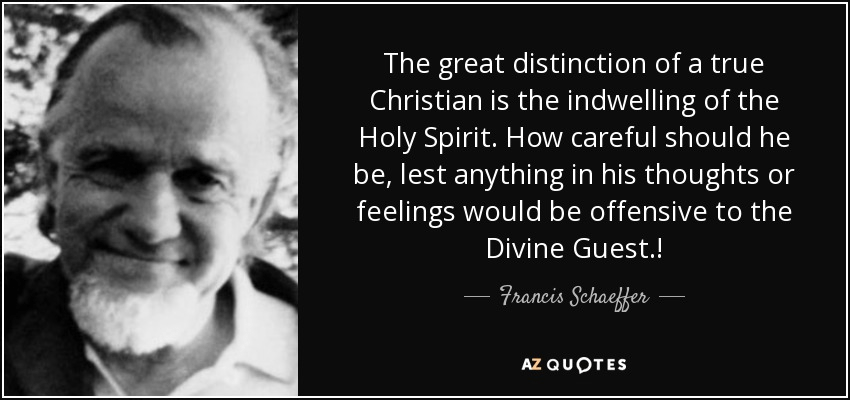
The Spirit is the distinguishing mark of the believer in Jesus. The Spirit opposes the sinful nature and expects us to do the same. There’s no need to try and live the Christian life on our own power when we possess spiritual power. There exists an internal struggle within us that desires to do right but has a compulsion to do otherwise. Yet, the indwelling Spirit gives us victory. Jesus lived the life for us that we could not live. His life, as much as his death, achieved salvation from sin for us. The very same Spirit that helped Jesus live his life, and raised him from death, is the same Spirit whom we possess.

When I was a kid, I remember my grandmother canning preserves. I would sit on a stool in the kitchen and watch her, looking forward to having some grape preserves on my next piece of toast. I once asked her, “Why are you always melting that wax over the fruit?” I didn’t understand how wax could make my toast taste any better. Grandma answered, “The wax seals the jar tightly so the fruit can’t be contaminated. If I didn’t seal it, the fruit would eventually rot.” As an amateur in the canning business, I could see the importance of picking grapes, boiling them, and canning them. But I now know how important sealing and preserving are.

You and I are God’s preserves. God not only chose us, redeemed us, and called us to life in the Son – God also had a plan for preserving us as heirs of eternal life. God gave us the indwelling Spirit so that we can live as we ought, free from sin and doing the will of God through spiritual power working within us. 

I hope today that you have a deep appreciation for the privileges of no condemnation, freedom from sin, possessing the mind of Christ and the power of the indwelling Spirit. And more than that, that you will avail yourselves of this tremendous gift of the Spirit and experience life and peace.

Gracious God, fill us with the knowledge of your will through all spiritual wisdom and understanding. May we live lives worthy of the Lord Jesus and please him in every way; bearing fruit in every good work, growing in the knowledge of God; being strengthened with all power according to your glorious might so that we may have great endurance and patience, joyfully giving thanks to you. For you have rescued us from the dominion of darkness and have brought us into the kingdom of the Son you love, in whom we have redemption, the forgiveness of sins. Amen.

What Does God Want? (John 11:1-45)

The Raising of Lazarus, by Rembrandt, c.1632

Now a man named Lazarus was sick. He was from Bethany, the village of Mary and her sister Martha. (This Mary, whose brother Lazarus now lay sick, was the same one who poured perfume on the Lord and wiped his feet with her hair.) So the sisters sent word to Jesus, “Lord, the one you love is sick.”

When he heard this, Jesus said, “This sickness will not end in death. No, it is for God’s glory so that God’s Son may be glorified through it.” Now Jesus loved Martha and her sister and Lazarus. So when he heard that Lazarus was sick, he stayed where he was two more days, and then he said to his disciples, “Let us go back to Judea.”

“But Rabbi,” they said, “a short while ago the Jews there tried to stone you, and yet you are going back?”

Jesus answered, “Are there not twelve hours of daylight? Anyone who walks in the daytime will not stumble, for they see by this world’s light. It is when a person walks at night that they stumble, for they have no light.”

After he had said this, he went on to tell them, “Our friend Lazarus has fallen asleep; but I am going there to wake him up.”

His disciples replied, “Lord, if he sleeps, he will get better.” Jesus had been speaking of his death, but his disciples thought he meant natural sleep.

So then he told them plainly, “Lazarus is dead, and for your sake I am glad I was not there, so that you may believe. But let us go to him.”

Then Thomas (also known as Didymus) said to the rest of the disciples, “Let us also go, that we may die with him.”

On his arrival, Jesus found that Lazarus had already been in the tomb for four days. Now Bethany was less than two miles from Jerusalem, and many Jews had come to Martha and Mary to comfort them in the loss of their brother. When Martha heard that Jesus was coming, she went out to meet him, but Mary stayed at home.

“Lord,” Martha said to Jesus, “if you had been here, my brother would not have died. But I know that even now God will give you whatever you ask.”

Jesus said to her, “Your brother will rise again.”

Martha answered, “I know he will rise again in the resurrection at the last day.”

Jesus said to her, “I am the resurrection and the life. The one who believes in me will live, even though they die; and whoever lives by believing in me will never die. Do you believe this?”

“Yes, Lord,” she replied, “I believe that you are the Messiah, the Son of God, who is to come into the world.”

After she had said this, she went back and called her sister Mary aside. “The Teacher is here,” she said, “and is asking for you.” When Mary heard this, she got up quickly and went to him. Now Jesus had not yet entered the village, but was still at the place where Martha had met him. When the Jews who had been with Mary in the house, comforting her, noticed how quickly she got up and went out, they followed her, supposing she was going to the tomb to mourn there.

When Mary reached the place where Jesus was and saw him, she fell at his feet and said, “Lord, if you had been here, my brother would not have died.”

When Jesus saw her weeping, and the Jews who had come along with her also weeping, he was deeply moved in spirit and troubled. “Where have you laid him?” he asked.

“Come and see, Lord,” they replied.

Jesus wept.

Then the Jews said, “See how he loved him!”

But some of them said, “Could not he who opened the eyes of the blind man have kept this man from dying?”

Jesus, once more deeply moved, came to the tomb. It was a cave with a stone laid across the entrance. “Take away the stone,” he said.

“But, Lord,” said Martha, the sister of the dead man, “by this time there is a bad odor, for he has been there four days.”

Then Jesus said, “Did I not tell you that if you believe, you will see the glory of God?”

So they took away the stone. Then Jesus looked up and said, “Father, I thank you that you have heard me. I knew that you always hear me, but I said this for the benefit of the people standing here, that they may believe that you sent me.”

When he had said this, Jesus called in a loud voice, “Lazarus, come out!” The dead man came out, his hands and feet wrapped with strips of linen, and a cloth around his face.

Jesus said to them, “Take off the grave clothes and let him go.”

Therefore many of the Jews who had come to visit Mary, and had seen what Jesus did, believed in him. (New International Version)

The Raising of Lazarus, by Vincent Van Gogh, 1890

Here’s a Captain Obvious observation:

what God wants, and what we want, is not always the same thing. 

Today’s Gospel story centers around a man named Lazarus, the brother of Mary and Martha. The disciples were familiar with them since they were committed followers of Jesus. 

Their friend Lazarus became deathly ill. Christ and the disciples caught wind of it. Everyone believed Jesus could do something about this. But Jesus stayed put. He didn’t make a move to go to his sick friend. 

After a few days, Lazarus died. It was only then, that Jesus made his move.

The religious authorities in Jerusalem had it out for Jesus. But Jesus decided to go to Bethany and Jerusalem anyway. This made no sense to the disciples. Lazarus was lying dead in Bethany. Going there would put everyone at risk – which is why Thomas uttered the defeatist and dramatic statement, “Let us also go, that we may die with him.”

Yet, they all went. And once they arrived, Christ and his disciples found the grieving sisters. Mary and Martha believed that Jesus was the promised Messiah who would come and save the people. They didn’t understand why Jesus stayed away and didn’t come sooner. 

If Jesus had been there, he could have healed Lazarus. He healed other people, so why not a friend and a brother?

The death of Lazarus seemed to be the end. No one was happy with how things shook-out. Lazarus died. The disciples’ plans were dead. Mary and Martha’s expectations died…

but death is exactly what it takes in to have resurrection.

There’s no such thing as a painless miracle. Death isn’t a pleasant affair. I have been with countless people at the end of life, and I will tell you that, although it’s possible for a death to be peaceful, it’s still ugly business. 

It’s also painful to watch carefully laid and prayed over plans die. It hurts to see a long sought after dream just go up in smoke and die. To see anything or anyone we deeply care about die is gut-wrenching. Yet, in order for a resurrection to occur, there must first be a death.

There cannot be a new life unless there’s an old one. 

Jesus did the impossible by raising Lazarus from death and giving him new life. And the resurrection of Lazarus pointed to an even greater truth: Christ’s own death and resurrection was coming, and it will change everything.

Whenever what we want dies, then we are in a position to ask: So, what does God want? 

God wanted something better than what everybody else wanted. By allowing ourselves to be consumed with what God wants, it turns out to be the very best thing for us, even if it does not quite jive with what I want.

Everyone’s expectations needed to die, along with Lazarus, for the resurrection to become reality. Only then did Jesus act by rising Lazarus from death.

Jesus pointed to himself as the one able to bring life to all that is dead among us. Sometimes:

  • dreams must die so that Jesus can resurrect them to new life, with outcomes far more glorious than you and I could ever imagine
  • plans have to be dead and buried before Jesus will breathe new life into them, making those plans so much more than they could ever have been in our hands.
  • ministries, even churches, need to be dead as a doorknob so that Jesus can resurrect them and give them new life, invigorated with spiritual resurrection power.

If we desire to see the miracle of resurrection, we must die to ourselves – take up our crosses and follow Jesus into the grave so that he can transform our lowly expectations into a glorious new existence. Death does not have the last word because Christ’s resurrection makes it possible for us to have new life. Again, I ask:

What does God want? God wants to raise the dead to life.

Do you believe this? Yes, I believe. Help me in my unbelief.

Follow the path of what God wants and watch what the Lord will do for you.

Hope for the Grieving (Jeremiah 31:15-22)

Orthodox icon of Rachel weeping for the children

This is what the Lord says:

“A voice is heard in Ramah,
    mourning and great weeping,
Rachel weeping for her children
    and refusing to be comforted,
    because they are no more.”

This is what the Lord says:

“Restrain your voice from weeping
    and your eyes from tears,
for your work will be rewarded,”
declares the Lord.
    “They will return from the land of the enemy.
So there is hope for your descendants,”
declares the Lord.
    “Your children will return to their own land.

“I have surely heard Ephraim’s moaning:
    ‘You disciplined me like an unruly calf,
    and I have been disciplined.
Restore me, and I will return,
    because you are the Lord my God.
After I strayed,
    I repented;
after I came to understand,
    I beat my breast.
I was ashamed and humiliated
    because I bore the disgrace of my youth.’
Is not Ephraim my dear son,
    the child in whom I delight?
Though I often speak against him,
    I still remember him.
Therefore my heart yearns for him;
    I have great compassion for him,”
declares the Lord.

“Set up road signs;
    put up guideposts.
Take note of the highway,
    the road that you take.
Return, Virgin Israel,
    return to your towns.
How long will you wander,
    unfaithful Daughter Israel?
The Lord will create a new thing on earth—
    the woman will return to the man.” (New International Version)

The bereavement of losing someone you care about is awful. A parent experiencing the death of a child is next level grief. There is no bereavement like it.

As a hospital chaplain, I occasionally attend to a grieving mother who just lost her baby. I have shown up for premature and stillborn deaths, full term births, then death, sudden infant death, and more. The grief is indescribable.

On some level, there is no comfort – and never will be. I know that, for me, providing grief support to mothers who are enduring the death of a baby or young child has profoundly changed me and forever impacted my soul. So, I can only imagine what it’s like for a mother.

Many Christians will recognize the verse of Rachel weeping for her children as part of the early story surrounding Jesus:

An angel of the Lord appeared to Joseph in a dream. “Get up,” he said, “take the child and his mother and escape to Egypt. Stay there until I tell you, for Herod is going to search for the child to kill him.”

So he got up, took the child and his mother during the night and left for Egypt,where he stayed until the death of Herod. And so was fulfilled what the Lord had said through the prophet: “Out of Egypt I called my son.”

When Herod realized that he had been outwitted by the Magi, he was furious, and he gave orders to kill all the boys in Bethlehem and its vicinity who were two years old and under, in accordance with the time he had learned from the Magi. Then what was said through the prophet Jeremiah was fulfilled:

“A voice is heard in Ramah,
    weeping and great mourning,
Rachel weeping for her children
    and refusing to be comforted,
    because they are no more.”(Matthew 2:13-18, NIV)

It’s really hard to have hope when you’re in the throes of lamenting the death of children. We need hope. It’s necessary to life. We cannot survive, let alone thrive, without it.

It is possible to simultaneously experience hopelessness and hope. At the same time, we hold both despair and desire, anguish and anticipation, in our hearts. While we may never forget who we have lost, we make it through our days believing that another child can change the world for the better. We place our faith in the Christ child, in Jesus.

Wily old King Herod massacred innocent toddlers in order to ensure the destruction of Jesus. Behind his atrocity was the devil himself who knew that Jesus was the coming King who would one day bring salvation. But the old King’s sinister plan didn’t work. 

Reflecting on a vision of Christ’s birth, the Apostle John stated:

The dragon stood in front of the woman who was about to give birth, so that it might devour her child the moment he was born. She gave birth to a son, a male child, who “will rule all the nations with an iron scepter.” And her child was snatched up to God and to his throne. (Revelation 12:4-5, NIV)

Satan wars against God’s Son and God’s people, whose roots go all the way back to the first prophecy of Christ:

And I will put enmity
    between you and the woman,
    and between your offspring and hers;
he will crush your head,
    and you will strike his heel.” (Genesis 3:15, NIV)

There has been bad blood, ever since the Fall of humanity, between the serpent and the seed of the woman. The Old Testament Israelites were continually being threatened with extermination; they were constantly tempted to conform to pagan ways for handling their suffering and grief. 

Herod was just another in a long line of demonically animated men trying to perpetuate the kingdom of darkness. The devil knows that his time is short; and he uses twisted persons like Herod for his insidious schemes.

Many people experience hell on earth because Satan is on a rampage; mothers and their children are often the collateral damage.

The holiday season is a hard time of year for many people, filled with depression instead of joy, grieving over lost loved ones for whom you will not spend another Christmas with. And yet, there is a reunion coming, the hope of a bodily resurrection in which we will be with Jesus and God’s people forever.

Satan’s most powerful weapon, death, has lost its sting because of Jesus. Death does not have the last word; resurrection does. And this hope for the future helps us in the present to keep going and not give up.

The prophet Jeremiah was dealing with children lost in war to the invading Babylonians. His words are a lament in the context of the hope that captivity and exile will not be forever. 

Matthew wants us to see that the exile is over for us; Jesus has arrived, and the tears that were shed will shortly dry up. There may be a time of suffering that we must endure, but there is glory ahead.

Jesus is the Great Deliverer who brings us out of the grip of death, grief, and lament and into the promises of God. Christ is our hope. Amen, and amen.