Isaiah 43:16-21 – God Is Doing a New Thing

This is what the Lord says—
    he who made a way through the sea,
    a path through the mighty waters,
who drew out the chariots and horses,
    the army and reinforcements together,
and they lay there, never to rise again,
    extinguished, snuffed out like a wick:
“Forget the former things;
    do not dwell on the past.
See, I am doing a new thing!
    Now it springs up; do you not perceive it?
I am making a way in the wilderness
    and streams in the wasteland.
The wild animals honor me,

    the jackals and the owls,
because I provide water in the wilderness
    and streams in the wasteland,
to give drink to my people, my chosen,
    the people I formed for myself
    that they may proclaim my praise. (New International Version)

Judgment and Ruin

The prophecy of Isaiah spans sixty-six chapters; it is a large book portraying a large God who is in control of the nations and holds them accountable for their decisions and actions. Chapters 1-39 of Isaiah contain a lot of scathing judgments. God is pictured as the one true Judge who is not only grieved over the sins of the pagan nations, but especially over the sin of God’s people, Israel. 

As a result of Israel’s refusal to recognize their errant ways and turn to the Lord, God sent the Babylonians to Jerusalem. King Nebuchadnezzar tore down the city wall, took all the implements from the temple, and carried off the youngest and brightest people into exile to Babylon. 

Grace and Mercy

Israel was ruined. But that is not the end of the story. In chapters 40-66 of Isaiah, rather than judgment dominating the prophecy, grace and mercy are liberally spoken. Although Israel deserved their exile, God would step in and return them back to the land.

The Lord will bring them back to Jerusalem, yet it will not be easy. The long journey home will be full of obstacles to overcome and deserts to cross. They will need to walk in a caravan stretching over five-hundred miles (like walking from Milwaukee, Wisconsin to Lincoln, Nebraska). That’s about four months of walking over harsh terrain, desert, and dangers from thieves and wild animals. 

Yet, God will care for them, making a way through the desert, providing water, commanding animals to keep away, and causing growth to spring up from the desert for their pack animals to eat.

God Was Doing Something New

No longer could Israel only rely on looking back to the exodus out of Egypt. They had been doing that for a thousand years. Now, they have to deal with God in the present moment and take a walk of faith filled with uncertainty and hazards. 

The Israelites would be vulnerable in their walk to Jerusalem. It was a scary prospect for them. God was telling his people to forget the “good old days” of the exodus because he is doing a work right now in the present that requires their faith and action.

Isaiah insisted that the people must commit their ways to the God who is calling them to a new journey. They are to be present and mindful to what God is doing now. God is doing a new thing, so forget clinging to the familiar past and strive to live in the here and now.

If we believe there is a better tomorrow, we can bear a hardship today.

It’s easy for people to get stuck in the past. One of the reasons we get stuck is that we do not lament our losses. Being present to God does not mean refusing to deal with what happened in the past; it means lamenting our losses in the present so that the past does not control us. 

You and I are not the same people we were twenty years ago. The institutions we care about are not the same. Some of the people we have cared the most about in our lives are not here anymore. Only you and I are here, now, in this present moment. There is no alternate reality or some multiverse in which things are different. That means we must deal with today.

The Good Old Days

The Israelites did not grieve well. They kept looking back to a golden age when they came out of Egypt and entered the Promised Land.  And when things began to break down in Israel and in Judah, they kept looking back instead of dealing with God in the present. 

Rather than lamenting their losses, they just wished things were different. Whenever anyone or any group fails to grieve a significant loss or change, then the ghosts of the past roam everywhere. No one can effectively move into the future unless they confront the stark reality that things have changed; we cannot turn the clock back to halcyon days.

Things can be better. But that will not happen apart from doing the hard work of identifying denial of the way things presently are, confronting the anger, stopping the bargaining with God, addressing the depression, and coming out the other side coping in a healthy way with the new reality. 

The Israelites were in exile. It was not their new normal. It was their present station of history. God was ready to take them back to Jerusalem. Yet, they were stuck in depression.  Jerusalem would never be the same city again. The people had to resolve their inner spiritual tension in order to accept it. Acceptance is not cheap; it takes a difficult journey to get to that point.

A healthy way of viewing the past is to see ancient miracles, like the exodus, re-enacted in fresh ways for the present. I know a guy who asked his newlywed wife a question after they got married, “What are we going to talk about for the rest of our lives?”  The thought of living together for decades had him curious and a bit scared. 

The man’s wife wisely replied, “I think we will talk about whatever happens each day.”  Ah, there is the truth about relationships: They happen in the present. Good relationships are built on daily experiences. The newness of each day keeps the relationship alive and exciting.  Couples that don’t continue to experience each other in fresh new ways lose the joy and enthusiasm of their relationship.

When folk no longer experience God in creative, new, and fresh ways in the present, they are limited by their memories of what God once did, back there, in the past. 

God Is Alive Today

A God who is hermetically sealed in the past becomes an interesting person to be theologically studied and learned about, like any character from history. However, today, God is alive! Now, in the present, God wants to do a new thing! We need present-tense stories of God so that others know the relevance of the Lord in the here and now.

God is most definitely changeless in character and attributes. Yet, that does not mean God is averse to change and new things. In fact, God’s work is to effect transformation in the lives of people who need redemption and new life. The God I serve is anything but boring, lifeless, careless, or uninteresting. 

The proof that something is alive is that it grows, develops, changes, and matures. The new plants in our gardens and fields are undergoing astonishing growth and development.  What they are like now is quite different than what they will look like in August and even different than October.

New, different, creative, and exciting things need to happen in the church and in the world today, in the present. Whenever those things do not happen, people will believe that God is dead, does not care, or does not exist. Because God is alive and works in the present, the Church is to be alive with spiritual momentum, biblical drive, and Christian proactive love.

Showing Others What God Is Like

People everywhere need an accurate picture of God portrayed for them. That is why the church exists – to show people what God is really like, what he looks like here in the present.  Here is a question I often ask people, both Christian and non-Christian: “What is your picture of God?  What is God like?” 

I have gotten all kinds of answers to those questions. And I have discovered that many people picture God as a harsh Judge who is stern and always unhappy about something.  I have found that many picture God as distant, boring, and unsympathetic with the problems of this world.

Many people generally disdain any organized religion, viewing the church as distorting God, and caring more about buildings, budgets, and butts in the pew, rather than the poor, the disadvantaged, and the pressing issues of our day.

Jesus As the Picture of God

            If people are continually underwhelmed by Church, they will not be overwhelmed by God. Looking at Jesus, we get a picture of God. We see a Savior who walks on water, raises the dead, and amazes the crowds. Christ’s unpredictability led many to have a new and more accurate picture of God.

Philip said, “Lord, show us the Father and that will be enough for us.”

Jesus answered: “Don’t you know me, Philip, even after I have been among you such a long time? Anyone who has seen me has seen the Father…. Believe me when I say that I am in the Father and the Father is in me; or at least believe on the evidence of the works themselves. Very truly I tell you, whoever believes in me will do the works I have been doing, and they will do even greater things than these, because I am going to the Father. And I will do whatever you ask in my name, so that the Father may be glorified in the Son. You may ask me for anything in my name, and I will do it.” (John 14:8-14, NIV)

            Jesus revealed to us a God who is compelling, powerful, relevant, passionate, unpredictable, exciting, personal and present to people right now, this very day. The Church everywhere has been given the assignment to reveal God to the world. 

The Church is supposed to be a place of change and reform that wakes the dead and raises them to new life, right now, in the mighty Name of Jesus. 

God is the Creator of the universe. God is creative. We are in his image. We are creative.  God is fresh, does new things, and wants people to do the same without always getting stuck.

A problem which happens over and over again is called a pattern. Avoidance of conflict, or being impulsive, or allergic to risk, or distracted and bored, or overcommitted, or afraid of authority, or a people-pleaser, or resistant to making hard decisions, or a fear of failure, are not just problems, but patterns that prevent us from allowing God to be present to us today. 

And today, we need to embrace the new life God is trying to accomplish in us. God will make a way where there seems to be no way.

Help us, Lord, to have hope for the future. In the face of change, help us to set fear aside and recognize our potential for problem-solving. Help us develop a reasonable optimism when confronted by new things and to guard against our own defensiveness. Be with us as we remember and celebrate former times and keep us from unreasonable yearning for them. Work your will in us, through Jesus Christ our Lord. Amen.


Psalm 29 – The Power of Words

Ascribe to the Lord, O heavenly beings,
    ascribe to the Lord glory and strength.
Ascribe to the Lord the glory of his name;
    worship the Lord in holy splendor.

The voice of the Lord is over the waters;
    the God of glory thunders,
    the Lord, over mighty waters.
The voice of the Lord is powerful;
    the voice of the Lord is full of majesty.

The voice of the Lord breaks the cedars;
    the Lord breaks the cedars of Lebanon.
He makes Lebanon skip like a calf,
    and Sirion like a young wild ox.

The voice of the Lord flashes forth flames of fire.
The voice of the Lord shakes the wilderness;
    the Lord shakes the wilderness of Kadesh.

The voice of the Lord causes the oaks to whirl,
    and strips the forest bare;
    and in his temple all say, “Glory!”

The Lord sits enthroned over the flood;
    the Lord sits enthroned as king forever.
May the Lord give strength to his people!
    May the Lord bless his people with peace!
(New Revised Standard Version)

I have always felt comforted during thunderstorms. Having grown up in the Midwest of America, strong thunderstorms are a given every summer. When my daughters were small children and frightened by the loud clap of thunder, I said to them, “That’s just God letting us know he is powerful and watching over us.”

God spoke and stirred up a storm… So, they cried out to the Lord in their distress, and God brought them out safe from their desperate circumstances. God quieted the storm to a whisper; the sea’s waves were hushed. (Psalm 107:25, 29-30, CEB)

Yet, there is even more going on in today’s psalm than a reminder of God’s glory and power over all creation. God’s very voice is the source of all the power. In the beginning God created the heavens and the earth – with words. The Lord Almighty spoke the entire world into existence. God’s words are generative, that is, the speech of God creates and gives life. When God’s voice goes forth, things happen.

God said, “Let the waters under the sky come together into one place so that the dry land can appear.” And that’s what happened. (Genesis 1:9, CEB)

The way God gives is through speech. Yes, the mechanism of God’s provision for us is words. This means language is vitally important. The Lord creates, gives, sustains, and blesses us creatures through language. Out of all creation, humans are the only creatures formed in the image and likeness of God.

God said, “Now we will make humans, and they will be like us. (Genesis 1:26, CEV)

People, then, are capable of speech. Even more, we as people with the ability of language have the capacity to form our own generative words. We have the God-given means to give life with our speech.

“Life and death lie in the power of language.”

Helen Keller

I believe we all intuitively know this is true. As we reminisce the history of our lives, we can observe events where another’s words impacted us so significantly that it was as if they gave us the gift of life. We never forget those words. We also have had times when another’s words cut us emotionally and it felt as if a part of us died. We tend to remember those as well, and they hold us back in our own life-giving speech to ourselves and others.

“The godless destroy their neighbors by their words, but the righteous are saved by their knowledge.” (Proverbs 11:9, CEB)

It is necessary for us to listen to the voice of the Lord. God’s speech does not disappoint or destroy. God’s Word is eternal life. The better we listen to God, the better we can have the generative power of words to provide life for others.

It only takes a cursory look at Holy Scripture to realize that words are powerful and are to be used with great care. We are all to continually develop the craft of wordsmithing so that we might ascribe to the Lord the glory due his name as well as bless the world.

“As a tree gives fruit, healing words give life, but dishonest words crush the spirit.” (Proverbs 15:4, NCV)

The language we use—spoken and written words, sign language, facial expressions, bodily gestures, singing—helps us understand ourselves and lets us create relationships with others. Our words give us the power to describe our past, define our present, and dream of our future. 

“Words from wise people are like water bubbling up from a deep well—the well of wisdom.” (Proverbs 18:4, ERV)

We adults may balk at the notion that words are anything more than a creative expression. Yet, as I believe is typical with most things, children are closer to the kingdom of God than us bigger people. Kids effortlessly make connections between words and reality whereas us older folks barely have an idea this even occurs. My grandson once remarked when I was talking to him about being cautious at the playground, “How am I supposed to meet new people if I can’t talk to strangers?”

“When I asked my son (5 years old) how his day was, he said it was awesome. I asked him what made it so awesome – his response was ‘because I wanted it to be.’”

Tanya Niedzwiecki (Huffington Post, November 2015)

The voice of Lord exhibits a mighty God who has the power to create and recreate with but a word. As people in God’s likeness, our words are powerful tools to be used with wisdom and care. Our speech allows us to praise God and encourage one another. Even more, the use of language enables us to speak into existence new realities for ourselves and others. May those words bring forth hope and blessing to a world in need of healing.

Mighty God, King all powerful, I am overwhelmed before such awesome majesty, and my response to your voice is reverent worship through Jesus Christ, your Son, my Lord, who lives and reigns with you and the Holy Spirit, one God, now and forever. Amen.

Psalm 19 – The God We Can Know

The heavens keep telling
    the wonders of God,
    and the skies declare
    what he has done.
Each day informs
    the following day;
    each night announces
    to the next.
They don’t speak a word,
    and there is never
    the sound of a voice.
Yet their message reaches
    all the earth,
    and it travels
    around the world.

In the heavens a tent
    is set up for the sun.
It rises like a bridegroom
    and gets ready like a hero
    eager to run a race.
It travels all the way
across the sky.
    Nothing hides from its heat.

The Law of the Lord is perfect;
    it gives us new life.
His teachings last forever,
    and they give wisdom
    to ordinary people.
The Lord’s instruction is right;
    it makes our hearts glad.
His commands shine brightly,
    and they give us light.

Worshiping the Lord is sacred;
    he will always be worshiped.
All his decisions
    are correct and fair.
They are worth more
    than the finest gold
    and are sweeter than honey
    from a honeycomb.

By your teachings, Lord,
    I am warned;
    by obeying them,
    I am greatly rewarded.
None of us know our faults.
    Forgive me when I sin
    without knowing it.
Don’t let me do wrong
    on purpose, Lord,
    or let sin have control
    over my life.
Then I will be innocent,
    and not guilty
    of some terrible fault.

Let my words and my thoughts
    be pleasing to you, Lord,
    because you are my mighty rock
    and my protector. (CEV)

Today’s psalm is a celebration of God’s self-revelation. Through both nature and law, the Lord has graciously made the divine life known to humanity. What’s more, God’s moral and ethical teachings provide insight for living a good life. This is for the common good of all persons.

The vision of the psalm is of a personal God, not an abstract deity who is aloof from creation. Through both land and law, there is the Lord of life, desiring humanity to know the divinity which infuses it all and has people’s best interests continually at the forefront of providence and goodwill.

The created world witnesses to God. Creation manifests the glory of its Creator. Each creature and every created thing have the capacity to acknowledge and declare their Originator. That which has no mouth can speak. Those with no vocal cords have a voice. We can hear them, that is, if our ears are open to listen. The creation is not God. Yet the created world and order knows the Lord so intimately that it sometimes seems as if the sun, the trees, the mountains, and the meadows are divine. The divine stamp is there, testifying with mysterious words to a glorious God who desires to be known.

So, the Lord graciously gave us law. God’s righteous and good law flows seamlessly from God’s good character. Law is the divine medium for humanity, a guide for human life toward thriving and flourishing on God’s good earth. We were put on this planet with instructions on how to get along on it. It is when we throw out the rulebook and improvise that we tend to get into all kinds of trouble.

“Knowing God is more important than knowing about God.”

karl rahner

Even when we as people dig our own graves and fall into them, God is there. Grace is available for the asking, redeeming the wayward life. Deliverance is a real possibility, to set us aright again, and restore us to our full luster as people created in the image of God. Law and land converge to guide into grateful living, into the wisdom of dealing rightly in all things.

Wisdom in the Old Testament is the combination of knowledge and practice. It is the application of God’s self-revelation to concrete situations in life. We live wisely when we get to know the sovereign God of creation and use the Lord’s revealed mores and ethos as our guide in daily experiences.

We need God’s gracious revealed law. It’s not just for theology nerds or spiritual eggheads; God’s law is for everyone – the learned and the unlearned. Every one of us needs the guidance and direction of God’s Holy Word, and the careful application of it to all our circumstances. That’s wisdom.

You and I are shaped and formed as godly people as we allow God’s Word to awash us and seep into our souls.  Reading this psalm out loud slowly and contemplatively more than once is an opportunity to let our common ordinary experiences transform into divine appointments.

Clean the slate, God, so we can start the day fresh! Keep me from stupid and idiotic sins, from thinking I can take over your work. Then I can start each day sun-washed, scrubbed clean of sin’s awful grime. Let me not be found in the dominion of darkness but bask in the glorious light of your glory. Accept both my words and my life when I place them on the morning altar, O God, my Rock, my Deliverer, my Redeemer, my All. Amen.

Psalm 139:1-6, 13-18 – Specially Crafted by the Divine

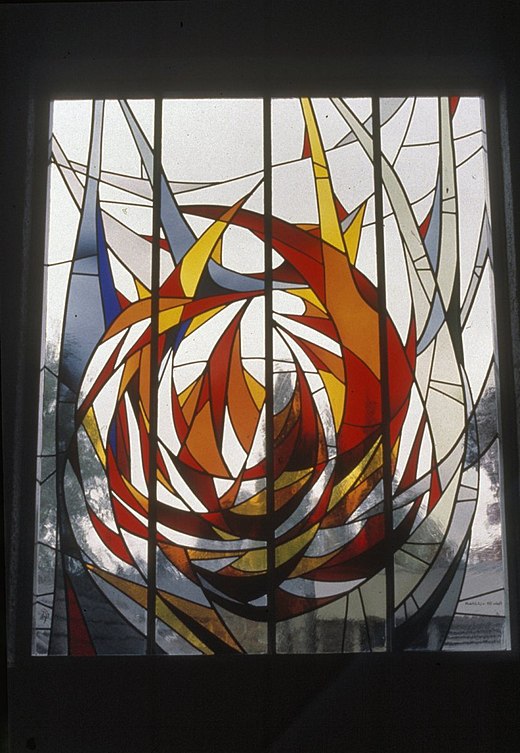
Psalm 139 stained glass by Dutch artist Ted Felen (1931-2016)

Lord, you have examined me.
    You know me.
You know when I sit down and when I stand up.
    Even from far away, you comprehend my plans.
You study my traveling and resting.
    You are thoroughly familiar with all my ways.
There isn’t a word on my tongue, Lord,
    that you don’t already know completely.
You surround me—front and back.
    You put your hand on me.
That kind of knowledge is too much for me;
    it’s so high above me that I can’t reach it….

You are the one who created my innermost parts;
    you knit me together while I was still in my mother’s womb.
I give thanks to you that I was marvelously set apart.
    Your works are wonderful—I know that very well.
My bones weren’t hidden from you
    when I was being put together in a secret place,
    when I was being woven together in the deep parts of the earth.
Your eyes saw my embryo,
    and on your scroll every day was written that was being formed for me,
    before any one of them had yet happened.
God, your plans are incomprehensible to me!
    Their total number is countless!
If I tried to count them—they outnumber grains of sand!
    If I came to the very end—I’d still be with you. (CEB)

It is no wonder so many people struggle with their self-image. Beautiful people reign in television and movies; the rich and powerful are highlighted in the media; and people with perfect teeth and immaculate attire are splashed in front of us in the daily barrage of advertisements. Meanwhile, the rest of us 99% of the population quickly notice we do not measure up to such a standard. You don’t have to be a people watcher to know that less than perfect bodies are the norm and that most folks do not have a budget to live like the other 1% humanity.

If we make comparisons with others too much and for too long, it gets downright depressing. Yet, into this dark abyss of one’s self-image enters the biblical truth that each one of us, no matter our station in life, was personally hand-crafted by a heavenly Being who loves us dearly. We are indeed fearfully and wonderfully made.

The Creator God took great care to make us and form us just so. The psalmist, David, praised God for the way we were created. The real standard from which we ought to judge ourselves is this: God knows us intimately, inside-and-out, and neither condemns us nor shames us but loves us wholly.

Psalm 139 by Dutch painter Ellen Van Randeraat, 2013

So then, rather than wasting our emotional energy and mental faculties on wishing we looked different or were more like so-and-so who seems to always have it all together, try practicing what David did: Praise God. 

Whenever we have the notion that we do not measure up to our imposed arbitrary standard, keep in mind that the only real measurement is grace. No matter who we are, the entire race of humanity has been created in the image of God, and, on that basis alone, we have inherent value, worth, and majesty. Let us, then, treat ourselves and others with the yardstick of grace.

The inner critic, that is, the inner judgmental dialogue we have with ourselves, needs to be replaced with the truth of Psalm 139. Although we might be rather hard on ourselves and say things in the reclusive parts of our minds and hearts that we would never say to others, nor tolerate others saying about someone else – God speaks to us with tender words of grace. Perhaps you think that only you know the depth of your own sorrows, hurts, fears, insecurities, and worries.  Except….

God. The Lord knows it all intimately – and is not one bit repulsed. You see, God knows that the answer to all the self-doubts is Divine care and protection. You and I have the freedom to plumb the recesses of our hearts and souls – to bring out all that is inside the cluttered closet of our minds and lay it all on the table without fear of God calling you what you call yourself.

Therefore, please do not quickly pass over the inspired words from Holy Scripture contained in today’s psalm. Take the time to carefully digest each phrase slowly so that the message becomes internalized and believed in real-time experience.

One of the theories of human psychology is that people are driven by two primary needs: 

  1. To intimately know another person.
  2. To be intimately known by another person. 

God knows us even better than we know ourselves – and still loves us! There is nothing we learn about ourselves that God does not already know. No human relationship can even come close to the level of knowing that God has for us and about us.

To know God is perhaps the greatest and highest pursuit we could ever enjoy. God is so immense and infinite that we will spend an eternity getting to know the Lord and will never get to the end of it. That is the kind of God we serve. Be encouraged today and always with the reality that you are known and can know God – and even more, loved deeply as a specially fashioned creature.

O God, thank you that I am wonderfully made in your likeness.  I praise you that I am fully accepted, even when I do not accept myself.  In Jesus Christ you have demonstrated the height of your love and mercy.  May this grace be with me every day so that I will conduct myself in a manner worthy of being part of the human family.  Amen.