The Divine Gardener

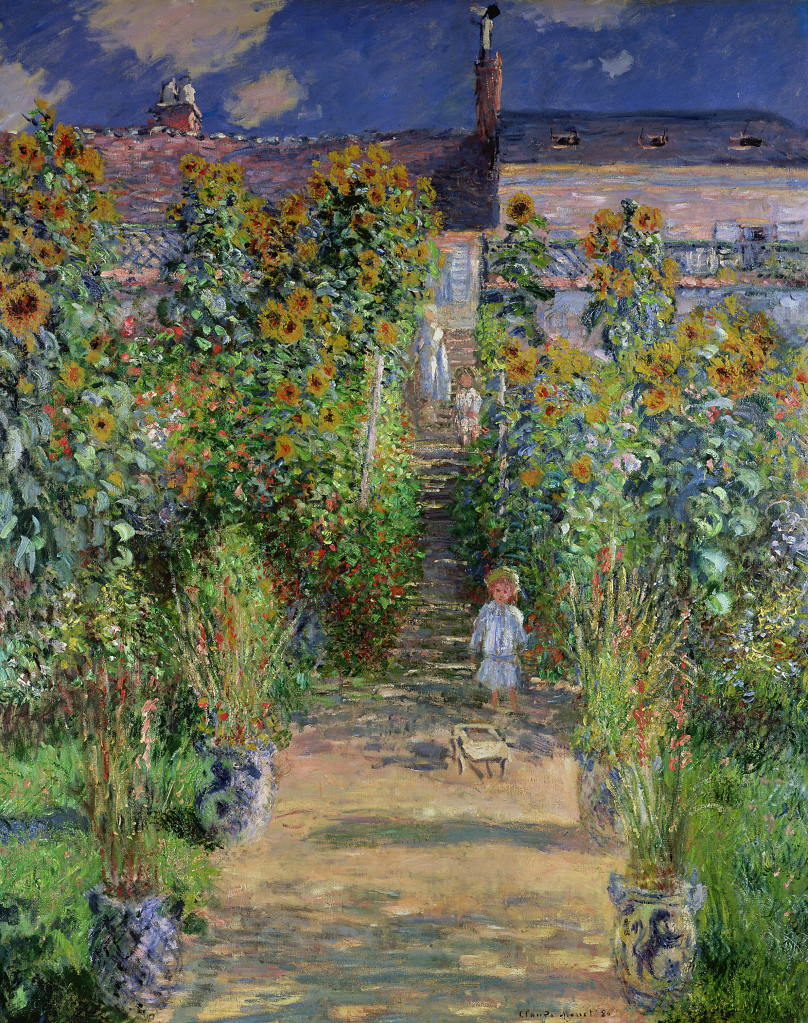
The Artist’s Garden at Vétheuil, by Claude Monet, 1881

The fruit of the Spirit is love, joy, peace, patience, kindness, goodness, faithfulness, gentleness, and self-control. (Galatians 5:22-23, Common English Bible)

Soon it will be Spring. Many people are already planning for the soil in fields and gardens to be turned over for planting and cultivating.

Healthy plants grow and feed many. They don’t simply occur by happenstance. And neither does things like morality, ethics, and living an altruistic life; they don’t just happen.

Virtue and a good life are the result of solid and robust inner work within the soul.

The daily overall trajectory of personal and institutional life demonstrates whether they are driven by egoistic desires, or influenced from an inner garden of delectable fruit which has been wisely plucked for others to enjoy.

 “A good tree doesn’t produce bad fruit, nor does a bad tree produce good fruit. Each tree is known by its own fruit. People don’t gather figs from thorny plants, nor do they pick grapes from prickly bushes. A good person produces good from the good treasury of the inner self, while an evil person produces evil from the evil treasury of the inner self. The inner self overflows with words that are spoken.”

Jesus (Luke 6:43-45, Common English Bible)

The Apostle James learned well from his Teacher when he said:

My brothers and sisters, can a fig tree produce olives? Can a grapevine produce figs? (James 3:12, Common English Bible)

The soul is a garden which must have a faithful gardener to continually attend to it. There is a constant need for paying attention to the plants through consistent weeding, watering, and nurturing the seeds placed in good rich soil.

If we will but only allow it, the Holy Spirit of God can be our Divine Gardener, being the elements we need for growth, maturity, and a good life which produces good succulent fruit for many to enjoy.

Apart from the Spirit’s warming, watering, and protecting, people can easily degenerate into all kinds of illicit thinking and behavior such as immorality, moral corruption, doing whatever feels good, idolatry, substance abuse, casting evil spells, hate, fighting, obsessive behaviors, violent anger, competitive opposition, conflict, selfishness, group rivalry,jealousy, and lying.

The Christian virtues which flower and produce the fruit of love, joy, peace, patience, kindness, goodness, faithfulness, gentleness, and self-control occur through a close intimate connection with the Divine Gardener. 

Our Divine spiritual Gardener knows that all things are connected – that below the surface the roots of every plant become connected with one another. There is really no such thing as a person who is disconnected from the rest of humanity.
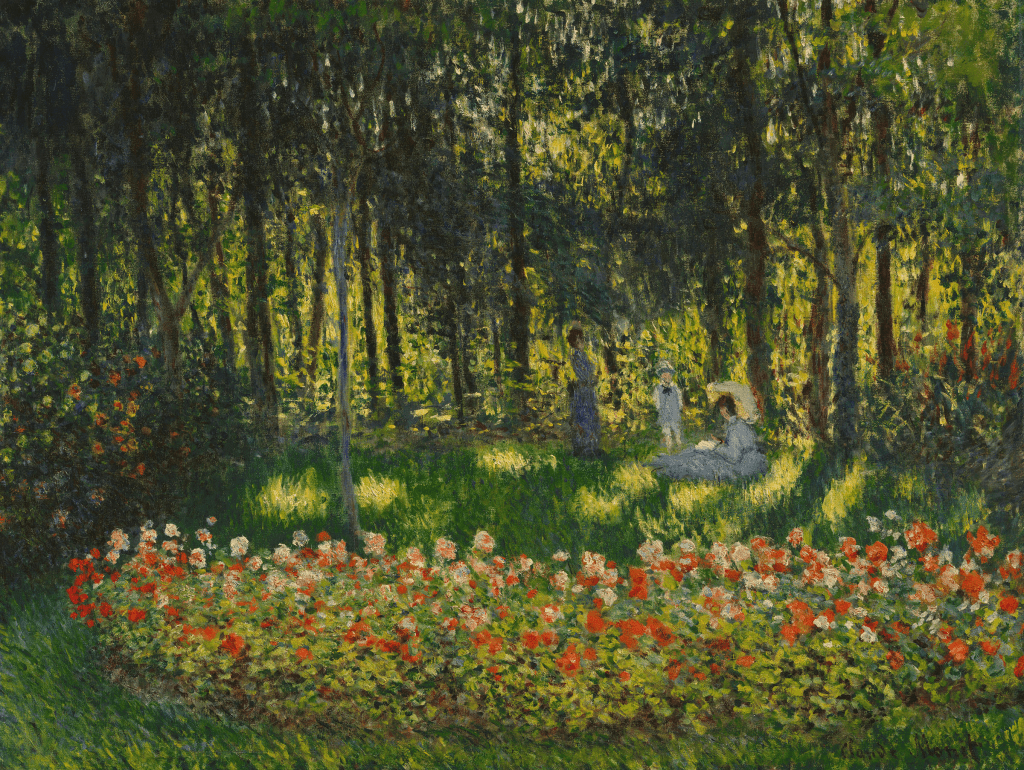
The Artist’s Family In the Garden, by Claude Monet, 1875

Thus, the Apostle Paul, having also learned well, understood that there are not spiritual “fruits,” but only spiritual “fruit.” That is, the nine virtues Paul mentioned are the “fruit of the Spirit,” not “fruits.”

In other words, all virtuous words and behavior are connected with each other. When a person or an organization has the Divine Gardener attending to them, all nine of the Christian values are a collective basket of fruit which cannot be separated from one another.

So then, if we look at the list of spiritual fruit in the New Testament book of Galatians and say something like, “Well, I’m pretty good at kindness and goodness, but I don’t have much peace or patience,” then what this really means is that we are likely doing kindness and goodness from a different place than by means of the Holy Spirit.

Because when the Spirit is manifested in us, we exhibit spiritual fruit. We cannot separate the nine spiritual virtues any more than we can separate the Trinity. They’re all one spiritual fruit, cultivated and produced within the inner person by the agency of God’s Spirit, our Divine Gardener.

Perhaps we need to consider what is happening in the ground, underneath the surface, which is the shadow side of our lives that no one sees.

For example, it could be that we are driven far more by our ego and our anxiety about most things than about genuine altruism and love. The results of our actions and words may look the same or similar, but the motivation might be far from truly altruistic.

Any sort of “fruit” will simply not last if our actions spring from a place of ego control and worry – because it is not of the Spirit.

Both persons and institutions must mortify (put to death) the deeds and the weeds of the sinful nature.

I have been crucified with Christ and I no longer live, but Christ lives in me. And the life that I now live in my body, I live by faith, indeed, by the faithfulness of God’s Son, who loved me and gave himself for me.

The Apostle Paul (Galatians 2:20, Common English Bible)

The Spirit will always have us in the good rich soil of Christ, so that when we are planted and receive the proper amounts of spiritual sun and living water, we will most certainly produce a hundredfold crop.

Then, we learn to make proper and right judgments about what is happening in our world. We are able to see the thief in the garden who cares only to pick fruit he has neither planted nor cared for, having no intention of sharing anything, but instead seeks to amass a gluttonous basket for his own self.

There is a great need for virtuous living, ethical sensibilities, and wise discernment among everyone in this world.

We are now observing what happens when a people are ignorant of how true righteousness, justice, goodness, and peace are grown and developed in any culture, society, and government. Fools are allowed to roam the garden, and they make a complete mess of things.

Let us all do our part in ensuring that genuine spiritual fruit is produced, coming from the true self. Disconnection, destruction, and chaos are the fruit of a bad tree. Then, it is only fit to cut down and thrown into the fire.

Jesus said:

“Every good tree produces good fruit, and every rotten tree produces bad fruit. A good tree can’t produce bad fruit. And a rotten tree can’t produce good fruit. Every tree that doesn’t produce good fruit is chopped down and thrown into the fire. Therefore, you will know them by their fruit.” (Matthew 7:17-20, Common English Bible)

Therefore, beware, watch out, and be wise in the way your own soul is cultivated, and how you discern the souls of others.

For the Christian, the season of Lent is the best and most appropriate time to focus upon spiritual disciplines which help connect us with Christ and with one another.

Daily attention to the garden of our soul prepares us for Holy Week by participating with Jesus in both his crucifixion and resurrection. All that is wrong and sinful in this old fallen world is put to death, and a new life of virtuous and altruistic living is enjoyed.

And the beauty of it all is that it will organically spring from the depths of a well-cultivated soul garden. The Divine Gardener stands ready with both hose and hoe to bring about the fruit of the Spirit.

Soli Deo Gloria

‘Tis the Season For Praise (Psalm 148)

By Stushie Art

Praise the Lord!
Praise the Lord from the heavens;
    praise him in the heights!
Praise him, all his angels;
    praise him, all his host!

Praise him, sun and moon;
    praise him, all you shining stars!
Praise him, you highest heavens
    and you waters above the heavens!

Let them praise the name of the Lord,
    for he commanded and they were created.
He established them forever and ever;
    he fixed their bounds, which cannot be passed.

Praise the Lord from the earth,
    you sea monsters and all deeps,
fire and hail, snow and frost,
    stormy wind fulfilling his command!

Mountains and all hills,
    fruit trees and all cedars!
Wild animals and all cattle,
    creeping things and flying birds!

Kings of the earth and all peoples,
    princes and all rulers of the earth!
Young men and women alike,
    old and young together!

Let them praise the name of the Lord,
    for his name alone is exalted;
    his glory is above earth and heaven.
He has raised up a horn for his people,
    praise for all his faithful,
    for the people of Israel who are close to him.
Praise the Lord! (New Revised Standard Version)

By Bible Art

God is sovereign – which means that the Lord has complete power, dominion, and authority over everything that exists. God has supremacy because the Lord is the Creator God, the One who brought all things into existence.

Ideally, God and all creation exist harmoniously together. People coexist with God and recognize the Lord’s sovereignty through offering praise, adoration, and thanksgiving to the Lord.

That is what today’s psalm calls us to do, especially in this season of Christmastide. Christians are to offer their praise to God, despite whatever circumstances may be happening in their lives, and around them.

The psalmist was not telling people to simply forget their sorrows. He was exhorting everyone, including all creation, to praise the Lord in the middle of their distress.

When Christ was born, circumstances were not good for the Jews in Judea. Roman occupation had a firm authoritative hold upon them. Throughout their history, Jews have been often marginalized and oppressed. They know what suffering is.

Even though Christianity is a sizable world religion, Christians in many parts of the world today experience ostracization and discrimination. Christians everywhere are not immune to world events with situations like dictators, disasters, and diseases.

Yet, there is always an opportunity for praise to God. And the psalmist summons the faithful to do so. Praise and adoration of God shape us and form us spiritually, so that, even if we do not feel like doing it, the very act of offering the praise trains our spirits to bend in a good direction.

We could simply give-in to the status quo of things through constant complaining; or keep offering our woes. But that doesn’t negate the importance of praise.

Today we have the opportunity (and responsibility) to praise God for the incarnation of Christ. To remember that God loved us enough to become one of us. To adore the Christ child, and choose to give thanks, even though there might be oppression all around us.

We can celebrate, along with all creation, the nature of God and the Lord’s good purposes for humanity and all the earth. Adverse situations may stop us from many things we want to do, yet no circumstance can ever prevent us from praising God for divine attributes and divine sovereignty.

All of creation praises God by being exactly what God created it to be. A tree doesn’t try and be a star in the sky. It simply takes root and grows, branching out and becoming a haven for many creatures. Squirrels do what squirrels do, just like flowers, rocks, wind and weather do what they do.

It’s us people who tend to go rogue and try to be something or someone we’re not.

We can best praise God by living as God created us to live. We were designed to live in a divine/human cooperation of caring for all creation. We best exist alongside God by being good stewards of all that God has given to us – including the earth, our families and neighborhoods, and especially ourselves.

Praise is the job description of everything which exists. We will do that well as we honor our mandate to care, and not to harm; to serve others, and not be self-serving.

All things are connected on this planet. The ecosystems of the earth, and the economies of people, are all meant to live in harmony with each other, so that all of creation is blessed.

You and I have a sacred trust of relating well with each other, and everything around us.

The human condition is one of ongoing ups and downs. We experience a full range of tragedy, division, and hardship; along with joy, wonder, and happiness. In all things, no matter what, we are called to praise the Lord.

Each of us needs to find that place and that way of orienting and reorienting ourselves to what is important and why we are here.

For me, that happens whenever I hug my dear wife. Sometimes, I even go out in my backyard and hug my oak tree. The very act of hugging helps ground me to what is here and real, what is important and necessary.

If we can but touch one another, not just literally, but with well-placed words and helpful actions, then we can recall why harmony with all things is so important.

I’m in no way saying this is easy. It isn’t. There are many days when either the world seems as if it is a big collective ball of grumpy; or you yourself can hardly do the barest of responsibilities.

Yet, we can still find a way to praise, to be grateful, to offer what little care there may be to give.

Because it’s not so much about the amount of what we do, but rather how we are able to do it. A smidge of something done with love is infinitely better than lots of accomplishment without any care behind it.

The holidays are some of the hardest days for some folks. Christmas and the New Year are associated with grief for various reasons. It can bring isolation, not connection. The last thing such a person may want to do is praise the Lord, especially with a community of folks. And yet, that may just be the best activity.

There is no one-dimensional way of praising God; our offerings to the Lord can be multi-faceted. It can be achieved according to what we have to offer, and why we are offering it. It will not look the same for everyone.

Whatever you really need to do for an offering of praise this year, then do it. It’s okay if it’s a bit avant-garde, or off the beaten path. You are, after all, talking to a guy who hugs trees, for God’s sake.

Maybe this is the time to re-establish an old tradition that has fallen by the wayside. It could be the right opportunity to pick up that old musical instrument or to stretch your voice in singing again.

The exhortation we have from the psalmist is to praise. How you go about it, is up to you, my friend.

May almighty God, who sent his Son to take our nature upon him, encourage you in this holy season, scatter the darkness of sin, and brighten your heart with the light of his holiness. And may the blessing of God – Father, Son, and Spirit – be upon you and remain with you forever. Amen.

Third Sunday of Advent – The Ministry of John the Baptist (Luke 3:7-18)

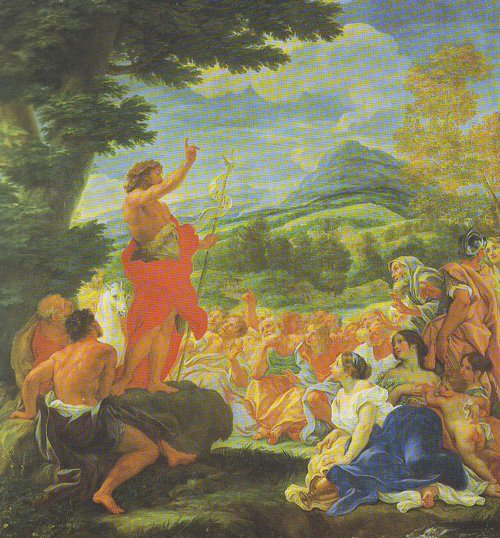
St. John the Baptist Preaching, by Giovanni Battista Gaulli (1639-1709)

John said to the crowds coming out to be baptized by him, “You brood of vipers! Who warned you to flee from the coming wrath? Therefore, bear fruits worthy of repentance, and do not begin to say to yourselves, ‘We have Abraham as our ancestor,’ for I tell you, God is able from these stones to raise up children to Abraham. Even now the ax is lying at the root of the trees; therefore every tree that does not bear good fruit will be cut down and thrown into the fire.”

And the crowds asked him, “What, then, should we do?” In reply he said to them, “Whoever has two coats must share with anyone who has none, and whoever has food must do likewise.” Even tax collectors came to be baptized, and they asked him, “Teacher, what should we do?” He said to them, “Collect no more than the amount prescribed for you.” Soldiers also asked him, “And we, what should we do?” He said to them, “Do not extort money from anyone by threats or false accusation, and be satisfied with your wages.”

As the people were filled with expectation and all were questioning in their hearts concerning John, whether he might be the Messiah, John answered all of them by saying, “I baptize you with water, but one who is more powerful than I is coming; I am not worthy to untie the strap of his sandals. He will baptize you with the Holy Spirit and fire. His winnowing fork is in his hand to clear his threshing floor and to gather the wheat into his granary, but the chaff he will burn with unquenchable fire.”

So with many other exhortations he proclaimed the good news to the people. (New Revised Standard Version)

John’s ministry was meant to be one of preparing people for the Lord’s coming. His understanding of that preparation may seem odd, even harsh, to us.

Yet, John believed that the coming of the Lord meant that Judgment Day was at hand. So, his words are consistent with that sort of theological understanding.

What John did not see at the time – nor anyone else, for that matter – was that the coming of the Lord was happening in two advents, and not just one.

The first advent, or coming, was the incarnation and earthly life of Jesus. This first coming is not yet the time for judgment. The second advent, however, will be all about judgment for both the living and the dead.

That reality, however, doesn’t mean John’s feisty words have no meaning for us. In fact, they have more meaning than ever, because the judgment he foresaw is still yet to come.

We need to hear John’s words, and have the ears to receive those words, because we are in a world that seems ripe for divine judgment.

Repentance – a change of mind and heart that leads to a new life of active justice (not judgment) – is the appropriate preparation for us in this current Advent season.

Amongst the crowds who gathered around John, some recognized how they had fallen short of loving God and neighbor. Some had a profound sense of failing to live faithfully. Others were overwhelmed and came to see and hear the Baptist preach.

Above all, however, John had a warning to the people about relying on their privilege as Jews. It isn’t pedigree that gets anyone anywhere in God’s kingdom.

Instead of putting faith in something like ethnicity or religious beliefs, people ought to be putting their efforts into living a good, right, and just life.

For us today, nobody can rely on special privileges either. It has always been humanity’s responsibility and obligation to love, not hate; serve, not always looking to be served; and showing mercy, not revenge.

The axe comes in many forms, yet it consistently exists to cut off something. Far too many persons, during this time of year, and especially in this season, feel cut off from family or friends. Many sense they are cut off from light, or sanity, as if the world is a surreal place filled with clowns and oligarchs who care nothing for others.

There’s a lot of suffering going on. And any threats of axes and separation are already a reality for too many persons. So, what are we to do with all these icky and unwanted thoughts, feelings, and situations?

John said to the crowd that they were to bear fruit that is worthy of repentance. That is a very biblically language-based way of saying that, for God’s sake, we had better start practicing forgiveness, and see one another from a different angle.

We need a changed viewpoint that leads to a changed heart and life.

There must be a new, or renewed, relationship with God.

If there is doubt about what to do, the answer lies within the problem:

  • For the money-hungry, don’t be greedy, but learn to give away resources
  • For those in authority, don’t abuse power through extortion, but learn to give it away, along with your wages
  • For those who talk a good line, don’t manipulate others, but learn to give your hands and feet to working for a better world, and for your neighbor next door

Learning how to change and be different in this season of Advent is the very best way of preparing to receive the Christ child at Christmas.

One greater than John is coming, with something better than anyone can imagine. It is the gift of a different baptism – fire and spirit – that breathes the power of God into everything it touches.

The axe may be at the root of the tree. There may already be plenty of separation and disconnection. But this year doesn’t have to end in disaster or destruction or disappointment.

You and I, along with everyone who calls on the name of the Lord, can experience deliverance from evil, and freedom to be the people we were always meant to be.

O God of the lost and the displaced, you promise restoration and wholeness through the power of Jesus Christ. Give us faith to live joyfully, sustained by your promises, as we eagerly await the day when they will be fulfilled for all the world to see; through the coming of your Son, Jesus Christ. Amen.

Living Bread from Heaven (John 6:51-58)

Art by Nigel Wynter (1957-2024)

I am the living bread that came down from heaven. Whoever eats of this bread will live forever, and the bread that I will give for the life of the world is my flesh.”

The Jews then disputed among themselves, saying, “How can this man give us his flesh to eat?” 

So Jesus said to them, “Very truly, I tell you, unless you eat the flesh of the Son of Man and drink his blood, you have no life in you. Those who eat my flesh and drink my blood have eternal life, and I will raise them up on the last day, for my flesh is true food, and my blood is true drink. Those who eat my flesh and drink my blood abide in me and I in them. Just as the living Father sent me and I live because of the Father, so whoever eats me will live because of me. This is the bread that came down from heaven, not like that which the ancestors ate, and they died. But the one who eats this bread will live forever.” (New Revised Standard Version)

To the religious leaders of Christ’s day, Jesus was making more noise than a couple of skeletons dancing on a tin roof. And they neither liked it, nor appreciated him drawing so much attention to himself.

Tensions had been escalating between Jesus and the religious establishment. The atmosphere was thick with grumbling leaders, as they tried to make some sense of Christ’s words to them.

Jesus offering his body for people to eat was causing far too much noise for the Jewish leaders. What in the world is this guy talking about?

Rather than making the meaning clear for them, Jesus added drinking his blood to the discussion. What’s more, Christ got up in their grill and confronted them with a choice, instead of a straightforward explanation.

Using some good old double negative language, Jesus flatly stated that there’s no life without any eating of his flesh and drinking of his blood. Then conversely, stated positively, Jesus affirmed that eternal life is found in those who eat his flesh and drink his blood.

This was next level communication of Jesus to the religious leaders. Earlier, Christ let them know that they needed to make the choice of coming to himself, of engaging in a life-giving relationship with him.

Yet now, it’s a matter of outright participation in Jesus, of eating and drinking the body and blood of Christ. Both the choice of relationship and of participation are radical decisions, which requires ditching some old traditions, and beginning some new ones.

Christ’s words are difficult, because they demand a change in thinking and behavior. Indeed, his words demand a change in our very way of being.

Christian discipleship requires that we stop the false ways of being in this world, and start a different way of being, according to the true self. In other words, Jesus was insisting on repentance and faith.

We are all on the hook to not just talk some theology and take some communion elements. It’s a lot more involved than that. Jesus demands our very lives, and not simply to sign off on some doctrinal statement about him. It’s about life itself, the power of life and death.

By eating and drinking Christ, there is meaningful relational connection, and ongoing participation in his life and ministry.

None of this is about literal cannibalism, and not even about actual bread and wine. This is deep metaphorical stuff which is meant to convey to us who Jesus is and how we can be related to him.

When we ingest food and drink, it goes into us and throughout our entire body. You cannot get much closer to something than by eating it and having it inside you. Just as eating bread goes to our very core and helps sustain life, so ingestingJesus is about allowing him to be as close to us as possible, into the very depths of our soul.

And by taking Christ into us, we will truly live and connect; and not be separated and die.

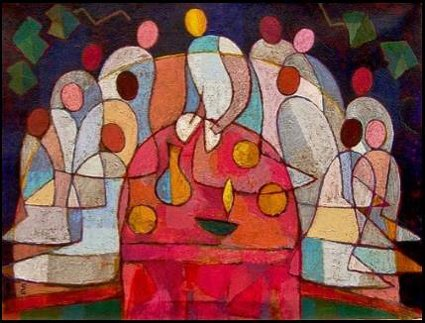
Art by Soiche Watanabe

We can no more spiritually live without taking Jesus into us, as we could live without eating on a regular basis. Christ is our breakfast, lunch, and dinner; our midnight snack and our birthday cake. Jesus is all that, and more.

Perhaps you are wondering why Jesus didn’t just state plainly who he is, why he came, and what will happen. Because it’s too much to handle.

We don’t simply accept Jesus into our heart, and then go on our merry way. Jesus Christ is someone to search for and discover, as if we were looking for fresh water or for the best baguette in the world.

Anyone can affirm a few belief statements, or do some good deeds. But it takes real courage to go hard after the spiritual life and find out what it’s all about:

It requires some solid bravery to explore the depths of your own true self and face the internal crud that’s been hiding in the shadows of your soul.

It demands identifying the bogus ways we prop up a false self for others to see – wanting to control how people view us and treat us.

It takes some real chutzpah to pursue the God life without worrying about where it will take you or who it will upset.

Jesus is a force to contend with. He is the Son of God, sent from above, to provide the world with real spiritual food and drink. Christ is the one who sustains life, and makes abundance possible. He is the Lord who speaks, calls out, and draws us to himself.

Jesus Christ helps us fit, even though we come from the island of misfit toys.

Even more pertinent than the question of “Who is Jesus?” is the probing question, “And what will you do with him?”

Christ cannot fit into your neat theological system, your tidy doctrinal statements, and on your nicely cleaned coffee table within the attractive Bible. Sooner or later, we all must contend with the divine force which gives life to everything. We cannot get away from him.

So, go after Jesus. Find out who he is. Determine how to deal with a mercy so powerful that it melts away guilt and shame as if it were in a 500 degree oven. After all, it’s better to have a tasty loaf of bread than to become a hard slice of burnt toast.

But let’s not worry about how hot it is in here, but how noisy it’s getting.

Gracious Lord, move us, your people, to experience your love more deeply. Fill us with the energy that comes from a desire for service. Connect us with creation to care for your world. Engage us in the scriptures and increase our knowledge of you. Raise up your power and come among us. May your bountiful grace and mercy equip us. Amen.