Hebrews 11:1-7 – Live By Faith

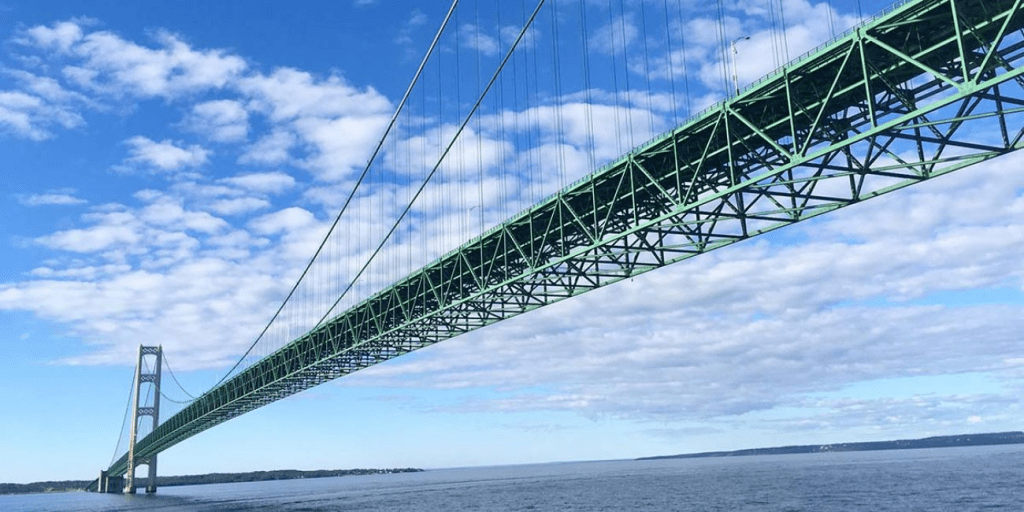
The Mackinac Bridge, joining the upper and lower peninsulas of Michigan

Now faith is confidence in what we hope for and assurance about what we do not see. This is what the ancients were commended for.

By faith we understand that the universe was formed at God’s command, so that what is seen was not made out of what was visible.

By faith Abel brought God a better offering than Cain did. By faith he was commended as righteous when God spoke well of his offerings. And by faith Abel still speaks, even though he is dead.

By faith Enoch was taken from this life, so that he did not experience death: “He could not be found, because God had taken him away.” For before he was taken, he was commended as one who pleased God. And without faith it is impossible to please God because anyone who comes to him must believe that he exists and that he rewards those who earnestly seek him.

By faith Noah, when warned about things not yet seen, in holy fear built an ark to save his family. By his faith he condemned the world and became heir of the righteousness that is in keeping with faith. (New International Version)

“Faith does not eliminate questions. But faith knows where to take them.” Elisabeth Elliot

Faith is dynamic, not static. Faith is both knowledge and mystery. Faith encompasses past, present, and future.

The Mackinac Bridge is the longest suspension bridge in the Western hemisphere at 26,372 feet long. At its highest, the roadway is 200 feet above the strait that separates the upper and lower peninsulas of Michigan in the United States. 

All suspension bridges are designed to move to accommodate wind, change in temperature, and weight. It is possible that the deck at center span could move as much as 35 feet either east or west, due to severe wind conditions.

It’s one thing to know facts about the bridge, and it’s another thing to actually drive on it and cross the strait. 

Some people don’t try it. I’ve driven the Mackinac Bridge many times, and it’s a hoot! In order to cross the bridge, we need to know it will hold us up above the water. And then, we actually need to drive on it.

True biblical faith is neither an existential leap into darkness, nor a simple recognition of certain facts. 

Rather, Christian faith is a reliance upon and commitment to Jesus that results in taking a risk. 

Faith is knowledge that God exists. Faith is stepping out and acting. Faith requires both knowledge and action. 

One can read all the facts about the Mackinac Bridge, but it isn’t the same thing as crossing it. Conversely, one can cross the bridge, even daily, and have no real appreciation for its true magnificence and structural wonder.

The New Testament of the Bible wants us to know Jesus, both intellectually and experientially. Only through those two elements of faith will anyone have a sustainable faith which perseveres throughout life. 

A lack of high-level commitment from professing Christians points to the reality that many believers are missing a crucial part of faith. There are those who rush into situations half-cocked without a solid base of understanding. And then, there are others who talk an issue to death and never act. 

A full-orbed biblical faith seeks knowledge and understanding so that it may respond in loving action.

Faith is important. It’s part of us. We are all people of faith – maybe not sharing the same faith – but it is faith, none-the-less.

“Never be afraid to trust an unknown future to a known God.” Corrie ten Boom

Belief transcends time. Faith is rooted in the past, experienced in the present, and future-oriented. In Christianity, faith is historically moored to the redemptive events of Christ’s incarnation, life, death, resurrection, and ascension. This historic faith has continuing ramifications into the present time. And it is a faith which believes Christ is coming again to judge the living and the dead.

All of this means our salvation encompasses past, present, and future. So, it is appropriate and accurate to say the Christian has been saved, is being saved, and will be saved.

Deliverance from sin, death, and hell was achieved on the cross. We are presently in the process of being delivered from our sinful nature and the effects of a fallen world. And we will be completely delivered at the end of the age from disease, disaster, and death.

The New Testament brings out all these dimensions of time. Whereas the Apostle Paul tended to continually look back to the past of God’s action in history, the author of Hebrews consistently looks ahead and brings out the future orientation of our faith.

And that is what the great Hall of Faith in chapter eleven of Hebrews is about – giving repeated examples of individuals who transcended their present hard circumstances through realizing what will be eventually coming. All of them acted particular ways in the present time because of what they believed would happen in the future.

People of faith allow their belief in what is coming to shape how they live now in daily life.

Abel took the absolute best of his flock and made it an offering, with the intent of giving God an appropriate gift. Whereas his brother Cain cobbled together some of the leftovers from his vegetable harvest and gave them a nonchalant toss to God. Then, he got upset when God looked with disfavor on it.

Abel’s actions demonstrated the attitude of his heart. His knowledge and action worked together. The gift he gave to God cost him his life, as Cain was inflamed with anger and killed his brother. Only by looking ahead and seeing that God’s reward is better than anything this world can offer, can we endure hardship.

Enoch focused on pleasing God through his three-hundred year life, knowing he would then enjoy an eternity with the Lord who provides good rewards. Enoch displayed his faith through obedience to God. He believed God existed and that God is good, and then proceeded to live a life of goodness.

Noah, despite the jeering of his neighbors, took one-hundred years of his life to build a big ark, believing without a doubt that God’s judgment was coming. The daily grind of constructing an ark for such a long time was made possible because Noah was looking ahead. His present actions were shaped by his forward thinking faith.

In each individual’s life, their daily actions were a result of their unshakable belief in what was to come.

Faith enables us to persevere patiently through any kind of adversity.

Knowing we have a better reward ahead; realizing our present trouble will not last forever; and believing Christ will eventually make all things right in this world – forms the foundation of our faith. Such a faith buoys us so that we do not drown in a sea of injustice, microaggressions, unhealthy power dynamics, as well as plain old meanness and insensitivity from others.

So, when we face those times which tempt us to get lost or stuck in an ever-enclosing existential angst, take a pause, check the facts, and then confidently cross the bridge.

Live by faith. You’ll be glad you did.

Christ be with me, Christ within me,

Christ behind me, Christ before me,

Christ beside me, Christ to win me,

Christ to comfort and restore me.

Christ beneath me, Christ above me,

Christ in quiet, Christ in danger,

Christ in hearts of all that love me,

Christ in mouth of friend and stranger.

Amen. – A Prayer of St. Patrick

Psalm 27 – Wait…

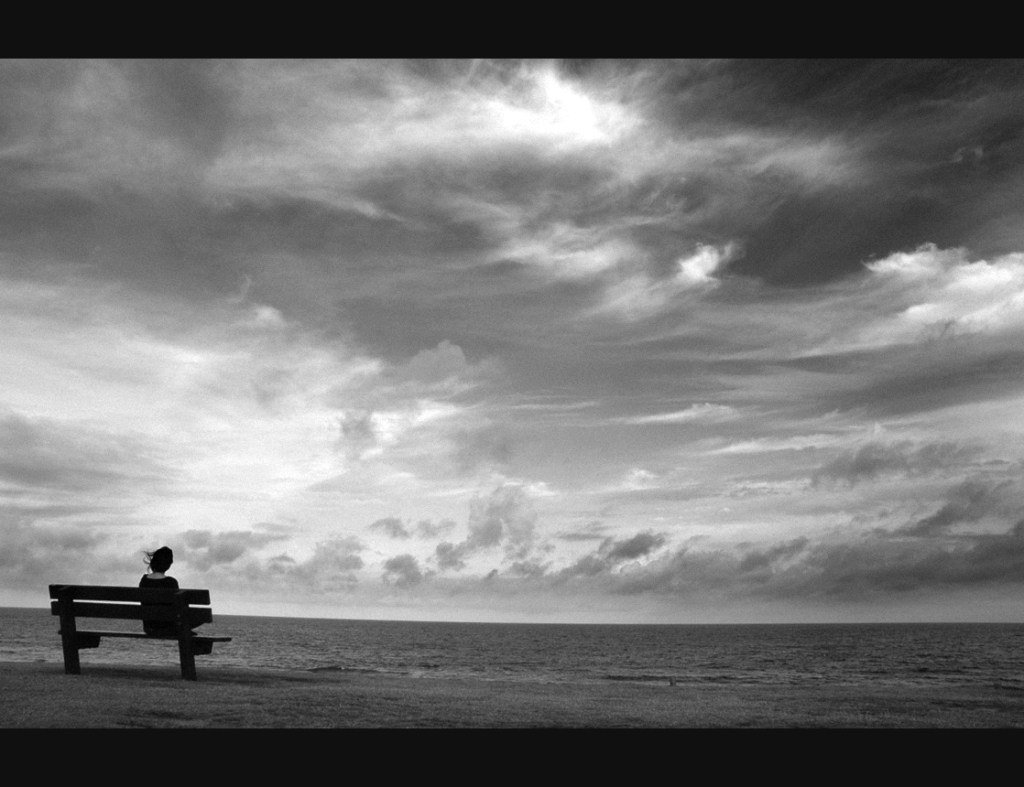
Psalm 27:4 painting by Marguerite Moreau McCarthy

The Lord is my light and my salvation;
    whom shall I fear?
The Lord is the stronghold of my life;
    of whom shall I be afraid?

When evildoers assail me
    to devour my flesh—
my adversaries and foes—
    they shall stumble and fall.

Though an army encamp against me,
    my heart shall not fear;
though war rise up against me,
    yet I will be confident.

One thing I asked of the Lord,
    that will I seek after:
to live in the house of the Lord
    all the days of my life,
to behold the beauty of the Lord,
    and to inquire in his temple.

For he will hide me in his shelter
    in the day of trouble;
he will conceal me under the cover of his tent;
    he will set me high on a rock.

Now my head is lifted up
    above my enemies all around me,
and I will offer in his tent
    sacrifices with shouts of joy;
I will sing and make melody to the Lord.

Hear, O Lord, when I cry aloud,
    be gracious to me and answer me!
“Come,” my heart says, “seek his face!”
    Your face, Lord, do I seek.
    Do not hide your face from me.

Do not turn your servant away in anger,
    you who have been my help.
Do not cast me off, do not forsake me,
    O God of my salvation!
If my father and mother forsake me,
    the Lord will take me up.

Teach me your way, O Lord,
    and lead me on a level path
    because of my enemies.
Do not give me up to the will of my adversaries,
    for false witnesses have risen against me,
    and they are breathing out violence.

I believe that I shall see the goodness of the Lord
    in the land of the living.
Wait for the Lord;
    be strong and let your heart take courage;
    wait for the Lord! (New Revised Standard Version)

“The key to everything is patience. You get the chicken by hatching the egg, not by smashing it.”

Arnold H. Glasow

The Christian season of Lent is a time of waiting…. Believers patiently wait for Easter and the resurrection of the Lord. But there must be a crucifixion before there is a resurrection. There must be suffering before there is glory. Truncating the process of spiritual development, including the hard circumstances of life, will stunt our growth.

So, we need to wait for the Lord….

But, dang it, waiting is hard! Patience is especially difficult whenever we are experiencing hardship and difficulty. We already know that praying for patience is problematic; we end up getting plenty of opportunities to exercise patience and may feel like we’re worse off than before. So, what do we do?

The way to wait patiently is through hope. And hope is a reality which needs to be continually fortified.

Whatever we long to see realized…

the return of a wayward son or daughter…

revitalization and revival within the church…

courage to face the high wall of adversity…

protection and deliverance from mean-spirited people…

an end to pandemic…

freedom from racism and injustice…

healing from chronic pain…

enough finances to make our budget budge…

whatever the situation we long for, patience is to be our breakfast every morning to help us through each day, living one day at a time, putting one foot forward.

Apart from patience, faith, and hope in God, we will lose our spiritual zeal and settle for a mediocre existence with tepid relationships and lukewarm engagement of the world. 

God desires more for us…

than simply having a marriage in which two people only exist under the same roof…

for church to be more than buildings, budgets, and butts in the pews…

for our work to be more than a necessary evil to make a living…

for our lives to be more than fear, worry, and anxiety…

for much more than broken dreams, messed up relationships, and situations gone sideways.

The confident expectation of hope neither eliminates trouble from our lives nor magically makes everything better.

Deep faith, like the psalmist expressed, does not change or alter reality – but it does change us.

The way in which we view and handle our troubles is understood differently through the filter of faith and the lens of hope.

The mammoth adversity in our lives is no longer feared because of settled trust in God; the danger which lurks about has no teeth to hold us when we are secure in the Lord.

The actions believers take toward God amidst the fallen nature of this world are to wait and hope, to be strong and take courage. It is precisely when we are totally discombobulated that faith and confident expectation kick in and take effect.

Our faith leads us to confess:

I believe the Lord is the Light which keeps me safe and illumines my path.

I believe the Lord is my Fortress, a castle to protect me.

I believe the Lord is an Army surrounding me, defending my life.

I believe the Lord is the Rock of my salvation, keeping me secure.

I believe the Lord is a Parent who holds me close and does not let go.

I believe the Lord is the right and good Judge, always extending grace and mercy to me.

I believe the Lord is Healer, oftentimes healing me from the need to be healed.

Therefore:

I have confidence and courage to engage the world, knowing God has my back.

I have confidence God will handle malevolent persons, systemic evil, and sinister forces on my behalf.

I have confidence I can approach God, since God’s character is always gracious and loving.

I have confidence to pray with authority, understanding God is the Sovereign of the universe.

I have confidence better days are ahead, that the Christ is soon coming.

I have confidence God bends to attentively listen to me praying.

I have confidence God is neither angry at me nor hidden from me.

I have confidence God shall lead me, guide me, and teach me in the way I ought to go.

I have confidence knowing that God has my best interests in mind.

Rather than losing heart, we can be strengthened with solid theology. Making daily affirmations of faith, persevering in hope, and performing small acts of love are our daily tasks while we wait and watch….

Almighty and everlasting God, the One who sees, knows, and protects, by the power of your Holy Spirit, you are refining us, purifying our discipleship, pulling us into following Jesus in this scary new world of uncertainty. Grant us mercy and grace to trust you more deeply, for the only secure place is with you, our light and our salvation, the stronghold of our life. We pray in the name of Jesus, the first-born of your new creation, and our hope, our life. Amen.

Hebrews 11:17-22 – Faith Forward

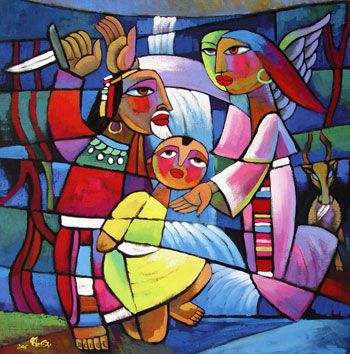
Sacrifice of Abraham by He Qi

By faith Abraham, when God tested him, offered Isaac as a sacrifice. He who had embraced the promises was about to sacrifice his one and only son, even though God had said to him, “It is through Isaac that your offspring will be reckoned.” Abraham reasoned that God could even raise the dead, and so in a manner of speaking he did receive Isaac back from death.

By faith Isaac blessed Jacob and Esau in regard to their future.

By faith Jacob, when he was dying, blessed each of Joseph’s sons, and worshiped as he leaned on the top of his staff.

By faith Joseph, when his end was near, spoke about the exodus of the Israelites from Egypt and gave instructions concerning the burial of his bones. (New International Version)

Life requires faith.

To keep going, to endure and persevere, demands sustained faith over the course of a lifetime.

Faith is confidence in what we hope for and assurance about what we do not see. (Hebrews 11:1)

The biblical character, Abraham, let faith shape his actions. He obeyed God’s call on his life and left his home country to go somewhere he knew nothing about. And he did it with no GPS and no AAA tour books.

Even thought Abraham had a good life in his home city of Ur, he left, believing there was something better ahead.

After reaching the land which God led them to, Abraham, age 100 and his wife, Sarah, age 90, became parents. It happened because of faith. The two of them believed God’s promise of a child, even though it was biologically impossible.

Abraham kept his faith over the long haul of his life. He did it by looking ahead to the eternal city. Because Abraham had looked ahead on this earth and stepped out in faith, he was able to clearly discern that all his faith eggs were not in the earthly basket.

Against all odds, Abraham was convinced God was good for his promises and knew what he was doing.

Trust in the Lord with all your heart,
And lean not on your own understanding;
In all your ways acknowledge Him,
And He shall direct your paths.

Proverbs 3:5-6, NKJV

Isaac was the miracle child, the promised son born to Abraham and Sarah in their old age. One day, God came along and gave Abraham a very strange command: Take your son, the child of the promise, and go to the mountain and sacrifice him there. (Genesis 22:1-19)

“Huh? What the @#$&*!!” we might say. But it only seems perplexing and weird to us. Abraham listened and obeyed. He simply went about the business of saddling up the donkey, chopping some wood for the sacrifice, and took his only son with him on the journey to the mountain – with no questions or talk back to God.

While you and I might try and figure out if we really heard God or not, Abraham had a history of faith with God. He knew God’s voice as well as he knew his own. Abraham was well down the road of relationship with the God he served.

Today’s New Testament lesson gives us an insight into Abraham’s thought process, a line of thinking consistent with a person who has a regular habit of talking with God. Abraham was willing to follow through with sacrificing his beloved son because he was sure that God could raise people to life. Abraham believed death would not have the last word.

Abraham did not try and figure out God’s mind. He didn’t get into a debate with God about the contradiction of ethics he was being asked to do. He just obeyed. Abraham reasoned that it didn’t matter if Isaac were killed because God could raise him from death. This, of course, is not what happened. It was all a test of faith. Abraham knew beyond a shadow of a doubt that God is the Lord who provides.

You and I rarely know why we are facing the unwanted circumstances we are enduring. We don’t always know what in the world God is thinking. Yet, like Abraham, if we have a spiritual history of walking with God and hearing the Lord’s voice, we don’t hesitate to respond. We are convinced God will provide.

Obedience for the follower of Christ is not a burden but a privilege, even when we are being tested beyond our seeming emotional ability to do it.

Grant, O God, that we may never lose our way through self-will, and so end up in the far countries of the soul. May we never abandon the struggle, but endure to the end, and so be saved. May we never drop out of the race but press forward to the goal of our high calling. May we never choose the cheap and temporary path but let go of all but you. May we never take the easy way and never forget that sweat is the price of all things, and that without the cross, there cannot be the crown.

So, keep us and strengthen us by your grace so that no disobedience, weakness, or failure may stop us from entering into the blessedness which awaits those who are faithful in all the changes and chances of life, through Jesus Christ our Lord. Amen

2 Samuel 5:1-10 – Living into a Purpose

All the tribes of Israel came to David at Hebron and said, “We are your own flesh and blood. In the past, while Saul was king over us, you were the one who led Israel on their military campaigns. And the Lord said to you, ‘You will shepherd my people Israel, and you will become their ruler.’”

When all the elders of Israel had come to King David at Hebron, the king made a covenant with them at Hebron before the Lord, and they anointed David king over Israel.

David was thirty years old when he became king, and he reigned forty years. In Hebron he reigned over Judah seven years and six months, and in Jerusalem he reigned over all Israel and Judah thirty-three years.

The king and his men marched to Jerusalem to attack the Jebusites, who lived there. The Jebusites said to David, “You will not get in here; even the blind and the lame can ward you off.” They thought, “David cannot get in here.” Nevertheless, David captured the fortress of Zion—which is the City of David.

On that day David had said, “Anyone who conquers the Jebusites will have to use the water shaft to reach those ‘lame and blind’ who are David’s enemies.” That is why they say, “The ‘blind and lame’ will not enter the palace.”

David then took up residence in the fortress and called it the City of David. He built up the area around it, from the terraces inward. And he became more and more powerful because the Lord God Almighty was with him. (New International Version)

“The purpose of life is to contribute in some way to making things better.”

Robert F. Kennedy

A sense of satisfaction and gratification comes with a job well done. Whenever we have an inner sense of accomplishing something important or fulfilling a purpose which was long in the planning, there is a settled feeling we have lived into God’s intentions for us.

David experienced success because the Lord was with him. He was careful to do all that God intended for him to do. King David lived into his anointing and demonstrated that he was of a different cut than the previous king, Saul. David was the person equipped by God to lead all Israel and Judah.

Using his newfound position and authority, David took the initiative to do the Lord’s will. This was a long time in coming. David had a sense, because of close walk with God, of when to be patient and wait, and when to take charge and act.

There was an extended patient wait for the Lord’s timing in David becoming king. Although anointed by the prophet Samuel as king while Saul was still in his reign, it took years for David to be enthroned as the actual king. David had several opportunities to make himself king by killing Saul (who was trying to kill David) but he allowed God to enthrone him in God’s own good time.

In fact, rarely does anything the Lord promise come to fruition immediately. We must wait patiently for deliverance from painful trials of faith and the return of Christ. God makes promises. Then we persevere until those promises are fulfilled.

All of David’s waiting finally dissipated into kingly action. Before there were kings, judges ruled in Israel. And before that, Joshua led the people into the Promised Land. They had a mandate to expel the Canaanites. Those instructions from God only partially happened. There were still remnants and pockets of resistance. The Jebusites, ensconced in the city of Jebus (Jerusalem) were the most stubborn.

Part of the reason there were Canaanites still living in the land was the former King Saul’s failure to take up the Lord’s plan. One of the first acts of King David was to finish and fulfill the complete takeover of the land.

David was willing to attempt something nobody else could do, and that no one believed could be done. If we were a fly on the wall during discussions about this, I can imagine a coterie of people saying to the king, “We tried that before. It won’t work. You cannot get rid of the Jebusites. This is a fool’s errand.”

Pessimism and passivity certainly do not dislodge anything, and the people had fallen into a cynicism that believed they needed to put up with the current situation. Whenever a group of people fall into this kind of thinking, criticism is rife because folks are not working together toward shared goals and solutions. Instead of addressing problems, there is merely complaining about the problems.

On the other side of it, the Jebusites were smug in their self-confidence, showing their bravado through being blowhards. However, they had not yet faced David. If they thought another king like Saul was coming along, they were in for a big wake up call.

The Lord almighty was with David. And that is what made all the difference. King David did not accept the status quo. He worked toward accomplishing the Lord’s will, as he understood it. And his faith always led to effective action.

God almighty, ruler of heaven and earth, may we your people never lose the way through our self-will, and so end up stuck in our souls with nowhere to go. Help us to never abandon the struggle so that we may endure to the end, and so be saved. May we never drop out of life with you but press forward to the goal of our high calling. May we not choose the cheap and easy way of getting things done but always remember that sweat is the price of all things, and that without the cross, there cannot be the crown. So, keep us and strengthen us by your grace. Let no disobedience nor weakness or failure stop us from being faithful in all the changes and chances of life, through Jesus Christ our Lord. Amen

*Above statue of King David, outside his tomb in Jerusalem