Job 1:1-22 – A Better Way Through Impossible Suffering

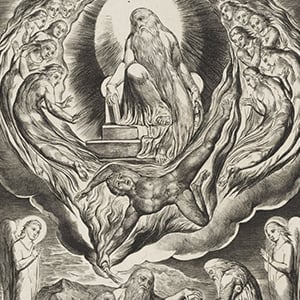
Satan Going Forth from the Presence of the Lord by William Blake, 1825

In the land of Uz there lived a man whose name was Job. This man was blameless and upright; he feared God and shunned evil. He had seven sons and three daughters, and he owned seven thousand sheep, three thousand camels, five hundred yoke of oxen and five hundred donkeys, and had a large number of servants. He was the greatest man among all the people of the East.

His sons used to hold feasts in their homes on their birthdays, and they would invite their three sisters to eat and drink with them. When a period of feasting had run its course, Job would arrange for them to be purified. Early in the morning he would sacrifice a burnt offering for each of them, thinking, “Perhaps my children have sinned and cursed God in their hearts.” This was Job’s regular custom.

One day the angels came to present themselves before the Lord, and Satan also came with them. The Lord said to Satan, “Where have you come from?”

Satan answered the Lord, “From roaming throughout the earth, going back and forth on it.”

Then the Lord said to Satan, “Have you considered my servant Job? There is no one on earth like him; he is blameless and upright, a man who fears God and shuns evil.”

“Does Job fear God for nothing?” Satan replied.“Have you not put a hedge around him and his household and everything he has? You have blessed the work of his hands, so that his flocks and herds are spread throughout the land. But now stretch out your hand and strike everything he has, and he will surely curse you to your face.”

The Lord said to Satan, “Very well, then, everything he has is in your power, but on the man himself do not lay a finger.”

Then Satan went out from the presence of the Lord.

One day when Job’s sons and daughters were feasting and drinking wine at the oldest brother’s house, a messenger came to Job and said, “The oxen were plowing and the donkeys were grazing nearby, and the Sabeans attacked and made off with them. They put the servants to the sword, and I am the only one who has escaped to tell you!”

While he was still speaking, another messenger came and said, “The fire of God fell from the heavens and burned up the sheep and the servants, and I am the only one who has escaped to tell you!”

While he was still speaking, another messenger came and said, “The Chaldeans formed three raiding parties and swept down on your camels and made off with them. They put the servants to the sword, and I am the only one who has escaped to tell you!”

While he was still speaking, yet another messenger came and said, “Your sons and daughters were feasting and drinking wine at the oldest brother’s house, when suddenly a mighty wind swept in from the desert and struck the four corners of the house. It collapsed on them, and they are dead, and I am the only one who has escaped to tell you!”

At this, Job got up and tore his robe and shaved his head. Then he fell to the ground in worship and said:

“Naked I came from my mother’s womb,
    and naked I will depart.
The Lord gave and the Lord has taken away;
    may the name of the Lord be praised.”

In all this, Job did not sin by charging God with wrongdoing. (New International Version)

Much of life is a mystery. We simply do not know why some things happen. And it’s likely we won’t have answers to many of our vexing questions, this side of heaven. From our limited human perspective, **** happens, and that’s about all we can say about it. 

There are times in Holy Scripture, however, when the veil between heaven and earth is peeled back long enough for us to catch a glimpse of mystery. Today’s Old Testament lesson is such a story. 

Job was a wealthy man and had everything this earthly life could offer. What’s more, he was a pious godly person of faith. It was commonly understood that those two things always went together. So, when we see behind the curtain and are privy to a conversation between God and Satan, the devil himself points this out – that Job only praises God because of how good he has it.  Even with this understanding of what was behind Job’s misery, we still see the mysterious God allowing Satan to operate with only God-knows reasons why.

Whenever calamity strikes, or bad news causes us to slump in our chairs, or adversity hits unexpectedly, or trouble smacks us upside our life like a sledgehammer, it’s only human to begin wondering what we did wrong or what we did to bring on such a terrible set of circumstances. 

But the truth is this: We just don’t always know. 

Yes, I fully understand that statement is hard to swallow; it even sucks. For example, no amount of understanding why my grandson has a rare form of epilepsy will make the pain go away. All my wonderings about his future isn’t going to help my daughter. It’s an impossible emotional place to be. It’s sad and it’s frustrating.

Yet, there is a better way.

Although there is so much we don’t know, we do know Job’s inconceivable response to the mystery of God. He made an incredible confession of faith, despite the most awful of circumstances. Job made the affirmation:

“When I was born into this world,
    I was naked and had nothing.
When I die and leave this world,
    I will be naked and have nothing.
The Lord gives,
    and the Lord takes away.
Praise the name of the Lord!”

Job 1:21, ERV

Rather than spending all of our emotional energy trying to figure out an answer to our “why” questions, perhaps the more sage response is to confess our faith in a radical trust of God. 

Using these actual words from Job can be a necessary start to navigating the troubled waters of evil which swirl around us, even if we have to say them over and over again to believe them.

I know I do.

Almighty God, every good thing I have in my life comes from you. It is your prerogative whether I continue to have those things, or not. Whatever happens, whether it causes heartbreak or happiness, is completely known to you. I trust that you know what you are doing, and I completely throw myself upon your mercy through Jesus Christ, my Savior. Amen.

Confess and Believe

Welcome, friends, to this Christian season of Lent. Holy Scripture graciously communicates that everyone who believes in their heart, with a faith which bubbles up and come pouring out of the mouth, shall be saved. Click the videos below, and let us consider God’s grace to us in Jesus Christ…

Pastor Tim Ehrhardt, Romans 10:8b-13

Forgive those things we have done, O God,
which have caused you sadness,
and those things we should have done
that would have brought you joy.
In both we have failed
ourselves,
and you.
Bring us back to that place
where our journey began,
when we said that we would follow
the way that you first trod.
Lead us to the Cross
and meet
us there. Amen.

Romans 10:8b-13 – Believe and Confess

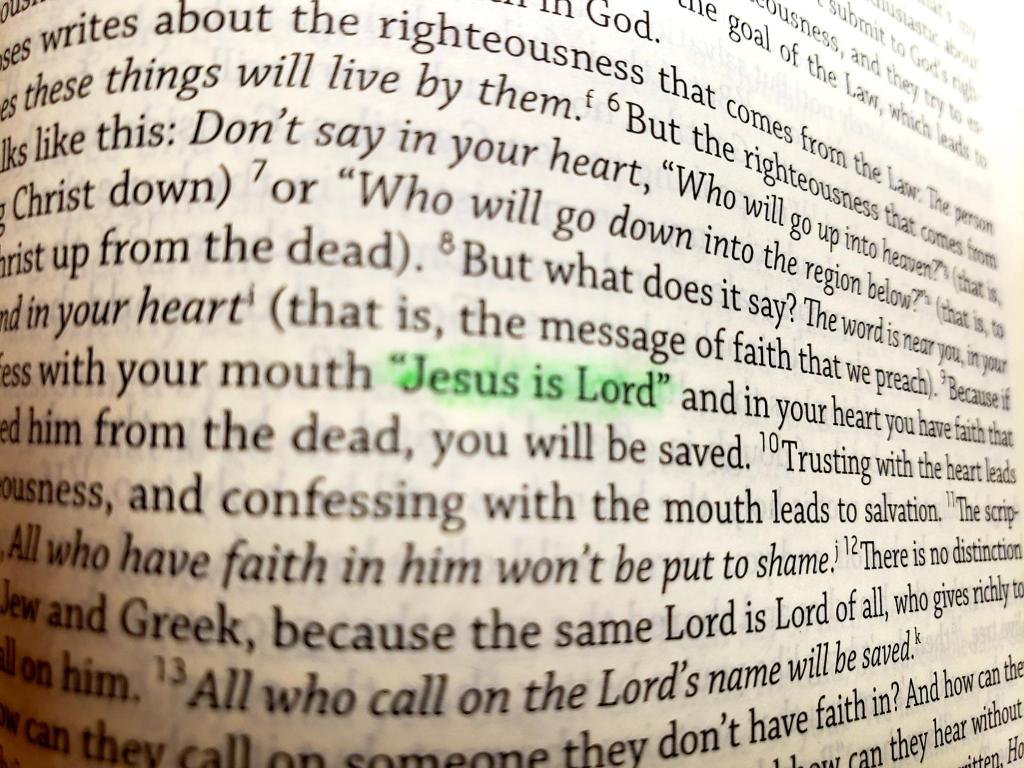
“The word is near you; it is in your mouth and in your heart,” that is, the message concerning faith that we proclaim: If you declare with your mouth, “Jesus is Lord,” and believe in your heart that God raised him from the dead, you will be saved. For it is with your heart that you believe and are justified, and it is with your mouth that you profess your faith and are saved. As Scripture says, “Anyone who believes in him will never be put to shame. ”For there is no difference between Jew and Gentile—the same Lord is Lord of all and richly blesses all who call on him, for, “Everyone who calls on the name of the Lord will be saved.” (New International Version)

Confess with the Mouth

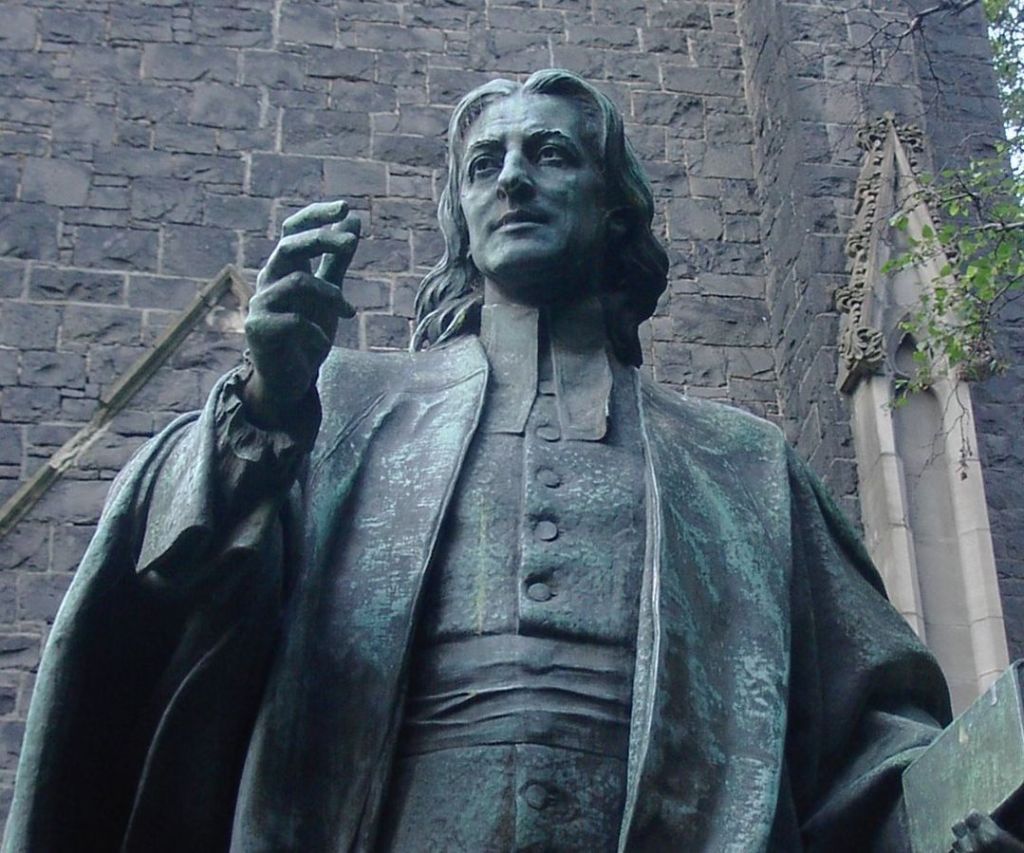
John Wesley (1703-1791) was an Oxford don who became an Anglican priest. He had all the intellectual tools to rightly handle the intricacies of theology and teach the Bible. Yet, when he first started out, there was no heart behind it. 

On a voyage across the Atlantic to America, Wesley spent much of the time on the ship with a group of German pietists – men and women who had a heart behind their practice of Christianity. The Germans deeply impressed Wesley, and he realized there was something important missing from his own religion. 

The ship encountered a storm and Wesley was afraid for his life. But the German believers seemed unfazed, having a heart-faith that John could not explain. He wanted what they had. Wesley was fearful and found little comfort in his religion. So, he confessed to one of them his growing misery and decision to give up the ministry. One of the Pietists advised, “Preach faith till you have it. And then, because you have it, you will preach faith.”

John Wesley acted on the advice. He led a prisoner to Christ by preaching faith in Christ alone for forgiveness of sins. He was astonished. Here was a man transformed instantly. Wesley cried out, “Lord, help my unbelief!” However, he still felt dull inside and little motivation even to pray for his own salvation. 

Statue of John Wesley as a young preacher, by Adam Carr, located in Melbourne, Australia

Having returned back to England, Wesley was in a church service listening to Romans expounded by the preacher. He recalled the experience years later: “While he was describing the change which God works in the heart through faith in Christ, I felt my heart strangely warmed. I felt I did trust in Christ, Christ alone for salvation; and an assurance was given me that He had taken away my sins, even mine, and saved me from the law of sin and death.”

Believe with the Heart

Simply uttering the words with our mouths, “Jesus is Lord,” by itself does not create deliverance and salvation. The heart needs to be involved. Yet, we must also consider the reality that only focusing on the heart, without having the mouth involved, is an insufficient faith. Christian belief has a solid objective real historical base from which our hearts can tether themselves. Christian confession affirms that Jesus is, indeed, risen from death and is Lord of all, having secured salvation for us through his shed blood on the cross.

Consider two hypothetical men at the time of the Passover in Egypt: Eleazar Ben Macaroni and Yakov Yarmulke. Eleazar and Yakov are talking together on the night the angel of death is about to pass through Egypt and the firstborn son in every family would be killed – that is, unless the blood from a sacrificial lamb was over the door of the house so that the angel would “pass over” the house and no one would be killed. 

Passover Angel of Death, by Arthur Hacker (1858-1919)

Yakov says to Eleazar, “Can you believe all that has been happening around here?  It’s all very scary!  All of those plagues, the disaster around us, and now this night!”  Eleazar asks, “Well, haven’t you put the blood over the door?”  “Yes, I’ve done all that – but it all is still disturbing.  My heart is troubled.  What do think will happen?” “Will we be okay?” asks Yakov nervously.  Eleazar responds, “I trust in the promises of God; let the angel come!”

So, when the angel of death came, which house do you suppose lost his firstborn son: Eleazar ben Macaroni, or Yakov Yarmulke?  The answer: neither of them. The angel of death did not come to either man’s house because deliverance is determined by the blood of the lamb and not by the quality or intensity of faith of the person. 

“For me His precious blood he shed – for me His life He gave. I need no other argument, I need no other plea; it is enough that Jesus died, and that he died for me.”

My Faith Has Found a Resting Place, hymn by Eliza Edmunds Hewitt (1851-1920)

If we only focus on the heart, our hearts will condemn us. We need to say the words of our faith, to confess them with our mouths, repeatedly, again and again, until we believe them. We are not to wait for our hearts to feel like having faith and living for God, because our hearts can be desperately wicked, and they will keep deceiving us. The heart needs to be informed by God’s Word and accept the words of Holy Scripture by faith:

“If we confess our sins, he is faithful and just to forgive us our sins, and to purify us from all unrighteousness.” (1 John 1:9, NIV)

Have the Heart and Mouth Work Together

We need both a right confession with our mouths and a right confession in our hearts for saving faith. When the heart receives grace, and the mouth expresses the beauty of faith – when heart and mouth work in concert with each other – something beautiful and gracious happens: 

“Everyone who calls on the name of the Lord will be saved.”

Romans 10:13

When Holy Scripture says “everyone,” it means “everyone.” All who cry out to God with their mouths, from a heart desiring God, will be saved. It does not matter whether that call is melodious, sweet, and in tune; or whether the call is a jumbled off-key joyful noise. It makes no difference; both will be saved. 

Only uttering the right words like some magical incantation does not save us. Only sincerity of heart does not save us. One does not achieve salvation through self-effort or trying to be worthy. No one is saved by finding the right combination of words in prayer or having a nice feeling.

Calling on the name of the Lord with both mouth and heart, trusting in the redemptive events of Jesus Christ, is what saves us.

Whether Jew or Gentile, rich or poor, American or Arab, famous or infamous, it is no matter – because salvation isn’t dependent on our looks, our past, or our zeal in doing good works. Salvation is completely from God and freely given to all who call upon the name of the Lord.

Make No Room for Shame

What’s more, all who trust in Jesus Christ will never be put to shame. In ancient Roman society, nearly three-fourths of all the people in the Empire were slaves to the other one-fourth. It was a culture built around the concept of honor and shame. It was shameful to be a slave, and honorable to be privileged, wealthy, and influential with a good Roman pedigree and citizenship. It was beneath such people to interact with those who served them because dealing with shameful people would make them shameful, as well.

Jesus forsook his honorable position in order to hob-nob with us rabble. He became one of us to save us and lift us up with him.

“For you know the grace of our Lord Jesus Christ, that though he was rich, yet for your sakes he became poor, so that you, through his poverty, might become rich.” 

2 Corinthians 8:9, NIV

Jesus embraced the shame of the cross. Therefore, we need never live in a state of shame ever again. Our hearts need not condemn us. Jesus has already taken care of shame, once for all.

“Let us fix our eyes on Jesus, the author and perfecter of our faith, who for the joy set before him endured the cross, scorning its shame, and sat down at the right hand of the throne of God.  Consider him who endured such opposition from sinful men, so that you will not grow weary and lose heart.” (Hebrews 12:2-3, NIV)

Put a Focus on Lent

The season of Lent lets us know we are neither brains-on-a-stick nor walking-headless-hearts. We have both heart and mouth, both deep feeling and real intellectual knowledge. Together, they form belief and confession. Lent is an invitation to prepare our hearts for Christ’s passion and resurrection. It includes an examination of our hearts so that we can deepen our piety and devotion to Jesus. And it incorporates confession of Jesus with the mouth.

The good news is this: Jesus is Savior and Lord; he has risen from death; and there is forgiveness of sins and deliverance from guilt and shame through is cross. When all is said and done, people need the Lord.

“I have not come to call the righteous, but sinners,” said Jesus. (Matthew 9:13)

Repentance involves both heart and mouth. And Lent is just the season for it, to turn from everything we have previously been living for other than Jesus. It’s an opportunity to start afresh with new life in Christ. It’s enough to make old John Wesley smile from the grave.

Have mercy on me, O God, according to your unfailing love; according to your great compassion blot out my transgressions. Wash away all my iniquity and cleanse me from my sin. 

Create in me a pure heart, O God, and renew a steadfast spirit within me. Restore to me the joy of your salvation and grant me a willing spirit, to sustain me.

Save me from guilt and shame and my tongue will sing of your righteousness. Open my lips, and my mouth will declare your praise. You do not delight in sacrifice, or I would bring it; you do not take pleasure in burnt offerings. The sacrifices of God are a broken spirit; a broken a contrite heart, O God, you will not despise. Amen.

All I Want for Christmas Is Faith

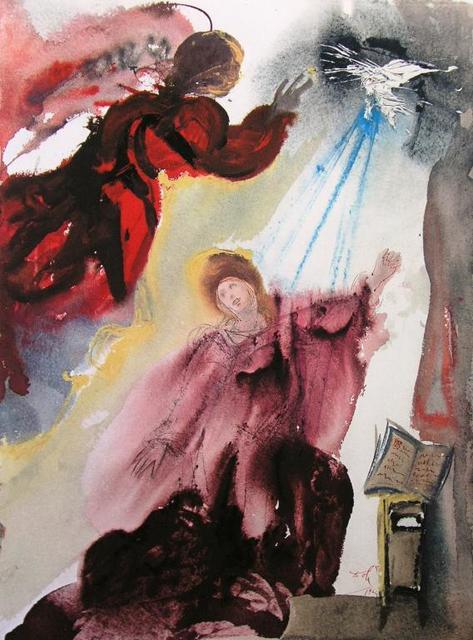
Annunciation to Mary by Salvador Dali, 1965

In the sixth month, God sent the angel Gabriel to Nazareth, a town in Galilee, to a virgin pledged to be married to a man named Joseph, a descendant of David.  The virgin’s name was Mary.  The angel went to her and said, “Greetings, you who are highly favored!  The Lord is with you.”

Mary was greatly troubled at his words and wondered what kind of greeting this might be.  But the angel said to her, “Do not be afraid, Mary, you have found favor with God.  You will be with child and give birth to a son, and you are to give him the name Jesus.  He will be great and will be called the Son of the Most High.  The Lord God will give him the throne of his father David, and he will reign over the house of Jacob forever; his kingdom will never end.”

“How will this be,” Mary asked the angel, “since I am a virgin?”

The angel answered, “The Holy Spirit will come upon you, and the power of the Most High will overshadow you.  So, the holy one to be born will be called the Son of God.  Even Elizabeth your relative is going to have a child in her old age, and she who was said to be barren is in her sixth month.  For nothing is impossible with God.”

“I am the Lord’s servant,” Mary answered.  “May it be to me as you have said.”  Then the angel left her. (Luke 1:26-38, NIV)

Most of life is lived in the mundane, even in a time of pandemic. For the most part our everyday lives involve going about our business and dealing with the daily grind. That is because we are common ordinary people. So, we can especially relate to Mary because she is quite plain. 

To put Mary’s life in our contemporary vernacular, at the time of this encounter with the angel, she is of junior high age but has never attended school. She wears mostly clothes from Goodwill, and occasionally can get some from Wal-Mart. She cannot read because girls of her day rarely did. Her parents make all the decisions that affect her life, including the one that she should be married to an older man named Joseph. We do not know if she even liked him. She lives in a small town that most people cannot point to on a map. 

One night, into the bedroom of this young girl comes the brightly beaming divine messenger Gabriel whose name means, “God has shown himself mighty.” Mary stands there in her ratty old flannel nightgown, her life very quickly moving from the ordinary to the extraordinary. The juxtaposition could not be more pronounced:  a mighty angel and a plain teen-ager; a messenger of the Most High God and a girl barely past puberty; a holy angelic light which beams in a simple candlelit bedroom; an awesome power encountering complete vulnerability.

Annunciation by Mexican painter Angel Zárraga (1886-1946)

Mary, compared to Gabriel, is defenseless, fragile, and overwhelmed. She is in way over her head. That is why we can relate to her. We can get our human arms around Mary. She is like us. She has faced life with little power to make it turn out the way she planned. Forces beyond her have rearranged her life and altered it forever. She is the Matron Saint of the Ordinary. We can totally understand why Mary responds the way she does.

Mary’s initial reaction was to be “greatly troubled.”  She was disturbed and shaking in her hand-me-down slippers. The angel confidently told Mary that she had found favor with God. In other words, Mary was literally “graced” by God. The situation was not that Mary had some extreme spirituality, but that God simply chose her to be the mother of Jesus. And Mary needed to come to grips with what was happening to her.  This was well beyond anything she could have expected.  Becoming pregnant with the Savior of the world was not even remotely on her radar. 

Mary immediately sensed the crazy disconnect between what was being told to her and who she was. After all, she was a plain ordinary girl from the hick town of Nazareth and was being told that she would raise a king.  Maybe somebody in heaven screwed up. Maybe Gabriel got the wrong girl. Maybe his Google map sent Gabriel on a wild goose chase. Relating to Mary, we can totally understand that she would question how in the world all this was going to happen.  Not only is Mary ordinary and far from royalty, but she is also very much a virgin.  Nothing about any of this made any sense.

But the angel let Mary know that God specializes in the impossible. English translators chose to phrase the original rendering of Gabriel’s words as “for nothing is impossible with God.” I rather prefer the more literal translation which is “for there is nothing outside of God’s power.” To me, that is beautiful. There is nowhere we can go, no place on earth, no situation whatsoever that is beyond God’s ability and reach to affect divine power.

We do not always get straightforward answers to our questions about God, but Mary asked a question and got a straight answer: She really can be pregnant with Jesus because the Holy Spirit will come upon her, will overshadow her with power. If the story were to end there it would be a great story. But to me the most astonishing part of the narrative is Mary’s response to what was happening to her.

Mary believed the message and submitted herself completely to God’s will. I think we would completely understand if Mary simply said in her ordinary way that she was not prepared for this. We would totally “get it” if Mary pushed back on what the angel said to her. We could relate if Mary just dismissed the angel’s presence, like Scrooge in the Christmas Carol, as if Gabriel were just “an undigested bit of beef, a blot of mustard, a crumb of cheese, a fragment of an underdone potato. There’s more of gravy than of grave about you, whatever you are!”

Yet, Mary not only believed; she also humbly submitted herself to what was happening. And this is what I believe we need to relate to most about Mary – not her being just a plain ordinary person in a non-descript village but stepping up to the calling she received. We, too, have received a calling in our lives. We, too, have been given the power of the Holy Spirit.  We, too, are ordinary people who have been given a very extraordinary task. 

Our response today can be the same as Mary: “I am the Lord’s servant; may it be to me as you have said.” The Church is pregnant with possibilities because of the Holy Spirit. We know the end of Mary’s story. She gave birth to Jesus. She raised him in her plain ordinary way. She watched him grow up. She saw him embark on his ministry to proclaim the kingdom of God has become near. Mary did not always understand what Jesus said or what he was doing. And she experienced every mother’s nightmare in seeing her beloved son killed in a terribly gruesome manner right in front of her eyes. 

Yet, just as the Holy Spirit was with the birth of Jesus, so the Spirit was with Jesus at his resurrection from the dead. Jesus lived an ordinary life in a very extraordinary way. Furthermore, today Jesus invites us to do the same. Because Christ accomplished his mission of saving people from their sins and establishing a kingdom that will never end, he has given us the same Holy Spirit to follow him forever and call other people to follow him, too. 

To trust and obey is God’s only way to live into the life of Jesus. The Christian life may often be difficult, but it is not complicated. It is rather simple, just like Mary. Mary responded to God’s revelation with faith, choosing to fully participate in what God was doing. “I am the Lord’s servant” is our confession, as well. Along with Mary we declare, “May it be to me as you have said.”