I Am Responsible and Accountable (Ezekiel 18:1-32)

The word of the Lord came to me: “What do you people mean by quoting this proverb about the land of Israel:

“‘The parents eat sour grapes,
    and the children’s teeth are set on edge’?

“As surely as I live, declares the Sovereign Lord, you will no longer quote this proverb in Israel. For everyone belongs to me, the parent as well as the child—both alike belong to me. The one who sins is the one who will die.

“Suppose there is a righteous man
    who does what is just and right.
He does not eat at the mountain shrines
    or look to the idols of Israel.
He does not defile his neighbor’s wife
    or have sexual relations with a woman during her period.
He does not oppress anyone,
    but returns what he took in pledge for a loan.
He does not commit robbery
    but gives his food to the hungry
    and provides clothing for the naked.
He does not lend to them at interest
    or take a profit from them.
He withholds his hand from doing wrong
    and judges fairly between two parties.
He follows my decrees
    and faithfully keeps my laws.
That man is righteous;
    he will surely live,
declares the Sovereign Lord.

“Suppose he has a violent son, who sheds blood or does any of these other things (though the father has done none of them):

“He eats at the mountain shrines.
He defiles his neighbor’s wife.
He oppresses the poor and needy.
He commits robbery.
He does not return what he took in pledge.
He looks to the idols.
He does detestable things.
He lends at interest and takes a profit.

Will such a man live? He will not! Because he has done all these detestable things, he is to be put to death; his blood will be on his own head.

“But suppose this son has a son who sees all the sins his father commits, and though he sees them, he does not do such things:

“He does not eat at the mountain shrines
    or look to the idols of Israel.
He does not defile his neighbor’s wife.
He does not oppress anyone
    or require a pledge for a loan.
He does not commit robbery
    but gives his food to the hungry
    and provides clothing for the naked.
He withholds his hand from mistreating the poor
    and takes no interest or profit from them.
He keeps my laws and follows my decrees.

He will not die for his father’s sin; he will surely live. But his father will die for his own sin, because he practiced extortion, robbed his brother and did what was wrong among his people.

“Yet you ask, ‘Why does the son not share the guilt of his father?’ Since the son has done what is just and right and has been careful to keep all my decrees, he will surely live. The one who sins is the one who will die. The child will not share the guilt of the parent, nor will the parent share the guilt of the child. The righteousness of the righteous will be credited to them, and the wickedness of the wicked will be charged against them.

“But if a wicked person turns away from all the sins they have committed and keeps all my decrees and does what is just and right, that person will surely live; they will not die. None of the offenses they have committed will be remembered against them. Because of the righteous things they have done, they will live. Do I take any pleasure in the death of the wicked? declares the Sovereign Lord. Rather, am I not pleased when they turn from their ways and live?

“But if a righteous person turns from their righteousness and commits sin and does the same detestable things the wicked person does, will they live? None of the righteous things that person has done will be remembered. Because of the unfaithfulness they are guilty of and because of the sins they have committed, they will die.

“Yet you say, ‘The way of the Lord is not just.’ Hear, you Israelites: Is my way unjust? Is it not your ways that are unjust? If a righteous person turns from their righteousness and commits sin, they will die for it; because of the sin they have committed they will die. But if a wicked person turns away from the wickedness they have committed and does what is just, and right, they will save their life. Because they consider all the offenses they have committed and turn away from them, that person will surely live; they will not die. Yet the Israelites say, ‘The way of the Lord is not just.’ Are my ways unjust, people of Israel? Is it not your ways that are unjust?

“Therefore, you Israelites, I will judge each of you according to your own ways, declares the Sovereign Lord. Repent! Turn away from all your offenses; then sin will not be your downfall. Rid yourselves of all the offenses you have committed, and get a new heart and a new spirit. Why will you die, people of Israel? For I take no pleasure in the death of anyone, declares the Sovereign Lord. Repent and live! (New International Version)

Every single one of us is accountable to one another for what we say and how we conduct ourselves. Above all, we are accountable to God for our motives, words, and actions in this life.

The flipside to stating that we are accountable, is saying that none of us are responsible for another person’s intentions, words, or actions.

Other people may influence us. We may be either participants in or victims of another’s actions. Some folks might take credit for something another person said or did. Yet, ultimately, we are responsible for our own life.

Whatever I think, say, or do is on me, period.

What’s more, one’s past actions do not replace our current actions. The prophet Ezekiel emphasized individual responsibility and accountability. All of the other Old Testament prophets addressed whole nations, and not individuals. They denounced the social, economic, and political systems and institutions, upholding communal ideals of justice.

Ezekiel communicated that children shall not be punished for their parent’s sins. Only the person who sins will face judgment.

A person ought only to pay for their own sins; punishment should not carry forward to future generations. The prophet also insisted that each individual person has the opportunity to change their behavior, and so, avoid their deserved penalty.

Every individual has the opportunity to change their personal ways of injustice or unrighteousness. For those who refuse, there is a and right and just Judge who knows how to dispense what is needed for each person – whether it is judgment to the arrogant, comfort to a victim, or justice for the underprivileged.

God cares that every person on earth receives what they need to thrive and flourish in this life. And to those who don’t give a wit about others, the Lord gives an opportunity to turn from arrogance and change.

Refusing to change, however, will end badly for the stubborn person.

The prophet Ezekiel calls on individuals to speak and act in ways that are helpful, not harmful. And whenever one harms another, that one must acknowledge the irresponsibility, because I am held accountable for what I say and do.

All words and actions come with consequences. It would do us a lot of good to consider how what we say and do (or fail to say and do) impacts the next generation of people. Everyone leaves a legacy of some sort – whether good or bad – so we need to be aware of how we live.

Each person must take up the mantle to do good, not evil; and to live righteously, not wickedly. Living selfishly with impunity leads to divine judgment. Yet, mercy is always there, if we seek to amend our ways.

Conversely, living righteously, and then resting on my laurels and living however I want, does not inoculate me from divine judgment.

You and I must live one day at a time, trusting God and seeking the welfare of others. And when I mess up, I am to keep a short account with God by admitting my fault and receiving grace.

We humans have quite enough responsibility in our lives without taking on the extra job of exacting judgment on another person. If we live a righteous life to begin with, then there is no need for a new heart and life.

Yet, if I need it, a new existence is there, through a change of direction which humility grants us.

Almighty God, help me to prioritize your values, and put my faith into action. Enable me to use the talents, resources, and time with which I have been blessed. Empower me to serve my community and my world. May I serve you always, and pray with a joyful spirit. Amen.

Confess and Believe

Welcome, friends, to this Christian season of Lent. Holy Scripture graciously communicates that everyone who believes in their heart, with a faith which bubbles up and come pouring out of the mouth, shall be saved. Click the videos below, and let us consider God’s grace to us in Jesus Christ…

Pastor Tim Ehrhardt, Romans 10:8b-13

Forgive those things we have done, O God,
which have caused you sadness,
and those things we should have done
that would have brought you joy.
In both we have failed
ourselves,
and you.
Bring us back to that place
where our journey began,
when we said that we would follow
the way that you first trod.
Lead us to the Cross
and meet
us there. Amen.

Romans 10:8b-13 – Believe and Confess

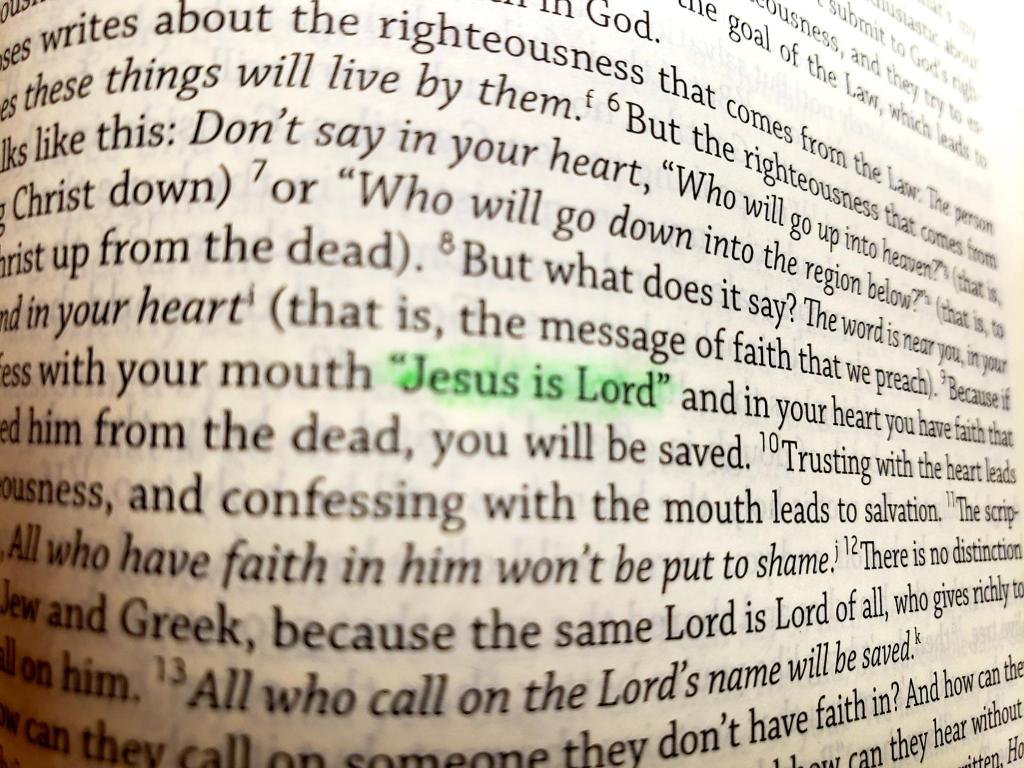
“The word is near you; it is in your mouth and in your heart,” that is, the message concerning faith that we proclaim: If you declare with your mouth, “Jesus is Lord,” and believe in your heart that God raised him from the dead, you will be saved. For it is with your heart that you believe and are justified, and it is with your mouth that you profess your faith and are saved. As Scripture says, “Anyone who believes in him will never be put to shame. ”For there is no difference between Jew and Gentile—the same Lord is Lord of all and richly blesses all who call on him, for, “Everyone who calls on the name of the Lord will be saved.” (New International Version)

Confess with the Mouth

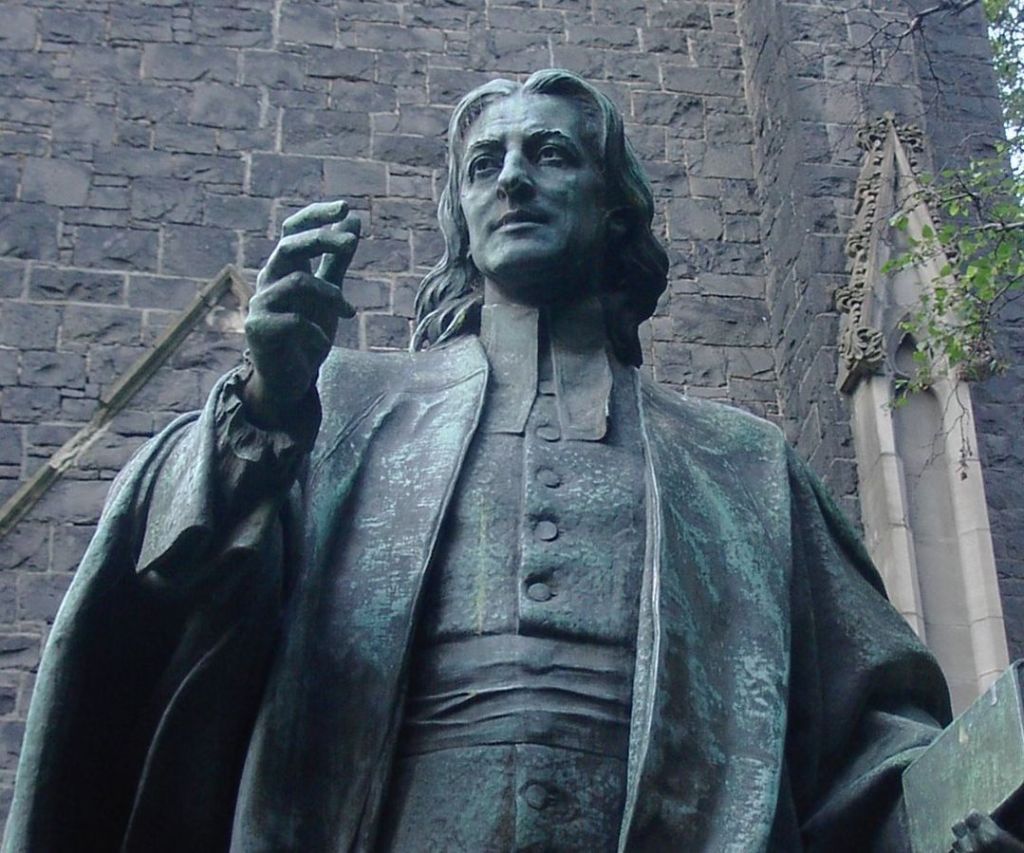
John Wesley (1703-1791) was an Oxford don who became an Anglican priest. He had all the intellectual tools to rightly handle the intricacies of theology and teach the Bible. Yet, when he first started out, there was no heart behind it. 

On a voyage across the Atlantic to America, Wesley spent much of the time on the ship with a group of German pietists – men and women who had a heart behind their practice of Christianity. The Germans deeply impressed Wesley, and he realized there was something important missing from his own religion. 

The ship encountered a storm and Wesley was afraid for his life. But the German believers seemed unfazed, having a heart-faith that John could not explain. He wanted what they had. Wesley was fearful and found little comfort in his religion. So, he confessed to one of them his growing misery and decision to give up the ministry. One of the Pietists advised, “Preach faith till you have it. And then, because you have it, you will preach faith.”

John Wesley acted on the advice. He led a prisoner to Christ by preaching faith in Christ alone for forgiveness of sins. He was astonished. Here was a man transformed instantly. Wesley cried out, “Lord, help my unbelief!” However, he still felt dull inside and little motivation even to pray for his own salvation. 

Statue of John Wesley as a young preacher, by Adam Carr, located in Melbourne, Australia

Having returned back to England, Wesley was in a church service listening to Romans expounded by the preacher. He recalled the experience years later: “While he was describing the change which God works in the heart through faith in Christ, I felt my heart strangely warmed. I felt I did trust in Christ, Christ alone for salvation; and an assurance was given me that He had taken away my sins, even mine, and saved me from the law of sin and death.”

Believe with the Heart

Simply uttering the words with our mouths, “Jesus is Lord,” by itself does not create deliverance and salvation. The heart needs to be involved. Yet, we must also consider the reality that only focusing on the heart, without having the mouth involved, is an insufficient faith. Christian belief has a solid objective real historical base from which our hearts can tether themselves. Christian confession affirms that Jesus is, indeed, risen from death and is Lord of all, having secured salvation for us through his shed blood on the cross.

Consider two hypothetical men at the time of the Passover in Egypt: Eleazar Ben Macaroni and Yakov Yarmulke. Eleazar and Yakov are talking together on the night the angel of death is about to pass through Egypt and the firstborn son in every family would be killed – that is, unless the blood from a sacrificial lamb was over the door of the house so that the angel would “pass over” the house and no one would be killed. 

Passover Angel of Death, by Arthur Hacker (1858-1919)

Yakov says to Eleazar, “Can you believe all that has been happening around here?  It’s all very scary!  All of those plagues, the disaster around us, and now this night!”  Eleazar asks, “Well, haven’t you put the blood over the door?”  “Yes, I’ve done all that – but it all is still disturbing.  My heart is troubled.  What do think will happen?” “Will we be okay?” asks Yakov nervously.  Eleazar responds, “I trust in the promises of God; let the angel come!”

So, when the angel of death came, which house do you suppose lost his firstborn son: Eleazar ben Macaroni, or Yakov Yarmulke?  The answer: neither of them. The angel of death did not come to either man’s house because deliverance is determined by the blood of the lamb and not by the quality or intensity of faith of the person. 

“For me His precious blood he shed – for me His life He gave. I need no other argument, I need no other plea; it is enough that Jesus died, and that he died for me.”

My Faith Has Found a Resting Place, hymn by Eliza Edmunds Hewitt (1851-1920)

If we only focus on the heart, our hearts will condemn us. We need to say the words of our faith, to confess them with our mouths, repeatedly, again and again, until we believe them. We are not to wait for our hearts to feel like having faith and living for God, because our hearts can be desperately wicked, and they will keep deceiving us. The heart needs to be informed by God’s Word and accept the words of Holy Scripture by faith:

“If we confess our sins, he is faithful and just to forgive us our sins, and to purify us from all unrighteousness.” (1 John 1:9, NIV)

Have the Heart and Mouth Work Together

We need both a right confession with our mouths and a right confession in our hearts for saving faith. When the heart receives grace, and the mouth expresses the beauty of faith – when heart and mouth work in concert with each other – something beautiful and gracious happens: 

“Everyone who calls on the name of the Lord will be saved.”

Romans 10:13

When Holy Scripture says “everyone,” it means “everyone.” All who cry out to God with their mouths, from a heart desiring God, will be saved. It does not matter whether that call is melodious, sweet, and in tune; or whether the call is a jumbled off-key joyful noise. It makes no difference; both will be saved. 

Only uttering the right words like some magical incantation does not save us. Only sincerity of heart does not save us. One does not achieve salvation through self-effort or trying to be worthy. No one is saved by finding the right combination of words in prayer or having a nice feeling.

Calling on the name of the Lord with both mouth and heart, trusting in the redemptive events of Jesus Christ, is what saves us.

Whether Jew or Gentile, rich or poor, American or Arab, famous or infamous, it is no matter – because salvation isn’t dependent on our looks, our past, or our zeal in doing good works. Salvation is completely from God and freely given to all who call upon the name of the Lord.

Make No Room for Shame

What’s more, all who trust in Jesus Christ will never be put to shame. In ancient Roman society, nearly three-fourths of all the people in the Empire were slaves to the other one-fourth. It was a culture built around the concept of honor and shame. It was shameful to be a slave, and honorable to be privileged, wealthy, and influential with a good Roman pedigree and citizenship. It was beneath such people to interact with those who served them because dealing with shameful people would make them shameful, as well.

Jesus forsook his honorable position in order to hob-nob with us rabble. He became one of us to save us and lift us up with him.

“For you know the grace of our Lord Jesus Christ, that though he was rich, yet for your sakes he became poor, so that you, through his poverty, might become rich.” 

2 Corinthians 8:9, NIV

Jesus embraced the shame of the cross. Therefore, we need never live in a state of shame ever again. Our hearts need not condemn us. Jesus has already taken care of shame, once for all.

“Let us fix our eyes on Jesus, the author and perfecter of our faith, who for the joy set before him endured the cross, scorning its shame, and sat down at the right hand of the throne of God.  Consider him who endured such opposition from sinful men, so that you will not grow weary and lose heart.” (Hebrews 12:2-3, NIV)

Put a Focus on Lent

The season of Lent lets us know we are neither brains-on-a-stick nor walking-headless-hearts. We have both heart and mouth, both deep feeling and real intellectual knowledge. Together, they form belief and confession. Lent is an invitation to prepare our hearts for Christ’s passion and resurrection. It includes an examination of our hearts so that we can deepen our piety and devotion to Jesus. And it incorporates confession of Jesus with the mouth.

The good news is this: Jesus is Savior and Lord; he has risen from death; and there is forgiveness of sins and deliverance from guilt and shame through is cross. When all is said and done, people need the Lord.

“I have not come to call the righteous, but sinners,” said Jesus. (Matthew 9:13)

Repentance involves both heart and mouth. And Lent is just the season for it, to turn from everything we have previously been living for other than Jesus. It’s an opportunity to start afresh with new life in Christ. It’s enough to make old John Wesley smile from the grave.

Have mercy on me, O God, according to your unfailing love; according to your great compassion blot out my transgressions. Wash away all my iniquity and cleanse me from my sin. 

Create in me a pure heart, O God, and renew a steadfast spirit within me. Restore to me the joy of your salvation and grant me a willing spirit, to sustain me.

Save me from guilt and shame and my tongue will sing of your righteousness. Open my lips, and my mouth will declare your praise. You do not delight in sacrifice, or I would bring it; you do not take pleasure in burnt offerings. The sacrifices of God are a broken spirit; a broken a contrite heart, O God, you will not despise. Amen.

Walking in the Light without Fumbling in the Darkness

Photo by Julia Volk on Pexels.com

All the hopes and expectations of Christians are realized in Christ’s resurrection. The good news of Easter cannot be contained or limited to a single day (Easter Sunday). That is why, according to the Church Calendar, Easter is only the first of fifty days of celebration called “Eastertide” which leads to the day of Pentecost.  Eastertide is designed for exploring the new life we have in Jesus and the joyful Christian life we can all experience.

Yet, what if a new life has not been our experience? What do we do when, year after year, Easter comes and goes and all the old sins, failures, compulsions, and addictions remain unchanged?  It is not sufficient to simply know the gospel of grace; there must be a careful and truthful application of the gospel to our lives. For the gospel is not just a message to believe; it is a powerful truth to be acted upon in our daily lives.

Too many folks are spiritually damaged from regrets or remorse over bad decisions. They have shame and guilt about the inability to overcome bad habits. There is a lack of courage in facing temptations and sins within. It all lies beneath the surface festering, irritating, and causing pain. In some cases, it is so deeply embedded in the soul that the cause of the discomfort is unknown.

Spiritual renewal is needed. To take a trip into our inner worlds, there are three words that bring to light three important theological themes.  We need to know and apply these words so we will have the pain relieved and experience the joy of new life in Jesus Christ. (1 John 1:1-2:2)

Fellowship: Christians have a sharing bond of partnership in Christ with God and with one another.

We proclaim to you what we have seen and heard, so that you also may have fellowship with us. And our fellowship is with the Father and with his Son, Jesus Christ. (1 John 1:3, NIV)

Koinonia is a familiar word to many Christians. The image of “fellowship” might be of sitting around a table at a church potluck. Or maybe it evokes the picture of standing around after church and talking with each other over a cup of coffee. The biblical word is much more than this. Fellowship means we have deeply shared beliefs and behaviors with God and one another. 

Fellowship means Christians have a vital union with Jesus which paves the way to cooperate with God’s purposes in the church and the world. Fellowship also means Christians share in Christ together through a common relationship with God and a common purpose of glorifying God. In Christ we partner together to live out the Great Commandment and the Great Commission. Biblical fellowship is an action based in the union we have with God in Christ.  To live in fellowship is to live in the light and not in the darkness.

The way we view Jesus determines how we live the Christian life. Jesus was a real flesh-and-blood man. If Christians do not uphold the physical reality of Jesus, then the Christian life will be unconcerned for the material world and the ethics of bodily existence. The Christian life is very much about both body and soul.

Walk: The power of sin is very deceptive.

If we claim to be without sin, we deceive ourselves and the truth is not in us…. If we claim we have not sinned, we make him out to be a liar and his word is not in us. (1 John 1:8, 10, NIV)

The New Testament often pictures the Christian life as a walk down a road. Which road we are on and how we walk it is especially important. God is light and in him is no darkness at all. We are to walk with the light of Jesus illuminating our way.

Talk is cheap. The real muster is whether we live in the light of revealed truth.  If a person claims a relationship with Jesus but lives how they want, that person is not an authentic believer.  If a person claims to be without sin, that person is self-deceived by the power of sin.  If a person claims they are okay and do not sin, such a person makes a mockery of Christ’s bodily existence, including his human suffering and death.

Photo by Paulo Mu00e1rcio Dos Santos on Pexels.com

If a person’s daily life is characterized by darkness, then no matter how sincerely or publicly they make a profession of Jesus, that proclamation is a sham. This is not about sinners in general making occasional lapses in judgment or behavior. This is about people who claim to be Christian but have daily on-going patterns of deliberately walking down a dark path and doing what they want. Their mantra is, “It’s my life, I do what I want, and nobody is going to tell me what to do.” Such a person is a poser. They only pretend to have a walk with Jesus.

To counter the bogus claims and pretensions, we are to walk in the light, and not hide in the darkness. This requires honesty, integrity, and the courage to allow God’s light to shine on the shadowy places of our lives. There cannot be new life without the light.

We counter the darkness by openly confessing our sins. There is a promise attached we need to take to heart: God is faithful to forgive and purify us. God’s light shining upon us might hurt, but it brings life and healing. Holding onto secrets only festers in the soul, while the snakes of sin slither around our feet.  The result is spiritual blindness, darkness, and death. Confession is more than private and personal; it is also public and corporate.  New life, renewal, revival, and revitalization come from real honest tell-it-like-it-is confession. 

This really ought to scare the hell out of us. Jesus, in his Sermon on the Mount, said we should pluck our eyes out if they offend. Cut our hands off if they cause us to sin. It is better to be in God’s kingdom with no eyes and hands then to burn in hell with all our parts intact. (Matthew 5:29-30)

Repentance is more than mouthing words about being a sinner like everybody else. Repentance is a complete change of how we live our lives. If there is a besetting sin that dogs us every day and we do all the same things this year we did last year to deal with it, and it did not work, then we will be right back here at Eastertide next year – frustrated with the very same dark walk, carrying the very same burden of guilt, shame, and regret. 

Remaining in the dark with no one knowing about our inner life is opposite of biblical fellowship because it forsakes the light. Walking away from the church will not deal with it. Walking away from God will not deal with it. Trying a new teaching or a new practice will not make it go away. Only agonizing, soul-rending, yet freeing, confession will allow God’s surgical knife to take out the offending sin and bring healing of both body and soul.

Patricia Raybon, in her book I Told the Mountain to Move confesses the regret and grief she carried after aborting two children. She writes, “I had told myself that an abortion would end my problems, not complicate them by bringing an innocent life into my own upheaval.” She shares the following letter, written to her two aborted children:

Dear Babies:

“This is Mama. You will know my voice, I think, even though we were together for such a short time. I did a bad thing. I did not trust God. I did not understand God would have made everything okay. I was like Peter, who looked at the waves, not at Jesus. And when he looked at the waves, he started to sink—down, down, down.

That’s how I felt, like I was sinking down. When the doctors said you were growing inside of me, that’s how I felt, so I didn’t know how to love you. I was afraid. I let fear convince me that more babies would just make things worse.

Instead, look what I did. I robbed us. First, I robbed you—taking your own lives. I didn’t think I was strong enough. So, I robbed myself of all the joy you would have brought me, too. Brought all of us, your sisters, your family, and for each of you, your daddy. I thought we would have more problems. That we did not have enough money. That we did not have enough time. That we did not have enough love. But I just did not know then that God is bigger. And God would make everything all right. I didn’t know.”

We are not left to unending remorse and sorrow.

Advocate: The atoning sacrifice of Jesus Christ purifies us from all unrighteousness.

My dear children, I write this to you so that you will not sin. But if anybody does sin, we have an advocate with the Father—Jesus Christ, the Righteous One. (1 John 2:1, NIV)

To advocate means to come alongside another in need, speaking and acting on their behalf. Jesus is our Advocate. Christ’s death atoned for all our sin, guilt, and shame. Christ’s propitiation satisfied all of God’s righteous wrath against every sin, including yours and mine. The Lord’s gracious intervention has saved us from ourselves. Jesus made it possible for us to experience forgiveness, restoration, and new life. 

When we are so broken and full of tears that we cannot even speak, Jesus steps in and speaks on our behalf with meaningful words that have been backed up with the action of the cross and resurrection.

We have a few choices: We could pretend everything is okay and proceed with business as usual. Or we can come to Jesus, confess our sin and receive the grace of forgiveness and cleansing. We can allow the church to be a hospital for sinners through praying for one another. Throughout the New Testament we are called to be little advocates practicing the ministry of coming alongside and speaking on one another’s behalf before God and others.

Choose wisely, my friend.