Developing the Skill of Wisdom (Colossians 1:9-14)

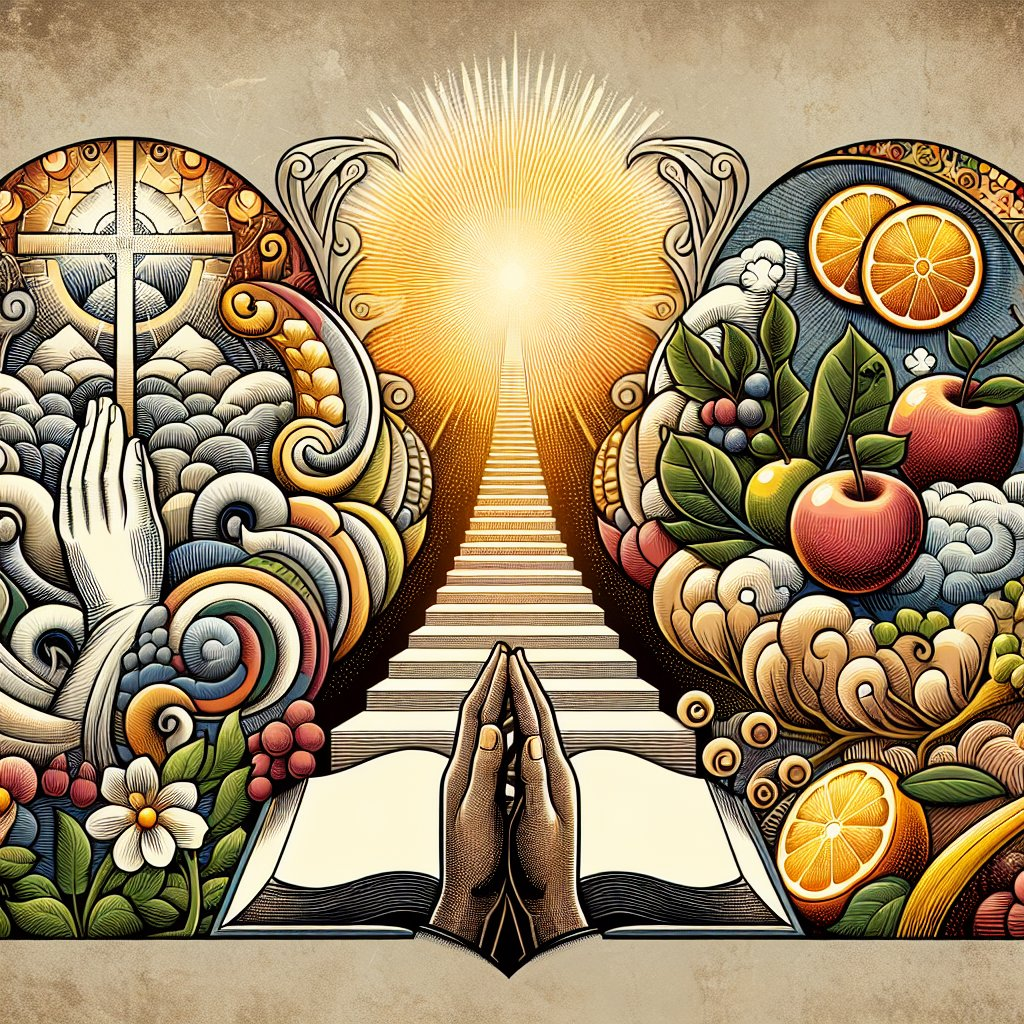
Colossians 1:9-10, by Bible Art

For this reason, since the day we heard about you, we have not stopped praying for you. We continually ask God to fill you with the knowledge of his will through all the wisdom and understanding that the Spirit gives, so that you may live a life worthy of the Lord and please him in every way: bearing fruit in every good work, growing in the knowledge of God, being strengthened with all power according to his glorious might so that you may have great endurance and patience, and giving joyful thanks to the Father, who has qualified you to share in the inheritance of his holy people in the kingdom of light. 

For he has rescued us from the dominion of darkness and brought us into the kingdom of the Son he loves, in whom we have redemption, the forgiveness of sins. (New International Version)

When I was younger, I played a lot of ping-pong. And I got good at it. In fact, during a several months stretch, back-in-the-day, I had a record of 156-2. Not bad.

That kind of record was only possible because of the two reasons that make any skill an accomplishment:

  1. Knowledge. I learned the game of ping-pong and eventually knew it inside and out.
  2. Experience. I practiced for hundreds, if not thousands, of hours in developing my technique.

The sort of knowledge that Paul was talking about was more than information and intellectual understanding; he used a specific word (in the Greek language – ἐπιγινώσκω, pronounced “EPee-gi-NOS-ko) which refers to knowledge gained by experience.

In English, we need to put two words together in order to communicate Paul’s concept: experiential knowledge – an understanding which is gained by continual repetition and practice until there is proficiency.

There are just some things that can only be learned and integrated into life through constant use and development over time. And this is precisely how a person becomes mature in life:

Growth + Time = Maturity.

And with maturity comes the wisdom to live life as it meant to be lived. This means that wisdom doesn’t come overnight or quickly; to be wise requires a great deal of learning, effort, experience, and time.

The wisdom and understanding Paul refers to is not some sort of secret information which has to be accessed through careful initiation into a group of people who have the inside knowledge. No, this is wisdom which can be gained by anyone who embraces a life of faith and spiritual discipline.

The highest form of knowledge for the Apostle Paul is knowing God in Christ.

This sort of knowledge is an understanding of salvation, and experiencing deliverance from guilt, shame, and the false self. Such knowledge is evidenced by the fruit of the Spirit in living a life of love, joy, peace, patience, kindness, goodness, faithfulness, gentleness, and self-control. (Galatians 5:22-23)

Colossians 1:11, by Bible Art

From the outside of Christianity looking in, it may appear that this is all a grand achievement of the human will. But it isn’t. On the inside, the Christian life is thoroughly a work of God’s glorious power, bringing new life, and effecting spiritual growth and maturity into a wise and good way of life.

We did not deliver ourselves. God did. The Lord transferred our membership from the realm of darkness to the empire of light. Christians are simply people who have been redeemed by God in Christ. Our liberation is because of God’s gracious forgiveness of sins.

Forgiveness, however, is not the end game. Forgiveness frees us to pursue the spiritual life without guilt and shame hindering us and weighing us down all the time. Forgiveness opens us to the possibilities of positive and life-giving relational connections with God and other people.

In our relationship with God, prayer becomes the conduit of divine/human conversation. That connection, in the past, had blockage because of our unhealthy lifestyles. But it is now unobstructed because of God’s gracious intervention by Jesus, in the Spirit.

So, when it comes to our interactions in prayer, there’s no need to invent a new game; we just need to learn the one we’ve got, and put in the hours of work necessary to become accomplished at it. 

Today’s New Testament lesson is a prayer from the Apostle Paul to the Colossian Church. His prayer for them was singular: To have wise minds and spirits, that is, to have knowledge of God – an understanding of who God is and how God operates.

To learn divine ways is to acquire the skill of wisdom.

Paul prayed for a reason: so that we might live our lives in a way which pleases God and enables us to sustain a lifetime of spiritual growth. 

As people created in God’s image and likeness, we are hard-wired with a spirit which needs strengthening and exercise. That happens as we put in the constant repetitions of connecting with the divine and putting in the time on our knees – praying daily for ourselves and others to mature in faith so that we might all together act wisely and justly in this world, for the life of the world.

A good place to start is to use Paul’s prayer as our own. Never has there been such a need than now for us to know how to apply wisdom in the places and in the circumstances we’ve never been in before. 

For wisdom to happen, we must grow in our knowledge by putting in the hours of prayer.

The skill of wisdom doesn’t magically happen. Wisdom is the culmination of acquired understanding; a lot of practice exercising love in the places where love is not; and engaging in a lifetime project of becoming knowledgeable through constant learning, struggling, and growing.

Direct me, O Lord, in all my doings with your most gracious will and wisdom. Further in me your continual help – that in all my work and in all I do and say, I may glorify your holy name; and, by your mercy, obtain the life that is truly life; through Jesus Christ, my Lord.  Amen.

Worship That Is Fit For a King (Colossians 1:11-20)

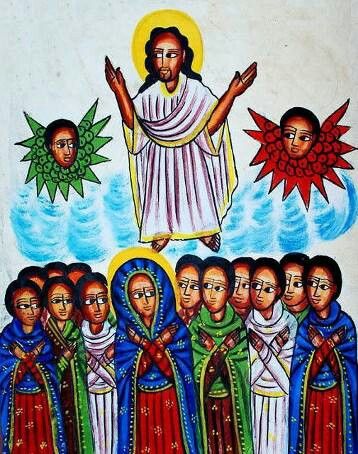
17th century Ethiopian Orthodox depiction of the glorified Christ

[May you be] strengthened with all power according to his glorious might so that you may have great endurance and patience, and giving joyful thanks to the Father, who has qualified you to share in the inheritance of his holy people in the kingdom of light. For he has rescued us from the dominion of darkness and brought us into the kingdom of the Son he loves, in whom we have redemption, the forgiveness of sins.

The Son is the image of the invisible God, the firstborn over all creation. For in him all things were created: things in heaven and on earth, visible and invisible, whether thrones or powers or rulers or authorities; all things have been created through him and for him. He is before all things, and in him all things hold together. 

And he is the head of the body, the church; he is the beginning and the firstborn from among the dead, so that in everything he might have the supremacy. For God was pleased to have all his fullness dwell in him, and through him to reconcile to himself all things, whether things on earth or things in heaven, by making peace through his blood, shed on the cross. (New International Version)

Today is Christ the King Sunday. It is intended to help us see the cosmic reality that Jesus reigns over all creation as the only rightful Sovereign of the universe. This particular Sunday always comes just before Advent so that we remember to anticipate both a baby and a king.

Christ as Lord of all exposes three problems humanity faces:

  1. Building our own petty kingdoms and setting ourselves up as masters over our own small worlds.  People who have been hurt (all of us) often attempt to seize power for themselves in order to avoid ever being hurt again, or in the belief that wielding power could have prevented others from being hurt. The classic villains of movies and literature are ones who seek to destroy the current establishment so that they can rebuild it in their own idea of how the world should operate. The destruction is motivated by protecting loved ones from pain. The irony is that a lot of hurt is inflicted on the protagonists in order to alleviate the antagonist’s pain.
  2. Bowing to other kings besides King Jesus. When distressed, we might rely on alternative authorities to address our hard circumstances – expecting another to give us what only Jesus can. Instead of running to Christ, there is a fleeing to politicians or pundits or pastors. And we rely on them to cope with whatever is going on in our lives.
  3. Lacking awareness of the power we have as subjects of King Jesus. Christians possess authority in Jesus Christ. As believers in Jesus, we reign with him and can exercise authority over every dominion that exists, especially the dominion of darkness.

Jesus is King. Neither you, nor I, are. 

A simple statement; yet, not easily engrafted into daily life. 

Part of the original sin of Adam and Even was rebellion – to break the bonds of loving authority God provided for them. Westerners, especially, tend to have an anti-authoritarian strain which runs rather deep in us.

When my middle daughter was a child and grappling with the implications of faith in Christ, she blurted out an honest cry that we can likely resonate with: “I just don’t want another person in my life telling me what to do!” 

Indeed, Jesus is King; we are not.

Christ the King Sunday reminds us of the pre-eminence and lordship of Jesus Christ: 

  • All things were created through Jesus and for him. 
  • Everything in all creation is held together by Jesus. 
  • Christ is the head of the church. 
  • In Jesus Christ, complete divinity exists and reigns. 
  • Jesus made peace through the cross because he had the authority and the qualifications to do so. 
  • Broken relationships and proper lines of authority are now restored and redeemed in Christ.
Ethiopian Orthodox depiction of the glorified Christ

We can also likely relate to, at times, indulging in the illusion (and delusion!) of being in control and independently dictating the course of our lives. Yet, mercifully, Jesus is the great sovereign King, and this is a good thing – because in Christ we find authority to redeem and reconcile. 

Because Christ is King, we really ought to submit to him. In fact, we need to pay some attention to how our bodies are to submit to his lordship.

When the body moves to animating physical actions of submission, this helps the heart to follow. Whole person worship involves engaging the mind, spirit, emotions, and, yes, the body. To neglect the body in worship is to truncate the ability to connect with God in Christ.

A typical metaphor for the Church is the “Body of Christ.” We can live into that phrase through an embodied spirituality of submission. Our individual bodies are temples of the Holy Spirit, important for expressing worship. (1 Corinthians 3:16)

God created us with literal physical bodies. And Jesus has a literal physical body. Bodies are important for whole person worship. This means the physical postures we take in worshiping King Jesus are significant. We need to pay attention to them.  

A healthy practice for Christians is to kneel in the presence of the Lord. I realize some Christian traditions do it as a part of their worship, and some do not. Some like it, some don’t. Yet, bowing, even prostrating oneself (if you are physically able!) can be a powerful symbol of the heart’s desire and disposition to submit to the lordship and authority of Jesus Christ. 

Crawling out of bed in the morning getting on your knees and beginning the day with submission to live into the will of God; and also ending the day in the same manner, is a practical way of remembering who Jesus is and who we are.

I believe all Christians need to feel free in adopting a physical posture of worship which helps them connect with God in Christ. For some, that will be sitting in a comfortable position in contemplation. Others will want to stand, raise their hands, even dance in praise.

It also behooves us to let our bodies respond to whatever is happening with us spiritually. Exuberant praise needs the expression of hand clapping and toe tapping. Confession of sin needs a bit of bowing, kneeling, even prostrating. For prayer, hands open and palms facing up to receive blessing from God is a good bodily position of worship.

You get the idea. Just remember we need to strive for congruence in our worship, that is, what is happening with our outward bodily movements needs to match what is occurring inward with our spirits. And when the two are in sync, meaningful worship can happen – worship of submission fit for a king.

Sovereign God, in your mercy you have sent your Son, the Lord Jesus, who has brought reconciliation to a once broken relationship. I bow before you in obedience, submission, and worship. Let me live a cross-shaped life through enjoying the peace you have given me in Christ in both body and soul. Amen.

Colossians 1:27-2:7 – What Is God’s Goal For Your Life?

Gran Abuelo, a 3,600 year old Cyprus tree in Chile

God chose to make known how great among the gentiles are the riches of the glory of this mystery, which is Christ in you, the hope of glory.It is he whom we proclaim, warning everyone and teaching everyone in all wisdom, so that we may present everyone mature in Christ. For this I toil and strive with all the energy that he powerfully inspires within me.

For I want you to know how greatly I strive for you and for those in Laodicea and for all who have not seen me face to face. I want their hearts to be encouraged and united in love, so that they may have all the riches of assured understanding and have the knowledge of God’s mystery, that is, Christ, in whom are hidden all the treasures of wisdom and knowledge.I am saying this so that no one may deceive you with plausible arguments. For though I am absent in body, yet I am with you in spirit, and I rejoice to see your orderly conduct and the firmness of your faith in Christ.

As you therefore have received Christ Jesus the Lord, continue to walk in him, rooted and built up in him and established in the faith, just as you were taught, abounding in thanksgiving. (New Revised Standard Version)

I invite you to consider the question: “What is God’s goal for my life?” 

This might just be the most important question you ever answer. 

We are created in the image and likeness of God. We were designed for a purpose. Therefore, it is vital and necessary to know the aim, trajectory, and goal for your life.

First, however, let’s consider why we might be out-of-touch with the answer. 

In the beginning God created the heavens and the earth. Man and woman are the apex of God’s imaginative activity. Only humanity has within themselves the ability and the special character to connect with the divine in a special fellowship relationship. 

Yet, the original people fell from their place in Paradise. 

Now, in this current broken world we inhabit, and apart from God, people’s experience is fragmentation, disconnection, confusion, and separation in relationships and self-understanding.

One way of looking at the entirety of the Bible is that it reveals how God is graciously and patiently wooing wayward people back to Paradise. 

The ultimate fulfillment of this re-connection is found in the person and work of Jesus Christ. In Christ, what was lost is found; what was separated is connected; and what was scattered into a thousand pieces is being put back together again.

So, let’s get back to the question of God’s goal for you and me. Since we live in a fallen world, we have to deal with sin, death, and adverse situations. Yet we can take charge of our lives and face reality with a Christian life which thrives and flourishes.

“My friends, be glad, even if you have a lot of trouble.  You know that you learn to endure by having your faith tested.  But you must learn to endure everything, so that you will be completely mature and not lacking anything.  If any of you need wisdom, you should ask God, and it will be given to you.  God is generous and won’t correct you for asking.  But when you ask for something, you must have faith and not doubt.” (James 1:2-6, CEV)

What is God’s goal for my life? Maturity. That you and I will be completely mature. That we will work toward spiritual maturity in our own lives, and what’s more, labor toward presenting others mature in Christ Jesus.

Yes, maturity. Out of all the things which God might want from and for us, maturity is at the top of the list.

Maturity means to be a whole person, not fragmented, a complete and healthy person – in body, soul, spirit, mind, and emotions – all aligned together in a total package of wise living from encouraged hearts and loving faith communities.

Maybe that sounds too far from your own experience. Perhaps you feel that you are all over the place, as if you could never have it all together (or that others are never going to have it together). However, the goal is not about having it all together. 

Rather, maturity is about you and me submitting to adversity and hardship as our teachers. In other words, it’s suffering which leads us to God. Spiritual growth and development happens in the crucible of life. Faith formation occurs in the class of hard knocks.

And we are not to let any spiritual hucksters or charlatans come along and deceive us with all kinds of talk about how the Christian life is having every earthly desire satisfied and never having any significant problems again – that if we just name it and claim it, then our faith will move mountains of money into our bank account or put us into positions of power.

Wi’áaşal, a giant 1,000 year old oak tree in California, on the Pechanga Indian Reservation

Maturity requires spiritual growth over a long period of time. There is no substitute, no other way to be mature in Christ. And our faith will be tried at every turn so that it is strengthened in sustained living for Jesus.

Whenever things are going great, it’s too easy to attribute it to our own ingenuity, ability, or intellect. Yet, when things are rough and there is no apparent way out, we need something or someone outside of ourselves. 

Faith is a muscle that must be stretched, exercised, and used so that it will grow and develop. Trials to our faith and hard situations are the means of strengthening such a faith. The result of all that struggle is maturity, completeness, and wholeness. 

We learn to connect with a generous God who won’t chide us for our messiness and problems. God delights in hearing us and responding to our prayers.

God pays attention and responds… in his own good time and according to his own good grace, and not on our timetable or according to our expectations.

Sometimes we need to learn that the three-ring binder approach to Christian discipleship, with clear proven steps to move forward, is not what we really need. We need Jesus himself. 

In order to return to the Garden, we must walk through the gate of Christ and learn to enjoy the pasture we are currently in. 

Maybe our circumstances will change, and maybe they won’t. But that’s not the point. The aim of all Christian discipleship is that you and I will change, and that our perspective will be different.

So, what will you do today, even right now, to take charge of your life and make a step toward maturity and healthy spiritual wholeness? 

In truth, you know exactly what to do and who to be. You just need some encouragement and affirmation to get over a few fears. It’s okay to be afraid. It’s not okay to remain stuck in fear.

Gracious God of mission who reaches the world with mercy and love, you alone bring growth to your Church everywhere. Send your Holy Spirit to strengthen our faith, give shape to our Christian hope, and love to all our words and actions. May our witness in the world demonstrate a mature Christianity, full of grace and seasoned with salt, through Jesus Christ our Lord. Amen.