“To the angel of the church in Philadelphia write:
These are the words of him who is holy and true, who holds the key of David. What he opens no one can shut, and what he shuts no one can open. I know your deeds. See, I have placed before you an open door that no one can shut. I know that you have little strength, yet you have kept my word and have not denied my name. I will make those who are of the synagogue of Satan, who claim to be Jews though they are not, but are liars—I will make them come and fall down at your feet and acknowledge that I have loved you. Since you have kept my command to endure patiently, I will also keep you from the hour of trial that is going to come on the whole world to test the inhabitants of the earth.
I am coming soon. Hold on to what you have, so that no one will take your crown. The one who is victorious I will make a pillar in the temple of my God. Never again will they leave it. I will write on them the name of my God and the name of the city of my God, the new Jerusalem, which is coming down out of heaven from my God; and I will also write on them my new name. Whoever has ears, let them hear what the Spirit says to the churches. (NIV)
Over thirty-five years ago, the late Chuck Colson, a former White House Counsel and founder of Prison Fellowship, wrote a timely and influential book entitled Loving God. In it, he presented a simple yet biblical premise concerning the life of every believer in Jesus: The way to love God is to obey God. Everything turns on our listening to God and doing what he says to do.
Jesus himself communicated to the church at Philadelphia (not Pennsylvania, but ancient Asia Minor, now present-day Turkey) affirming their faithful obedience of the message. Because of their steadfast observance of the gospel, the Philadelphian believers would be protected and loved by Jesus.
The church at Philadelphia did much more than offer a confession of loving God – they affirmed that confession through loving obedience to Jesus. In some Christian circles, we call this “living into our baptism.” That is, it is one thing to experience the sign of baptism as being set apart by the Holy Spirit for a relationship with God through the person and finished work of Jesus. It is quite another thing to “live into” this reality by knowing God’s Word and dutifully obeying it.
Human beings are complex creatures in their psychology, sociology, and history. However, there is at least one simple straightforward biblical truth we all can live into: To love God is to obey God. Therefore, it is quite necessary for us to spend extended times reading and knowing our Bibles well so that we can adhere to what it says.
“It is not what we do that matters, but what a sovereign God chooses to do through us. God doesn’t want our success; He wants us. He doesn’t demand our achievements; He demands our obedience. The Kingdom of God is a kingdom of paradox, where through the ugly defeat of a cross, a holy God is utterly glorified. Victory comes through defeat; healing through brokenness; finding self through losing self.” –Chuck Colson
Gracious God, thank you for the message of good news that in Jesus Christ I have forgiveness of sins. Help to hold onto this gospel through all the vicissitudes of life so that obedience springs from my heart in all things by the power of the Holy Spirit. Amen.
Ruins from the ancient city of Sardis, the capital of the kingdom of Lydia, in present day western Turkey.
“To the angel of the church in Sardis write:
These are the words of him who holds the seven spirits of God and the seven stars. I know your deeds; you have a reputation of being alive, but you are dead. Wake up! Strengthen what remains and is about to die, for I have found your deeds unfinished in the sight of my God. Remember, therefore, what you have received and heard; hold it fast, and repent. But if you do not wake up, I will come like a thief, and you will not know at what time I will come to you.
Yet you have a few people in Sardis who have not soiled their clothes. They will walk with me, dressed in white, for they are worthy. The one who is victorious will, like them, be dressed in white. I will never blot out the name of that person from the book of life but will acknowledge that name before my Father and his angels. Whoever has ears, let them hear what the Spirit says to the churches. (NIV)
When Christians think of biblical epistles (letters) to churches, the Apostle Paul might immediately come to mind. Yet, contained within the first three chapters of Revelation are seven succinct letters to seven different churches. What makes these short bursts of exhortation so powerful is that they come from Jesus himself. Yes, that Jesus – the Lord Jesus Christ, the head of the church. So, it seems to me that Christ’s observations about the church carry more weight than anybody else’s thoughts.
And the thoughts of Christ were about how far the church was from completing the work of God. So, Jesus gave a pointed admonition, almost like a parent trying to awaken a teenager in the morning. “Wake up!” said Jesus because he found the church’s obedience incomplete and lacking strength. If this were the Apostle Paul talking, he would likely have framed it this way: “You have sinned and fallen short of the glory of God.”
Our Lord went directly to the heart of the church’s life… that is, death. The stark reality is that these statements from Jesus remain penetrating and relevant for today’s church. So, what is to be done about the situation of spiritual death and dryness in the church? Jesus did not leave the church hanging but in a few compact words let them know exactly what they are to do to remedy their spiritual malady: Remember. Obey. Repent.
The Seven Churches of Asia, stained glass window in York Minster, England.
Sometimes, if not many times, we may tend to forget the things we need to remember and remember the things we are to forget. We are to follow God in his pattern of remembering and forgetting. God has said:
I wipe away your sins because of who I am. And so, I will forget the wrongs you have done. (Isaiah 43:25, CEV)
I will forgive their wrongdoing and never again remember their sins. (Jeremiah 31:34, CEB)
I will forget their sins and never again remember the evil they have done. (Hebrews 10:17, ERV)
When it comes to those who have wronged us, we are to emulate God’s grace, mercy, and kindness through forgiveness. To “forget” does not mean performing a personal lobotomy but simply not to hold an offense against another by continually bringing it to mind. On the other hand, God remembers his promises to his people. Likewise, we are to constantly bear in mind what God has put before us to remember:
For I received from the Lord what I also handed on to you, that the Lord Jesus on the night when he was betrayed took a loaf of bread, and when he had given thanks, he broke it and said, “This is my body that is for you. Do this in remembrance of me.” In the same way he took the cup also, after supper, saying, “This cup is the new covenant in my blood. Do this, as often as you drink it, in remembrance of me.” For as often as you eat this bread and drink the cup, you proclaim the Lord’s death until he comes. (1 Corinthians 11:23-26, NRSV)
We are to have an abiding remembrance of the Lord Jesus, the very person who spoke to the church hundreds of years ago. It is in those times when we become distressed that we must center our memory on Christ:
We must focus on Jesus, the source and goal of our faith. He saw the joy ahead of him, so he endured death on the cross and ignored the disgrace it brought him. (Hebrews 12:2, GW)
Remembering Jesus Christ sets us on the path to fulfilling the work of God and completing that which has been given us to do. This is precisely why I choose to follow the Church Year and remember time by having it centered around the life and ministry of Jesus.
Always think about Jesus Christ. He was brought back to life and is a descendant of David. This is the Good News that I tell others. (2 Timothy 2:8, GW)
I have been a constant example of how you can help those in need by working hard. You should remember the words of the Lord Jesus: “It is more blessed to give than to receive.” (Acts 20:35, NLT)
Let us remember together in prayer:
Awesome Lord Jesus, your words penetrate to the core my being. Strengthen me by the continuing presence of yourself through the Holy Spirit so that my every thought, word, and deed is done in your holy Name. Kindle in my heart a vision of your love and shine the light of your victory over sin, death, and hell over this dark world. Continually take me to yourself; keep me in your wounds and mindful of your presence so that I shall fulfill all the will of God for my life through your divine enabling. Amen.
Christ’s Church is not so much made up of saints or sinners as it is made up of saintly sinners and sinning saints. The Church is at the same time both beautiful and ugly, holy, and wicked, full of faith and full of fear. The Body of Christ is the place of spiritual sensitivity as well as a den of depravity. So, anyone searching for a squeaky-clean church on a nice upward path of success with everything done to perfection and where no one ever gets hurt or unhappy… it does not exist; and, it never did.
Jesus stands alongside his imperfect people, despite their faults and egotism. Jesus intimately knows our damaged emotions and our open putrid spiritual abscesses. Yet, he treats us with mercy because he never tires of rehabilitating and reforming his Church.
Christ’s disciple, Peter, is the poster child for all the mixed motives and imperfect following of God we experience. For example, Peter stepped out of the boat in great faith and walked on the water, only to begin sinking because of his great fear. It was Peter who made a bold and right confession of faith, and then turned around here in our story for today and bought into Satan’s agenda. And Jesus was right there next to Peter all the way. Christ both rebukes and loves, all the while never abandoning us, but always working in and through us to accomplish his kingdom purposes.
Here is what we need to know or be reminded of today: Following Jesus involves pain and sacrifice because we live in a broken mixed-up world, and, on top of it, Christ’s Church is still imperfect and in the process of becoming holy. If we will admit it, we are all like Peter – a little devil who needs to get in line behind Jesus. (Matthew 16:21-28)
Peter Admonishes Jesus by Unknown artist
We all, at times, get frustrated and/or disgusted with the whole church thing. We can whine and complain and even avoid it. Or, we can commit to taking up our cross, and give our lives for Jesus Christ. We can choose to put love into the church where love is not, even when we do not feel loved. Priest and professor, Ron Rollheiser, once gave the following analogy about staying together around Jesus:
Imagine that the family is home for Christmas, but your spouse is sulking, you are fighting being tired and angry, your seventeen year old son is restless and doesn’t want to be there, your aging mother isn’t well and you are anxious about her, your uncle Charlie is batty as an owl… and everyone is too lazy or selfish to help you prepare the dinner. You are ready to celebrate but your family is anything but a Hallmark card. All their hurts and hang-ups are not far from the surface, but you are celebrating Christmas and, underneath it all, there is joy present. A human version of the messianic banquet is taking place and a human family is meeting around Christ’s birth….
In the same way, here we are, the community of the redeemed. We gather in our imperfect way, a crazy mix of sinner and saint. But we gather in and around Jesus – and that makes all the difference. There is a reason we are here on this earth, a reason much bigger than all our dysfunctional ways and dyspeptic attitudes. Jesus Christ is building-up the people of God and he will keep doing it until the end of the age. In other words, Jesus is not quite finished with us yet; we still have some things to learn about the need for sacrifice.
The need for sacrifice by Jesus. (Matthew 16:21-23)
Jesus stated openly and in detail what must happen. It was necessary for Christ to suffer deeply and die a cruel death; it was God’s will and plan. Yet, good ol’ Peter was not down for this plan, at all. He took Jesus aside and rebuked him, believing him to be off his rocker for even suggesting such a terrible scenario. Jesus, however, turned the tables on Peter and rebuked him right back. Essentially, what Jesus said is that being Christ-centered without being cross-centered is satanic.
The error of Peter was that he presumed to know what was best for Jesus. He believed the suffering of the cross would “never” happen. Peter’s perceptions were dim and limited; he did not clearly see how broken the world really is and how much it would take to heal it. Jesus needed to offer himself as a sacrifice for the sins of the entire planet.
Crucifixion of Christ by Georges Rouault, 1936
Sometimes, like Peter, we might think that the way I see and the way I perceive is the way things really are, or, at least, how they should be. Peter had been walking with Jesus for a few years, watching and enjoying his ministry of teaching, healing, and extending compassion. It was all good for Peter, and, therefore in his mind, it should not change. Peter wanted to hold this moment forever. After all, why try and fix something that is not broken? Oh, but broken the world is – so much so that it required the ultimate sacrifice.
Just because it was good for Peter did not mean it was good for everybody or should always be this way. If Peter were to have his way, we would all be in hell right now; it would not have been good for us. We, like Peter, are finite humans with limited understanding and perceptions. We can easily slip into a satanic mode of believing that because something is going fine for me that everyone else is doing okay, too. I like it, I want it, so what is the problem?
The problem is that we too easily look at life through narrowly selfish lenses, and then cannot see other people’s needs; cannot perceive the lost world around us with any sense of reality; cannot see that Jesus has an agenda very different from our own. Our limited perceptions come out in saying things like, “Oh, she is just depressed because she is avoiding responsibility.” “People on government welfare are lazy.” “He’s addicted because he doesn’t want to help himself.” “They’re demonstrating on the streets because they are a bunch of malcontents.” These, and a legion of statements like it, betray a satanic worldview devoid of grace and a compulsive need to find blame, believing that if there is personal suffering there must be personal sin.
In truth, we are all part of one human family, and we are all in this together; one person’s joys are our joys; one person’s struggles are our struggles. We really are our brother’s keeper. The detachment we can have toward other human beings is completely foreign to the words of Jesus. The Christian life involves suffering, and Jesus invites us to follow him in his way of sacrifice.
The need for sacrifice by the followers of Jesus. (Matthew 16:24-28)
There is a way to reverse demonic thinking. Jesus issues an invitation to practice self-denial, to fall in line behind him, and walk with him in his suffering. Self-denial is not so much doing something like giving up sweets for Lent as it is giving up on ourselves as our own masters. It is the decision to make the words and ways of Jesus the guiding direction for our lives. It is the choice to quit holding onto the way I think things ought to be, and to take the time to listen to Jesus.
The logic of Jesus is relentless. Life comes through death, so, we must give up our lives to find them. It does us no good to adulterate our lives by serving the gods of success and perfectionism. Jesus invites us to quit our moonlighting job with the world and go all in with him. Only in this way will we truly find life.
Jesus was saying more than just submitting to suffering – we are to embrace it. In doing so, we will find reward and joy. For those familiar with this path, they can tell you that suffering is a blessing because they have found the true purpose and meaning of life.
Crucifixion with Lamp by New Zealand artist Colin McCahon, 1947
Few people have suffered as much as the nineteenth-century missionary medical doctor to Africa, David Livingstone. He was a pioneer explorer who opened the interior of Africa to the outside world. He had two reasons for doing so: To be able to take the good news of Christ’s suffering to the African people; and, to open Africa to legitimate trade so that the illicit slave trade would end.
Dr. Livingstone’s hand was once bitten and maimed by a lion; his wife died while on the mission field; he was most often alone on his travels; the one house he built was destroyed in a fire; he was typically wracked with dysentery and fever, or some other illness in the jungle. Someone once commented to him that he had sacrificed a lot for going in the way of Jesus. Livingstone’s response was, “Sacrifice? The only sacrifice is to live outside the will of God.” When asked what helped him get through so much hardship, he said that the words of Jesus to take up his cross were always ringing in his ears.
We may believe we must watch out for ourselves; that we need to push for our personal preferences; that if I accept this invitation to follow Jesus in the way of self-denial I will be miserable and people will walk all over me. Such thoughts are demonic whispers in our ears.
There are two ways of thinking and approaching the Christian life: There is the way which believes success, perfection, and a pain-free life is the evidence of God’s working; while the other way believes that suffering is right and necessary to connect with God and to be in solidarity with those who suffer.
Suffering, rejection, and execution did not fit into Peter’s church growth plan or factor into his view of Messiah. So, I will say it plainly: We do not exist only for ourselves. We do not exist to be a spiritual country club. We do exist to follow Jesus in his path of sacrifice and suffering for a world of people who desperately need to know the grace of forgiveness and the mercy of Christ. Jesus died. We are to die to ourselves. Christ lives; so, we are to live a new life. In God’s upside-down kingdom, joy comes through suffering. We are to follow Jesus as the mix of sinners and saints that we are.
Peter eventually learned his lesson from Jesus. After Christ’s resurrection and ascension, Peter caught fire with courage and boldness – which landed him in hot water with the Jewish ruling council. As a result, he was severely whipped and flogged and told to keep in line. Peter’s response demonstrates how far he had come. He left the experience rejoicing that he had been counted worthy of suffering disgrace for the Name of Jesus Christ. (Acts 5:41)
Therefore, I urge you, brothers, and sisters, in view of God’s mercy, to offer your bodies as a living sacrifice, holy and pleasing to God—this is your true and proper worship. Do not conform to the pattern of this world but be transformed by the renewing of your mind. Then you will be able to test and approve what God’s will is—his good, pleasing, and perfect will.
For by the grace given me I say to every one of you: Do not think of yourself more highly than you ought, but rather think of yourself with sober judgment, in accordance with the faith God has distributed to each of you. For just as each of us has one body with many members, and these members do not all have the same function, so in Christ we, though many, form one body, and each member belongs to all the others. We have different gifts, according to the grace given to each of us. If your gift is prophesying, then prophesy in accordance with your faith; if it is serving, then serve; if it is teaching, then teach; if it is to encourage, then give encouragement; if it is giving, then give generously; if it is to lead, do it diligently; if it is to show mercy, do it cheerfully. (NIV)
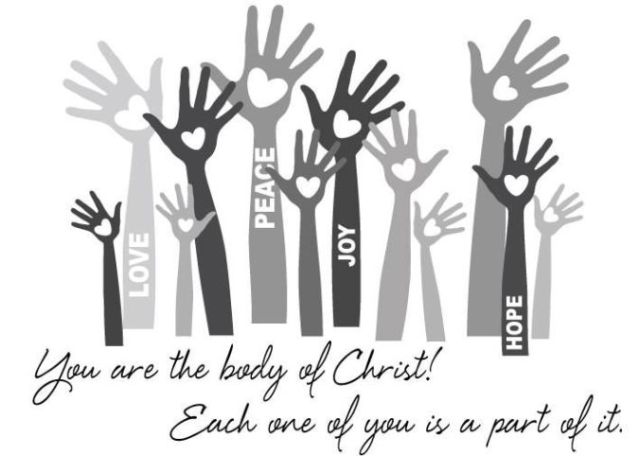
Every person is important. Everyone is needed. Each one, according to this New Testament lesson, is to offer their entire lives to God through worship and the exercise of their spiritual gifts. People are designed to be active in building up one another.
When I was growing up, we had a fine china set that my parents kept in a beautiful china cabinet. The set and the cabinet are old and were a prominent part of our living room. However, we almost never used it. I can only remember once or twice that my Mom got the china out to use.God is not looking for fine china that sits unused. He is looking for rough-and-tumble clay pots—the kind that can be used every day. God wants ordinary table-wear that can be handled in a crash-and-bang world.
Followers of Jesus Christ were never meant to be a china cabinet, where precious pieces are safely stowed out of harm’s way. Instead, humanity is to be like a working kitchen, where well-worn pots are filled again and again to dispense their life-giving contents to a thirsty world; and, where common plates and cups are used again and again to provide a hungry population with the Bread of Life.
Within the ancient Roman Church were both Jews and Gentiles – two groups vastly different from each other. They tended to keep to themselves and only operate within their familiar and comfortable circles of friends and relatives. But the Apostle Paul wanted them to be united by exercising their spiritual gifts for the benefit of the entire congregation, and not just certain persons.
We are strongly encouraged to give ourselves in service to one another because of God’s mercy in Christ. Since God has saved us from sin, we are to gratefully respond to him in worship that is dedicated to serving everyone. The word “worship” in today’s text is where we get the word “liturgy.” That is, Paul’s vision for the church was to have a daily liturgical rhythm of spiritual worship, not just on Sunday when we might pull out the fine china and impress people.
Paul’s appeal was not to guilt people into serving but is an exhortation for all Christians to appropriately respond to God’s grace by offering their lives in sacrificial service. This is a form of saying “thanks” to God. To be oriented in a sacred liturgy that is fit for the daily will of God, our minds must be renewed. Through saturation in Scripture we discern our spiritual gifts, know what God wants us to do with those gifts, and use them effectively in the church and the world.
Grace has been given to every believer in Jesus, not just a select few. We all have different gifts and have been graced with abilities for the benefit of others. When everyone collectively uses these spiritual gifts, there is the ability to know the will of God in any situation for any group of people. All the pronouns used in today’s verses are plural. There is to be a group dynamic which seeks to give minds and bodies completely to God in worship, using our spiritual gifts for building up one another, and discovering the will of God together.
All believers in Jesus must share and work together by utilizing God’s grace, instead of getting burned-out because others are not serving. Grumbling about what others are not doing begs the question of whether we are over-functioning, or not. It could be that we have succumbed to the danger the Apostle Paul warned us about: thinking so highly of ourselves that we believe our gifts are superior to others, so we need to maintain our control and hegemony in the group. This is a terribly misguided notion.
We belong to one another. Therefore, one major way of giving to God is through offering ourselves to each other with equity and without favoritism. We must not separate Christ from his church. To say that we need God, but do not need the church is to really say that we do not need God because the two are inseparable. Nowhere in Holy Scripture do we find individual Christians doing their own thing, isolated from a committed group of people, the church.
When Jesus called people to follow him in service to God and a world in need, some gave him excuses that they were busy and had other pressing matters to attend to before they could follow him. Jesus simply left them and told them they were not fit for the kingdom of God. (Luke 9:57-62)
When people were preoccupied with building wealth, or gaining power, or jockeying for influence, Jesus told them to stop it, exercise some faith, and seek first the kingdom of God. Build your treasure in heaven, Jesus said, because it will be permanent; and, not on earth where it is temporary. (Matthew 6:19-34)
We are graced by God with abilities which God fully expects us to use. “Cheap grace” is merely embracing Christ as a personal Savior but not welcoming him as the Lord in whom we must sacrificially give our lives to service in the church and the world. Spiritual health and vitality cannot exist apart from every person using God’s given grace to contribute to the functioning of the Body of Christ.
The list of spiritual gifts Paul provided is not exhaustive but represents a combination of speaking and serving gifts necessary to bless humanity. Paul exhorted the church to not restrain people’s exercise of gifts but let them go at it, full bore:
“Prophesying” is not foretelling the future but a word meaning “inspired speech” from God that addresses what God’s people are to do considering his Word.
“Serving” is a generic word referring to all types of hands-on service.
“Teaching” is needed to instruct the faithful in all the revealed will of God.
“Encouraging” involves both speaking and serving, as the one gifted in encouragement comes alongside others and helps them to do something with both verbal coaching and tangible help.
“Giving” specifically refers to the person who lives a simple life to be able to give generously and contribute to the needs of others.
“Leading” is the ability to get out in front and show the way in obtaining the will of God.
“Mercy” is themuch-needed ability to see down-and-out hurting people and be a conduit of God’s grace to them.
Here is a simple observation: There is no one person who possesses all these gifts. That is why everyone must work together to have a spiritually healthy community. A spiritually toxic community is the inevitable result of only a few people using their gifts.
The Apostle Paul communicated some important truth about what faithful Christians must do to be transformed by a renewal of the mind: exercise godly sacrifice; commitment to worship; intentional unity; and, an awareness of our spiritual gifts. The following are some thoughts on becoming aware of our spiritual gifts:
Pay attention. Every spiritual gift reflects God’s grace and character, and so, you will find joy and satisfaction in expressing it. Your spiritual gift will be a place of deep spiritual formation and growth in your life, as God uses it both to powerfully connect you to him and to expose areas of your soul that need his forgiveness and redemption.
Try. Give it a whirl. Take the step to connect with a service or ministry, or just try doing what you feel might be something God wants you to do. Gifts are discovered more from others observing and affirming your gift and less than going through a research process. The encouragers among us will be happy to affirm the gifts of others.
Develop. All spiritual gifts must be cultivated and developed. Paul told his young protégé, Timothy, to fan into flame the gift of God. Put yourself in a position to be taught and mentored.
We were designed by God for worship and service. We will find our greatest delight in life through engaging those two activities. The result is a spiritually healthy and thriving Christian community that loves God, loves one another, and loves the world.
God of grace, I come before you today praying for your Holy Spirit to stir up the gifts already placed inside your people. God Almighty, I pray that whatever gifts your Holy Spirit has decided to give and put within me and those around me that those gifts be activated and used for your glory and the edification of others. I pray for peace and joy in the community, that no one will be jealous or covetous about anyone else’s gifts. Lord God, I pray also as these gifts grow and develop that the fruit of the Spirit will be manifested, to ensure the gifts are ministered in love. May you receive all praise honor and glory from the gifts you give, through Jesus Christ, our Lord. Amen.










 Rev. Tim Ehrhardt