On the Need for Humble Leaders (1 Peter 5:1-11)

I appeal to your spiritual leaders. I make this appeal as a spiritual leader who also witnessed Christ’s sufferings and will share in the glory that will be revealed. Be shepherds over the flock God has entrusted to you. Watch over it as God does: Don’t do this because you have to, but because you want to. Don’t do it out of greed, but out of a desire to serve. Don’t be rulers over the people entrusted to you but be examples for the flock to follow. Then, when the chief shepherd appears, you will receive the crown of glory that will never fade away.

Young people, in a similar way, place yourselves under the authority of spiritual leaders.

Furthermore, all of you must serve each other with humility because God opposes the arrogant but favors the humble. Be humbled by God’s power so that when the right time comes he will honor you.

Turn all your anxiety over to God because he cares for you. Keep your mind clear and be alert. Your opponent the devil is prowling around like a roaring lion as he looks for someone to devour. Be firm in the faith and resist him, knowing that other believers throughout the world are going through the same kind of suffering. God, who shows you his kindness  and who has called you through Christ Jesus to his eternal glory, will restore you, strengthen you, make you strong, and support you as you suffer for a little while. Power belongs to him forever. Amen. (God’s Word Translation)

“The most powerful weapon to conquer evil is humility. For evil does not know at all how to employ it, nor does it know how to defend itself against it.”

St. Vincent DePaul

The real mettle of a person, especially a leader, is not seen in their very visible public service. Rather, solid spiritual leadership is forged in the invisible places, in the daily mundane tasks which no one ever sees.

It is in our most unguarded times that we really demonstrate who we are. This is the sacred space where humility is learned and developed. Therefore, to know a genuinely humble leader, one must follow that person in the common course of daily life.

Leaders without such a foundation of daily and consistent faithfulness will eventually crack. Ministry gradually becomes more duty than delight. Service to others is eventually measured by church attendance, monetary offerings, and public image. The soul shrinks over a long stretch of time, almost imperceptibly.

In a slow drift, faith fades, and anxiety fills the emptiness; glory grows dim, and greed grows destructively. Safety and security are ensconced as primary values to mitigate the nagging sense of worry. The original adventure of confident faith, conviction of purpose, and compassionate ministry becomes a bygone era.

Thus, it is most necessary to return to the queen of all virtues, the ideal Christian ethic for all followers of Christ: humility.

God opposes the proud but gives grace to the humble (Proverbs 3:34; James 4:6-7). With humility, our eyes are filled with spiritual sight, seeing and honoring the larger realities of the universe. Without humility, there is blindness, an inability to recognize the need for God’s grace.

The sinister approach of sinful pride is revealed in the wrongheaded thought, “I’m fine. I can do it on my own. I don’t need you, thank you very much.” 

So, how’s that been working for you lately? Are you frustrated, worried, despondent? 

“Do you wish to rise? Begin by descending. Do you plan a tower that will pierce the clouds? Lay first the foundation of humility.”

St. Augustine

Humility opens to us the wide vistas of God’s love and mercy. It is neither weakness nor a cenobite self-abnegation into denying my personhood. Instead, a humble spirit:

  • Renews hope. Spiritually and emotionally healthy leaders make for spiritually and emotionally healthy congregations. Humility discerns that all Christian ministry rests with the sufficiency of Christ, not me, thus kindling a future hope in realities bigger than me.
  • Relieves anxiety. Humility knows and rests in the hands of a good and merciful God, rather than a perceived need to “look out for number one.”
  • Resists the devil. A robust faith always has a strong foundation of humility, helping us see that Satan has nothing we want. 
  • Remains steady. Humility is willing and privileged to share in the sufferings of Christ, and so, can persevere through both bad circumstances and boredom.

As individuals, we all need to gain and maintain a humble spirit. Humility really is the virtue to which everyone must aspire. It delivers what we need the most: To rest secure in the merciful arms of God. 

In this old fallen world, every family, neighborhood, organization, institution, corporation, and government is in desperate need of humility. We’ve already made quite enough mess of things with our human pride.

Within the church, and inside of every religious community, it is most necessary to reinforce all leadership appointments and staffing with humility. No amount of human intelligence, skill, and hard work can make up for a lack of humility. 

God is sovereign and in control. So, the sooner we sync our lives with this truth, the better off we will be.

Sovereign God, you cause people and nations to rise and to fall. I place my complete trust and devotion in you. With all the humility I can muster, I bow to you and submit to your gracious work in my life and in the life of the world. 

Shoo all sinful pride far from me, create in me a pure and humble heart, and let me share in your sufferings so that I might share in your glory, through Jesus Christ, your Son, my Lord, who with you and the Holy Spirit are one God, now and forever. Amen.

The Necessity of Mentoring Relationships: Paul, Tom, and Timothy (2 Timothy 3:10-15)

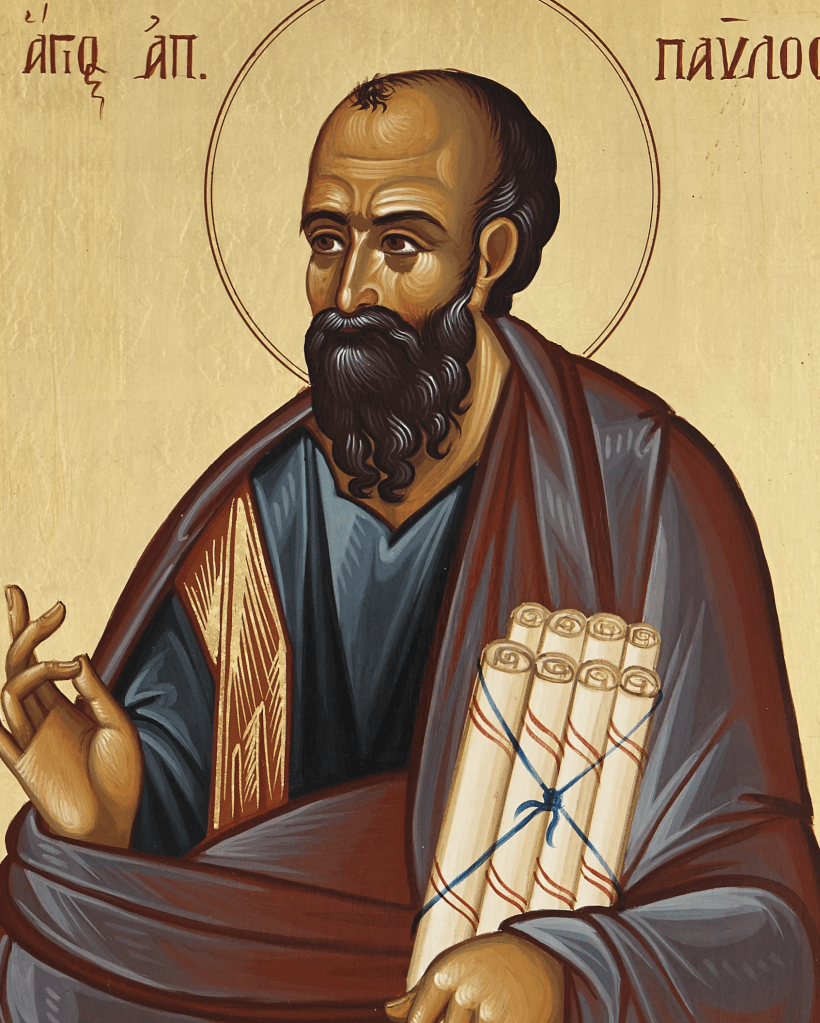
Orthodox icon of St. Paul
Orthodox icon of St. Timothy

You’ve been a good apprentice to me, a part of my teaching, my manner of life, direction, faith, steadiness, love, patience, troubles, sufferings—suffering along with me in all the grief I had to put up with in Antioch, Iconium, and Lystra. And you also well know that God rescued me! Anyone who wants to live all out for Christ is in for a lot of trouble; there’s no getting around it. Unscrupulous con men will continue to exploit the faith. They’re as deceived as the people they lead astray. As long as they are out there, things can only get worse.

But don’t let it faze you. Stick with what you learned and believed, sure of the integrity of your teachers—why, you took in the sacred Scriptures with your mother’s milk! There’s nothing like the written Word of God for showing you the way to salvation through faith in Christ Jesus. (The Message)

Paul and Timothy had a special relationship. Paul, the Apostle and mentor in the faith; and Timothy, the apprentice.

Together, they saw it all – and experienced it all. And through it all, the Christian tradition was passed on because of Paul’s purposeful mentoring of others, especially Timothy, by both verbal teaching and life example. In this, Paul helped set Christianity on a trajectory of modeling the words and ways of Jesus.

Faith is a gift given by God through Scripture and faithful people – and then received by us. Christianity is designed for community; it is not merely a solitary affair between the individual and God. Anyone trying to go it alone in the Christian life will soon discover they are overwhelmed and in over their heads with trouble.

Contemporary pastoral ministry still needs to follow in the footsteps of the Apostle Paul. Just one of the many reasons why churches in the West are in such decline is that Christian leaders are not intentionally focused to passing-on a solid body of teaching, along with a consistent example of how to put it into practice, through close relationships.

Anyone who has been in the pastoral ministry gig for a long time, remaining consistent and faithful, has most certainly had a good spiritual teacher and guide shepherding them through their Christian experience. A good long ministerial life isn’t happenstance; it’s the result of a solid foundation through a Paul-and-Timothy sort of relationship.

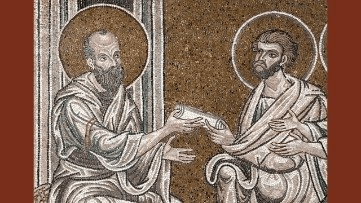
Mosaic of Paul and Timothy, Cathedral of Monreale, Sicily, Italy

By God’s grace, I’ve had several persons influence my life in profound ways in such a relationship. One of the earliest and longest was with Tom – a campus minister on my university who built into my life as an undergraduate and a very young Christian. We remained connected and became good friends for nearly four decades until his untimely death.

Tom knew what he was doing with me. To this day, even with multiple academic degrees and many professional ministry experiences, I attribute most of what I know about Christian faith and practice as simply saying and doing what I saw Tom say and do. And, I might add, Tom consistently saw my true self, even when I didn’t see it myself.

A good model in the faith has the same qualities and insights as the Apostle Paul of old. For example, here are just a few of the important things I learned from Tom:

  • Christian ministry is interpersonal; time must be spent with others, getting to know them and building relationships. Doing pastoral ministry from afar is an oxymoron. From what we know of Paul, at times he had a team of up to seventy persons following him around on missionary endeavors.
  • There are always going to be charlatans and bad apples around. Don’t simply ignore them. Confront them in grace and truth. I still remember a time when I went along with Tom, not knowing where we were going or what he was up to. In retrospect, he probably knew I would bolt if I caught wind of what he was about to do. We went to the dorm room of a believer whom Tom flat-out confronted on his talking and living being inconsistent with his professed Christianity. My eyes got huge when Tom said, “In the name of Jesus Christ I rebuke you and I call you to repent.” This was said in a gracious and conversational tone, not in anger, which communicated concern and love for this individual student.
  • Develop relationships. And the best way of doing this is by having the Timothy tag along with the Paul. Tom continually brought me along to whatever he was doing, whether it was a weekend retreat he was leading, or going to the grocery store. We cannot learn from others if we aren’t around them, and Tom understood this better than most. As a result, I learned more than lessons; I learned a life.
  • It’s not about me. Tom never took himself too seriously. And because of that, I observed him never becoming overwhelmed or obsessing over the trouble he would sometimes get into. In fact, he typically welcomed the trouble whenever he saw it was not of his own making.
  • Openness and vulnerability are necessary. More than once, Tom strolled into a bible study with me and some other guys, flopped down and said, “Man, I really blew it today…” and then went on to explain some boneheaded thing he did. We unpacked the entire situation together. Not once do I ever recall Tom trying to look like the perfect Christian leader. He embraced who he was and was always willing to shine the light on the shadowy places of his heart.
  • Holy Scripture is central to Christian life and ministry. Inevitably, Tom’s question to us, after describing his bonehead move, was to ask, “What are you learning in God’s Word? Do you have any encouragement for me?” On a daily basis, without fail, Tom asked this question of me: “So, what is God teaching you in the Word?”

Through both Holy Scripture and the significant relationships I’ve had throughout my life, I can confidently state that there are two indispensable elements to effective Christian ministry:

  1. It must be firmly grounded in objective theory derived from God’s Word.
  2. It must be intentionally practiced with subjective experience derived from interpersonal relationships.

Objective theory without lived practice leads to being puffed-up with knowledge and no love – because love requires people. And subjective experience without a grounded theory is nothing but a form of spiritual A.D.D. in which whatever shiny thing we see grabs our attention.

I always considered Tom as my spiritual father (and his wife as a dear spiritual mother!). They have shown me not only how to live the faith, but also how to be a spiritual father myself. And as a result, my own dear wife and I have many spiritual children scattered throughout the country.

This is the consummate Christian: Coming to faith by God’s grace, mediated to us through actual flesh-and-blood people; being taught and mentored in that faith by proven Christians; and then, simply saying and doing what you have seen and heard from holy leaders and Holy Scripture.

It’s not rocket science. It’s not abstract art. It’s a life. It’s relationships. And it’s absolutely necessary in order for both the church and the world to be blessed.

But he’s already made it plain how to live, what to do,
    what God is looking for in men and women.
It’s quite simple: Do what is fair and just to your neighbor,
    be compassionate and loyal in your love,
And don’t take yourself too seriously—
    take God seriously. (Micah 6:8, MSG)

Soli Deo Gloria. Amen.

Numbers 27:12-23 – Humble Leadership

Moses Blesses Joshua by Marc Chagall, 1966

One day the Lord said to Moses, “Climb one of the mountains east of the river and look out over the land I have given the people of Israel. After you have seen it, you will die like your brother, Aaron, for you both rebelled against my instructions in the wilderness of Zin. When the people of Israel rebelled, you failed to demonstrate my holiness to them at the waters.” (These are the waters of Meribah at Kadesh in the wilderness of Zin.)

Then Moses said to the Lord, “O Lord, you are the God who gives breath to all creatures. Please appoint a new man as leader for the community. Give them someone who will guide them wherever they go and will lead them into battle, so the community of the Lord will not be like sheep without a shepherd.”

The Lord replied, “Take Joshua son of Nun, who has the Spirit in him, and lay your hands on him. Present him to Eleazar the priest before the whole community, and publicly commission him to lead the people. Transfer some of your authority to him so the whole community of Israel will obey him. When direction from the Lord is needed, Joshua will stand before Eleazar the priest, who will use the Urim—one of the sacred lots cast before the Lord—to determine his will. This is how Joshua and the rest of the community of Israel will determine everything they should do.”

So, Moses did as the Lord commanded. He presented Joshua to Eleazar the priest and the whole community. Moses laid his hands on him and commissioned him to lead the people, just as the Lord had commanded through Moses. (New Living Translation)

Moses was one of the most humble persons who ever lived on this earth (Numbers 12:3). Whereas many people are concerned for their legacy at end of life, Moses, instead, had a deep pastoral concern for his fellow Israelites. He didn’t want them without a capable and godly leader. So, in his humility, Moses was willing to obey God, let go of power, and share his authority so that the people would be well-cared for.

“All streams flow to the ocean because it is lower than they are. Humility gives it its power.”

Lao Tzu (Chinese philosopher, 6th century B.C.E.)

I believe humility is the queen of all virtue, especially that of leadership. Yet, humility is one of the hardest virtues to practice because it requires that we willingly put aside pride, ego, and personal agendas in order to embrace God’s agenda.

Rather than having large statues erected to honor us and our proud accomplishments, or having our names plastered on buildings (and churches!) to recognize our wonderful charity, we really need to orient our energies toward passing the baton to trustworthy people who are capable of faithfully fulfilling the role of servant leader. (2 Timothy 2:2)

Being poor in spirit (Matthew 5:3), becoming like a little child (Matthew 18:3), and thinking of others as better than ourselves (Philippians 2:3) are the cornerstones to becoming open to what God has for us. To be a humble leader means to steadfastly seek God’s will and way in everything. Then, to have the courage in leading others toward God’s direction, despite resistance and opposition from those who want to follow a different path.

Therefore, a leader’s task is to be consumed with seeking God’s direction rather than living purely according to instinct, pragmatic desire, or personal views. We continually need a radical openness to God. So, we must work to develop an ever-deepening awareness of where God is leading us. 

God, in divine mercy, is always up to something good. The Lord has plans for us and for the people we lead.  It’s humility that allows us to listen well to God’s Spirit and gain the direction needed for leadership.

Yet, being open to God is not quite as easy as it sounds. We must recognize that not everyone is open to God.  There are those, maybe even including us, who may be closed to God. 

If our focus is more on creating safety and security or trying to do enough good deeds to be recognized by God and others, or having our institution be what we want it to be, then we have become closed to what God wants.  This comes out in a couple of different ways….

  1. Maintaining tradition, at all costs. Whenever we do everything the way we have always done it, to make us feel safe and secure, then anything that threatens that security angers us. This is where folks practice either fight or flight – they wage either a holy war or just leave. Living with uncertainty and ambiguity is too much for them. But faith is what it takes if we are going to follow God. Like Abraham in the Old Testament, we are called to move and change without always knowing the destination.
  • Getting rid of traditions, at all costs. Sometimes folks who want new or different, desire to create a place of their own making to serve them and their needs. They aren’t really focused on what God is calling them to do. Rather, like Timothy in the New Testament, we are to hold onto the great deposit of doctrine and heritage given to us and not always be looking for the next new thing to turn things around.

So, what to do? Have the humility to ask the question continually and constantly: “What is God’s will?”  We need leadership that is incredibly open to God, allowing decision-making to come from a position of faith, and not fear. This enables us….

  • To let God, flow in and through us, rather than willfully insisting it should be our way or the highway.
  • To practice hope and love, rather than relying on our own strength and desires.
  • To make prayer and discernment the foundation of what we do, always seeking what God wants and then leading others in that direction by inviting them to the same kind of prayerful process.
  • To read our Bibles as if our lives depended on it and pray like there is no tomorrow.

If we have humility and a deep openness to God; a conviction that we are primarily called to follow Jesus Christ; a willingness to let God’s power flow through us; and, a determined readiness to move people lovingly and graciously in God’s direction, then amazing things can happen. 

Let our prayer together be this: I am yours, God, no matter where you call me to go, what you call me to do, and how you call me to be. I will seek your will and way as I lead others to do the same. Amen.

Titus 1:1-9 – Effective Spiritual Leaders

From Paul, a slave of God and an apostle of Jesus Christ. I’m sent to bring about the faith of God’s chosen people and a knowledge of the truth that agrees with godliness.

Their faith and this knowledge are based on the hope of eternal life that God, who doesn’t lie, promised before time began. God revealed his message at the appropriate time through preaching, and I was trusted with preaching this message by the command of God our savior.

To Titus, my true child in a common faith.

Grace and peace from God the Father and Christ Jesus our savior.

The reason I left you behind in Crete was to organize whatever needs to be done and to appoint elders in each city, as I told you. Elders should be without fault. They should be faithful to their spouse and have faithful children who can’t be accused of self-indulgence or rebelliousness. This is because supervisors should be without fault as God’s managers: they shouldn’t be stubborn, irritable, addicted to alcohol, a bully, or greedy. Instead, they should show hospitality, love what is good, and be reasonable, ethical, godly, and self-controlled. They must pay attention to the reliable message as it has been taught to them so that they can encourage people with healthy instruction and refute those who speak against it. (Common English Bible)

Paul wrote his letter to Titus so that spiritually solid competent virtuous leaders might be appointed to guide the church on the island of Crete (located in the Mediterranean Sea, south of Greece). 

There was no ambiguity with Paul about the importance of leadership. The Apostle clearly laid out his expectations that church officials must have a good reputation – not bossy, quick-tempered, heavy drinkers, bullies, or dishonest in business. Instead, they must be friendly to strangers and enjoy doing good things. They must also be sensible, fair, pure, and self-controlled.  They must stick to the true message they were taught, so that their good teaching can help others and correct everyone who opposes it.

I find it interesting that very few biblical scholars view this teaching as an ideal to aspire – while many churches and believers think this is the case. There is neither any indication nor reason within the biblical text to think that Paul presented his expectations for the ideal leader, as if no one could really be this way. 

Furthermore, Paul did not provide his instruction as a strategy for getting apathetic people off their butts and into some form of service. No, it’s best to understand that Paul meant what he said. He knew that compromising on the character of leadership would erode and destroy the church.

“True leadership is found in giving yourself in service to others, not in coaxing or inducing others to serve you.”

J. Oswald Sanders

The selection of church leaders is important because just one bad belly-aching non-virtuous apple can upset the entire apple cart. Good people provide good teaching and good wisdom. Selfish people with a self-centered agenda find ways to subvert or manipulate sound instruction to get what they want. 

Everyone in the Body of Christ is to grow in the wisdom and knowledge of God. They are to be wise to all the shenanigans of myopic persons through understanding the commands and instruction of Holy Scripture. This is yet another reason to immerse ourselves in the Bible so that we will lead with confidence.

If a church or faith community feels the need to overlook character defects to fill empty leadership seats, then Houston, we have a problem. Any short order cook worth his salt would never crack open a rotten egg and mix it in with the rest to make an omelet. And any group of people who throw a bad egg into their leadership team had better be ready to get sick and vomit when meetings are called to order.

It is imperative that spiritual leaders possess the following:

  • A good reputation
  • Faithfulness and fidelity to their families.
  • A clear-mind and consistent good behavior.
  • Self-control
  • The moral courage to speak truth with grace.
  • A spirit and practice of hospitality.
  • An ability to communicate well so that people are built up in their faith.
  • Sobriety
  • Humility
  • Respectability
  • Gentleness
  • Patience
  • Generosity
  • Compassion
  • Maturity
  • Sincerity
  • Honesty
  • Empathy
  • Purity

All these traits are needed for effective and godly spiritual leadership. Compromising on virtue will never end well. Upholding moral character brings blessing.

“The authority by which the Christian leader leads is not power but love, not force but example, not coercion but reasoned persuasion. Leaders have power, but power is safe only in the hands of those who humble themselves to serve.” 

John R.W. Stott

God calls and sets apart individuals for service. The Lord desires to reveal and manifest the divine presence among people through leaders who reflect God’s good attributes. Jesus Christ wants his church to be built up through faithful service. The Spirit seeks to sanctify and empower for effective ministry.

Nowhere do we find in Scripture that a leader’s main job is listening to complaints. That’s because God has a zero tolerance policy toward murmuring, grumbling, and ingratitude. In fact, the New Testament clearly says to do everything without complaining or arguing. (Philippians 2:14)

Neither will you find the church is supposed to operate just like an American form of democracy. Spiritual leaders are not representatives of the people to do their will. Instead, they are representatives of God to the people so that God’s will is done in all things. 

That all means prayer to God and outreach to the world is the major work for spiritual leaders. And it takes virtuous and ethical persons leading to realize love to all kinds of people. So, feel free to exercise leadership. Just make sure that leadership is grounded in the God of integrity and the Word of grace and truth.

Almighty God, the One who gives good gifts to people, may every grace of ministry rest on divinely appointed leaders. Keep them strong and faithful so that your church may prosper in peace. Grant leaders wisdom, courage, discretion, and benevolence so that they may fulfill their charge to the glory of Jesus Christ and in the power of your Holy Spirit. Amen.